
If you’re a cuisine lover with a passion for tacos or a taco business owner seeking profit strategies, understanding the financials behind taco trucks is key! Tacos tantalize taste buds and, when sold from a truck, they can bring in impressive earnings. In this article, we’ll dissect daily revenue, monthly profitability, and the myriad factors that influence how much your taco truck can rake in. Get ready to dive into the delicious world of taco truck economics and discover how to maximize your earnings!
Rolling Revenue: Understanding the Daily Income Landscape for Taco Trucks
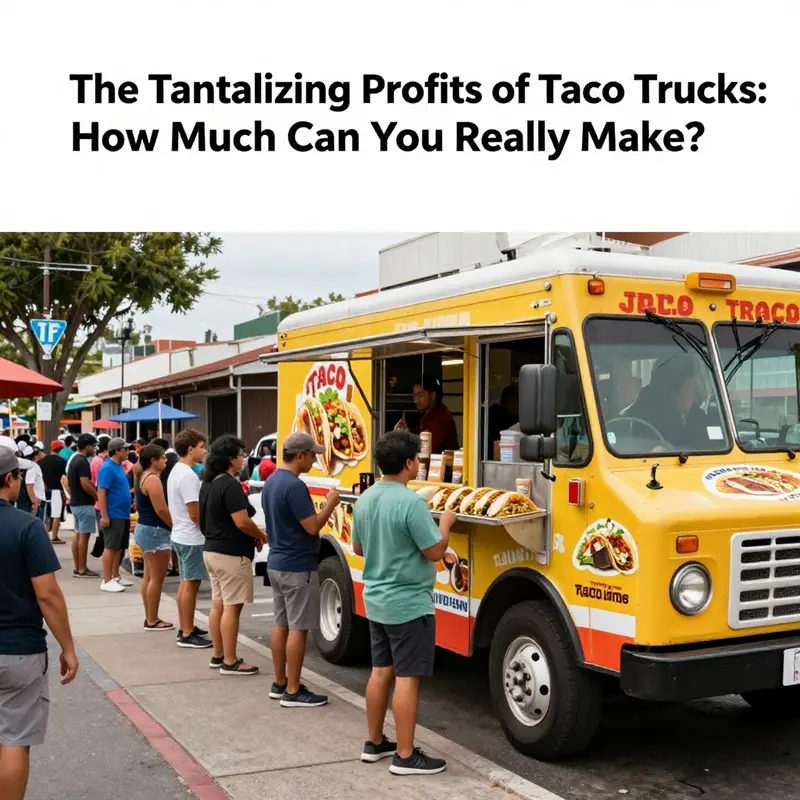
Revenue is not a single number. It is a rhythm shaped by location, timing, price, and the everyday rituals of street food fans who crave something quick, hot, and flavorful. For a taco truck, that rhythm translates into a daily cadence of rush hours, market days, and weekend festivals, each contributing a different tempo to the bottom line. The chapter that follows surveys this cadence with a steady eye on the numbers that most operators confront: what they can bill in a day, how profit sticks to their margins after fuel and labor are paid, and when the math starts to favor expansion rather than endurance. The numbers aren’t a guaranteed forecast, but they do sketch a map of possibility that is both grounded in reality and hopeful for those who plan with discipline and a clear sense of location.
In the simplest terms, a well-positioned taco truck can generate substantial daily revenue, especially in high-traffic urban environments. Industry data consistently points to a broad range: many productive days fall between roughly $1,000 and $3,000 in peak periods, with larger highs possible when the truck is parked in or near dense business districts, parks near entertainment venues, or locations that reliably pull in foot traffic. Where you stand on that spectrum depends on several levers: the size of your menu, the speed of service, the density of nearby workers and residents, and your ability to convert curious passersby into repeat customers. In practical terms, this means a truck that lands in a busy zone during lunch and again in the evening can rack up a very different daily total than one that serves a quieter neighborhood only a few hours a day. The National Restaurant Association’s data reinforces this picture, noting that in prime urban centers, average daily revenue for a well-located taco truck can exceed $2,000, especially in areas with consistent foot traffic, proximity to offices and nightlife, or venues with predictable crowds.
Seasonality is a silent co-pilot in the revenue story. Summer markets, college events, sports games, and festival seasons can push daily totals higher, while colder months, rain, or off-days can cool demand. The best operators plan for this with flexible schedules, mobile routes, and a willingness to shift among high-traffic hot spots as events roll through the calendar. A robust calendar of recurring gigs—think weekly farmers markets, monthly street fairs, or regular stopovers near stadiums or arenas—can stabilize what might otherwise be a jagged cash flow. In this sense, revenue potential is not only about raw demand but also about the operator’s discipline in aligning daily routes with the moments when customers most want a quick, craveable meal on the go.
The numbers also reveal the ripple effect of branding and operational discipline. Some trucks achieve higher daily totals not merely by being in the right place but by leveraging a recognizable brand that travels with consistent quality and speed. Efficiency in the kitchen translates directly into capacity; faster service means more customers served per hour, which in turn increases average daily revenue. The case for operational discipline is reinforced by broader industry findings: when a truck pairs efficient preparation with a strong brand and targeted marketing, the same location can yield more revenue across more days of the month. This isn’t magic. It is the practical confluence of good menu design, effective workflow, and a reputation that makes customers choose your line over others.
Moving from gross revenue to the true financial picture requires unpacking the cost structure that sits between sales and profit. Food trucks commonly operate with gross margins in the 60% to 70% range, a testament to the favorable economics of compact kitchens and lower overhead relative to brick-and-mortar restaurants. Those margins, however, are not a guarantee of net profit. They reflect the portion of revenue left after the cost of ingredients but before all other expenses. The remaining costs—fuel to move the truck around, maintenance and wear on the vehicle, insurance, licenses and permits, staff wages, and ongoing overhead like supplies and cleaning—sap a significant portion of the gross. When you subtract these, net profit for a well-run taco truck can hover in the neighborhood of $1,500 to $5,000 per month. On a daily basis, if a truck makes around $2,500 in sales, that translates to roughly $200 to $375 in net profit after all the usual costs are accounted for. This dual view—impressive top-line potential coupled with lean operating costs—explains why many operators focus relentlessly on efficiency, waste reduction, and speed of service as the core drivers of profitability.
To illustrate how these numbers play out in real life, consider two hypothetical but plausible scenarios that many operators encounter. Scenario A centers in a bustling downtown area during lunch hours with steady foot traffic from office workers and nearby shoppers. The truck is priced to balance value and margin, offering a tight, well-curated menu that can be served quickly. Over a typical eight-hour window, this setup can approach the upper end of the daily revenue spectrum—roughly $2,000 to $2,800 in sales on a busy day. With a gross margin around 65%, gross profit sits near $1,300 to $1,820. After accounting for fuel, maintenance, ingredients, permits, insurance, and labor, net profit for the day might be in the range of $160 to $350. If this pattern holds for 20 to 22 operating days in a month, monthly net profit could land between $3,200 and $7,700. Scenario B shifts the setting to a high-traffic weekend hotspot near an event venue or a stadium, where demand spikes during the tail ends of events and in evenings. Daily sales can easily surpass $3,000, with a similar gross margin profile. Net daily profit might rise to $300 to $450, and monthly nets could soar, especially for operators who command loyalty, operate multiple days per week around events, or visit clusters of recurring crowds. In these configurations, top earners can push well beyond $10,000 in net profit per month, underscoring the leverage that location, timing, and branding provide.
Of course, not every day will hit the high end, and smart operators plan for the counterbalance. Dips in customer flow, unfavorable weather, or surprises in ingredient costs can compress daily revenue and shrink margins. The SBA’s 2024 outlook makes this point clear: net profit margins for food trucks typically fall in a broad 8% to 15% range when you account for all expenses. Put another way, the same $2,500 day that looks so promising on the surface can, in practice, yield a modest daily net if costs spike unexpectedly. The takeaway is not to chase heroic single-day outcomes but to cultivate a durable pattern of revenue that holds across a range of conditions. Efficient purchasing that guards against price volatility in produce, dependable fuel budgeting, and predictable labor costs are all essential levers. And while the math can appear unforgiving in a downturn, disciplined operators who establish recurring locations, maintain a strong brand, and optimize the customer experience can sustain profitability even when external conditions tighten.
The growth trajectory attached to these daily numbers also depends on strategic branding and customer engagement. In a bustling market, a taco truck can become a fixture—a recognizable presence that locals seek out, anticipate, and even plan around. This is where the narratives of small business success meet the daily arithmetic. Strong branding helps convert casual foot traffic into repeat customers, and loyalty programs or mobile ordering can amplify this effect by improving repeat visitation without substantial increases in labor. A well-executed social media presence complements the physical presence, creating a feedback loop: publicity drives traffic, traffic improves cash flow, and stronger cash flow enables better equipment, more consistent ingredients, and more reliable staff schedules. It is a virtuous cycle that elevates both revenue and resilience, especially when a truck can capitalize on events or seasonal crowds that align with its core offerings.
Practical planning matters as well. The dance between daily revenue and profitability often turns on route planning and calendar management. A truck that maps out a weekly rhythm—one or two core locations with predictable crowds, supplemented by weekend events—reduces the friction of near-term decision-making. When the truck can anticipate demand, it can optimize staffing and prep. It can optimize ingredient order quantities to minimize waste while satisfying the daily hunger of the neighborhood. It can calibrate pricing and menu mix to balance profitability with customer satisfaction. The more predictable the pattern, the easier it becomes to forecast revenue with confidence and to manage the subtle but important variations that occur from day to day.
To make these points tangible, many operators emphasize the power of efficient operations and strong branding as two sides of the same coin. On the operations side, streamlining food preparation, ensuring quick service, and maintaining consistent portion control all contribute to higher daily throughput and better margins. A smooth kitchen flow reduces the time customers spend in line, which in turn increases the number of orders served per hour. It also lowers the risk of spoilage and waste, preserving both food quality and margin. On the branding side, customers are drawn not only by the flavor of the food but by the story the truck tells—the pride in sourcing, the personality of the team, and the visible care put into each order. A compelling brand invites repeat visits and word-of-mouth referrals, which are among the most durable indicators of sustained revenue. When a truck blends speed with a memorable experience, it can grow its daily revenue footprint without a linear increase in labor or fixed costs. This is the essence of leveraging daily revenue potential into a scalable and sustainable business.
Embedded in this discussion is a practical realization: the daily revenue potential of a taco truck is real, but it is not guaranteed. The same appetite that creates a high-volume lunch rush can be tempered by competition, regulation, and market dynamics. The most successful operators treat revenue not as a one-off windfall but as an ongoing discipline—an annual game plan with monthly milestones and weekly check-ins. They track sales patterns, adjust menus to reflect what customers actually want, and maintain a flexible approach to where they operate. The business case for a taco truck, in its most robust form, rests on combining a steady rhythm of revenue with a disciplined cost structure, and then layering in branding and customer loyalty that turn occasional spikes into durable growth.
If you are weighing a path into this line of work, the numbers tell a disciplined story. A taco truck can indeed generate substantial daily revenue, particularly in busy urban habitats, on weekends, and at events. Profitability becomes more reliable as you optimize your margins and minimize the variable costs that erode the bottom line. Start by validating your location strategy—where you will be and when you will be there. Build a menu that balances cost with desire, ensuring that most items sit within a comfortable margin while remaining appealing to a broad audience. Create a workflow that minimizes wait times without sacrificing quality. Then establish a brand that people recognize and remember, and pair that with marketing tactics that reward loyalty. When these elements align, the numbers begin to reflect the reality that many operators already observe: daily revenue can be substantial, monthly earnings can support a meaningful profit, and a well-executed plan can sustain growth over time.
For readers who want to dig deeper into the practicalities of starting and running a successful food truck operation, an exploration of strategic decision points like choosing the right vehicle and the broader planning considerations can be valuable. You might start by looking at the fundamental choice of a vehicle and kitchen setup, then link to guidance on selecting the best fit for your business model. The decision to choose the right food truck—an essential early step—often sets the tone for how you’ll approach location strategy, branding, and daily operations. For more on that critical step, you can explore this resource: Choosing the right food truck.
In closing, the bottom line on daily revenue for taco trucks is that potential is real and scalable, but it requires a disciplined, location-aware approach. The numbers are best understood as a system: revenue compounds when you optimize throughput, pricing, and customer loyalty; costs compound in the opposite direction if you neglect fuel, permits, or labor discipline. The best operators build a daily cadence that suits their market, protect margins with careful sourcing and waste reduction, and cultivate a brand that makes customers return. Taken together, these practices turn a high-variance venture into a predictable, repeatable source of income that can grow with time and ambition. External industry benchmarks and case studies corroborate this trajectory, while also reminding us that the path to sustained profitability is paved with careful planning, relentless execution, and a deep understanding of the local streets where the truck meets its audience.
External reference: For additional context on small-business profitability in the food-truck sector and a comprehensive overview of the operational considerations that affect net margins, see the U.S. Small Business Administration’s Food Truck Success Report (2024).
External resource: https://www.sba.gov/business-guide/starting-a-business/food-truck-success-report-2024
Tacos in Motion: Unraveling Monthly Earnings and Margins in the Taco Truck Economy
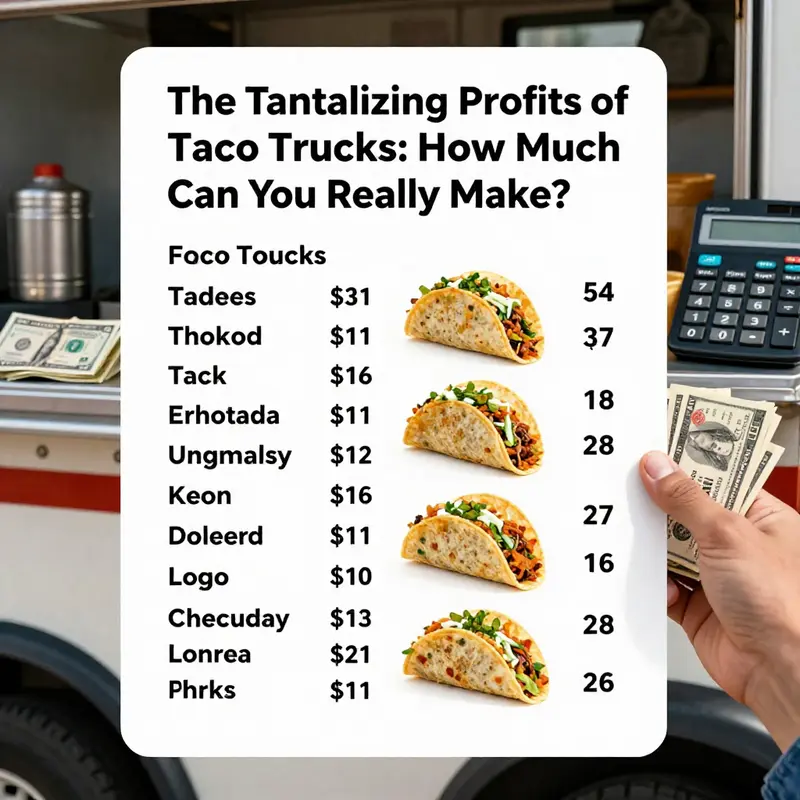
The sight of a taco truck rising above a busy curbside, steam curling from a sizzling grill, evokes a simple, almost timeless appeal: fast, flavorful food served with a smile, on wheels. Yet the true story behind the taco truck economy is a balance act shaped by street-level hustle, smart pricing, location savvy, and disciplined cost control. This chapter looks beyond a single dish to explore what a typical month can look like in terms of revenue and margins, and how those numbers translate into a sustainable livelihood for operators who choose mobility over a fixed storefront. The numbers are not a uniform map, but they are a reliable compass. In many urban markets, a well-positioned truck can generate substantial monthly revenue—often in the range of forty to sixty thousand dollars—driven by the speed of service, high customer turnover, and the ability to chase demand from lunch crowds to late-night events. In peak seasons or at events that draw large crowds, that figure can climb to eighty thousand dollars or more in a single month. The variation is real and meaningful, and it reflects a confluence of factors that range from geography to weather, from the rhythm of local events to the stubborn math of ingredient costs. Location remains king. A truck parked near a dense office corridor at lunch can see a steady flow of business, while a truck at a festival or stadium concourse can register spikier, high-volume days that push monthly totals into higher ranges. This is not merely about being in the right street; it’s also about being in the right street at the right time, with the right menu at the right price. The financial picture becomes clearer when we separate revenue from costs and consider how lean a mobile operation can be compared to a brick-and-mortar restaurant. The National Restaurant Association and industry analysts highlight a pattern that resonates in the field: mobile food options, by their nature, carry lower overhead than fixed-location eateries, a factor that has a direct impact on margins. A typical taco truck’s cost structure is lean yet intentional. Food and beverage costs, the direct inputs that determine taste and value, often run around thirty to thirty-five percent of revenue. Fuel, maintenance, and the vehicle’s ongoing expenses typically amount to roughly ten to fifteen percent. Labor—wages for cooks, prep staff, and any helpers—shapes both the pace of service and the customer experience, usually in the twenty to twenty-five percent band. Permits, licenses, insurance, and related regulatory costs total roughly five to ten percent. When these elements are added up, the gross margin for a taco truck generally lands between fifty-five and sixty-five percent, a robust figure in the broader restaurant landscape. In effect, the truck’s business model prioritizes volume, quick turnover, and efficient supply chains, allowing operators to capture more of each dollar earned than a typical sit-down venue might. Even with that favorable margin, net profit is a function of how well the operator manages the rest of the machine: fuel and maintenance schedules, vehicle depreciation, staff utilization, and the ever-present need to keep an eye on permits and insurance. Net monthly profit for a well-run taco truck is often cited in the range of about one thousand five hundred dollars to five thousand dollars, with those figures reflecting careful staffing, smart route planning, and disciplined inventory control. This is not a guarantee, but it is a plausible corridor for operators who optimize operations while maintaining high service standards. It is not unusual to hear about “top earners” in larger metro markets where brand trust, loyalty, and recurring events push net monthly profits into the ten-thousand-dollar territory. In practice, a truck that has carved out a strong niche, repeated customers, and strategic partnerships around events, can extend its influence by running multiple stops or collaborating with nearby venues. A recent year’s snapshot from industry coverage highlighted that a mid-tier mobile taco stand with a solid menu and marketing approach might net around three to four thousand dollars per month, while trucks near tourist hubs, stadiums, or festival grounds frequently push past six thousand dollars. When considered on an annual basis, those dynamics imply that the path to meaningful profitability is less about a single blockbuster month and more about the consistency of earnings across a broad slate of days and events. The cadence of a given operator’s calendar—lunch rushes on weekdays, weekend dining, and seasonal surge during fairs or concerts—becomes a rhythm that sustains cash flow and supports reinvestment back into the business. Innovation, after all, is less a novelty and more a necessity for sustaining profitability—whether that means updating packaging to be more sustainable, introducing limited-time specials, or weaving in fusion flavors that attract curious customers who are drawn to novelty but still anchored by value. The strategic advantages of this model grow sharper when one considers the extended ecosystem around the truck: social media engagement, flash promotions, and the ability to respond quickly to customer feedback. A truck that pairs great flavor with fast service and a strong social presence can convert occasional buyers into repeat visitors, and repeat visitors into advocates who spread the word at events and in neighborhoods between stops. From a planning perspective, the profitability story rests on several pillars. First, a clear understanding of market demand is essential. High-traffic corridors, activity hubs, and event calendars define the canvas on which revenue is painted. Second, a deliberate pricing strategy that balances affordability with margins helps maintain steady revenue streams while ensuring ingredient costs don’t erode profitability. Third, a tight control over cost of goods sold, labor productivity, and overhead ensures margins remain within the expected range. Fourth, ongoing investment in branding and experience—whether it’s the visual appeal of the truck, the efficiency of the service, or the consistency of the product—creates differentiation in a crowded market and can sustain long-term profitability. The practical implications for someone entering the business are straightforward and pragmatic. Conducting thorough market research is crucial: which neighborhoods experience day-to-day foot traffic? Where do large crowds gather for events or sports? Are there gaps in competition during certain hours? Building a solid business plan around these insights sets the foundation for predictable revenue. Understanding local regulations, securing the required permits, and obtaining adequate insurance are not mere formalities; they are essential guardrails that protect earnings and help avoid costly downtime or penalties. Choosing a high-traffic location is the most tangible driver of revenue. This is not a one-time decision but an ongoing optimization process. Operators learn to track foot traffic, optimize fuel use, and schedule cooks in alignment with peak hours. They learn to balance speed with quality—ensuring customers get a consistent product even as lines grow and demand heats up. The conversation around earnings and margins also invites a reflection on the broader ecosystem in which taco trucks operate. Social media is not simply a marketing tool; it is a distribution channel, a feedback loop, and a community hub that can unlock a steady stream of repeat customers. A truck that shares behind-the-scenes content, previews new menu items, or announces pop-up collaborations can broaden its reach and create anticipation that translates into footfall during off-peak times as well. The path to sustainable profitability for a taco truck is therefore a blend of disciplined financial management and imaginative customer engagement. A practical way to approach this blend is to think in terms of three intersecting circles: location and volume, cost discipline, and brand-building. Within location and volume, the operator continually seeks out the most reliable streams of customers—whether daily lunch crowds in a business district, after-work clusters in nightlife corridors, or seasonal surges around festivals and stadiums. Within cost discipline, the focus remains on keeping food costs within the thirty to thirty-five percent band, while maintaining a lean labor structure that supports the pace of service without compromising quality. In terms of brand-building, the operator works to convert one-off visitors into regulars by creating a memorable experience: consistent flavors, friendly service, a visually appealing cart, and a story that resonates with the community. For newcomers, it is helpful to see how these elements play out in practice. The model is not a fixed script; it is a living system that responds to market signals, weather, and consumer tastes. A truck’s monthly earnings are not merely a sum of daily receipts but the result of a series of decisions about where to park, what to cook, how to price, and how to interface with the community. The most successful operators often treat every stop as a test: does the price point maximize the average transaction size? Does the menu offer a balance of staple items and limited-time specialties that entice repeat visits? Is the truck’s presence at an event timed to capture the maximum surge in demand without draining labor or inventory excessively? In this sense, profitability is not a fixed target but a dynamic outcome of disciplined execution and ongoing adaptation. It is worth noting that the literature and market reports frequently emphasize the variance that accompanies mobile food ventures. A truck’s revenue can grow when it avoids deadhead miles—traveling with purpose, not just for the sake of movement—and when it aligns its schedule with high-demand windows. It can shrink costs when it standardizes recipes, leverages bulk purchasing, and minimizes waste. It can elevate margins when it negotiates favorable terms for fuel and insurance, or when it strategically diversifies revenue through catering or private events. From a practical standpoint, a reader should take away that monthly earnings for a taco truck are robust in many markets but highly contingent on a few levers: the truck’s location strategy, the efficiency of its operations, and the strength of its brand. A well-run truck in a high-traffic urban zone can routinely realize a monthly total that supports a meaningful profit, with the potential to scale up through fleet expansion or multiple locations if the operator pursues growth thoughtfully and with adequate capital. The bottom line is clear: the taco truck model can be a profitable venture when operators optimize for volume, discipline costs, and cultivate a loyal customer base. That means not only serving good food quickly and consistently but also building a brand that people seek out for reliable, high-quality experiences. If you are exploring how to structure your mobile food venture, consider studying established models and the ways they balance the three pillars of revenue, margin, and growth. A practical starting point is to examine how different operating formats are organized and how they translate into profitability. For readers seeking a concise guide on scalable models, a resource worth reviewing is the discussion of top food truck models for success. This overview can help you understand how various routes, menus, and staffing configurations influence both daily throughput and longer-term margins. In addition, it is essential to anchor this exploration in real-world data and industry benchmarks. For a broader context on how the market defines and rewards efficiency in the mobile food sector, reference industry statistics and trend analyses. The dialogue around earnings is not merely aspirational; it is anchored in the reality that a taco truck operates within a dynamic urban economy. The daily rhythm of city life—work commutes, lunch breaks, after-work gatherings, and weekend festivals—provides a stage for revenue generation that fixed-location concepts may envy in terms of flexibility and reach. At the same time, the lean cost structure requires concerted attention to inventory, staffing, and regulatory obligations. The good news is that many operators discover that the discipline required to maintain healthy margins becomes a competitive advantage. When a truck consistently delivers a steady flow of customers and tight cost controls, the margins stay resilient, and the business becomes more attractive to investors, lenders, or partners who see potential for expansion. The results are not guaranteed, but the pattern is observable: strong location decisions, efficient operations, and a compelling brand message converge to create a sustainable path to meaningful monthly earnings. If you want to anchor your strategic planning in established benchmarks, you can consult external sources that summarize industry statistics. For readers who wish to explore this further, a reputable data point comes from National Restaurant Association industry statistics, which provide a macro view of the profitability landscape across restaurant formats, including mobile concepts. In summary, monthly earnings and margins for taco trucks are shaped by a triad of location, cost control, and brand experience. A well-positioned truck can generate significant revenue each month and maintain margins that permit reinvestment and growth. The margin advantage of mobile operations—coupled with the ability to adapt to shifting demand and to experiment with menu and service innovations—helps explain why many operators choose the taco truck model as a viable, scalable, and ultimately profitable enterprise. For anyone considering entering the field, a careful plan that emphasizes high-traffic opportunities, a lean cost structure, and a memorable customer experience—augmented by a disciplined approach to marketing and engagement—can transform a simple taco stand on wheels into a sustainable chapter of culinary entrepreneurship. If you want to dive deeper into the strategic models that have proven successful across the space, follow the linked guide on top food truck models for success. That resource can illuminate how different layouts, staff structures, and menu designs affect throughput and margins in practice, complementing the numbers and concepts discussed here. For broader industry benchmarks and statistics that frame these conversations, you can consult established industry sources such as the National Restaurant Association. External resource: https://restaurant.org/research/industry-statistics
Beyond the Bottom Line: How Efficiency, Branding, and Location Shape Taco Truck Profits
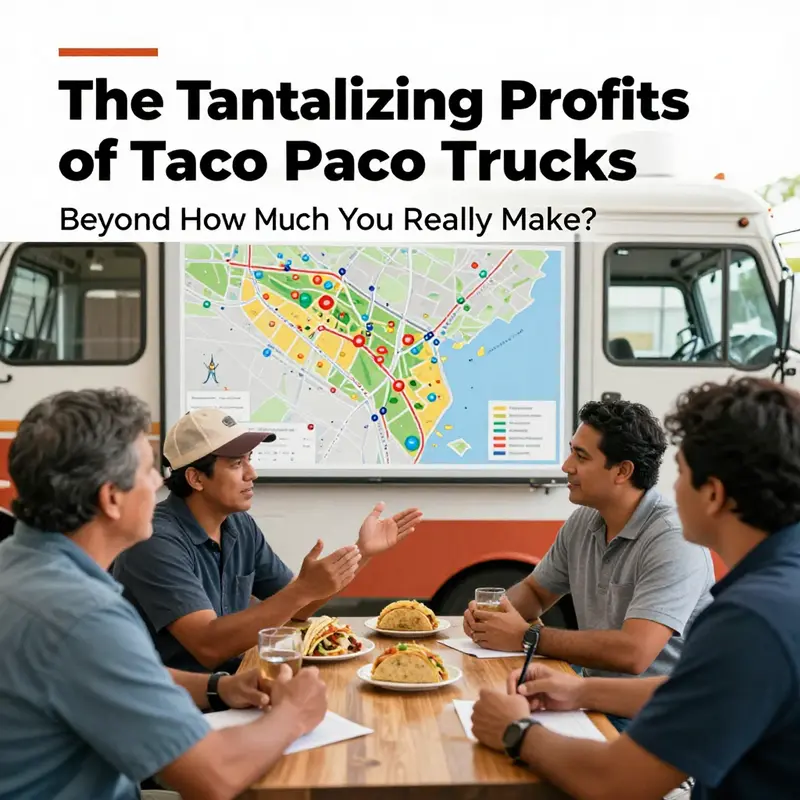
The profitability of a taco truck is a living system, not a simple math problem of price times volume. It unfolds at the intersection of where you park, how you move goods and people, and how you tell a story that customers want to repeat. When operators think only in terms of daily sales, they may miss the quiet mechanisms that push a business from viable to durable. In practice, the numbers can be striking, but they are not random. A well-timed pass through a high-traffic corridor, paired with a lean supply chain and a memorable brand, can amplify every dollar earned and every hour invested. The picture that emerges from industry data and field experience is one of balance: strong location strategy, disciplined cost control, and a brand that brings customers back long after their first bite.
Consider the scale of opportunity in dense urban centers and busy event hubs. In peak seasons or on weekends, a successful taco truck in a high-traffic location can generate between $1,500 and $3,000 per day. Those daily figures translate into robust monthly revenue if the operation runs 20 to 25 days a month. On the surface, the math looks straightforward: more days plus more customers equals more revenue. Yet the real challenge lies in converting revenue into real profitability. Even with attractive gross margins—historically around 60% to 70% for well-managed food trucks—the bottom line depends on controlling a broad menu of costs: fuel, vehicle maintenance, ingredients, permits, insurance, and wages. When these inputs are handled with care, the range of net profits widens significantly. A well-run taco truck can realistically net $1,500 to $5,000 per month, while the best operators in bustling markets or at large festivals may push past $10,000 in net profit per month. The disparity across operators is not a mystery; it reflects the dynamic interplay of location, branding, and operations that this chapter unpacks.
The geographical variable is the most visible dial. Loots and colleagues underscore that accessibility matters as much as the food. A truck parked near a dense office complex or a construction site can benefit from built-in foot traffic and longer dwell times. By contrast, a truck in a hard-to-reach corner, no matter how excellent the menu, risks sparse lines and shorter customer visits. Parking convenience translates into convenience for the customer, and convenience translates into repeat business. This is not merely about proximity to a street corner; it is about creating a predictable, walk-up experience where customers can find you without hunting. The operating hours have to align with the rhythms of the community you serve, whether that means lunch crowds near office parks, dinner winds through residential blocks, or weekend marches through festival grounds. The zoning and permit landscape matters just as much as the menu, because a truck can attract a steady stream of patrons only if it meets the local rules that govern where, when, and how it can operate. A mismatch here can cap growth long before branding or menu design are fully tested.
Brand identity is the second big lever. In markets crowded with vendors offering similar fare, a distinctive name, a visually striking vehicle, and a consistent social presence can create a durable advantage. A brand tells a story that customers remember and share. It signals what kind of experience to expect and builds trust over time. In practice, differentiation is not merely about a clever logo or a catchy slogan; it is about delivering a consistent dining experience that guests can count on. This includes ingredient quality, flavor authenticity, and the pace of service. A truck that consistently serves flavorful, fresh food with efficient service earns more than one-off praise; it earns repeat visits and word-of-mouth referrals. Loyal customers reduce the need for constant new-customer outreach and can sustain a business through slower periods.
The quality and consistency of ingredients matter for both taste and margins. Fresh produce, reliable proteins, and well-managed portion control drive both customer satisfaction and cost discipline. When a truck achieves consistent cooking times and portion sizes, it minimizes waste and shortens line times. Speed of service matters, too. Crowded lines can deter potential customers from waiting, while a smoothly paced flow can turn a 5- to 7-minute queue into a positive, almost enjoyable experience. A positive dining experience extends beyond the plate. Friendly, responsive customer service reinforces brand loyalty and creates a sense of community around the truck. In the best cases, a vendor becomes part of the local food culture, a familiar stop that people seek out on a weekly basis.
From the financial side, the story is a reminder that profit is a function of operating discipline as much as appetite for growth. Gross margins of 60% to 70% reflect the leverage in food-cost management and menu design. Yet the real test sits in the expense ledger: fuel, maintenance, packaging, ingredients, permits, insurance, and labor. The ability to manage these costs without sacrificing quality is what separates the sustainable operation from the ephemeral one. It helps to view profitability as a system rather than a single snapshot. A truck with a second unit, a pop-up event, or a corner stand can expand capacity without a linear increase in costs, provided the scale is managed carefully and the brand is coherent across channels. This is where data analytics becomes a practical tool. Monitoring peak sales times, identifying the most popular menu items, and understanding customer demographics allows operators to refine inventory, tailor staffing, and select future locations with greater confidence.
Growth strategies—such as adding another truck, venturing into a brick-and-mortar location, or extending the product line—must be planned with budgeting discipline. Effective budgeting means tracking all expenses and evaluating the return on investment for equipment, permits, insurance, and staff. Maintenance investment is not optional; neglect here can produce expensive downtime and loss of customers who expect reliability. In a business that thrives on consistency, the cost of quality maintenance is often lower than the price of unexpected breakdowns or supply interruptions. Growth planning also means embracing the reality of seasonality. Some markets spike during tourist seasons, stadium events, or local festivals, while others rely on steady daily traffic from nearby workplaces or residential neighborhoods. The most successful operators synchronize procurement and staffing with these cycles, ensuring the truck remains responsive to demand without bloating overhead during off-peak periods.
A practical takeaway is to view profitability as a mosaic of interdependent decisions. Location choice, accessibility, and permits set the stage for revenue opportunities. Branding and customer experience determine how much of that revenue translates into sustained profits. Ingredient quality and service speed convert orders into repeat visits. Financial management and scalability define how those profits accumulate into longer-term wealth and resilience. The numbers from industry observations illustrate this pattern: a high-performing urban truck can reach the upper end of daily revenue during peak times, and even a modest but well-run operation can generate meaningful monthly profits when cost control and customer loyalty align. When all pieces work together, a taco truck can be more than a seasonal curiosity; it can become a durable brand with a steady cash flow that supports growth and stability.
Within this framework, the path from potential earnings to realized profits rests on practical choices. It means selecting a location that offers reliable access and parking that invites casual visits while supporting efficient operation. It means crafting a brand story that differentiates the truck in a crowded market and reinforces that story with consistent food quality and service. It means building a lean cost structure that leaves room for investment in equipment, staff, and future expansion. And it means using data—sales timing, item popularity, and customer demographics—to inform decisions about inventory, staffing, and where to position the next rollout. Taken together, these elements form a blueprint for profitability that transcends the simple question of “how much can a taco truck make.” They address the real question: how can a taco truck make money consistently, season after season, year after year?
For operators who want to connect theory with practice, the narrative above has a practical through-line. If you are in the early stages, focus on the basics that are often overlooked: locating near accessible parking with predictable traffic, understanding local permitting requirements, and building a brand that invites loyal customers to return. If you already operate a truck, examine your data. Identify your peak times, the items that drive the most revenue per dollar spent, and the customer segments that visit most frequently. Use that insight to adjust pricing modestly, refine portions, and tailor promotions that reward repeat visits. The real payoff comes not from a single moment of high sales, but from a consistent pattern of traffic, service quality, and disciplined spending.
To help connect these principles with concrete resources, consider exploring content that speaks directly to choosing the right equipment and setup. A well-chosen vehicle and layout can improve workflow, speed, and customer perception, making it easier to deliver a reliable product at scale. For further guidance on selecting the right configuration, see the article Choosing the right food truck.
External reference: For a broader scholarly perspective on the sustainability and profitability of mobile food ventures, see https://doi.org/10.1016/j.jce.2024.03.002
Final thoughts
In conclusion, the potential earnings of a taco truck can be incredibly rewarding, but it all hinges on factors like location, operational efficiency, and brand strength. Daily revenues can soar, and with smart planning, monthly profits can accumulate to impressive levels. Whether you’re just starting your taco venture or looking to boost your existing business, understanding these figures can pave the way to success. So, grab those tortillas and start planning your profitable taco truck journey!