
Are you a taco-loving entrepreneur dreaming of serving your delicious creations at private parties? If you’re gearing up to ignite taste buds at weddings, birthdays, or corporate events, there’s more to consider than just your secret taco recipe! By diving into the legal implications of selling food at private gatherings, you ensure not just deliciousness but compliance and success. Just like a perfectly crafted taco, understanding food permits is key for those operating taco trucks. From the essential permits needed to avoid legal pitfalls to the financial consequences of ignoring regulations, this article will equip you with everything you need. So, let’s taco ‘bout the essential nitty-gritty of thriving in the mobile food scene while keeping your taco dreams intact!
Behind Private Parties: The Hidden Legal Tightrope of Selling Food Without Taco Truck Permits
To understand the legal terrain, it helps to describe the typical permit landscape and how it applies to private gatherings. Most jurisdictions require at least a basic framework: a license to operate a food service business within the jurisdiction, a permit or exemption for temporary or mobile service at events, proof that food handlers have appropriate training, evidence of liability insurance, and an inspection of vehicles and equipment used to prepare and hold food. The exact names and combinations differ from place to place, but the underlying concept is consistent: authorities want assurance that temperatures are controlled, cross-contamination is prevented, sanitation is maintained, and that a business can be held accountable for the safety of the food it serves. Even if the venue itself is privately owned, the act of selling food to guests makes the operation a regulated service in the eyes of health departments. In many cases, front-of-house operations like a taco station or a mobile kitchen will be treated as a temporary food service operation, requiring a temporary permit for that event or a more comprehensive mobile vendor license if the activity is recurring or long-term. Without such documentation, a private party can become a regulatory flashpoint, and a few hours of festive cooking can turn into a site for fines, mandatory shutdowns, or even criminal scrutiny.
In practice, three core elements commonly shape the decision to require permits. First, the activity must be evaluated as food preparation for public consumption, rather than a strictly personal or family meal. Second, the scope includes the handling and serving of food to multiple guests, not limited to the host’s immediate circle. Third, many regulatory bodies look at whether the operator has a dedicated commercial setup—such as a vehicle or a fixed kitchen—that moves between events, rather than a makeshift kitchen inside a private home. When these conditions align with a regulatory framework for food service, permits such as temporary food service licenses or mobile vendor permits are not optional ornaments; they are prerequisites for legal operation. The consequences of skipping them can be immediate and examplary: a shutdown during service, fines that can escalate quickly if the event continues, and in some cases civil or criminal consequences. The concern is not merely about paperwork; it is about public health safeguards that ensure the food you serve has been prepared and handled in a way that minimizes risk to guests.
To bring this to a more concrete level, consider how different jurisdictions approach this issue. In several states across the U.S., the rule is clear: if you provide food to the public, you are operating a food service business and should be registered with the local health department, even if the setting is private. California, New York, and Texas, among others, typically enforce that any direct food sales to guests—whether on a public street or a private lot—must comply with hygienic standards, including but not limited to food handler licensing, proof of liability insurance, vehicle or facility inspections, and a documented food safety plan. The specifics matter, but the pattern is recognizable: the venue does not automatically absolve the operator of regulatory duties. In some regions, there is a pathway for temporary events, designed to facilitate one-off private celebrations or smaller gatherings, but these pathways require advance application and must be aligned with sanitary criteria and safety expectations. The bottom line is that private settings do not automatically immunize a vendor from regulatory oversight; instead, they may trigger a different kind of permit process that exists to cover special, short-term, public-facing operations.
The practical implications extend beyond permits. If your operation involves staff, electricity, refrigeration, or the handling of perishable ingredients, the regulatory net widens. You may be required to demonstrate a food safety training credential for each person who handles food, as well as to show that equipment and facilities meet sanitation and safety standards. Insurance emerges as a critical line of defense for both the operator and the host. Liability coverage is a familiar requirement for commercial ventures; at a private event, it becomes a hinge issue: does the host’s personal homeowners policy or the venue’s liability coverage extend to a mobile food service operation, and does it cover the specific activities you are undertaking? For many hosts, the insistence on vendor insurance grows directly from risk management, especially when events involve children, alcohol service, or complex menus that include raw or high-risk ingredients. The operator will often be expected to carry general liability coverage, and sometimes products liability for the food itself. Without this protection, a claim arising from a cut, burn, allergic reaction, or spoiled food can quickly become a host of legal and financial complications that ripple through the event.
Beyond permits and insurance, there is the everyday discipline of food safety. The chain of custody for ingredients, proper cold-holding temperatures, hot holding for ready-to-eat items, and safe food handling practices are not negotiable. The same basic standards that govern a commercial kitchen apply when you are running a taco station at a private party. A failure in sanitation or temperature control can create a serious health risk for guests and invite swift regulatory attention. In many regions, the health department can require corrective actions on the spot, demand a stop-work order, or order the vendor to end service until conditions are corrected. This is not merely about avoiding penalties; it is about preventing illness at gatherings where friends, families, and coworkers come together. Even the perception of noncompliance can erode trust and complicate future opportunities for private-event catering.
Operational realities also matter. If a private event uses electricity from a generator or public utility, if you rely on prepared components that are kept warm in a chafing dish, or if you are transporting perishable items, you have to demonstrate that your setup mirrors the safeguards of a regulated kitchen. This means a clear plan for cold and hot storage, waste disposal, handwashing, and facilities for utensil cleaning. It also means that your staffing arrangements must reflect labor laws and safety practices for workers who might be exposed to equipment, hot surfaces, and sharp tools. All of these elements feed back into permit eligibility. The more a private event resembles a conventional food service operation—frequent customer contact, payment handling, and ongoing food preparation—the stronger the case for requiring formal permits.
If, after weighing these factors, you still want to proceed with selling at a private event, there are practical steps to take that reduce risk. Start by contacting the local health department or the city or county licensing office to confirm which permits apply to your specific situation. Ask about temporary event permits as an option and the prerequisites associated with them. Gather documentation that demonstrates your readiness: a formal food safety plan for the event, proof of food handler training for staff, and appropriate insurance coverage. Prepare a detailed description of the equipment you will use, how you will monitor temperatures, what menu items you will offer, and how you will manage waste and sanitation during the event. If you are hosting teams or subcontractors, ensure there is a clear line of accountability for compliance with food safety and labor laws. Of course, the host can play a role in coordinating with vendors and ensuring the venue’s policies are aligned with regulatory requirements—but the legal obligation to comply generally rests with the operator who is selling the food.
For those who want a broader sense of how this plays out in the industry, see the practical discussions around launching and operating a mobile food business. There, issues such as licensing, inspections, and safety plans are explored in depth, and the emphasis remains on treating private events as part of a regulated ecosystem rather than as exemptions from it. To connect this chapter to the larger conversation about starting a food venture, you can read more about the essential steps for launching a food-truck operation in the linked overview: Legal steps for launching a food truck.
Finally, the international perspective helps frame the logic. Global health authorities emphasize that private or public contexts do not automatically remove the obligation to obtain permits when food is produced for public consumption. The New Zealand government’s guidance on private and public food service outlines several permit categories, including temporary event licenses, and underscores that compliance is not location-dependent but activity-dependent. The underlying principle is straightforward: selling food to others creates public health responsibilities that must be met, regardless of the setting. For U.S. readers and others who want to cross-check this framework with a well-established regulatory resource, reference material from public health agencies on mobile and temporary food vending offers useful benchmarks for how permits and safety standards are typically scoped and enforced. External references like these provide a realistic map of expectations and emphasize that the safest course is to plan thoroughly before selling at any private event.
External resource: FDA guidance on mobile food vending explains key regulatory expectations for food safety, equipment, and inspection norms as mobile vendors operate under varied local authorities: https://www.fda.gov/food/fda-food-safety-modernization-act-fsma/mobile-food-vending
The Hidden Permit Gate: Navigating Health Rules for Taco Trucks at Private Parties
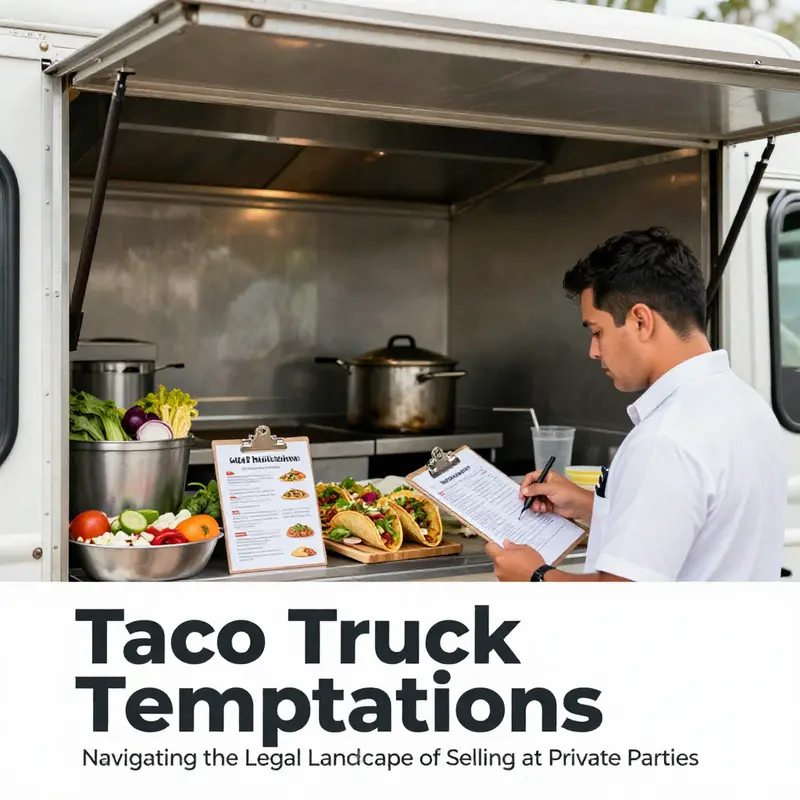
Private parties often feel like intimate gatherings—backyard bars, rented halls, and curated menus designed for close friends and colleagues. Yet for mobile food vendors, the door to serving at weddings, birthdays, or corporate gatherings does not swing open simply because the invitation is private. Health departments treat the sale of food at any public-facing event with a standard set of expectations designed to protect guests who assume the food is safe. The logic is simple but robust: if a taco truck or any mobile kitchen offers meals to the public, it must meet the same safety requirements that apply at a street fair or a market stall. The venue type—private or public—doesn’t automatically erase the duty to comply. This is the practical reality behind the scenes where health inspectors, insurance brokers, and safety plans converge with event coordinators and culinary operators. The question, then, is not whether you can sell at a private party, but under what conditions, with which permits, and how you prove you meet those standards before you say yes to a booking.
Most jurisdictions require some form of regulatory authorization for mobile food vendors, and the scale of that authorization can be surprisingly broad. A valid Mobile Food Vendor Permit or its local equivalent is the central credential; without it, even a well-meaning operator risks being shut down and facing penalties mid-event. But a permit is not a single piece of paper. It often implies a chain of compliance steps: a food handler certification for the people in the truck, proof of liability insurance, a vehicle inspection documenting sanitation readiness, and a food safety plan or HACCP plan that outlines how you control risks from sourcing to service. When a private event is the setting, the burden does not shift to the host. The operator is the one responsible for maintaining licensing, keeping records, and ensuring that all standards are in place for the duration of service.
Private events create a curious tension. On one hand, clients want the convenience and flavor of a mobile kitchen at a customized venue, tailored menu, and flexible service. On the other hand, health authorities want consistent oversight to prevent outbreaks and safeguard guests who may have varied tolerance for risk. In many places, private event organizers do not assume regulatory compliance for you; they hire you to comply with the rules already on the books. The consequence of noncompliance can be immediate and painful: a citation, a fine, a temporary shutdown, or a denied service for the night. Some jurisdictions do offer special temporary event permits designed to streamline licensing for one-off gatherings, but those are not universal, and they require prior planning and an inspection. If you want to operate without delay on the booked date, you must align with those processes rather than hope a loophole exists.
Disparities by location are the practical reality. In large metropolitan areas, the health department may publish precise criteria for the type of mobile kitchen that is permitted at private venues. In cities like Los Angeles or San Francisco, for example, there are explicit expectations around water supply and handwashing, waste disposal procedures, and detailed record-keeping for food sources. A truck might be required to have a dedicated handwashing station with running water on-site; a separate area for hot and cold holding; and a setup that permits easy cleaning and sanitation between batches. Regulations frequently demand that equipment be certified or meet specific standards; there can be limits on where trucks may operate, particularly around schools, parks, or other sensitive locations due to traffic and environmental concerns. The normal pattern is that a private event does not grant you a carte blanche; it folds into a broader framework of public health obligations that apply regardless of the event’s private status.
To illustrate how these frameworks function, the public health guidance that governs outdoor food service becomes a useful anchor. The U.S. Centers for Disease Control and Prevention has published event-specific guidelines to help vendors navigate risks associated with crowd meals, temperatures, and cross-contamination. Core principles appear across jurisdictions: hot foods kept hot, cold foods kept cold, hot surfaces and equipment maintained at safe temperatures, and practices that minimize touching ready-to-eat foods with bare hands. The guidance emphasizes the need for a documented approach to handling perishable items, controlling environmental risks at the service site, and ensuring that people with the freshest memories of a busy night are not left with foodborne illness as the souvenir. While the exact requirements—such as the specific temperatures and the length of time foods can sit out—vary by state and city, the underlying logic is consistent: safety depends on predictable, verifiable processes that can be audited if necessary.
From a practical standpoint, private events present both opportunity and responsibility. The opportunity is to tailor a menu and service experience to a specific client, perhaps preparing signature street-food items that resonate with the guest list. The responsibility is to demonstrate that the kitchen in the truck, the staff on site, and the event footprint all work within a controlled system. That often means that at minimum you will need: a valid food handler certification for you or your crew, a current proof of liability insurance, a recent vehicle inspection that confirms cleanliness and compliance, and an adaptable HACCP-style plan that sets critical control points for cooking, cooling, and serving. It also means having a dependable means of maintaining temperatures during transit and service, a confirmed plan for waste handling, and clear records showing where supplies come from and how they are stored.
Because private events may be hosted at venues with their own kitchen facilities or at pop-up sites with limited plumbing, the specifics can diverge. Some venues will have a contracted caterer or exclusive food vendor; others may simply host a DIY food truck dinner. In the first scenario, you may need to coordinate with the venue’s culinary team and follow its SOPs, which could include additional certifications or separate food safety checks. In the second, your truck must stand on its own: you provide your own handwashing station, your cold storage, your waste management plan, and your staff with the required certifications. Either way, the organizer’s willingness to host does not replace your obligation to be compliant. The onus remains on the vendor, not the host, to verify that all licenses are current and that the on-site setup meets health standards.
From a risk-management perspective, the best practice is to plan for compliance long before a single guest steps onto the event site. Start by identifying your target markets and the types of private events you want to serve. Then map out the regulatory requirements for those locales. Reach out to the local health department or city business licensing office and request a written checklist or pre-approval guidelines for private-event operations with a mobile kitchen. Use this to structure your license and permit timeline, ensuring you secure any temporary-event permissions well in advance. Build a compliance calendar that aligns with event booking calendars, ensuring there is a buffer between a booking and the issuing of permits, along with any required inspections. The calendar should also allocate time for staff training and for the installation or verification of on-site equipment. The more you document up front, the smoother the process when a client asks, “Can you do a private party?” and your answer can be confident rather than reactive.
An important nuance is that the client may assume the host will take care of everything, or they may incorrectly believe the health department covers private gatherings behind closed doors. In truth, the operator’s compliance is public-facing; the guests, the hosts, and the event staff rely on you to have the proper oversight. A transparent approach that communicates licensing status, food safety practices, and a plan for safe service can actually be a selling point. When you can show a prospective client that you hold the required permits, can provide a HACCP plan, and can demonstrate a clean, stable service area, you transform compliance into credibility. It becomes part of the narrative that makes a wedding cake cutting and a street-taco cart feel like a professional, reliable experience rather than a risky afterthought.
To close the loop on what you need to know before a private booking, think in terms of the chain of responsibility rather than the single night. The permit is the anchor; the certifications and documentation are the sails; the on-site practices are the steady wind that carries the service through. Keep your menus flexible and your service footprint adaptable, because some venues will require the truck to park a certain distance from other food stations, or will require you to provide a handwashing sink with approved water supply, or to keep a waste-recovery plan in place. Spending a little time up front clarifies what you can and cannot do and reduces the likelihood of a last-minute conflict when the event schedule is tight and guests are waiting for hot, fresh tacos. There is a practical elegance in approaching private events with this disciplined mindset: you deliver delicious food while preserving public health, and you do so in a way that earns repeat bookings rather than legal warnings.
Alongside the technical requirements, vendors should also consider the client experience. Nobody wants a party interrupted by a sudden inspection or a need to relocate a service window. But turning that risk into a smooth, well-communicated process can set you apart. Offer a pre-event readiness checklist to the client, including where the truck will be placed, what safety measures will be in place, and how long you anticipate service to run. Demonstrate your readiness with written documentation and a calendar that shows inspection dates and permit validity. In this way, the private party becomes not a liability risk to be dodged, but a showcase of professional practice that respects guests as essential stakeholders in the success of the event.
Within this broader frame, it is essential to keep your approach practical. If you want a quick anchor for how to proceed, begin with the simplest path: contact your local health department and request the exact requirements for operating a mobile kitchen at private events. Ask for a clear list of permits, inspections, and training credentials that apply to you. If a temporary-event permit is available, learn its scope, the inspection protocol, and the timeframe for approval. Build a file of your food-safety plan, supplier verifications, and staff certifications that is easy to present to clients and inspectors alike. And remember the difference between a policy and a reality: policy is what should be done; reality is what is enforced. By anticipating enforcement and preparing accordingly, you avoid the double-hit of losing the event and paying penalties.
For practical guidance on equipment standards, licensing readiness, and the broader platform you operate from, consider resources about the right fit for your business. See Choosing the right food truck for a framework on equipment standards and licensing readiness.
External resource: CDC Event Food Safety Guidelines: https://www.cdc.gov/foodsafety/event-food-safety.html
Counting the Cost: The Financial and Regulatory Fallout of Selling at Private Parties Without Permits
Private parties can feel intimate and low-stakes, yet the line between a casual gathering and a regulated food operation remains. When a mobile food vendor serves meals at a private event, public health standards still apply, and the host cannot waive regulatory requirements. Vendors must hold valid permits, a food handler’s license, insurance, vehicle inspections, and a documented food safety plan. Without them, authorities can issue stop-work orders, fines, or license suspensions, with penalties that can accumulate over time and threaten future business. Some areas offer temporary or event-specific permits for private gatherings, but these require advance planning and coordination with the regulator. Even with such options, noncompliance carries insurance and reputational risks that can hurt long‑term revenue through lost opportunities. One practical path is to partner with a licensed caterer or venue that already holds permits, ensuring the guest experience remains intact while compliance stays visible. The bottom line is that permits are not a hurdle to overcome once; they are a prudent investment in reliability, safety, and growth, especially as private events expand the potential market for mobile culinary concepts. Vendors who plan for licensing from the start are better positioned to deliver professional service and avoid disruptive regulatory interruptions, protecting their brand and their bottom line.
Beyond the Backyard: How Local Permits Shape Taco Truck Sales at Private Gatherings
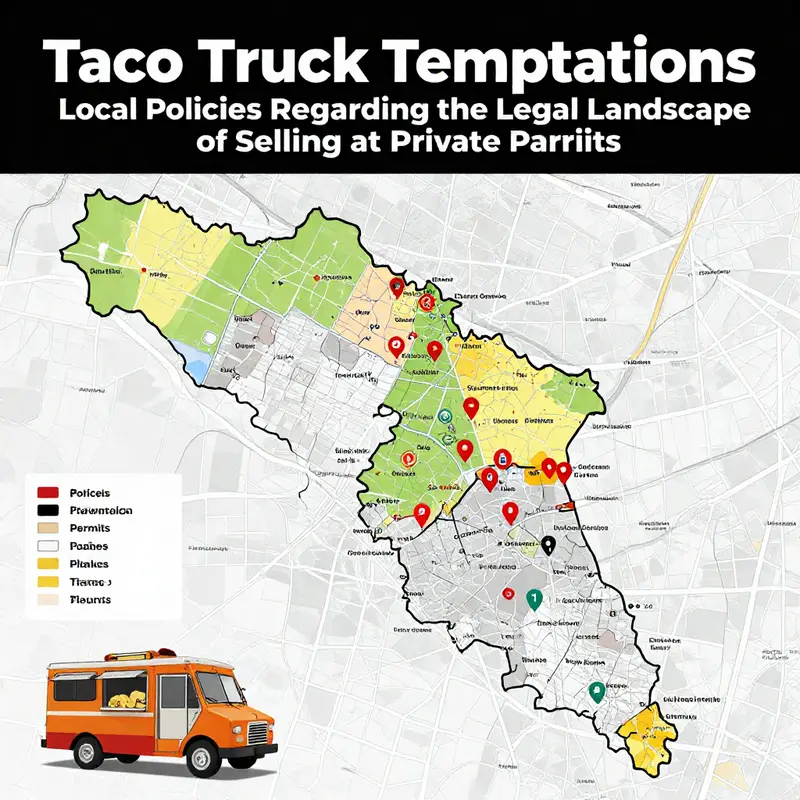
A private taco-night can be a memorable centerpiece, but food vendors operating at private events are still governed by local health and safety rules. Private venues are not exempt from permitting, inspections, or proper food handling practices. In most jurisdictions, mobile food facilities require a valid permit, proof of insurance, and a risk-based plan for sanitation, temperature control, and waste management. Hosts should confirm the vendor’s credentials in advance, request permit numbers and insurance certificates, and verify that the truck meets inspection standards. If a permit cannot be secured for a given date, consider compliant alternatives such as catered service from a licensed kitchen or pre-prepared foods that do not require on-site roaming cooking. By planning proactively, hosts protect guests and avoid penalties, while vendors demonstrate professionalism and accountability.
Behind the Sizzle: Navigating Temporary Event Permits for Taco Trucks at Private Parties
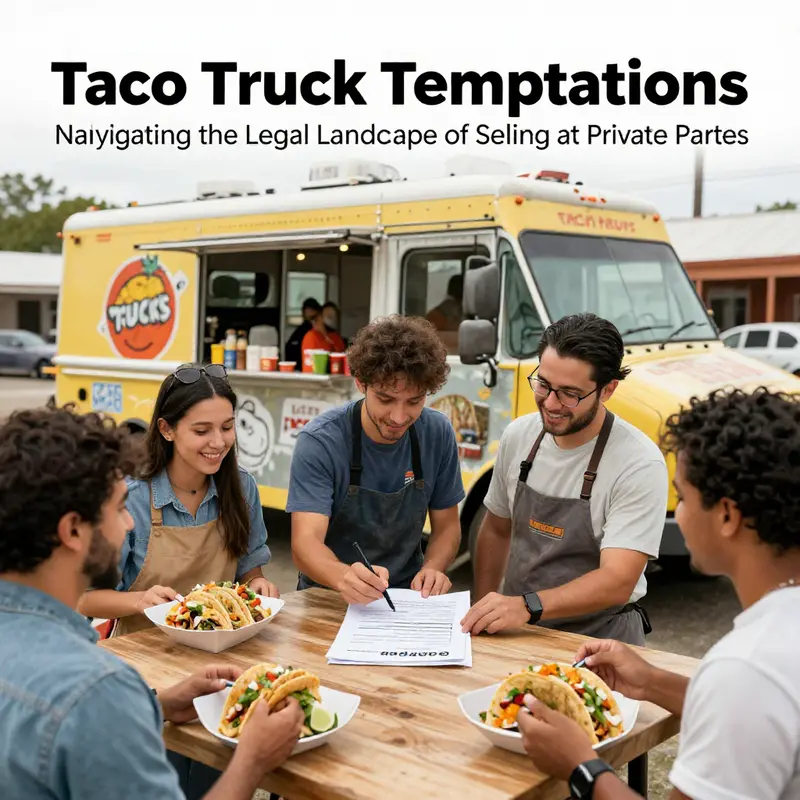
The gleam of a taco truck at a private party can feel like a shortcut to hospitality and hustle. A laughter-filled backyard, a courtyard wedding, or a corporate retreat can look and feel like a personal, offline moment where a vendor simply shows up, plates hot, and serves to guests who have been invited by the host. But the reality lurking behind the steam is regulatory, not decorative. Private events do not automatically exempt a mobile food operation from the same health and safety standards that govern street fairs, plazas, or any place where the public can gather to eat. The idea that a party is a closed, private microcosm often masks a public health responsibility that travels with every bite. In practice, this means that a taco truck looking to cater at a private party typically needs not just a chef with a smile and a skillet, but a legitimate permit framework that proves the operation meets sanitation, labeling, and safety expectations. Without that framework, even the most delicious al pastor or shrimp taco risks interrupting a celebration with a health inspection, a shutdown, or a costly fine. The logic is straightforward: public health agencies exist to ensure that any setting where food is prepared and sold under the banner of a business adheres to baseline practices that protect guests, employees, and the broader community. A private gathering does not erase those obligations; it can intensify them, because the event may involve unfamiliar volunteers, temporary facilities, and variable conditions that complicate risk management. The takeaway is clear: if you plan to sell food at a private party, you are entering a regulated space, and the gatekeepers are regulators who assess your operation against defined standards rather than against the guest list alone.
The practical outline of what must be in place is not complicated in principle, even if it can be in flux in practice. At the core is a Mobile Food Vendor Permit, a credential that local health departments or regulatory authorities issue after reviewing several elements of your operation. This permit typically sits alongside a food handler’s license for staff, proof of liability insurance, a vehicle inspection to ensure sanitation and vehicle compliance, and a demonstrated adherence to food safety protocols—often encapsulated in a formal plan or HACCP compliance. In many places, the event’s location and the nature of the service do not erase these requirements. The vendor bears primary responsibility for compliance, not the event organizer. The consequences of selling without a permit can be immediate and costly: fines, orders to cease service, or even being shut down mid-service. It is not merely a bureaucratic formality; it is a public health safeguard that ensures hygiene, temperature control, cross-contamination prevention, and proper waste management at every service point.
Still, the system is not monolithic. Some jurisdictions offer a degree of flexibility for temporary, one-off occasions through Temporary Event Permits or similar avenues. These permits recognize the sporadic nature of private functions and attempt to streamline the approval process while preserving safety standards. The key is that these are not automatic; they require advance planning and authorization. The path to approval begins with a conversation with the local health department or city licensing office to understand what exactly constitutes a ‘temporary’ event in that jurisdiction, what documentation will be required, and what conditions will be imposed. The differences from one city to the next can be substantial. For example, in cities with dense regulatory frameworks and a heavy burden of inspection, the process may involve a more rigorous review of your menu, sourcing, and staff training. In others, the requirements may be more focused on logistics, such as ensuring there is adequate handwashing facilities, a clean setup for food preparation, and a waste disposal plan that does not spill into a guest area.
A concrete illustration helps translate theory into practice. In a city like Toronto, Ontario, the published guidelines for food trucks and mobile vendors place emphasis on several recurring themes: food safety standards, vehicle sanitation, and operational procedures that keep the service safe in a temporary event setting. The documentation arc typically includes commercial insurance, proof of reliable electrical access or generator arrangements, and a plan for waste disposal and noise control to respect neighboring properties. One recurring practical requirement is to submit a detailed menu for approval, alongside food source verification that demonstrates the origin of ingredients and compliance with food safety standards. Staff training certificates often accompany applications, underscoring the emphasis on human factors in maintaining safe handling and proper cooking temperatures.
The application cadence also matters. The Toronto framework, as summarized in the official city regulations document, advises applicants to begin the process four to six weeks in advance of the event. This lead time helps accommodate the review, any requests for clarifications, site inspections if needed, and the coordination of utilities and access arrangements at the event venue. The documents requested may include a menu, ingredient sourcing information, and evidence that staff have completed relevant food safety training. The emphasis on advance planning is not a mere bureaucratic gatekeeping exercise; it is a practical hedge against last-minute complications that can jeopardize a celebration or force an abrupt service halt. In other words, preparation translates into a smoother experience for the host, the vendor, and, most importantly, the guests who arrive expecting food that is both delicious and safe.
To the person organizing the event, understanding these requirements should be part of the planning checklist rather than an afterthought. An organizer who assumes responsibility for “getting around the permits” is stepping into risky territory. In most jurisdictions, the liability for compliance lies with the vendor, but many hosts use their event contracts to ensure compliance language is included and that the vendor’s regulatory status is verified before service begins. The negotiation typically covers who pays for permit fees, what happens if a permit is delayed, and what contingency plans exist if the venue cannot accommodate a temporary food setup because of sanitation or electrical constraints. A well-constructed contract will also address what happens if an inspection occurs during the event and whether the vendor can operate while pending approval in a limited capacity, or if the event must be halted temporarily until compliance is confirmed.
For vendors eager to operate at private functions, there is a practical rhythm to balance ambition with compliance. The first step is a proactive assessment of the venue’s feasibility from a regulatory standpoint. This includes confirming whether the site can support the required utility needs, whether there is a suitable area for a handwashing station or sanitizing station, and how waste will be managed. Vendors should prepare a clean, concise dossier that can be shared with the permitting authority when necessary: a detailed menu, expected guest count, ingredients sourcing, a staff training plan, insurance certificates, vehicle sanitation checks, and a clear hazard analysis that outlines critical control points during preparation and service. The goal is to present a credible, low-risk operation that aligns with local expectations for temporary food service.
For individuals who want a quick reference point about the legal roadmap, a practical route is to consult resources that outline the steps to launch and operate a food truck legally. A stable starting point is to review the legal steps for launching a food truck, which explains how permits fit into the broader licensing landscape and what to prepare before hitting the road or the private event scene. This kind of guidance helps frame the process as a series of verifiable milestones rather than an opaque maze of forms.
Even with well-documented processes, the landscape remains adaptive. Cities adjust requirements in response to public health findings, evolving safety standards, and changes in staffing or infrastructure at event venues. Those who intend to serve tacos at private events should stay connected to local health authorities, attend any workshops or webinars they offer for temporary event vendors, and keep a running file of updated documents. As a best practice, vendors should routinely review their HACCP plans, conduct internal audits of kitchen operations, and verify that all staff certifications remain current. The practice of maintaining readiness minimizes the risk that a single oversight could derail a party and potentially tarnish a business’s reputation.
Ultimately, the decision to serve at a private party while staying within the bounds of regulatory requirements hinges on respect for the framework, not just appetite for a busy night. The public health system is designed to ensure that the joy of sharing food does not come with an unanticipated cost in safety. The host’s guest experience benefits when the vendor operates transparently, documents compliance, and communicates clearly about what is needed to keep everyone safe and satisfied. In places where permit pathways are well understood, and where organizers and vendors engage in early dialogue, the chance of a smooth, memorable event increases markedly. In places with evolving rules, the key remains the same: begin early, document thoroughly, and remain adaptable to practical constraints without compromising safety.
For readers who want to explore a concrete entry point into this regulatory terrain, consider exploring the practical steps for launching a food service operation and the specific permits that are likely to be required for temporary, event-based service. This context helps you see how private-party catering fits into the broader licensing landscape and why compliance is a non-negotiable foundation of a successful, legally sound enterprise. And for those who want a broader, authoritative reference beyond local guidelines, the U.S. FDA’s Mobile Food Vending guidance provides a nationwide framework highlighting the essential safety and regulatory expectations that inform state and local programs. You can review the official FDA guidance here: https://www.fda.gov/food/fda-food-safety-modernization-act-fsma/mobile-food-vending.
If you’re planning to host or operate a taco truck at private gatherings, a pragmatic takeaway is this: treat the private party as a regulated event with a clear checklist rather than a loophole. The stronger your documentation, the smoother the process and the happier your guests will be. And when in doubt, lean on the authority of local health departments and the practical roadmaps they offer. They exist to help you serve food safely, enjoyably, and without interruption, whether the celebration is a backyard wedding, a corporate retreat, or a milestone birthday. For a concise overview of how some operators navigate the legal steps in their region, you can consult the broader, experience-based guidance available at the legal steps for launching a food truck. This resource, while broad, helps frame the right questions to ask early—questions that save time, reduce risk, and keep the party on track.
In sum, the sizzle you taste at a private party should come from flavor, not from a loophole. The permit, the paperwork, and the plan are the quiet sous-chefs that make the experience reliable and lawful. When done right, temporary event permits become a natural part of the hospitality equation, enabling memorable celebrations without compromising safety or compliance. The more business operators and hosts collaborate in this regard, the more likely it is that private parties can savor board-approved, regulator-approved culinary moments that feel effortless but are in fact well regulated beneath the surface.
Internal link reference: For a practical roadmap and more on the legal steps for launching a food truck, explore this guide: legal steps for launching a food truck.
External resource: For foundational public health context on mobile vending, see the FDA guidance: https://www.fda.gov/food/fda-food-safety-modernization-act-fsma/mobile-food-vending
Final thoughts
In the exciting world of taco trucks, understanding and complying with permits is essential for your business’s success and longevity. Selling at private parties without the right permits may seem harmless but can lead to significant legal and financial repercussions. The taco industry is vibrant, filled with passion—ensure your operation thrives by respecting health regulations, recognizing local policies, and securing any necessary temporary permits. Now, armed with this knowledge, go forth and serve those tantalizing tacos, all while keeping your business on the right side of the law!