
If you’re itching to serve up sizzling tacos at your next event, renting a taco food truck might just be your golden ticket! It’s not just about rolling out delicious dishes; understanding the costs involved is crucial for your taco venture’s success. Pricing dynamics can vary wildly based on several factors, and so can the availability of food trucks in your area. Our exploration begins with the nitty-gritty of what influences rental prices and the comparisons you need to make to ensure you maximize your profits while serving the tastiest tacos. Together, we’ll navigate through regional variations, understand the economic implications of renting a taco truck, and arm you with the knowledge necessary to make your taco dreams a delicious reality!
Pricing in Motion: Decoding the Real Cost of Renting a Taco Food Truck
Renting a taco-focused food truck is an appealing route for aspiring cooks, seasonal businesses, or brand activations that want the wow factor of a mobile kitchen without tying up capital in a full purchase. But the question—how much does it cost to rent a taco food truck?—doesn’t have a simple, one-size-fits-all answer. The price you encounter on a quoted contract will hinge on a cluster of interlocking variables, each tugging the final number in a different direction. The core idea that emerges from recent market observations is straightforward: rental prices are shaped as much by how you intend to use the truck as by the truck’s own hardware, its power and water needs, and the environment in which it will operate. In other words, the cost is not merely about a daily rate; it’s about the entire ecosystem that supports a mobile kitchen on the move.
From a high level, the rental landscape rests on three broad planes. First is the beginning point—the vehicle itself. Even without naming specific models, you can think of the truck as a fully equipped kitchen on wheels. The chassis, the cooking surfaces, the refrigeration, ventilation, waste systems, and health-and-safety compliance all factor into what a rental company has to preserve and deliver. That package becomes the anchor of any quote, because it defines what you can cook, how efficiently you can cook it, and what regulatory hurdles you’ll need to clear to serve food at events. As of the mid-2020s, the up-front investment that goes into these mobile kitchens has shaped ongoing operating costs in meaningful ways. When a unit carries more robust equipment or newer technology, the rental price inevitably climbs, but the payoffs are a more reliable service, greater efficiency, and better consistency across a busy service window.
Second is context—where you plan to deploy the truck and for how long. Location and event type exert a powerful pull on rates. In bustling urban cores or at prestigious festival sites, demand is high, and you’ll see premium pricing for the privilege of access, space, and on-site support. For corporate events, weddings, or multi-day festivals, the price per day can move up, fueled by the need for extended staffing, power reliability, and waste management. In contrast, a routine weekday setup at a low-traffic area may command a steadier, lower rate. The mobility that makes a taco truck so appealing—its ability to park, set up, and deliver on-site service—also expands the logistical footprint: you may need comprehensive parking coordination, extra space for maneuvering, and a more complex permitting or security plan. All of these add-ons show up as line items in a quote, shaping the total once all the pieces are tallied.
The third plane is the truck’s grade and technical profile. A newer, higher-end unit with advanced refrigeration, energy-efficient appliances, precise temperature control, and well-tuned ventilation can deliver crisp execution and faster turnarounds. Those capabilities translate into higher rental prices but also lower risk of service interruptions, keeping operations smooth through peak demand. Conversely, a more basic or older configuration may come with a lower daily rate, but you’ll trade some reliability and capacity for that savings. The customization layer—branding elements, tailored kitchen layouts, or specialized equipment—adds value and tends to push pricing upward, as it requires more planning, transit, and setup time.
In practice, most rental agreements also carry non-negotiable base costs that every renter should anticipate. A security deposit is common, intended to cover potential damage and ensure the vehicle is returned in good condition. There is typically a minimum rental duration, which helps the provider justify moving equipment through a predictable pipeline and reserves a block of the truck’s calendar for the renter. Then there are delivery and pickup charges, especially if the site is hard to access or requires a dedicated driver to bring the unit to a defined location. If the truck needs to be fueled, cleaned, or left in a particular serviced state after use, those fees may appear as post-rental cleaning or fuel surcharges. All of these components can combine into a single day’s invoice in a way that feels disproportionate if you’ve not prepared for them ahead of time.
Beyond these structural elements, many renters discover that the economics of a rental are more forgiving when viewed through the lens of a well-scoped event plan. If you’re coordinating a multi-day festival or a citywide promotional tour, you may negotiate a bundled rate that includes setup and teardown time, a dedicated technician, and a stable power supply, which can yield savings relative to booking those elements à la carte. If you’re running a one-off pop-up at a farmers market, the equation shifts toward lower overall cost but with tighter performance expectations—your window for customer service is compact, and any hiccup affects more customers in a shorter span. In both cases, transparency about what is included in the rental price—whether it covers power, water, waste disposal, sanitation, and permit coordination—helps you compare apples to apples rather than chasing hidden or duplicated charges.
Guidance from industry observers consistently points to a practical starting approach: begin with a clear scope of your event needs before you solicit quotes. Document the date range, daily operating hours, the expected guest count, and any on-site requirements such as electrical output, plumbing connections, or waste management. Decide if you will supply staff or rely on the rental partner to provide cooks and service personnel. Determine whether you’ll require ancillary services such as point-of-sale integration, menu boards, or mobile payment processing. This upfront scoping not only clarifies your own budget but also minimizes back-and-forth that can inflate quotes with services you don’t actually need. In a market where price tags can swing with a few knobs turned, a well-defined brief keeps proposals aligned with your real needs and prevents drift toward over-engineered solutions.
A helpful way to think about the rental decision is to compare the total cost of ownership for a given period against the cost of a high-quality, short-term rental for a targeted event. You may find that a lean, well-managed rental yields a lower monthly burden and less ongoing risk than purchasing a vehicle and managing insurance, maintenance, and storage. Conversely, if you anticipate frequent use or ongoing deployments—season after season—the cumulative cost of rentals can approach or exceed a financing or leasing plan for a properly chosen unit. The arithmetic isn’t always straightforward, but the principle is simple: rental pricing isn’t just a daily fee; it’s a reflection of usage frequency, equipment capability, support services, and the regulatory and logistical landscape that accompanies mobile food service.
From a practical standpoint, renters who want to maximize value should inquire about the following elements when obtaining quotes. First, ask what is specifically included in the base rate: is there a separate hourly component, or is this a flat daily charge? Second, confirm the minimum rental duration and any penalties for early return or extensions. Third, request a detailed breakdown of additional line items such as setup/breakdown labor, transport, fuel charges, and any service or cleaning fees. Fourth, clarify what is covered by insurance and what the renter must provide, and ensure that health and safety compliance is aligned with the event’s requirements. Fifth, ask about peak-season surcharges and whether the provider offers a fixed-price option during high-demand periods. Finally, inquire about weather-related contingencies and cancellation policies, because mobile culinary operations live at the mercy of the elements and event changes. These questions—paired with a thorough scope—will help you navigate a landscape that can feel fluid and unpredictable yet remains anchored to a discernible logic: price rises with capability, coverage, and reliability, and falls with simplicity, predictability, and scale.
The research results for this chapter emphasize three core ideas. First, the initial investment in a mobile kitchen drives operating economics; higher-quality equipment and robust compliance support contribute to higher rents but also to more consistent, safer, and faster service. Second, the site and event context—urban density, venue prestige, audience size, and the duration of engagement—has a disproportionate impact on rental pricing. Third, the unit’s technical specifications and customization carry significant weight; better efficiency, larger capacity, and more sophisticated climate control justify higher rates, while older or simpler configurations tend to be more affordable but may constrain performance. These conclusions align with the broader industry counsel that the most reliable way to secure fair pricing is to engage directly with local rental providers, request formal proposals, and compare apples to apples using a consistent evaluation framework. For readers seeking an authoritative technical frame, manufacturers’ and industry reports offer guidance on what constitutes a modern mobile kitchen’s essential baselines and how those baselines influence cost structures over time.
If you want a concrete path to anchoring your decision in a single narrative, start with a decision framework that centers on whether you need on-site fabrication and live-fire cooking at scale, or whether you can achieve your goals with a more compact, energy-efficient setup and limited staffing. A larger, fully equipped unit may be necessary for multi-day festivals or high-volume launch events with complex menus, while a smaller, simpler configuration can deliver a lean presence that still captures the excitement of a taco concept for daily pop-ups. As you explore quotes, remember that the value proposition isn’t only about the price tag. Reliability, speed of service, ease of setup, and the ability to scale up to different venue types all affect the total experience for both operator and customers. In a market where every event is a performance, the cost of renting a taco food truck is really the price of delivering consistency, safety, and flavor in a mobile space.
For readers interested in the broader decision process that includes selecting the right hardware and layout, you may find it useful to review guidance on choosing the right food truck. Choosing the right food truck provides a framework for evaluating layouts, equipment sets, and service capabilities that feed directly into rental pricing discussions. This lens helps ensure that your rental inquiry aligns with a realistic plan for cooking, serving, and entertaining guests, rather than chasing a hypothetical ideal that may sit beyond budget in practice.
In terms of external context, the field benefits from ongoing technical information and industry benchmarks that help ground pricing conversations in solid data. For a technical overview of how commercial kitchens are designed and regulated, consider consulting established resources that describe the specifications and compliance expectations for mobile food operations. Such references can help you translate conversation with rental providers into concrete, testable requirements for power, ventilation, sanitation, and safety. This approach reduces surprises and supports a negotiation posture that focuses on the essentials—reliability, service quality, and the ability to meet your event’s exact needs.
External resource: https://www.chevrolet.com/commercial
Through this lens, the journey from interest to quotation becomes a practical exploration rather than a guessing game. You move from a general desire to test a taco concept on wheels to a quantified plan with defined service expectations, a clear event calendar, and a priced agreement that reflects both the vehicle’s capabilities and the environment in which it will perform. The chapter’s central takeaway is that rental pricing is a function of use, capacity, and consequence—the more you demand of a mobile kitchen, the more the price accommodates those demands. Yet when you pair careful planning with credible quotes, you can secure a rental that delivers flavor, efficiency, and reliability without paying a premium for features you won’t utilize. With that mindset, you’re positioned to navigate the market with clarity, leverage, and a practical sense of what it takes to bring a taco experience to life on wheels.
Renting a Taco Truck in a Crowded Market: Costs, Comparisons, and a Roadmap to Launch
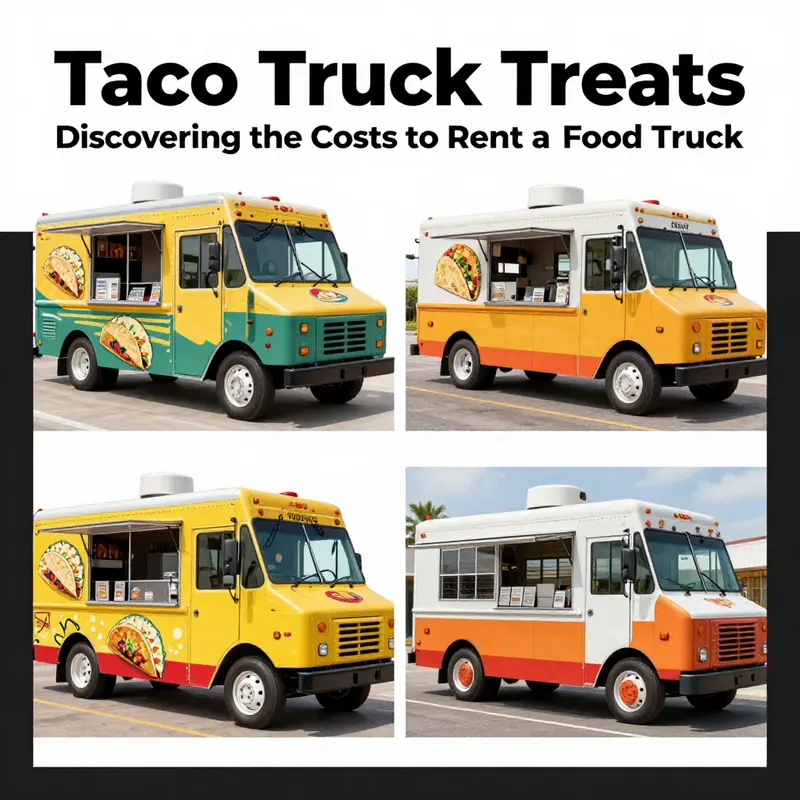
Renting a taco truck in the current market is more a study in tradeoffs than a single price tag. The sticker price you see for a rental can hinge on geography, the size and outfitting of the unit, and how long you need it. In practice, the market shows taco trucks—fully equipped for cooking—pulling monthly rental rates roughly in the range of one thousand to three thousand dollars. The variance is big enough that two operators across the same city can sign two very different contracts. The difference often comes down to the level of equipment (grill types, fryer count, refrigeration, ventilation), the power and water hookups required, and whether the rental package embeds routine maintenance, cleaning, and replacement parts. The picture becomes clearer when you compare taco rentals to other mobile kitchens, because it reveals where the taco format sits in the overall mobile-restaurant ecosystem and why those price signals exist in the first place.
A useful way to anchor expectations is to look at comparable mobile kitchens. Mobile coffee trucks, which usually lean on simpler menus and gentler health-safety requirements, tend to rent for about eight hundred to two thousand dollars a month. Fast-food trucks—think burgers or fried chicken with more complex cooking lines—edge higher, commonly between one thousand five hundred and three thousand five hundred dollars per month. Treat and dessert trucks, with lighter cooking needs, typically come in around nine hundred to two thousand two hundred dollars. The taco format sits in the mid-to-high territory because it blends substantial cooking capacity with broad appeal, yet often remains more compact than a full fast-food kitchen on wheels. These ranges are not just numbers; they reflect the architectural reality of a mobile kitchen: heat, ventilation, sanitation, and consistent power supply are not small costs, and they are core to the user experience you promise guests.
These ranges also reflect the economics of ownership. A brand-new taco mobile trailer or cart can run from roughly $1,680 to $10,360 or more, depending on the size, the number of cooking stations, and the presence of features like built-in refrigeration, vent hoods, and electrical system upgrades. The figures noted for specific models in the research are illustrative of purchase costs rather than rental rates; they help explain why rental prices are structured as they are. When you rent, you’re not just paying for space and wheels; you’re paying for the depreciated value of the asset, ongoing maintenance, potential replacements of worn equipment, and the convenience of a ready-to-run kitchen. If you compare those purchase costs with the rental, the math makes sense: renters gain flexibility and lower upfront risk, while landlords justify premium rents by ensuring the unit remains in top condition and that ongoing support is available. In markets with high demand for mobile dining, the premium for a turnkey experience—where everything works when you pull up to an site—tends to be baked into the monthly price.
Geography matters as well. A taco unit in a high-demand urban market might command monthly rents on the higher end, especially if you’re chasing weekend events, pop-up markets, or high-traffic areas where event fees are steep and permit costs are part of the landscape. Conversely, operators in smaller towns or regions with abundant supply of mobile kitchens can secure lower rates, albeit with fewer choices in terms of equipment configurations. The rental contract details can swing prices dramatically. Some agreements include routine maintenance and priority repair service; others lean on the operator to arrange insurance, routine cleaning, and occasional component replacements. Weather and seasonality also play a role. In peak seasons, particularly during food festivals and street fairs, inventory and equipment demands rise, and so may the monthly charges to secure a unit during that window. In quieter months, operators may negotiate reduced rates or longer-term arrangements to keep the truck in use rather than sitting idle.
For someone evaluating whether renting makes sense, the question is not only about the monthly price but about what you gain relative to your business model. Renting can dramatically lower the barrier to entry, allowing an entrepreneur to test a taco concept without tying up capital in a purchase, to pilot menus, and to scale operations quickly if demand proves strong. It also lets a start-up experiment with different configurations: a compact trailer for show-and-go pop-ups, or a larger kitchen trailer with multiple burners, a grill, and refrigerated storage for a more traditional storefront-like workflow. The decision to rent should be aligned with planned menus, target events, and the expected cadence of your operation. If your plan involves regular participation in a steady schedule of events, a rental that covers maintenance and service might be preferable to owning, where you shoulder more of the upkeep and the risk of equipment failures. In other words, rental decisions should be anchored in your longer-term business design—whether you want rapid market entry, flexibility to shift formats, or a predictable monthly operating expense as you learn what your customers crave.
From a budgeting perspective, a practical approach is to start with a baseline of what your event calendar requires. Define the minimum cooking capacity you need to deliver your menu at peak demand. If you rely on grilling and frying, you’ll need appropriate ventilation, a reliable power supply, and sufficient refrigeration. Those needs often drive the rental price. If you can operate a streamlined menu with limited cooking gear, you can potentially secure the lower end of the rental spectrum. Another critical factor is duration. Short-term rentals for a few months—such as to cover a festival season or a training period—tend to be priced differently than year-long leases. The cost of power, water, and waste disposal can be bundled into the agreement in some markets, while in others these are itemized charges. If the package includes maintenance, you gain predictability but may pay a premium, whereas a more hands-on arrangement can yield lower monthly rent but higher out-of-pocket costs for repairs or part replacements. In planning your numbers, you should also consider the intangible benefits of renting, such as the speed of launch, reduced administrative burden, and the flexibility to test multiple locations or event formats before committing capital.
Insurance and permits deserve emphasis in any rental plan. Health department regulations in many jurisdictions place strict requirements on mobile kitchens, often with proof of up-to-date insurance, certificates of fire suppression, and periodic inspections. Rentals that offer a turnkey compliance package—or a consultant to help you navigate permits—can simplify the launch, but they may add to the monthly price. The operator who handles their own permits and arranges maintenance independently could negotiate a leaner contract but will assume more responsibility for day-to-day operations. The risk calculus changes as you consider seasonality: the cost of sitting idle can erode the advantage of renting if you sign an extended contract in a low-need period. Yet, if you rely on a schedule of events that runs year-round, rental can translate into steadier cash flow. In practice, many operators pair a base, month-to-month rental with a flexible add-on package during peak times, allowing them to scale up or down without renegotiating the core terms.
If you’re trying to estimate a reasonable budget, begin with a conservative middle of the market estimate for your region and adjust based on your specific gear needs. A taco truck that comes with a full cooking line—grill, fryers, refrigeration, and a vent hood—will push toward the higher end of the monthly range, while one designed for lighter assembly or cold prep might land closer to the lower end. Don’t forget to factor in extras beyond the sticker price: utilities, waste disposal, cleaning, and occasional equipment refreshes. Even when the rental includes maintenance, the need for occasional component replacements or part upgrades remains, and these costs can surprise new operators if not planned for. In the mid-to-long term, price trends can shift with demand for mobile experiences, the supply of rental units, and the regulatory environment that governs mobile food operations. A prudent operator negotiates service-level expectations around uptime, spare parts, and response times to minimize downtime during busy events, which can have a direct impact on revenue.
For someone who wants to proceed with a rental plan, the next step is to reach out to local providers and compare quotes. It’s wise to collect several offers that specify what is included and what is charged separately. Some contracts bundle the power supply and water hookups, while others itemize them and bill separately. Clarify who handles the insurance, the maintenance schedule, the repair response times, and the process for swapping out faulty equipment. Ask about deposits, cancellation terms, and any fuel or utility caps. If you’re unsure how to interpret a quote, a quick feed-forward exercise helps: map each line item to your menu needs and your event calendar, and ask the vendor to explain any line you don’t fully understand. This is where a solid understanding of your equipment needs—matched to your menu and event plan—turns price shopping into value shopping. In that sense, renting is as much a negotiation about service levels as it is about price. For a starting point, it helps to anchor your expectations with knowledge about what similar kitchens in your region demand and what those units include in their standard packages. This kind of framing can be aided by a practical guide on the subject, such as Choosing the right food truck, which presents a useful framework for thinking about equipment layouts, safety considerations, and maintenance needs as you evaluate rental offers.
In the end, the decision to rent comes down to whether the monthly price plus any extras fits your business plan and your appetite for hands-on management. A rental can accelerate go-to-market timelines and preserve capital, granting an entrepreneur time to validate a concept, establish a customer base, and iterate on a menu. It can also reduce the risk of capital shortages that slow growth or force a hurried exit from a market. The downside is that cumulative rental payments may exceed the cost of owning a similar unit over the same horizon, and you may encounter constraints around upgrading equipment, customizing the space, or negotiating for flexible use during peak periods. The key to turning rent into a strategic advantage is clarity about your end game: do you aim to operate a few pop-ups and festivals, or do you want to build a more consistent food-truck business with a stable weekly schedule? The rental choice should align with that ambition and with the practical realities of your region. A thoughtful plan that binds the rental to your calendar, your menu, and your growth trajectory can transform a neutral cost into a strategic step toward a scalable, repeatable business model.
For further context on how these dynamics play out in practice, you can explore broader guides on the topic of choosing and deploying mobile food trucks. External industry insights emphasize the range and scope of mobile kitchen configurations and the practicalities of making a kitchen on wheels both compliant and profitable: https://www.madisonhill.com/blog/technical-guide-to-carros-para-vender-comida-grades-specifications-applications
On a closing thought, the road to a rental decision can be shorter when you anchor your expectations to the realities of the market, the precise configuration you need, and the event calendar you expect to fill. For a concise, practical path to thinking about your specific vehicle needs, consider the linked guide on choosing the right food truck as a starting reference, and use it to shape your discussions with rental providers. The right conversation can reveal not just price, but the total ownership experience you’ll be stepping into as a mobile entrepreneur, a journey that begins with a solid plan and a clear sense of how the kitchen on wheels will fit into your business strategy.
Rent Now, Pivot Later: Navigating the Costs and Opportunities of a Taco Food Truck Rental
For aspiring taco entrepreneurs weighing the leap from a street-cart setup to a full mobile kitchen, renting a taco food truck offers a clear path to entry. It allows you to test demand, refine your menu, and build a local following without tying up capital in a hard asset. The appeal is practical: you can explore location strategies, seasonality, and service models with lower risk and more agility than buying outright. In many markets, startup cash is scarce, and lenders scrutinize the business plan as much as the vehicle itself. A rental keeps the focus on selling tacos and learning the craft of mobile hospitality rather than on depreciation schedules and loan covenants. When the goal is to learn quickly and scale thoughtfully, renting can feel less like a gamble and more like a stepping stone to a sustainable brand on wheels.
The economics of renting a taco food truck hinge on the inverse relationship between upfront investment and ongoing payments. Basic purchase price points for entry level mobile kitchens can range from a few thousand dollars for small, simplified units to ten thousand dollars or more for better equipped, road-ready trailers. This spread reflects differences in size, kitchen hardware, electrical capacity, and reliability in transit. In contrast, rental arrangements typically pend on monthly fees that are intended to be significantly lower than the purchase price. The math is straightforward but consequential: renting converts a large, one-time outlay into an ongoing expense, but it preserves liquidity, limiting the financial exposure tied to this venture in its early months. For a founder testing a new market, that liquidity can be the difference between a rushed launch and a carefully paced rollout.
To understand how the rental option lands in the real world, consider the broad spectrum of what a rental typically includes. Many rental packages come with maintenance, insurance, and sometimes even essential kitchen equipment. This arrangement can dramatically simplify budgeting by reducing hidden costs that often creep in with ownership. Think of it as an umbrella that protects you from the frequent surprises of operating on the road: breakdowns, tire wear, power glitches, and the occasional equipment failure are handled within the monthly plan rather than as unexpected line items. The tradeoff is a smaller sense of control over long-term asset value and customization. In a field where branding and consistency drive customer recall, even modest constraints on personalization can ripple into how customers perceive your business.
The decision to rent or own is rarely binary. It is best framed as a spectrum of commitment. On one end, you have a short-term trial that enables rapid market tests with minimal risk. On the other, you have a long-term plan that favors ownership, equity, and branding flexibility. A renter who plans to operate in multiple neighborhoods or festivals may value the mobility and the ability to switch locations without renegotiating a purchase loan. A vendor who sees a clear, steady, three- to five-year plan in a single location might prefer to buy once the brand and workflow prove resilient. The incentives in the middle are strongest for operators who want predictable cash flow and a conservative growth curve. In practice, many ambitious newcomers approach rental as a way to iterate quickly: experiment with menu tweaks, event types, and customer service models before committing to a permanent kitchen asset and a fixed branding strategy. The flexibility to pivot is, itself, a form of competitive advantage.
Pricing dynamics also matter, and they vary by region, rental duration, equipment level, and the presence of add-ons such as power generation, water supply, and waste management. While explicit rental prices are not standardized across markets, the core message remains consistent: monthly rents are designed to be affordable relative to the purchase price, while still offering a turnkey solution that includes essential maintenance and insurance. This balance makes it possible for a first-time operator to keep working capital aligned with inventory needs, staffing, and marketing, rather than tying it up in a vehicle that may take months to generate a positive cash flow. For someone starting small, the ability to fund a consistent supply of fresh tortillas, proteins, salsas, and toppings without a looming loan payment each month can be the decisive factor between a confident launch and a cautious postponement.
Consider the broader investment picture beyond the sticker price. When renting, you typically gain a platform that lowers the friction of day-to-day operations. Maintenance is often bundled, reducing the risk of stray costs that can derail a budget mid-season. Insurance is commonly included or simplified through the rental agreement, which can remove one more layer of complexity for a seller who is new to compliance and risk management on the road. The operational savings extend beyond the vehicle itself. A rental can enable a sharper focus on food costs, supplier relationships, and staffing strategies, which are the real engines of profitability in a taco business. With capital freed from a heavy upfront purchase, you can invest in a better supply chain, a stronger marketing push, or a more versatile staff team, all of which influence revenue more directly than a new hull or a paint job.
Yet the long arc of rental economics demands careful scrutiny. Over time, cumulative rental fees can outpace the cost of ownership—especially if the venture proves durable and the operator eyes expansion beyond a single truck. The math becomes more intricate when you layer in inflation, changing insurance costs, occasional maintenance, fuel, and permitting or inspection fees that must be paid regardless of vehicle ownership. The rent-versus-own calculation also touches branding and customization. Rentals sometimes come with restrictions on external branding, color schemes, or certain kitchen layouts. In a business where the visual identity and the aroma of sizzling peppers are what draw customers in, limits on design can slow the process of building a recognizable brand. For those who view branding as a primary asset, ownership can unlock a more deliberate, cohesive customer experience.
In this context, a thoughtful operator will approach the rental decision as a market test with a clear set of decision criteria. How many events are you aiming to attend in the first year? Do you expect to move between different neighborhoods or festivals, or do you want a fixed base of operations? How important is branding control to your strategy—and how quickly do you need to iterate the menu to match customer feedback? Answering these questions helps translate abstract economics into a concrete plan. The rental option should be considered not as a compromise but as a strategic tool that allows you to learn, adapt, and respond to market signals with agility. If your goal is to refine a taco concept, nail down a reliable daily workflow, and establish a customer base before making a capital-intensive commitment, renting can be the most practical, high-impact choice.
As you weigh the numbers, it helps to anchor expectations with a few practical benchmarks. Purchase price examples for entry-level mobile kitchens show a wide spread, reflecting differences in equipment and capabilities. Some basic, electric kitchen trailers or carts can be found in the lower thousands, while more robust configurations with upgraded electrical systems and independent power generation can approach the upper end of that range. Even with these context clues, rental remains the safer entry point for many operators, because the monthly cost is easier to project than the exact return on the invested asset over time. The objective is not to avoid ownership at all costs but to implement a measured approach that preserves flexibility while you build your business case for expansion. A realistic budgeting framework for rental includes the base monthly rent, a clear understanding of what maintenance or wear-and-tear responsibilities the contract covers, insurance terms, any utility or service fees, and the cost of additional equipment or branding options that you may opt into.
For readers seeking concrete paths to move forward, think in terms of next steps rather than a single verdict. Start by collecting quotes from local rental providers and comparing them against a simple model that projects revenue, costs, and capital needs over a 12- to 36-month horizon. If the rental price is low enough to liberate funds for core operations yet robust enough to keep the vehicle in service during peak demands, it may be the preferable option. If the rental bundle feels restrictive or if the business shows strong traction early, you can pivot toward ownership with a clearer picture of expected sales and seasonality patterns. The decision, then, becomes less about fear of a sunk cost and more about a disciplined approach to learning market fit and scaling responsibly.
For those who want further guidance on navigating vehicle selection and financing, a useful starting point is the resource that discusses choosing the right food truck as part of the broader journey toward a successful mobile kitchen. This internal resource can help you align your operational needs with your branding goals and ensure you pick a platform that scales with your vision. You can explore that guidance here: Choosing the right food truck.
In the end, renting a taco food truck is not merely a cost decision. It is a strategic stance about how quickly you can learn, how deeply you can engage with customers, and how efficiently you can allocate scarce startup capital. It is about turning uncertainty into data, and data into a repeatable, profitable operation on wheels. If your aim is to prove demand, test menus, and understand the mechanics of service in a mobile format, renting offers a practical and scalable route. It gives you the runway to iterate without the burden of owning an asset that may or may not fit your long-term brand architecture. And when the time comes to graduate from trial to trajectory, you will be in a better position to decide whether ownership aligns with your growth plan and your appetite for branding, customization, and financial risk.
External snapshot of market options can be found in current listings that show the range of mobile units available and the price points operators consider when evaluating rental versus purchase. While individual prices vary by configuration and market, the underlying lesson remains consistent: rental lowers upfront risk, supports iterative learning, and provides a platform to generate revenue while you build a track record. Prospective renters should approach these decisions with a clear timeline, a realistic forecast of operating days, a disciplined budget, and a readiness to adapt as the food scene evolves. The path to a thriving taco business on wheels begins with asking the right questions, testing whether renting meets your strategic goals, and choosing a vehicle that aligns with your brand, your menu, and your customer experience.
External reference for rental and purchase market examples: https://www.alibaba.com/product-detail/Mobile-Snack-Food-Truck-Electric-Taco-FOOD-Cart_1600829315512.html
Renting Reality: Navigating Regional Costs, Availability, and the Path to a Profitable Taco Truck
The leap from kitchen dreams to a rolling taco business begins long before the first masa is pressed or the first salsa is stirred. For aspiring operators, the number that often dominates the planning stage is not the cost of the recipe or even the price of beef, but the rent of the mobile kitchen that will carry those flavors to sidewalks, farmers markets, and festival grounds. Renting a taco food truck, unlike buying one, comes with a price tag that ebbs and flows with place, timing, and market dynamics. The real story behind those numbers is not a single nationwide figure but a landscape of regional differences, availability windows, and strategic choices that can stretch or shrink a business’s margin. In this chapter, we peel back the layers of that landscape, connect the dots between cost, location, and opportunity, and illuminate a practical path for operators who are trying to gauge how much a rental should cost and how to make a rental decision that supports growth rather than constraints.
First, it is essential to acknowledge that rental costs are not a uniform metric. They vary widely from one region to another, driven by demand, competition, and the cost of doing business in a given area. Urban cores with dense foot traffic and a robust street-food culture tend to command higher monthly rental rates. In these high-demand urban environments, a taco truck may rent for a higher monthly range because the opportunity to feed an audience that values quick, flavorful options comes with a premium. In practical terms, a renter might see monthly costs that sit in a higher tier—reflecting prime locations, the need for ready-to-operate equipment, and the reputational value of operating in established food corridors. The arithmetic goes beyond the sticker price; it factors in the premium for proximity to events, office districts, and festival queues, as well as the cost to maintain brand presence in a competitive market. The core takeaway is simple: if your goal is to appear in the city’s most trafficked zones, you should plan for higher recurring rent and build a pricing model that can absorb it without compromising profitability.
Contrast that with smaller cities or rural areas, where the same rental model can look dramatically different. In less dense locales, rental costs tend to be more affordable, and the competition may be less fierce. This can translate into lower monthly rents, creating a more forgiving operating environment for a startup with limited initial revenue. But lower rent often comes with trade-offs: smaller audiences, less predictable foot traffic, and a more seasonal cadence of demand. For operators, the challenge is to balance the savings on lease payments with the need to generate enough daily sales to cover labor, ingredients, and other fixed costs. The math becomes a tapestry of trade-offs rather than a single line item. A rental strategy that works in a medium-sized city might not translate neatly to a rural town, and vice versa, unless the business model is adaptable enough to meet the local rhythm.
Short-term rentals and flexible leasing models are another dimension that can tilt the cost picture. Platforms and vendors increasingly offer short-term arrangements that let a startup test the market without committing to a long-term lease. Short-term rentals can be attractive when a business is validating a concept or when the calendar is crowded with events that offer a window for experimentation. In these arrangements, the cost structure can resemble a daily or weekly rate rather than a fixed monthly payment, with additional fees for delivery, setup, or equipment upgrades. For operators, this flexibility often translates into a lower upfront risk and a clearer path to revenue generation during the initial months of operation. The catch is that these short-term options may come with higher per-day costs, and availability becomes a critical constraint. If a market is saturated with events or if a specific venue has limited access windows, the cost to secure a short-term truck during peak times can be significant. The strategic implication is clear: use short-term rentals to probe market fit, but anchor the long-term planning on a more stable, cost-efficient arrangement that aligns with expected volume.
The type of vehicle you rent matters just as much as where you rent it. A compact taco cart or a small, nimble trailer typically carries a lower rental price than a full-sized, fully equipped mobile kitchen. The decision here is not only about price but about how the vehicle aligns with the planned menu, the service model, and the venues you intend to serve. A compact unit can be ideal for office districts, university campuses, or weekend farmers markets where quick-service throughput and mobility are paramount. It minimizes maintenance costs and often reduces power needs, enabling leaner operation. A larger, more feature-rich truck, by contrast, can handle catering gigs, longer events, and diverse menus but comes with higher maintenance, higher power requirements, and, naturally, higher rental fees. The practical approach is to select a vehicle that fits the business’s core demand—speed and consistency for everyday venues, or capacity and versatility for events—without paying for capabilities that won’t be used regularly. In this sense, the rental decision becomes a strategic fit test: does the truck match the primary revenue streams the business expects, or does it overextend in pursuit of versatility that remains underutilized?
Availability is the unseen currency in rental markets. Pricing is meaningful, but access often drives the bottom line just as much. In high-demand regions, there can be fierce competition for the limited number of trucks, especially during peak seasons and around major events. Availability may be concentrated among a few rental partners who service large urban areas, which can push up prices as demand outstrips supply. Conversely, in markets with fewer operators or more flexible inventory, availability can be more robust, allowing operators to secure a vehicle on favorable terms or time their entry to align with off-peak demand. For startups, this variability means that timing is almost as important as the monthly rate. If your launch window coincides with a lull in activity or a slow market season, you may access more favorable terms and longer rental periods, which can lower the effective cost per revenue day. Waiting for a more opportune window, however, risks missing critical early sales opportunities, so the decision hinges on a careful forecast of demand, event calendars, and the strength of the local consumer appetite for taco offerings.
The spectrum of vehicle types and rental options also means that buyers should look beyond the headline rental price. A higher monthly rent could come bundled with maintenance, insurance, or included power and water hookups, while a lower rate might require separate payments for these essentials. Some rental partners offer turnkey packages that include setup, food-safety equipment, and basic branding assets, which can simplify startup requirements and reduce the need for a heavy upfront investment. Others may charge extra for delivery to event sites, on-site staff, or post-event cleaning. In these scenarios, the visible rent is only part of a broader cost structure that truly determines the monthly financial burden. Entrepreneurs should map out all expected recurring costs—rent, insurance, utilities, fuel, maintenance, consumables, and compliance costs—and incorporate them into a robust monthly cash flow projection. A clean projection reveals whether a given regional rent level supports the intended volume, margin, and growth trajectory, or if adjustments in menu mix, pricing, or scheduling are needed to preserve profitability.
To navigate this landscape, a practical approach is to start with market mapping. Identify the core venues that will anchor your business—office parks, college campuses, weekend markets, and event venues—and investigate the typical foot traffic and spending patterns in each. Then, inquire about rental terms in those zones. Often, theoperator can negotiate a package that includes access to a consistent location, a fixed number of operating days, or preferential terms for participating in community events. Negotiation matters here; the rent is not a fixed, unchangeable figure but a flexible component in a larger business agreement. It is wise to request a transparent breakdown of the rental agreement: the base rate, any tiered pricing for longer terms, delivery charges, restrictions on hours, penalties for late return, and any service fees for utilities or maintenance. The crisp objective is to transform a vague monthly number into a precise, forecastable line item within a lean, data-informed budget.
As you weigh regional realities, give thought to the brand and service model you intend to deploy. The rental decision should harmonize with how you plan to deliver value: speed, consistency, menu adaptability, or experiential branding. A strong, repeatable service in a busy district may justify a higher rent if it yields a reliable stream of repeat customers and strong event bookings. If you’re testing a concept in an incremental fashion, a lower-rent environment with flexible terms could be the safer path, provided the menu and operations can sustain growth over time. This is where the literature of best practices on choosing the right vehicle becomes invaluable. A clear alignment between the vehicle’s capabilities and business goals reduces the risk of overspending on features you won’t use. For readers who are just beginning, a practical entry point is to consult a guide that outlines how fleet selection maps to business goals, and then to pair that with a rent strategy that scales with growth. Choosing the right food truck serves as a thoughtful reference to align vehicle selection with market ambition, ensuring the rental decision remains a catalyst for growth rather than a financial crosswinds.
Reality check and planning discipline are essential. Real-world rental costs reflect not only the geography but also the operational realities of a taco-focused concept: speed of service, product consistency, and the capacity to scale through events or steady daily sales. A well-structured plan should include multiple scenarios: a conservative baseline that assumes modest daily revenue, a growth pathway that anticipates expansion into additional sites or higher-volume events, and a peak season scenario that tests the ceiling of capacity. Each scenario should incorporate the regional rental price, the typical event fees, and the incremental costs that come with more ambitious activity. This approach helps ensure that the rental choice remains sustainable across the year and across a variety of market conditions, not merely during a favorable month. It also emphasizes the importance of relationships with rental partners. A reliable partner that understands your business trajectory can become more than a vendor; they can be a collaborator who helps you navigate seasonal fluctuations, secure preferred terms for recurring engagements, and provide continuity as you refine your menu and service model.
For readers seeking a practical anchor in a shifting market, the chapter’s insights point toward a disciplined, market-aware approach to renting. Start by mapping regional demand, then evaluate what you truly need in a truck to sustain daily operations and event-based growth. Weigh the total cost of ownership as it applies to rental: monthly rent, insurance, maintenance, utilities, and the value of delivery and setup services. Assess whether the vehicle type you choose will stay aligned with your core offerings as you scale. And remember that rental pricing is often dynamic; a price today may be negotiable tomorrow if you demonstrate reliability in early operations and a clear plan for consistent revenue generation.
If you are beginning to explore your options, a resourceful next step is to examine current rental listings through platforms that specialize in mobile kitchen equipment. These listings offer real-time data on availability, regional price bands, and vehicle specifications, enabling you to compare options side by side and simulate how different assumptions affect your cash flow. When you’re ready to dig deeper into how vehicle choice and market dynamics intersect with your business goals, consider the broader guidance available on the topic of choosing the right food truck to ensure your rental choice is a stepping stone toward a scalable, profitable venture. The journey from rental to revenue is a careful choreography of location strategy, vehicle fit, and cost discipline, and the better you choreograph that sequence, the more confidently you can step into the market.
External perspective can further illuminate the path. As the market evolves, keeping an eye on external benchmarks and market intelligence helps calibrate expectations and validate your budgeting approach. A widely used external reference for current listings and regional pricing is a reputable online marketplace that aggregates real-time data on mobile kitchen rentals. This source provides a practical lens through which you can gauge typical ranges for your region and compare the features included in different rental packages. By grounding your estimates in current market data, you reduce the risk of overpaying or underutilizing a rental asset—and you keep your business plan aligned with observable market behavior.
In sum, renting a taco truck is a regional story as much as a business decision. The numbers you encounter are reflections of place, timing, vehicle type, and the willingness of rental partners to structure terms that fit your trajectory. The right approach blends market awareness with strategic vehicle fit, careful budgeting of all recurring costs, and a readiness to negotiate terms that support sustainable growth. While the purchase price of a food truck captures headlines, the economics of renting a taco truck tell a more nuanced tale—one where a smart choice today can unlock more opportunities tomorrow, even in a market that is busy, competitive, and regional in its expectations. For operators who want to anchor their plan in a grounded, regionally informed view, the path forward is to start with region-specific rental estimates, assess how those costs interact with projected sales, and pursue a vehicle that meets the business’s core needs without overshooting the budget. This balanced approach not only clarifies what to pay today but also clarifies what to pay tomorrow as the concept grows, evolves, and seeks to reach more customers with greater flavor and reliability.
External resource: https://www.foodtruckrentals.com
Final thoughts
Renting a taco food truck can be more affordable than you think! Understanding the various cost factors, market comparisons, and regional differences empowers you as taco enthusiasts and business owners alike. A taco food truck not only brings authenticity to your event but also delights guests with flavor-packed experiences. As you contemplate this exciting venture, keep the key takeaways in mind: pricing varies by region, competition exists amongst food trucks, and the economic benefits can be substantial. Get ready to serve up the best tacos in town and watch your venture thrive!