
Picture this: the aroma of sizzling tacos wafting through a bustling street festival, vibrant lights dazzling against a backdrop of laughter and bites of joy. Renting a taco truck isn’t just a logistics task; it’s a heartfelt endeavor to bring authentic flavor and fun to every taco lover’s palate. Whether you are a zealous taco fan dreaming of turning your passion into a budding business or an experienced taco vendor eyeing new opportunities, knowing how to rent a taco truck is essential. In this guide, we’ll explore essential steps and vibrant insights divided into four lively chapters that’ll lead you straight to taco success. From establishing your business model to ensuring compliance and conducting technical diligence, let’s get the fiesta started!
Chapter 1: Charting Your Taco Truck Rental Strategy: Crafting a Model That Fits Market Demand
A taco truck is more than a vehicle with a grill; it is a portable kitchen designed to meet real-world demand in a changing urban landscape. Renting one, rather than buying, invites a practical mindset: treat the truck as a temporary, adaptable asset that must align with a sustainable business model. The starting point is clarity about what you want to achieve and how flexible you need to be as markets shift. Do you aim for steady lunch crowd revenue at a handful of sites, or are you chasing high-energy events that require a nimble route and a punchy menu? Answering that question guides every other decision, from the kind of rental you pursue to how you price and market your offerings. In this light, the business model becomes less about the chassis and more about turning space, timing, and taste into reliable cash flow.
One of the clearest advantages of renting is the ability to test a concept before committing substantial capital. This is where the decision between a turnkey, fully equipped truck and a more modular, empty-chassis approach matters. A turnkey truck lets you hit the ground running, with kitchen systems, ventilation, and code-compliant components already in place. An empty chassis, by contrast, invites you to curate the layout and equipment around a specific menu and service style. The choice is not merely about cost; it is about speed to market, control over the customer experience, and your appetite for ongoing upgrades as you learn what works. For a practical look at hardware considerations, see the guide on Choosing the right food truck.
Beyond the truck itself, your model should articulate clear revenue streams. The primary revenue comes from on-site sales at locations with high foot traffic, whether that means office parks, construction sites, college campuses, or festival grounds. The days of a single steady lunch crowd are giving way to a portfolio approach: weekday lunch routes, weekend event gigs, and seasonal shifts that keep the business profitable through weather and scheduling quirks. Many operators also build a secondary stream through catering for private events, corporate gatherings, or pop-up collaborations with local businesses. The ability to scale a given route, move to a new zone, or compress operations during off-peak times hinges on how you price, package, and promote your menu. A strong branding framework helps anchor these revenue streams by creating recognition that travels with the truck.
The cost structure is the practical backbone of the model. Fixed costs—insurance, permits, fuel, and ongoing maintenance—create a baseline that your revenues must cover. Variable costs—ingredients, disposables, and labor—fluctuate with volume. A rental arrangement can alter this balance by reducing depreciation and major repair risk, but it also transfers some burdens. Maintenance responsibilities, for instance, may be negotiated in the lease, but you will likely still handle day-to-day upkeep, refilling, and minor repairs. Budgeting for contingencies, such as a late-season lull or a weather-related event, helps maintain operations without sudden cash squeezes. The real discipline is to project weekly revenues against these costs and to measure how many days you must operate to break even.
A critical component of the model is location strategy. Mobile vendors succeed when they combine data-informed site selection with regulatory savvy. This means evaluating foot traffic patterns, nearby competitors, and the zoning rules that govern where a truck can operate or park. The mobility of the truck is a strategic asset; use it to calibrate routes to demand cycles. For example, certain neighborhoods may deliver consistent lunch traffic on weekdays, while others pulse during evenings and weekends when events occur. The rent arrangement should also factor in the cost of repositioning, permits for different locations, and the potential for partnerships with property managers or event organizers who can offer recurring slots. In this sense, the model is not just about where you serve, but how reliably you can serve those places over time.
Differentiation helps convert traffic into repeat business. A compelling branding concept, coupled with a menu that resonates with local tastes and current food trends, can turn a simple taco stand into a recognizable destination. This is where menu engineering becomes part of the strategic model: it’s not just about what you serve, but how you present it, how you price it, and how you handle sustainability and packaging. Storytelling—whether through authentic regional flavors, a modern twist on classics, or a commitment to fresh, local ingredients—creates emotional value that customers remember and share. The branding should be reflected in the truck’s design, the staff uniforms, and the online presence, including social channels and profile listings on local event calendars. The aim is to be memorable in a way that makes customers seek you out again, rather than simply stumble upon you by chance.
Planning for growth requires a financial discipline that matches the flexibility of the rental model. Financial projections should extend beyond a single month or season. Build weekly models that account for peak weeks, shoulder periods, and potential expansion into catering or additional routes. Scenario planning—best case, expected case, and worst case—helps determine when to renew the lease, when to upgrade equipment, or when to adjust your concept to fit a shrinking budget. Contingency planning is essential because events, weather, or shifts in consumer interest can abruptly reshape demand. Renting provides a safer exit path compared with owning, because the asset can be returned if a concept loses traction or if market conditions demand pivoting to a different culinary niche or service modality. Yet this flexibility still requires disciplined budgeting, careful contract reviews, and a clear set of criteria for continuing, expanding, or adapting the business.
Permits, licenses, and compliance are the invisible but non-negotiable components of the model. A rental agreement does not absolve you from regulatory responsibilities; it merely shifts how you approach them. A mobile food vendor permit, a business license, and a recognized operating framework are prerequisites that enable you to serve legally. Health and safety standards, ventilation, grease management, plumbing, and fire suppression systems must be verified for compliance, both for the truck and for the jurisdiction where you intend to operate. In the United States, UL-listed equipment and reputable wiring practices matter; in other markets, CE certification and other local standards apply. The rental provider should be able to supply documentation or facilitate access to third-party inspections, but you must actively verify and manage these requirements to avoid last-minute setbacks.
As you narrate this model to lenders, partners, or co-founders, remember that the value of renting lies in the speed to market and the clarity of your path. You are testing a business hypothesis about how customers respond to your menu, service cadence, and branding—without bearing the long-term risk of ownership. The narrative you present should connect the forecasted sales with the planned site network, equipment setup, and compliance posture. It should articulate not just how you will get customers, but how you will keep them returning, time after time. If the story feels coherent and data-driven, it becomes easier to secure the terms you need from lenders or rental platforms, while also guiding your own disciplined execution.
For operators who want to see how the pieces fit, consider a simple reflection point: what is the core promise your taco truck makes to customers, and how does your model ensure that promise is delivered consistently? The answer to that question will shape every subsequent decision—from the menu lineup and the menu pricing to which events you pursue and which routes you abandon. It also guides how you communicate with customers online and in person, how you partner with event organizers, and how you measure success. In the end, the renting path is not about postponing the hard decisions; it is about making deliberate, tactical choices that align with emerging demand while preserving the possibility of pivoting when new opportunities arise.
If you are exploring the hardware and legal landscape together, you can visit the Choosing the right food truck resource to compare turnkey versus customizable options as you craft your model. This is not a one-off exercise but a nimble, ongoing process that evolves as you learn from early shifts in location, menu popularity, and customer feedback. A well-constructed rental strategy becomes a blueprint for testing ideas quickly, refining your brand, and scaling your mobile food venture with less friction than ownership would typically demand.
External resource: https://www.forbes.com/sites/forbestechcouncil/2024/07/16/how-to-start-a-mobile-food-business-on-a-budget/
Chapter 2: Sourcing the Right Rental Partner for Your Taco Truck Venture
Choosing the right rental partner for a taco truck venture is more than selecting a vehicle. It is selecting a strategic ally who will influence safety, efficiency, and the pace at which you can scale. The process should be viewed as an integrated step in building a compliant, dependable mobile kitchen rather than as a simple rental transaction. When you approach sourcing with that mindset, you begin to see how the provider’s capabilities extend beyond the chassis and stainless steel. A good rental partner offers not just a truck, but a comprehensive platform that aligns with your menu, your service model, and your growth trajectory. This perspective is especially important for startups testing a market, seasonal vendors chasing peak events, or established operators venturing into temporary expansion. In that light, the search for a rental source becomes a careful balance between performance, compliance, and continuity of support. It’s about finding a partner who can deliver a truck that feels like a natural extension of your brand and a service ecosystem that helps you land permits, train staff, and sustain health and safety standards without friction. For readers exploring the concept of choosing the right food truck as a foundational step, see the practical guidance tied to that decision as you evaluate rental options. Choosing the right food truck is a useful anchor as you compare suppliers, warranties, and on-site support.
To begin, you should anchor your search around your business model. Are you seeking a fully equipped vehicle that’s ready to operate, or do you prefer an empty chassis you can outfit yourself? Are you renting for a short-term burst—such as a festival or weekend markets—or planning a longer-term operation that requires ongoing service and upgrade pathways? Answering these questions early helps filter supplier options and clarifies what “value” means in your rental agreement. A turnkey truck offers speed and consistency; an empty chassis invites customization and potentially lower upfront costs, but both paths demand solid due diligence to ensure you aren’t trading compliance risk for perceived savings.
Specialized food truck platforms appear as one of the most efficient routes to reliability. The best providers in this space frame the offer as a turnkey experience: a mobile kitchen built with food-safe materials, integrated refrigeration, cooking equipment, ventilation, and legal documentation that covers health codes, inspections, and permits. The advantage here is simplicity and predictability. You move from planning to operation faster, which matters when you’re chasing events or seasonal revenue. These platforms often maintain standardized maintenance schedules and can provide training on equipment operation and safety protocols. The flip side is that cost may reflect the convenience and service bundle, so you should scrutinize what is included in the monthly rate and how upgrades or substitutions are managed over time.
Used equipment markets present another viable path, especially for operators mindful of budget or those testing a concept before committing to a longer-term lease. In this route, you’ll encounter a spectrum of trucks with varied histories. The upside is potential savings and the opportunity to snag newer features at a fraction of the price. The caveat is the need for heightened vigilance. Used units demand careful evaluation of wear, mechanic history, and the integrity of critical systems. You should request comprehensive maintenance records, operational history, and third-party inspection reports where possible. It’s wise to insist on a recent diagnostic and to verify that any past repairs did not compromise safety or sanitation standards. If you pursue this path, treat the acquisition as a learning curve, not a quick flip, and allocate time for a cautious, staged handover with the vendor or seller.
Manufacturer or dealer rentals offer another compelling option, particularly when consistency and support are priorities. Manufacturers may provide leasing arrangements that include warranties, routine service, and access to certified technicians who understand the equipment inside and out. These relationships can be advantageous when you’re planning to scale or maintain a uniform fleet across multiple events. The potential downside is a longer lead time for delivery and possibly higher monthly costs. As with any major purchase, you’ll want to compare not just the sticker price but the total cost of ownership, including maintenance, insurance, and the availability of replacement parts.
As you evaluate rental sources, transparency in specifications becomes a non-negotiable criterion. A high-quality provider should share clear, technical details about the truck’s grade and engineering features, not just a glossy brochure. When the hull of the truck is assembled from durable, food-safe materials such as stainless steel or aluminum, you gain resilience against corrosion and a cleaner pathway to compliance with health inspections. The mention of materials goes beyond aesthetics. The choice of 6061-T6 aluminum, for instance, is frequently cited for durability and easy sanitation, and while this level of specificity might feel technical, it translates into real-world advantages: smoother cleaning cycles, longer life, and fewer surprises during regulatory checks. Beyond the materials, look for information about interior design features that influence safety and efficiency. For example, internal baffles or anti-slosh features help stabilize liquids during transit, reducing spill risk and vibration that could affect cooking operations or contaminate ingredients. Such engineering details aren’t cosmetic; they reflect a vendor’s commitment to quality and to practical, on-the-road reliability.
Reliability also hinges on the vendor’s practices around maintenance, insurance, and support. A reputable rental company should publish maintenance schedules and provide access to service records. They should offer responsive technical support, whether you’re navigating a routine repair or a sudden equipment fault during a busy event. Ask about who handles breakdowns, response times, and what loaner units are available if a truck needs extended service. Consider how the provider handles upgrades or substitutions when equipment becomes outdated or when regulations evolve. A capable partner will address these scenarios with clarity, ease, and a fair cost framework rather than making you sign up for surprise fees.
The lease agreement itself is a contract that should be read with a business lens rather than a curiosity lens. Beyond the monthly rate, you’ll need to map out the rental duration and renewal terms, the conditions for deposits, and the boundaries of your maintenance responsibilities. What happens if a generator or a refrigeration unit fails? Who bears the cost of parts and labor, and what are the turnaround expectations for repairs? Are there penalties for late returns or for early termination? Clarifying these questions upfront protects you from disputes that can derail a new venture before it gains momentum. Insurance is another critical layer. A commercial liability policy is typically required, but you must also verify whether the provider requires additional insured status or incident reporting workflows. The contract should also address upgrades, optional add-ons, and return conditions—ensuring that you can exit cleanly and at predictable cost if your plans shift.
Among the most practical steps is to verify regulatory readiness through the rental partner. A truck is only as useful as its compliance framework allows. Confirm that the vehicle has valid registration, appropriate operating permits, and current business licenses. For users in the United States, confirm that kitchen equipment meets UL standards; in the European market, look for CE certification. These certifications aren’t mere formalities; they create a bridge to health department clearances, municipal permits, and easier scheduling of inspections. A rental source that can supply or facilitate these documents saves you time and reduces the risk of last-minute permit delays. In addition, you should consider whether the provider has experience working with local jurisdictions in your anticipated operating areas. Some regions impose unique constraints on where a food truck can park, how it must be vented, and how waste is managed. A vendor with a track record navigating these rules can help prevent licensing bottlenecks and keep your event calendar intact.
As you integrate all these considerations, remember that the rental source you choose is not merely a supplier but a practical partner in your business operations. A strong partner aligns with your branding and your service model, supports you in training staff, and helps you stay compliant across growth phases. It is also worth recognizing that the relationship can extend into marketing and operations support. Some rental providers offer onboarding sessions, safety training, and ongoing operational guidance that empower you to execute more consistently, whether you’re serving a crowd at a bustling festival or delivering friendly service at a neighborhood market. The most effective partnerships convert equipment into a platform for performance. They remove friction from your day-to-day operations, allowing you to focus on the foods you craft and the experiences you create for customers.
Finally, consider the broader trajectory of your business when you assess rental options. If you expect to expand, you’ll want a partner capable of scaling with you—adding more trucks, adjusting fleets for different menus, or providing cross-support across multiple geographic locations. If you anticipate a phased entry into a new market, a flexible leasing framework that accommodates seasonal peaks and non-operational months can be invaluable. A well-chosen rental source becomes more than a solution for today; it becomes a critical enabler for tomorrow’s opportunities. The aim is to secure not only a vehicle that meets your current needs but also a collaborative ecosystem that understands your brand, supports your compliance requirements, and helps you maintain service quality whether you’re cooking carne asada by a lakefront park or serving quick bites at a bright, busy city corner.
In evaluating potential partners, anchor your process in transparency, safety, and practicality. Ask for explicit specifications, inspect the truck when possible, request third-party validation of key systems, and map out a clear path for repairs, upgrades, and returns. The end goal is a rental arrangement that feels like a natural extension of your operation—one that frees you to focus on the craft of your food, the reliability of your service, and the joy of building a loyal customer base. If you keep these standards in view, your chosen rental source will not just be a vendor; it will become a dependable ally in your taco truck journey.
External resource: For a broader overview of food safety and mobile vending compliance, you can consult established guidelines at the U.S. Food and Drug Administration’s food safety resources: https://www.fda.gov/food
Chapter 3: Safeguarding Your Taco Venture — How to Meet Compliance, Safety, and Legal Standards When Renting a Taco Truck
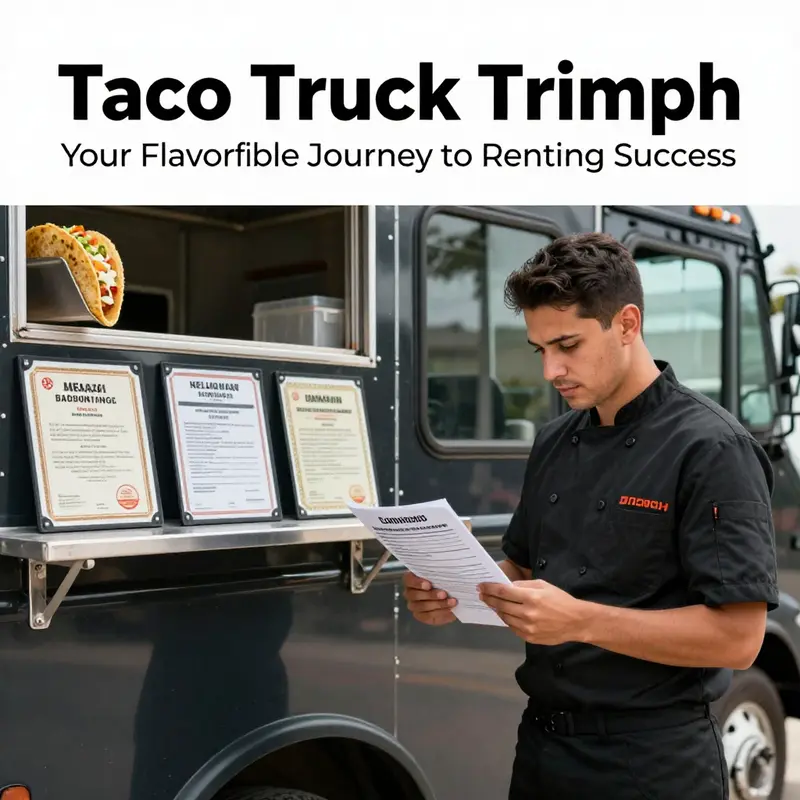
Renting a taco truck is more than choosing a vehicle; it is stepping into a regulated, highly visible food business where safety, hygiene, and legality shape every decision. The moment you sign a lease, you inherit a framework of standards designed to protect customers, staff, and your own investment. Skip or rush through these requirements, and you can face fines, operational shutdowns, or worse—a damaged reputation that follows you long after the event ends. This chapter unfolds the practical, grounded path to align your rental with the law and with the best practices that keep a mobile kitchen running smoothly, day after day.
First, verify the legitimacy of both the truck and the rental partner. The truck is more than a sum of appliances; it is a mobile business platform that carries public-facing responsibilities. Start by confirming the truck’s documentation: current vehicle registration, valid license plates, and a DMV inspection sticker that confirms the vehicle meets safety and emissions standards. Parallel to that, assess the rental company itself. A reputable operator will display a verifiable business license, a physical address, and a trackable online presence. You deserve a straightforward lease that spells out use conditions, payment terms, maintenance duties, and the process for reporting damage or malfunctions. If anything feels vague or offshore in its operation, walk away. For a deeper dive into the legal steps that frame successful food-truck ventures, explore the broader guide on launching a food truck. It offers a clear map of permits, registrations, and regulatory checkpoints that complement the rental process. Legal steps for launching a food truck.
Once you establish that the truck and the rental company stand on solid ground, you move into a rigorous pre-rental inspection. This is not about aesthetics alone; it is about safety, reliability, and long-term cost control. Begin with the exterior: walk around the chassis, check the tires for even wear and appropriate tread depth, scan for signs of damage or corrosion, and inspect the undercarriage for leaks. Turn on exterior lights to ensure signals, brake lights, and hazard indicators function properly. Inside, test every essential appliance and system. Verify that the stove and grills heat evenly and that the refrigeration units maintain safe temperatures throughout without excessive noise or vibration. Check the water supply lines and drainage system for leaks or blockages that could jeopardize sanitation. Review the electrical system for exposed wiring, overloaded circuits, or insecure connections. Ensure that all cooking utensils, food storage containers, and waste receptacles are present and in good condition.
Critical to any mobile kitchen are safety features and regulatory-ready documentation. Confirm the fire suppression system is appropriately rated and accessible, and that at least one fire extinguisher is within easy reach and fully charged. Smoke detectors should be present and functional, and emergency exits, if applicable, must remain unobstructed. A well-equipped first-aid kit should ride with the truck. In addition to equipment checks, perform a careful cross-check of identifiers: align the vehicle’s VIN and license plate with the paperwork supplied by the rental company, ensuring there is no mismatch that could cause legal or operational complications later. A thorough, documented pre-rental inspection creates a paper trail that protects you and the lender while giving you a clear baseline for future maintenance.
Beyond the mechanical health of the truck lies the domain of food safety and health regulations. Before you operate, secure the necessary permits from your county or city health department, typically a mobile food facility permit that validates your truck’s layout, hygiene plan, and overall readiness for serving the public. A food safety plan is not a bureaucratic checkbox; it is the blueprint for preventing contamination and ensuring temperatures stay within safe ranges. Practically, this means implementing strict handwashing protocols, maintaining hot and cold food at safe temperatures, and designing workflows that minimize cross-contamination. Color-coded cutting boards and utensils can help staff follow these routines even on busy shifts. Daily and post-shift cleaning regimens should be standardized and documented, with waste managed promptly to avoid pest issues and neighborhood complaints.
Insurance is not optional but foundational. A comprehensive package typically includes commercial auto insurance tailored to a mobile food operation, general liability to cover customer slips or property damage, and, when you hire staff, workers’ compensation. The rental agreement may specify what the rental company provides versus what you must secure on your own. Do not assume the lender’s insurance covers every risk your business faces. Confirm the exact coverage limits, what is excluded, and how claims will be processed. If you rely on the truck during a large event or festival, you may need higher limits or additional riders for event-specific liabilities. In California and many other jurisdictions, workers’ compensation is mandatory for employed staff, and the regulatory landscape can vary by city. It is worth consulting a local insurance advisor who understands mobile food operations to tailor a policy that lines up with your menu, expected volume, and operating patterns.
Permits and licensing extend beyond the vehicle itself. The mobile nature of a taco operation means you must think about where you park, how you source water, where waste goes, and when you can legally operate in a given area. Zoning and local ordinances govern street operation, residential restrictions, and access to parking at events. It is wise to map out a few target hubs—food truck parks, farmers markets, and event spaces—and learn their permit requirements, application timelines, and any city-specific stipulations related to hours of operation, signage, and fire-safety compliance. Because laws change, view compliance as an ongoing practice rather than a one-time task. This means keeping your licenses current, renewing permits before they lapse, and staying informed about any regulatory shifts that could affect where and when you serve.
A sustainable compliance program also requires disciplined recordkeeping and staff readiness. Build a simple, auditable filing system for everything from maintenance logs and purchase receipts to inspection reports and insurance certificates. This is not merely administrative; it is your defense against disputes and regulatory audits. Equip your staff with basic compliance training so that daily operations reflect your standards. A certified food-handler program, such as ServSafe or an equivalent in your region, ensures that each team member understands safe food handling, personal hygiene, and pest prevention. Regular safety drills, especially for emergencies like a fire or power outage, help your crew respond quickly and calmly, reducing risk and downtime.
Engaging with the broader legal framework also means recognizing the technical standards that kitchen equipment must meet. In the United States, kitchen appliances within a food truck should comply with applicable safety standards, often indicated by UL certification, while European markets may emphasize CE compliance. These certifications are not cosmetic labels; they signal adherence to tested safety and performance criteria that impact electrical, gas, and fire safety in a compact, highly regulated space. When you review a rental agreement, ask for the equipment’s certification documents and maintenance history. A truck that has routinely passed safety checks and that can provide recent service records offers you a more predictable operating life and fewer surprises during a busy shift.
Compliance is not a checklist to complete before launch; it is an operating discipline that threads through every day of your business. After you take possession of the truck, you will rely on a rotating calendar of inspections, insurance renewals, permit renewals, and staff trainings. Schedule periodic internal audits that re-verify the truck’s registration and plate numbers, the validity of the inspection sticker, and the status of health permits. Use a simple scoring system to track maintenance issues, safety equipment status, and food-safety readiness. If a problem arises, address it promptly, documenting the actions taken and notifying all stakeholders as required by your lease and local regulations.
As you build your operation, integrate these compliance routines with your marketing and growth plans. Your reliability as a compliant mobile vendor becomes part of your brand promise. Event organizers and customers reward vendors who demonstrate consistent safety practices, transparent permitting, and visible cleanliness. The more you embed these standards into your everyday workflow, the less friction you will experience when boards, health inspectors, or event coordinators review your operation.
To maintain momentum, treat compliance as an ongoing conversation rather than a set of rigid rules. Regulations evolve, and technologies in sanitation, waste management, and energy efficiency continually advance. Stay curious about best practices, attend relevant workshops if available, and share your learnings with your team. In the end, renting a taco truck can open doors to a dynamic, scalable business if you anchor it in rigorous compliance, proactive safety management, and thoughtful, customer-focused operations. This approach protects your investment, supports sustainable growth, and keeps the focus on delivering great, safe tacos to delighted customers.
Under the Hood of Mobility: A Technical Vetting Guide for Taco Truck Rentals
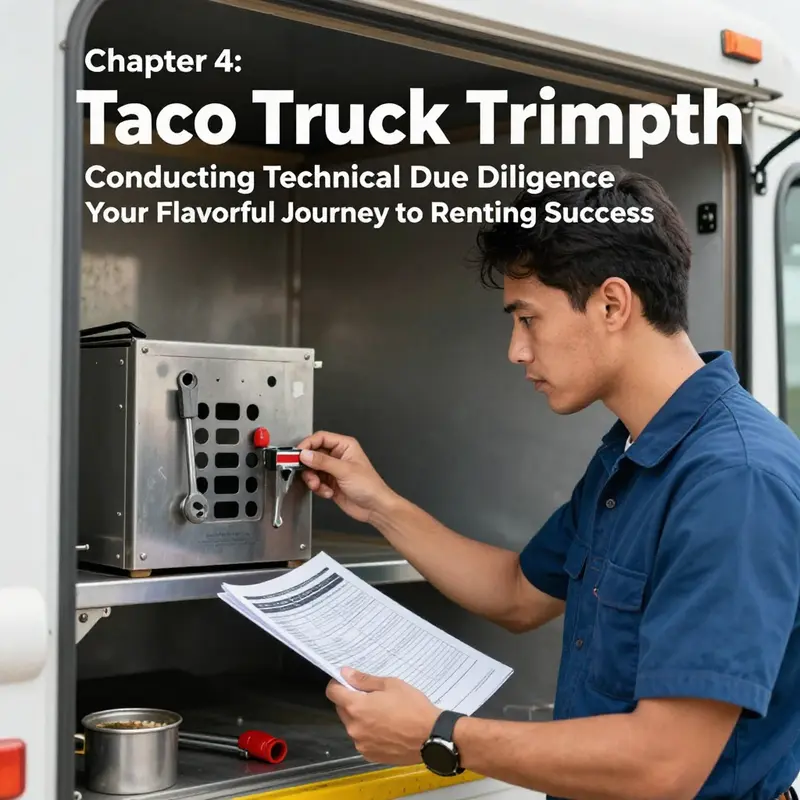
Renting a taco truck is more than selecting a vehicle with a griddle; it is acquiring a mobile kitchen that must perform reliably, safely, and legally. This chapter provides a structured due diligence framework for evaluating both new and used units, focusing on build quality, materials, sanitation architecture, and the systems that support daily service. It emphasizes reading the truck like a risk report rather than a sales brochure, and it explains how to obtain verifiable records that stand up under audit and event conditions.
First, credibility: demand transparent maintenance logs, third-party inspection reports, and build specifications for chassis, seating, plumbing, and electrical. A reputable supplier should share documentation that proves regular service, component replacement timelines, and recent safety tests. Second, materials and sanitary design: inspect corrosion resistance, surface finishes, and weld quality in the undercarriage, storage bays, plumbing runs, and food-contact surfaces. Stainless steel and selected aluminum alloys are common choices; insist on certificates or lab reports confirming material performance under wash-downs and heat exposure.
Third, sanitation architecture: evaluate ventilation, grease management, water supply, waste handling, and fire suppression. Look for proper trap sizing, accessible cleanouts, cleanable plumbing, and schematics of the kitchen layout showing vent hoods and extinguishing devices aligned with your menu. Fourth, electrical and gas systems: confirm electrical service is rated for your equipment, that grounding and overcurrent protection are documented, and that propane or other fuels have protected storage, leak testing records, and emergency shutoffs.
Fifth, the vehicle and driveability: request a recent independent inspection, a road test, and verification that the mileage matches service history. Ensure you can operationally test the kitchen equipment under load during the assessment. A credible vendor will facilitate this evaluation, and you should participate in the test where possible.
Finally, alignment with regulatory frameworks: health department expectations, vehicle registration, and business licenses. Map the build specifications to inspection outcomes and compliance checks so the truck remains a reliable platform across events, markets, and catering jobs. The payoff is not only risk reduction but stronger negotiating leverage, predictable maintenance costs, and a clear path to scale. For external guidance, consult federal and state mobile food facility guidelines and adapt the criteria to your local regulatory environment. Always request verifiable certificates, inspection reports, and performance data before committing to a contract or purchase.
Final thoughts
Embarking on the journey of renting a taco truck is not just about securing a vehicle—it’s about creating a culinary experience that dances on taste buds and builds lasting memories. By defining your business model, carefully selecting your rental source, ensuring compliance, and conducting rigorous technical due diligence, you are setting the stage for taco greatness. With each taco served, you’re not just feeding hungry customers; you’re sharing love, culture, and delicious flavors. So, gather your ingredients, prep your grill, and let the flavors fly as you bring your taco truck dreams to fruition. Your delectable adventure awaits!