
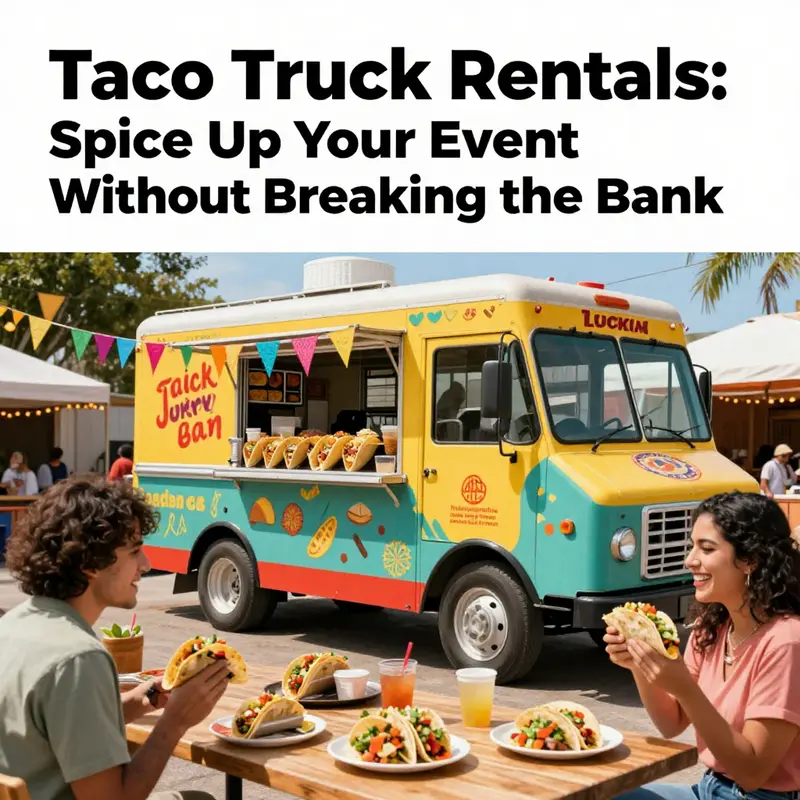
For taco lovers and culinary entrepreneurs alike, renting a taco truck is an exciting venture. From vibrant flavors to the convenience of on-the-spot service, taco trucks can enhance any event—be it a wedding, a corporate gathering, or a street festival. However, navigating the costs and pricing structures can feel like a challenge. This guide dives into the essentials of taco truck rentals, exploring everything from the variables affecting costs to platforms for renting, ensuring you have the knowledge to make a delicious decision. Each chapter unfolds a piece of the taco truck rental puzzle, helping you to savor every detail and find the perfect fit for your needs. Get ready to taco ’bout an unforgettable experience!
Pricing the Moveable Feast: Decoding the Variability in Taco Truck Rentals
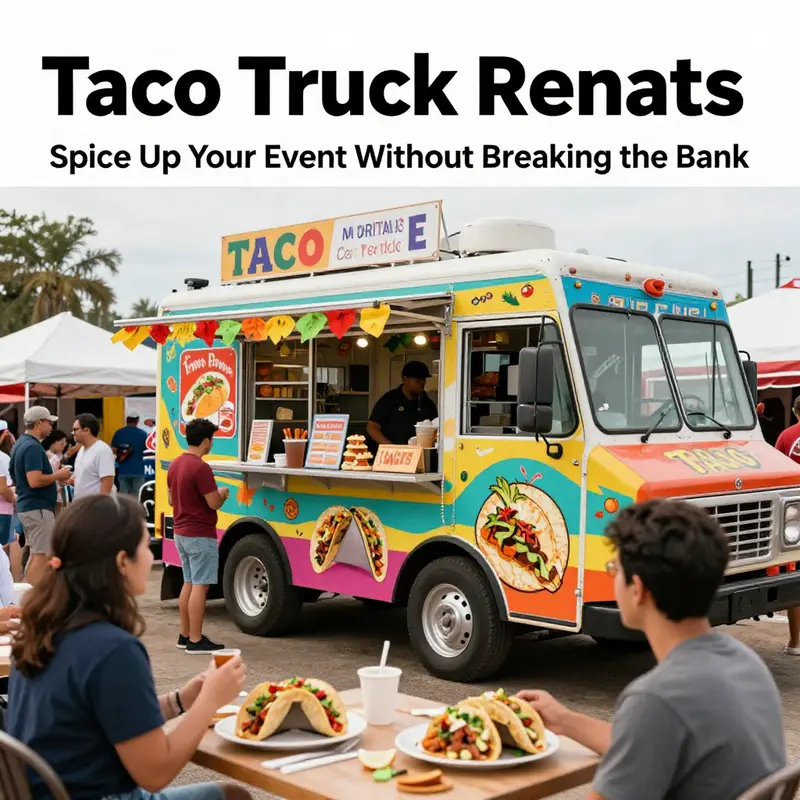
A taco truck is more than a vehicle. It is a mobile kitchen on wheels and a portable storefront. When you start shopping for a taco truck rental, the sticker price you first notice is rarely the whole story. Prices vary by city, week, and package. The budgeting process is about understanding a spectrum of costs and how each rung on that spectrum affects break-even, service quality, and risk. Look beyond daily rates to what is included, what is not included, and how long you actually need the truck to operate at full strength.
The core cost drivers are location, duration, and equipment. Location matters because each city has its own market and licensing costs. Short-term events often command higher daily rates than longer leases that include maintenance or support. The truck’s condition and equipment also matter; newer, fully equipped units cost more but can save time and reduce risk. Features like refrigeration, a hood, a walk-in cooler, and a service window can push price upward but enable higher throughput.
Who operates the truck also matters. A rental that includes a driver adds labor costs but reduces risk, while a driverless arrangement may be cheaper upfront but requires more on-site management. Insurance and permits add another layer of cost and complexity; unclear coverage can lead to surprises.
The bottom line is that there is no single price. A turnkey unit reduces friction but costs more daily; a lean setup lowers upfront price but requires more management. To compare quotes, ask what is included in the base rate, what equipment is guaranteed, and what is optional. Request a sample contract to ensure all costs are disclosed. The market lacks a universal pricing standard, so negotiation and clarity are essential.
As you evaluate options, map your budget against realistic usage. Consider outcome-focused questions like which package supports your service level, brand, and schedule. The goal is to translate any quote into total cost of operation, including equipment, staffing, permits, maintenance, and travel. With a clear view of costs, you can negotiate terms that align with your business plan and avoid chasing the lowest daily price at the expense of reliability and guest experience.
Price on Wheels: Decoding What It Really Costs to Rent a Taco Truck
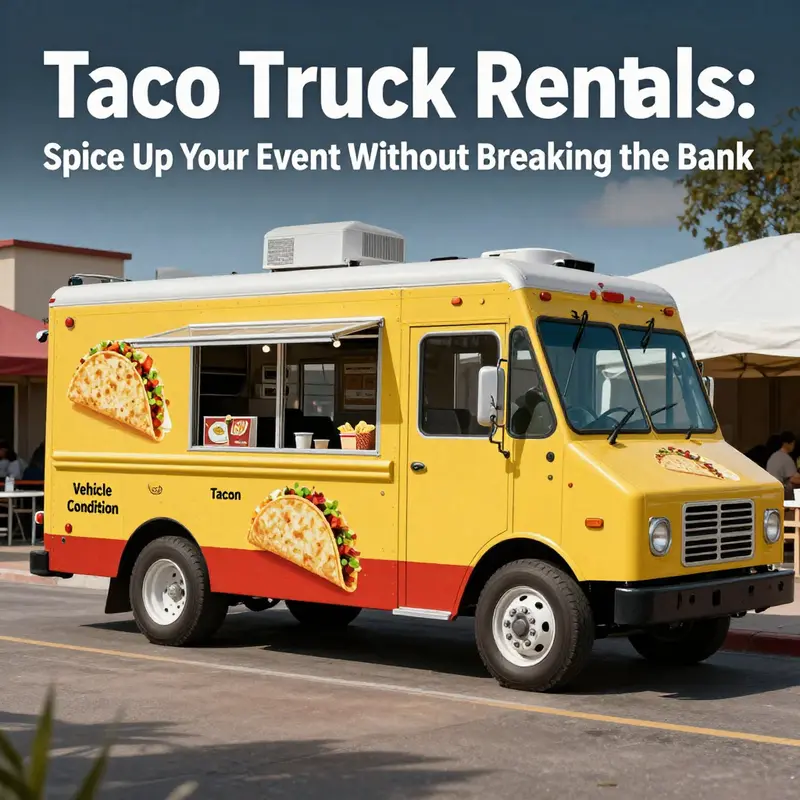
Renting a taco truck is more than choosing a vehicle; it’s a bundle of kitchen capability, service level, and market demand. There isn’t a single nationwide price because the cost reflects location, vehicle type, equipment, staffing, and permits. In general, you’re paying for the mobile kitchen, not just a box, with plumbing, ventilation, refrigeration, and safety systems that raise the price relative to a plain van. Costs vary by market: in busy cities, daily rates can be higher; in less dense regions, rates may be lower but availability may be tighter. Newer, fully equipped trucks with modern kitchens command higher fees than older, basic setups. Longer commitments can unlock discounts, while shorter events may incur a premium. Service level matters: a lean truck rental is cheaper but comes with more DIY on-site work, whereas full-service options with chefs and crew push the price up but deliver reliability. Permits, insurance, and health-safety requirements also influence the final number because many venues require proof of coverage. The practical takeaway is that budgeting should anchor on quotes rather than a single sticker price. Start with a local ballpark, then compare multiple vendors, request itemized quotes (truck, crew, ingredients, permits), and adjust scope to fit your budget. Seasonal timing, equipment needs, and contingency plans can shift total costs meaningfully. Finally, treat rental price as part of a broader event budget that includes fuel, maintenance, insurance, and licenses, and seek quotes that reflect your exact needs. This approach helps you negotiate with clarity and deliver a successful taco experience without overspending.
Riding the Route: Taco Truck Rentals—Pricing, Availability, and What to Expect
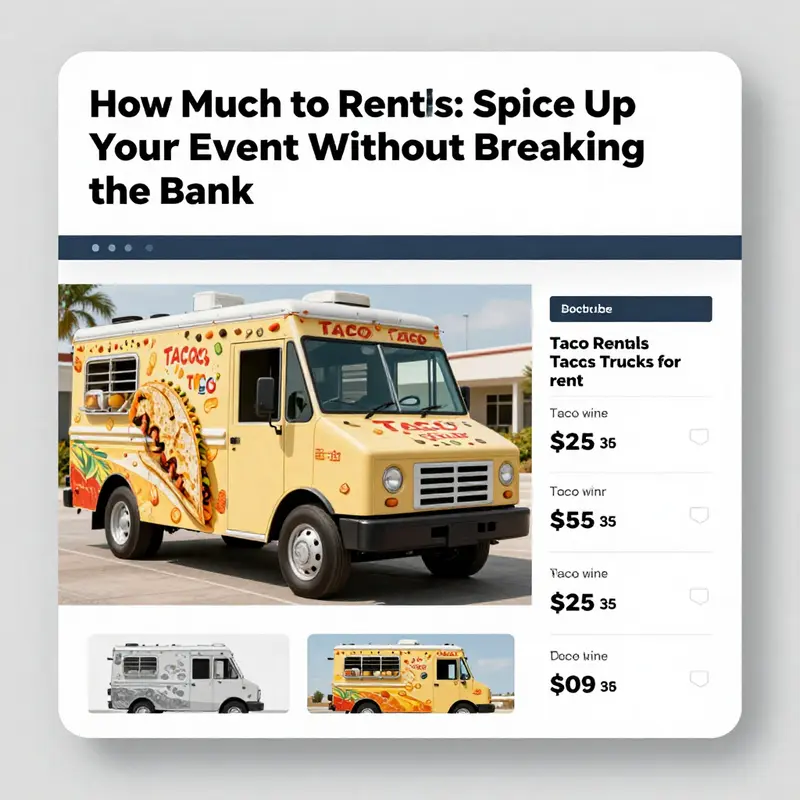
Renting a taco truck is about more than a single price. Platforms connect owners with event organizers and typically structure costs as a base daily rate plus add-ons such as staffing, insurance, fuel, and equipment upgrades. Availability varies by market; urban areas tend to have more trucks but also tighter calendars, so booking early helps. Costs depend on the truck’s footprint and features: a small unit with basic prep space is cheaper than a fully equipped kitchen with exhaust, generator, and on-board staff. When budgeting, consider the base rate and the optional extras, and be aware that longer rental periods or multi-truck packages can reduce the daily cost. In peak seasons, pricing can rise, so planning ahead often yields better options. Check for health-compliance support, maintenance guarantees, and delivery assistance, as these can affect the total and the reliability of service. Align the rental choice with your menu and venue so the equipment matches your needs, and the schedule fits your service plan.
The Price of the Taco Trail: Navigating Rental Costs and Purchase Paths for a Mobile Kitchen
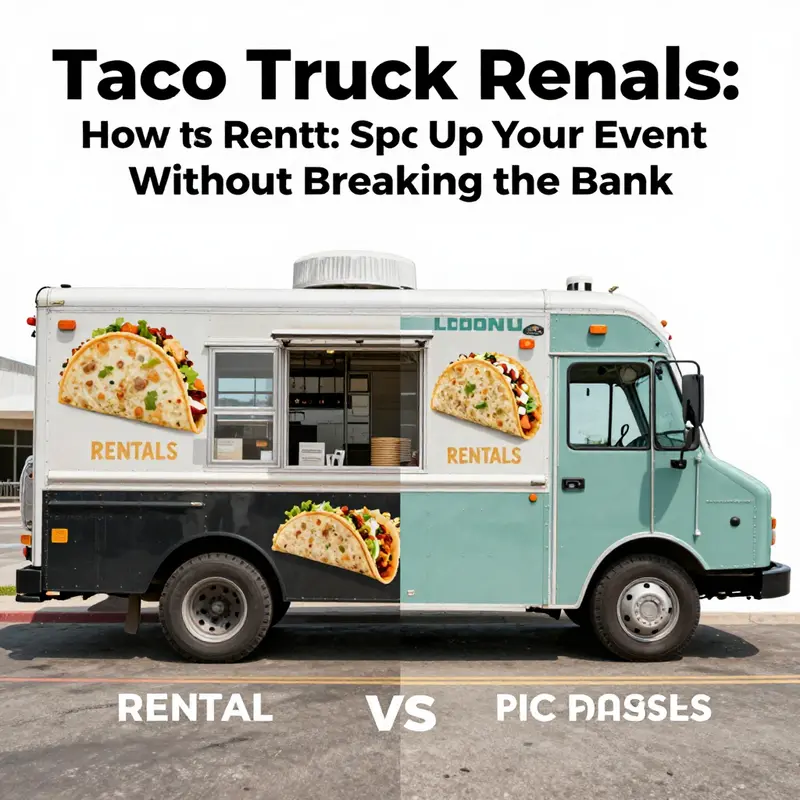
Dreams of serving sizzling street tacos often collide with the practical math of costs. The moment you start asking how much it costs to rent a taco truck, you enter a landscape where price is not a single number but a spectrum shaped by location, size, condition, and the level of service you require. The illustration above alludes to a truth that seasoned operators know: a taco truck is not merely a vehicle; it is a fully functioning mobile kitchen, a combination of transportation, equipment, and operation that can swing on a dime depending on the choices you make. If you are weighing the path of renting versus purchasing, the landscape becomes even more nuanced. You need to think not just about the sticker price, but about daily rates, maintenance, staffing, compliance, and the rhythms of your event calendar. The road to a smart decision begins with clarity about what you need to test on the road, and what you want to own for the long haul.
Renting a taco truck, on the surface, resembles renting any heavy, purpose-built vehicle. The base price is a function of the unit’s size and condition, but the total cost quickly grows with the extras. A compact, economy-minded mobile kitchen may list at a modest daily rate, while a larger, fully equipped unit with a generator, refrigeration, ventilation, and a skilled operator can command a premium. The most important distinction is whether the rental includes the driver and the equipment, or if you must supply your own staff and your own insurance. In some markets, the rental price is a clean daily or hourly figure, and in others the price is bundled with services such as a trained crew, a food-grade water supply, and a disposal plan for waste. Each addition shifts the monthly ledger, changing not only the bottom line but the day-to-day operations you can realistically manage.
Regional variation is a straightforward reality. If you map the taco-truck market, you will see price bands that reflect local demand, the cost of living, and the proximity to large events. In one metro area, a mid-sized, fully equipped unit might carry a monthly rental that translates to a significant daily rate for events during peak season. In a smaller city or rural region, the same unit could be more affordable, but you may face fewer available dates and longer travel times to reach venues. These regional dynamics matter because they influence whether renting makes sense as a short-term strategy or as a supplemental tool for an existing culinary business. They also affect the decision to lease or own, since the monthly cash flow and the potential for revenue growth are highly sensitive to how often the truck is booked and how reliably it can be moved from one event to the next.
Size and condition are more than abstract metrics. The size of the mobile kitchen determines payback potential, but it also drives the complexity of set-up and the cost of maintenance. A smaller, older rig may be affordable to rent but could require more frequent downtime for repairs, which erodes uptime and earnings. A larger, newer truck with high-end refrigeration and industrial-grade cooking surfaces offers smoother operation and a higher throughput, yet the daily rate reflects that reliability. When you anchor on size, you must also consider the configuration: how many burners, the capacity of the griddle, the oven or steam-infusion system, and the availability of refrigeration and a hand-wash station. Each feature is a practical necessity in the field and, in rental pricing, is a proxy for the level of service and the expected performance on busy days. And because a mobile kitchen sits at the intersection of food safety and customer experience, higher-quality units are often more than just a convenience—they are an essential compliance and reputational asset.
A critical arena in the rental calculus is the decision to include a driver or to operate solo. A driver can dramatically alter both the cost and the risk profile of a rental. With a driver, you gain expertise in food safety, speed of service, and efficient navigation through traffic and parking constraints. The driver’s presence reduces your labor burden and can raise the quality of service, echoing through your reviews and return business. However, a driver adds a continuous cost—daily or hourly wages, potential travel time, and the need for payroll management. If you opt to supply your own staff, you gain control over brand voice and service style, but you also assume the responsibility for training, food handling certifications, and compliance with health codes. Either path alters the price equation and shapes the planning calendar, because the inclusion of a driver changes not only the cash-flow profile but the operational flexibility you can muster for back-to-back events.
Insurance, permits, and fuel are more than administrative afterthoughts. In the rental world, insurance is not simply a formality; it directly affects the daily rate and the risk you absorb with every service call. Rental agreements frequently require specific coverage limits, and the costs are not negligible for a mobile kitchen that travels, operates outdoors, and handles perishable goods. Permits and health inspections form the legal backbone of every event, and their presence in the price reflects the practical realities of compliance. Depending on the jurisdiction, you may need licenses for food handling, street vending, and even parking in certain districts. These costs can be predictable, but they can also spike during festival seasons or in areas with heightened regulatory scrutiny. Fuel and generator maintenance contribute to the quiet math of your margins. Generators burn fuel, require routine servicing, and add noise considerations to the customer experience. If you rely on shore power at events, you’ll still need to budget for the plug-in infrastructure and potential surge protections. Each of these elements, seemingly technical and mundane, forms a critical thread in the fabric of your rental cost. They determine not just what you pay, but what you can promise to clients in terms of consistency and reliability.
When you move from the conceptual to the concrete, the numbers start to bleed into strategy. A practical rule of thumb is to think in terms of a cost per event and a utilization rate. The cost per event includes the base rental, driver fees if applicable, insurance allocation, fuel or generator costs, and any portable equipment rentals needed for service (ice, water, disposables). The utilization rate looks at how many events you expect to book in a given time frame, factoring in travel, setup, and breakdown times. If you are testing the market, renting generously to achieve a breadth of experiences—different venues, different crowds, different menus—can be a fast path to learning. If you are confident in your seasonal plan, you may push toward longer rental commitments or even negotiating a block rate with a single operator to secure priority dates. Either way, cost becomes a tool for forecasting revenue, not just a line on a receipt.
For those who want a practical starting point when weighing paths, a thoughtful path forward is to examine the broader landscape of mobile-food options and then zoom in on the specific needs of a taco-focused menu. The right truck must be not just a symbol of culinary flair but a dependable engine for consistency. A guide that helps you compare features and align them with your business goals can be invaluable. For example, a resource that highlights how to evaluate different food trucks—and what to look for in terms of layout, ventilation, and equipment quality—can provide a framework for your negotiations. Consider this as you begin your due diligence, and remember that the decision between rental and purchase often hinges on tempo: how many events you plan to run and how quickly you intend to scale.
If your goal is to move from concept to opening with a tested model, the option to explore rental as a stepping stone may be compelling. Renting lets you sample service patterns, customer flows, and kitchen ergonomics without committing to a long-term asset. It also lets you test your branding with a real kitchen in the field, to confirm that your menu, pricing, and service style resonate with customers before you invest in a permanent setup. The flip side is that ownership, though capital-intensive upfront, offers the potential for equity, depreciation, and control over branding and operational rhythms. Ownership can also unlock opportunities such as franchising or expanded catering services, where owning a branded unit becomes a marketable asset rather than a sunk cost.
For many operators, the marriage of rental flexibility and eventual ownership is the sweet spot. A typical pathway begins with short-term or seasonal rentals to validate demand, followed by a transition to ownership through a phased purchase plan or a lease-to-own arrangement. In this crossfade, you protect cash flow while building a track record, which is essential when you later approach lenders or investors for a larger fleet or a dedicated commissary facility. The calculation, again, is pragmatic: if the unit sits idle for more days than it serves, renting can be more cost-effective. If the unit sits in demand at a high clip, ownership can become a better long-run financial move. Some operators begin with a modest, portable kitchen and upgrade as their brand grows, while others start with a larger, more capable unit to handle ambitious plans from day one. Each path has its own risk-reward profile, and the right answer is deeply personal to your appetite for risk, your timeline, and your revenue ambitions.
As you chart your course, a practical touchstone is to explore the route of choosing the right equipment and layout that aligns with your menu and service model. A well-designed kitchen on wheels should feel like an extension of your brand, a space where speed, cleanliness, and safety are woven into every step of the operation. A useful starting point is to review resources that focus on the broader decision of choosing the right food truck, which helps frame the considerations around size, layout, and functionality. For readers at this stage, a helpful anchor is the article that guides you through evaluating options and aligning them with business goals, with actionable insight into how to balance upfront costs against long-term value. This is not merely about acquiring a vehicle; it is about engineering a micro-kitchen that travels reliably and serves well.
In the end, the question of how much to rent a taco truck is not a simple price tag but a choreography of decisions. It requires you to weigh frequency of events, the geographic spread of your markets, the level of service you want to provide, and your appetite for ownership. It requires you to visualize the daily life of the truck: the setup, the service flow, the break-down, the clean-up, and the compliance checks that turn a kitchen-on-wheels into a reputable business. It requires a plan that adapts to weather, traffic, and the whims of event calendars. If you proceed with a structured approach, you can build a rental or ownership strategy that supports your culinary vision while keeping your financials under control. The path to a successful taco venture is less about chasing the lowest price and more about aligning the truck with your brand, your operations, and your growth trajectory. And as you move forward, keep your decision anchored in practical testing: rent to learn, buy to grow, and always measure the economics against the horizon you want to reach.
For further reading and a practical starting point on evaluating options, explore the guide on Choosing the Right Food Truck, which offers a framework for assessing layout, equipment, and service capabilities in light of your business goals. Choosing the Right Food Truck.
External resource: For a broad overview of startup costs and planning considerations that can inform your rental versus purchase decision, consult the Small Business Administration’s guidance on estimating startup costs and capital needs: https://www.sba.gov/business-guide/plan-your-business/estimate-startup-costs
Final thoughts
Navigating the world of taco truck rentals may seem daunting, but with the right insights, you can elevate your event to new heights. Understanding the cost variability and the factors that influence pricing arms you with the necessary knowledge to make informed decisions. Exploring rental platforms will simplify your search, helping you uncover the perfect taco truck to fit your occasion. Ultimately, weighing the pros and cons of renting versus purchasing can unlock even greater opportunities for culinary entrepreneurs. Whether you’re planning a celebration or looking to start your own taco business, the journey begins with the right rental choices—so roll on out and get ready to indulge!