
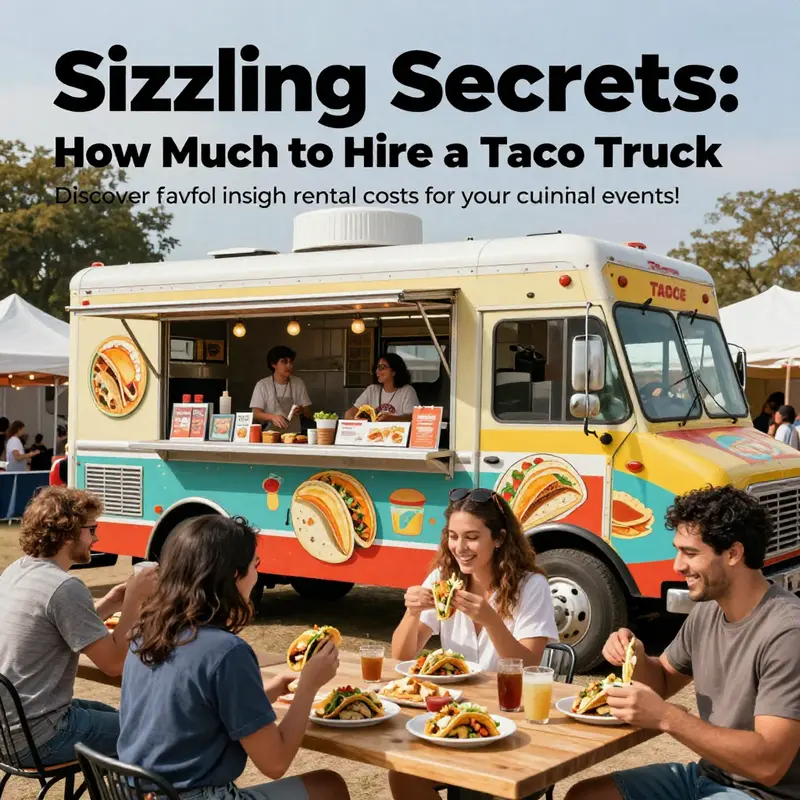
Are you ready to spice up your next gathering with mouthwatering tacos? Renting a taco truck can elevate any event, be it a wedding, festival, or a casual backyard party. But how much do you really need to shell out for this tasty experience? In the vibrant world of taco trucks, the costs can range from surprisingly budget-friendly to splurging for high-end options. Join us on a flavorful journey as we break down the essential details on taco truck rentals. From daily costs to long-term options, we’ll explore the critical factors that influence pricing and even touch on alternatives that could satisfy your cravings. Get comfortable, tasty insights are headed your way!
Daily Footprint, Real Costs: How Much to Hire a Taco Truck for Your Event
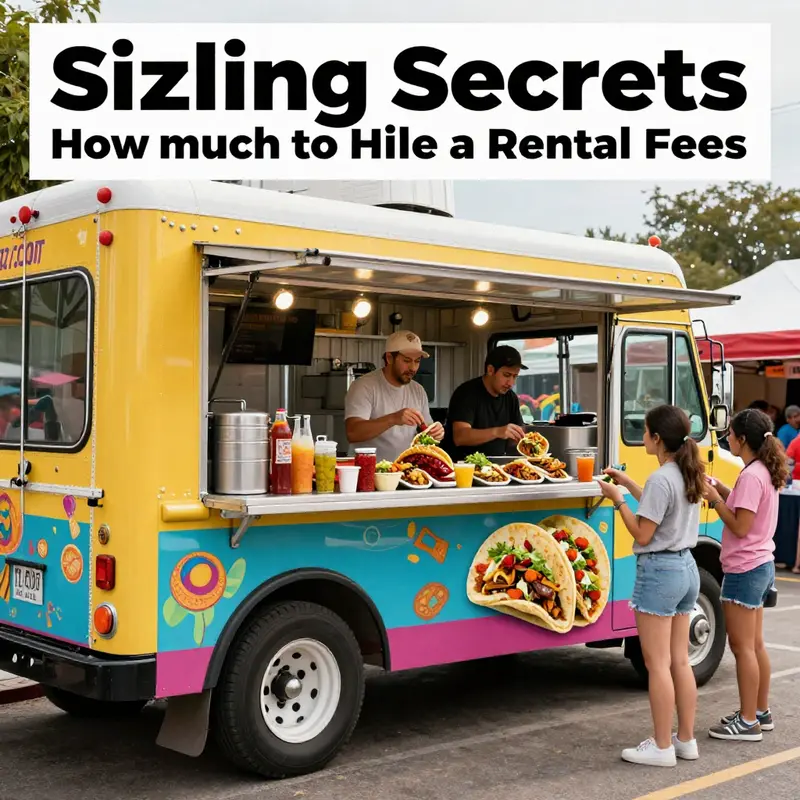
When you start planning a tented event, a guest list and a playlist quickly become secondary to the question of logistics. Among the most impactful logistical choices is whether to hire a taco truck and, if so, how to price that decision in a way that aligns with your budget and goals. The path from curiosity to a signed rental agreement runs through a landscape of variable daily fees, geographic quirks, equipment configurations, and service options. In North America, and particularly in the United States, the daily rental price for a fully equipped commercial food truck is not a single fixed number but a spectrum that reflects what you actually need on the day of the event. A practical starting point is to view the cost as a package rather than a sticker price. You factor in the truck itself, the kitchen capabilities, the power and water systems, the branding and signage, and any staffing that may accompany the rental. Only then do you arrive at a more precise forecast that can be aligned with sponsorship goals, ticket sales, or a private budget.
The core range is revealing. A basic or older model—often referred to as a starter kit for shorter bursts like pop-ups or neighborhood markets—tends to land in the $300 to $500 per day bracket. This is the lean option: a truck that can fry or grill, keep ingredients cold, and serve a steady stream of orders, but with limited extras. The higher end of the spectrum pushes past $800 for a single day, especially when the truck is brand-new or heavily customized. In these cases, operators bring a turnkey experience: a fully equipped kitchen with reliable refrigeration, efficient ventilation, robust electrical capacity, perhaps a climate-controlled environment, and branding elements designed to stand out in a crowded event space. The difference between $500 and $800 is not merely a bigger kitchen; it often signifies a more fault-tolerant setup, faster service, more capacity for peak hours, and a vehicle that remains dependable over back-to-back events.
A critical—and sometimes overlooked—factor is whether the rental package includes staff. Some vendors offer a “full-service” arrangement that includes a chef or kitchen crew, a server or two, and a dedicated cleaner. This can add roughly $150 to $300 per day to the base rental, depending on the level of service, the number of shifts, and the complexity of the menu you’re offering. If a team is included, you reduce the stress of managing kitchen workflow on-site, ensure consistency in portion sizes, and free up your event staff to focus on guest experience and beverage pairing. If staffing is not included, you must account for labor costs separately, including potential overtime rates if your event runs late or requires simultaneous service from multiple stations.
Beyond the daily number, there are weekly and longer-term rental structures that alter the math in meaningful ways. For ongoing or multi-day use, the per-day rate often drops when you commit to a block of days—think a weekly rental ranging from about $1,500 to $3,500. Extended arrangements, such as a rental spanning several weeks or months, can attract discounts through bundled maintenance, insurance, and logistical planning. The logic is straightforward: a vendor gains predictability in workload and reduces the overhead of repeated setup and breakdown. For event planners, contractors, or brand activations with a schedule, a longer-term rental can offer cost efficiency that offsets the convenience of a ready-to-go truck.
Prices, of course, do not exist in a vacuum. There are distinctive factors that either push up or pull down the figure you ultimately pay. Geography is a prominent driver. In large metropolitan hubs like New York, Los Angeles, or Austin, demand is fierce, and rents reflect that premium. In smaller cities or rural areas, the same truck can be markedly cheaper, which makes location a crucial first screen when you begin formulating a budget. Equipment configuration is another major determinant. A truck outfitted with a full kitchen—stove or griddle, fryers, refrigeration, warming drawers, and a dishwashing station—will command a higher daily rate than a more minimalist setup. Add-ons such as a dedicated power system, water supply, a prep area, a canopy with branding, and a premium sound or lighting system, and you’re stepping into the higher end of the spectrum.
Branding and design contribute not just to operational efficiency but to perceived value at the event. A striking exterior with custom signage, LED lighting, and cohesive color schemes can tip the scale toward a higher price tag because it directly influences guest perception and social media amplification. Conversely, if the event is modest in scale and branding needs are minimal, you can lean toward a simpler build and a more economical rate without sacrificing food quality or service reliability.
Licensing and compliance can quietly ripple through the total cost. Some jurisdictions require a local health permit or mobile vending license for each event, and the rental provider is often responsible for ensuring that such licenses are valid for the service period. If the site requires additional inspections or permits, you may encounter extra charges. It’s not glamorous, but it matters when you’re coordinating permits with venue staff, city officials, and insurance providers. And speaking of insurance, many rental packages include basic coverage, but you should confirm whether the policy extends to the event location, whether it covers food-liability scenarios, and what happens if the truck is delayed by weather or mechanical issues. If you’re organizing a large-scale activation or festival, those insurance considerations can push the budget upward, but they also protect you from large financial exposure.
As you weigh these variables, it’s useful to consider an example: a mid-sized private party with 150 guests and a two-hour service window in a mid-market city. A basic, no-frills model might suffice if you’re prioritizing budget and guest count over spectacle. The cost might hover around $350 to $450 for the day, with no staff included. If your menu is straightforward and you can manage prep coordination with a helper from your catering team, that could be a clean, predictable expenditure. “Premium” configurations with a modern kitchen, upgraded ventilation, and a branded exterior could push the day price to $700 or more, especially if lighting, sound cues, and an on-site chef are bundled in. If you want everything covered—from the truck’s arrival to the end of service and the cleanup—a full-service package could approach $1,000 to $1,200 in a busy market, reflecting the included labor and the guarantee of a smooth service under peak demand.
But the cost isn’t just the ticket price you see on a quote. A comprehensive forecast should account for ancillary expenses that are easy to overlook in the excitement of a menu reveal and a compelling color scheme. Transportation from the vendor hub to your venue, fuel surcharges, or overtime for late-night breakdown can add hundreds of dollars. A service level that guarantees on-site power, water hookups, and a reliable wastewater plan may carry a premium but saves you the risk of on-site improvisation. Some venues impose a fee for backstage or service-area access, while mobile commissaries may require you to secure a staging area with covered electricity, lighting, and waste disposal facilities. If you’re hosting outdoors in a climate prone to sudden changes, you may also need contingency arrangements, such as weatherproof awnings or backup generators, which can inflate the daily cost but preserve food safety, service speed, and guest comfort.
With all these moving parts, the simplest way to approach pricing is to inventory your event’s precise needs and then map them to a tiered cost structure. Start with the core requirements: the number of meals needed, the expected peak service period, and the necessary operating hours. Then layer in the essential operational elements: power needs, water supply, refrigeration capacity, and waste management. From there, determine whether you want a minimal setup or a fully branded and staffed experience. If you’re uncertain about staffing, consider a two-tier approach: obtain a base rental for the truck alone and compare it against a full-service package that includes staff. The delta between the two clarifies how much value the service team adds to your bottom line and your guests’ experience.
The decision to hire versus buy or co-operate is another dimension worth exploring. Buying a secondhand taco truck can be a prudent long-term investment for repeat events or for a small-scale business seeking to establish a market presence. Price ranges for a used truck typically fall in the broader spectrum of tens of thousands of dollars, often between twenty thousand and fifty thousand, depending on the vehicle’s condition, the equipment configuration, and the age of the appliances. Some organizers also explore collaborations with existing truck operators, where a revenue-sharing model replaces fixed rental payments. In such arrangements, you might contribute a share of profits—commonly somewhere in a 30% to 50% range—until the venture reaches a certain return on investment and becomes self-sustaining. This approach reduces fixed costs but places greater emphasis on sales performance, schedule reliability, and the consistency of the guest experience. It’s a trade-off between predictability and upside potential, and it requires clear, formal agreements about staffing, menu scope, and service duration to prevent misaligned expectations during a busy event weekend.
Whether you rent, buy, or partner, your planning should begin with the same discipline you’d apply to any other major purchase: a detailed five-column forecast that lists the required service hours, the number of meals, the gear and crew needed, the transport and setup tasks, and the risk-adjusted costs. A pragmatic forecast might start with the base daily rental, add the staffing premium if applicable, then factor the necessary permits, insurance, transport, and site fees. For longer events, apply a per-day discount for multi-day commitments and account for fuel or electricity surcharges if they are part of the rental package. In the end, the decision isn’t simply about whether a taco truck is affordable. It’s about how the presence of a mobile kitchen amplifies your event’s attractions, how much that amplification costs on a per-guest basis, and whether the resulting guest experience translates into measurable outcomes—whether that’s increased ticket sales, greater brand engagement, or enhanced guest satisfaction.
To support a thoughtful comparison, you may find it helpful to consult additional resources and industry-provided benchmarks. For ongoing industry insights and case studies, the Fireduptacotruck blog offers perspectives on how trucks are positioned within different event formats and budgets. Reading reflections from practitioners who have navigated similar decisions can illuminate practical questions you may not have anticipated—such as the importance of a reliable power plan, how to design a kitchen layout that accelerates service, or ways to coordinate with venue teams to streamline load-in and load-out. You can discover this resource here: Fireduptacotruck blog.
If you’re searching for a broader perspective on the equipment and its market value, you’ll encounter a wide range of listings and specifications that illustrate the high value placed on well-equipped, service-ready mobile kitchens. These references emphasize the technology behind mobile food service, from durable construction and CE-compliant safety features to efficient layouts that maximize throughput. While the specific listings and configurations vary, the underlying principle remains consistent: a taco truck’s rental cost is anchored not only in its kitchen capacity but in the reliability, speed, and guest experience it enables. In planning your event, treat the rental as an investment in operational reliability that pays dividends in service quality, consistency, and guest satisfaction rather than as a mere expense. Your ability to forecast accurately, communicate clearly with the rental vendor, and align the service level with your event’s ambition will determine whether your taco truck becomes a memorable highlight or a missed opportunity.
In closing, the daily rental fee for a taco truck is a practical lens through which to view event budgeting. It is a dynamic figure shaped by location, equipment, brand, licensing, and the extent to which staff are included. When you add in the ancillary costs—permits, insurance, transportation, and site fees—the final price becomes a robust, real-world forecast rather than a superficial quote. The best practice is to approach it as a structured dialogue with vendors: identify your non-negotiables, price out tiers that match your risk tolerance, and allow room for contingency in the event of weather, delays, or higher-than-expected demand. The payoff is a guest experience that feels both seamless and elevated, with a reliable kitchen that can deliver the flavors you promised without becoming a budgetary afterthought. For planners who treat the taco truck as a strategic asset—part theater, part utility—the daily rental becomes not just a cost to manage but a powerful lever to orchestrate an event that resonates with guests long after the last bite has disappeared.
External resource: https://www.alibaba.com/product-detail/Mobile-Food-Truck-Outdoor-Food-Trailer_1600494767243.html
The Price Plate: Decoding Weekly and Long-Term Taco Truck Rentals for Events and Startups
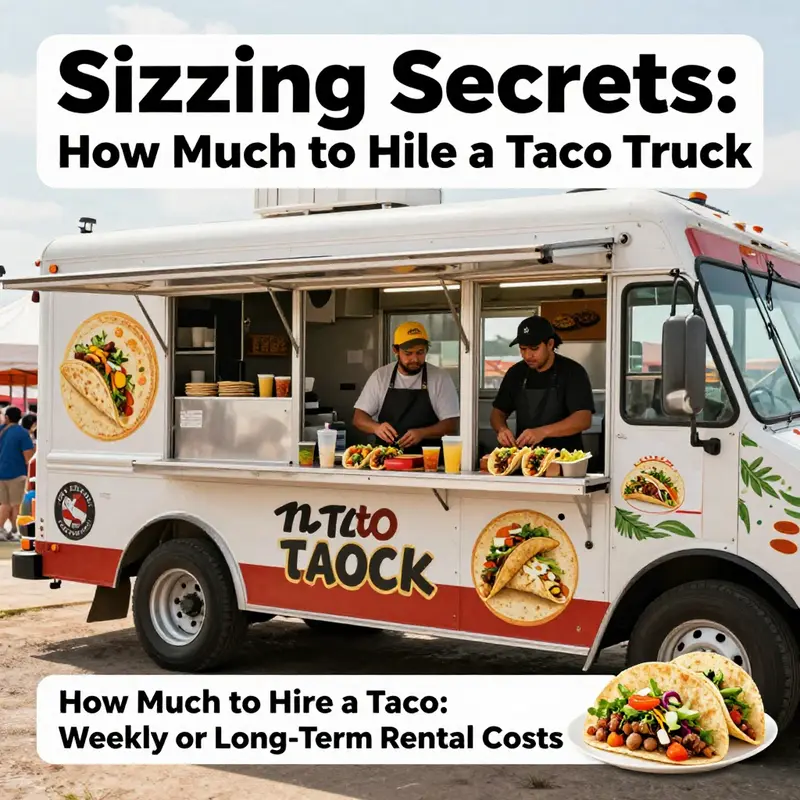
When you begin planning a taco-centric venture or a big weekend event, the question most organizers hover around is not just what you’ll serve, but how much it will cost to serve it in scale. A taco truck is more than a kitchen on wheels; it is a mobile business with expenses that hinge on timing, location, and the level of service you demand. To translate appetite into numbers, it helps to treat rental pricing as a multifaceted menu of options rather than a single line item. In practice, the daily rhythm of a taco operation—whether you’re fueling a pop-up market, a food festival, a private party, or a longer, more sustained culinary venture—shapes the decision between short-term rental and a longer commitment. The range you’ll encounter is broad, and the right fit depends on a balance of need, risk, and cash flow. On a practical level, the starting point is the baseline cost to rent a fully equipped, food-grade trailer that can actually cook and serve, not merely transport ingredients. In many North American markets, the standard day rate for a ready-to-run, commercial-grade food truck sits in a band from roughly three hundred to eight hundred dollars per day. That spread reflects a spectrum of configurations—from lean, refurbished rigs designed for quick turnovers to high-end setups that boast full kitchen appliances, refrigeration, advanced electrical systems, branding, and climate control. The low end, about three hundred to five hundred dollars per day, is the choice for shorter gigs or first-time events where simplicity and speed are paramount. You’ll get a kitchen that can handle the core taco workflow, but maybe without extra frills or high-capacity output. The high end, six hundred to eight hundred dollars per day or more, corresponds to a vehicle that looks and operates like a mobile restaurant: a robust lineup of cooking equipment, significant power needs, premium branding, and reliable support for longer durations—think large music festivals, multi-day conventions, or high-profile brand activations. These numbers, of course, reflect the market in the United States and other similar economies as of 2026, and they can drift depending on the day’s demand, the truck’s reputation, and how far the truck is traveling to reach the event.
A frequent complication in budgeting is whether the rental includes personnel. Some rental providers offer a “full-service” or “staffed” package, where a trained cook or a small crew handles the kitchen, food prep, and even basic service. That convenience comes at a premium. In practical terms, adding a chef or team can push the daily rate up by roughly one hundred fifty to three hundred dollars. The extra hands are not just about labor costs; they’re about consistency, speed, and food safety. For event planners, the value of having professionals who can navigate peak service times, maintain kitchen hygiene, and keep the operation compliant with local health codes is often worth the marginal premium. If you’re contemplating a longer engagement—several days, weeks, or even months—the math shifts again, and the economics start to favor stability and predictable cash flow.
Weekly or long-term rental arrangements are where the cost calculus becomes more nuanced. If your plan is to run the taco truck for multiple weeks or to test a seasonal concept without purchasing a vehicle, many operators and rental firms structure pricing in a way that rewards continuity. Typical weekly rates land in the neighborhood of about thirteen hundred to thirty-five hundred dollars. The wide span here mirrors the same factors seen in daily pricing but with a stronger emphasis on utilization patterns: the longer you commit, the more leverage you have for the provider to optimize fuel, maintenance, and scheduling, which can translate into better weekly numbers. For longer-term rentals, such as three months or more, some vendors offer bundled packages that incorporate routine maintenance, basic insurance options, and occasional upgrades to equipment or branding. These packages, while not universal, are designed to stabilize costs and reduce last-minute surprises for the renter who treats the taco operation as a temporary business venture rather than a one-off event.
Crucially, the final price tag is not driven by a single factor but by a constellation of variables that respond to geography, capability, and branding. Location is a decisive lever: in urban hubs with high event demand—cities with a thriving festival circuit or a dense corporate event calendar—the sticker prices tend to rise. Conversely, in smaller towns or rural zones, the same truck can command lower daily or weekly rates, reflecting less crowded demand and different competition dynamics. The equipment configuration is another major determinant. A modest setup featuring a reliable cooking module, a compact refrigeration unit, a hand sink, and a basic electrical system will be priced differently from a full kitchen lineup complete with multiple burners, a larger hood, a robust electrical distribution panel, a walk-in cooler, and advanced water management. Branding and presentation matter too. A truck with a high-visibility exterior, custom wrap, polished signage, menu boards, and a sound system creates an image that can elevate perceived value, which in turn can justify higher rental costs for events where the ambience and guest experience are critical.
Licensing, permits, and compliance are the understated costs that can tilt monthly totals in meaningful ways. Some locales require specific health permits or inspections for mobile food operations, and a rental provider that handles these logistics or helps secure the appropriate licenses can add to the cost—but with the upside of reducing regulatory friction on event day. If you’re paying for a full-service package that includes staff, you should also account for the possibility of extra charges related to payroll, workers’ compensation coverage, and site insurance. Each of these elements adds a layer of safety and reliability but also a layer of expense that is easy to overlook when you’re focused on the headline rental price. The sum of these factors—the size and capabilities of the kitchen, the quality of branding, the regulatory requirements, and whether personnel are included—creates a spectrum where the cost of hiring a taco truck is as much about the logistics of execution as it is about raw capacity.
Beyond renting, there are meaningful alternatives that often surface in conversations about starting a taco venture or running a temporary food concept. One option is to buy a used taco truck, typically priced in a broad range from roughly twenty thousand to fifty thousand dollars depending on the vehicle’s condition and the equipment it carries. This path suits entrepreneurs who expect to operate frequently, want branding continuity, or plan to build a long-term business with more control over maintenance and upgrades. Another option, for the risk-tolerant, is to partner with existing taco truck operators through a revenue-sharing arrangement. In such models, the rent becomes a percentage of profits rather than a fixed fee. The appeal is immediate: lower fixed costs and a direct alignment of incentives between the operator and the partner. However, revenue sharing also folds in complexity—transfer of receipts, dispute resolution, and the question of control over menu, pricing, and customer experience. For a planner the decision isn’t simply about the bottom line today but about the long arc of a culinary venture: whether to lease and scale with flexibility, to purchase and own the asset, or to collaborate and share risk while building a brand footprint.
When you’re weighing these paths, it helps to frame the decision in terms of a few core questions: How long will the event run or the concept be active? What is the minimum kitchen capability required to deliver a consistent, safe, and delicious product? How critical is mobility and the ability to serve at multiple venues with rapid setup and takedown? What level of brand presence and guest experience are you aiming for? And finally, what does cash flow look like month to month? Short-term rentals can minimize upfront capital but demand sharp budgeting to avoid overpaying for days you might not fully utilize. Long-term rentals can stabilize costs and ensure equipment readiness but may bind you to a contract that limits flexibility if market conditions shift. The most prudent approach is often to pilot a concept with a carefully scoped rental—enough to validate demand and refine operations—before committing to ownership or a long-term partnership that could become less adaptable as your venture evolves.
For those who want to ground their budgeting in a practical reference, the spectrum of costs often becomes clearer when you separate the decision into tiers of service and performance. A baseline rental—roughly three hundred to five hundred dollars per day—can support a compact market or a single-day festival where the intention is to test the concept with minimal risk. If the aim is a more immersive brand experience or a multi-day engagement, a higher tier—around six hundred to eight hundred dollars per day—provides a more complete kitchen, stronger reliability, and more resources for handling peak demand. If your event strategy includes a professional appearance and a guarantee of performance, you may look at an all-inclusive package at roughly seven hundred to twelve hundred dollars per day. This tier typically bundles kitchen operations, staffing, branding enhancements, and perhaps a contingency plan for weather or power hiccups. The weekly equivalent—one thousand four hundred to three thousand five hundred dollars—captures the economics of continuity and the efficiencies that come with sustained use, especially when you factor in maintenance, insurance, and the ability to pre-book with the same crew and venue. In the end, calculated rental costs should be evaluated against the value of speed, reliability, and the guest experience—elements that can translate into higher ticket prices, stronger word-of-mouth, and repeat business.
As you navigate options, a practical strategy emerges: treat the rental decision as a phase in a broader business plan rather than a one-off expense. Start by defining the minimum viable kitchen for your menu, the maximum geographic reach you envision over a given period, and the level of service you want to deliver to guests. Then sample a few different configurations—perhaps a basic, a well-equipped, and a staffed option—to observe how each responds to pace, volume, and peak-hour demand. This approach gives you tangible data about throughput, customer satisfaction, and workforce scalability, which in turn informs whether it makes sense to extend a rental, upgrade to a more capable unit, or shift toward ownership. If you’re uncertain about the best fit, remember that the path to clarity often lies in examining not only the sticker price but the total cost of operation over the duration of the engagement. That total cost includes fuel, maintenance, insurance, potential overtime for staff, and the inevitable spikes that come with a busy weekend.
For readers who want a concrete reference point while negotiating with vendors, it helps to review a practical benchmark: the decision to choose a base rental that covers the essentials for a simple event, plus the option to scale up if demand grows. In the broader landscape of mobile food service, a carefully scoped weekly or long-term rental can provide the reliability you need without the heavy commitment of ownership. It also gives you time to test your concept, refine your menu, and optimize your supply chain before committing to a more permanent footprint. If you’re evaluating whether to rent weekly or lock in a longer-term arrangement, the crucial factor is your pace. Do you anticipate frequent events across several months, or is the plan concentrated on a single season with a limited number of appearances? The answer will guide you toward a rental schedule that aligns with your cash flow and business objectives while keeping your customers fed with high-quality tacos.
To explore more about selecting the right food truck and aligning it with your business goals, you can refer to a resource that focuses on choosing the right vehicle and configuration for your needs: Choosing the right food truck. This guidance becomes especially valuable if you’re weighing whether to pursue a rental, a kitchen upgrade, or a full purchase as you scale. As you finalize decisions, remember that the rental landscape is not a fixed price; it is a dynamic market shaped by demand, capability, and how you balance risk with opportunity. A well-structured weekly or long-term rental can be a powerful bridge between concept validation and a sustainable, scalable taco business, enabling you to test, iterate, and grow without locking you into a costly long-term asset before you’re ready. For practitioners who want to see the broader picture, the market’s complexity—where gear, branding, permits, and staffing converge—points to a broader truth: rental decisions are business decisions. They hinge not only on today’s price but on tomorrow’s potential: the capacity to serve more guests, to host more events, and to craft a brand that becomes a recognized favorite in a competitive culinary landscape. If you are ready to explore the concrete specifications and equipment packages that vendors offer, keep this frame in mind as you compare quotes, timelines, and service levels. The right weekly or long-term rental is not simply a cost; it is an enabling platform for your food story to unfold with consistency, efficiency, and flavor.
External reference: For further context on equipment specifications and standard configurations, see the vendor-focused resource at https://www.alibaba.com/product-detail/Mobile-Food-Truck-Outdoor-Food-Trailer_1600494767243.html.
Pricing on Wheels: The Real-World Guide to How Much It Costs to Hire a Taco Truck
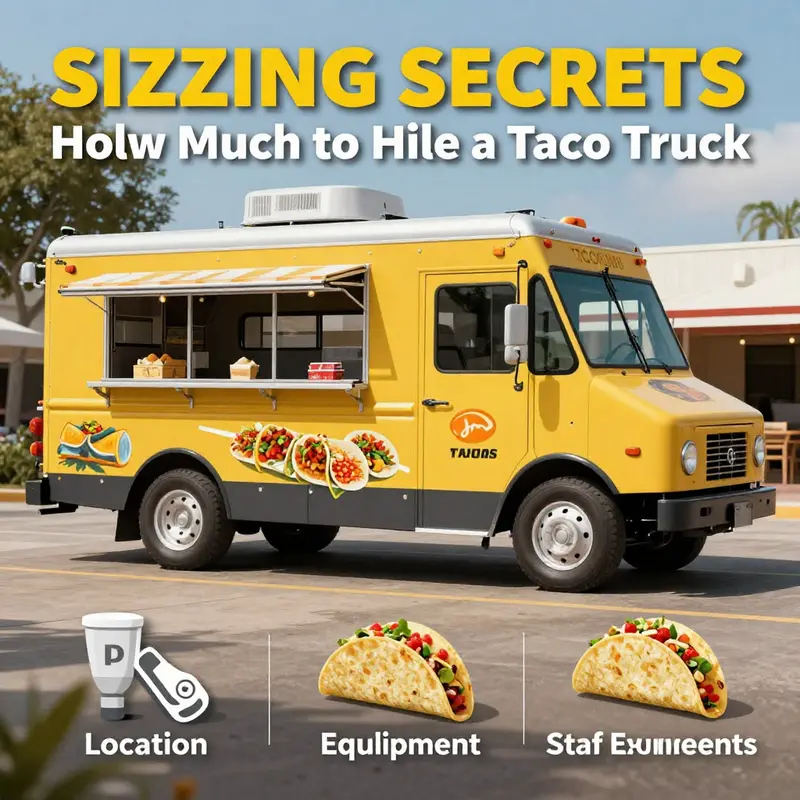
A taco truck rolling into your event is as much a financial decision as it is a flavor experience. The sizzle and the colorful branding create a mood, but the price tag behind that mood is a mix of practical costs, logistics, and the expectations you set for your guests. When you step back from the aroma of seasoned meat and fresh cilantro, you’ll find that the “how much” question splits into two parallel paths: one rooted in renting the truck itself by the day or week, and another grounded in per-person catering rates for events. Both routes are common, both are shaped by similar forces, and both require you to balance what you want with what you’re willing to pay for the pause in the day when a line of fans finally reaches the counter. As of 2026, market patterns show the most transparent way to forecast costs is to map out the event’s scale, location, and desired experience, then translate those factors into either a daily vehicle cost or a per-head price. The result is a practical, context-driven estimate rather than a single universal number.
Renting by the day or by the week presents a straightforward way to secure a reliable kitchen-on-wheels for a discrete window. In North America, and especially the United States, the daily rental for a fully equipped commercial food truck typically ranges from about $300 to $800. This spectrum splits into two rough tiers. A basic setup—a second-hand truck or a lighter retrofit with essential cooking and prep space—often lands in the $300–$500 per day range. It’s well-suited for shorter events, neighborhood gatherings, or pop-up moments where the emphasis is on speed, accessibility, and simplicity. The higher end, $600–$800+ per day, covers high-functioning trucks with full kitchen configurations, robust power systems, refrigeration, branding, and sometimes more expansive service facilities. These are the trucks that show up at large festivals, wedding receptions, or corporate promotions where the event calendar demands reliability, consistent service, and eye-catching presentation.
A layer that many planners overlook at first is the option of “all-inclusive” or staffed rentals. Some rental providers offer packages that include a chef or team for the duration of the event. This all-in approach can elevate the guest experience and drastically reduce coordination burdens for the host, but it also adds roughly $150–$300 per day to the base truck cost, depending on staffing levels and the complexity of the menu. The takeaway here is simple: the sticker price on a taco truck isn’t just the vehicle; it’s the entire culinary machine you’re bringing to site, from the grill and cold storage to the people who will man the grill, greet guests, and keep things clean and moving. A shopper who asks the right questions will understand that a higher daily rate may be paying for consistency, safety, and peace of mind, not just a larger flame on the burner.
If your event is spread over several days or you anticipate repeated use within a short window, weekly or long-term rental can become more economical. Weekly rates often land in the $1,500 to $3,500 range, depending on the truck’s configuration and the inclusive services offered. For longer arrangements—three months or more—service providers frequently present discount bundles that incorporate maintenance, basic insurance, and routine support. The economics shift meaningfully when the vehicle is a working kitchen rather than a one-off prop; the more time you commit, the more you can leverage the maintenance and support components as part of a bundled package. When you’re budgeting for a festival circuit, a series of private events, or a multi-day corporate activation, the long-haul pricing can be the difference between a one-off spectacle and a repeatable culinary experience.
Yet, for most hosts the bite-size, per-person approach to pricing remains the clearest way to estimate costs for a particular guest count and service duration. The industry tends to quantify catering services in the range of roughly $15 to $30 per person, with prices climbing to about $25–$35 per person for more elaborate menus or upscale presentation. This is where menu complexity becomes the primary driver: the more refined the taco spread—house-made tortillas, premium meats such as carne asada or al pastor, or a robust selection of vegetarian or vegan options—the higher the ingredient costs and the labor hours behind each plate. Those premium touches are what push the per-person price into the upper tier. A basic taco offering with standard proteins and standard sides will land closer to the lower end of the spectrum, whereas a sophisticated menu with curated toppings, chef-driven flavors, and a polished service station nudges the price upward.
Location and accessibility also shape the bill in meaningful ways. Urban centers with high demand often see transportation and logistics surcharges, access constraints, and additional permitting costs folded into the final price. Rural or remote locations may require longer travel times or specialized equipment to reach the site, which translates into transportation fees that can be added to the per-person quote. Service duration is another critical lever. A six-hour event requires more staffing hours, longer food preparation windows, and extended equipment use, which tend to raise overall costs. In contrast, a compact two-hour segment may allow a leaner crew and shorter setup time, keeping the per-person price toward the lower end. The truck’s condition and equipment level matter as well: a well-maintained vehicle with a complete kitchen, reliable refrigeration, and ample prep space underpins faster service and consistent quality, but it comes at a higher operational cost that is reflected in the pricing.
Seasonality punctuates the pricing conversation in a way that guests rarely notice. Summer weekends, spring wedding season, or holiday events create peaks of demand. When demand spikes, so do the margins for operators who can commit the truck to a calendar full of events or sell premium slots during peak times. From the host’s perspective, this seasonality means that booking early, especially for popular dates, can lock in more favorable per-person rates and avoid late-season price surges. A host who plans ahead may secure an already-provisioned truck for a fixed rate, while a last-minute inquiry during a busy window could trigger premium pricing simply because the supply is thin.
To illustrate how these factors feel in practice, consider two pricing scenarios that reflect typical event profiles. A neighborhood celebration with a taco truck offering standard fare might price around $15–$20 per person for a modest guest list of 60 to 100 attendees. In this case, the goal is reliable throughput, quick lines, and consistent flavor, with a focus on affordability and accessibility. By contrast, a corporate event or a large-scale festival with a more elaborate menu and an emphasis on branding and presentation could push the per-person price to $30–$35 or higher. Here, guests may expect custom toppings, premium proteins, choreographed service stations, and a polished aesthetic that elevates the event experience. In both cases, the math is straightforward: multiply the per-person rate by headcount, then factor in service duration, staffing, and any transportation or setup fees that the vendor might apply.
A practical way to think about these numbers is to compare the two primary purchase logics side by side, not as competing choices but as two facets of the same decision. If you’re looking for predictability and a fixed milestone, a daily or weekly rental provides a contained budget, with the potential for bundled services that simplify coordination. If your focus is guest-centric experience and menu flexibility, a per-person catering price aligns with the number of mouths you plan to feed and the scale of the culinary show you want to provide. In either path, the critical steps are the same: define your guest count and service duration, map out your must-haves versus nice-to-haves in terms of equipment and staffing, and probe the vendor’s capabilities for reliability, insurance, and compliance with local health codes. It’s also wise to ask about what’s included in the quote beyond the stove and the grill. Is there a dedicated on-site chef? Are plates, utensils, napkins, and condiments included, or will those be billed separately? Will the truck arrive with prepped ingredients or will all food prep occur on-site? Such questions sound granular, but they determine whether your final invoice reflects a clean, turnkey experience or a cascade of add-ons that complicate budgeting after you’ve signed the contract.
From a bidding and comparison perspective, what you’re really doing is setting a benchmark for what the market expects for your event type. The data you collect from multiple quotes isn’t just a price sheet; it’s a map of capabilities, service levels, and the intangible factors that shape guest satisfaction. When you hear a host describe a price as “too high,” ask which elements drive that feeling. If the price reflects a premium menu, a higher-end branding package, and a robust service crew, that’s a signal that you’re paying for a more immersive experience. If the price seems high for a standard menu but does not include transportation, insurance, or on-site staffing, you’re likely looking at a package with hidden costs that require careful scrutiny. The inverse is equally true: a lower quote can be a savvy choice if it covers the essentials—food safety, timely arrival, and clean teardown—without pinching guests’ enjoyment with optional extras.
As you assemble your budgeting framework, a practical touchstone is to think about the total event experience, not only the dining line. For instance, a well-priced basic taco truck can still delight guests if it’s paired with a thoughtfully designed service flow, clear signage, and a friendly team that engages guests with a quick, informative riff on the menu. A more premium approach might weave in live-fire theatrics, a chef narrating the sourcing and preparation, and a branded station that doubles as a photo backdrop. Each choice carries a different price trajectory, but both share one constant: the goal of delivering taste, speed, and consistency in equal measure. When you align your expectations with the truck’s capabilities and the event’s wishes, you begin to see the cost not as a single barrier but as a spectrum of value—the cost of momentum, the investment in brand experience, and the assurance that your guests will walk away with a memory as tangible as the flavors on their plate.
If you’re weighing options and want a structured framework, you might explore resources such as guides that discuss pricing and catering costs within the food-truck space. These guides offer practical language for comparing quotes, identifying what’s included in the price, and understanding typical ranges for different event types. For more context on pricing and catering costs, you can consult an industry overview that consolidates current market expectations and practical scenarios. And when you’re ready to dive deeper into the specifics of choosing a vehicle that fits your culinary ambitions, a centralized guide on selecting the right food truck can provide a clear, vendor-neutral checklist that helps you assess options without getting lost in marketing fluff.
For hosts who want a quick reference as they plan, picture this: a basic taco truck that serves standard fare at a neighborhood gathering will likely sit at the lower end of the price spectrum, roughly $15–$20 per guest. For a more elaborate event with premium ingredients and a multi-faceted presentation, expect the per-person price to climb to the $30–$35 range. Across all scenarios, the event’s scale, the menu’s complexity, the location’s accessibility, and the service duration are the decisive levers. If you’re curious about how this plays out in real budgeting exercises, a practical, up-to-date comprehensive guide on food truck catering costs offers a structured lens to compare numbers, understand what’s included, and plan with confidence. In the hands of a thoughtful planner, these figures become not a guess but a grounded estimate you can defend to stakeholders and guests alike.
To navigate from theory to action, I recommend anchoring your plan to a single internal reference that helps you compare options without wading through endless marketing pages. The Choosing the right food truck guide offers a vendor-neutral approach to evaluating trucks, menus, and service models. It’s a useful companion as you translate this chapter’s pricing range into concrete quotes and a final budget that matches your event’s ambition. If the host’s goal is a memorable culinary moment without surprises in the checkout line, then your decision should hinge on the balance of value and experience you’re aiming for, not just the headline price. When you approach the process with this mindset, you’ll find that the right taco truck isn’t simply the lowest bidder or the flashiest truck; it’s the one that best aligns taste, service, timing, and cost into a cohesive experience for your guests.
External resource for additional context and budgeting guidance: https://www.foodtrucks.com/catering-pricing-guide
The Taco Truck Budget: Costs, Tradeoffs, and Alternatives Beyond Renting
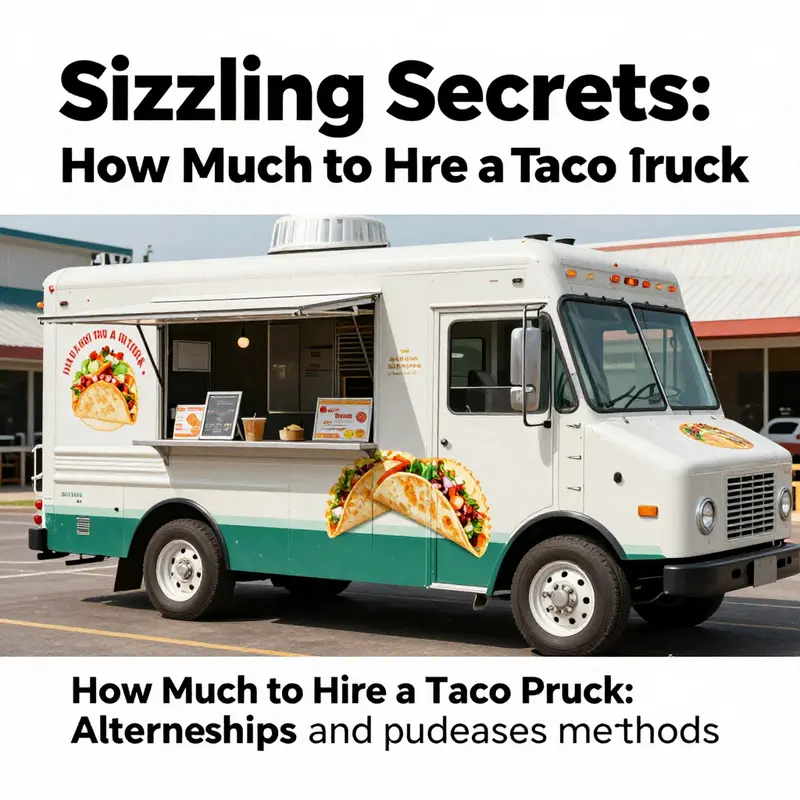
When considering how much it costs to hire or operate a taco truck, the decision is not a single price tag but a spectrum of models with different cash flows and risks.
Renting on a month-to-month basis can provide flexibility for one-off events or testing a concept. Typical costs range roughly from $1,500 to $3,500 per month for a fully equipped truck, with lower costs for barebones setups and higher costs for premium layouts.
Daily rental for events can range from $300 to $800 per day, with add-ons for crew when needed.
Leasing can offer predictable payments and upgrade options at the end of term, usually in the $800 to $2,000+ monthly range depending on terms and customization.
Vendor-operated models often charge a percentage of gross receipts (around 15% to 25%) or a flat daily fee ($200 to $500), trading direct control for turnkey operation and regulatory compliance.
Buying a used truck typically costs between $30,000 and $70,000, plus ongoing maintenance, insurance, and depreciation. Permits, licenses, and insurance are ongoing costs regardless of model and can significantly affect the bottom line.
Alternative paths include partnering with an established operator, using smaller units like push carts or kiosks, or testing a concept through festivals or pop-ups before committing to a full truck fleet. These options reduce upfront risk while providing real-market feedback.
Ultimately, the right choice depends on event frequency, market demand, cash availability, and your tolerance for operating complexity. Build a simple forecast that compares fixed costs (rent, lease, loan payments, insurance) to variable costs (fuel, maintenance, staff) and expected revenue from events to identify the break-even point.
Final thoughts
There you have it—a mouthwatering dive into the world of taco truck rentals! Whether it’s the daily fees or the advantages of long-term contracts, understanding the costs involved is essential for any taco enthusiast or event planner. By considering key factors like location, truck capabilities, and whether or not you’ll need staff, you’re better equipped to make an informed decision. Plus, don’t forget the alternatives; partnering with an existing truck or even buying your own might just lead you to your flavorful future in the taco business. So, what are you waiting for? Embrace the taco excitement, and get your event rolling with deliciousness!