
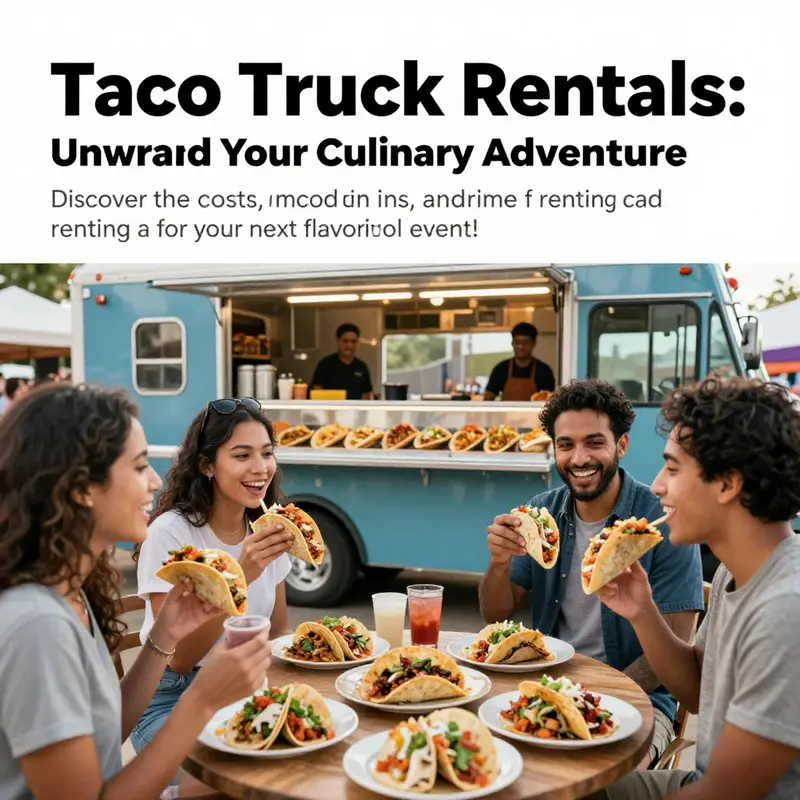
Are you a taco enthusiast eager to bring the street food experience to your next gathering? Or perhaps you’re a budding entrepreneur ready to dive into the vibrant world of mobile cuisine? Renting a taco truck can turn heads and tantalize taste buds, but understanding the costs involved can make all the difference. In this savory guide, we will explore the essential aspects of taco truck rentals, from understanding the basic costs to exploring options that fit your specific culinary needs. Each chapter will build upon the last, helping you savor every detail of this delicious journey.
The Price of Mobility: Decoding the Real Costs Behind Renting a Taco Truck
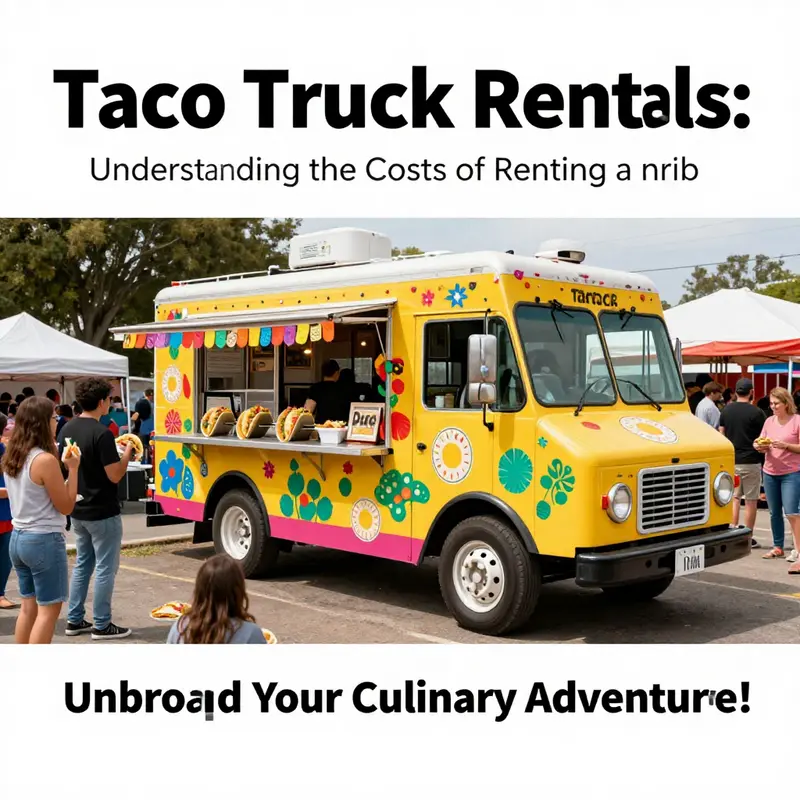
Choosing to enter the mobile food space isn’t just about cooking on wheels; it’s a decision shaped by upfront costs, ongoing expenses, and practical trade-offs. The spectrum runs from bare chassis rentals to fully equipped mobile kitchens with permits and ongoing maintenance included in monthly payments. The path you choose—whether you rent a simple pickup capable of pulling a cart or you lease a fully equipped kitchen on wheels—shapes the budget, risk, and growth trajectory. If you want a foothold in a busy street or festival circuit, upfront expenditure, ongoing operating costs, and potential returns interact in ways that can compress risk or magnify it. Understanding those interactions requires looking at the pieces of the puzzle with scope and nuance.
To begin, there is a fundamental distinction between renting a vehicle for a cart-style setup and renting or leasing a turnkey mobile kitchen. The first option is a way to test the market or supplement an existing operation with a portable shell that can be parked and served from but does not carry the full weight of a compliant kitchen. The second option—the fully equipped mobile kitchen—includes built-in refrigeration, exhaust, cleaning stations, safe cooking surfaces, and the permits, licenses, and maintenance that keep a compliant restaurant on wheels operating in a turnkey fashion. In practice, the cost gap between these avenues can be wide, and the daily or monthly price tags reflect the different layers of capability, risk, and compliance entailed.
For perspective, price ranges seen in rental markets vary. A standard pickup truck rental can be affordable for moving a cart or trailer from one site to another. In smaller markets, basic vehicle rental can sit in the mid-60s per day. In some places, you’ll see numbers hovering around sixty-four dollars daily for a straightforward pickup that can tow a compact unit or a basic cart. In other markets, similar pickup options might start higher, around the mid-to-high sixties per day, with variation by location and terms. A step up in price often accompanies greater convenience or higher demand. In these markets, rates may edge toward the seventies per day. The takeaway: if you’re simply moving a non-electric cart or an unattended setup, transportation can be economical, especially for pilots.
If you widen the scope to more premium transportation—think of a truck with towing capacity and a comfortable setup—the price responds accordingly. In a city with a sophisticated fleet market, a premium electric pickup can command a higher daily rate. A premium option was listed at about one hundred forty-two dollars per day. That price reflects not only the vehicle’s capabilities but flexibility, reliability, and potentially lower maintenance costs associated with an electric platform and near-new condition.
If the aim is a fully functional mobile taco business rather than a cart, the initial expense becomes different. The starting price for a basic taco food cart unit—a trailer or cart designed to house a small kitchen and service window—is typically described differently from a rental rate for a simple truck. In market data, the starting price for basic taco cart configurations is around two thousand dollars for a small quantity, with the per-unit price dropping with larger orders. For one to two units, you might see around nineteen eighty dollars per unit; for orders of seven or more, roughly sixteen eighty dollars per unit. That illustrates a principle: quantity drives price efficiency. If you’re planning expansion, the per-unit setup cost can be much more favorable at larger volumes.
Yet the sticker price of the trailer or cart is only one facet. Owning or renting a mobile kitchen entails ongoing costs that can alter total cost of ownership. Insurance, for example, is a recurring line item that can run fifty to one hundred dollars per day. Add ongoing expenses—fuel or power, routine maintenance, wear on equipment—and the permits and licensing required to operate in a given area. Permitting may include health certifications, vendor permits, and event fees, which can be costly and time-consuming. The exact mix varies by location, but the framework is similar: lower upfront price may mask higher daily, weekly, and monthly costs once you’re up and running.
For many operators, renting rather than buying or leasing hinges on the balance of upfront investment, ongoing costs, and expected ROI. Leasing can offer predictable monthly payments, often bundled with maintenance and insurance, simplifying budgeting. The trade-off is that monthly payments can be substantial, sometimes ranging from about fifteen hundred to three thousand dollars per month depending on the model and service package. The question is whether higher long-term cost provides more security, reliability, and scale, or if direct purchase with upfront capital and lower ongoing obligations is a better path toward profitability.
The potential revenue picture matters as much as the cost picture. A well-located taco truck can generate meaningful daily revenue; some scenarios exceed a thousand dollars per day depending on foot traffic, pricing, and menus. ROI is not a simple subtraction; it depends on how often the truck operates, event length, labor costs, ingredients, and turning foot traffic into sales. Menu pricing should reflect costs of goods, labor, and overhead, calibrated to the local market. A strong concept in a busy zone offers better odds of hitting or exceeding that $1,000 per day mark than a marginal location. The numbers are directional signals about where the business will perform best and how quickly it can scale.
From a practical standpoint, the path is best viewed as a staged continuum. Start with a modest transport-focused vehicle to test concept viability, sourcing, and safe food preparation, then upgrade to a more capable platform for a full kitchen if demand supports it. If events are demanding, a leasing option that bundles maintenance and insurance can reduce ownership friction while preserving upgrade options as technology and the brand evolve. Each step carries its own costs and risks, and the optimal path depends on the appetite for capital expenditure, managerial complexity, and expectations for growth.
To ground planning, study the lifecycle of a rental decision in real-world terms: city and event mix, permit requirements and renewal timelines, insurance costs, and coverage needed for a mobile kitchen with a full menu and potentially hazardous cooking processes. If you envision rapid expansion across markets, plan for a small fleet with standardized equipment and shared maintenance; a solo operator may prefer a lean model with flexible staffing. Practical resources that outline basic-to-premium configurations can help translate price points into actionable budgeting, aligning upfront cost with ongoing expenses, reliability, and growth potential. Remember that price signals reflect market conditions, not guarantees. The conversation about renting a taco truck is about strategy—balancing capital, risk, and opportunity to deliver a compelling product and sustainable business. If you want a quick scaffold, compare basic versus premium configurations, focusing on location, menu, and staffing. And for current market offerings, consult listings that illustrate pricing variations for basic carts and trailers. The snapshot helps anchor expectations as you map your own plan, ensuring investment aligns with goals and market dynamics.
External resource: https://www.alibaba.com/product-detail/Cheap-Catering-Trailer-Taco-Food-Cart_1600497881792.html
Final thoughts
Renting a taco truck is not just about the cost; it’s about the experience, the flavors, and the joy you can bring to your events. Whether you’re serving up street-style tacos at a wedding or launching a new food venture, understanding your options and their associated costs empowers you to make the right choice. So why not spice up your next occasion or business venture with the delightful taste of tacos? Dive into the world of taco truck rentals and get ready to serve happiness one taco at a time!