
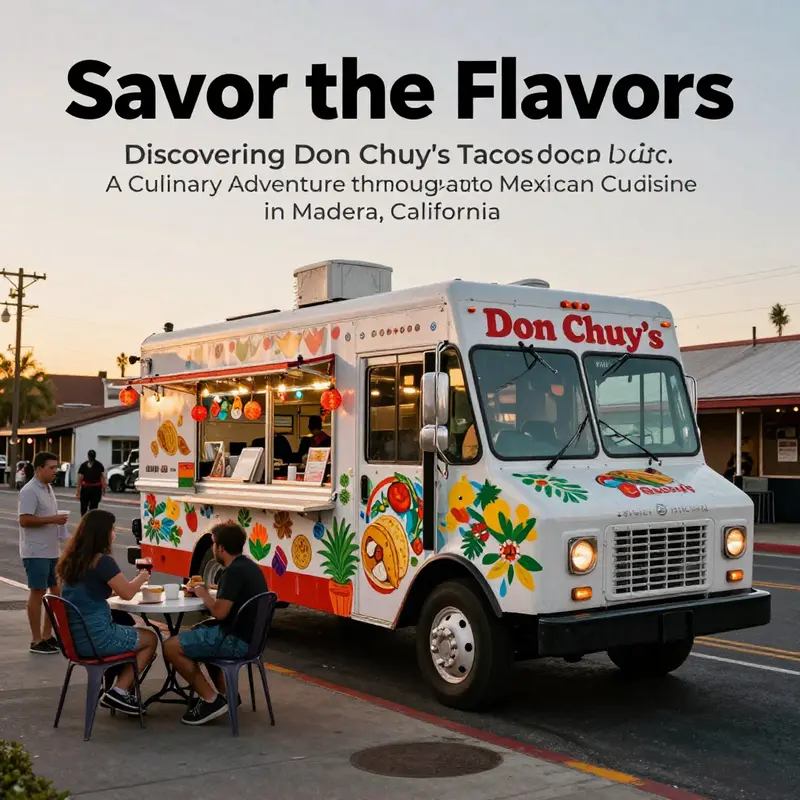
Tacos are more than just a meal; they’re an experience that embodies the heart and soul of Mexican culture. In Madera, California, one food truck stands out among the crowded streets, beloved by locals and foodies alike: Don Chuy’s Taco Truck. This mobile kitchen serves up authentic flavors that bring people together and foster a vibrant food culture. In the chapters that follow, we will delve into the popularity of Don Chuy’s, exploring what makes it a staple for taco fans. We will highlight the culinary offerings on its menu that keep customers coming back for more, and finally, we’ll examine the impact Don Chuy’s has on the local food scene, showcasing how food trucks like this can influence community and culture.
Wheels Through Madera: The Enduring Popularity of Don Chuy’s Taco Truck
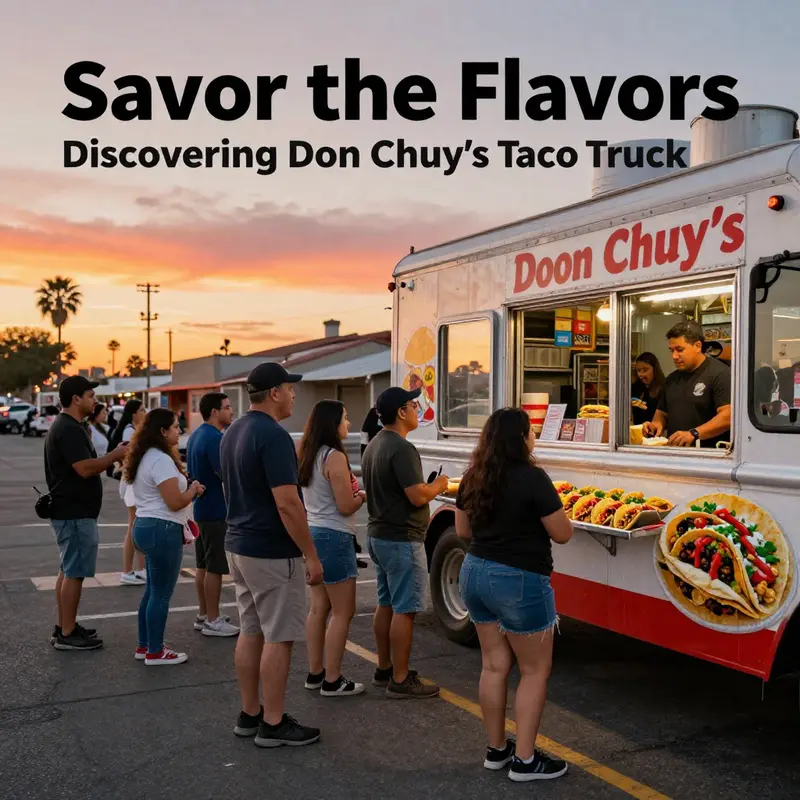
The story of Don Chuy’s Taco Truck unfolds where the rhythm of daily life in a small California city meets the scent of simmering onions, grilled meat, and warm tortillas. In Madera, the truck isn’t just a place to eat; it’s a moving anchor in a community that values both flavor and reliability. Locals and visitors alike come for the same reason they return to familiar faces: honest food served with a steady hand and a sense of place. The landscape of street food in small-town America often centers on speed and novelty, but in this corner of the Central Valley, the allure rests on something steadier—consistency, generosity, and a willingness to bring people together in a shared moment around a simple, well-made meal. Don Chuy’s has become a fixture not because it churns out fancy gimmicks, but because it preserves a lineage of taste that resonates with families, workers, and students who crave a meal that feels both familiar and satisfying after a long day.
The origin story is intimate and telling. The business began in 2001 as Carniceria Y Taqueria Don Chuy, rooted in a storefront that treated the kitchen as a workshop where tradition was not merely preserved but practiced daily. The leap from storefront to mobile truck was more than a change of venue; it was a strategic choice to meet people where they gather—at markets, outside workplaces, and along busy streets where the pace of life invites a quick, flavorful pause. The transition preserved the core promise: handmade meals crafted with fresh ingredients, honoring the old world techniques that make Mexican street food feel honest and deeply satisfying. In the truck’s early days, the same values that sustained the storefront carried forward—the care taken with each tortilla, the attention paid to picking16 ripe produce, and the respect shown to customers who walked away with more than just sustenance but a memory attached to a familiar scent and a smile from the cook. That continuity matters. It signals to a community that the move to mobility did not erode quality; it expanded access while preserving the heart of the kitchen.
To walk up to Don Chuy’s is to feel the pull of a well-worn routine, a sense that you are about to be welcomed into a space where food tells a story you’ve heard before and yet still want to hear again. The menu—comfortingly expansive in its simplicity—offers classic tacos, burritos, and other traditional dishes that embrace a wide range of tastes without losing the distinctive character of the region. It is not about chasing the latest trend; it is about offering dependable, fresh flavors day after day. The tortillas, often made by hand, carry a certain resilience that only comes from careful craft: pliable yet sturdy enough to hold a generous filling, a subtle sweetness that complements the meat rather than competing with it. The fillings are generous, a feature that matters in a culture that views meals as rituals that honor fullness and sharing. A bite carries a balance of textures—the snap of fresh onions, the bright lift of cilantro, the lilt of a well-seasoned salsa, and the smoky perfume of meat kissed by open flame. In this combination, Don Chuy’s tap into a universal appeal: the idea that good food should be generous, accessible, and produced with pride.
What fuels the truck’s popularity goes beyond the plate and into the social fabric of Madera. Don Chuy’s is not merely a place to grab a quick bite; it is a neighborhood destination where people catch up, where coworkers celebrate small wins, and where families turn an ordinary lunch into a shared experience. The owners have nurtured an atmosphere of reliability that becomes a quiet form of social infrastructure. They show up on schedule, they adapt to the needs of the moment, and they offer service that feels personal without becoming overbearing. This blend of dependability and warmth is essential in a city where many residents balance work, study, and family life. When a birthday or family celebration needs a reliable catering option, the truck has repeatedly proven itself a trusted partner, a memory-maker in which kids’ birthdays or family gatherings become a little brighter thanks to a feast that tastes like home away from home. The anecdotes stitched into local chatter—of a party where the host could focus on guests while the truck coordinated the logistics, or of a school event where a queue of kids formed with gleeful anticipation—are not mere stories. They are evidence of a service model that respects time, values other people’s plans, and rolls with the day’s changes with ease.
One of the most persuasive chapters in this growing narrative is the sense of continuity that comes from the business’s roots. The storefront era built a framework that transformed as the truck traveled, yet the core ethos remained intact: ingredients were kept fresh, preparation was meticulous, and the cooks spoke softly with the food in their hands, allowing the flavors to do the talking. This reverence for the craft permeates the entire operation. You feel it when a server greets you with a smile earned from years of working the line, when a tortilla is warmed over a small griddle that has seen countless meals pass through, and when a sauce is prepared with a careful ratio that lets the meat’s natural juices mingle with heat instead of overpowering them. The menu, while familiar, becomes a canvas on which the cooks paint with restraint. They do not clutter the plate with unnecessary adornments; they let the ingredients speak for themselves, supported by a light hand with seasonings, a respectful nod to regional variations, and a final touch of brightness that awakens the palate.
Geography matters in this story too. The truck’s physical presence at 1428 S Madera Ave is more than a coordinate on a map; it is a beacon for a city that often moves quickly from one obligation to the next. This site has become a meeting point where the morning crowd trades quick banter for a hot meal, and the afternoon crew stops by for a late lunch that breaks up the workday with something satisfying and familiar. The consistency of hours and the visibility of the truck’s location contribute to a sense of ritual—people know when to expect it, and they plan around it, much like families plan around school and work. The online voice of the business, from the official website to social channels, keeps the same rhythm: updates on menu items, hours, and location, ensuring that even casual observers can count on current information to plan their visit. In an era when food trucks can be fleeting and unpredictable, Don Chuy’s maintains a quiet confidence born of years spent refining a model that works for a community with appetite and schedule. This reliability translates into trust, a currency that grows with each repeat customer who returns for the same dependable flavors and the same welcoming exchange.
The generosity of Don Chuy’s menu is not simply about large portions; it emerges in the subtle inclusivity of the offerings. The truck embraces a broad audience—from families seeking approachable, comforting meals to colleagues craving a quick, satisfying lunch that satisfies without sacrificing quality. The result is a cross-section of the town at any given hour: students assessing a budget-friendly meal with real flavor, workers catching a moment of relief between shifts, and older residents who recall similar flavors from their own childhoods, now found again in the present on a street corner. The community’s response—expressed in the steady stream of positive reviews on platforms that capture local opinion—speaks to a shared sentiment: that when a mobile kitchen respects taste, time, and people, it earns a lasting place in the city’s social map. The narrative is reinforced by real-world attestations from patrons who have used the truck for celebrations and everyday meals alike, highlighting not only the food but the service’s adaptability. The fact that a customer could book the truck for a child’s birthday celebration is telling; it reveals a degree of civic trust that goes beyond mere satisfaction. It signals that the truck is versatile enough to become part of life’s milestone moments, a role that few food options sustain over years in a community.
To understand the breadth of the truck’s appeal in a place like Madera, it helps to read the broader social texture—the way people move through the city, the way local businesses support one another, and the way a flavor tradition travels with a team that treats cooking as a craft rather than a performance. The success here is not an isolated accident of taste; it is the outcome of deliberate choices: sourcing fresh ingredients, maintaining the integrity of traditional techniques, training staff to deliver calm, friendly service, and showing up with enough food and warmth to handle peak times and weathered schedules alike. The result is a restaurant-on-wheels that feels less like a temporary phenomenon and more like a permanent, welcome presence in the daily life of Madera. That sense of permanence is a keystone of its acclaim and is precisely what makes it a standout in an industry where novelty can blink out as quickly as it shines.
For readers who want to understand this dynamic in practical terms, consider a framework that values mobility without sacrificing heritage. The principle is simple: a mobile kitchen should extend the reach of a kitchen’s best qualities—the care, the craft, and the communal spirit—while remaining adaptable to the realities of a street-based operation. In this sense, Don Chuy’s Taco Truck embodies a thoughtful balance between tradition and innovation. The truck’s ability to move to different locations while maintaining the same standard of cooking and service demonstrates how a small, family-run operation can compete in a world where customer expectations keep rising. It is a story of resilience, not merely flavor; a reminder that when a business honors its roots while embracing the opportunities of mobility, it can become more than a place to eat—it becomes a catalyst for shared experience, a place where strangers become acquainted through the common language of appetite and hospitality. The popularity it enjoys in Madera is, in part, a testament to the city’s willingness to embrace culinary heritage that travels well and travels far, as well as to a business that never forgets the people who line up, the hands that dish out meals, and the smiles that greet them at the window.
In examining a successful local favorite, it becomes clear that the strength of Don Chuy’s lies not only in the food but in the way the food makes the moment meaningful. The truck’s presence answers a human need for nourishment that is rooted in culture, memory, and belonging. It is a reminder that meals can be more than sustenance; they can be rituals that help a community feel seen, valued, and connected. The popularity in Madera is a story about more than a tasty bite; it is a narrative about trust built over years, about the quiet dignity of doing a job well, and about a shared appetite for tradition delivered with speed and warmth on a sunlit street corner. And as long as the truck continues to navigate the city with the same steady cadence, it will likely remain a cherished chapter in Madera’s ongoing food story.
To explore how mobility, craft, and community intersect in ventures like this, many observers find it helpful to reflect on the broader landscape of food entrepreneurship. The journey from storefront to street side is a reminder that the best cooks often possess not just skill but a willingness to meet people where they are. In the case of Don Chuy’s, that willingness translates into a reliable meal that travels with the day’s moods and schedules, a menu that accommodates a spectrum of tastes, and a presence that feels both familiar and essential. The result is not fleeting popularity but a durable, beloved presence that town and visitors alike come to recognize and rely upon. It’s a narrative of nourishment that travels well, a story of how a kitchen’s heartbeat can echo across a city while staying true to its roots.
For those curious about how such a mobile kitchen earns its enduring trust, a useful starting point is the idea of choosing the right food truck. See a concise discussion of the essential considerations in Choosing the right food truck. This resource highlights how mobility, menu design, and service style interact to shape a dining experience that feels both easy to access and deeply satisfying. It is a reminder that popularity in a place like Madera arises not from chance but from a deliberate blend of craft, reliability, and community orientation. In this sense, Don Chuy’s Taco Truck is more than a cultural icon of a city’s food scene; it is a case study in how a small, family-run operation can sustain lasting appeal by staying faithful to the qualities that first drew people in and by adapting the form to the needs of a dynamic urban fabric.
External perspectives about customer sentiment in this context can be found in widely used review platforms that capture the lived experiences of patrons. For a snapshot of how many customers frame their visits, see the following source: https://www.yelp.com/biz/don-chuys-tacos-and-catering-madera
On Wheels, In Flavor: The Menu and Craft of Don Chuy’s Taco Truck
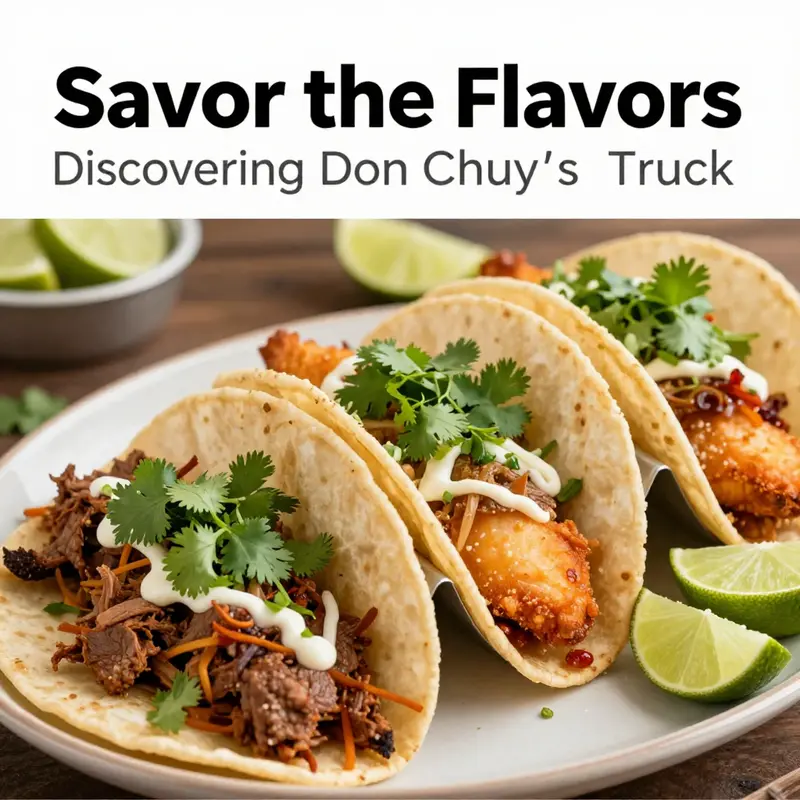
The sight and scent of Don Chuy’s Taco Truck arriving in Payson is a welcome signal that an evening can become a small festival of Mexican flavors. The truck’s presence deserves more than a passing nod; it marks a deliberate meeting point where tradition meets mobility, where a portable kitchen can deliver comfort and character in a single, satisfying bite. In Payson, this has become more than a quick meal. It is a ritual that locals and visitors alike return to, a reminder that great street food can feel as intentional and comforting as a home-cooked plate, even when it is served from a bright vehicle that glides into town with the sun on its hood and the grill singing just beneath a thin sheet of steel. The menu, in its seeming simplicity, is actually a carefully calibrated menu of memories and techniques, a compact syllabus in Mexican flavors that travels with the truck, ready to be read and tasted by anyone who approaches with appetite and curiosity.
At the heart of the lineup is a standout combination of meat and tortilla that reads like a compact tour of the region’s most beloved street staples. The Carne Asada Burrito arrives wrapped in a soft flour tortilla, its fillings arranged like a coiled landscape of flavors you can uncoil with each bite. Juicy, grilled beef provides a savory core, its char and smoke tempered by the warmth of the tortilla and the gentle heft of rice and beans that frame the protein. The texture is key here—the beef is not merely flavorful, it yields with a confident tenderness, while the surrounding components offer a comforting, almost-housemade balance that makes the burrito feel substantial without becoming heavy. It is the kind of dish that travels well, a portable pocket of protein and starch that still tastes bright and fresh as you unroll the next segment.
Then there are the Tacos de Barbacoa, which occupy a different space on the palate. These are noted for their tender, slow-cooked beef, a meat whose fibers loosen with the touch of a fork and with the steam of the cooking process. Each bite releases a savory depth that lingers, the kind of savor that invites you to chew a moment longer, to let the flavors unfold rather than rush toward a quick finish. The balance here relies on the meat’s natural richness, a hint of caramelization from the slow-roast process, and a touch of brightness from fresh toppings. It is a reminder that the best barbacoa lives in the space between patience at the stove and the immediacy of a hot plate served on a curbside window. The result is not just nourishment; it is a narrative about time, technique, and the way a humble truck can carry a tradition forward with practical ease.
Beyond these signature dishes, the broader menu reveals the range that a mobile kitchen must embrace to satisfy a diverse crowd while remaining faithful to its core identity. The Al Pastor Tacos, for example, showcase pork marinated and prepared with the same respect for craft that flavors the rest of the lineup. The description here is brief, because the beauty lies in the technique: pork marinated and then cooked on a vertical spit until the exterior holds a crisp, caramelized edge while the interior remains tender and juicy. The geometry of flavor is deliberate—the spice profile, the slight sweetness from the caramelization, and the crisp bite of a warm tortilla together form a set of contrasts that keep the experience engaging bite after bite. Then there are the Chicken Tinga Tacos, where shredded chicken takes on a smoky resonance from a tomato-chipotle sauce. The heat is measured, the smokiness pronounced but never overwhelming, and the overall effect is a bright, lively dish that carries a hint of heat to wake the palate without shutting it down.
The vegetarian offering on the truck’s board is equally thoughtful, proving that a plant-forward option can deliver a satisfying, full-bodied experience without feeling like a compromise. A vegetarian taco with sautéed peppers and onions offers a fresh counterpoint to the meatier selections, emphasizing the same care for texture and seasoning. The peppers bring sweetness and snap, the onions contribute aromatic depth, and the tortilla remains a steadfast vessel that holds everything together with a gentle hold. This is where Don Chuy’s Taco Truck demonstrates its understanding of its audience. It is not simply a celebration of meat, but a celebration of flavor, aroma, and balance across a spectrum of preferences and appetites.
What makes these dishes feel distinctive in Payson—and perhaps in any locale where the truck makes a stop—is the way the kitchen reads the specifics of its ingredients and translates them into a clear, readable flavor map. The beef shows up with a smoky edge and a bright, almost citrus lift in the form of fresh toppings, while the barbacoa relies on slow-cooked tenderness that invites the eater to slow down and savor the texture. The al pastor offers a crisp, caramelized exterior with a warm interior, a contrast that is heightened by the tang of salsa and the freshness of cilantro and onion accents. The tinga’s tomato-chipotle presence gives a smoky, tangy finish that lingers pleasantly on the tongue. Taken together, these elements form a cohesive line of offerings that feels both anchored to Mexican street-food traditions and refreshed by the immediacy of a mobile kitchen’s rhythm. Each item is a small lesson in technique—grill, roast, marinate, braise, brighten—and a reminder that great flavor can occur anywhere, so long as a cook remains attentive to heat, timing, and balance.
In Payson, the truck has earned its status not only through temperature and technique but also through the relationships it builds with diners. The menu works as a social instrument as much as a culinary one. People come for the recognizable favorites, yes, but they also stay for the way the truck positions itself as a point of cultural exchange—a place where strangers become familiar by sharing a single plate, where the act of ordering becomes part of the experience, and where toppings and sauces are the quiet dialect that binds flavors together. The sensory loop is clear: first the sizzle, then the aroma that hits as the lid lifts and the toppings are added, then the first bite that confirms that the dish has the power to evoke memory and curiosity in the same instant. This is the magic of a well-curated menu on a mobile stage. It is not simply about the recipe; it is about the story that the kitchen tells with every plate and every wrapper, with every nod to tradition and every wink to the present.
The truck’s ability to operate in a small footprint and deliver consistent quality has also earned it a certain standing in the local fast-food landscape. As of January 2026, it was ranked as the fifth best fast-food spot in Payson out of seven in that local area. The ranking hints at something essential: in a market where convenience and speed often define value, Don Chuy’s Taco Truck has carved out credibility through repeatable quality and a menu that honors its core ingredients. The drive for reliability—well-seasoned meat, tortillas that are neither too thick nor too thin, toppings that sing rather than overwhelm—translates into a simple but powerful brand proposition: you know what you’re getting, and you’re still eager for more. This consistency matters on a street where options change quickly and appetite can be as fickle as the weather. A good taco truck earns trust the way a good neighbor earns trust—through predictable warmth, a familiar flavor, and a sense that a good meal will be there when you need it.
Culinarily, the truck sits at an interesting crossroads. It has the immediacy of street food—fast, flavorful, and designed for quick, satisfying meals—while also carrying the weight of traditional cooking techniques that require time, attention, and respect for the ingredients. The Carne Asada Burrito is a case in point: it is not a rushed assembly line product but the result of purposeful grilling, careful assembly, and thoughtful accompaniments that add dimension without clutter. The Barbacoa, likewise, whispers of patience and control—the ability to coax tenderness from a cut of meat through steady heat and a steady hand. In this sense, Don Chuy’s Taco Truck becomes more than a vendor; it becomes a moving classroom of technique and a local stage where stories are told in flavors.
The educational dimension of the menu extends beyond the kitchen to the customer experience. Diners are invited to notice the balance among brightness, heat, and texture, to recognize how a simple tortilla can carry so much flavor when its integrity is preserved. They learn to expect that a well-made taco will deliver a clean, crisp bite from the shell, the fragrant lift of cilantro and onion, the tart lift of lime, and a carefully measured dab of salsa that enhances rather than overwhelms. The burrito, with its blend of meat, rice, and beans, teaches a larger lesson about proportion and layering: every component enhances another, while maintaining its own identity. Even the vegetarian option demonstrates the versatility of the kitchen’s approach, proving that meat is not the only vehicle for bold, satisfying flavor on a street-truck stage.
From a business or culinary-multure perspective, the menu’s clarity matters. It communicates a philosophy: respect for tradition, an eye for balance, and a commitment to quality that travels well. The foldable, portable format means that careful portioning, reliable sourcing, and timely preparation must work in harmony to deliver consistency across multiple stops and varying crowds. In that sense, the menu reads like a compact manifesto for how a mobile kitchen can maintain authenticity while also remaining accessible and adaptable to different venues and audiences.
To imagine a future for this truck is to imagine the potential for ongoing evolution without losing its core identity. The current lineup demonstrates a flexible frame you can lean into or lean away from depending on the setting, the crowd, or the day of the week. The truck can maintain its character while exploring seasonal toppings, regional twists, or additional vegetarian offerings that speak to a broader set of dietary preferences. What matters is that any modification remains anchored in the same principle that defines its present: clear, appealing flavor, meticulous technique, and a respect for the cultural roots of the dishes. The real value of the truck lies not in chasing trends but in translating tradition into a portable, daily ritual that travelers, locals, and curious eaters can access with ease. That is the power of a well-crafted menu on wheels: it turns a simple bite into a shared experience, a memory of a neighborhood street, and a small, daily affirmation that good cooking does not need a formal dining room to thrive.
For readers exploring how such a business model can be sustained and scaled, consider how menu decisions contribute to building a brand identity and customer loyalty in a mobile context. A thoughtful, well-constructed menu anchors expectations and creates opportunities for repeat visits, word-of-mouth referrals, and social sharing. It also supports the practicalities of a truck-based operation: predictable cooking times, manageable inventory, and consistent portion control. The Payson experience of Don Chuy’s Taco Truck demonstrates that when a menu is curated with both soul and strategy, a simple plate can carry a community’s sense of place from one street corner to the next. In this sense, the truck is not only serving food; it is serving a narrative of authentic Mexican flavors delivered with care, speed, and a clear devotion to craft.
For readers who are curious about the business and culinary philosophy behind this mobile kitchen, a useful point of reference can be found in industry discussions about choosing the right food truck. The linked article offers guidance on how menu decisions and operational goals shape a truck’s identity and success. See Choosing the right food truck for more on how a menu interacts with branding, logistics, and the daily realities of mobile food service. And for those who wish to explore external perspectives on the dining experiences these trucks enable, the Payson community’s own listings provide a tangible snapshot of public reception and ongoing relevance. The truck’s presence in the area, its ranking among local fast-food options, and the tangible love diners show through their words and repeats visits all point to a larger story: mobile food can become a cornerstone of regional food culture when it honors its roots and remains responsive to its audience.
External knowledge about the broader landscape of mobile food can be found in restaurant and street-food reviews, local business listings, and community feedback. In Don Chuy’s case, the combination of a strong, clearly defined menu and the mobility to meet diners where they are has created a reliable, memorable experience. The result is a dining format that respects tradition while embracing speed and flexibility—an ideal synergy for a dynamic dining scene that continues to evolve with every stop the truck makes.
External reference: https://www.yelp.com/biz/don-chuys-taco-shop-payson
Rolling Flavor, Building Community: Don Chuy’s Taco Truck and the Pulse of Local Food Culture
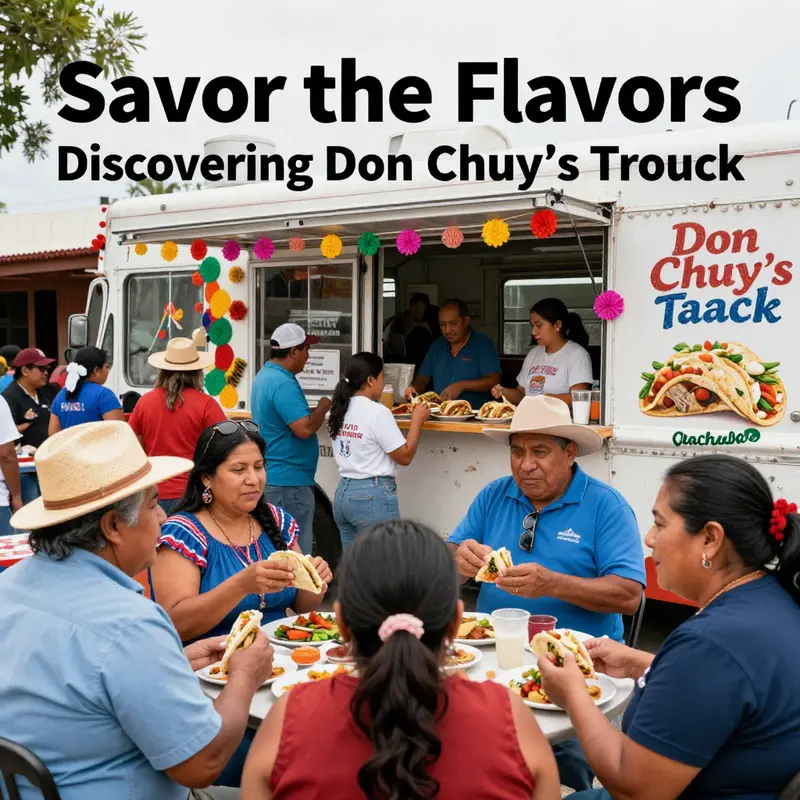
Across the winding streets of Madera and the broader Central Valley, the arrival of Don Chuy’s Taco Truck is more than a gust of scent and heat. It signals belonging, a temporary home for the neighborhood’s shared rituals of hunger and relief. The truck moves through the 93637 area with the reliability of a neighborhood fixture, drawing people who crave not only a quick bite but a sense of connection. Don Chuy’s presence is a reminder that food mobility can anchor local identity just as surely as brick-and-mortar kitchens, and the effect ripples beyond the plate. In places like Madera and nearby communities, the taco truck becomes a mobile commons, a place where strangers become neighbors, and where the act of ordering a simple taco is also an act of reciprocity between cooks, workers, and patrons who are all navigating a common day-to-day grind. The story of this truck, then, is also a story about how Mexico-centered street food travels, adapts, and ultimately finds a resting place within American urban life. The sensory language of street cuisine—char, lime, cilantro, and the whisper of corn tortillas—tells only part of the tale. The full narrative unfolds in conversations held in shade beneath an awning, in shared lines during late shifts, and in the quiet confidence of a regular who knows the exact moment when the salsa kicks in and when the music shifts from regional to universal. Don Chuy’s Taco Truck is a powerful case study in how mobility and community intersect in contemporary food culture, turning a meal into a contribution to local resilience and shared memory.
The social fabric that sustains Don Chuy’s Taco Truck is inseparably tied to the concept of community support and solidarity. A widely cited sentiment from the truck’s patrons captures this ethos: \”Business was slow… then Don Chuy pulled up and reminded us we’re not alone in this grind. Go show them some love. Real ones support real ones.\” This line, more than a line, is a public acknowledgment of the emotional and economic lifeline that small, mobile vendors provide. It reflects a larger truth about street-food economies: they often operate in a precarious space where timing, reputation, and mutual aid matter as much as recipes and speed. In that sense, Don Chuy’s Taco Truck becomes an informal hub of mutual care. It is not simply a place to eat; it is a space where the vulnerable—seasonal workers, small business owners, and families—recognize one another’s presence and resilience. The truck thus serves a dual function. It satisfies hunger while validating a working-class narrative of persistence and solidarity that might otherwise remain unspoken.
The idea of the truck as a social hub is reinforced by the broader pattern observed in many food-truck worlds. These mobile vendors often locate themselves at edges of urban life where people from immigrant backgrounds gather, rest, and plan their days. In this sense, the taco truck becomes a horizontal meeting ground—neither fully formal nor entirely informal—where strangers exchange stories as freely as orders. It is not unusual to see day laborers and local residents sharing space and a meal, their conversations weaving a tapestry of mutual dependence and cultural exchange. The significance of such spaces extends beyond the immediate joy of food. They function as vital nodes in a network of social support, where knowledge about jobs, child care, or housing can be shared, and where a simple meal can soothe the day’s anxieties as much as it satisfies appetite. The phenomenon aligns with broader research that treats the taco truck as more than a culinary artifact. It is a social institution that adapts to shifting urban realities, offering stability in a landscape characterized by change and flux.
Culinary normalization plays a crucial role in this equation. The presence of Don Chuy’s Taco Truck helps normalize Mexican street food within the American urban palate, a process that California has long facilitated through its layered culinary histories. The quiet, daily operation of the truck—tapping into a tradition of hand-made tortillas, seasoned meats, and bright salsas—works to widen appreciation for the craftsmanship that undergirds fast-casual Mexican cuisine. It is easy to conflate authenticity with a fixed origin, yet the truck’s flavor profile reveals a dynamic authenticity: a kitchen that honors tradition while responding to the tastes of local patrons who may come from a mosaic of backgrounds. In this sense, the truck participates in a broader cultural project—one that celebrates Mexican street food as a vibrant, adaptable form of urban nourishment rather than a relic of the past. The shift from a purely immigrant culinary echo to a normalized presence in city life mirrors a larger trend described in national conversations about how food trucks contribute to regional identity and local pride. The narrative in places like California demonstrates how street food can elevate a city’s gastronomic landscape without erasing its origins. The result is a form of culinary normality that invites newcomers to participate without erasing the lineage from which these flavors emerged.
Beyond taste and sentiment, the economic vitality of Don Chuy’s Taco Truck matters deeply. Small, mobile kitchens are engines of entrepreneurship and local employment that often escape the attention given to brick-and-mortar ventures. The truck’s mobility enables it to serve disparate neighborhoods, creating a flexible supply chain that can respond to demand, events, or seasonal shifts. In effect, the business model embodies resilience: it charges forward with limited overhead, leverages social trust, and builds a loyal customer base through reliable quality and consistent presence. The patrons’ sense of solidarity—expressed in the exhortation to support real ones—circles back into the economy, reinforcing a feedback loop where customers feel empowered to invest in the livelihoods of the vendors who feed their communities. This economy is not merely transactional; it is relational. Every interaction between a cook and a customer reinforces a sense of shared responsibility for the neighborhood’s prosperity. The truck’s officers and cooks become familiar faces in the street, credited with contributing to a city’s tempo and to the everyday rituals that knit residents together across age, language, and background.
The cultural dimensions of this phenomenon are equally compelling. Don Chuy’s Taco Truck embodies a form of cultural identity that thrives when food is used as a language of belonging. The truck negotiates in real time the tension between tradition and adaptation, offering dishes that honor regional Mexican influences while incorporating local preferences. In the process, it helps to narrate a broader story of immigrant communities who maintain a sense of home by preserving culinary memory while creating new pathways through which that memory can thrive in a different land. This dual act—preservation and adaptation—results in a food culture that is both rooted and expansive. In urban spaces where diverse populations intersect, the taco truck stands as a cultural ambassador, a mobile stage where stories of migration, labor, and pride are spoken through aroma and texture. The effect on the local culture, then, is not merely about eating well. It is about recognizing shared humanity across cultural boundaries and appreciating how culinary creativity can be a conduit for mutual respect and social cohesion.
To imagine the broader implications, consider how such mobile cultural signifiers reshape urban food ecosystems. They expand the repertoire of what counts as local cuisine and invite residents to participate in a city’s evolving culinary map. The tacos themselves become a form of edible storytelling, each bite carrying a fragment of a history that is being lived anew in public spaces. This is where Don Chuy’s Taco Truck contributes to the normalization of Mexican street food in daily life and to the cultivation of local culinary pride. It is a reminder that food is not just fuel; it is a practice of community building that makes the city feel smaller and more inclusive, even as its streets grow busier and more diverse.
The legal and cultural dynamics surrounding food trucks are part of a larger conversation about how cities regulate and valorize informal economies. The references to regulatory challenges in the broader literature remind us that the truck’s capacity to serve as a community anchor depends on a complex weave of permits, compliance, and public space policies. While Don Chuy’s Taco Truck may ride the edge of these systems, its resilience signals a growing recognition of the social good these vendors can provide when supported by thoughtful policy and engaged urban governance. In this light, the truck’s success becomes a microcosm of a wider movement: a shift toward recognizing street-food economies as legitimate contributors to urban vitality, cultural exchange, and economic opportunity. This is not simply about eating well; it’s about acknowledging and nurturing the social ties that food trucks help forge in our cities.
The narrative around Don Chuy’s Taco Truck also invites us to reflect on the role of food in collective memory. When a truck parks near a bus stop, a school, or a labor site, it becomes part of the day-to-day rituals that structure memory in a community. The scent of grilled meat and citrus juice becomes a recurring cue that listeners later recall on their own terms—after work, at a family gathering, or during a quiet moment on a crowded street. In these moments, food transcends its immediate purpose and becomes a shared language—one that can bridge differences in dialect, background, and experience. The truck, by moving through town, helps to stitch together a patchwork of memories and loyalties that anchor people to place as much as to flavor. This is the essence of local food culture: a living, breathing mosaic that grows richer with each stop the truck makes, each new regular who becomes a friend, and each plate that tastes like a memory in the making.
If readers wish to explore further how these dynamics have been theorized and documented in related contexts, there is a body of work that examines the legal and cultural negotiations shaping food-truck movements. For a broader theoretical lens on these dynamics, see LA’s Taco Truck War: How Law Cooks Food Culture Contests at https://doi.org/10.2139/ssrn.1694747. In the meantime, the case of Don Chuy’s Taco Truck stands as a vivid example of how a simple act—serving tacos on a curbside corner—can ripple outward to influence how communities perceive food, labor, and belonging. The story it tells is one of persistence, mutual aid, and a shared appetite for a city that values both its variety and its roots. And while this chapter anchors itself in the local texture of Madera and its environs, the implications reach far beyond a single truck, inviting readers to consider how similar scenes unfold across towns and cities where street food becomes a credible, needed, and cherished part of everyday urban life.
For readers who want to trace these threads through a practical lens, insights from related food-truck discourse—including how these mobile kitchens influence local identity and community cohesion—provide a helpful frame. Stories of micro-communities formed around such ventures are often explored in depth on the Fire Up Taco Truck Blog. https://fireduptacotruck.com/blog/
Final thoughts
As we’ve journeyed through the flavors and experiences offered by Don Chuy’s Taco Truck, it’s clear that this beloved food truck is more than just a culinary stop—it’s a hub for the Madera community. From its popularity among locals to the delicious offerings on its menu, Don Chuy’s stands as a true testament to the power of food in uniting people and fostering cultural appreciation. So, whether you’re a taco aficionado or a curious newcomer, make sure to track down Don Chuy’s for an unforgettable taste of Mexico right on wheels.