
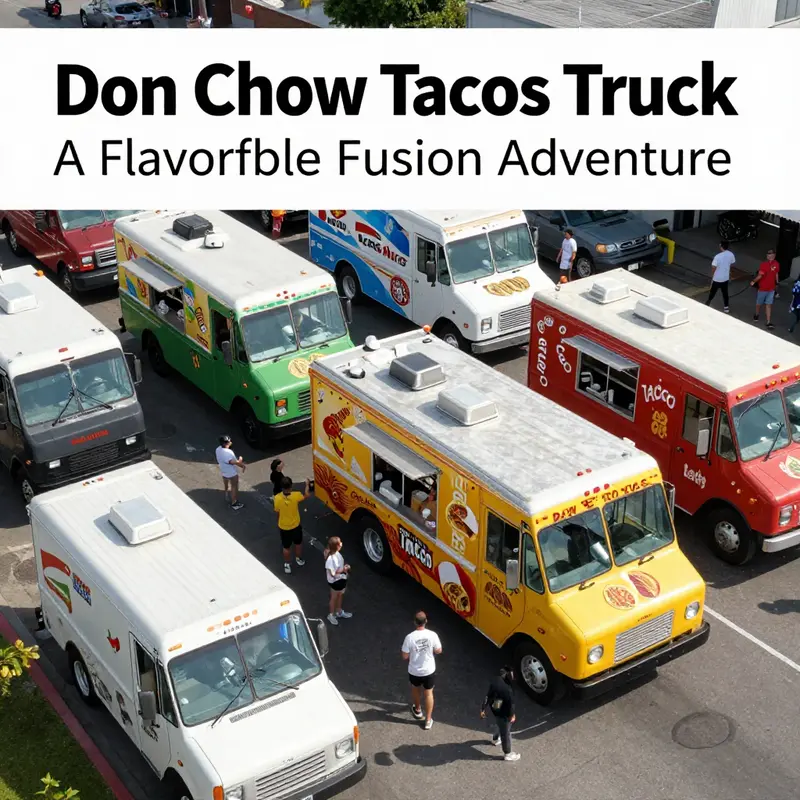
In the vibrant heart of Los Angeles, a culinary phenomenon emerged that captivated food lovers and taco fans alike: Don Chow Tacos Truck. This unique food truck brought together Chinese and Mexican flavors, creating an unforgettable fusion dining experience. Though it ceases operations in 2015, Don Chow remains a nostalgic reference point in LA’s food scene. As we delve into its impact, we’ll explore the innovative flavors that defined its menu, the cultural significance of its creations, and the challenges the truck faced in a competitive market. Ultimately, we’ll uncover the legacy left behind and how it influences new food ventures today. Buckle up for a delicious journey through the milestones of this fusion icon!
Wheels of Synthesis: How East Meets Latin on a Los Angeles Fusion Truck
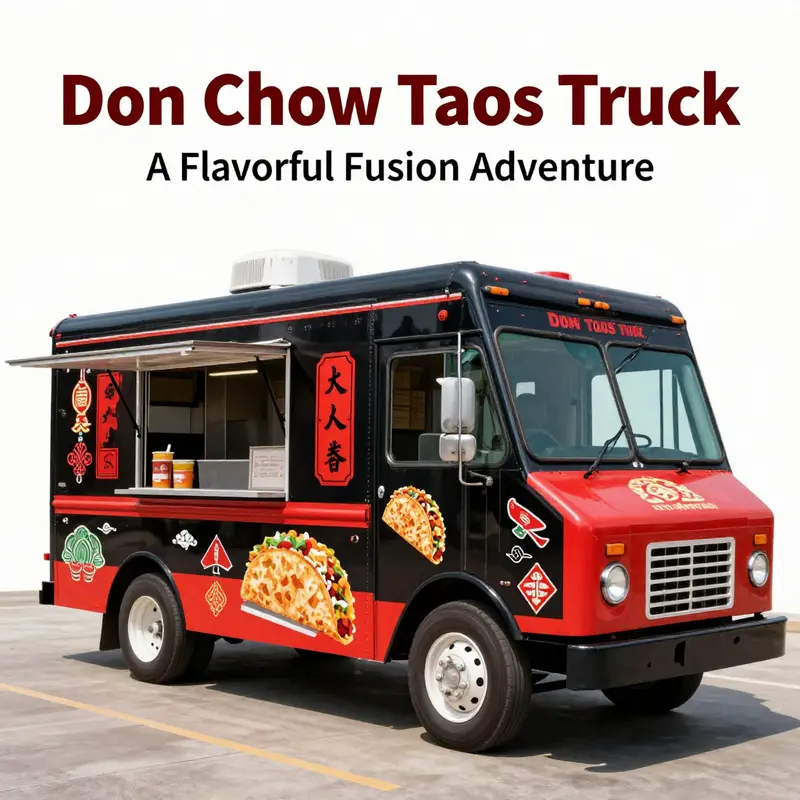
The street-level theatre of Los Angeles in the early 21st century offered a vivid stage for a new kind of culinary conversation. On the move, in a city of polyglot neighborhoods and open-air markets, a fusion-focused food truck emerged not merely to feed but to translate cultures into bite-sized narratives. The concept was simple in its aim and adventurous in its execution: blend the bold, comforting techniques of Chinese cooking with the sun-warmed, salsa-streaked palate of Latin street food. The result was less a menu than a dialogue, a portable kitchen that invited readers and eaters to see how flavors could travel when fixed places become mobile. In this sense, the truck functioned as a rolling classroom where tradition didn’t fight modernization but interrogated it, asking what a familiar handheld could become when the pathways of two immigrant kitchens intersected on a single, steam-lifted stage.
The branding itself announced the idea before a single bite was taken. A striking black-and-red silhouette—an homage to a protective, theatrical fierceness—set the tone for an experiment that wanted to be both street-smart and culturally thoughtful. The message, painted boldly on the side of the vehicle, declared that this was “Where Chinese meets Latin.” It was a slogan that avoided the brag and embraced the bridge, signaling a culinary dialogue rather than a simple mash-up. In those words lay a commitment to listening as much as tasting, a willingness to pay attention to two distinct culinary genealogies while stitching them together into something new. This approach recognized that fusion is not about erasing difference but about letting two palettes converse across the same plate, the same tortilla, the same set of toppings.
The menu, while modest in size, was expansive in its ambitions. It didn’t merely sprinkle soy sauce over a familiar format or toss in a few jalapeños for color. Instead, it invited technique from Chinese cooking—wok heat, precise timing, the punch of garlic and ginger, and a reliance on umami-rich bases—and paired it with the handheld convenience and bright toppings of Latin street fare. The result was a handheld dish in which the heat of Sichuan-inspired seasoning met the freshness of a tortilla, the brightness of lime, and the earthy depth of soy-slicked aromatics. The flavor profile moved with a dual heartbeat: one track carried the clean bite and crisp texture of a well-balanced taco, the other the lingering warmth and complexity of a Chinese palate. It was not merely about stacking ingredients; it was about layering cultural memory. Even a casual eater could feel the echo of distant kitchens in the steam and sizzle, a reminder that food is a portable story.
Yet the encounter extended beyond taste. The truck transformed eating into a form of cultural exchange, and the act of consuming became a small, shared ceremony. It offered a way for people who might never cross paths in a neighborhood to walk a short geography together: from a Chinatown market to a Latin-inspired street corner, then back again, each bite guiding the way. The branding and the menu together framed the experience as approachable rather than exotic, inviting curiosity rather than spectacle. In this sense, fusion was not simply a flavor project; it was a social experiment conducted under the open sky, a reminder that regional identities thrive not in isolation but in conversation with one another. The streets became a classroom where culinary memory, daily hunger, and urban improvisation met, and where the simple taco became, through cross-cultural technique, a small, tangible monument to mobility and exchange.
The arc of the truck’s life—its rise during a period when food trucks were rewriting expectations for what fast, accessible cuisine could be—also tells a broader story about the evolution of fusion on wheels. The early wave of mobile eateries pushed the boundaries of comfort foods, not by discarding tradition but by reframing it in real time. In this sense, the concept captured something essential about the city itself: a place where different neighborhoods are close enough to share air, noise, and appetite, yet where each bite can still act as a doorway to another world. The fusion concept, as practiced here, was less about creating a new category and more about revealing the underlying kinships between culinary lineages. It showed that a well-aimed pairing—technique and format, aroma and topping, heat and freshness—could make two distinct cultures feel like neighbors at the same table.
Even as the vehicle eventually ceased operations in 2015, the conversation it sparked continues to resonate in the fusion-food landscape. The truck remains a reference point for those who remember the thrill of trying something that felt both daring and intimate, something that insisted the city could hold complexity without demanding that anyone abandon comfort. For today’s street-food fans, the lesson endures: a dialogue about food can travel as swiftly as a truck, and the most memorable meals often emerge when cooks listen closely to another tradition and then answer with a thoughtful syntheses of technique and idea. The broader movement toward cross-cultural mobile cuisine has only grown since, with new voices testing how far a handheld can travel when cooks invite in a second pantry, a second street, a second set of expectations.
For readers who want to explore the larger conversation of how food-truck fusion has evolved, there’s a rich archive of voices and experiments to consult. One resource, in particular, articulates the momentum and the possible futures of mobile fusions, framing the topic as a revolution of sorts in how people think about boundaries and plate discipline. This kind of context helps explain why the Don Chow concept mattered: not merely as a clever twist on two familiar flavors but as an early exemplar of a philosophy that treats the street as a laboratory and the plate as a passport. If you are curious to see how the broader dialogue about fusion on wheels has unfolded, you can read more about the ongoing conversation in the piece that surveys food-truck fusions as a culinary revolution: food-truck-fusions-a-culinary-revolution.
Despite the formal end of that particular venture, the story remains a touchstone for chefs and entrepreneurs who view mobility as a platform for cultural storytelling. It invites us to consider not just what we eat, but how the act of choosing a bite performs cultural memory. In today’s Los Angeles, where dozens of mobile kitchens operate across a complex map of neighborhoods, the spirit of early fusion pioneers persists in the willingness to experiment with lineages that might once have seemed too distant to combine. The promise is not to erase origins but to illuminate them, allowing ingredients and techniques to travel with the eater and return with new meaning. If the table is the city, then the wind is the invitation. And on that invitation, the memory of a black-and-red truck, a slogan, and a bold dream continues to travel.
External resource for reading: https://www.donchowtacos.com/
A Cross-Cultural Cart on Wheels: Don Chow Tacos Truck and the Birth of Fusion Street Flavor
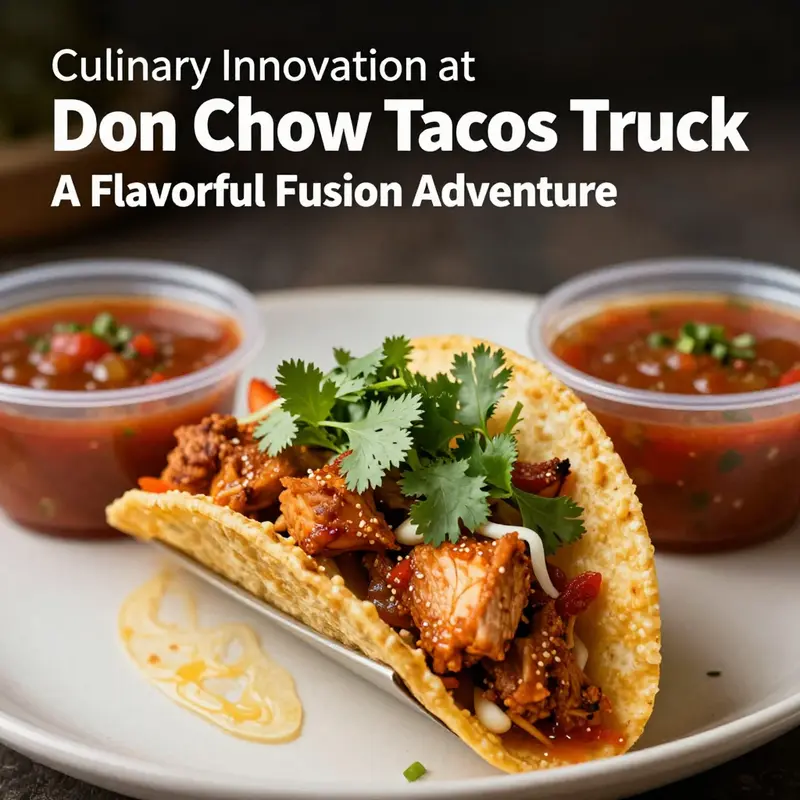
On a sun-worn corner where traffic hums and the scent of sizzling meat threads through the air, a food truck once carried more than meals. It carried conversation. It carried a bet that two vast culinary lineages—Chinese and Mexican—could meet not as a clash but as a chorus, each note amplifying the other. Don Chow Tacos Truck became more than a temporary stop along a food-truck map; it was a mobile laboratory where tradition learned to improvise. In a city defined by its appetite for reinvention, the truck carved out a distinctive space in the early wave of fusion cuisine. Its branding—an emblematic black-and-red iconography and a bold tagline about two cultures meeting at a single table—offered a visual invitation to wandering eaters who wanted more than a quick bite. What followed was a menu that spoke in flavors, textures, and techniques borrowed from distant kitchens and made to feel intimate, accessible, and celebratory.
At the heart of Don Chow’s culinary approach was a belief that flavor depth emerges when ingredients are treated with care and when cultural traditions are allowed to converse. The menu did not simply fuse items side by side; it reimagined street food formats by weaving in Chinese seasoning, soy-based components, and fresh Asian vegetables into familiar Mexican shapes. The result was a repertoire that felt both adventurous and grounded, a rare balance in the bustling world of mobile kitchens where speed and novelty often outrun soul. The decision to go beyond traditional tacos was not a gimmick but a deliberate strategy to demonstrate that fusion could be precise, purposeful, and deeply satisfying.
Consider the char siu pork taco, a harmony of sweet-soy marinade and the caramelized edges of slow-roasted pork tucked into a warm tortilla. The dish might sound simple, yet its effect rests on a patient, almost meditative preparation. Five-spice notes, a Chinese pantry staple, mingle with the tang of lime and the brightness of pickled vegetables to create a bite that feels both familiar and unfamiliar at once. The pickled ginger slaw adds a crisp snap and a zingy counterpoint that cuts through the pork’s richness, making each mouthful a delicate dance between honeyed softness and peppery brightness. It is the sort of pairing that rewards a library of small, deliberate steps—marinade, roast, rest, slice—each step building toward a final bite that lingers with warmth rather than a blunt finish.
In another direction, the kimchi-laced carnitas taco leans into fermentation and heat in a way that respects both sides of the aisle. Carnitas—traditionally a celebration of pork’s unctuousness—receives a kimchi-driven lift that introduces lactic tang and a kiss of chili heat. The result is not merely “spicy with kimchi” but a layered profile in which acidity, funk, and savor accumulate through careful interaction with the meat and its tortilla cradle. These two examples illustrate a broader philosophy: fusion is not about crowding flavors into a single shell, but about giving each element breathing room while ensuring their contrasts sharpen one another. The technique behind these dishes—handmade tortillas, slow-cooked meats, and deliberate seasoning—speaks to a reverence for craft that refreshes street food without sacrificing authenticity.
The tortilla, a simple vehicle, becomes a canvas when made by hand and paired with a meat that has been coaxed to tenderness over time. The choice to use handmade tortillas signals a demand for texture and integrity; a soft, slightly charred shell carries sauces and crunch without collapsing under the weight of bold fillings. The slow-cooked meats, a cornerstone of the menu, are not rushed by the clock. They are allowed to develop depth, to acquire sweetness from caramelization, and to shed fat in a way that concentrates flavor. In this light, the truck’s culinary innovations appear less as reckless experimentation and more as a disciplined approach to cross-cultural cookery. The goal is to offer a complete experience: aroma, mouthfeel, texture, and finish all in close conversation with each other.
What makes the Don Chow narrative particularly resonant is its sense of place and timing. Los Angeles, with its mosaic of neighborhoods and street-food corridors, provided fertile ground for a concept that celebrates diasporic dialogue. The fusion kitchen has often walked a tightrope between novelty and sustainability; Don Chow walked it with a steady, almost reverent gait. In a landscape crowded with quick-service brands, the truck’s ability to make bold statements while remaining approachable helped seed a broader curiosity about what fusion can mean in a city that thrives on cultural exchange. Even though the truck eventually ceased operation in 2015, its imprint lingered in the stories of diners who remember the thrill of discovering flavors that felt both distant and intimately local. The memory is not simply of a dish, but of a mode of eating—an invitation to listen for the whispers of soy and citrus in a Mexican street-food chorus.
The enduring appeal of Don Chow’s approach lies in how it encouraged a more thoughtful, less performative form of fusion. Rather than presenting a kaleidoscope of flavors only to confuse the palate, the menu built a narrative arc—one that began with the comforting familiarity of a tortilla and moved toward the surprising resonance of a Chinese spice blend. This progression allowed diners to ask questions of their own eating habits: Why does a certain combination feel right? Which textures are most satisfying in a bite that travels across borders? How can a single dish honor two culinary lineages without diluting either? In answering these questions, Don Chow offered a template for future generations of mobile chefs who sought to honor heritage while remaining imaginative and unafraid to take calculated risks.
The cultural significance of such fusion ventures extends beyond taste. They became microcosms of a city that continuously negotiates identity. For many patrons, the truck offered a way to imagine community across languages and traditions. The dishes served as passports of flavor, inviting curious eaters to traverse cultural terrain without leaving the block. In this sense, the Don Chow story is not merely about a menu but about a philosophy of food as connection. It emphasizes technique and quality—handmade components, slow-cooked proteins, and carefully composed sauces—while also foregrounding the social experience of sharing a meal with strangers who become neighbors for the moment between a bite and a breath of air.
Today, the conversation around fusion street food continues to evolve, and the Don Chow chapter remains a touchstone for those who study the emergence of cross-cultural cuisines on wheels. The model invites contemporary brands to explore overlapping sensibilities rather than to pretend they do not exist. A modern fusion truck can trace a direct line back to Don Chow’s insistence on careful technique, thoughtful ingredient sourcing, and a willingness to let two culinary worlds illuminate each other instead of fighting for dominance. This lineage is visible in the ongoing interest of diners and producers who seek out cross-cultural flavor experiences that are both adventurous and grounded in technique.
For readers who want to explore the broader conversations around food-truck fusions, the idea of fusion as a culinary revolution is discussed in depth in conversations and articles that map how mobile kitchens have reshaped the way communities encounter new flavors. As you trace the paths of today’s inventive cooks, you can see how the Don Chow model—an insistence on craft, a respect for ingredients, and a willingness to bridge boundaries—continues to inform and inspire. If you are curious about how fusion concepts trend across the landscape of contemporary food trucks, this lineage offers a practical lens through which to view both the past and the future of cross-cultural street dining. food-truck-fusions-a-culinary-revolution
For readers seeking archival or official context on the brand’s history and its distinctive branding, more information can be found through the official site, which preserves a record of the concept and its recipes in retrospect: https://www.donchowtacos.com.
External resource: https://www.donchowtacos.com
Where Chinese Meets Latin: The Enduring Echo of Don Chow Tacos in Los Angeles’ Fusion Food Scene
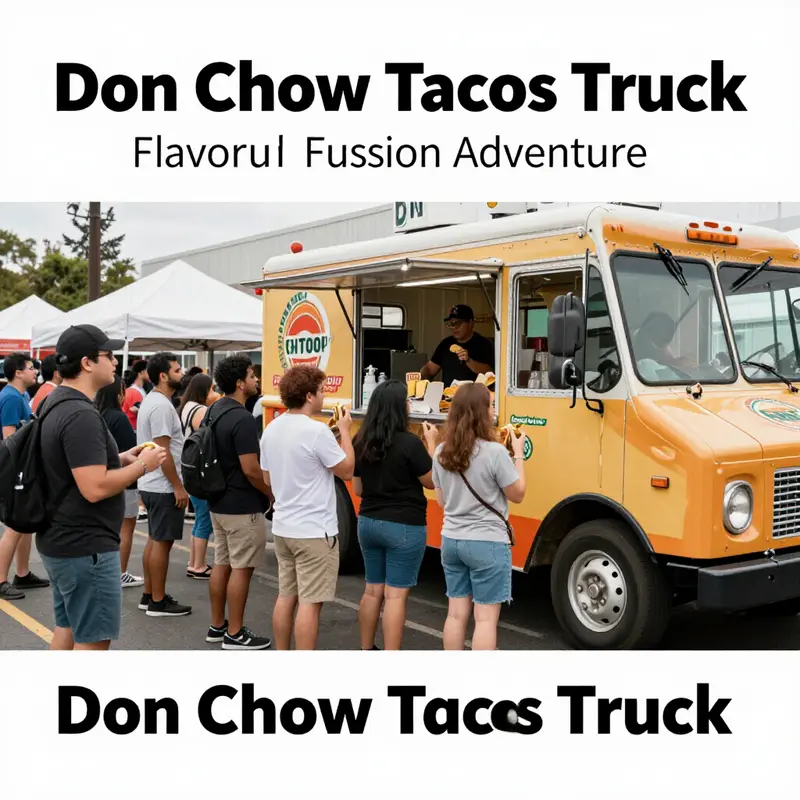
In Los Angeles, a city where street corners taste like a map of the world, one mobile kitchen managed to fuse two seemingly distant culinary lineages into a single, memorable rhythm. Don Chow Tacos stood not merely as a provider of meals but as a cultural experiment on wheels. It operated at a moment when the city’s appetite for novelty was matched by its willingness to blend traditions, letting the street become a laboratory for flavor and identity. The truck’s ambition was simple in uno: braid Chinese flavors with Mexican street foods until a new category of appetite emerged. Its menu—a carefully tuned balance of soy-infused stir-fries, smoky chiles, and tortilla-based staples—was not just about taste. It was about storytelling, about showing how immigrant creativity could rewrite a city’s culinary map without waiting for a formal invitation from a restaurant corridor. The branding reinforced this narrative in a striking way. The black and red palette, paired with a traditional Chinese lion motif, announced a meeting point where two worlds could learn from each other. The slogan—“This is where Chinese meets Latin”—did more than advertise; it invited customers to participate in an act of cultural exchange. You could hear the promise in the sizzle and see it in the logo, a mobile stage where performance and cuisine collided in real time. The truck’s presence signaled a broader movement within Los Angeles: that mobile dining could be a vehicle for dialogue as much as for appetite, a way for communities to vendingly demonstrate presence, memory, and aspiration in a fast-paced urban ecosystem.
What made Don Chow Tacos distinctive was not only its hybrid menu but the way the concept traveled. It transformed the street into a shared classroom where customers learned to recognize common ground across traditions and, in some cases, to reinterpret familiar flavors through unfamiliar lenses. Soy sauce, sesame oil, and stir-fried vegetables found their way into fillings that could rest on a corn tortilla or a soft taco, while chilies and salsas offered heat with a twist of umami. The resulting dishes carried a paradox of familiar comfort and surprising novelty, a paradox that resonated with LA’s habit of coexisting multiple culinary dialects in the same bite. The experience extended beyond taste to body language and space. The truck’s line up and service style suggested a performance—rapid, efficient, almost choreographed—echoing the dynamism of street markets in both hemispheres. In this sense, the fusion was less a static recipe than a continuous negotiation, a conversation that travelers could overhear as they waited for their order.
The cultural footprint of this venture in the city’s popular imagination was considerable because it reframed what a food truck could be. It was not merely a portable kitchen; it was a mobile platform for cultural exchange, memory sharing, and the forging of new community identities around the table. The lion head logo and the bilingual slogan created a visual and verbal shorthand that travelers could carry with them long after the last bite. In the crowded, image-saturated ecosystem of LA’s culinary scene, such branding mattered. It provided a quick reference point for people exploring the city’s growing appetite for cross-cultural experiences. That reference point mattered more than mere novelty; it helped validate a broader narrative about inclusion, adaptation, and creation through food. The city’s residents—from longtime Angelenos to new arrivals—found in the truck a sense of recognition and a door to dialogue. The experience reminded diners that cuisine is not only about sustenance but also about shared memory, the kind that can travel as quickly as a street snack does and linger longer than a single meal.
The timing of the truck’s cessation in February 2015 did not erase its influence. If anything, the moment underscored a broader truth about Los Angeles: the street food landscape is a living archive, constantly rewriting its own rules. Don Chow Tacos ceased operations, but the questions it raised—How far can two culinary traditions travel together? What stories emerge when flavors blend at the edge of a curbside stall? How do branding and performance extend a meal into memory?—continued to echo through the newer generation of hybrid movers who followed. Those later ventures did not simply replicate the idea of fusion; they expanded it, experimenting with more nuanced textures, cooking methods, and cultural references. The city’s appetite for such experimentation did not wane; it matured, becoming more discerning about technique and provenance while still cherishing the thrill of surprise. In this way, Don Chow Tacos helped seed a continuum: a lineage of mobile, fusion-driven dining that treats cuisine as a public conversation, not a private code.
Scholars and critics looking at urban food culture often point to trucks like this as early proof that mobility can amplify cultural exchange. The concept of a vehicle that carries heritage on its back—and serves it up in real time—offers a powerful image of how immigrant communities contribute to an evolving cityscape. In a place renowned for its diversity, the fusion truck became a microcosm of LA itself: a space where tradition and modernity meet, where memory travels quickly, and where adaptation is the engine of innovation. The entrepreneurial energy that powered such ventures is inseparable from the social dynamics that give Los Angeles its flavor—an ongoing process of translation, negotiation, and exploration across neighborhoods, languages, and taste preferences. The truck’s story is, therefore, not a footnote in the city’s gastronomic history but a defining line that helps explain how the city continually reimagines what its food can be when different lines of descent intersect on a shared path.
For readers seeking a broader framework on how food trucks shape urban culinary identities, see this broader analysis of the phenomenon in the Los Angeles context. The discussion situates mobile dining within a larger conversation about cultural exchange, economic adaptation, and the evolving meaning of authenticity in a city defined by flux. Its broader message complements the Don Chow Tacos narrative by situating it within a pattern that many hybrid ventures have followed, a pattern that continues to influence new generations of cooks, vendors, and dreamers who see a curbside corner as a place of possibility rather than merely a place to eat. To explore linked reflections on the fusion economy and the social life of food trucks, readers can consult the idea that has been articulated in related discussions about culinary innovation and urban exchange.
As this chapter moves toward its broader implications, it is worth noting that the conversation around cross-cultural cuisine is not about erasing origins but about celebrating overlap. The story of this LA fusion truck demonstrates how taste can become a bridge, how a mobile platform can translate heritage into something accessible, and how branding can invite strangers to become temporary neighbors for a shared, visceral experience. In the end, the truck’s legacy lies not only in the memorable dishes it produced but in the way it reframed the street as an arena for cultural dialogue. The next wave of fusion-focused ventures can trace their lineage back to the playful risk-taking and communal energy that Don Chow Tacos embodied on those bustling corners of the city. It is a reminder that innovation in cuisine often travels fastest along the routes created by people who refuse to let any single tradition own the space where flavors meet.
In this spirit, the cross-cultural kitchen on wheels remains a living invitation: a prompt to keep tasting, reinterpreting, and reimagining what it means for a city to eat together. For those who want to delve deeper into the idea of fusion as a culinary revolution in mobile form, the conversation is ongoing and the streets remain a compelling classroom. And for readers drawn to the practicalities behind such culinary experiments, the linked piece food-truck-fusions-a-culinary-revolution offers a closer look at how this creative impulse translates into real-world strategies and storylines.
External reading: For a broader context on how food trucks shape LA’s culinary identity, see the Los Angeles Times piece on the role of mobile vendors in urban culture. It provides a wider lens on how transient kitchens contribute to a city’s evolving sense of place and belonging: https://www.latimes.com/food/story/2023-04-12/los-angeles-food-trucks-culinary-identity
When Fusion Hit the Street: Navigating the Operational Toll and Market Realities of Don Chow Tacos Truck
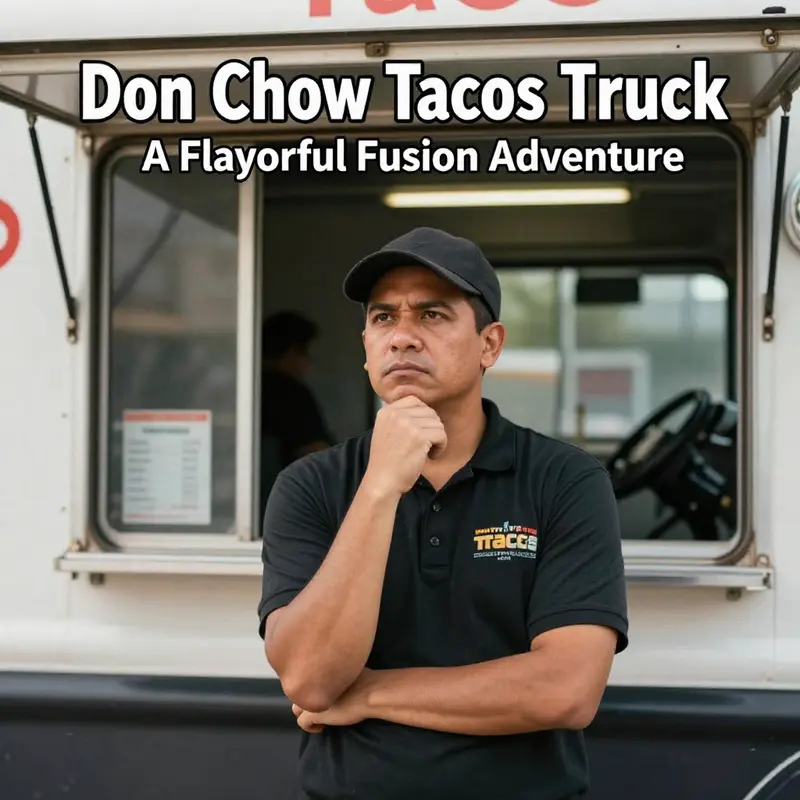
Don Chow Tacos Truck represented a bold experiment in the Los Angeles food scene, a mobile embodiment of cultural fusion that aimed to harmonize two culinary worlds in a single, moving kitchen. Its branding, a striking black-and-red motif and a lion-dance silhouette, announced a philosophy as much about storytelling as it was about flavor. The slogan, “Where Chinese meets Latin,” framed the experience as a conversation rather than a conquest, a notion that drew curious diners who wanted to taste ideas as much as meals. Yet behind the vivid colors and the mouthwatering possibilities lay a set of relentless operational pressures and merciless market dynamics that many a bright concept must confront to endure. Don Chow Tacos’s story, culminating in its closure in early 2015, offers a case study in how a pioneering truck can illuminate the tough math of mobility, cost, and consumer appetite in a city where novelty is abundant and profitability is stubbornly difficult to pin down.
Operationally, the day-to-day demands extended far beyond sourcing fresh ingredients or composing a menu that could justify the fusion premise. The truck’s existence depended on a continuous cycle of movement, location scouting, and regulatory navigation that can wear down even the most passionate kitchen crew. Mobile gastronomy is a constantly shifting chessboard: where to park, for how long, and under which permits, with each venue and jurisdiction carrying its own rules. The cost structure alone was a heavy load to bear. Fuel, routine maintenance, and eventual renovations for a vehicle that functions as both kitchen and storefront create a fixed expense base that needs to be offset by high-volume sales. Then there are the insurance premiums, the licenses across multiple districts, and the necessary refrigeration and cooking gear that must perform reliably in outdoor, sometimes unpredictable environments. These are not merely overheads; they are the scaffolding that makes it possible to translate a single concept into a daily operation.
In a city as competitive as Los Angeles, logistics grew into a form of performance art. The truck had to be driven to a stream of venues that could provide the steady revenue needed, yet the best spots were also among the most crowded; securing permissions to operate in those high-traffic corridors required careful timing and persistent outreach. The result was a routine that demanded meticulous planning: routes mapped to anticipated foot traffic, parking options validated in advance, and contingency plans ready for weather shifts or city regulations that could abruptly alter a day’s potential. The operation model was inherently labor-intensive, and this meant that staffing was not a luxury but a prerequisite for consistency. Skilled cooks who could translate a blended concept into reliable execution were essential, and their presence mattered as much for recipe fidelity as for guest experience. The reliance on a few core contributors, such as Ernie Gallegos, who helped craft a menu that balanced traditional techniques with inventive twists, underscored how fragile a fading edge of expertise could be when turnover or scheduling missteps occurred. A single lapse in kitchen discipline could ripple outward, affecting service speed, portion control, and ultimately taste perception—elements customers often use to measure the value of a fusion philosophy they are still learning to trust.
The market forces at work in Los Angeles created a relentless appetite for novelty, yet that appetite was not a guaranteed path to sustainable profitability. The fusion scene was crowded with ambitious operators offering similar experiences—fresh ideas, social media buzz, and a festival-like energy that could catapult a truck into the limelight for a season. In that arena, standing out meant more than a clever concept; it demanded ongoing innovation, disciplined cost management, and a marketing discipline that could convert curiosity into repeat business. This is where high operational costs intersected with market dynamics. Even as Don Chow Tacos gained attention, the financial arithmetic remained stark. A premium concept in a mobile format must deliver enough high-margin revenue to cover fixed costs and fluctuating daily sales. The mobile model inherently carries revenue volatility: one day’s location win might be offset by another day’s weak turnout. For a business built on a lean team and tight margins, this volatility can be a tipping point.
In addition to these economic pressures, consumer trends often move with the speed of a buzz cycle. Fusion cuisine had a moment when cross-cultural menus felt new and exciting, drawing crowds hungry for experiential eating that seemed to symbolize a broader curiosity about global flavors. But trends shift quickly, and the market can temper its enthusiasm as new concepts emerge. The rise of plant-based options, evolving dietary choices, and the emergence of brick-and-mortar concepts offering similar flavor profiles at a different price point could erode one truck’s customer base if not addressed through constant adaptation. Don Chow Tacos faced this head-on by continuously refining its recipes and exploring what would set it apart when the initial novelty wore off. Still, the challenge was to grow beyond a local cult following into a sustainable, broad-based operation. In many cases, defining a path to scale for a single truck is where the tension becomes acute. The sector’s long-term viability often depends on the ability to translate one successful mobile concept into a scalable model that can withstand both the costs of growth and the scrutiny of a market that rewards novelty but demands reliability.
The brand identity that made Don Chow Tacos memorable was not in itself a guarantee of enduring financial health. The visual impact, the cultural premise, and even the awards breathed life into the business, elevating it from a mere roadside stand to a recognized icon of fusion cuisine. Yet iconic status does not automatically translate into sustainable economics. The same attention that drew fans could also attract scrutiny from city platforms and a crowded media landscape that files stories on the next big thing as quickly as it celebrated the last. The tension between iconic appeal and day-to-day viability became evident in the balance the owners had to strike: maintain a distinct, story-rich brand while ensuring that every shift, every route, and every menu decision contributed meaningfully to the bottom line. The operational reality of a mobile kitchen—its wear, its maintenance demands, and the need to stay compliant with an evolving patchwork of local regulations—remains a constant backdrop to any aspirational narrative about flavor diplomacy on wheels.
In hindsight, much of Don Chow Tacos’s closure can be read as a natural consequence of a message reinforced by the broader industry discourse: a pioneering concept, no matter how compelling, must contend with the structural constraints of mobility. The dynamic tension between high fixed costs and the demand for consistent, repeatable quality can prove unsustainable when market growth slows or when the competitive field densifies. This is not merely a story about one truck failing; it reflects a recurring pattern in early fusion and street-food entrepreneurship. Many operators who populerize a new culinary idea ultimately face a combination of operational headwinds and market realities that test their resilience and their willingness to adapt beyond a single vehicle or a single moment of triumph. The arc—from breakthrough concept to closure—reads as a quiet reminder that the most memorable flavors are not only about what is plated on a tray but also about the practical endurance required to keep that plate warm and that flame steady against a crowded, ever-changing street.
For readers seeking a broader perspective on this evolving landscape, the future of food trucks continues to unfold with innovations in technology, logistics, and policy that shape not just profitability but the very shape of mobility culture. The Guardian’s overview of the field highlights both the promise and the pressure points facing mobile operators as they navigate regulatory shifts, evolving consumer expectations, and the balancing act of scaling sustainable ventures within a vibrant but unforgiving urban ecosystem. As you explore the continuing evolution of street-food entrepreneurship, consider how a concept that once sparked curiosity in a fellow Angeleno can translate into a durable enterprise—or whether the lessons learned in Don Chow Tacos’s run illuminate a longer arc for fusion-driven mobile chefs.
In terms of practical, bite-sized guidance for current and aspiring operators, the path forward often begins with a clear recognition of the operational skeleton that supports the dream. The decisive factors are not solely taste and concept but the calculus of routes, permits, staffing, and cash flow. For those curious about weighing the many moving parts of a mobile kitchen’s strategy, a useful entry point is understanding how to choose the right equipment, permits, and business model—topics that are explored in depth in resources like Choosing the right food truck. This emphasis on practical foundations helps ensure that a bold culinary vision can translate into reliable daily performance rather than fading into a story of what could have been. Ultimately, Don Chow Tacos’s chapter in the history of street fusion remains instructive: creativity thrives when backed by disciplined operations, and a fearless palate benefits from a steady, repeatable engine beneath it. External references, including the broader industry analysis from major outlets, offer a compass for operators navigating the same crossroads today, reminding us that the street is not just a stage for flavor but a proving ground for stamina, strategy, and sustained care for the craft.
External reference: https://www.theguardian.com/lifeandstyle/2024/jun/18/the-future-of-food-trucks
Where East Meets West on Four Wheels: The Enduring Legacy of a Pioneering Fusion Truck
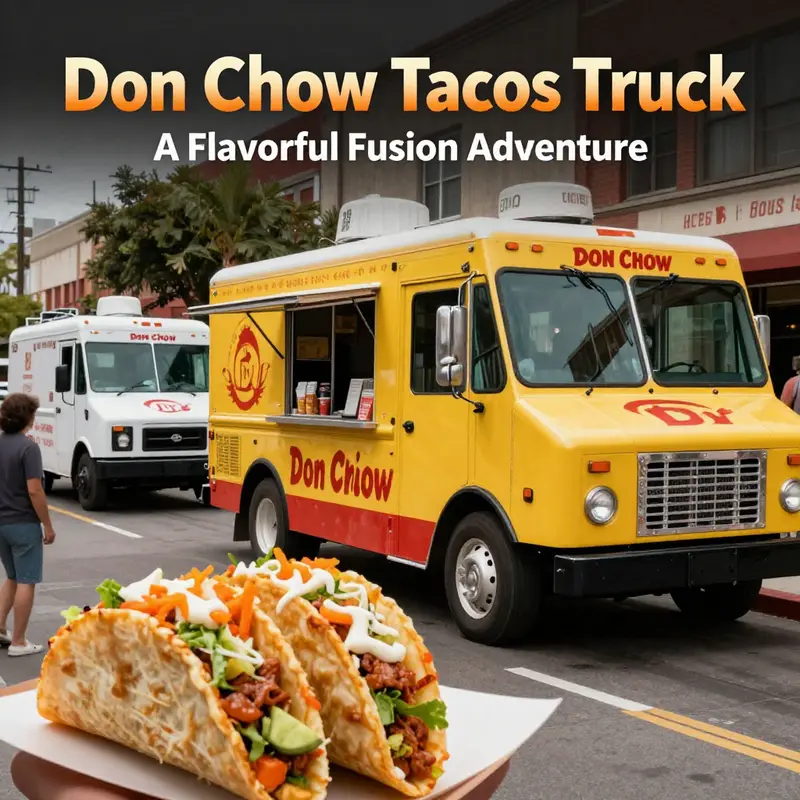
The story of a pioneering fusion street vendor in Los Angeles reads like a blueprint for cultural exchange in the age of mobility. On the surface, it was a simple idea: tacos, the most portable of plates, dressed with the bold flavors and textures of Chinese cooking. But the effect went beyond taste. It was the ignition of a movement that treated street food as a democratic canvas where identities could mingle, remix, and reappear in surprising, deeply human ways. The truck’s emblem—a stark black-and-red motif paired with the head of a lion dance—announced a collision of traditions and a willingness to see where those collisions could lead. Its slogan, a memorable declaration of purpose, captured a moment when people began to understand that food could refuse to be siloed into one heritage, and that a handheld meal could carry voices from multiple kitchens at once. Even after it stopped operating in February 2015, the idea it represented lingered in the air like a scent that refuses to fade, nudging diners and dreamers to imagine what street-food fusion could become when freedom to experiment travels as far as the truck itself.
What made this venture so influential was not merely its menu, but its mechanism. A mobile kitchen, by its nature, travels with its audience. It meets workers during a lunch rush, students after a class, families at a night market, and it borrows the spontaneity of the street to test flavors without the heavy commitments of a brick-and-mortar restaurant. The operator translated a complex culinary toolkit—stir-frying at high heat, balancing citrus, soy, garlic, and chilies, and layering textures—into a practical, handheld experience. The result was a new kind of culinary demonstration: a story told bite by bite, a bridge built one tortilla at a time, with the aroma as the invitation. This approach showed that fusion cuisine could thrive not in high-end rooms but at the curbside, where stories are shared as easily as sauces and where a shared table can emerge from a line of fans waiting for the next bite.
In the years that followed, the fusion street-food blueprint proliferated. Entrepreneurs, moved by the early success of street-level crossovers, began to experiment with combinations that seemed improbable but proved delicious in practice. Korean-Mexican burritos, Japanese-Peruvian Nikkei-inspired plates, and other hybrid concepts began to populate cities around the world, especially in urban centers with diverse populations. The core lesson from the LA truck was simple yet powerful: cuisine can be a living dialogue. It can honor origins while inviting new influences; it can respect tradition while inviting audacious twists. The mobile format amplified that dialogue. Every stop offered a new audience, and every audience offered new feedback, enabling cooks to refine not just recipes but narratives. The truck’s influence thus extended beyond its minutes on the street. It offered a model of culinary storytelling in which the cook is both chef and cultural translator, translating heritage into something accessible without diluting its essence.
This is why the truck’s story matters even to those who never tasted its specific dishes. Its bold blending of Chinese techniques with Mexican street-smartness suggested a larger truth about food and cities: urban life is a laboratory where different smells and memories can collide, cohere, and become new traditions. The vehicle itself—portable, visible, and accessible—became a symbol for a broader shift in how people think about food origins. The era that followed did not abandon the idea of fusion; it refined it. The goal shifted from proving that two cuisines could coexist on one menu to exploring how many cuisines could coexist on a single block, on a single night market, or within a single city block’s worth of stands. In this sense, the legacy is less about specific recipes and more about a mindset: that fusion is not a compromise but a creative act that respects history while inviting invention.
The branding and presentation, too, mattered. The dark, electric color scheme and the lion-dance imagery spoke a language of celebration and vitality. It signaled that fusion food could carry cultural pride and a sense of play at once. There is a value in branding that embodies the message: food can honor tradition without becoming museum piece, can be rooted in place while still feeling global. In that sense, the truck helped people recognize street food as a place where identity is lived, not simply consumed. It invited communities to see themselves in a broader menu of possibilities. Local diners discovered that their own neighborhoods could host microcosms of global cuisines, and aspiring cooks learned that their street stalls could become launchpads for larger dreams. The model suggested that a city’s palate is not a fixed map but a living portrait, continuously sketched anew by the people who choose to serve it from wheels instead of walls.
Importantly, the legacy endured not by clinging to nostalgia but by enabling practical pathways for new entrants. The early fusion truck helped normalize the idea that a mobile platform could function as both lab and stage. It encouraged operators to pursue culinary curiosity with the pragmatism of a small business: lean inventories, scalable techniques, and a menu flexible enough to reflect changing tastes and seasonal ingredients. In a world where food trucks increasingly compete on social media, location, and speed, the pioneering vehicle demonstrated that content—the story behind the dish—could be as compelling as the dish itself. The narrative it offered required no grand culinary pedigree to be persuasive; it rewarded authenticity, adaptability, and a willingness to learn from customers as much as from any cookbook or culinary tradition.
As the fusion food truck movement matured, many operators drew from the same well of curiosity that the LA example had tapped. They approached cross-cultural cooking not as a collision but as a collaborative conversation. The result was a vibrant ecosystem where chefs, farmers, and suppliers explored hybrid approaches with fewer constraints and more experimentation. The renewed interest in small-batch techniques, regional spice blends, and cross-cultural sourcing can be traced in part to the early success of that street-level experiment. It reminded city dwellers that the best street food often comes from asking three simple questions: What do people crave? Where do the kitchen’s techniques come from? How can we deliver this with speed, joy, and accessibility? The answers, in turn, propelled a broader wave of culinary innovation across continents.
For readers seeking context beyond the arc of a single truck, the broader arc of international street food trends offers a useful lens. The Guardian has published a sweeping assessment of how street foods have evolved as cities have become more cosmopolitan, highlighting the rise of transnational flavors on urban sidewalks and fountains of flavor in open-air markets. This wider lens helps situate the LA truck’s influence within a global pattern: when mobility meets hybridity, street food becomes a dynamic platform for cultural exchange, not merely a quick meal. The idea that food can be both local and planetary at once is, in many ways, the most enduring part of its legacy.
Within the narrative of this chapter, a link to a deeper exploration of fusion on the move provides a natural waypoint for readers who want to understand the current state of the genre. For a concise articulation of how fusion concepts have evolved into a culinary revolution within the truck ecosystem, see the overview in food-truck-fusions-a-culinary-revolution. The note is not about one brand or one recipe; it is about a pattern of experimentation that can still be seen in cities around the world today. The enduring lesson is clear: street-food fusion works best when it honors roots while inviting new voices to the table, when the rider and the chef share the road and the plate, and when mobility itself becomes part of the flavor story.
In sum, the legacy of this pioneering fusion truck is less a catalog of dishes than a doctrine for street-level culinary innovation. It showed that a portable kitchen could travel faster than fixed tastes, that a bold motif could embody a philosophy, and that gastronomy could be a practice of hospitality as much as a practice of technique. The truck’s influence is visible in the ongoing willingness of street-food vendors to experiment with culture, climate, and community. It remains a touchstone for anyone who believes food can push against borders and, in the process, create new forms of belonging. The global mosaic of modern fusion street food owes a substantial portion of its energy to the early steps taken on those Los Angeles streets, steps that remain instructive for anyone who wants to understand how food travels, evolves, and ultimately unites.
External context is useful, too. For a broader context on how international street food trends have reshaped urban life, consult the Guardian’s overview linked above. This larger conversation helps frame the historic moment not as a singular event but as an ongoing dialogue about culture, mobility, and flavor in contemporary cities.
Final thoughts
Though Don Chow Tacos Truck may have parked its wheels for good, its legacy continues to roll through the streets of Los Angeles and beyond. The fusion of Chinese and Latin flavors paved the way for a new wave of culinary creativity, encouraging food truck operators to think outside the box. By celebrating unique flavors and cultural connections, Don Chow Tacos Truck not only delighted taste buds but also forged a path for future fusion ventures. This delightful chapter in LA’s food history reminds us that the beauty of cuisine lies in its ability to evolve and unite diverse culinary traditions, inviting all to savor the incredible results.