
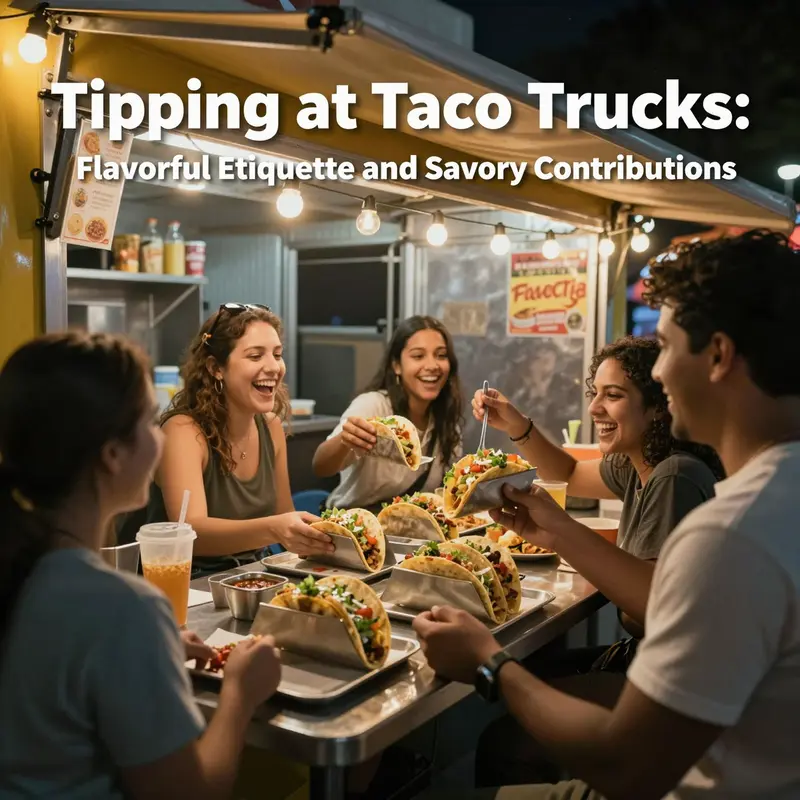
As food lovers and taco aficionados, we know how crucial that first bite of a taco is—the savory, seasoned meat, the crunch of fresh toppings, and the warmth of a perfectly soft tortilla. But something that often gets overlooked in the joy of taco purchasing is the practice of tipping at taco trucks. Tipping isn’t just a casual afterthought; it’s becoming an essential aspect of the culinary experience, especially in the vibrant world of food trucks. This article dives into the ins and outs of taco truck tipping, examining accepted etiquette, economic impacts, cultural differences, and practical mechanics. By the end, you’ll not only feel more confident about that cash exchange but also understand how tipping enriches the taco truck community.
The Tip That Keeps the Line Moving: Mastering Taco Truck Etiquette
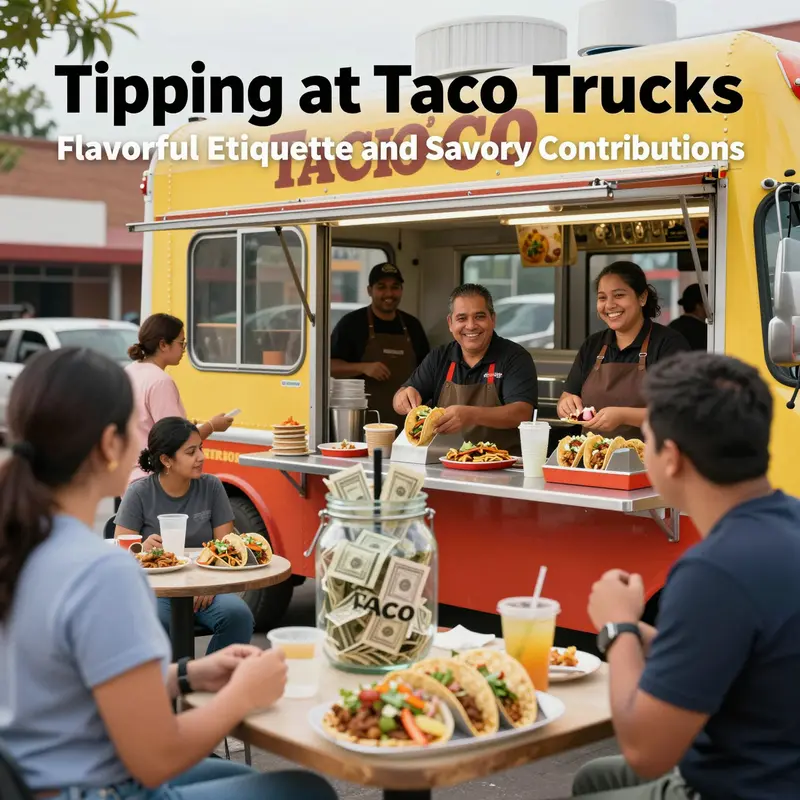
A steady rhythm greets you at a taco truck: the sizzle of meat on a hot grate, the clack of a cash drawer, the hum of casual chatter from people in line. The truck itself seems like a pocket-sized kitchen on wheels, a front door to cooks who juggle multiple tasks at once—flipping tortillas, taking orders, handling payments, swapping recipe notes, wiping down counters, and sometimes juggling a phosphorescent screen that pings with feedback or a prompt for a tip. The experience feels intimate and brisk at once, a quick detour from grocery store lines into a moment of human craft. In that moment, tipping sits not merely as a monetary gesture but as a signal—an acknowledgment that the person behind the counter is doing more than assembling a meal. They’re managing a complex chain of tasks under the pressure of timing, precision, and the unpredictable quirks of street service. And because tipping culture is shifting with digital tools and evolving expectations, that signal is taking on new forms as well as old meanings.
Tipping at taco trucks sits at the intersection of tradition and change. Traditional tipping culture often favors sit-down experiences, where service is framed as a visible, ongoing relationship. Food trucks, with their fast pace and curbside convenience, have historically carried lighter expectations. Yet the past few years have nudged that boundary. Digital ordering, QR codes, mobile payment prompts, and contactless transactions have made the act of tipping both more visible and more normalized in quick-service settings. In practical terms, this means that a tip is no longer seen as optional by some customers and as a straightforward acknowledgment by others. It’s a form of feedback: you valued the interaction, you appreciated the extra attention to accuracy, or you simply want to support a small business that is often run by a single operator or a small crew without the cushion of benefits.
Data from recent industry surveys paints a clear picture: tipping at food trucks is less universal than at full-service restaurants. A 2023 National Restaurant Association snapshot showed that only about 42 percent of Americans consistently tip at food trucks, compared with roughly 92 percent at full-service establishments. The gap isn’t about generosity so much as clarity. It asks us to interpret what “service” means in a fast, mobile setting and to adjust our habits accordingly. The larger message is less about guilt over tipping and more about recognizing the labor that fuels the experience—labor that blends cooking with order-taking, payment handling, cleaning, and inventory tracking. A tip can be a practical supplement to wages that, in many cases, depend on tips to reach a livable level, especially in expensive urban landscapes where fixed salaries may be lower and the cost of living higher.
When you encounter a taco truck with a visible tip jar or a digital prompt asking for gratuity, the path forward becomes more straightforward. The prompt itself is a cue; part of the conversation between customer and vendor is inside that tiny screen or jar. A 10–15 percent tip is a reasonable starting point in these contexts, even for modest orders. If you’re paying in cash and there’s no explicit prompt, a small tip of one to two dollars or simply rounding up your total can carry significant meaning. A tip of this magnitude for a ten-dollar meal is not merely a numerical gesture; it signals a respect for the labor behind the plate and for the hands that navigated a flurry of orders, substitutions, and occasional mishaps with patience and poise.
A core element of the tipping conversation is the human element behind the counter. Taco truck workers are often multi-hyphenate workers: they grill, they greet, they take orders, they navigate digital devices and sometimes customer misunderstandings, all while keeping the line moving and ensuring accuracy. That blend of skills—culinary craft intertwined with responsive service—creates a service dynamic that can feel almost like a street-side performance. The tip, in that frame, becomes a standing ovation for the performer who delivered both the sizzle and the smile, who made eye contact, offered a recommendation, or corrected a mistake with humor and efficiency. In other words, tipping acknowledges not only the final product—the taco—but the entire choreography that brings it to your hands.
The decision to tip is also shaped by the level of interaction you experience. If your encounter is a quick exchange—step up to the window, place an order, grab a bag, and step away—the tipping decision remains flexible. Some people prefer to tip when the service includes an extra effort: a staff member who greets you by name, who takes the time to clarify substitutions, or who offers recommendations based on the day’s specials. Others lean on the social contract they already maintain with service workers in other venues and translate that practice to the truck window. In a sense, a taco truck tip functions as a microcosm of broader tipping norms: it’s a small, tangible way to sustain someone’s livelihood while validating the care they put into your meal.
If you’re unsure whether to tip, a practical rule of thumb can help: consider whether you’d tip for delivery or curbside pickup through a third-party app with a tip option, and apply the same logic here. The modern tipping ecosystem increasingly treats the tip as part of the service package, not a separate add-on. The growing integration of tipping features into payment systems across food trucks signals a broader cultural shift toward recognizing service work in all its forms, whether that work happens behind a counter or at the kitchen pass. That shift aligns with emerging etiquette that values customer courtesy as much as customer generosity. In this sense, a polite “thank you” remains important, but it’s often followed by a tip that confirms the value of the labor involved. Even a modest gesture—someone who delights in delivering a perfect pick-up, who handles a complicated order with grace, or who resolves a mistake swiftly—deserves a nod in the form of gratuity.
A little more nuance emerges when we consider different urban contexts. In high-cost cities where street food is a major convenience and a source of daily sustenance for many workers, tipping can be a meaningful supplement to a modest wage. The more a truck operator depends on tips for a sizeable portion of income, the more important the tip becomes as a signal of appreciation and support. That recognition matters in a setting where the line moves quickly but the effort behind each plate remains substantial. It’s also worth noting the role of the tip jar’s visibility. A clear jar or a digital prompt reduces ambiguity and invites customers to participate in a shared economy of care. The presence of a jar or prompt is not coercive; it’s educational. It communicates that the service you received came with a request for support that is reasonable given the level of personalized attention you experienced.
For readers seeking practical guidance that respects both the customer’s budget and the worker’s needs, a straightforward approach works well. If a tipping jar or prompt is present, follow the suggested range. If a tip is not requested, consider rounding up or leaving a small amount if you enjoyed the interaction or if the order required extra effort—say, a customized build or a substitution-heavy batch that demanded careful counting and accuracy. When in doubt, start with a modest tip and adjust in future visits based on consistency of service and the complexity of your orders. A simple, well-timed tip can be a meaningful repeat invitation to the workers—the kind that encourages them to keep the service friendly, efficient, and attentive.
This evolving etiquette is not about policing behavior; it’s about cultivating a community standard that recognizes the human labor behind a quick, satisfying meal. The shift is visible in more than just the tip itself. It’s reflected in how workers are treated—how they’re greeted, how their recommendations are welcomed, and how they’re supported when things go off-script. A tip is part of that support system. It’s a quality-of-service signal that complements the explicit instruction of a menu. It invites customers to participate in a fair exchange: you receive a well-made meal that arrives promptly; they receive fair compensation that acknowledges their skill. In a sense, the tip becomes a bridge between two economies—the customer’s sense of immediate value and the worker’s long-term livelihood.
If you’re new to the scene or if you’re visiting a taco truck that’s not clearly prompting for gratuity, the simplest path remains the most respectful: offer thanks, observe the cue of any visible jar or digital prompt, and then decide. In many cases, a dollar or two or a rounding-up gesture will be appreciated and remembered. For those who want to understand the broader etiquette landscape, a deeper dive into how tipping norms vary across cities and venues can offer additional clarity. The BBC’s coverage on tipping at food trucks highlights this variability and the way communities negotiate the balance between efficiency and courtesy across different regions. You can explore that broader conversation here: https://www.bbc.com/news/world-us-canada-68739124. The conversation is ongoing, and local practices continue to evolve as operators adapt to tools that make tipping easier and more transparent.
For readers who want to connect these reflections to a broader set of practical resources, our own hub offers a space to explore nuances of the craft and the economics behind street cuisine. A quick visit to the Fire Up Taco Truck blog provides context, stories, and practical tips that balance the bite of a perfect taco with the economics of running a mobile kitchen. You can read more there through this link: Fire Up Taco Truck Blog.
In the end, the question “do you tip a taco truck?” yields a thoughtful answer: tipping is not universally required, but it is increasingly understood as part of a fair, respectful exchange for service that blends cooking, order handling, and customer care under tight deadlines and unpredictable conditions. If you choose to tip, you’re participating in a simple, humane act that supports workers who pour skill, speed, and pride into each plate. If you choose not to, you can still express appreciation with courtesy and patience, recognizing that the absence of a tip should not diminish the quality of the service or the care that went into your meal. The evolving tipping norm—powered by digital prompts, clear cues, and a growing recognition of street-food labor—invites everyone to participate in a just and generous approach to a culture that keeps meals moving, communities fed, and the line between food and joy a little brighter.
Pocket Change, Real Consequences: The Economic Footprint of Tipping Taco Truck Workers
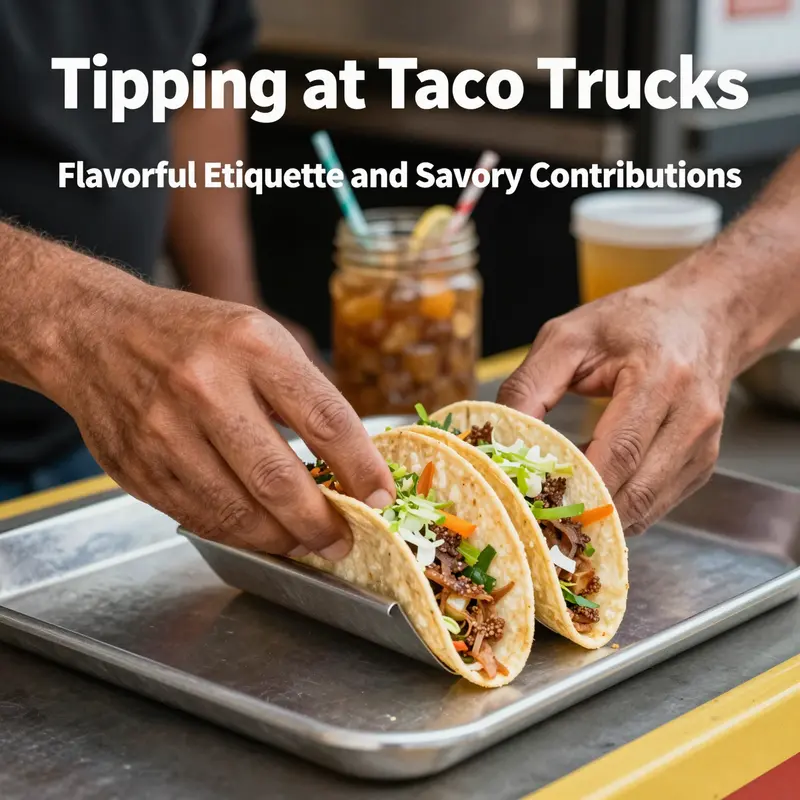
Tipping at a taco truck is more than a polite gesture; it is a microeconomic lever that helps determine the daily livelihoods of the people behind the counter. In a landscape where quick service and mobility define the delivery of cultural flavors, the tip becomes a direct transfer of value from customers to workers, often filling gaps left by base wages and the volatile economics of the street-food sector. The numbers matter not as abstract statistics but as real-world signals about who benefits from tipping and how that benefit shapes the sustainability of a vibrant, mobile food economy. A 2026 snapshot from the National Restaurant Association shows that more than six in ten mobile food vendors report receiving regular tips, a striking rise from a decade ago when tipping in this space was far less predictable. This shift points to a cultural normalization of tipping even in settings traditionally viewed as no-frills, cash-and-carry transactions. Yet the same body of research also reveals a broader public perception puzzle: a 2023 NRA survey highlighted that only 42 percent of Americans consistently tip at food trucks, compared with about 92 percent at full-service restaurants. The divergence speaks to confusion about etiquette, not indifference to the workers’ welfare. If etiquette is evolving, economics is pushing forward with unmistakable momentum: tipping is increasingly being treated as part of the cost of doing business for taco trucks, not an optional add-on.
That economic momentum is not uniform across geographies or business models. In cities with higher living costs or denser pedestrian traffic, tips can represent a larger portion of income, and customers often anticipate tipping as part of the service culture. In other areas, where wages are marginally different or foot traffic is episodic, tips can swing the numbers in the opposite direction, creating uneven earnings that complicate personal finance planning for workers who already operate with thin margins. The mobile nature of these jobs compounds the issue. Taco trucks rotate through neighborhoods, fairs, and office corridors, where customer volume and tipping norms can vary by block, hour, or season. The result is income that can feel like a fluctuating tide rather than a stable paycheck, even for workers who perform multiple roles in a single shift—cooking, taking orders, handling payments, and maintaining the cart’s cleanup and inventory. In that sense, tipping functions both as a currency of appreciation and as a critical revenue stream that helps stabilize earnings in a job that is frequently low-wage and high-turnover.
The economic model of tipping in this sector rests on a simple premise: customers pay a lower menu price, while a portion of labor costs is borne by the tip that customers choose to leave. The affordability of street food hinges on this delicate balance, which allows trucks to keep menu prices accessible while granting workers the potential to earn more than their hourly wage through gratuities. However, the system is not without risk. The amount tipped can hinge on factors beyond the worker’s control—time of day, weather, location, local event schedules, and even the season. A busy lunch rush in a downtown corridor might yield generous tips, while a late-evening stop near a quiet residential street could produce little, despite the same level of service and attention. Such variability can create a painful lack of income predictability that affects everything from debt repayment to savings goals and future planning. Still, even with its ups and downs, tipping remains a meaningful, sometimes essential, mechanism by which taco truck workers supplement base wages and maintain a livable standard of living in environments where hours can be by the clock and tips by the customer.
Digital payment systems have sharply changed how tipping works in practice. Modern taco trucks increasingly deploy card readers and QR code prompts that offer a tip option at the point of sale. When a customer opts to add a tip through a digital prompt, the funds are typically directed to the staff rather than the business as a whole, which helps ensure that the worker who served you benefits directly from your generosity. This transparency is valuable for both workers and customers: it reduces ambiguity about whether a tip is properly allocated and it reinforces the social contract that tipping is a form of compensation for service beyond the act of simply handing over food. Yet digital tipping, while convenient, can also intensify the stakes. If a customer is unsure who is earning the tip—especially in a small operation where one person may cook, take orders, and handle payments—the trust in the system depends on clear communication and visible cues about who benefits from gratuities.
Beyond the arithmetic of dollars and percentages lies the critical question of stability. The mobile food service sector has seen tipping become more routine, but not uniform. The 60 percent figure for regular tipping among mobile vendors signals a shift toward tipping as part of a broader social expectation in this space, yet the economic impact remains uneven. For workers, this means income that may depend on foot traffic patterns, the chipper mood of a sunny day versus a rainy one, and the alignment of peak hours with passing crowds. For employers, tipping creates a way to align labor costs with revenue without raising menu prices to levels that would push customers away. That alignment can enable competitive pricing and a flexible workforce. But it can also generate a fragile income structure for employees who can ill afford unpredictable earnings, especially those who juggle multiple jobs, support families, or rely on credits and loans that expect a predictable pay cycle.
A broader takeaway is that tipping, in this context, functions as a redistributive mechanism that can reduce wage gaps and expand the middle ground of income for workers who operate on the edge of poverty in a high-turnover environment. It has the potential to improve retention and morale, particularly when customers recognize the effort that goes into making a fast, hot, and tasty product in a tiny, constantly moving kitchen. When customers acknowledge the labor behind the meal, tips become a form of social investment in the people who bring regional flavors to crowded sidewalks and bustling street corners. In this way, tipping helps sustain a micro-economy that supports not only workers, but also independent operators who rely on daily revenue to cover a kitchen’s fixed costs, fuel for travel between neighborhoods, and supplies that must be replenished at a rapid pace. The economic signal is clear: tipping is not merely optional indulgence; it can be a stabilizing force for workers who would otherwise see their paychecks shrink as business costs rise or customer volumes ebb and flow.
What does this mean for the reader who wonders how much to tip or whether tipping is appropriate at a taco truck? The practical implications emerge from this economic lens. When a truck features a visible tip jar or a digital prompt that invites gratuity, a thoughtful 10 to 15 percent tip on the order is a simple and fair acknowledgment of service that includes more than just the food preparation. It rewards the extra effort that goes into greeting customers, taking orders, offering recommendations, and ensuring order accuracy in a fast-moving environment. If a tip jar is not present and the customer-facing service is limited to a quick counter pickup, a small cash tip—such as $1 to $2—or rounding up the total can still contribute meaningfully to a worker’s earnings and signal appreciation for a job well done. For readers who engage with QR codes or online ordering platforms, the tip option should be treated with the same respect as at a sit-down restaurant. Digital prompts simplify the act of tipping, but the impact remains real: it reinforces the value of the worker’s time and skill, especially on days when the truck is short-handed or when suppliers are late and the pace of service intensifies.
From a business and policymaking perspective, the shift toward tipping in the mobile segment also points to longer-term implications for wage standards, wage compression, and the incentives embedded in price setting. The economy of tipping can help maintain affordable prices for customers while distributing more of the labor cost burden to consumers. However, it can also create income instability for workers who have little control over the swings in customer generosity. This dynamic highlights a broader industry need: transparent, predictable compensation that respects workers’ contribution while allowing operators to adapt to changing demand. In this light, better data on tipping patterns across cities, times of day, and types of service can inform wage policies and business decisions that balance affordability for customers with fair, stable income for workers. The evolution of tipping norms across different U.S. cities—an area where etiquette often travels faster than wage policy—deserves continued attention from researchers, industry leaders, and consumers alike. For readers seeking a deeper dive into how tipping norms evolve and vary by locale, there are evolving resources and guidelines to help bridge the gap between expectation and practice.
For taco truck operators who want to align tipping with sound business practices while protecting workers’ incomes, it can be valuable to consider the broader financial ecosystem in which tipping exists. Beyond the immediate paycheck, workers rely on tips to cover everyday expenses, from groceries to transportation to childcare. Some operators also navigate tax considerations that can affect how they present wages and tips to the workforce. As a practical resource for owners, there is information available on food-truck-related deductions and savings strategies that can help maximize earnings and, by extension, support fair tipping practices. See the discussion on Food-truck-deductions-maximize-savings for more on how business finances intersect with wage and tip income, and how careful financial planning can bolster the overall economic resilience of a truck operation.
Of course, tipping practices are ultimately shaped by culture, price sensitivity, and a desire to reward good service. The ongoing conversation about tipping at food trucks is not simply about whether to give a percentage; it is about recognizing the value of workers who combine culinary skill with customer service in a high-velocity, mobile setting. It is about understanding that tipping can help stabilize a paycheck in a world where the price of a taco can swing with proximity to a major transit hub or the timing of a lunch crowd. It is about acknowledging that, while tipping is not legally mandated in many contexts, it remains a practical mechanism for ensuring that the people who perform a diverse set of tasks—cooking, taking orders, collecting payments, and maintaining cleanliness—are compensated in a way that rings true to their labor and contributions. And as tipping norms continue to shift, it is incumbent upon both customers and operators to approach gratuities with intention: to support workers, sustain businesses, and maintain the sense that the street food economy is a fair, dignified, and livable line of work.
External resource for broader tipping norms and etiquette across the country can be found here: https://www.nationalrestaurantassociation.org/insights/should-you-tip-at-food-trucks-etiquette-across-different-us-cities/
Cross-Cultural Tips: Do You Tip a Taco Truck When Cultures Collide?
Tipping a taco truck sits at a curious crossroads where practical economics meets social posture and local custom. The small ritual – handing coins, tapping a digital prompt, or leaving a note – says more about a community’s values than about the meal alone. In a diverse country like the United States, and in places where street-food vendors meet travelers from many cultures, tipping becomes a living map of how service labor is perceived and rewarded.
In major urban centers, tipping at taco trucks is often expected when a jar or screen prompt is present, shifting tipping from a personal gesture to a visible part of the transaction. The practice reflects broader shifts in food-service economics and the rise of mobile, fast-casual operations that blend quick service with restaurant-like attention to guests. The recommended baseline may hover around 10-15 percent, but context matters: a warm greeting, a careful explanation of a spicy option, or a customized order can justify a larger tip.
Cultural norms vary by city and country. In Austin, tipping at a taco truck may feel optional and personal, tied to the moment and the relationship with the vendor. In dense coastal cities, tipping may function more as a social investment in the worker’s livelihood and in the overall service experience. Travelers are encouraged to read the room, observe local cues, and respond with generosity where appropriate. When the environment is cash-based rather than digital, a small cash tip – one or two dollars, or rounding up the total – can still convey appreciation without disrupting the flow of service.
For those who want a practical anchor, a simple guideline can help: if a tip jar or digital prompt exists, consider 10-15 percent; if not, a modest cash tip or rounding up is a courteous option. Understanding local variations and keeping in mind the worker’s perspective on wages and costs of living can make tipping a humane and culturally informed gesture.
Beyond the Window: Mastering How to Tip a Taco Truck with Confidence
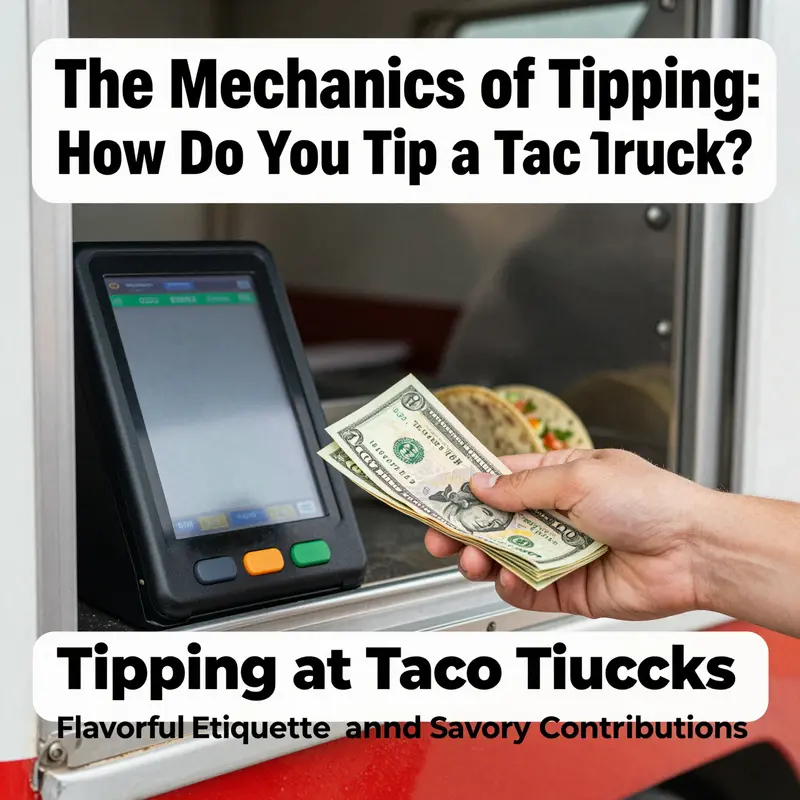
The ritual of tipping a taco truck sits at the delicate intersection of gratitude, social code, and the practical realities of a labor-intensive street food business. It’s not a universal requirement the way it is in many sit-down restaurants, yet the etiquette around tipping has shifted in meaningful ways over the past decade. A quick scan of recent conversations, surveys, and industry commentary makes one thing clear: most people aren’t opposed to tipping a taco truck. They’re unsure exactly when and how much is appropriate, and that uncertainty often leads to hesitation, a missed opportunity to acknowledge a job well done, or a casual rounding of the bill that still feels thoughtful. The practical mechanics of tipping—where to tip, how to do it, and what it communicates—matter as much as the amount. In this sense, tipping becomes a conversation between customer and cook, a small but real social contract that sustains the energy of the street-food economy and the human labor that makes it possible.
To understand tipping at a taco truck, one should first recognize the working context. Food trucks and taco carts are micro-businesses, frequently run by a single proprietor or a small team who juggle multiple roles: planning and cooking the menu, taking orders, processing payments, keeping the equipment clean, and sometimes balancing inventory and sourcing. In many cases, the operator is also the chef and the cashier, which means the same person you tip is the person who prepared your meal and who may have just kept the whole operation moving through a busy shift. Given that arrangement, tipping is less about a customer paying for a service in a formal dining setting and more about acknowledging the labor, skill, and courage it takes to operate under the open sky, in hot sun or cold wind, with limited space and the ever-present pressure of a line.
Practical mechanics define much of how tipping actually happens. If a taco truck offers a digital payment terminal that prompts you to add a tip, the polite thing to do is to consider it, even if the amount is modest. A small tipping range, for instance between fifty cents and two dollars, is common in many cities where the digital prompt is a norm. The prompt itself is a signal that gratuity is encouraged, not coerced, and the choice to participate reinforces the connection between consumer support and the livelihood of the vendor. In places with high food-truck activity, these digital prompts are designed to simplify tipping and help ensure that the worker receives a tangible benefit for their service. If your bill comes through a QR code or online ordering platform with a tip option, selecting that field is a clear acknowledgment of service beyond the mere act of handing over money for goods.
Where the digital prompt is absent, the visible tip jar remains a straightforward cue. A jar near the ordering window communicates a communal appreciation for tipping as a community norm. It’s not a mandate, but it is an invitation to contribute. Even a small amount—the spare couple of dollars that might otherwise sit in your wallet—can travel a long way on a truck that operates with slim margins and high energy demands. In many contexts, cash tips carry a particular resonance. They are immediate, tangible, and easy for the operator to allocate without navigating a digital payout system. If you pay with cash and there’s no jar, a discreet extra dollar or two tucked into the transaction can still feel like a respectful nod to the effort on display.
One of the most nuanced aspects of tipping a taco truck is the ownership question. Many operators are sole proprietors who wear multiple hats, sometimes including the role of chef, cashier, and operations manager all at once. This reality can make tipping feel awkward, because you might be tipping the business owner as much as the person who served you. Yet the labor involved—prepping ingredients, managing equipment, sourcing supplies, and keeping a clean, safe workspace—remains the same in substantial measure, regardless of whether the person at the window is the owner or a trusted staff member. The sentiment behind tipping is not a judgment about ownership; it’s a signal that you value the labor that goes into your meal. In many communities, that signal is warmly received because it recognizes the risk and effort inherent in small-business food service. A tip, then, is less about who you’re tipping and more about the acknowledgement of work that sustains a neighborhood favorite and keeps a vibrant street-food economy alive.
The etiquette landscape around tipping has been evolving as well. A 2023 national snapshot suggested that only a minority of Americans consistently tip at food trucks, with a much higher tipping rate observed in full-service restaurants. That gap has stirred conversation and led many experts to advocate for more explicit etiquette guidance. In practice, the most respectful approach is straightforward: when a tip option exists—whether digital or physical—lean into it in a way that reflects your experience. A tip in the range of 10 to 15 percent is a thoughtful benchmark when the service extends beyond the simple act of receiving a burger or a taco: when you’re greeted warmly, when the order is accurately taken with recommendations, or when the staff go the extra mile to ensure your meal suits your tastes. If the system doesn’t present a percentage, rounding up the final total or adding a few dollars on top of the price is a practical and appreciated alternative.
This kind of guidance helps reduce ambiguity. It reframes tipping from a transactional add-on into an act of reciprocity for service that often blends cooking, customer interaction, and day-to-day business management. Consider the way a taco truck can become a social hub in the neighborhood: a place where people share a quick meal and a moment of human connection amid the bustle of the city. In such a setting, a tip can feel like a bridge, signaling not only gratitude for the specific order but also support for the ongoing viability of a small business that offers a sense of community and place. The material impact of tips matters as well. For operators, spare funds from tips can cover essential costs—gas for mobile operations, maintenance of cooking equipment, or even a meal for a hard-working cook who often spends long hours in the truck. In a climate of rising operating expenses and stiff competition, consistent tipping helps sustain the labor that makes each taco an event rather than a mere transaction.
As customers, we also carry a social duty to tip with intention rather than habit. The right amount and method can depend on several situational cues: a visible effort to greet you by name, a careful description of the menu, or a thoughtful recommendation that helps you navigate spice levels or ingredient substitutions. Such interactions elevate the experience beyond a quick bite and demonstrate that the vendor sees you as more than just another order. The etiquette you practice today may influence the frequency and quality of service you get tomorrow, reinforcing a cycle of respect and reliability that benefits both the customer and the business. In this sense, tipping becomes a sustainable practice—one that aligns with values of fairness and community well beyond the lunch hour.
In thinking about how best to approach tipping, it helps to anchor your decisions in a few practical habits. If you use digital payments, check the available tip options and select a modest amount if you’re satisfied with the service. If there’s a tip jar, leave something meaningful enough to be noticeable without feeling extravagant. When paying cash, consider adding a small tip that reflects the service you received and the effort that went into your meal, even if the worker is the owner. If you’re in a high-cost urban area where workers often rely on tips for a significant portion of their income, you might lean toward the higher end of the 10–15 percent range or add a few extra dollars to acknowledge efficient service on a busy day. These microgestures accumulate into a larger sense of support for a system that has long thrived on the generosity and cooperation of everyday diners.
The evolving norms surrounding tipping are also a reminder that etiquette can be contextual, not prescriptive. The absence of a tip jar or a digital prompt is not a moral failing on the part of the customer; it’s an opportunity to adjust to the local custom and to recognize the most intimate aspects of the operation—the cook’s hands on the flame, the pace of the line, the care in preparing a vegetarian option without cross-contamination, or the patience shown when a customer’s order requires a quick modification. In conversations about best practices, the bottom line remains simple and humane: tipping is not legally required, but it is increasingly seen as a respectful acknowledgment of labor and service. The most thoughtful approach is to participate when the option exists, and to offer a small token when it does not. If you’re ever unsure, a quick, courteous question—“Is a tip appreciated here?” or “Do you have a preferred way to handle tips?”—can clear the air and show respect for the person who prepared your food and kept the truck moving.
For readers who want a broader view of tipping norms across different contexts and cities, a deeper dive into etiquette can be helpful. For a broader context, see the practical guidance in the Fireduptacotruck community resource, which discusses tipping and related best practices in street-food settings. You can explore insights at the Fireduptacotruck blog to connect the tipping habit to broader food-truck operations and maintenance considerations. https://fireduptacotruck.com/blog/.
In sum, the mechanics of tipping a taco truck are not a rigid set of rules but a responsive practice that honors labor, supports small businesses, and reinforces a sense of community. The most respectful approach blends awareness with generosity: engage with the available tipping options, consider a 10–15 percent gesture when service warrants it, and, if there’s no digital prompt or jar, offer a small cash tip or round up your payment. This simple act can ripple through the day, financing a longer shift, fueling a bike or van, or simply ensuring the craft of the cook continues to be celebrated in the neighborhood.
External resources offer broader context on tipping norms across different locales and platforms. For a comprehensive look at evolving etiquette in 2025 and beyond, see Roadtrippers’ guide to tipping at food trucks and the etiquette surrounding it: https://www.roadtrippers.com/blog/should-you-tip-at-food-trucks-and-what-etiquette-applies-in-2025
Final thoughts
Tipping at taco trucks isn’t merely about leaving extra cash—it’s a flavorful way to connect with the people behind your meal, support hard-working staff, and acknowledge the passion they put into every taco that graces your plate. Whether you’re enjoying a street taco during a night out or grabbing lunch at a food festival, your tip can make a difference. By understanding the etiquette, recognizing the economic impacts, embracing cultural nuances, and mastering the mechanics of tipping, you’ll enhance not only your experience but also contribute to the vibrant taco truck community. So, the next time you’re faced with that cash exchange, remember: every tip is a sprinkle of kindness, helping to keep the taco truck culture alive and thriving!