
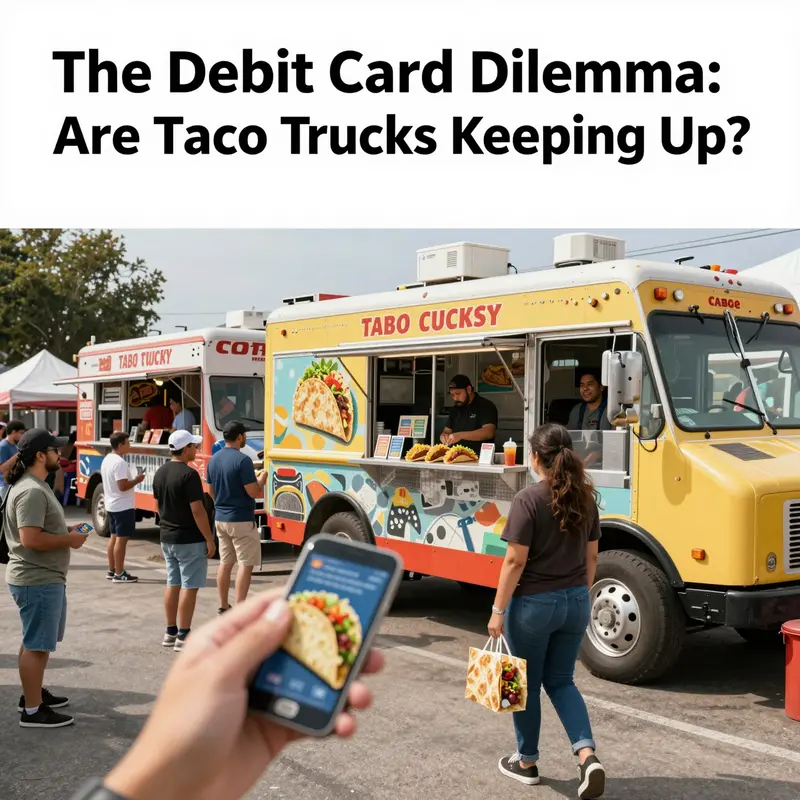
Taco trucks have long been a staple of vibrant street food culture, tantalizing taste buds with their vibrant flavors and culinary creativity. Yet, as the food landscape evolves, one prominent question arises: do taco trucks accept debit cards? Understanding the journey through taco truck payment acceptance unveils much more than just a financial detail; it exposes industry trends, technological shifts, and economic implications that resonate deeply with cuisine lovers, taco fans, and taco business owners. Join us as we dive into the world of taco trucks, examining the current industry trends of debit card acceptance, the technological innovations propelling this change, the economic impact on vendors, and the consumer’s need for convenient payment options. Let’s taco ‘bout the flavor of commerce!
Swipe or Snack: The Card-Ready Evolution of Taco Trucks and What It Means for Diners
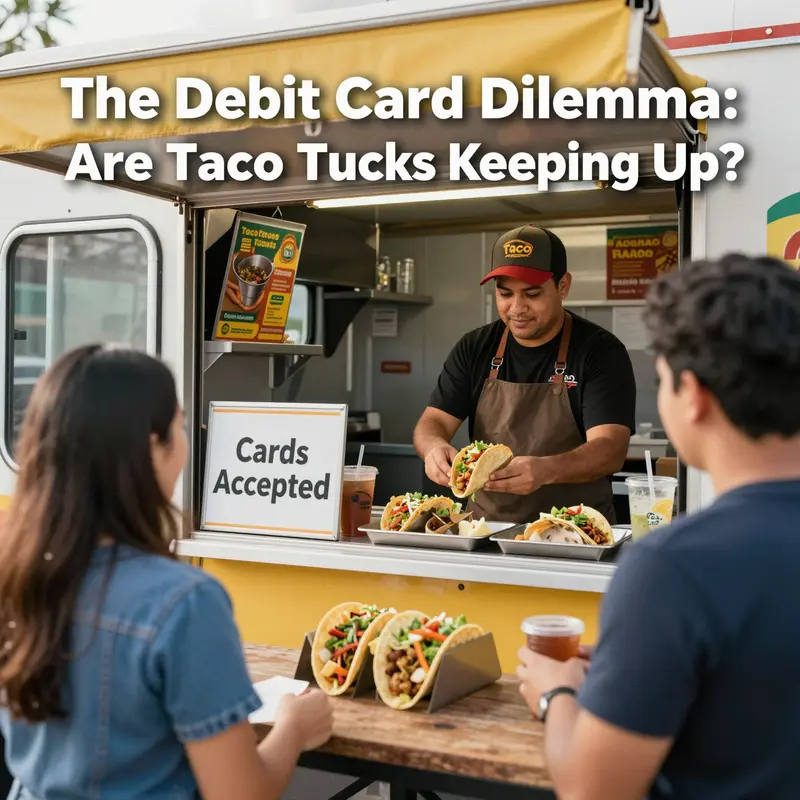
Do taco trucks take debit cards? The question opens a window onto a broader and more intricate turn in street food: the gradual move from cash-only windows to payment ecosystems that respond to a digitally literate public. For many customers, dragging a wallet full of crumpled bills into a street-food line feels outdated, and the request to pay with a card is no longer a novelty but a baseline expectation. Yet the reality behind that expectation is uneven and deeply local. In some neighborhoods and cities, card readers are as common as the metal grates that shield the grills. In others, the stall line still tips toward cash for practical reasons that range from cost and reliability to the social rhythms of the neighborhood. The end result is not a simple yes or no, but a spectrum where vendor choices, customer demand, and infrastructure intersect on every street corner. The broader arc, however, is clear: the food truck sector is increasingly wired for electronic payments, and that shift is reshaping everything from speed of service to meal budgeting for travelers and locals alike.
The momentum toward card acceptance is strongest in urban cores and areas that shoulder high foot traffic and a steady flow of tourists. In these contexts, the math of a single sale can change with a tap or a swipe, not a cash-handling dance. The business logic is straightforward: faster checkouts, reduced risk of short change, and the possibility of higher average tickets when customers can pay with a card or a digital wallet. Technological adaptations have become more accessible for small operators. Portable terminals, affordable readers, and software capable of syncing with basic inventory and order-management tools make it feasible for a truck to operate with the same checkout fluency as a storefront. The result is a ride-along blend of mobility and digital convenience that aligns with what many diners now expect as a baseline in a fast-casual setting.
Yet the cash-accepting dichotomy remains stubborn in many communities. Lengthy memories of cash-only days, concerns about card processing fees, and the practicalities of maintaining a stable internet connection all contribute to a slower transition. In parts of the country with cash-centric economies, small operators may worry that card readers add costs without guaranteeing a corresponding return in sales. They may also face inconsistent network connectivity on certain blocks or at certain times of day, which can disrupt electronic payments more than cash. The practical upshot is a continued bifurcation: some trucks embrace card readers as standard, while others stay firmly cash-first. This local variance is not a failure of the model but a reflection of the diverse realities within the street-food ecosystem. It also means that a dine-in plan can hinge on where you are and which truck you encounter, a reminder that street food is a mosaic rather than a uniform chain of experiences.
Beyond the geography of acceptance lies the technology itself. The modern taco truck increasingly centers its service around a mobile point-of-sale system built to survive wind, heat, dust, and the unpredictable tempo of a lunch rush. These systems handle multiple payment modalities—swipes, chip inserts, and contactless taps—and they can deliver receipts by print, text, or email. They also create data trails that operators can study to optimize staffing, inventory, and product mix. The presence of a digital wallet option, even if not universal, increasingly signals to customers that the business embraces modern convenience. But the operational reality is nuanced. A successful card-enabled workflow depends on reliable connectivity, secure data handling, and a simple, fast user experience. A single hiccup—the device freezing, the reader failing to communicate with the network, or a misread card—can stall a line and test customer goodwill in real time. In other words, technology brings opportunity, but it also raises expectations and introduces points of friction that must be managed with care.
Against this backdrop, vendor variability emerges as a central theme. The shift toward electronic payments is not a uniform policy enacted across a fleet of trucks; it is a patchwork. Some operators adopt electronic payments gradually, testing the waters with one event or a single market before expanding to their entire route. Others leap forward, replacing older systems with robust, mobile-ready configurations that promise smoother service and the potential for higher tips. Conversely, there are operators who maintain cash-only models as a deliberate choice, whether to keep costs down, to serve a clientele less inclined to use cards, or to simplify cash management in environments where card networks are perceived as unreliable. The economics are part of the story: card processing fees eat into margins, the cost of hardware and software can be a barrier for newer entrants, and the flexibility of accepting multiple forms of payment must be weighed against the ease of getting people fed quickly. The point is not to champion one path over another, but to acknowledge that the decision rests with each operator, shaped by their location, customer base, and strategic priorities.
There are illustrative instances that help illuminate this dynamic. In some markets where demand is high and competition intense, vendors who previously refused card payments have begun accepting them to avoid losing customers to faster-moving lines and to capture orders from people who travel with a preference for digital wallets. The transition, when it occurs, can correlate with improvements in throughput, the ability to track sales more precisely, and better control over cash handling. At the same time, other operators—especially those serving tight-knit, cash-based communities—choose to sustain cash-only policies to minimize fees and to preserve a sense of tradition and speed for a certain clientele. The result is a street-food landscape that feels simultaneously familiar and new, a place where the badge of a truck is less about the mode of payment and more about the overall experience—the aroma, the speed of service, and the predictability of the line.
For the consumer navigating this evolving terrain, preparation remains a practical virtue. The simplest recommended habit is to confirm payment options before you reach a truck. Real-time updates on social media, quick checks in review apps, or direct posts from the operator can reveal whether a truck accepts cards on a given day. Since policies can change with shifts in ownership, equipment upgrades, or the introduction of new markets, assumptions often lead to unnecessary delays. A small amount of cash as a backup is a reasonable hedge, though even cash-friendly diners are increasingly carrying a backup digital wallet for the sake of speed and hygiene. The culture of street food thrives on spontaneity, yet the modern card-enabled workflow demands a predictable, streamlined checkout. That is why the most reliable play for the informed eater is to treat each truck as a distinct business with its own policy and to verify before joining the queue.
Curiosity about this topic often intersects with broader questions about food entrepreneurship and payment ecosystems. The shift toward card acceptance mirrors broader shifts in the economy toward contactless and digital payments, a trend driven by consumer expectations, urban infrastructure, and the economics of running a mobile kitchen. When a truck can accept multiple payment methods, it reduces barriers for customers who want a quick bite during a busy day or a tourist trying to stake out a reliable meal in a new city. It also prompts vendors to reconsider their cash-handling processes, insurance considerations for cash storage, and the pace at which they can move customers through the line. The improved flow can support higher volumes, especially when combined with well-designed queuing and order-ahead options that integrate with the same POS system used at the point of sale. In this sense, the evolution of payment acceptance is both a customer-service enhancement and a strategic business decision that can shape a truck’s success across a season or a year.
For readers who want a sense of how these changes resonate on the ground, consider how a street-food experience in a bustling city may unfold. You arrive at a truck, you decide what to order, and you prepare to pay. If you are carrying a card, you anticipate a smooth tap or a quick insertion of a chip. If you only have cash, you scan the line to see whether a cash option exists or how long it might take to execute the transaction with a cash-only device. Either way, you gauge the value of the interaction not by the payment method alone but by the overall rhythm of service: the speed of the order, the clarity of the menu, the warmth of the greeting, and the confidence of the staff in handling your payment swiftly. This is the essence of the phenomenon: payment options are becoming a visible proxy for efficiency, reliability, and adaptability in a mobile food operation.
To keep this discussion grounded, it helps to see payment options as a localized, evolving feature rather than a monolithic policy. The latest guidance from industry groups tracking these changes underscores a trend toward broader acceptance, but with ongoing caveats. The certainty lies in continued experimentation and adaptation by operators who weigh customer expectations against the realities of cash handling, card processor fees, and network reliability. For readers seeking more context about how these shifts play out in practice, real-time reviews and vendor updates remain the most trustworthy sources of truth. The practical takeaway remains simple: treat each truck as its own enterprise and verify payment options before you buy, so every bite is followed by a smooth, seamless checkout.
If you are curious about how payment technology reshapes the everyday operation of street kitchens, a broader window into the topic is available through the Fire Up Taco Truck blog. There you can explore discussions about equipment, setup, and throughput in a format that connects the street-level realities with the technology behind them. For readers who want a direct, contextual glimpse into how these trends influence a wide range of mobile culinary enterprises, that resource offers a useful vantage point. Fire Up Taco Truck blog.
In sum, the debit card question for taco trucks encapsulates a broader shift toward faster, more versatile, and more consumer-friendly mobile dining. The pattern is not universal, but it is increasingly common. Card acceptance tends to be more robust in high-traffic, tourist-friendly zones and during peak service times, while cash remains a stubborn anchor in other quarters. The real-world effect is a more fluid and efficient dining experience for many customers, paired with a cost-benefit calculus that operators continually reassess. Diners who embrace the change can enjoy quicker payment experiences and broader payment options, while those who encounter cash-only trucks learn the value of a quick check or a backup plan. The result is a city-scale mosaic of payment policies, each piece contributing to a larger, evolving story about street food in a digital era. For a fuller sense of how historical experiences with cash-only practices have appeared in public reviews, you can consult archival discussions that capture the tension between tradition and modernization across different neighborhoods and times: https://www.yelp.com/biz/tacos-manuel-los-angeles.
Tap, Wallet, and the Taco Line: How Digital Payments Are Rewriting the Taco Truck Experience
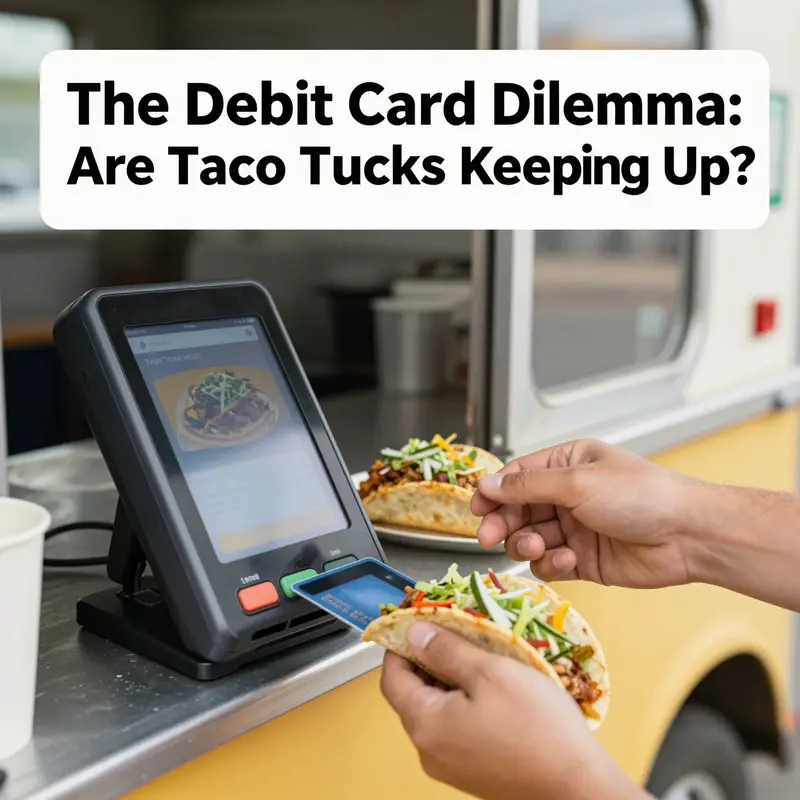
The street hums with the scent of sizzling peppers and cilantro, and the line at the taco truck grows as the evening light softens along the curb. In this setting, the question “do taco trucks take debit cards?” has become less of a curiosity and more of a basic expectation for customers who crave speed, convenience, and a seamless bite on a busy schedule. The answer, as many observers have noted, is not a uniform yes or no but a shifting landscape shaped by technology, vendor philosophy, and local market dynamics. Some trucks still operate in a cash-first world, while others sport sleek card readers that clamp onto a small counter, the tiny device glinting with the possibility of a card tap or a quick insert. The broader pattern, however, is unmistakable: digital payment options are becoming increasingly common, even indispensable, for mobile food vendors who want to stay competitive in a crowded field.
For years, a few outliers stood out as cash-only holdouts. Historical snapshots, such as the 2017 Yelp report noting that a well-known Austin truck like Tacos Manuel did not accept debit or credit cards, serve as a reminder that transition timelines vary. These pockets of cash-only operation persisted not only because of stubborn vendor preference but also due to the cost structure and reliability concerns around hardware, connectivity, and training. Yet the industry has steadily shifted under consumer pressure and the organizational push of modern payment ecosystems. The incursion of mobile point-of-sale systems, with compact card readers and the promise of faster, cleaner transactions, has reduced one of the most persistent friction points for customers who show up with a wallet full of plastic but a clock that insists on punctual service.
In places where the market is more open to experimentation, the shift has not merely been about accepting a card at the window. It has become about the speed and reliability of the entire payment experience. A customer’s journey from queue to bite can feel smoother when payment happens in seconds, with a digital receipt stored in a payment app or sent to an email address. Vendors report that digital payments streamline tracking, reconciliation, and taxes, turning everyday sales into data points that can be analyzed for inventory planning and marketing decisions. In this sense, the debit card question transcends the transaction itself and touches on owner oversight, financial management, and the vendor’s ability to respond to demand with agility.
The urban trend toward card acceptance is not accidental. It mirrors a broader shift in consumer behavior: a growing comfort with digital wallets, contactless transactions, and the expectation that a street-food experience should match the convenience of a brick-and-mortar restaurant. Even when the price point is lower and the menu simpler, customers want the same speed and frictionless experience they enjoy at established eateries. The deployment of portable readers and simple onboarding processes has lowered the barrier for a mobile operator to switch from cash-only to cash-friendly or fully cashless operations. In addition, the safety and traceability that come with card-based payments address a long-standing concern among vendors who needed to keep careful cash-handling records for audits, taxes, and internal controls.
The Austin market, often highlighted as a bellwether for food-truck innovation, has articulated these dynamics through guidance and policy updates. The Austin Food Truck Association’s payment options guidance, updated as of March 2026, underscores a pragmatic approach: vendors should clearly communicate accepted payment methods, invest in reliable payment infrastructure, and maintain flexibility to accommodate customers who still rely on cash. This guidance acknowledges that while many trucks have embraced digital payment, a one-size-fits-all mandate would ignore the realities of bandwidth, service area, and the cost of hardware. Vendors who operate in areas with spotty cellular service may still need to offer offline transactions, with subsequent reconciliation when connectivity is restored. The practical takeaway is simple but powerful: customers should verify payment options in advance, and operators should design a system that remains robust across conditions.
Beyond local anecdotes, the pattern resonates at a global level. A 2025 study on digital payment adoption in the food truck sector in Chennai, Tamil Nadu, documents how technology integration—through mobile POS and contactless terminals—transforms routine transactions into efficient, auditable processes. The study highlights how digital payments facilitate faster service, improve security through encrypted transactions, and assist vendors in maintaining transparent cash flow records. The Chennai study, though set in a different urban ecosystem, reinforces a universal logic: when a business model moves from stationary to mobile, the payment experience becomes a critical driver of customer satisfaction and revenue potential. The convergence is clear—wherever the market supports it, vendors are upgrading their payment infrastructure to accommodate debit and card payments with confidence.
Customers who care about convenience may navigate this landscape by seeking out trucks that display clear, visible indicators of accepted methods. Signage near the order window, apps that list available trucks with their payment options, and social media posts that announce changes in payment policy all help reduce confusion. In many cities, diners will find that a truck’s card acceptance is linked to its POS setup and the vendor’s tolerance for transaction fees. The friction a consumer experiences when a card is declined—whether due to a temporary connectivity interruption or a misreading device—can erode trust in a vendor that otherwise delivers a satisfying meal. Given that, customers often carry a cash backup, not out of nostalgia but out of prudence, appreciating that the most smoothly run taco line is the one where a customer’s preferred method is accepted without delay.
Vendors, in turn, weigh several practical considerations when deciding how to structure payment acceptance. Hardware costs are not immaterial, even for small operators who pride themselves on lean startups. A compact reader is a fixed expense, but the ongoing costs of processing—per-transaction fees, potential PCI compliance requirements, and occasional maintenance—add up. Vendors must also consider the reliability of cellular networks, which power most mobile readers. A stormy night with rain-slicked streets can degrade connectivity, threatening stalled lines and frustrated customers. Some operators mitigate this risk by maintaining cash-only options during peak events or in zones with notoriously weak coverage, while others invest in offline-first payment modes that sync when back online.
The customer experience thus becomes a blend of expectations and realities. A diner who values speed and simplicity will likely keep a card ready and a digital wallet prepared for the moment of payment. Yet the same diner might perform a small mental calculus: if the truck accepts debit cards with a quick tap, the line will move faster and I’ll likely be happier with the service. The synergistic effect is not merely about the device at the window but about how the entire operation communicates payment options, processes transactions, and then caps the exchange with a clear, shareable receipt. In this sense, payment acceptance is part customer service, part operations management, and part strategic signaling about the vendor’s willingness to invest in modern systems that match growing consumer expectations.
For entrepreneurs who are evaluating this shift or planning a launch, the question often turns into navigation rather than a verdict. It is worth contemplating guidance like that offered in the linked resources that explore how to align a food-truck business with modern payment ecosystems. For instance, those considering how payment acceptance fits into a broader business strategy might find it useful to examine the broader framework outlined in resources about choosing the right food truck. This cross-reference can help entrepreneurs assess not only payment options but also the fit between hardware, software, service area, and the menu’s scale. Choosing the right food truck provides a strategic lens for weighing costs, capacity, and the operational realities of card acceptance alongside other critical decisions like vehicle setup, permits, and staffing.
The central takeaway remains accessible and actionable: debit cards and other digital payment methods are no longer a fringe capability for taco trucks. They are increasingly a baseline expectation in many markets, supported by a mix of vendor incentives, customer demand, and increasingly robust payment infrastructure. The pace of adoption varies by city, by event, and by the vendor’s calculus about fees, hardware, and reliability. Yet the trajectory is clear—digital payments are here to stay in the taco-truck economy, and the most successful operators are those who design systems that combine speed, security, and flexibility for both customers and staff. In practice, this means signage that clearly states accepted methods, trained staff who can guide customers through any hiccup, and a well-considered plan for managing connectivity, offline transactions, and reconciliation.
External research and industry guidance lend further texture to this evolving picture. A broader academic context shows how digital payment systems are reshaping mobile food businesses, including the adoption patterns, security considerations, and the economic implications of moving toward card and contactless payments. For readers seeking a more scholarly framing of these dynamics, see the external resource cited below.
External resource for broader context: https://www.researchgate.net/publication/390485675DigitalPaymentSystemsandtheirAdoptionintheFoodTruck_Industry
Wallets on Wheels: The Economic Pulse of Debit Card Payments for Taco Trucks
On curbside corners and in sunlit food-house lines, taco trucks have become a microcosm of urban commerce. The question patrons and planners keep asking is whether these nimble vendors take debit cards. The answer hinges on place, policy, and practicality. In a city like Austin, where the food truck economy pulses with mobility and diversity, the drift toward digital payments is clear, yet it is not universal. A few longtime cash-only stalwarts remain, and their choices can be as revealing as the wallets they serve. The uneven adoption is not merely a quirk of entrepreneurship; it reflects how payment technologies intersect with risk, cost, and customer expectations in a market where speed and simplicity often outdo price wars and lavish branding. The historic cash preference, exemplified by stories of trucks that once insisted on cash only, underscores a simple truth: payments are not just a back-office concern, but a daily live decision that shapes foot traffic and the bottom line.
As mobile point-of-sale systems become more common, the mechanics of payment on the street have shifted. Card readers, touchless wallets, and cloud-connected receipts let customers pay by debit, credit, or digital wallets with a quick tap or dip. The experience is cleaner and faster than handling coins and bills, and for many customers it feels inherently safer. The transaction cycle that was once a moment of friction—digging for change, counting bills, reconciling a cash drawer—has largely vanished into a sleek screen. This immediacy matters in a setting where every minute counts, where lines can grow long in the heat, and where a missed sale often means lost momentum for the entire day’s schedule. The operational improvement extends beyond convenience; it reduces theft risk, minimizes the overhead of cash handling, and makes the daily ritual of balancing the till less painful and error-prone. For the owner scanning receipts later, the digital trail left by a debit card payment becomes a reliable compass for understanding how a day, a week, or a season is trending.
Financial planning for a taco truck benefits profoundly from the clarity that electronic payments provide. Digital transactions deliver readily accessible records, making budget forecasting more precise and tax reporting more straightforward. Small operators can slice sales by time of day, by location, or by menu item and then fold that intelligence into stock orders, supplier negotiations, and promotional plans. The granularity of data reveals patterns that cash-only systems simply cannot capture: the uptick in sales from a late lunch crowd, the temperature sensitivity of demand for certain fillings, or the impact of a new salsa blend on repeat visits. In this way debit card acceptance becomes not just a payment method but a strategic instrument. For a business eyeing growth, the capability to measure, compare, and adjust is a practical form of leverage that cash alone rarely affords.
Cash flow, the lifeblood of any mobile venture, benefits conspicuously from faster settlement times. Debit transactions typically settle more quickly than manual cash deposits or check processing, improving cash availability for immediate reinvestment. A truck can replenish inventory more confidently, cover urgent maintenance, or fund a targeted, time-limited promotion without waiting for a weekly cash drop or a delayed bank cycle. This agility matters on the road, where inventory is perishable and opportunities to upsell can hinge on the ability to respond in real time. The result is a cleaner operational rhythm, less anxiety around float and liquidity, and more room to experiment with new menu items or sourcing options. With improved cash flow, operators may also explore upgrades to equipment, better lighting for nighttime service, or partnerships that extend the service window—investments that further embed the mobile kitchen into the fabric of local commerce.
Yet the economics are not one-sided. The flip side of embracing debit card payments is the cost structure that comes with it. Taco truck operators must weigh hardware investments against ongoing charges. A modern POS setup typically includes card readers, software subscriptions, and connectivity services, all of which eat into slim margins. Transaction fees, monthly service costs, and chargebacks can accumulate, even when volumes are modest. For high-traffic days, the cost per sale can be manageable, but during slower periods or in venues with erratic footfall, these fixed costs can compress margins and require more deliberate pricing strategies. The economics are highly sensitive to volume, location, and vendor terms. However, as processing costs have become more competitive and as readers proliferate across mobile ecosystems, the barrier to entry for small vendors has diminished, allowing more trucks to experiment with pricing and promotions that reflect convenience rather than pure cash cost.
The risk of lost sales is a real counterweight. Not every customer carries debit cards or uses digital wallets, especially younger patrons who may favor cardless or cashless optimism but still rely on a mix of payment methods when traveling. In some cases, turning away card payments can deter a segment of potential customers who arrive with the assumption that a quick card tap will settle the bill. The historical cash-only stance of a few carts—like the better-known stories that circulate in urban food-truck lore—exposes how a rigid policy can curb reach and demand. It is not about shunning old habits altogether, but about recognizing evolving consumer behavior and the friction that can arise when a payment option feels inconvenient. For operators, the lesson is clear: the choice to accept debit cards should be evaluated against the typical customer profile, the truck’s location and hours, and the competitive landscape of nearby vendors.
Beyond the numbers, the broader economic impact of widespread card acceptance among taco trucks points toward a more formalized and transparent local economy. Digital payments generate data trails that support compliance with tax and reporting obligations. They create a record of receipts that can be analyzed to identify best sellers, peak hours, and efficient supply chains. This trend aligns with a national pattern in which the informal and informal-adjacent segments gradually adopt formal financial practices. The integration of mobile payments with traditional cash workflows does more than simplify checkout; it enhances accountability and trust among customers, partners, and regulators. As mobile payment technologies evolve and as costs decline, the incentive for taco trucks to accept debit cards grows, shaping a marketplace that values speed, reliability, and consumer confidence. The net effect is a more inclusive and accessible street food economy that can scale as permissions, permits, and neighborhood demand evolve.
Of course, policy variation remains a practical reality. Not every truck vendor has the same toolkit, and decisions about payment acceptance can shift with vendor experience, location, and neighboring competition. Customers who want to minimize friction should verify payment options before visiting, especially when trying a new route or a late-night stop. Signage, simple explanations at the order window, and a few reminders about accepted forms can go a long way toward smoothing the encounter and preventing missed opportunities for a quick sale. In the spirit of practical planning, operators can consider a staged approach to adoption: start with debit card acceptance at the most critical times or places, then expand to additional options as the business grows. This measured path allows for learning and adjustment without overwhelming the back end with unfamiliar software, complex reconciliation, or inconvenient downtime.
For readers seeking a practical lens on how these financial choices impact budgeting and planning, see food-truck tax deductions. This resource offers guidance on how digital receipts and structured revenue streams can support deductions and financial planning, an aspect often overlooked when the debate centers on payment methods alone. The linkage between payment acceptance and tax strategy is not accidental; it grows from the same root—having clear, accessible data and a disciplined accounting routine that scales with the business. The more data a truck generates through debit transactions, the more accurately it can forecast demand, price sensitivity, and seasonal shifts, and the more confidently it can navigate licensing, insurance, and other regulatory commitments. When operators pair a thoughtful payments strategy with solid record-keeping and proactive planning, the street corner becomes not just a place to eat but a model of lean, data-informed micro-entrepreneurship.
In sum, the economic implications of debit card transactions for taco trucks are nuanced and layered. The benefits—reduced cash handling, sharper financial tracking, faster settlement, and stronger cash flow—often translate into tangible growth opportunities. The costs—technology investment, ongoing fees, and the risk of missed sales from cash-preference customers—require careful calibration and ongoing evaluation. The broader economic effect points toward greater formality, transparency, and integration with modern retail practices, a trajectory that benefits both operators and customers who expect quick, reliable service. The optimal path is not a one-size-fits-all policy but a tailored approach that respects local conditions, vendor capabilities, and consumer habits. And as the landscape continues to evolve, the card in hand may well become as essential a tool for the taco truck operator as the skillet and the salsa jars are for the cook—an instrument not only of payment but of growth, resilience, and the everyday cadence of street commerce.
Swipe, Sizzle, and the Card-Reader Future: How Debit Payments Reshape the Taco Truck Experience
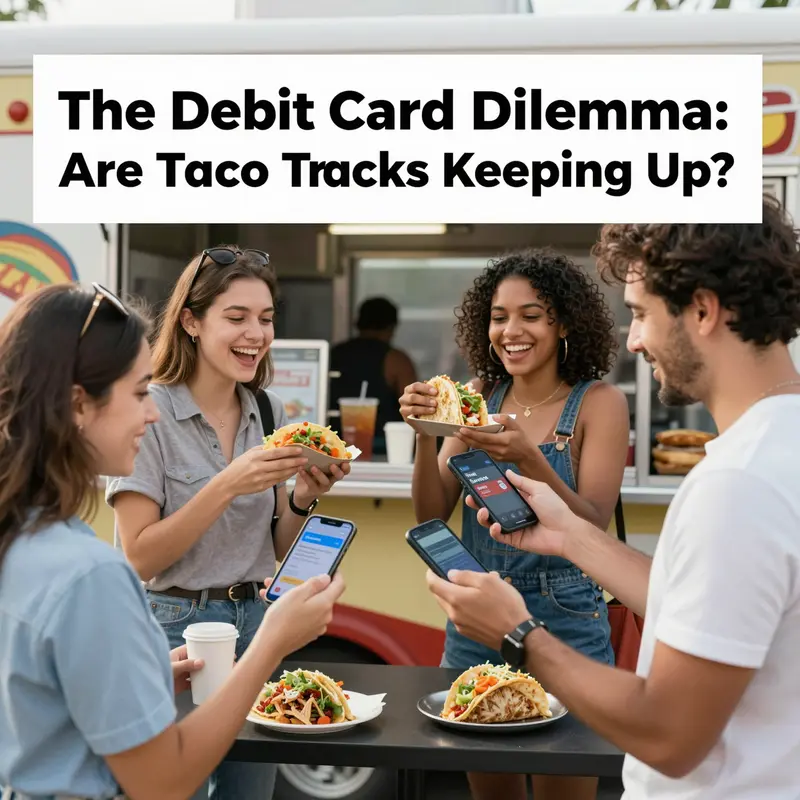
On a warm afternoon, the scent of corn tortillas and charred meat drifts down a busy street as a line forms at a roving kitchen on wheels. The scene is familiar to many urban diners, yet the question’s stakes have shifted with the growing prevalence of digital payments. Do taco trucks take debit cards? The simplest answer is nuanced: many do, but others still rely on cash, and a notable handful no longer accept plastic at all. That tension isn’t merely a quirk of vendor personality. It sits at the crossroads of customer expectations, operational realities, and the evolving economics of small-scale food businesses. In cities that champion entrepreneurial food culture, the drift toward card acceptance mirrors wider shifts in how people pay for everyday meals, while revealing the persistent gaps that keep some carts cash-only. It is a story of convenience, risk, and the way technology reshapes a centuries-old difference between a wallet full of notes and a reader that hums with every order.
For many customers, the contrast is immediate: when a card reader swipes and a digital receipt lands on a screen, the transaction feels seamless, the meal arrives, and the line length shortens. But when the vendor stands with a handwritten total and a stubborn cash drawer, the same order can become a barrier. The hesitation is rarely about preference for cash itself; it often reflects a calculus about fees, setup costs, and the reliability of hardware and internet connectivity in a moving, outdoor kitchen. Cash has long been the default because it is simple, universal, and does not hinge on a wireless signal or a charged device. In the rush of lunch breaks or festival crowds, cash remains a practical option for both the buyer and the seller, even as the market seems to tilt toward digital ease.
Historical snapshots remind us how uneven card acceptance has been in the taco-truck world. In some well-traveled corridors, notable carts have earned a reputation for cash-only operations, and patrons who arrive with only a card discover an inconvenient mismatch with the vendor’s policy. Past reports describe specific trucks that accepted only cash, sometimes attracting frustrated customers who traveled far only to be turned away at the window. These stories matter not as isolated anecdotes but as data points in a broader map of payment practices. They illuminate a market where consumer expectations are shifting faster than some small businesses can adapt, and they illuminate the friction points that arise when a mobile kitchen lacks a consistent way to process modern payments.
The countervailing trend is equally evident. Across more markets, taco trucks are adopting mobile point-of-sale systems that can read debit and credit cards and, in many cases, support contactless payments through digital wallets. The appeal is straightforward: convenience for customers, faster service, and the potential to increase order size by making the payment experience frictionless. These devices are not just gadgets; they are a platform that changes how vendors price, promote, and manage their sales. A card-enabled cart can accept impulse add-ons—extra salsa, a second taco, or a small drink—without patients waiting for cash change. And because many of these devices tie into cloud-based reporting, owners can track daily revenue with a granularity that cash-only years seldom offered. The real impact, however, is less about the micro-transaction and more about the broader habit shift: diners who carry less cash and rely on digital wallets increasingly expect to settle up with a tap or a swipe.
From the vendor perspective, the decision to accept debit or to remain cash-only rests on a constellation of costs and benefits. Processing fees, monthly service charges, and per-transaction rates can nibble away at margins—especially on the modest ticket sizes that characterize street-food meals. Yet these same costs can be offset by higher average tickets, improved cash flow, and reduced risk of counterfeit currency or miscounts during busy hours. Another factor is reliability. A handheld reader depends on a stable power source and a reliable internet connection; in urban canyons or festival grounds where networks are crowded, a cart may encounter temporary outages that disrupt even the most well-meaning transactions. The preference for a cash-only mode in some trucks is thus not simply a stubborn holdover. It can reflect a deliberate balance between minimizing risk, avoiding hardware maintenance, and reducing the complexity that often accompanies digital sales in a small, mobile kitchen.
In markets that actively nurture food-truck ecosystems, organizations and associations have started to codify payment options to guide both vendors and customers. For instance, updated guidance from a major city’s food-truck association highlights that many operators now routinely accept debit and cards, alongside a growing array of contactless methods. The shift is framed not as a universal mandate but as a response to customer demand and the competitive landscape. When a consumer strolls up to a cart and sees a small screen flashing “card accepted,” it signals a second layer of trust: the business is attuned to modern payment habits, prepared to process transactions quickly, and positioned to accommodate varying preferences. In Austin, where the food-truck culture blends vibrant street-food artistry with a high tolerance for experimentation, this evolution has a specific texture. A wave of vendors has adopted mobile POS systems, and many customers expect to pay with debit, credit, or a digital wallet. Yet even within a single city praised for innovation, the picture is not uniform, and the likelihood of encountering a cash-only cart still exists.
That reality places some responsibility on consumers to verify payment options before ordering. It is not uncommon for a cart’s status to shift as the crew rotates through events or as management updates its payment setup. The most reliable approach is proactive verification: check the vendor’s official pages, their social media posts, or the listing on a trusted platform where payment options are updated frequently. Yelp and Google Maps profiles can be especially informative when the language around accepted forms of payment changes quickly. A shopper who is planning a bite to eat during a lunchtime sprint often benefits from a quick check, rather than discovering at the window that a preferred payment method is not supported. This practice is part of a broader consumer strategy of predicting friction points and reducing the chance of being turned away at the critical moment when hunger and timing collide.
The social and economic undercurrents behind these everyday choices also deserve attention. The substitution between debit cards and cash ties directly into broader research on consumer price sensitivity and payment dynamics. When customers can pay with a debit card, vendors may see higher average orders simply because the payment friction is reduced. But merchants must weigh this against processing costs and the risk of chargebacks or disputes that can dim a small operation’s balance sheet. The negotiation between consumer convenience and merchant costs is never flat; it waxes and wanes with gas prices, event calendars, and the digital wallet’s growing reach in daily life. In effect, the card reader is not merely a gadget but a symbol of how a small business integrates into a wider economy where data, speed, and reliability increasingly govern the customer experience.
For diners who travel with a preference for non-cash payment, a practical mindset is to carry a small reserve of cash while relying on digital options whenever possible. In some cases, a vendor may offer a cash-optional alternative only during peak times or at certain locations; in others, the cash-only model may persist regardless of demand. The best approach is a light preparation: a quick check on the day’s schedule, a glance at the vendor’s posted payment options, and a readiness to adjust expectations if a cart focuses on a cash-only policy for reasons rooted in its current setup. This pragmatic stance does not demand abandoning digital wallets; it simply recognizes that the landscape for mobile food is dynamic and sometimes uneven, especially in the transition from traditional cash handling to modern, card-enabled operations.
The broader ecosystem has responded with practical resources to assist both sides of the equation. Vendors who want to embrace card payments can access affordable, user-friendly POS solutions and straightforward point-of-sale software that integrate with existing business processes. Diners benefit from a growing culture of transparency, where vendors openly display accepted payment types and keep them updated in public forums. The dialogue between consumer expectations and vendor capabilities is ongoing, and the pace of change is shaped by both the adoption of new payment technologies and the stubborn realities of operating a mobile kitchen in diverse urban environments. In this context, the question “do taco trucks take debit cards?” evolves into a more nuanced inquiry about how quickly a cart can adapt, how effectively a payment method aligns with customer needs, and how the business balances convenience with prudent financial management.
For readers who want to explore how the payment conversation is advancing in a practical, real-world setting, a glance at industry commentary and community blogs can be revealing. A number of operators and enthusiasts share insights about how to navigate the payment landscape, the relative costs of different readers, and how to structure a menu to maximize the benefits of card acceptance without sacrificing speed. These discussions are not about elevating one method over another; they are about aligning a mobile business model with the evolving expectations of customers who care about speed, reliability, and simplicity as they decide what to eat and how to pay.
In the end, the card-readers’ hum at a taco truck is a small but telling indicator of a larger demographic shift. The street-food scene, with its emphasis on speed, flavor, and character, is increasingly integrated with the digital economy that many diners already inhabit. The question is less about a fixed policy and more about a living practice—one that can vary by day, by venue, and by the readiness of a vendor to invest in a more flexible payment framework. For customers, that means the next visit to a beloved cart may be smoother and faster if debit or card use is an option, or it may require a quick detour to a nearby cash-only favorite. Either way, the evolving payment mix is part of the story of how taco trucks remain agile, responsive to customer desire, and deeply embedded in the everyday economics of a mobile, vibrant food culture. The result is a cuisine that travels not only with its ingredients but with a growing repertoire of ways to pay for it, a development that continues to unfold with each festival, market, and curbside lunch.
External reference for context: For a concrete illustration of cash-only encounters described in user reviews, see a detailed discussion here: https://www.yelp.com/biz/el-ranchito-taco-truck-los-angeles.
Internal resource note: For ongoing conversations about payment options and how vendors balance convenience with cost, the community blog at fireduptacotruck offers ongoing reflections and practical tips for operators exploring payment integration. Learn more at fireduptacotruck blog.
Final thoughts
As the taco truck scene evolves, so too does the payment landscape that underpins it. The trend toward debit card acceptance signals a shift not only in convenience but in the very way taco businesses engage with their customers. By embracing technological advancements, vendors can enhance their operational effectiveness and boost sales opportunities. Ultimately, the dance of flavors at taco trucks now comes with the rhythm of card swipes, offering that delicious blend of culinary enjoyment and modern convenience. Next time you’re craving those mouth-watering tacos, remember that your payment options might have expanded just like the flavor palette at these beloved food trucks.