
Taco trucks are a sizzling sensation for cuisine lovers and entrepreneurs alike, serving up vibrant flavors on wheels. But beyond the delicious tacos, many wonder: do taco trucks really make money? Diving into this flavorful question, it’s clear that profitability depends on more than just tasty tacos—it’s about mastering location, understanding market demand, and keeping sharp financial and operational control. This exploration unwraps the secret sauce across three savory chapters. First, we’ll break down the core factors that determine whether a taco truck turns a profit. Next, we’ll analyze the bustling market demand and competition that shape success. Finally, we’ll dig into the financial planning and savvy management that keep the cash flow flowing and the business thriving. For taco fanatics and food truck owners alike, this guide offers a comprehensive look at what it truly takes to make taco trucks a winning business.
Profit in Motion: Unraveling the Money Roadmap for Taco Trucks
A taco truck sits at the intersection of flavor and opportunity, a mobile kitchen that can roam to where customers gather rather than wait for them to come to a brick-and-mortar storefront. Yet money, not appetite, ultimately decides the story of a taco truck’s success. The research landscape around this business model suggests a clear truth: taco trucks can make money, but profitability is not automatic. It emerges from a disciplined mix of location leverage, price discipline, cost control, and disciplined growth that evolves over time. In practical terms, a truck must navigate a five-year journey that often begins with losses and gradually approaches breakeven and then sustained profit, a path shaped by market demand, operating discipline, and the ability to reinvest earnings into the business core. This is not a fairy-tale timeline. It is a forecast grounded in real-world dynamics, where the initial cinematic appeal of mobile cuisine gives way to the daily grind of cash flow, supplier negotiations, permit renewals, and the relentless pressure to serve fast, hot, consistent meals to a fickle, time-constrained audience.
At the heart of profitability lies location—the most decisive variable in a world where every mile traveled and every minute of queue time can tilt the arithmetic of revenue. A truck parked in a high-traffic zone near office towers, construction sites, college campuses, or at major events can translate foot traffic into steady volumes that push daily revenue upward. The math becomes tangible when you consider peak demand windows: lunch hours that compress a queue, evenings when food seeks social rituals, and weekend migrations to festivals or farmers’ markets. The better a truck’s location strategy aligns with these demand pockets, the more orders it can fulfill without sacrificing the quality or speed that keep customers returning. In practice, this means more than just picking a hot spot. It requires a careful study of pedestrian flow, seasonality, and the rhythms of the neighboring community. It also implies flexibility—knowing when to relocate for a big event, a roster of backup locations, and the ability to announce a new hotspot to social followers with clarity and credibility.
Pricing and cost management work in tandem with location to shape margins. The most successful trucks maintain a focused menu that highlights high-margin items while preserving customer appeal. A lean menu reduces waste and simplifies inventory, which matters when every ingredient bill and portion yields a direct line to profitability. Food costs, labor, and overhead such as fuel, vehicle maintenance, and insurance require meticulous tracking. Profit margins on the grill can be thin if pricing does not reflect real costs or if portion control slips under pressure. Efficient inventory control, supplier negotiation, and the discipline to pivot menus during lean periods are essential. The forecasting lens provided by the latest five-year projections emphasizes that revenue growth is possible—projecting a climb from roughly half a million dollars to well over three million—but this ascent often comes with a protracted period of negative EBITDA. In other words, even as sales rise, the cost structure and scale-up investments keep earnings before interest, taxes, depreciation, and amortization in the red until the tail end of the forecast horizon. For many operators, this is the price of building a brand and a scalable operation that can sustain growth, not a sign of inevitable failure.
Operational efficiency is the quiet backbone of profitability. Speed of service matters because time is money. A well-tuned workflow on a truck—where a crew can consistently deliver a high-quality product within minutes of a customer ordering—delivers more customers per shift and reduces line churn. Equipment reliability protects uptime and prevents the cascading losses that come from outages during peak hours. The story of a profitable taco truck is as much about the micro-dynamics of day-to-day service as it is about big-picture strategy: how quickly orders are prepared, how accurately they are assembled, and how the kitchen remains clean and organized under pressure. Maintenance routines and preventive checks on burners, refrigeration, and electrical systems prevent small issues from blossoming into costly outages. In other words, reliability compounds value by reducing downtime and keeping queues moving, while consistent quality fosters repeat business and word-of-mouth referrals, both of which are crucial in a crowded market.
Brand, marketing, and the ability to cultivate a loyal following also influence profitability. In a mobile food economy, the public’s awareness of a truck’s location, hours, and menu offerings often determines daily revenue more than any single price point. A strong brand identity—its colors, its story, its social voice—helps a truck stand out amid the hustle. Most successful operators lean into social media as a location-mapping tool and promotional channel, announcing daily or weekly locations, sharing mouth-watering visuals, and offering limited-time deals to spike traffic. The nimble nature of a mobile venture makes it well suited to experimentation: a new topping, a seasonal special, or a collaboration with a local business can quickly reposition a truck in the market’s memory and attract new customers. This marketing agility must be supported by a practical financial plan. The five-year forecast underscores that marketing and customer acquisition are not optional—they are integral to achieving the revenue milestones that eventually support profitability. The growth story here is not about sudden windfalls but about consistent, data-informed decisions that push the business toward a sustainable cash cycle.
Startup costs and ongoing capital needs frame the early years in a way that shapes the entire profitability arc. The initial investment in a truck, outfitting it with kitchen equipment, and obtaining permits and insurance is nontrivial. The choice between a new vehicle or a well-maintained used unit affects not just upfront cash outlay but ongoing maintenance and depreciation, which in turn influence tax considerations and cash flow. A notable sense of opportunity lies in sourcing strategies that could lower initial barriers. Industry discussion points toward potential savings from refurbished or sourced-used trucks from cost-effective markets, balanced against the higher risk profile and longer lead times that can accompany such acquisitions. The broader financial plan also highlights the need for working capital to fund inventory, supplies, and unexpected contingencies during the growth phase. The forecast’s five-year cash requirement—substantial at roughly $2.45 million—makes a choice about scale, partnerships, and financing nontrivial. In short, profitability is not a one-time event but a multi-year orchestration of asset allocation, working capital, price discipline, and disciplined growth. It demands a long horizon mindset, clear milestones, and the capacity to reinvest earnings in ways that sustain momentum.
The packaging and presentation of food, while sometimes overlooked, contribute to how customers perceive value and, by extension, how money flows back to the truck. Specialized, hinged, reusable containers and thoughtful packaging help maintain food quality and presentation during transport, especially for premium or gourmet offerings. This attention to packaging can support a premium pricing posture when the menu aligns with what discerning diners expect in a portable format. Packaging choices also intersect with sustainability narratives that increasingly resonate with customers, adding another layer to brand equity. In markets where customers are sensitive to waste, the choice to invest in durable packaging can pay off through brand loyalty and repeat business, even if the per-unit cost is higher. The upshot is that packaging is not merely a logistics detail; it is a strategic lever that can influence perceived value, order size, and the speed and reliability of service—all of which feed into the profitability equation.
Market dynamics and strategic positioning remain central to the profitability equation. A truck’s success is never guaranteed, but it can be steered by understanding the local ecosystem and aligning with demand patterns. Urban cores, campuses, and event-heavy geographies tend to yield higher daily volumes, but they also come with stiffer competition and potentially higher costs. A sophisticated approach balances location density with the ability to maintain consistent service at scale. This includes building a reliable schedule, forming partnerships with event organizers or campus administrations, and leveraging community ties to become a familiar, trusted option among regulars. The best operators treat profitability as an adaptive discipline: they monitor demand signals, track margins by menu item, and refine operations in response to what the data reveals about peak times, wastage, and labor productivity. In building a durable business, the story is less about chasing every hot spot and more about cultivating a reliable flow of revenue across a diversified set of locations and occasions, always with an eye toward sustainable margins.
From a strategic perspective, a five-year financial plan is indispensable. It promises a structured path to profitability by specifying revenue milestones, cost containment targets, and capital needs tied to growth initiatives. The forecast emphasizes that initial losses can be expected as the business learns to scale, build brand recognition, and optimize operations. The payoff appears as the cumulative effect of improved utilization, tighter cost controls, and more predictable cash flows that reduce the risk of liquidity crunches. The practical takeaway for aspiring operators is to approach the business with a plan that anticipates a measured ramp, not a sudden windfall. This means securing appropriate funding, building a reliable supply chain, and maintaining an agile mindset that allows for menu adjustments, location shifts, and marketing experiments without derailing the cash trajectory. It also means recognizing that profitability is a function of both revenue expansion and disciplined cost management. A truck that sells more meals at a sustainable price, while controlling waste, labor, and fuel, will create the conditions for a profitable bottom line, even if that bottom line begins as a modest margin in year one and gradually grows through year five.
A final, practical strand in this profitability tapestry concerns the knowledge corners often overlooked by the casual observer. Tax considerations, for example, can influence cash flow significantly, and smart owners use deductions to optimize their numbers. For readers seeking actionable guidance, a useful entry point is the topic of tax deductions for food truck owners, which provides insights into how legitimate expenses can be leveraged to improve after-tax cash flow. Beyond tax planning, awareness of compliance requirements, insurance needs, and licensing regimes helps reduce the risk of costly penalties that can erode profitability. In parallel, ongoing maintenance, hygiene compliance, and safety standards protect customer trust and reduce the risk of disruptions that could fracture the cash cycle. The money story of a taco truck thus unfolds as a balance between appetite and administration, between the romance of mobility and the discipline of finance. The five-year forecast provides the map, but the traveler—an operator who learns from demand, controls costs, and relentlessly improves operations—executes the journey. In this sense, profitability is not a single moment of triumph but a sustained practice of aligning daily decisions with a longer horizon of growth and resilience.
For readers seeking a compass beyond the internal framework of this chapter, external market analyses observe a broad international lens on used equipment, supplier dynamics, and capital efficiency that can influence price and timing decisions for new entrants. The landscape hints at the potential benefits and risks of tapping into global supply chains when financing a mobile culinary venture. An external resource detailing shifts in the used taco trucks market trends offers valuable context for anyone weighing asset choices and depreciation strategies as a long-run profitability plan. External resource: https://www.foodserviceequipment.com/used-taco-trucks-market-trends-china-suppliers-2026/. In sum, taco trucks can be money-makers, but only through a deliberate blend of location strategy, pricing discipline, streamlined operations, brand development, and disciplined capital management. The narrative of profitability here is a careful, ongoing negotiation between revenue opportunities and costs, carried forward by a well-structured five-year plan, and reinforced by practical lessons on efficiency, packaging, and market engagement. The payoff for the attentive operator is not only a positive bottom line but a resilient business capable of evolving with a dynamic urban economy, a strong brand footprint, and a controlled path to sustainable profitability.
Do Taco Trucks Make Money? Reading Market Demand, Competition, and the Path to Profit
Taco trucks can be profitable when market demand is understood and costs are controlled.
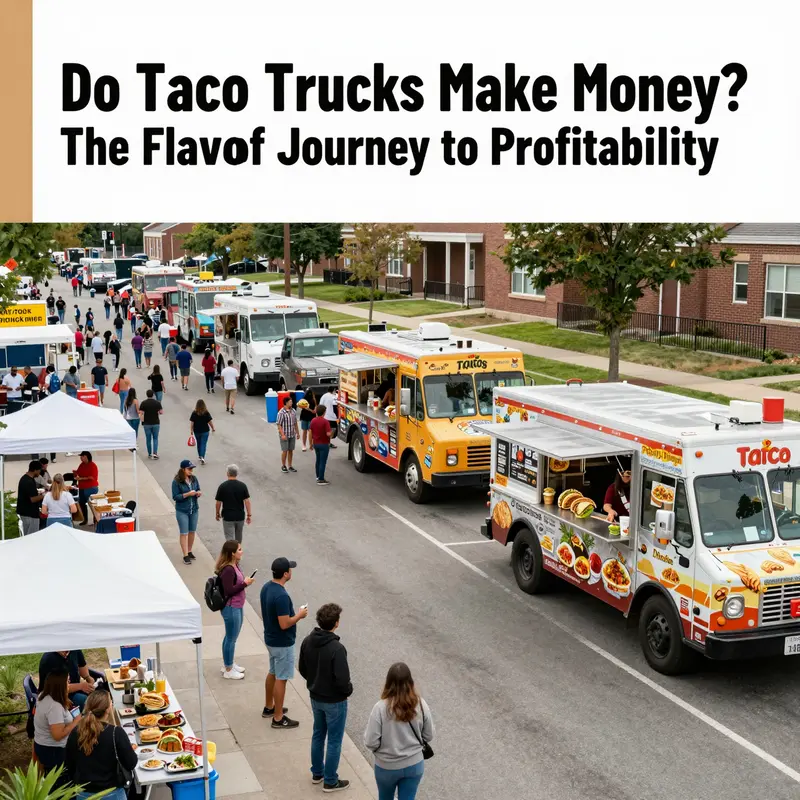
Location and demand matter most: high-traffic corridors, dense urban centers, campuses, and event days create repeat customers and faster turnover.
A concise menu and value pricing help translate foot traffic into steady revenue. Many tacos priced under ten dollars can sustain strong volume when the kitchen operates efficiently and waste is minimized.
Competition requires differentiation. A strong brand, cohesive packaging, and reliable service can turn first-time buyers into repeat customers and spread through word of mouth and social proof.
Operational discipline is essential: control food costs, negotiate with suppliers, schedule labor efficiently, and monitor cash flow to avoid negative EBITDA in the early years.
Five-year planning provides a roadmap. Revenues may grow from about 495,000 in the early stages to roughly 3.61 million over five years, while EBITDA can stay negative through year four and reach breakeven around year five, assuming disciplined execution and demand generation.
The practical takeaway is to pair market insight with tight cost control and a scalable operating model. Focus on productive locations, a manageable menu, and clear branding, then expand through events, partnerships, and additional daypart opportunities to build a resilient, profitable mobile food business.
Profit on the Move: Financial Planning and Management for Taco Trucks
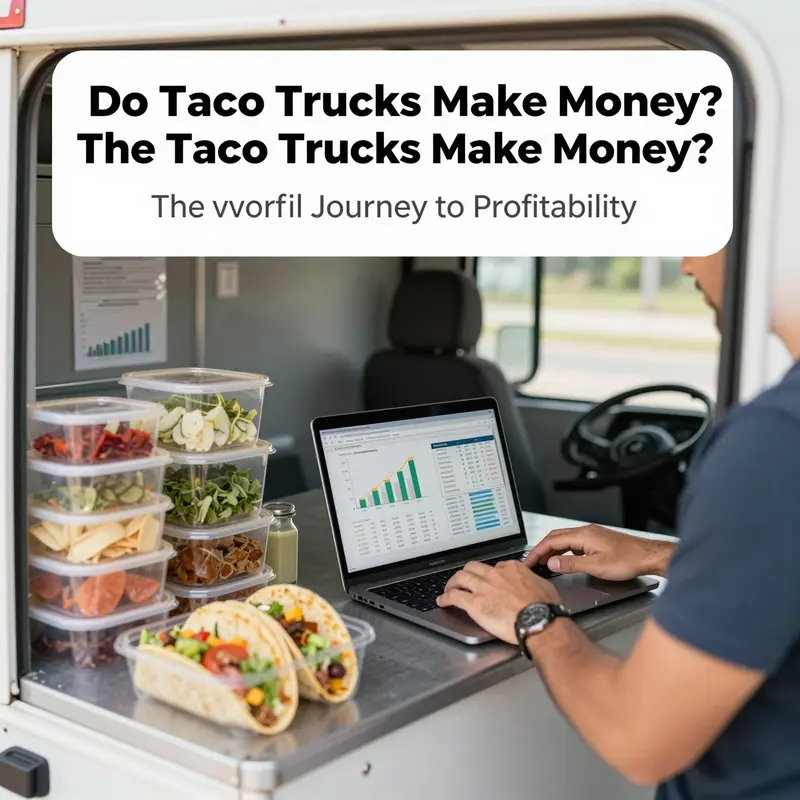
A taco truck is a rolling kitchen that carries more than hot food; it carries the potential for scalable earnings and a practical, disciplined path to profitability. The allure is clear: low barriers to entry compared with a brick-and-mortar restaurant, mobility that lets you chase dense foot traffic, and the ability to build a recognizable brand around flavor and speed. Yet money in the pocket does not arrive automatically. It arrives through careful financial planning, disciplined management of costs, and a clear strategy for growth that accounts for the ebbs and flows of daily demand. When you combine a solid five-year forecast with a tight handle on cash flow, a taco truck can move from early losses to sustainable profits, and perhaps to a self-renewing enterprise that scales across neighborhoods and events. This chapter threads together the mechanics of money in motion, tying the practical realities of startup costs, ongoing expenses, and pricing with the broader market dynamics that shape consumer spending. It also emphasizes how operational discipline—fast service, consistent quality, and efficient use of resources—becomes the invisible engine that sustains revenue when the initial buzz may fade.
Profitability begins with a plan that turns intangible appetite into tangible numbers. A widely cited forecast from early 2026 shows a striking arc: revenue rising from about $495,000 in the early years to roughly $3.61 million over five years. The forecast is not a guarantee, but it is a persuasive map of what is possible when there is relentless focus on location strategy, menu pricing, and cost control. The same projection also warns that earnings before interest, taxes, depreciation, and amortization (EBITDA) stay negative through year four, with breakeven arriving only in year five. That is not a flaw in the model; it is the honest signal that startups usually incur sizable upfront costs—vehicle outfitting, kitchen equipment, licenses, insurance, and marketing—before steady profits materialize. In practical terms, this means the business must manage liquidity so that cash reserves cover not only operating expenses but also those early, heavy outlays that enable reliable service, consistent food quality, and compliant operations. The reality is that the short-term pain of initial investment can be the prelude to long-term gain if the plan remains disciplined and adaptive.
Starting a taco truck is a story of careful budgeting as much as it is about culinary skill. One illustrative example from a typical financial plan—let’s call the venture “Tacos on the Go”—posits startup costs around $20,000. A substantial portion of that figure goes to the vehicle itself, about $15,000, with roughly $2,000 allocated to essential equipment and supplies. The remainder covers permits, licenses, initial inventory, insurance, and working capital to bridge the gap between opening day and the first steady stream of sales. The lesson here is deceptively simple: the more granular the budgeting in the early days, the more likely the venture will avoid cash crunches when seasonality, weather, or event calendars disrupt normal cash flow. The takeaway echoes across the broader literature on food trucks—that the numbers must be nailed down as precisely as possible from the outset, not left to chance.
Ongoing costs form the second pillar of sound financial management. Fuel to reach events, fresh ingredients to keep menus appealing, and labor to sustain a quick service tempo all eat into margins. Insurance, maintenance, and regulatory compliance add layers of financial duty that cannot be neglected. One practical insight from industry guides is the importance of robust infrastructure to prevent downtime and costly repairs. A well-functioning ventilation hood, adequate electrical capacity, and safe propane supply are not only safety prerequisites; they are business enablers. When a truck cannot operate due to system failures or safety concerns, revenue evaporates and the cost of downtime compounds quickly. This is why smart owners invest in preventative maintenance and reliability testing as a core operating habit. The bottom line is straightforward: control costs relentlessly, but do so with systems that sustain reliability, safety, and quality.
Market dynamics also shape the financial outcome in meaningful ways. The broader economy subtly influences discretionary spending and daily traffic. Policy shifts, local regulation, and even macroeconomic mood can tilt consumer appetite toward food-on-the-go. The narrative here is not to sensationalize external forces but to acknowledge their presence and prepare for them. A stable truck operation tills a broader market into a reliable customer base, but the operator must also be agile—adjust pricing where warranted, optimize routes for peak foot traffic, and adapt the menu to seasonal demand. A useful reminder comes from a different domain—the way investors react to sudden policy signals and how that can ripple through consumer confidence. While a taco truck does not ride those swings in the same way as a hedge fund, the principle remains: adaptability matters as much as resilience.
A central lever in profitability is pricing paired with portion control and menu design. Smart pricing requires an understanding of food costs, labor intensity, and the value perceived by customers. In the early phases, many operators err on the side of cautious pricing to build volume, then adjust as volume grows and brand equity solidifies. The goal is not simply to win customers with low prices but to sustain margins through a combination of high throughput and high-margin offerings. Packaging also plays a subtle but crucial role in profitability. The use of hinged, reusable containers can preserve food quality during transport and presentation, supporting premium pricing for higher-end or gourmet twists on traditional dishes. Good packaging reduces waste, protects margins, and enhances the brand’s reputation for care and quality, which in turn fuels repeat business.
Operational discipline becomes the daily discipline of the business. Inventory management matters because waste is not just a cost; it is a revenue leak hiding in plain sight. A steady cadence of par levels, supplier terms, and batch cooking can minimize waste while ensuring freshness. Efficient scheduling matters too; the crew’s pace must balance speed with accuracy to keep lines moving and customers satisfied. In turn, satisfied customers become word-of-mouth magnets and social proof that increments revenue without a corresponding increase in marketing spend.
Location strategy is another subtle art. While a fixed storefront is not required for a taco truck, the selection of sites—urban cores with dense office clusters, college campuses with a steady stream of hungry students, or event-heavy neighborhoods near sports venues—can magnify both demand and the efficiency of operations. The precise mix of locations matters because it governs not only how many meals can be sold but also when the truck must be on the road to capture the best windows of opportunity. A well-timed presence near a lunchtime crowd or a weekend festival can produce outsized returns relative to the effort and fuel spent to reach those sites. The better run a route, the more predictable cash flow becomes, and the easier it is to forecast both revenue and costs with confidence.
Beyond the core operation, there are meaningful expansions of revenue that seasoned operators pursue. Catering for events or office parties, offering pop-up experiences at markets, or creating collaborations with local businesses can all diversify income streams. Each new channel carries its own cost structure, but when managed well, it amplifies revenue without requiring a proportional increase in fixed costs. Growth can also come from a second truck—the step from a single vehicle to a small fleet is a true milestone that multiplies cooking capacity, expands geographic reach, and unlocks new partnership opportunities. Of course, each expansion must be carefully modeled in the financial plan, with a clear assessment of incremental costs, expected price points, and the time it takes to break even on the additional investment.
A practical way to connect the dots between plan and reality is to treat the five-year horizon as a living document. The forecasted path to profitability relies on disciplined cash flow management, meaning cash receipts and payments align with the realities of the business cycle. Negative EBITDA through year four, followed by breakeven in year five, is a common storyline for new mobile food concepts, but it only becomes credible if the business preserves liquidity to cover operating losses while investing in growth. Cash reserves, credit facilities, and contingency planning all play a part in this durability. The idea is not to avoid early losses at any cost, but to ensure those losses fund durable revenue-generating capabilities—better routes, smarter menus, scalable packaging, and a stronger brand.
If a reader wonders what all these pieces look like when they come together, consider the balance of cost control with customer value. The most successful taco trucks blend efficiency with a memorable culinary experience. They optimize the supply chain so ingredients stay fresh and costs stay predictable, but they also curate a menu that rewards repeat visits. The result is a business that can, over time, push higher average order values, improve the pace of service, and convert casual customers into regulars. In a marketplace that rewards both quick turnover and consistent quality, the synergy between financial discipline and culinary craft becomes the latent engine that powers growth.
The concept of packaging as a differentiator is worth returning to. When customers experience a premium feel through the containers that arrive with their meals, the perception of value rises. If a truck adopts hinged, reusable packaging, it signals not only attention to sustainability but a commitment to protecting the integrity of the food during transport. The maintenance of presentation—from the gleam of a tortilla to the steam in the bag—speaks to reliability. Such attention to detail can translate into higher willingness to pay and more reliable repeat business, especially in markets where consumers are increasingly conscious of quality and sustainability. In short, packaging is not a veneer; it is a component of the product experience and, as a result, a lever for profitability when priced and managed thoughtfully.
To anchor these reflections to a practical source of guidance, a practitioner can examine how a comprehensive food truck financial plan advocates budgeting, forecasting revenue, and managing expenses as core steps for turning a mobile kitchen into a sustainable venture. The emphasis is not merely on revenue but on the discipline that preserves margins as the business grows. The forecasted revenue growth in the five-year window, paired with the observed initial losses, reinforces a key truth: the journey to profitability requires patience, disciplined capital allocation, and a willingness to invest early in capabilities that compound over time. In other words, a taco truck can make money, but the path is paved with meticulous planning, disciplined execution, and a long-term commitment to running the operation as a cohesive, financially intelligent system.
For readers seeking more strategic guidance on this topic, one can explore additional perspectives on culinary business planning through related discussions in the Firedup Taco Truck blog. A notable entry, framed around the idea of culinary evolution in mobile formats, is accessible via the post focused on food-truck fusions—a reminder that innovation in design, menu, and service can reinforce financial outcomes. See the resource here: food-truck-fusions-a-culinary-revolution.
The practical conclusion is straightforward: with a solid five-year financial plan, disciplined cash flow management, and a menu and service design that maximize both speed and value, a taco truck can become a profitable, scalable enterprise. The forecasted trajectory—rising revenue, controlled costs, strategic location choices, and careful capital deployment—offers a blueprint that converts the romance of mobile dining into a repeatable, risk-aware business model. The ingredients for success are not exotic; they are the fundamentals of budgeting, pricing, and execution, applied with the care that keeps customers coming back and investors confident. The journey from early losses to eventual profitability is not glamorous, but it is repeatable, measurable, and within reach for operators who commit to the discipline that undergirds every durable business, mobile or stationary.
External reference: Growexa highlights the essential steps to creating a food truck financial plan, including budgeting, revenue forecasting, and cost control, as foundational to driving profit and growth over time. https://www.growexa.com/blog/how-to-create-a-food-truck-financial-plan
Final thoughts
Taco trucks bring more than just mouthwatering flavors to streets and neighborhoods—they’re a business model with exciting earning potential when approached with the right recipe for success. Profitability hinges on understanding and leveraging critical factors: choosing the perfect location, reading and adapting to market demand and competition, and maintaining strict financial planning. While early years may challenge with losses due to startup costs and scaling, a strategic five-year plan can steer taco truck ventures to thriving profits. For taco lovers and entrepreneurs alike, embracing these insights turns your taco truck passion into a sustainable business with delicious dividends. So go ahead, serve up those tacos with confidence and smart business skills, and watch the magic happen.