
Ever dreamt of serving up delicious tacos from a bustling food truck? A taco truck business can be a flavorful adventure, mixing your passion for cuisine with the thrill of entrepreneurship. But how do you whip up the perfect taco truck without breaking the bank? This guide will break down the costs you need to consider—from purchasing or leasing a truck to stocking your kitchen. Whether you’re a taco fanatic dreaming of being your own boss, or an aspiring taco mogul ready to hit the streets, understanding these costs is key to turbocharging your taco truck success.
Weighing Wheels and Wallets: The Buy-or-Lease Decision at the Start of a Taco Truck
The dream of a taco truck often feels kinetic, a portable kitchen that can chase crowds from farmers’ markets to nightlife districts. Yet the dream hinges on a practical decision that sits at the crossroads of cash flow and long-term strategy: should you buy a used truck or lease a vehicle for your first years on the road? This choice does more than determine a single price tag. It frames your startup runway, your monthly burn, and your ability to pivot as markets shift. When you stand at this fork, you’re not choosing a mode of transport so much as your business’s backbone, since the vehicle carries both the visible frontage and the unseen cost engine that powers every shift, every menu tweak, and every late-night service you’ll run. The decision is not abstract. It translates into real numbers, real risks, and real opportunities to test a concept before you commit to a more fixed path.
Purchasing a vehicle—especially buying a used truck—offers the strongest long-term value when you can weather a substantial upfront investment. In practice, a used food truck often lands somewhere in the range of thirty thousand to sixty thousand dollars. A brand-new unit, especially one built to bespoke specifications with premium equipment, can push well beyond seventy thousand and into the six-figure territory. The math behind buying is straightforward: you establish an asset on your balance sheet, and once the truck is paid off, your ongoing costs mostly become fuel, maintenance, insurance, and operating supplies. If you’re disciplined about maintenance and you operate in markets with steady demand, owning can translate into meaningful savings over five to ten years. And there’s potential upside when you choose to resell. A well-maintained used truck can retain value, and the resale can offset some of the original investment. The challenge, of course, is the upfront cash requirement and the ongoing obligation of maintenance and repairs. When things break—tractors, compressors, cooling units, or exhaust systems—the bill often lands with the owner, not the lessor. Emergency repairs, unexpected wear, and depreciation all ride with ownership, sometimes at inopportune moments when cash is tight or growth is knocking at the door.
From a cash-flow perspective, ownership tends to demand a higher initial outlay and a longer horizon before the monthly financial burden truly stabilizes. Still, it offers a clean break after repayment and the possibility to repurpose or resell the vehicle if your concept evolves or you scale beyond a single truck. If you intend to pursue a longer trajectory in taco entrepreneurship, purchasing a used truck can be a savvy anchor—one that preserves capital for kitchen upgrades, marketing, or expansion while giving you full control over modifications and branding. In contrast, a brand-new truck with high-end equipment can minimize downtime and require fewer quick fixes at the outset, but it comes with a steeper price tag and stiffer depreciation. The decision often hinges on your liquidity, appetite for risk, and your confidence in hitting revenue milestones quickly enough to justify the larger commitment.
Leasing, by comparison, is a more nimble path for operators who want an immediate market entry with a predictable monthly cost structure and less initial capital. A lease reduces the upfront burden, letting you start serving customers with a professional kitchen without tying up tens of thousands of dollars in a single lump sum. Monthly lease payments are typically predictable and may even come with maintenance or service agreements baked in, which can simplify budgeting and reduce the surprise costs that can derail a first-year cash plan. The trade-off, however, is functional and financial. You do not own the vehicle at the end of the term, and you face the end-of-lease decision: return the truck or pay a potentially sizable buyout if you want to stay in the same setup. Leases often come with mileage limits, wear-and-tear considerations, and restrictions on modifications—precisely the constraints a mobile kitchen might care about when you’re tweaking layouts, adding new equipment, or testing a bold menu concept. In other words, leasing can offer you a lower monthly burden and greater operational flexibility, but it can also restrict your ability to pivot rapidly or customize in ways that can differentiate your brand on the street.
The choice between buying and leasing is not simply a matter of the vehicle price tag. It interacts with every other line-item in your startup budget. When you forecast the total cost to launch a taco truck, you must consider the vehicle option alongside kitchen equipment, permits, insurance, initial inventory, branding, and the cash reserve you’ll need for the first few months of operation. A used truck with minimal upfront investment can free capital for essential equipment upgrades or a stronger launch marketing plan, potentially helping you reach customers faster and test your menu with less risk. On the other hand, a new truck with a robust, modern layout can streamline food preparation, improve efficiency, and present a polished brand image that helps command higher credibility at events and venues. The decision will inevitably be shaped by both your appetite for risk and your strategic plan for growth—from a single taco unit to a fleet that serves multiple locations.
There is also the practical rhythm of life on the road to consider. A used truck might come with more maintenance unknowns, translating into occasional downtime that disrupts service. Leasing can offer maintenance packages or service contracts that reduce those surprises, which matters when you’re building a customer base across busy weekends and seasonal peaks. If you’re testing a concept, refining your recipe, or learning the terrain of your city’s event calendar, a lease can provide a safer, adjustable runway. Yet if you’re confident in your concept, your vendor relationships, and your ability to manage upkeep and costs, owning a well-chosen used vehicle can be the most economical route in the medium and long term, especially after the loan is paid off and depreciation has largely run its course.
Beyond the unit itself, the decision shapes or constrains every other cost you manage. Equipment quality and layout—griddles, fryers, refrigeration, sinks, prep surfaces—determine not only user efficiency but also compliance with local health codes. Permits, licenses, and inspections come with a price tag that varies by city and state, yet they sit alongside insurance that protects both your business and your asset. Inventory planning and packaging, branding, and marketing efforts are all calibrated against the capacity and reliability of your mobile kitchen. If you choose to lease, you may find yourself with a lower initial outlay and a more predictable early-year burn, but with the trade-off of a less stable asset base and possibly higher long-term costs. If you buy, you gain a tangible asset and potential resale value, but you’ll need to absorb more risk up front and shoulder ongoing maintenance responsibilities.
For many new operators, the clearest way forward is to view the vehicle decision as part of a larger strategic plan rather than as a standalone purchase. If you’re weighing your options, exploring resources that map the terrain of the food-truck landscape can be particularly helpful. Choosing the right food truck is a prudent step in aligning your concept with the practical realities of ownership or leasing. It guides how you select a vehicle that supports your menu, your service style, and your event calendar. Choosing the right food truck offers grounded context for how a truck fits with your culinary goals and neighborhood footprint, helping you connect the dots between what you serve, where you serve, and how you’ll fund the venture.
As you finalize your plan, remember that the costs outlined in this discussion are part of a broader ecosystem of startup expenditures. A well-structured budget includes not only the vehicle but also the kitchen setup, permits, insurance, and working capital to cover the first several months of operation. If you’re trying to decide which route to take, consider a scenario planning exercise: model two versions of your first year—one built around a used truck with a purchase strategy, another around a lease with modular equipment and maintenance coverage—and compare the cumulative cash flows. The analysis will illuminate which path aligns with your risk tolerance, your anticipated trajectory, and your readiness to adapt as you learn what your customers crave in different communities. In either case, the most important factor is a clear, defendable plan that ties vehicle strategy to menu development, brand positioning, and the tempo of your expansion.
External perspective can also help ground your choice. For a deeper dive into the financial pros and cons of leasing versus buying a vehicle in recent years, see an industry-focused analysis that weighs long-term ownership against short-term flexibility. This kind of resource can sharpen your understanding of how depreciation, maintenance obligations, tax implications, and end-of-term costs influence the true cost of starting a taco truck. https://www.thebalancesmb.com/leasing-a-car-vs-buying-used-in-2025-financial-pros-and-cons-4189783
Behind the Sizzle: Mapping the Real Costs of Launching a Taco Truck
When you move from idea to street corner, the real cost map for a taco truck becomes almost as important as the recipe. The numbers aren’t just figures on a spreadsheet; they shape every choice you make, from the kind of truck you buy to the hours you can keep your doors open. The core truth is simple: the upfront investment is the gatekeeper to a scalable, compliant, and repeatable operation. Get it right, and the business can ride the wave of brisk sales, consistent quality, and manageable risk. Get it wrong, and the same numbers can chain you to a long struggle or a sale that barely covers your costs. The starting point is the vehicle itself, because the truck is the moving kitchen, the storefront, and the engine of your profitability all at once. A used food truck can be found in a broad range, often between thirty and sixty thousand dollars, depending on prior life, condition, and retrofitting needs. A brand-new food truck, on the other hand, usually lands well north of that, with base prices commonly in the seventy-thousand to one-hundred-twenty-thousand range and higher for fully customized builds. The decision between used and new cascades into every other cost: the level of equipment you can afford upfront, the speed with which you can operate legally, and the degree of branding you can support from day one.
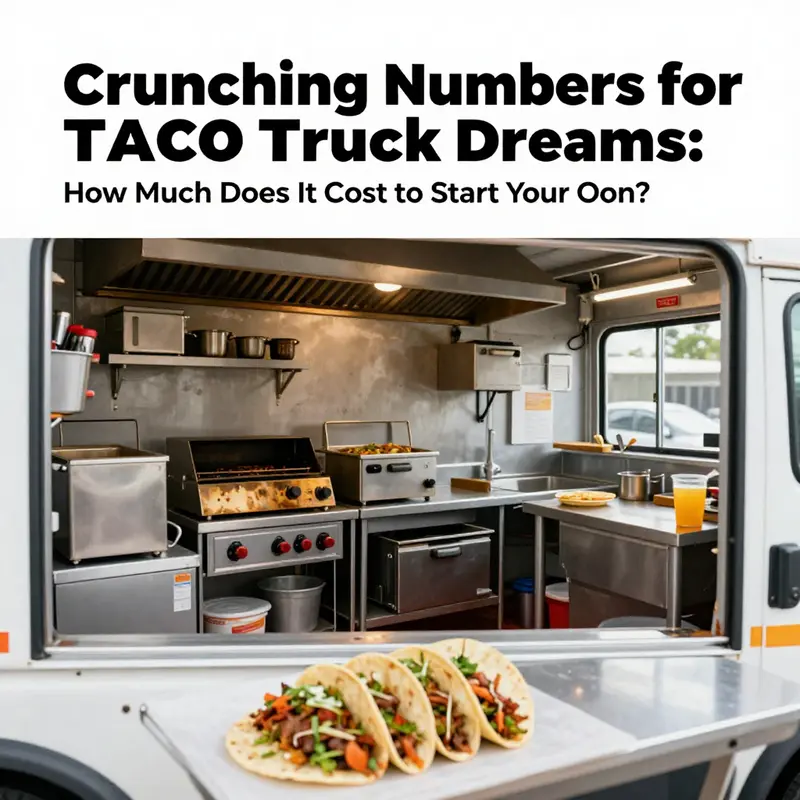
If preserving cash upfront is essential, leasing or partnering with an existing operation can be a smart bridge to launch. It allows you to test a market, refine your menu, and build a customer base with less immediate balance-sheet risk. The financial backers who guide these paths are motivated by quick turnover and predictable cash flow, not simply by owning a shiny truck. Yet even with these lower-risk entry points, the heart of your kitchen—its equipment—needs careful planning. In a mobile kitchen, the essential cooking appliances and their supporting systems are what make service possible. The standard lineup includes reliable grills or griddles, fryers, refrigeration units, sinks, prep surfaces, and secure storage. It’s tempting to think of these as modular add-ons, but in practice they form the backbone of throughput, menu variety, and health compliance.
Current market expectations for equipment are revealing. A complete, fully equipped mobile kitchen component—organized to support a broad range of fast-casual formats—can range from about 2,500 to 15,000 per essential module, depending on build quality, energy efficiency, and adherence to local health codes. Higher-end modules deliver better energy efficiency, longer lifespans, and easier sanitation workflows. They reduce the risk of breakdowns during a peak rush and simplify maintenance, which matters when you’re juggling line speed and food safety during busy events. It’s not just about the stovetop and the fridge; it’s about creating a kitchen that can be cleaned quickly, moves with minimal friction, and complies with the jurisdiction where you plan to operate. The price range suggests a practical truth: you can skimp on the equipment box, but you cannot skip the fundamentals without inviting operational friction down the line.
Beyond the truck and its core cooking modules, there are several other necessary investments that quietly compound the first-line costs. Permits and licenses can vary widely by location but typically amount to a few hundred to several thousand dollars. Health inspections, operator licenses, and mobile vendor permits are common milestones on the path to legality. Insurance is another nontrivial expense, with premiums for commercial auto coverage and general liability running in the thousands per year, depending on vehicle type, routes, and coverage levels. Then there is the initial inventory: meats, vegetables, tortillas, sauces, condiments, and the packaging that travels with your brand. This upfront stock is not just a menu starter; it is a cash buffer that helps you ride the gap between launch and the first strong sales week. Even branding matters at this stage. A simple but coherent branding and signage package—logo, color scheme, menus, and storefront signage—can run from several hundred to a few thousand dollars, and it pays off in higher recognition as you roll into your first events.
The other set of costs, often underestimated, revolves around the everyday cadence of running the business. You’ll need fuel, ongoing maintenance, and routine servicing of the truck and its appliances. Insurance premiums renew annually, and wages for staff at events add up quickly if you expect to scale beyond a single operator. You’ll also want to keep a reserve for contingencies—equipment hiccups, weather disruptions, or last-minute event opportunities that require quick sourcing of supplies or an unscheduled trip to a market. These operating capital needs aren’t glamorous, but they are the grease that keeps the wheels turning when the first wave of customers begins to arrive.
Bringing all of this together, the industry-standard way to frame the startup cost looks like three broad paths, each tied to how much you invest in the truck and how fully you outfit it from day one. A basic used truck paired with a minimal, reliable equipment package generally lands in the range of fifty thousand to eighty thousand dollars. A mid-range, more customized truck with full, well-thought-out equipment and branding can run from about ninety thousand to one hundred thirty thousand dollars. A premium path—new truck, highly capable equipment, thorough branding, and robust safety and efficiency upgrades—can push the total well into the range of one hundred forty thousand to two hundred thousand dollars or more.
Even these numbers are not merely abstract. They reflect choices with long-term consequences. A used truck can compress upfront costs but may require more frequent repairs and upgrades to meet evolving health codes and efficiency standards. A new, premium build offers a longer window before major systems require replacement and can support higher-volume operations, but it demands a larger upfront investment. The sweet spot for many entrants is a lean but reliable configuration that allows a quick route to profitability while keeping a door open for incremental growth, such as adding a second truck, expanding menus, or entering larger event markets.
To navigate this landscape thoughtfully, many aspiring operators rely on strategic financing or staged build-outs. Leasing a vehicle or acquiring a truck through partnerships with existing operators can dramatically lower the barrier to entry. It also buys time to validate your concept, sharpen your menu, and refine your pricing strategy before committing large sums to inventory and branding. As you evaluate financing options, consider the timing of permits, inspections, and health code compliance. A delay in any of these can stall your first sales window and extend your burn rate. The goal is to align your capital deployment with a realistic onboarding timeline—purchase or lease, outfit, obtain permits, and then launch with confidence.
If you’re looking for practical guidance on choosing the right path, a thorough look at the broader decision framework can help. For example, exploring the nuances of choosing the right food truck can provide a structured way to compare not just price, but reliability, maintenance expectations, and compliance readiness. You can explore that perspective here: Choosing the right food truck.
As you finalize your cost model, keep a close eye on the long tail of expenses. Permits, licenses, and insurance will recur or renew. Fuel and maintenance demand predictable budgeting, because breakdowns can derail a schedule and erase several days of planned revenue. A well-structured operating plan includes a modest reserve for unexpected repairs, a clear schedule of inspections, and a cost baseline for each event type you expect to serve. The most resilient operators treat costs as intentionally managed levers rather than fixed barriers. They negotiate supplier relationships, curate a lean but effective menu that minimizes waste, and design operations around a repeatable, high-quality customer experience.
Finally, it helps to anchor your expectations with a concrete external reference. For a broader sense of equipment configurations and at least one perspective on price ranges from current suppliers, you can review industry listings from external marketplaces. This resource provides a sense of market options and pricing patterns for mobile kitchen equipment, alongside practical notes on module quality and build standards: https://www.alibaba.com/product-detail/China-Stree-Mobile-Kebab-Tacos-Grill-Fast_1600739483778.html?src=20251228&spm=a2700.13817591.0.0.
The path to a thriving taco truck business is a balance of prudence and ambition. You map the upfront outlay, secure the necessary licenses, lay in the branding that makes your presence memorable, and then move with speed enough to capture your first wave of customers. The numbers tell you how far you can go, but the strategy tells you how fast you will reach the destination. The more deliberate your planning, the more you protect your margins as you scale—from a single truck serving a handful of events to a reliable fleet that feeds multiple neighborhoods and grows with repeat customers. The cost framework above is not a ceiling; it’s a compass guiding you toward a launch that feels doable, sustainable, and ready for the sizzling demand you aim to meet at every event.
Unlocking the Legal Gatekeepers: How Permits, Licenses, and Fees Shape Your Taco Truck Startup
When you imagine a taco truck rolling into a weekend market or a bustling street festival, it’s easy to picture sizzling meat, bright salsa, and a line of hungry customers. What often stays behind the scenes, however, is the steady chorus of permits, licenses, and fees that keep that gray-green machine legally on the road. Permits aren’t just bureaucratic speed bumps; they signal that your kitchen on wheels meets health and safety standards, pays taxes, and operates in a manner that protects the public and the business you’re building. Understanding what those costs look like—and how they differ from city to city—can transform a daunting to-do list into a clear, manageable path toward launch. In the broadest terms, the licensing landscape for a taco truck breaks into several overlapping layers: the business license, the various health and food service permits, tax-related registrations, mobile-operator permissions, signage approvals, and the sometimes thorny parking or operating permissions that let you actually park where customers expect you to serve. Each item carries its own price tag, and the sums add up quickly, even before you’ve purchased a single piece of equipment or hired a single chef. For someone calculating the total startup cost, permits and licensing represent a crucial, non-negligible portion of the budget. They are also one of the few cost buckets that you can influence directly by planning, shopping around, and building relationships with city clerks and health inspectors. The numbers vary, but a practical snapshot helps frame the conversation: a business license might run from fifty to three hundred dollars; a food service permit or mobile vendor permit commonly costs between one hundred and five hundred dollars per year; a health department inspection comes in around one hundred to four hundred dollars. Add in a sales tax permit, typically twenty to a hundred dollars, and you’ve begun to glimpse the steady rhythm of ongoing compliance. A dedicated mobile vendor permit, when required by the jurisdiction, can range from one hundred to six hundred dollars per year, while signage permits may run from fifty to two hundred dollars. Parking and operating permits, if they exist in your city, can be charged per day or seasonally, often at twenty to one hundred and fifty dollars per day, depending on local rules and the value of the venue. It’s important to acknowledge that these figures are not universal. In a smaller town, the process may be straightforward and inexpensive. In a major metropolitan area—where street vending is a competitive economy of its own—the same permits can carry steeper price tags and longer processing times. The total annual cost of permits and licenses can range from roughly five hundred dollars to more than two thousand, depending on the city, the scope of your operation, and how many jurisdictions you intend to serve. That spread matters, because it sits squarely in the cash-flow equation that determines how fast you can break even and begin to scale. If you are planning to operate in multiple districts or to participate in larger events, you will likely encounter additional layers of permit requirements and fees. Each jurisdiction may have its own forms, documents, and schedules, so the time you invest in early research can save you both money and headaches later on. When you start to assemble your price tag, you might find that certain permits are one-time costs, while others recur on an annual basis. Health-related inspections might be renewed yearly, while a signage permit could be a one-off approval for the branding you display on the truck. The nuance matters, because it affects not only your upfront capital needs but also your operating runway. You may also encounter overlapping or incremental requirements. Some cities bundle several licenses into a single health and safety framework, while others require separate inspections for vehicle sanitation, food handling, and waste disposal. In this sense, permits work as a documentary map for adhering to local expectations. They remind you to maintain clean equipment, to practice safe food handling, and to keep your business records in order. They also become touchpoints with government staff who can guide you through the process, clarify any ambiguities, and flag potential issues before they become costly problems. The practical impact on your startup journey is clear: a thorough planning phase that inventories all likely charges, timelines, and renewal dates. A robust checklist helps you forecast when money will leave your account and when you will need to re-apply. It also promotes better cash management, which is essential for a venture with fluctuating revenue tied to markets, weather, and event calendars. If you want a quick, actionable anchor for your own planning, consider the idea that permits and licensing form a predictable set of recurring costs. You can build these into your monthly burn rate, just as you would insurance or fuel. And you can begin to vocalize their strategic value when you discuss the project with lenders or partners. In the same breath, you can pursue avenues that help soften these costs or accelerate timelines. Some cities offer grants or microloan programs designed for small food businesses, recognizing that legal compliance is a cost of doing business rather than a luxury. You may also find that certain jurisdictions allow a combined or streamlined application, or offer point-by-point guidance for first-time operators. To connect this topic to practical action, you can start by reviewing a step-by-step framework that many aspiring food-truck operators find useful. For a step-by-step framework, check this resource: legal-steps-for-launching-a-food-truck. The guidance there helps you organize the application packets, identify which permits are essential from day one, and see where timing can compress the overall launch sequence. While the specifics of each permit are local, the pattern is consistent: identify, prepare, submit, renew, and budget. If you approach licensing with a mindset of proactive procurement rather than reactive costs, you’ll reduce the chance of surprises that derail your opening week. Additional planning may include aligning your branding and signage ambitions with the permits you can realistically obtain in the first season, since some explicit advertising allowances may require separate sign-off. When the time comes to translate all of this into a concrete budget, you’ll be grateful for the clarity that comes from framing permits and licensing as a clock and a ledger in your business plan. In the end, your taco truck is not only a mobile kitchen but a regulated small business that travels through a patchwork of municipal rules. Understanding the range of costs helps you set realistic price points, forecast revenue more accurately, and prevent a gap between your ambition and your bank balance. It also fosters a professional discipline that resonates with customers and potential partners. For anyone seeking a more municipal lens on these rules, you can consult official city resources that outline the application steps, required documents, and typical fees, which vary widely but share the same underlying logic. This is especially useful for operators who aim to scale or operate in jurisdictions with dense regulatory environments. The journey through permits is not a hurdle to be avoided; it is a structure within which a resilient, compliant, and customer-focused taco business can thrive. In this sense, licensing is not just a cost to bear but a framework that safeguards your operation and signals to customers that quality and safety come first. For those eager to dive deeper into city-by-city specifics, the City of Los Angeles offers a comprehensive, if demanding, blueprint for mobile food facilities that highlights the kinds of documents, inspections, and fees you’re likely to encounter in one of the country’s most regulated markets. External resource: https://www.lacity.org/health/permits-and-licenses/mobile-food-facility-permit
Securing the Start: Insurance as the Compass Guiding Costs and Confidence for a Taco Truck
Insurance for a taco truck startup isn’t a box to check; it’s a practical tool that protects people, property, and momentum. In this chapter we break down the core coverages you’ll encounter and how they shape your budget and your ability to grow. General liability sits at the center of risk management, covering third party claims from slips, burns, or product issues. Commercial auto recognizes your truck as a business asset rather than a personal vehicle, and it often matters more than a personal policy because of vehicle value, equipment inside, and the routes you plan. Workers’ compensation (where required) protects your team and your bottom line by providing medical care and wage replacement when someone is hurt, and it can be a gatekeeper for hiring. Property insurance protects your kitchen on wheels and the high value equipment that makes your menu possible. Product liability guards against claims tied to your food, while business interruption keeps cash flowing if an event, weather, or supply disruption shuts you down temporarily. Premiums are driven by truck value, equipment mix, payroll, location, and claims history, but they can be managed with intentional risk practices and smart choices about scope. Bundling policies with a single insurer can simplify renewals and potentially lower total cost, while a well documented safety program, routine equipment maintenance, and staff training can yield more favorable terms and lower deductibles. When budgeting, distinguish minimum viable coverage from longer term protection. At minimum, expect general liability, commercial auto, and workers’ compensation; add property and product liability as you scale; and consider business interruption once you have revenue streams that would be disrupted by a shutdown. In practice, this means asking insurers how different chassis, configurations, and equipment affect rates; comparing quotes from brokers who understand mobile food vendors; and presenting a clear risk map that includes safety protocols, ServSafe certifications, and driver training. For lenders and partners, a credible insurance program signals resilience and planning, which can improve access to capital. Many jurisdictions also require proof of certain coverages for permits and health approvals, so plan for that as you schedule events and locations. A practical planning approach is to map your insurance to your operating plan: what can go wrong, what coverage addresses it, and how you would recover. Use a simple spreadsheet to project annual premiums, deductibles, and potential out-of-pocket costs; compare that to the cost of a single downtime incident or a major equipment replacement. Finally, see insurance not as a cost to minimize but as a strategic investment that unlocks growth, protects your team, and preserves revenue during the inevitable bumps of launching a mobile food business.
null
null
Final thoughts
Diving into the taco truck business is both an exciting and budget-conscious journey. Every taco slinger needs to consider their investments wisely, from the truck itself to the necessary permits and marketing efforts. As you gear up for your taco adventure, remember to keep evaluating your costs and planning for success in this flavorful industry. The key is to blend creativity with a pinch of financial savvy to ensure your taco truck doesn’t just roll out, but rolls in profits!