
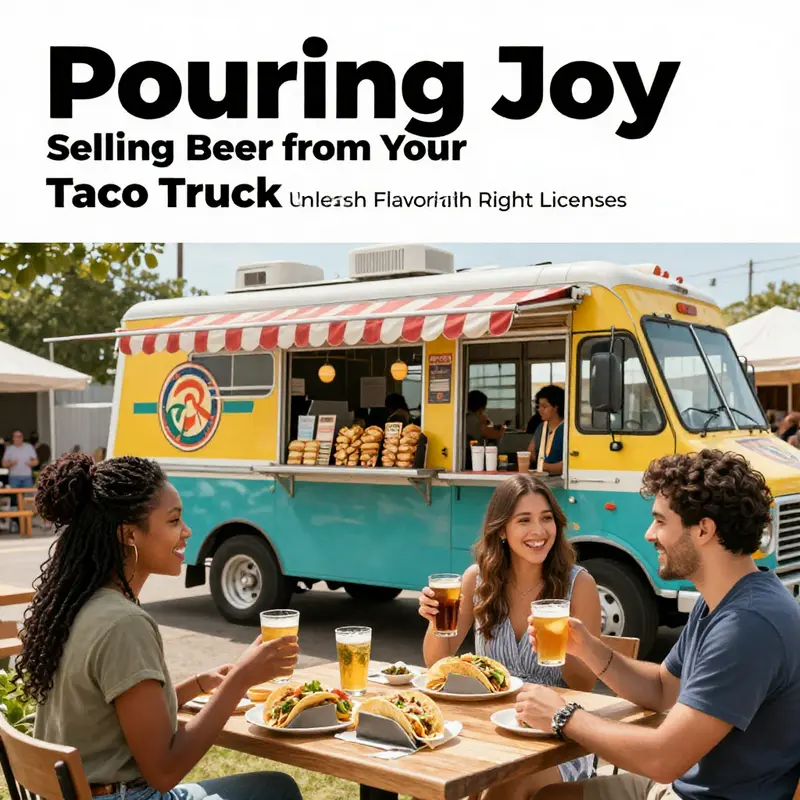
Imagine the scene: customers eagerly lining up at your taco truck, the tantalizing aroma of sizzling tacos filling the air, and a cold beer in hand to accompany their flavorful feast. Yes, you can sell beer from a taco truck! But there’s more to it than just a delicious vision. To navigate the flavorful path successfully, you must first understand the essential regulations around food service and alcohol sales. In this article, we’ll dive into the must-have licenses and permits, explore liquor license types, and clarify the differences between on-premises and off-premises sales. With the right knowledge, you can create a truly festive taco truck experience that your patrons will love!
Valid Licenses, Bold Flavor: The Road to Selling Beer from a Taco Truck
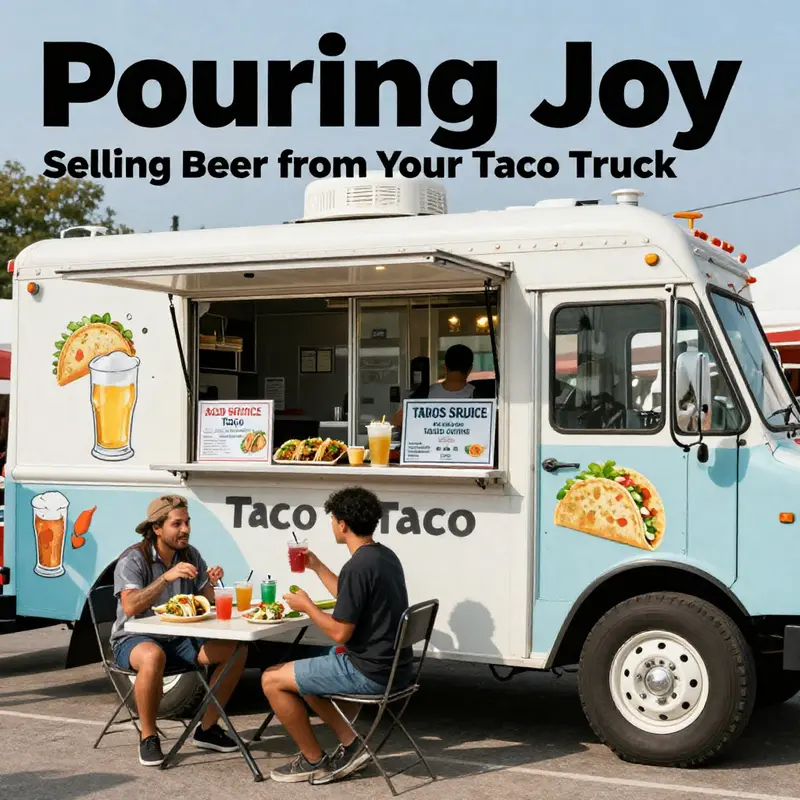
Choosing to sell beer out of a taco truck is not simply a matter of affinity for cold brews and warm tortillas. It’s a decision that threads together food safety, public health, local taste preferences, and the often labyrinthine world of licenses and permits. Read straight, the path to selling beer from a mobile kitchen is not about a shortcut to bigger profits. It’s about building a compliant, trusted operation that can serve great tacos and great beer without tripping over rules designed to keep people safe and communities orderly. The journey begins with one clear, nonnegotiable premise: you must secure the right licenses before your grill ever hits the sizzle. A food service license is the foundation, but it is hardly the only stone in the wall. The moment beer enters the equation, the walls rise higher, the gatekeepers tighten, and the process becomes more deliberate, methodical, and public. This is not a discouragement. It is a map, drawn with care, showing where you must go and what you must carry to operate legally and sustainably.
First, the food service license. This is the nonnegotiable starting point for any operation that prepares, handles, or serves food from a mobile unit. A taco truck has a kitchen—gas, refrigeration, handwashing stations, food-contact surfaces, hot and cold holding—each piece of equipment is not just a convenience but a public health safeguard. Health departments regulate these pieces with inspectors who verify that temperatures stay within safe ranges, that cross-contamination is prevented, and that sanitation is ongoing. In practice, obtaining a food service license means your truck meets local standards for cleanliness, equipment, and procedures. It means you have a plan for the flow of food from receiving to service, including how you store, cook, hold, and transport it. It also means your staff understands basic food safety; often, this is supported by food handler permits or equivalent training. And if you intend to serve alcohol, you already know the license conversations will go deeper.
Alcohol adds a different layer of accountability. Alcohol is a regulated commodity, and beer is governed by rules that straddle health, safety, taxation, and public order. In most states and municipalities, you cannot simply pour a beer from your truck because you have a food license. You must obtain an alcohol license or an alcohol permit, and the process is designed to ensure that everyone involved understands the responsibilities that come with serving alcohol. The exact license type depends on local law and your business model: some places offer a beer-only license intended for retailers who sell alcohol for off-site consumption, while others require a restaurant-style license for on-site consumption, which typically comes with stricter requirements around service, hours of operation, and seating. In many jurisdictions, if you want customers to drink beer on the spot near your taco truck, you’ll be looking at a restaurant-style license; if your business model centers on selling packaged beer to-go, a different category may apply. Either path demands more documentation, more training, and more scrutiny than a food truck license alone.
This is not to say the beer door is closed to mobile vendors. It is simply a door that opens only after you’ve proven you can manage both food and beverage service in a safe, legal, and organized manner. You will also encounter health department expectations that aren’t unique to beer but are essential to any operation that serves food alongside alcohol. Your truck’s equipment must support not only food safety but also the integrity of alcohol service. For instance, you may need separate storage areas for beer and food, dedicated cleaning protocols for beer taps orservice lines, and clear labeling and tracing for inventory that aligns with both health and alcohol control standards. Health inspectors will look at how you maintain the line between raw ingredients, ready-to-eat foods, and alcoholic beverages, making sure there is no cross-contact or cross-contamination, and that the sanitation plan covers every surface you touch—from the tap handles to the napkin caddy.
Beyond the kitchen and the tap, there is the regulatory architecture of where and how you can operate. Local zoning rules can be surprisingly specific about where alcohol can be sold, especially from mobile vendors. Some cities restrict alcohol sales to certain districts or times of day, or limit the number of hours you can operate with alcohol on a given block. Others may require you to be within a certain distance of entertainment districts or to obtain a special event permit if you’re operating near venues that generate heavy foot traffic. The exact consequences of missteps can be significant: fines, license suspension, or even a shutdown of your beer-and-taco operation. This is precisely why the early, practical advice from successful mobile vendors emphasizes proximity to the right city or county licensing offices and a willingness to walk through every regulatory door, even the ones that seem narrow or intimidating. It’s also why prospective operators must budget time and resources not only for the application fees but for the possibility of inspections, background checks, and time-sensitive renewals.
The licensing journey also includes training, a factor often underestimated by hopeful entrepreneurs. Responsible beverage service training—whether it’s TIPS, SELL, or a locally required equivalent—becomes indispensable when your business model envisions service of alcohol. The goal of such training is not merely compliance; it is safety. Servers learn how to identify signs of intoxication, how to intervene diplomatically to prevent overservice, and how to handle difficult situations with customers or other vendors. Training translates into fewer incidents that endanger patrons and fewer regulatory headaches. It also nurtures a culture of accountability among your team, which can pay dividends in customer trust and repeat business. When you couple this training with the right licensing framework, you create a service environment where the beer complements the tacos rather than complicates the operation.
From a practical standpoint, the path to beer on wheels begins with a careful audit of where your truck will operate and under which licenses. You will need a plan that accounts for on-site consumption versus off-site sales, and you will need to understand the geographic scope of your activity—city, county, and state boundaries all matter. Some jurisdictions may require you to obtain a separate alcohol permit for each location you operate in, particularly if you move between municipalities or operate during events that attract large crowds. This reality underscores the importance of careful route planning and an honest assessment of potential markets before you write your business plan or invest in equipment upgrades. The cost of licenses, the time needed for approvals, and the ongoing compliance obligations should factor into your pricing strategy and revenue projections. If your aim is to create a stable, repeatable experience for customers who crave both authentic tacos and a cold beer, you’ll want your compliance framework to be as dependable as your recipe.
As you map this terrain, you will inevitably encounter a simple but powerful tension: the desire for autonomy as a food entrepreneur versus the obligations of governance that protect public health and safety. This tension is not a trap; it is a sign that you are entering a space where responsibility and opportunity meet. The right licenses enable a predictable operating rhythm. They allow you to plan for permit renewals, audit trails for inventory and sales, and the kinds of staff training that keep your team confident and your patrons safe. When you approach licensing as a strategic asset rather than a hurdle, you begin to see opportunities for stability. A portable business model—one that can be present at popular markets, street fairs, outside restaurants, or events—benefits from a license structure that is clear, enforceable, and renewable with predictable timelines. The day you receive a green light on the alcohol side is the day you can begin to design a service experience that invites customers to linger, savor, and return.
At the end of the licensing road, there is a practical, everyday impact on your operations. Your staff will need to manage not just the beer but the entire service environment. You’ll draft a service script that respects local rules about serving age verification, limits on the amount of alcohol per customer, and required checks for intoxication. You’ll design a system for inventory control that tracks beer kegs, bottles, and cans with precision, so you know when to reorder and how to forecast peak times. You’ll set up a process for waste disposal in line with environmental regulations, ensuring that your packaging choices, refrigeration, and cleaning routines minimize waste and comply with disposal guidelines. The operational discipline that supports a successful beer-and-t taco program is not tangential; it is central. A well-run truck that serves great food plus beer becomes a reliable partner in bustling neighborhoods, a familiar sight at events, and a signal to customers that they can trust a small business that takes compliance seriously as part of its craft.
Before we close this exploration, it’s useful to acknowledge a practical resource that can help demystify the licensing maze. Start with your local health department to confirm the precise food service requirements for a mobile unit. Then, engage with your state or local alcohol control authority to understand the specific ABC licensing processes for beer sales. It can be tempting to assume that a food truck license is all you need, but the alcohol layer is separate and often more stringent. A reliable first step is to gather all relevant documents—business licenses, vehicle registration, health inspection reports, and a detailed business plan that outlines where you plan to operate, how you will handle food and drink service, and how you will train staff. As you prepare your application, keep a ledger of all fees, expected timelines, and required inspections. Having a clear, written plan helps you respond quickly to requests from licensing bodies and reduces the friction that can slow a promising launch.
For readers who want a practical, navigable overview of licensing steps, a well-wrought resource from the broader business landscape can help. The Small Business Administration’s guidance on alcohol beverage licensing provides a concise roadmap that complements your local requirements. This external reference can be a helpful supplement to the local rules you will follow because it frames licensing within the larger context of launching a compliant food-and-beverage operation. If you’re charting a detailed path from concept to a fully compliant beer-and-taco truck, you’ll want to check that resource as part of your due diligence and planning process. While the SBA guide does not replace local obligations, it helps you see how licensing fits into the broader lifecycle of a mobile food business that adds beer to the menu.
The licensing journey, then, is not a barrier to be endured but a framework to be understood. The joy of serving beer from a taco truck—paired with carefully crafted tacos, fresh toppings, and a friendly, efficient service style—rests on a foundation of compliance, customer safety, and thoughtful operations. If you approach licensing with a plan, you will find that the rules, once understood, become predictable pathways rather than opaque walls. You will know what to apply for, where to file, how to train, and when to renew. You will also become adept at communicating with patrons about the beer you offer, the reasons for certain policies, and the care you bring to every stage of service. The community you build—of regular customers who come back for the taste and the responsible service—can be your strongest asset. The more transparent and consistent your practices, the more trust you earn, and trust is the currency of repeat business in a competitive street-food landscape.
In short, the road to selling beer from a taco truck is straightforward in principle and complex in execution. You begin with a solid food service license and then layer on the appropriate alcohol permit, choosing a structure that aligns with whether your buyers consume on-site or take beer away. You verify that your operations meet health and safety standards and comply with local zoning when you plan where you will operate. You invest in training that elevates both service quality and responsibility. You prepare for ongoing compliance through recordkeeping, inspections, and timely renewals. And you view the entire process not as a hurdle but as a platform for building a dependable, legally compliant, and beloved mobile dining experience. If you can align your aspirations with the regulatory framework, the blend of tacos and beer on your truck becomes a sustainable, scalable enterprise rather than a precarious venture. This is the essence of serving not only flavor but also trust on wheels.
For readers who want to begin their licensing journey now, the practical step is to reach out to the appropriate local authorities, gather the necessary documents, and map a realistic timeline. Start with a conversation about your intended business model, the kind of beer service you plan to offer, and the locations where you expect to operate. From there, you can obtain the exact forms, understand the fees, schedule the inspections, and assemble the team that will deliver a safe and enjoyable experience. As you do, keep the bigger picture in view: beer and tacos that customers remember not merely for taste but for the care, compliance, and community you bring to every stop your truck makes.
If you’d like to explore a concrete path through the licensing maze, here is a practical touchpoint: the internal guide to legal steps for launching a food truck can help you align your plan with the regulatory requirements while keeping your eyes on the prize of great food and great drinks. The more you integrate licensing into your business design, the more likely you are to sustain growth and maintain a positive reputation in your market. And if you ever feel uncertain about a specific requirement, remember that licensing is an evolving landscape; staying informed, proactive, and connected to the right resources is how your beer-and-taco concept remains vibrant and compliant.
External resource: For official licensing guidance, visit the Small Business Administration’s Alcohol Beverage Licensing page to see how federal, state, and local requirements weave together as you prepare to launch. https://www.sba.gov/business-guide/launch-your-business/obtain-licenses-and-permits#alcohol-beverage-licensing
From Tap to Truck: Navigating Licenses, Local Zoning, and the Realities of Selling Beer From a Taco Truck
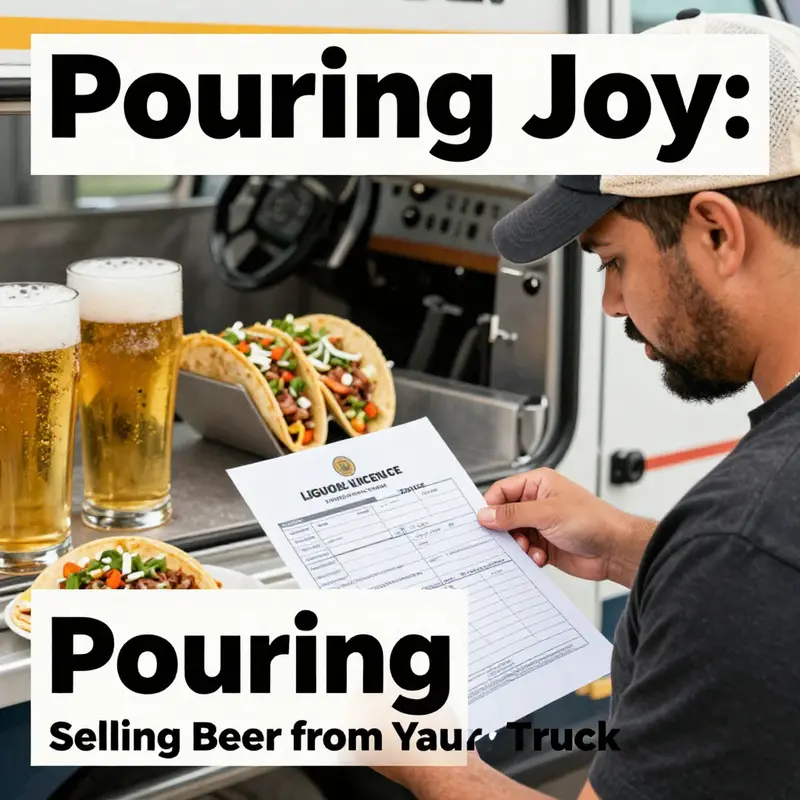
In many markets, the aroma of taco stands and the clink of ice in a pint share the same street corner. Yet behind that bustling curbside service lies a labyrinth of laws that treats alcohol differently from food, even when the two are sold from the same vehicle. The question of whether a taco truck can legally offer beer is less a matter of taste and more a matter of permits, licenses, and local policy. It is a question that blends entrepreneurship with public safety, tax compliance, and the patchwork of state and municipal regulations that govern alcohol.
When would-be beer servers approach the window, they carry not just recipes and kitchen habits but a stack of forms and a calendar of inspections. The baseline is familiar to any mobile vendor: you need a valid food service license to operate a kitchen on wheels. A taco truck that serves hot, hand-held food is not exempt from this. Health departments issue food truck licenses or food service permits that set the kitchen’s design, equipment, ventilation, sanitation, and handling procedures. These standards ensure that the food you produce meets public health expectations. Without them, the restaurant side of the business cannot exist, and a truck with customers cannot legally serve meals let alone beer.
But beer changes the equation. Selling beer—no matter how modest the quantity—requires an alcohol permit. In most states, this is a separate license from the food permit, often managed by a state-level liquor control board or an equivalent agency. The license type varies: a beer-only license for those who plan to keep to beer, or a mixed beverage license for those who intend to offer cocktails or other intoxicants. The critical point is simple and easy to miss: a food truck license by itself does not confer the right to sell alcohol. A separate permit is mandatory, and it arrives only after a careful, location-specific review of your business model, your outlets, and your staff.
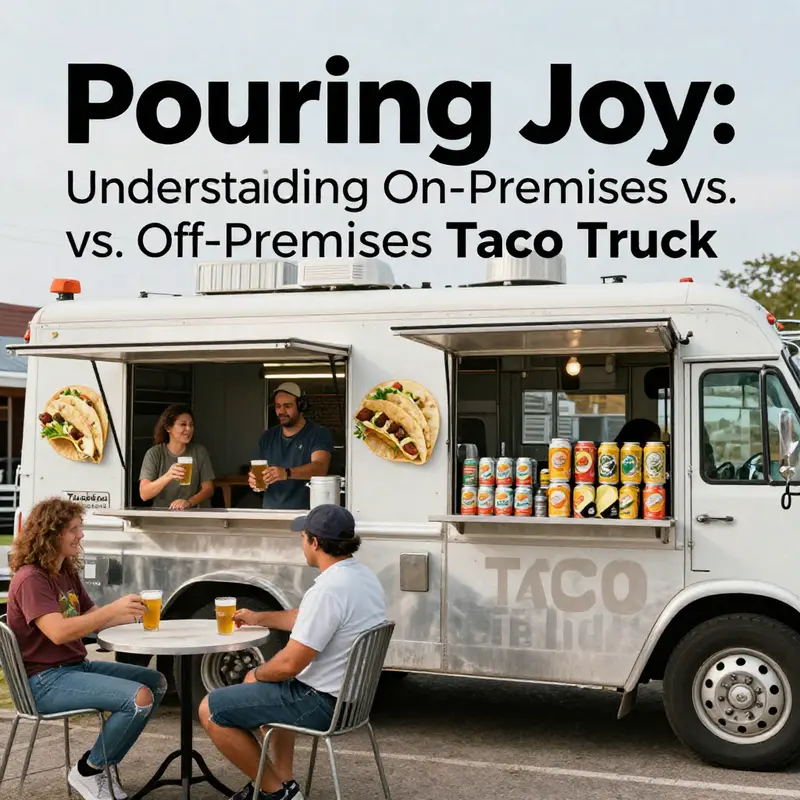
The on-site versus off-premises distinction adds another layer. If customers will drink beer at the truck’s curbside window or seated in an area that the truck controls, you are typically seeking an on-premises license, the kind that more closely resembles a restaurant liquor license. On the other hand, if your plan is to package beer for takeaway—cans or bottles sold to go—that line may fall under a retail beer license. The path to a retail license is often smoother, but it is not guaranteed, and it still requires approval from the jurisdiction where you operate. The practical upshot is that your business model will shape the exact license you pursue, but neither model can begin without the liquor authority’s blessing.
Even with a license in hand, the work does not end. Alcohol regulation sits at the intersection of many different authorities, and the path to compliance must weave through them all. The federal layer provides overarching guidelines on production, labeling, and distribution, but the actual authority to permit sales, and the rules governing who can sell beer where, is largely a state and local matter. The federal agency that most often serves as a starting point for newcomers is not a licensing body per se, but a source of information and a set of links to state codes. The important resource is the state’s own alcohol control framework, and in many jurisdictions, the alcohol licensing ecosystem is cautious and conservative because alcohol, unlike food, creates potential risks that extend beyond the kitchen.
Within specific states, the picture can become even more intricate if the localities have rules about mobile alcohol sales. Some cities and counties outright ban alcohol from mobile food units. Others allow it only in certain zones, such as near entertainment districts or within designated food truck corridors. The right to serve beer from a taco truck often hinges on where the truck is parked, how long it stays in one place, and whether the truck is considered a permanent extension of a licensed restaurant or a separate entity entirely. The rules around mobile alcohol are an ongoing conversation between policy objectives—public safety, noise control, and regulated commerce—and the pragmatic demands of small businesses that respond to consumer demand for convenient, flavorful food and drink.
The learning curve for operators is steep, but it is navigable with careful planning and a willingness to engage the right authorities early. An essential first step is understanding the idea of tied houses and the way some states treat the relationship between a licensed restaurant and any attached or affiliated mobile units. In states with tied-house laws, the restaurant’s ABC license may extend to mobile units when those units are not completely independent. Virginia is a frequently cited case study because it embodies a stricter approach: selling beer from a taco truck cannot be done as a separate, standalone operation under a non-existent license. Instead, the mobile unit often must be linked to an ABC-licensed premises, either by physically operating as an extension of a brick-and-mortar location or by securing a license that attaches to an existing licensed business. That means a hypothetical taco truck cannot simply improvise a temporary beer service on the curb; it has to fit into the licensing structure of a recognized premises and follow the same compliance rules as the stationary restaurant.
The practical implications are significant. For aspiring entrepreneurs, the Virginia example reveals a broader truth: antiquated regulatory constructs created in a different era do not smoothly accommodate modern mobile operations. The 1930s-era framework that produced many of these restrictions still shapes today’s licensing decisions, often creating friction between innovation and oversight. In this context, a bartender’s sheen on a taco truck’s window is not just a marketing flourish but a legal constraint. The boundary between a food business with a beer offering and a liquor-licensed establishment with a mobile arm becomes a line that must be drawn with careful attention to licensing, branding, and operational reality.
This is not to say that the dream is dead. Rather, it is a story of adaptation and strategic thinking. The most straightforward path for many operators is to anchor the mobile unit to an existing licensed premise. In practice, that means the taco truck would operate as a satellite or a mobile extension of a licensed restaurant, sharing the same ABC license and the same responsible beverage service standards as the brick-and-mortar location. The staff who pour beer would undergo the same training as the restaurant’s bartenders, whether that means TIPS or another recognized program, and the operation would be subject to the same responsible service rules, including checking IDs, refusing service to intoxicated customers, and ensuring a safe drinking environment.
In other scenarios, operators pursue a separate liquor license for the mobile unit. This option tends to be far more complex and expensive. Applicants must demonstrate that the mobile unit will be kept in a defined licensing footprint, that it will be operated in compliance with the premise’s license, and that all sales will occur in a manner consistent with the state’s alcohol laws. The process often requires a detailed business plan, a security plan, and a clear delineation of the truck’s physical location and operating hours. Regulators will ask for maps of where the truck will operate, plans for how drink sales will be conducted, and protocols for staff training and ID checks. In places where mobile sales are permitted, the license requirements may still demand that the unit operate only in conjunction with the main business, thereby blurring the line between a standalone beverage outlet and a licensed food truck.
The human element matters as much as the paperwork. Training is an essential component of compliance. In most jurisdictions, servers who pour beer must complete responsible beverage service training. The intention is to reduce risk—curbing underage drinking, preventing over-service, and promoting a culture where alcohol is served with a consistent standard of care. Training can feel like one more hurdle, but it is a protective measure that benefits the business, its staff, and the community. The costs involved—time, money, and sometimes travel to class—should be weighed against the benefits of staying on the right side of the law and protecting the venture from enforcement actions that could jeopardize the entire operation.
The logistics extend beyond licensing and training. Many operators must secure critical zoning approvals that govern where, when, and how beer can be sold from a mobile unit. Zoning concerns can reflect community preferences, the availability of parking, traffic considerations, and the desire to preserve pedestrian safety. In practice, a street-food business that wants to offer beer must engage with city planning offices, licensing bureaus, and health departments to present a cohesive plan. The process often includes submitting a business plan, health and fire inspections, and proof of insurance. The more cities and counties you must coordinate with, the more potential points of delay appear in the timeline. The reality is that licensing and zoning are not mere formalities; they are performance tests, and failing any one component can stall a dream.
From an entrepreneurial perspective, the regulatory landscape is less a barrier to beer and more a map to risk management. The key is to start early, gather accurate data, and build a case that aligns with public safety and community standards while preserving the business’s flexibility to move between neighborhoods and events. In this sense, the journey resembles a complex recipe that requires not only the right ingredients—food, beer, permit stamp—but also the precise heat and timing to ensure it all comes together. When the paperwork is complete and the staff trained, a taco truck can become more than a mobile kitchen; it becomes a small, regulated venue that travels to your customers rather than asking them to come to a fixed location.
The Virginia example, while specific, invites wider reflection. It illustrates a broader policy tension: legislators are balancing a desire to support small businesses and innovation with the need to maintain strict control over alcohol distribution, prevent illicit sales, and uphold community standards. The argument for reform often centers on modernizing the law to reflect today’s business realities, including mobile food operations that can serve alcohol responsibly within a defined regulatory framework. Advocates for reform emphasize streamlined licensing for mobile units, clearer definitions of what constitutes a separate establishment, and the creation of a licensing path that recognizes the value of food trucks that can pair their meals with responsibly served beer. Those who appreciate the economics of small, mobile food businesses know that any friction in licensing increases startup costs, stretches timelines, and reduces competitive parity with more traditional, brick-and-mortar venues. In other words, the law’s rigidity becomes a barrier not only to consumer access but to the growth and vitality of local food scenes.
There is also a practical, business-savvy dimension to this puzzle. Even when a legal route exists, it pays to think about branding, customer experience, and risk management in tandem with licensing. A beer offering from a taco truck should be integrated in a way that respects the overall concept: the truck is about fresh, vibrant food, not about becoming a sports bar on wheels. The experience must be carefully designed so that alcohol enhances the meal rather than turning into a distraction or a safety risk. The best operators treat beer as a complementary dimension of the dining experience, aligning pairing ideas with the menu, training staff to manage flow during peak hours, and ensuring that the truck’s schedule and route align with licensing constraints. The goal is to cultivate trust with customers, regulators, and the local community so that the business can grow in a compliant, sustainable way.
If the reader is impatient for the exact steps, think of this as a phased approach. The first phase is to confirm that the business model can exist within the jurisdiction’s licensing framework. This means talking to the local licensing office and the state ABC agency, and reviewing the city’s zoning rules for mobile vendors. The second phase is to assess whether a tie to a licensed premises is feasible. If so, the truck can function as a mobile extension of a brick-and-mortar establishment, sharing the same license and adhering to the same responsible beverage practices. The third phase, for those choosing a standalone mobile license, is a careful, thorough application process that will require a comprehensive plan. The fourth phase is ongoing compliance: periodic health inspections, license renewals, staff training refreshers, and periodic audits to ensure the operation remains within the lines.
In Virginia—and this is a particular case that often resonates with other states—the conversation is not simply theoretical. It informs a broader public policy debate about how to adapt outdated rules to new business models. The underlying message for the aspiring operator is that the dream of beer on a taco truck, while endangered by complicated laws, can still be realized with patience, strategy, and a clear understanding of the system. It also means recognizing the human costs of compliance. The owners who navigate these rules invest time and resources into a process that does not guarantee a quick payoff, yet in many cases yields a sustainable business that can serve communities with creative menus and a social experience that resonates with local culture. The rules may seem stiff, but they are designed to protect consumers and ensure fair competition.
The reader might wonder how a small operation keeps its momentum while chasing licenses that can stretch across months or even years. The answer lies in creating a disciplined compliance rhythm. Treat licensing not as a hurdle to cross but as a steady project that informs every business decision—from where you park on Fridays to which events you chase on Saturdays. This mindset helps you absorb the inevitable frustrations: delays, requests for more documentation, surprises from inspectors, and changing local policies. A restaurant‑style mindset toward regulation—rigor, documentation, transparency—turns a potential bottleneck into a competitive advantage. Business owners who document everything—permits, inspections, staff certifications—also build a durable case for future growth, making it easier to add new units or expand into other neighborhoods without starting from scratch.
The regulatory conversation is ongoing, and it shifts with public sentiment and policy priorities. Advocates for reform argue for clearer, more accessible pathways for mobile units to participate in the alcohol economy. They push for licenses that recognize shared premises and for temporary or event-based licenses that reflect the reality of street food culture. Opponents emphasize preventing over-concentration of alcohol outlets or undermining local control. In this push-pull, the most successful operators are those who keep their eye on customer experience while maintaining rigorous compliance discipline. They see beer not as a shortcut to faster profits but as a way to complement a culinary story—a story that travels with the truck and travels safely within the law.
For readers who want a practical stepping-stone summary, the essential takeaway remains straightforward. You must secure a valid food service license to operate the kitchen and a liquor license to serve beer. The route you choose—on-site consumption versus take-away—will guide the specific license type you seek, and local zoning rules will determine whether the venture is feasible in a given community. Training for staff raised to manage alcohol responsibly is not optional; it is a standard practice that protects your business and your customers. This is not a loophole; it is a foundation for a long-term, compliant operation that can weather regulatory changes and market shifts. The landscape is complex and sometimes frustrating, but it is navigable with careful planning and professional guidance when needed.
As you contemplate this journey, consider the broader economic and social context. The push to democratize access to good food and reasonable drinks on the go reflects a maturing food culture that values mobility, entrepreneurship, and community. A taco truck that can responsibly offer beer might contribute to lively street economies, create flexible employment, and allow more cooks and restaurateurs to explore new business models. Yet the success of such a venture rests on the willingness of regulators to adapt, on the resourcefulness of the operator to layer compliance into daily practice, and on the customer base that understands and respects the rules. The tension between innovation and oversight will continue to shape the lived reality of food trucks that want to pour beer. The right balance is not achieved by shrugging off rules, but by translating them into practical, reliable processes that support sustainable growth.
In closing, the bottom line remains the same, even as the path to it differs by jurisdiction: yes, you can sell beer from a taco truck, but only after obtaining the correct licenses and licenses-specific permits, and after becoming compliant with local zoning, training, and operational rules. The dream is independent of your market size, but it is not independent of law. The more you invest upfront in understanding and aligning with the regulatory framework, the more resilient your business will be. The stories of operators who succeed—who find that delicate balance between food, beer, and mobility—are not exceptions; they are models for those who approach licensing as a first-class business consideration, not as a last-minute add-on. The road can be long, and the paperwork can be tedious, but the payoff is a legally sound venture that serves great food and great beer to customers who appreciate both.
For actionable references on starting the legal journey, see the guidance here: legal steps for launching a food truck.
External resource: https://www.ttb.gov/alcohol-laws
null
null
Final thoughts
Selling beer from a taco truck is a recipe for flavor, fun, and fantastic profits! However, it’s crucial to navigate the path with the right licenses, permits, and training to meet your local regulations. By obtaining a valid food service license and a liquor license, alongside the understanding of on-premises versus off-premises sales, you’re not just pouring beer; you’re crafting experiences. Remember, every great taco feast goes better with a cold drink—so equip yourself and your taco truck for success. Now get out there, serve delicious food and drinks, and watch your taco truck business thrive!