
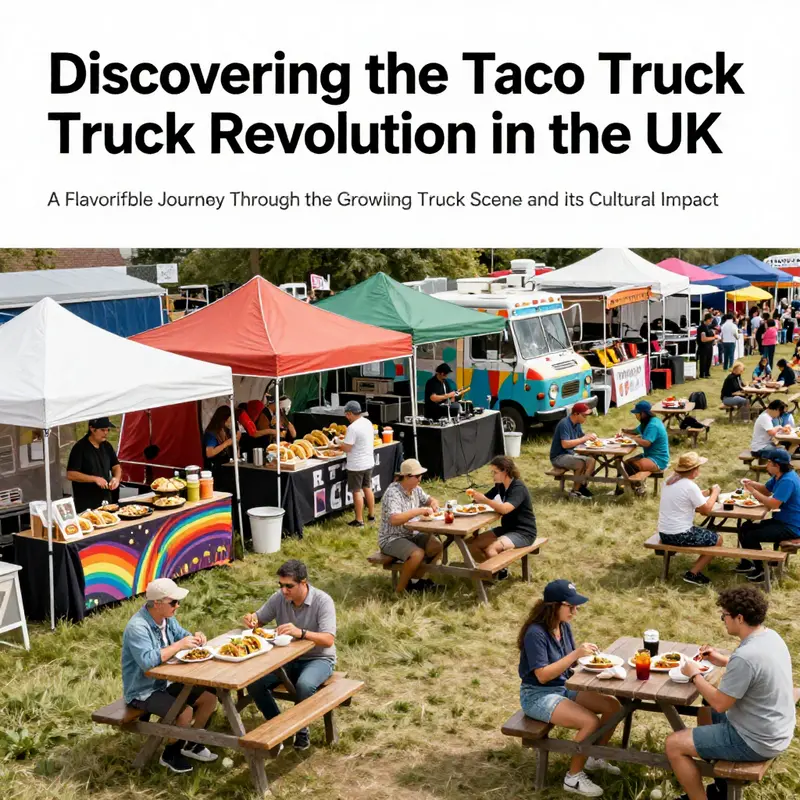
Taco trucks have officially arrived in the UK, and they’re shaking up the culinary landscape! From the busy streets of London to the vibrant neighborhoods of Manchester, taco trucks are not just a new way to grab a bite; they’re a celebration of flavor and culture. In this exploration, we’ll dive deep into the growth of taco trucks across major UK cities, uncover the cultural dynamics that make them unique, assess their economic impact, and satisfy your curiosity about evolving consumer preferences. Ready to embark on this delicious adventure? Let’s uncover the savory journey of taco trucks, where every bite tells a story!
Rolling Through Britain: The Rise of Taco Trucks on UK City Streets
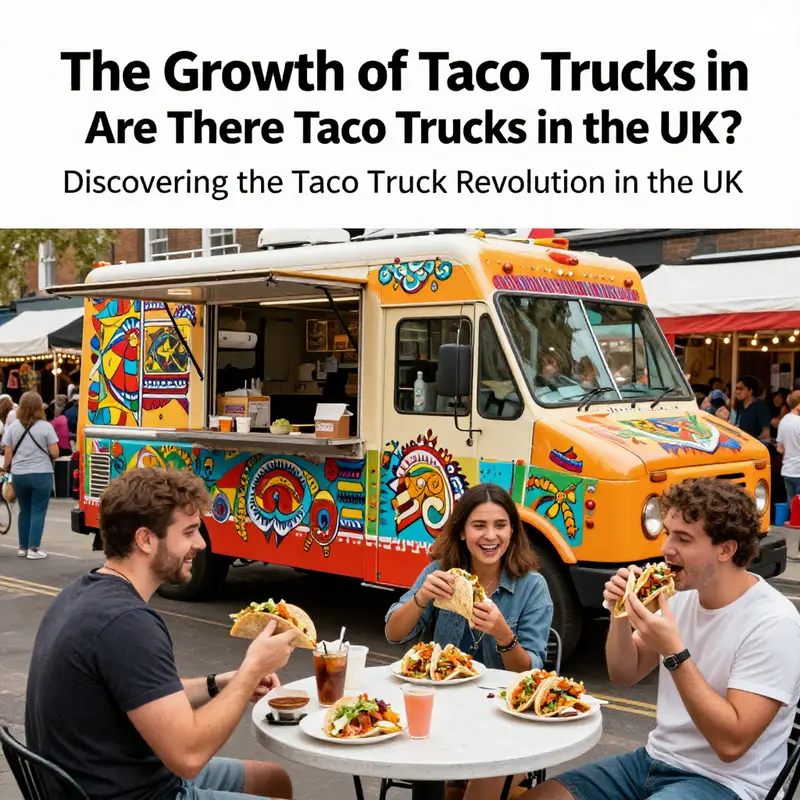
When people ask, are there taco trucks in the UK, the answer has shifted from a surprising yes to a confident yes with a sense of everyday normalcy. Across the nation’s largest cities and even in several smaller towns, mobile kitchens crawl through streets, pause at markets, and light up the corners of lunchtime streets with the sizzle of tortillas and the bright tang of lime. What looks like a new trend to some is, in truth, the culmination of a longer story about mobility, culinary curiosity, and urban experimentation. Taco trucks did not land in Britain as a static import; they arrived as a traveling ensemble of cooks, entrepreneurs, and neighborhood patrons who shared a longing for quick, flavorful meals that could travel with the city itself. The result is a compact ecosystem where tradition and improvisation meet, and where Mexican-inspired cooking has become a flexible, accessible language spoken across diverse urban landscapes.
The story begins in the United States, where taco trucks gained legendary status for their ability to transform underused spaces into gathering spots. The image of a black-and-white striped or brightly colored cart, parked on a street corner, becomes a social space as much as a culinary one. In the UK, this model found fertile ground in an urban fabric that prizes speed, affordability, and the thrill of novelty. Cities like London, Manchester, Birmingham, and Bristol—each with its own rhythm, its own neighborhoods, and its own rhythms of work and leisure—have become spots where a portable kitchen can thrive. The appeal is straightforward: mobility lowers the barriers to entry for new cooks and new menus, while the flexibility to move to different neighborhoods or events reduces the risk that a single fixed site may fail to match changing tastes. The food truck economy, at its best, serves as a living laboratory where cooks can test ideas, respond to crowds, and iterate quickly.
In practical terms, the UK taco truck scene has learned to speak in multiple dialects of flavor. Some operators lean into traditional Mexican street tacos, honoring classic methods, masa, and salsa verde. Others blend Mexican culinary techniques with British ingredients and preferences, producing recipes that feel both familiar and adventurous. This blending mirrors broader urban food culture in the UK, where global cuisines have become part of the everyday palate. Weekend markets, pop-up events, and even the busy lunch roads in metropolitan cores become stages for these mobile kitchens. A taco truck in London might share space with a curry stall and a vegan dumpling cart, each contributing to a cosmopolitan food court that travels as the city does. The experience is less about a single “authentic” recipe and more about the shared joy of a short menu, bright flavors, and a sense of community built around a quick, satisfying meal.
What the menus show, in turn, is a conversation between origin and adaptation. Some operators stay tightly aligned with traditional carnitas, al pastor, or barbacoa, offering a window into Mexican culinary roots. Others experiment with local produce—the UK’s seasonal produce and regional cheeses or peppers—pushing the boundaries of what a taco can be. A few standouts approach the taco as a canvas for global fusion, weaving in textures and ingredients from other food cultures in ways that feel natural rather than forced. The result is not a single culinary identity but a spectrum. It is this flexibility that makes taco trucks particularly well-suited to the UK’s urban environments, where the food scene moves quickly and consumers seek both comfort and surprise in a single meal. The trucks thus act as micro-ambassadors of a broader gastronomic curiosity that defines contemporary British cities, where street-food venues reflect a larger appetite for international fare presented with a local sensibility.
The business logic behind these mobile kitchens also deserves attention. A taco truck typically represents a lower-cost entry into the food-service world than a brick-and-mortar restaurant, a factor that resonates with British entrepreneurs who want to test a concept without the heavy overheads of a permanent site. The mobility itself becomes a strategic asset: it allows operators to calibrate location to demand, season, or event calendars. Weekends bring the most reliable crowds, as markets, fairs, and sport matches draw in footfall that a fixed storefront might miss. A solo operator, a small family-run venture, or a tight-knit team can run an operation with lean staffing and a nimble supply chain. This setup fosters a culture of hands-on learning, where cooks balance recipe refinement with customer feedback gathered in real time from street-level conversations. In other words, success hinges less on a grand, unchanging concept and more on the capacity to listen, adapt, and move with the city’s tempo.
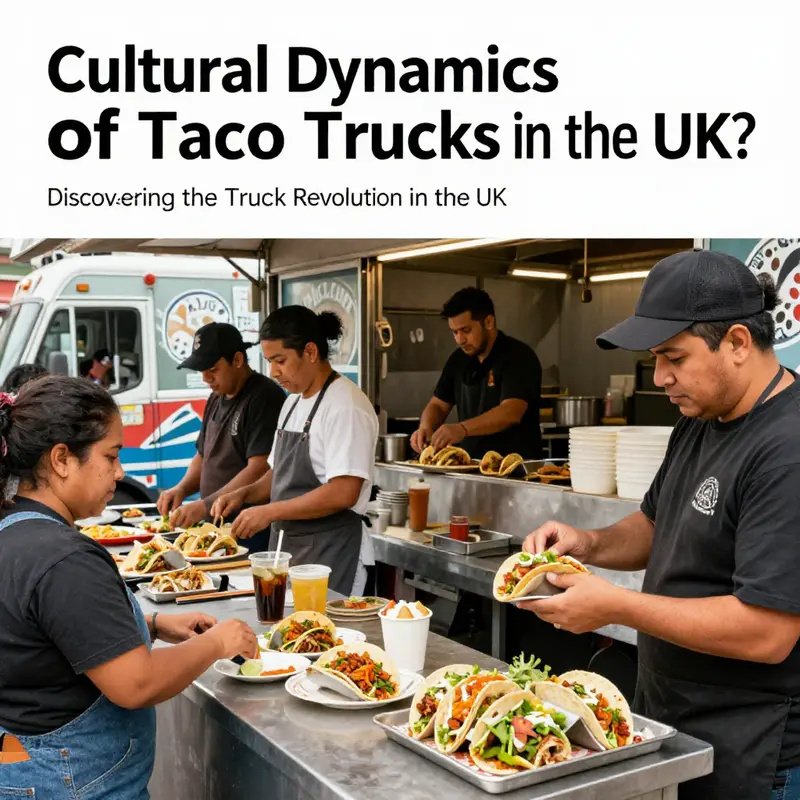
Cultural significance plays a crucial role in why taco trucks have endured and grown in the UK. They are not merely places to eat; they are spaces where food becomes a shared language. Immigrant designers of these carts often bring elements of their home culinary traditions, preserving heritage while translating it for a new audience. The fusion—rooted in tradition but expressed through local ingredients and the city’s pace—creates a form of culinary diplomacy on wheels. This dynamic mirrors broader urban patterns observed in other global cities, where food trucks function as social spaces that test ideas about belonging, space, and identity. A well-cited point of reference for this social space is the research on how taco trucks negotiate urban culture in Austin, Texas. The Budding Aromas from Taco Trucks: Taste and Space in Austin, Texas offers a lens through which to view the UK’s evolving scene: both contexts reveal how mobile food vendors negotiate with residents, municipal authorities, and the rhythms of daily life as they shape city culture over time. That comparative perspective helps explain why the UK’s taco trucks have proven durable: they respond to people’s appetite for quick, flavorful meals while also inviting a broader conversation about place, memory, and community..
Beyond sentiment, there is also a practical, infrastructural backbone that sustains growth. In recent years, a more robust ecosystem of food truck infrastructure has emerged across the UK. This ecosystem includes standardized health and safety practices adapted for mobile kitchens, clearer licensing pathways, and supportive networks of suppliers who understand the needs of small operators. As markets expand and events scale up, organizers seek reliability and consistency, and that demand has catalyzed professionalization without erasing the essential spirit of street food. For many operators, the journey begins as a weekend stand or a pop-up but evolves into a network of partnerships, occasional collaborations, or even a handful of recurring sites that allow customers to count on a familiar taco voice amid the city bustle. In this sense, the UK taco truck story resembles other mobile food narratives across Europe and North America, where entrepreneurial energy, taste for exploration, and the practicality of mobility converge to create enduring local favorites.
The current state and trajectory of this scene can be synthesized from a broader industry overview that tracks the rise of food trucks, including taco-focused ones, as a growing feature of urban food culture. A recent, comprehensive resource on the subject emphasizes how food trucks have become essential components of urban dining ecosystems, with composition and applications spanning a range of mobile culinary models. While the British context adds its own distinctive flavors—seasonality, regulatory nuance, and local sourcing—the core pattern is a clear one: mobile platforms enable chefs to test menus, cultivate a following, and scale their impact without a fixed storefront, embedding themselves into neighborhoods in ways that stationary eateries cannot. The UK’s taco trucks thus sit at the intersection of entrepreneurship, cultural exchange, and city-scale experimentation, offering a practical answer to the question, and a richer story about how urban food culture evolves when mobility is part of the dining equation.
For readers curious about how to translate this growing phenomenon into concrete next steps—whether they are students of urban food culture, city planners, or aspiring food-truck operators—the practical arc matters as much as the romance. There is a framework for approaching a mobile food venture that emphasizes steps such as understanding local licensing, calibrating a lean menu, and building relationships with markets and event organizers. It also highlights the importance of robust food safety practices suited to a mobile environment, a point that cannot be overstated given the realities of street service. In this context, the UK experience with taco trucks is a case study in how mobility, culture, and business sense co-create vibrant food scenes. As markets and city streets increasingly accommodate these itinerant kitchens, they become part of the everyday fabric of urban life rather than a fleeting novelty. The result is a more diverse, more dynamic city appetite that continues to reshape how Britons think about Mexican-inspired cuisine.
For those drawn to the practical dimension of this growth, there is a well-timed reminder embedded in the literature on mobile food commerce: the journey from a weekend stand to a recognizable brand is real but achievable with careful planning and community engagement. A useful starting point within the broader online ecosystem is to explore the licensing, safety, and market-entry steps that anchor a successful launch. The dialog between regulators, vendors, and customers often runs through markets and pop-ups first, where feedback is immediate and adjustments are swift. In this sense, the UK taco truck narrative echoes the Austin model not just in flavor but in the social mechanics of street-food entrepreneurship—the same impulse to claim space, foster belonging, and celebrate flavor in a portable form.
As the scene continues to mature, the UK’s taco trucks will likely deepen their ties with sustainable practices and local sourcing, a trend that aligns with wider consumer expectations for transparency and environmental responsibility. Operators may increasingly highlight how ingredients travel from farm to cart, reducing waste through smarter prep and packaging choices. The evolution may also bring tighter collaborations with farmers’ markets, cooperative suppliers, and urban agricultural projects, enriching the supply chain and offering customers increasingly story-driven meals. In the meantime, the existing wave of operators remains flexible, capable of adapting to new planning restrictions, changing consumer expectations, and unique urban rhythms—from quiet residential lanes to bustling city centers. The city, in this sense, remains the shared kitchen, and the taco truck a portable invitation to participate in a melting pot of flavors and experiences.
To summarize: yes, there are taco trucks in the UK, and their presence has grown steadily as part of a broader urban-food-ecosystem movement. Their success rests on mobility, affordability, and the capacity to blend authenticity with adaptation. They offer a practical route into the food business for many aspiring cooks, while also inviting city dwellers to engage with Mexican-inspired cuisine on the move. The narrative resonates with the classic Austin model in its core values—food as culture, community, and space—yet it also belongs to the UK’s distinctive cadence of markets, neighborhoods, and festivals. The result is a culinary landscape where a simple, well-cooked taco can become a familiar, welcome signature on a busy street corner, a small but meaningful contribution to the texture of urban life. For entrepreneurs and food-curious readers alike, these trucks present a vivid case study in how mobility can democratize taste and reshape the geography of eating in modern cities.
For practical steps that budding vendors may find useful, those interested can explore general guidance on launching a mobile food business. See the Legal steps for launching a food truck for a grounded overview of the licensing and compliance landscape that many UK operators navigate as they set up shop in markets, on street corners, or at cultural events. This resource can offer a pragmatic map of the process, from concept to cart, and help connect the culinary passion to a viable business model. And as the scene evolves, the UK taco truck story will continue to unfold in real time—through the pages of blogs, market write-ups, and the real-world experiences of those who keep these compact kitchens rolling through the city streets.
External resource: For a broader, up-to-date overview of current state and expansion of food trucks—including taco trucks—in the UK, see Buy Food Truck UK.
Internal link note: For practical steps that budding vendors may find useful, see the legal steps for launching a food truck. (Legal steps for launching a food truck)
null
null
Rolling Economies on the Move: The Economic Impact of Taco Trucks Across the UK
If you walk through the late afternoon bustle of central London, the outskirts of Manchester’s markets, or the riverfronts of Bristol, you will notice a familiar pattern: a cluster of compact, diesel-whispered kitchens parked on a curb or tucked into a pop-up plaza, serving up bright toppings, bold sauces, and tortillas that crackle with heat. Are there taco trucks in the UK? The answer is yes, and their presence speaks to more than a taste for Mexican-inspired street food. They represent a mobile slice of the informal economy that is reshaping urban food ecosystems. The rise of taco trucks sits alongside a broader surge of mobile vendors who test menus, chase foot traffic, and respond with agility to neighborhoods in flux. In major cities—London, Manchester, Birmingham, and Bristol—the scene has matured from a handful of curious beginnings into a recognizable strand of the urban dining fabric. They join markets, food courts, and pop-up events, weaving together local ingredients with international techniques to create something both familiar and new. This is not merely about eating on the go; it is about how cities invite culinary experimentation, how small operators translate cultural memory into portable meals, and how a simple cart can become a connector in a crowded urban landscape.
From the outset, the economic logic behind taco trucks is compelling. They reduce barriers to entry for aspiring food entrepreneurs. Traditional restaurant openings demand substantial capital for premises, fixtures, and long-term leases. A mobile unit, by contrast, can be launched with a fraction of that upfront cost, especially when the operator uses shared or temporary spaces rather than fixed storefronts. In the UK context, this translates into a wider pool of participants—many of them immigrant cooks or small, independent businesses who bring authentic flavors while adapting to local tastes. The mobility of these ventures is not merely a logistical detail; it is a strategic advantage that allows operators to calibrate offerings to what people want, where they want it, and when they want it. The flexibility to move between weekend markets, high-footfall office corridors at lunchtime, and seasonal festivals means that menus can evolve in response to demand, seasonal produce, and even the weather that guides consumer choices. A pinch of coriander here, a twist of lime there, and a recipe can seem both rooted in heritage and freshly minted for a contemporary urban palate.
Economic theory aside, the lived experience of taco trucks in UK cities underscores a practical value: affordable, high-quality meals that do not rely on expensive real estate. The operating model—compact kitchens, simpler permits, and variable, often shorter hours—keeps costs manageable while maintaining a standard of freshness. This balance between price and quality attracts a broad customer base, from budget-conscious office workers seeking a quick but nourishing lunch to families exploring weekend food scenes and curious foodies chasing new flavors. Where traditional restaurants might struggle to compete on price or time, taco trucks lean into efficiency. They optimize preparation timelines, negotiate with suppliers for flexible orders, and use flat-rate menus that simplify the customer decision process. In an era where consumers increasingly value value for money without compromising on taste, the mobile taco business in the UK aligns with a broader consumer shift toward nimble, value-driven dining options that still deliver memorable flavor experiences.
The employment dimension of this mobility is nuanced. Taco trucks create job opportunities that are often accessible to people who prefer flexible schedules or who are building livelihoods in tandem with education, caregiving, or other commitments. The workforce may include cooks, prep staff, drivers, and event coordinators who orchestrate shifts for peak markets or festival weekends. The model supports entrepreneurial labor as well—operators often start as solo founders and gradually scale by hiring assistants or collaborating with other cooks, enabling them to expand menus or cover more venues. In this way, taco trucks contribute to job creation without demanding the heavy payrolls associated with fixed-location restaurants. They also encourage skill development—knife work, sauce blending, and sensory calibration of heat and texture—skills that can be transferable across the broader food service economy. The result is a form of culinary entrepreneurship that strengthens local resilience by diversifying income opportunities in neighborhoods that may not sustain a full-service restaurant year-round.
Beyond the cash register, these mobile kitchens cultivate tourism and community engagement in meaningful ways. Festivals, pop-up markets, and street-food weekends become stages where visitors sample a city through its evolving food culture. In London, for instance, dedicated vendor zones and seasonal markets provide not only income for vendors but also a social hub for communities to gather, share space, and exchange ideas. The presence of taco trucks adds a layer of cultural exchange to urban life: a handheld meal becomes a tangible encounter with Mexican-inspired cuisine, adapted to the UK’s markets and produce. This cross-cultural dialogue has social value as well as economic weight. It helps local cooks build audiences, fosters ongoing relationships with farmers and wholesalers who supply fresh produce, and invites neighboring businesses to collaborate on events, simultaneous menus, or cross-promotions. The result is a dynamic micro-economy within the city—a testing ground for culinary ideas, a platform for immigrant entrepreneurship, and a catalyst for neighborhood vitality.
Of course, the mobility of taco trucks also serves a strategic business purpose: market testing. Operators can move to places with the most promising foot traffic, seasonal demand surges, or the shortest wait times, then adjust their offerings based on what they observe in real time. A taco truck can spin into a busy city center for lunch, then pivot to a university campus or a weekend market, and finally settle into a food-park arrangement that gives customers a predictable, repeatable experience. This fluidity is invaluable as consumer preferences shift in response to demographics, trends, and even macroeconomic factors such as inflation or changes in commuting patterns. The capacity to calibrate the menu—perhaps a leaner version during tighter economic times, or a richer, more indulgent lineup for festival crowds—means operators can sustain momentum while experimenting with bold ideas. In essence, mobility is not only a logistical advantage; it is a mechanism for entrepreneurial resilience, allowing taco traders to survive and thrive across a landscape that can be volatile and unpredictable.
This adaptive, experimental ethos dovetails with broader urban food diversity goals. Cities seek to broaden the range of accessible cuisines, support small businesses, and create spaces that invite people to linger rather than rush through a meal. In London’s food ecosystems, taco trucks contribute to a mosaic of options that complements established restaurants and independent eateries alike. The presence of mobile vendors in strategic hubs can increase foot traffic to nearby shops, encourage longer visits to neighborhoods that might otherwise be overlooked, and stimulate collaboration among local food producers. The result is a more vibrant street-level economy where a single cart can spark longer conversations about sourcing, sustainability, and the art of balancing cost with quality. In this sense, taco trucks function as living experiments in how urban spaces can be shared, used, and enjoyed in ways that honor tradition while embracing contemporary demand.
Scholars who study the social life of taco trucks in other cities offer a useful lens for thinking about the UK scene. A respected academic piece on Austin’s taco truck culture examines how these food vendors negotiate social spaces through their menus, service styles, and the timing of their operations. The study highlights how truck operators craft a sense of place within a mobile framework, turning meals into experiences that reflect evolving city cultures and audiences. While the UK context is not a direct replica of Austin’s dynamics, the parallel remains instructive: mobile food vendors become cultural actors who shape and are shaped by the places they inhabit. They negotiate the surrounding urban space—streets, markets, and events—while inviting locals to reinterpret what a meal on the go can mean. The UK’s taco trucks are part of this global conversation about food as a movable social experience, capable of bridging communities and sparking conversations about heritage, adaptation, and taste. For readers who want to explore this cross-cultural dimension further, an accessible reference to the Austin study can be found in scholarly discussions of taste and space in mobile cuisines.
In summary, the economic impact of taco trucks in the UK extends well beyond the simple act of filling plates. They lower entry barriers for aspiring food business owners, enabling a spectrum of entrepreneurs to bring authentic flavors to diverse neighborhoods. They offer affordable, quality meals that appeal to a broad audience, while also supporting job creation and flexible work arrangements. They contribute to tourism and community life by turning markets and events into social spaces where people can gather, compare dishes, and learn about culinary processes and sourcing. And they embody a model of market responsiveness that is increasingly valuable in a world where consumer preferences can shift overnight. All of this unfolds within a larger urban economy that is more dynamic, more eclectic, and more interconnected than ever before. The UK taco truck story is still being written, but the chapters already reveal a compelling narrative: one built on mobility, imagination, and the steady cadence of the street as a place of exchange and renewal.
For those who want to peek behind the scenes at how mobile food ventures can evolve into enduring parts of a city’s fabric, there is practical guidance and reflective commentary available in related culinary business discourse. And for readers curious about how mobile menus intersect with local tastes and global influences, a broader discussion of culinary fusion in truck-based formats offers useful context. To explore a broader sense of how mobile culinary practices fuse with local economies, see the discussion linked here: Food Truck Fusions: A Culinary Revolution. This perspective helps situate the UK’s taco trucks within a wider pattern of experimentation and adaptation that characterizes contemporary urban food culture.
External reference: The Budding Aromas from Taco Trucks: Taste and Space in Austin, Texas, which illuminates how taco-truck entrepreneurship negotiates social spaces and evolving city culture, can provide a comparative lens for understanding UK developments. https://doi.org/10.33182/tmj.v4i2.393
Rolling Tacos Across the UK: How Consumer Tastes Shape—and Are Shaped by—the Taco Truck Movement
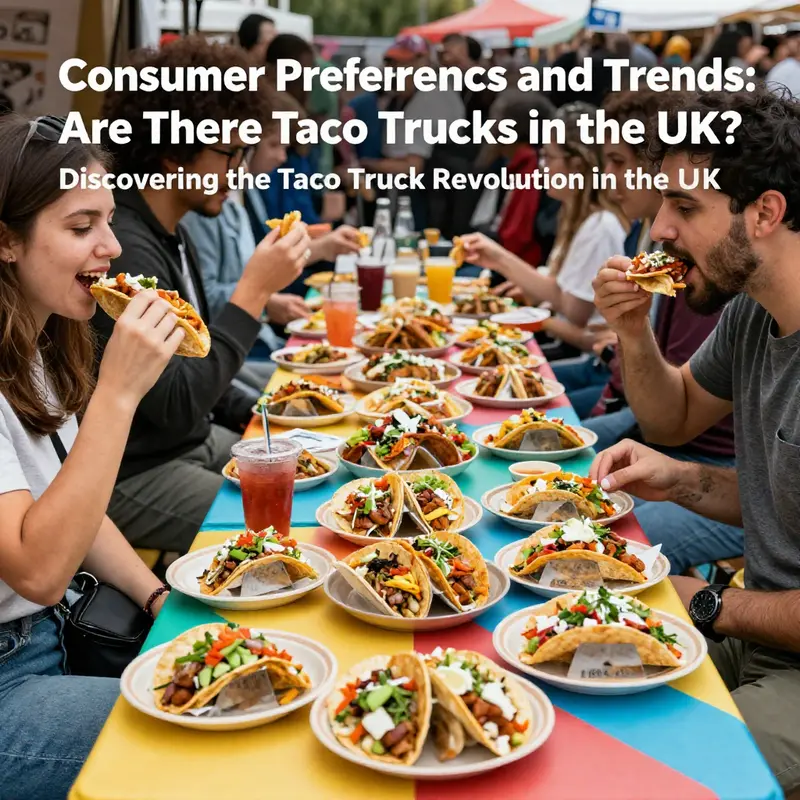
Are there taco trucks in the UK? Yes, and their presence reflects more than a passing culinary fad. Across London, Manchester, Birmingham, and Bristol, mobile kitchens have carved out a recognizable footprint, edging into weekend markets, city center pop ups, and even busy lunch corridors. The appeal rests not just on the promise of a quick meal, but on a larger shift in how people want to eat: flexible, flavorful, and social. Taco trucks embody that shift, offering a compact, efficient platform for cooks to present texture, heat, and aroma in a form that travels with the urban rhythm. Mobility lowers the barrier to entry and invites a diversity of voices to the street, turning the act of eating into a shared experience that is as much about place as it is about plate. The result is a culinary texture that feels both contemporary and rooted, a blend that urban diners increasingly expect from a modern cityscape.
Consumer preferences in the United Kingdom have grown more plural and more adventurous. Mexican-inspired cuisine, with tacos at its core, has moved from niche curiosity to a popular option that can stand alongside a full spectrum of global flavors. Tacos, with their small shells and modular fillings, offer an ideal canvas for chefs to experiment. They enable bite-sized explorations of technique, from slow-cooked meats to bright salsas, from grilled vegetables to cured and pickled accents. This modularity matters in a market that prizes variety, speed, and value. In practice, many UK taco trucks combine traditional Mexican methods with locally sourced ingredients and techniques, producing offerings that feel authentic without feeling culturally static. The street setting, meanwhile, keeps the experience intimate and democratic: a price point that invites sampling, a quick service model that respects the tempo of city life, and a space where people can decide in real time what flavors to chase next.
The urban setting is part of the appeal. London, Manchester, and Bristol provide a constellation of markets and pop-up venues where visitors can follow a chalkboard map of tribes and tastes. Weekend markets pulse with energy as new vendors rotate into the scene, and festival grounds become testing grounds for menus that might later graduate to fixed storefronts or larger, recurring stalls. There is something distinctly social about the taco truck experience. The line, the exchange of heat and aroma, and the ownership of a plate that was assembled moments before all contribute to a sense of participation in a larger urban foodie culture. The trucks do not simply deliver sustenance; they offer a mobile stage where cultural exchange and culinary curiosity are performed with every order. This dynamic mirrors a broader trend in city life, where food acts as a public ritual and a form of neighborhood identity.
The entrepreneurial logic behind these mobile kitchens is deeply aligned with consumer appetite. Mobility reduces upfront risk and allows cooks to test ideas quickly. A chef can refine a recipe based on what people in a particular neighborhood crave, then shift the menu to address emerging preferences or seasonal produce. Local sourcing becomes a practical advantage, not just a moral preference. When a truck carries herbs from a nearby market, or when a chef roasts peppers in a way that resonates with the climate and palate of the day, the dish gains a sense of place that fixed, distant kitchens rarely achieve. The cycle of feedback is direct: customers taste, comment, and return, and the truck evolves in response. This agile approach to menu development is a core reason why taco trucks have found such fertile ground in the UK, where a diverse population expects variety and immediacy in their eating choices.
Within this evolving ecosystem, the role of immigrant cooks and small independent operators is pronounced. The shared narrative across many of these kitchens is one of migration, learning, and adaptation. Immigrant culinary entrepreneurs bring techniques and flavor profiles that are anchored in memory and family practice, then translate them into a street-level business that must meet local expectations for quality, cleanliness, and consistency. The result is not a simple transplant of a foreign cuisine, but a constructive conversation with the city’s own culinary tradition. Dishes that travel well because of their portability and bright balance of sour, salty, and spicy tones become a kind of cultural bridge, inviting curious diners to explore the mechanics of taste through a familiar format. This is not merely about copying a recipe; it is about translating a heritage into a language the city can hear and respond to. The adaptability witnessed in London and Bristol—that same open exchange—speaks to a cosmopolitan appetite that refuses to be defined by a single cuisine.
A nuanced reading of why taco trucks resonate in the UK also draws on comparative urban theory. In cities worldwide, food trucks have become spaces where social life and gastronomy intersect, a phenomenon that scholars link to shifts in urban form and social inclusion. A 2026 study on the rise of taco trucks in Austin, Texas, for example, highlights how mobile kitchens negotiate space and community. The drivers of success are not simply the quality of the food but the ability to stage hospitality in a place that is constantly in motion. Immigrant-led culinary innovation translates into new social spaces, reworking how people gather, what they talk about, and how a neighborhood defines itself. Even though the context is American, the overarching patterns echo in the UK: trucks create and adapt public spaces, menus respond to demographics, and street food becomes a social practice that shapes, and is shaped by, the city’s growth. The UK scene, while operating under different regulatory and market conditions, embodies the same logic of cultural exchange and urban dynamism that makes the taco truck a flexible instrument of city life.
In this sense, consumer preference is both cause and consequence. It is cause because chefs design menus to fit known cravings from diverse communities; it is consequence because those choices, in turn, redraw the map of where and how people want to eat. The result is a living, evolving palette that travels with the city’s crowds. Some trucks foreground traditional Mexican fillings with careful attention to technique, while others pursue fusion that honors local agriculture and everyday food practices. Either approach prioritizes taste, speed, and a social moment that can be shared with friends and strangers alike. The street becomes a classroom, the market a laboratory, and the taco a signal that dining can be both portable and deeply meaningful. In a country with a long history of street food experimentation, the UK taco truck scene demonstrates that the appetite for innovation is not limited by class or geography but is instead amplified by the mobility and accessibility of the format.
As the scene expands, the consumer experience grows more sophisticated. Diners increasingly look for transparency in sourcing, clarity in heat and texture, and a sense that the vendor is paying attention to the whole plate. They want options that respect dietary needs without sacrificing flavor, plates that offer brightness and depth, and a pace that fits modern urban life. This expectation nudges operators toward better mise en place, more thoughtful sauces, and higher standards of cleanliness and presentation, all of which raise the overall quality of street food. The trucks that survive and flourish tend to cultivate a strong sense of hospitality; the ritual of ordering, receiving a freshly made item, and sharing a brief exchange about the heat level or preferred toppings becomes part of the appeal. For many, the value of the experience lies not only in the food itself but in the sense of being welcomed into a rotating and inclusive street culture that celebrates global flavors without sacrificing local sensibilities.
The UK context also emphasizes the democratic potential of mobile dining. Because these kitchens often set up in markets, plazas, and event spaces rather than permanent storefronts, they invite residents from various backgrounds to participate in the same gastronomic moment. A family stopping for a quick lunch might share a plate with a group of coworkers or students, all experiencing a common moment of flavor while negotiating the social dynamics of a busy city. In this environment, the cultural symbolism of tacos—humble, adaptable, and shared—appears in a new light: not as a luxury or an exotic novelty, but as a practical and hospitable way to feed many people with care and flair. This perception matters, because it influences how city planners, market organizers, and food entrepreneurs think about space, accessibility, and community-building through food.
To readers curious about the practical dimensions behind the scenes, it helps to connect these observations with the broader literature on mobile food and street economies. The culinary and cultural logic described here aligns with a larger trend in which food trucks operate as dynamic hubs of taste, space, and social life. A well-timed cart can become a weekly ritual for a neighborhood, a waypoint for students, or a stop on a cultural circuit during festivals. The value of these operations lies not only in the meals they deliver but in the way they contribute to a city’s sense of possibility. In that sense, the UK taco truck scene can be read as a living laboratory of urban mobility and cultural exchange, where the flavors on the plate tell a story about migration, innovation, and the everyday act of gathering.
For readers who want a practical entry point into the running of such ventures, there is a wealth of perspective in online resources dedicated to mobile kitchens. A convenient starting point is a dedicated industry blog that offers pragmatic guidance on menu planning, licensing, and customer engagement for mobile cooks. Fire Up Taco Truck maintains a repository of tips and reflections that illuminate how operators design seasonal menus, manage stock, and navigate markets with confidence. This internal resource provides a grounded counterpoint to the broader cultural analysis presented here and helps connect theory with everyday practice in the street food economy. Fire Up Taco Truck blog.
Looking ahead, the UK taco truck narrative is likely to continue maturing as consumer expectations become more precise and as operators experiment with form as well as flavor. The balance between tradition and invention will keep menus vibrant, while the social element of eating on the move will reinforce the value of street-level dining as a civic practice. The broader takeaway is that the street food phenomenon in the United Kingdom is not simply about enjoying a quick bite; it is about how a city negotiates change through taste, space, and solidarity. Each truck is a small but meaningful act of urban collaboration, a reminder that food can travel quickly while still inviting people to slow down and connect, even if only for a few mouthfuls of bright, well-balanced flavors.
External resource: The Budding Aromas from Taco Trucks: Taste and Space in Austin, Texas, 2026. https://doi.org/10.33182/tmj.v4i2.393
Final thoughts
The taco truck scene in the UK is more than just a trend; it’s a flavorful revolution that celebrates the melding of cultures while catering to diverse palates. Whether you’re a culinary enthusiast, a taco lover, or a budding entrepreneur, the rise of taco trucks brings exciting opportunities and experiences. As their popularity grows, so does the variety—bringing authentic flavors from Mexico, unique local adaptations, and a communal atmosphere that feeds both the body and soul. Here’s to the taco trucks! May they continue to roll forward, enriching UK streets with their vibrant tastes and cultural significance.