
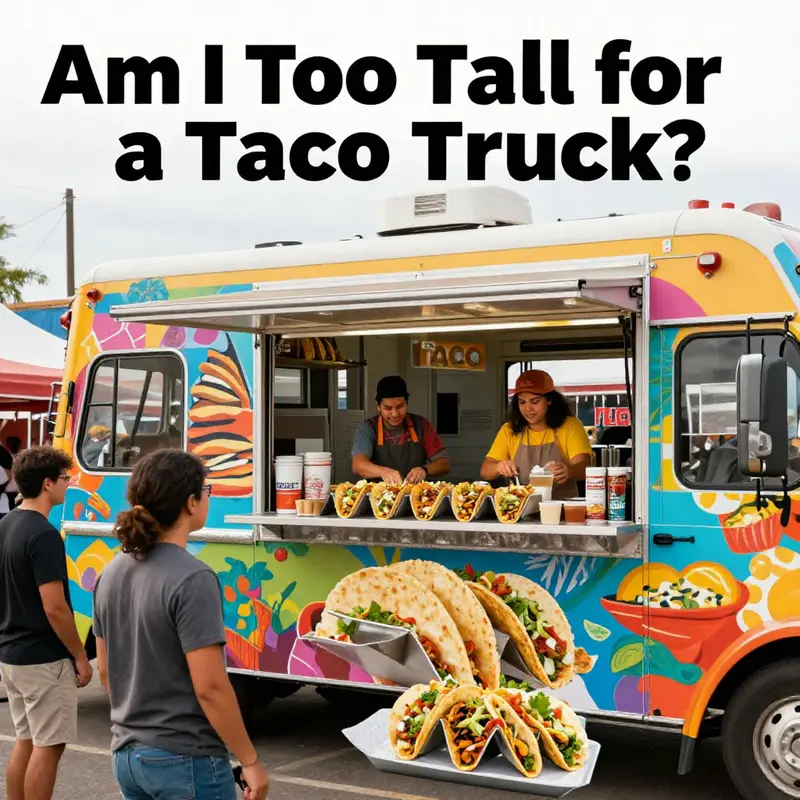
Taco trucks are iconic, savory havens for taco lovers, but for some, a pressing question arises: Am I too tall for a taco truck? Whether you’re a towering foodie excited to devour fresh tacos or a taco truck owner concerned about your operational space, it’s essential to understand how height plays a role in the taco truck experience. In this flavorful exploration, we’ll dive into four chapters that will clarify internal height limits, consider customer interactions, discuss the comfort for chefs and drivers, and emphasize the importance of practical experience. Join us in discovering the culinary potential that lies within and how height might just be a number.
Tall Orders, Tight Quarters: Exploring Internal Height Limits in Taco Truck Design
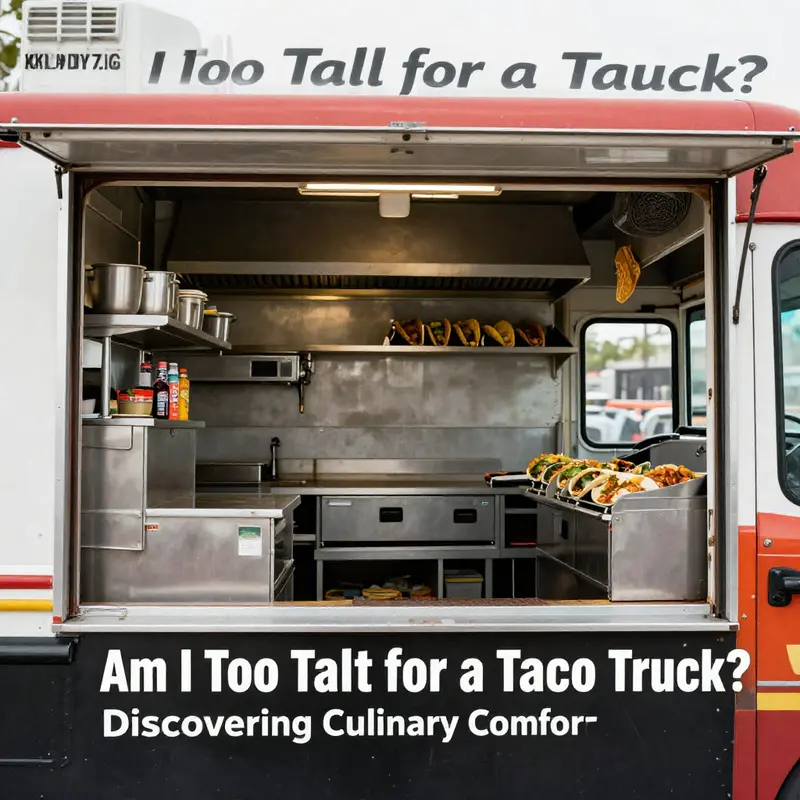
The question, “Am I too tall for a taco truck?” sounds almost playful until you step into the reality of how these mobile kitchens are put together. For most customers, height is a non-factor; you queue outside, you lean in at a window, you sample salsa, and you wonder if the sizzle of peppers might singe the top of your head if you were to duck into the wrong corner. For someone who plans to work behind the window—the cook flipping tortillas, the chef guiding a line of assistants, or the driver who handles the truck as a moving workspace—the question becomes practical and personal. Internal height limits aren’t a universal barrier in the way a strict altitude restriction might be; rather, they reflect the interplay between a vehicle’s built space and the human body that must move within it. In practice, this means there is no blanket rule that says you must be a certain height to operate a taco truck. Instead, the height question maps onto the interior geometry of the vehicle, the layout of the kitchen, and the way a person physically engages with every step of the workflow, from ingredient prep to plating to the simple, repetitive motions of service.
The first point to grasp is straightforward: taco trucks are compact kitchens. They are designed to maximize every inch of space for cooking equipment, refrigeration, storage, and the staff who maneuver around tight corridors of counter, hood, and prep area. The internal height is not the same as the overall vehicle height. In many mobile kitchens, the usable vertical clearance inside—the distance from the floor to the ceiling within the working zone—hovers around two meters or a bit less. That translates to roughly six and a half feet of headroom for someone standing straight up. It’s enough for most adults to work without stooping, but it isn’t an airy cathedral of a space. Taller individuals, say someone approaching or surpassing six and a half feet, may begin to notice the ceiling pressing in when they step close to the griddle, reach over the stove, or maneuver around a tall stack of trays behind the prep counter. This isn’t a theoretical inconvenience; it manifests as a practical constraint that can influence comfort, speed, and, ultimately, safety on the line.
If we think in terms of design, the interior height of a taco truck is inextricably tied to what the truck must do. The vehicle must house burners, a vent hood, a refrigeration unit, a work surface, possibly a fry station, and a maintenance-free path for staff to move from one station to another. All of these require clearances not just fore and aft, but vertically. A taller cook may need to adjust their posture constantly—twisting to reach a switch, ducking to pass behind a bulky hood, or bending to retrieve a pan from a low shelf. The ergonomic math becomes more acute when the same space must also accommodate safe, repeatable movements across a full shift. It’s not merely about standing upright in a vacuum; it’s about how tall staff translate their height into reach, comfortable strides along a fixed route, and consistent, safe operation of hot surfaces and sharp tools within a small footprint.
In practical terms, the interior height interacts with several ergonomic considerations that are universal in the craft of small-scale, mobile kitchens. For example, the height of the prep counter and the location of the griddle or range influence the angle at which a taller person will approach a pan, lift a stock pot, or slide a tray across a rack. These decisions ripple into the daily rhythm of service. A cramped zone near the stove can slow down the cook, requiring more careful twists and turns to avoid striking the hood or brushing a sleeve against a hot surface. The ventilation system itself, which demands a certain clearance above the cooking area, can create an obstacle course for someone with long limbs or a tall torso. All of this underscores a simple truth: the interior height is not about keeping people out; it’s about shaping a functional workspace that accommodates the common range of body sizes while acknowledging the realities of mobility, reach, and fatigue during long shifts.
For tall individuals considering entering or designing a taco truck, the key is to translate height into usable space. There is no abstract ceiling to conquer; there is a concrete layout that can be tuned to comfort and efficiency. Consider the space behind the counter—the stretch where ingredients are prepped, sauces are portioned, and tortillas are warmed. In many designs, that zone sits just beneath the vent hood and within reach of a primary work surface. If a worker stands at the proper height, their elbows rest at a comfortable angle as they slice, fold, and plate. But if the same person is taller than the available headroom, they might have to lower their shoulders, bend at the waist, or adopt a duck-walk around a support beam or a conduit that snakes along the ceiling line. The cumulative effect is not only physical strain but a potential drop in speed and accuracy under the stress of peak service.
This is where the concept of “internal height limits” becomes a practical guide rather than a barrier. A thoughtful build assistant or kitchen designer will map out the daily tasks required in the truck and compare them to the spatial envelope available. They will ask: Where does the cook’s head come closest to the ceiling when they reach for a pan? Where is the vertical clearance enough to stand upright while a tray is carried from the fridge to the prep area? Is there a safe, comfortable path around the sink and the stove when a tall person moves with full confidence? The answers aren’t universal; they depend on the specific truck, the chosen equipment, and the exact height of the person using it. The absence of a universal “height limit” means there is room for customization. In some cases, the interior can be adapted with a lower-profile hood, a slightly altered counter height, or strategically placed storage that reduces the need for tall staff to contort themselves around obstacles.
A portion of the dialogue about height in taco trucks also concerns the worker’s safety and the practical realities of a small, moving kitchen. Even with a two-meter ceiling, the combination of heat, steam, and grease creates a hazardous environment if the staff’s movements are restricted. The taller the worker, the more awareness needed for overhead lines, venting ducts, and the overall rhythm of motion. This is not about denying entry to anyone tall; it’s about designing for control and predictability. When a tall staff member can map their usual sequence of actions to a consistent set of body movements within the vehicle, they gain confidence and speed. If not, the job demands either a redesign of the interior or a different station assignment that minimizes awkward postures and repeated strain. In this sense, the height conversation is really a conversation about optimizing the choreography of work inside a narrow stage—the taco truck—where every movement must be precise, repeatable, and safe.
For those who approach the question from the customer’s vantage point, the conclusion remains reassuring: height does not determine whether you can enjoy or purchase food from a taco truck. The interaction point—the serving window—exists outside the physical constraints of the interior. You lean forward, a smile in the steam, and you place your order. You observe the choreography inside only as far as you want to, and you never have to squeeze into the cabin to be served. Even in lines that are longer and the pace more lively, the customer experience is designed to minimize the friction that height might imply. The more important factor for customers is clarity: the menu, the price, and the estimated wait time. These are the elements that travel with you regardless of how tall you are. The truck’s interior height becomes a concern primarily when the business owner intends to function efficiently on a daily basis, or when a tall individual contemplates joining the operation as a cook, prep lead, or driver.
If you are contemplating working inside a taco truck, a practical course of action follows a simple logic. First, inspect the interior space with your height in mind. Stand where you would perform the core tasks—griddling, chopping, loading, and plating—and observe whether your head clears the ceiling without creeping toward a bend in your posture. Second, consider the reach zones around the primary workstations. Are there blind spots or shelves that force you into awkward twists to access essential tools? Third, test a real workflow by simulating a busy service period. Imagine you’re building a batch of tacos, and you must move quickly between prep, grill, and service windows. If you sense fatigue or discomfort from the outset, you will know that adjustments are warranted. These steps are not about turning away tall people; they are about acknowledging differences in body dimensions and designing accordingly to maintain efficiency and safety under pressure.
Throughout this exploration, one evident thread emerges: height alone does not disqualify anyone from working in or enjoying a taco truck. The real question is whether the interior layout supports the range of human movement necessary to perform the job well and safely. A well-designed space respects a spectrum of body heights, allocates clear pathways, and places equipment so that it can be accessed without bending, twisting, or cramming. In other words, height matters as a design variable, not as a verdict. For someone who stands tall, the challenge becomes how to translate that height into better posture, faster movements, and less fatigue across a long shift. It may require a bespoke setup, a strategic equipment choice, or a few layout adjustments. Yet the outcome—an efficient, ergonomic, and enjoyable work experience—remains within reach.
As you consider these factors in the context of your own goals, the path forward is practical and hopeful. If you are in the market to purchase or lease a taco truck, seek out spaces that are comfortable for taller staff and allow for a generous range of motion around the main work zones. Do not assume that a standard, one-size-fits-all interior will suit you perfectly. Instead, treat the interior height as a variable to be measured, tested, and tuned. When you discuss specifications with builders or sellers, request specific measurements: vertical clearance in the prep zone, doorway width, and the clearance around the hood and exhaust. If possible, arrange a dry-run inside the cabin with the actual shooter of tall stature—your own height, or a colleague who matches your stature—to see how the space feels during typical tasks. This hands-on approach is the most reliable predictor of whether height will be a challenge or a non-issue.
In closing, the tall friend and the ambitious dreamer share a common ground: there is no universal barrier here. Height interacts with the interior geometry of a taco truck, yes, but it does not declare an outright exclusion. The decision rests with how thoughtfully the space is designed and how well the workflow can be mapped to human bodies of varying sizes. You do not have to shrink to fit a kitchen; you can, instead, design a kitchen that accommodates you. The practical reality is that the customer relationship is unaffected; you can still savor the warm tortillas and bright salsas from outside the window without bending a rule or limiting your enjoyment. The worker relationship, on the other hand, offers an opportunity to optimize a compact kitchen in a way that reflects real human dimensions. When height is accounted for—in the sense of reach, comfort, and safety—the taco truck can become not a limiting space, but a platform for skilled, efficient culinary craft.
For further guidance on standards and practical applications related to taco cart design, you may find broader technical discussions helpful. The landscape of interior design for mobile kitchens emphasizes stable power and fuel sources, ergonomic workspace planning, and the ongoing balance between compactness and usability. As you navigate the decision to work in or operate a taco truck, keep in mind that interior height is a variable you can negotiate through layout, equipment choice, and testing the space with real tasks. The goal is a design that respects your height while preserving the speed, safety, and joy of serving food from a moving kitchen. As you weigh your options, explore resources that speak directly to the reality of choosing the right configuration for your needs, such as the guidance offered in Choosing the right food truck. This step is not merely practical; it is foundational to turning a tall ambition into a smoothly operating taco truck business.
External resource for deeper technical standards and applications in practice: https://www.tacocartguide.com/standards-and-applications
Am I Too Tall for a Taco Truck? A Practical Look at Height, Access, and the Window

Tall questions often prompt humor, but they point to real design questions about who a space serves. When asking whether you are too tall for a taco truck, it helps to see height as one variable in a broader design problem: how the interior layout, equipment, and workflow accommodate varied statures.
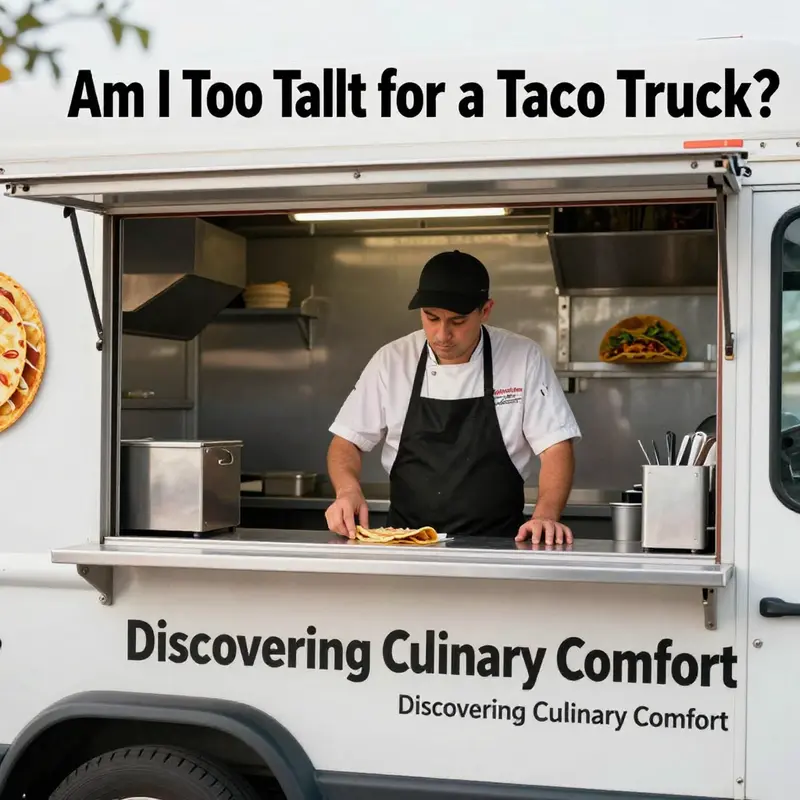
The service window remains the primary interaction point for customers, and its height is typically set to a comfort range that balances visibility and accessibility for a broad audience. A taller person might adjust slightly, while someone shorter can step in or lean as needed. The window should be a channel for clear communication, not a barrier.
Inside the truck, headroom, reach, and the position of burners, prep surfaces, and the exhaust hood define the real constraints. Most crews design around a comfortable standing height, with enough vertical clearance to operate tall equipment and grasp overhead shelves. For someone tall, the challenge is less about being barred and more about ensuring there is not constant neck-craning or cramped movement. If you plan to work inside, stand where you would perform typical motions—reach for a pot, lift a tray, wipe a surface—and adjust the layout if any action feels awkward. This is the core of inclusive design: fit the space to the tasks, not the other way around.
Beyond the physical shell, the workflow matters. A taco truck thrives on proximity to the customer and rapid turnover, so taller operators benefit from stations arranged to minimize bending and twisting. The task light should illuminate the work zone without causing glare, and the hood and vents should be accessible without forcing a cramped posture. Consider adjustable or modular components that can be tuned to different operators, or consulting vendors to customize counter heights for a better fit.
From the customer’s view, height usually disappears as a constraint when the window is well designed and the service pace remains friendly. The social moment—the exchange of hello, order, and framed toppings—wins on communication, not on how tall the server is. For staff, the takeaway is practical: test-fit any truck you are considering and simulate a shift. Inspect standing reach to key controls, doorways, and work surfaces, and verify there is ample clearance for safe movement with hot pans and steam.
If you are exploring options, use a practical checklist: confirm ceiling height is comfortable for your tallest team member, verify clearances around essential appliances, and ask about options to adjust counter heights or reconfigure layout. A good design harmonizes production with presentation, enabling people of different statures to work and interact with ease. Height, in this view, is a variable to manage, not a barrier to entry. For further context, you can explore general guidance on choosing a food truck that emphasizes fit, workflow, and accessibility.
null
null
Stretching Space: A Practical Walkthrough of Height, Ergonomics, and Tiny Kitchens
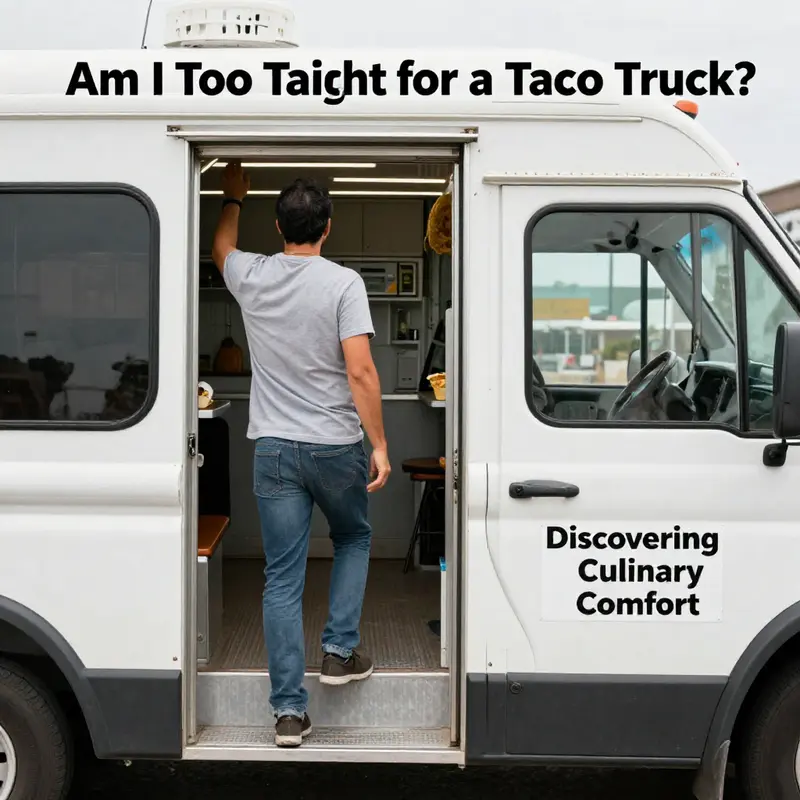
The question of being tall enough for a taco truck starts with a pragmatic look at ergonomics, not a hard ceiling. Height interacts with how the truck is built, how the chef moves inside, and how the workflow flows. In mobile kitchens, there is no universal interior height that fits everyone; operators rely on ergonomic principles, standard measurements, and adaptable design. The taller you are, the more you may notice constraints in a compact space, but comfort is possible with thoughtful assessment and targeted adjustments. The core idea is that inches matter mainly as they translate into a usable path, reach to tools, and rhythm of a shift. The topic shifts from a fixed cutoff to a space that invites a taller frame.
The interior height of a taco truck is not designed for every body, but for the tasks at hand: a cook’s posture as they prepare fillings, heat sauces, and assemble orders; and the customer’s experience at the window. Industry observations show interior clearances adequate for the average worker but potentially tight for those well over six feet. Imagine standing in a narrow corridor with overhead cabinets, and you can see how a taller person might brush a head on a shelf or have to twist to reach a deep cabinet. The practical lesson is that the exact height is less important than whether the layout provides continuous, safe movement and clear sight lines. When a truck includes generous headroom above critical workstations and avoids cramped turns, a tall operator can work with less strain.
For customers, height matters little once they are at the window. The exchange is straightforward: food and money at a service counter. A tall customer does not need to enter the vehicle, so exterior design matters more for visibility and accessibility. The window should be at a height that serves a broad range of statures, with space to approach without kneeling or leaning. The interior debate is chiefly about the operator’s reach to top-level storage and equipment, not about general customer experience.
A common theme among operators taller than average is that small modifications can transform a cramped space into a comfortable workstation. Raised work surfaces, adjustable shelving, and modular storage help tailor reach without changing posture. Even small changes—like repositioning the salsa station or bringing frequently used spices within arm’s reach—improve speed and comfort. Taller operators may raise the window or add a temporary prep area near peak flow. Such adjustments reflect a design rule: space should be flexible to accommodate diverse heights.
The interaction with equipment adds complexity. Rotating grills or tall cooking elements require thoughtful layout so tall operators can monitor and adjust without contortions. The bottom line: plan for vertical clearance around active zones and a clear path between prep and window. When a truck owner anticipates these needs, they can design around them without sacrificing compact efficiency.
In practice, a simple test helps: simulate a typical shift inside the vehicle. Do you reach ingredients without bending or leaning? Can you check flames and reach the far end of a prep counter without stepping back? If not, adjust the layout. The best layouts are dynamic resources, not fixed constraints. Height is not a disqualifier; it is a factor to accommodate through a scalable setup—raised surfaces, adjustable shelving, and clear corridors.
For those planning a taco truck business, ergonomics should be central to vehicle choice and layout. Look for interior dimensions that can be adapted, and assess the total workflow from prep to service to ensure no chokepoints appear from reach limitations. If height constraints threaten comfort, consider redesigns or a larger vehicle with headroom and accessible zones. The market increasingly supports flexibility and modularity, making it possible for taller operators to thrive while preserving the small, neighborhood charm of mobile food service.
Finally, the broader industry trend favors better ergonomics and modular interiors that can adapt to different operators and menus. Adjustable work surfaces, reconfigurable storage, and safe clearances around hot surfaces help a wider range of bodies work with confidence. Height then becomes a design variable rather than a barrier, enabling taller cooks to maintain pace and precision while keeping safety intact. The takeaway is simple: a space tall enough to let you cook with ease, creativity, and safety every day, under the sun and steam, makes the taco truck a flexible, sustainable platform for food entrepreneurs. External reference: https://www.foodtruckinsider.com/technical-guide-taco-cart-for-sale/
Final thoughts
By understanding the nuances of height within taco trucks, both lovers of tacos and those who operate them can embrace the full experience of this beloved food vehicle. Whether you’re twirling your way to the ordering window or maneuvering the kitchen, remember, it’s not just your height that matters; it’s how you interact with the tantalizing tastes of tacos. No matter your stature, taco trucks are designed to feed your soul. So dive in, savor every bite, and let the taco magic unfold.