
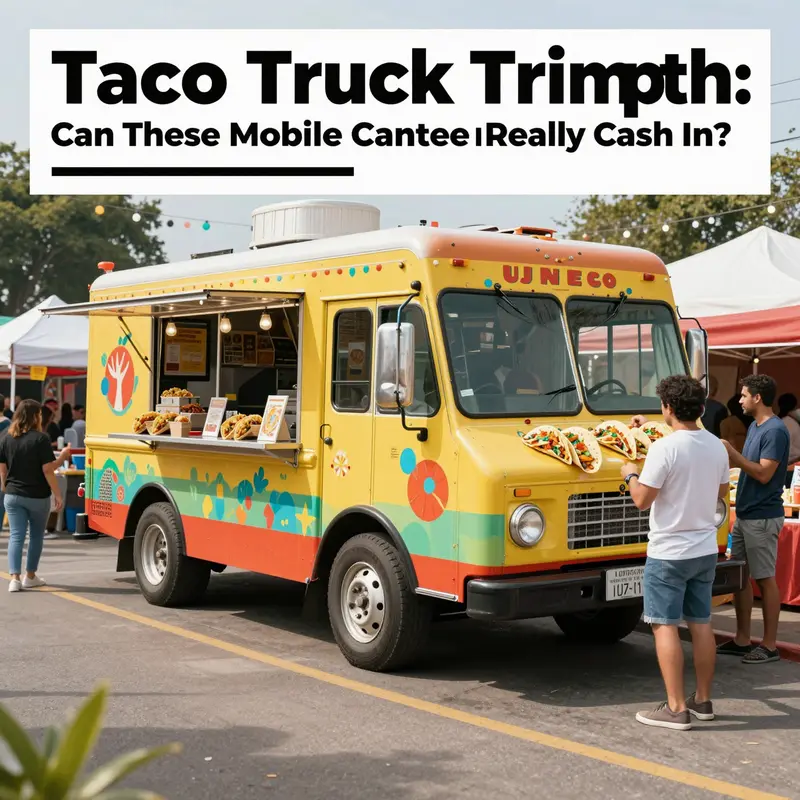
Taco trucks are more than just a food trend; they represent a vibrant culinary movement that captures the hearts (and appetites) of taco lovers everywhere! As they roll through city streets, they offer mouthwatering flavors and the potential for impressive profits. But do taco trucks really make good money? Buckle up as we explore this question through four flavorful chapters. We’ll begin with an examination of the revenue potential that taco trucks can achieve based on their market strategies. Next, we’ll dive into customer traffic insights that highlight the importance of footfall for profitability. Then, we’ll uncover operational strategies that can lead to success in this bustling industry. Finally, we’ll analyze the competition and socio-economic trends that can impact the financial landscape for taco trucks. With our taco truck adventure set, it’s time to dig in and see if these mobile eateries can really deliver the dough!
null
null
Foot Traffic as Fuel: Reading the Profit Potential of Taco Trucks in Busy Markets
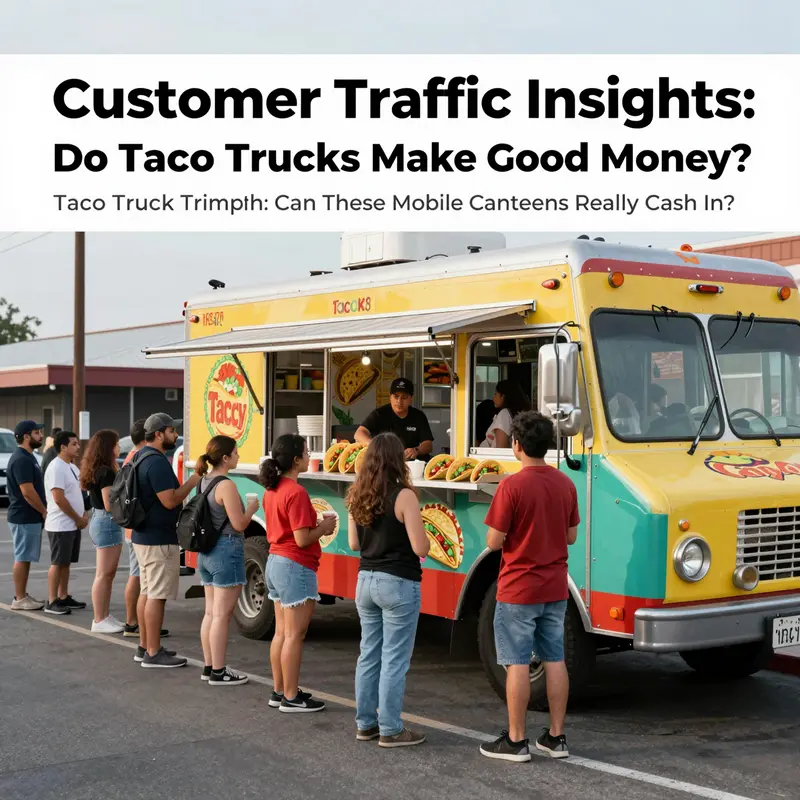
Foot traffic is the invisible engine behind the taco truck business, a resource that operators convert into revenue through speed, menu design, and smart location choices. In crowded urban centers, the difference between a steady trickle and a thriving, profitable operation often comes down to how deftly a truck captures the daily rush of people who want tasty, affordable meals with minimal wait times. Mobility is more than a feature; it is a strategy. A truck can reposition itself from a quiet lunch spot to a high-traffic corridor or a bustling festival as demand shifts, turning a daily cadence of customers into a reliable revenue stream. The picture that emerges from recent analyses is clear: when a taco truck is managed with discipline and placed in the path of foot traffic, money follows not by luck but by design.
Cultural infusion and community presence amplify that design. In cities like Austin, the taco truck scene has evolved from weekend curiosities into defining cultural institutions. The 2026 analysis of the Austin food truck ecosystem highlights how these mobile kitchens embed themselves in local identity. Repeat customers grow from a mix of dependable quality, memorable flavors, and a sense of belonging that neighborhoods cultivate. When a food truck becomes a familiar part of a daily ritual—the stop on the way to work, the lunch hour detour, the after-hours treat—foot traffic becomes loyalty, and loyalty translates to predictable revenue. This cultural resonance is not merely sentiment; it is a measurable driver of visits and orders. The result is a compounding effect: steady streams of new customers who become regulars, and regulars who help maintain a high baseline of daily sales even as competition intensifies.
From the finance side, the five-year outlook for taco truck ventures, built on observed demand and operational benchmarks, sketches a compelling arc. Projections suggest revenue growth from an initial year around the mid-five-figure range into multi-million totals by year five. Specifically, a five-year forecast shows revenue climbing to roughly $3.6 million across the period, underscoring the scale available when earnings are captured across multiple locations and high-traffic windows. What this means in practical terms is that the same mouthwatering offerings—delicious, fast, and affordable—can be deployed in several hot spots to create a mosaic of daily demand. Yet the forecast also signals a cautionary tale: earning the big numbers requires more than a stellar menu. It requires a disciplined path to profitability, with careful management of costs, labor, and financing as the business expands.
The early years in such a path are the most strategic. The forecast acknowledges that EBITDA may be negative for the initial years, with breakeven arriving only in year four or five. This is not a flaw in the model but a reality of scaling: upfront investments in equipment, permits, and branding, plus the cost of building a reliable supply chain and a crew that can sustain a tight service window, can suppress margins before volume catches up. The key message for aspiring operators is not to fear the negative EBITDA in the early stages but to design operations that maximize cash flow once scale is achieved. In practice, this means focusing on menu items that travel well, minimizing waste, negotiating favorable supplier terms, and orchestrating staffing so that the pace never slows the customer experience. A well-timed expansion to additional routes or locations can then convert a rising revenue line into a healthier EBITDA as fixed costs are spread across more customer encounters.
The everyday action that drives these numbers is a blend of speed, transparency, and customer-centric design. Open-front layouts, popular in modern food trucks, transform what could be a passive transaction into an engaging experience. When customers can see food preparation and hear the sizzle, trust grows. The sensory feedback—aroma, color, and the audible crackle of a fresh tortilla—nourishes impulse purchases at peak times. This design choice also fosters a perception of freshness and quality that helps differentiate a taco truck in a crowded market. It is not just about what is on the menu but how it is presented and perceived in the moment of choice. In markets where a dozen trucks offer similar fare, that visible craft and choreography—flipping, plating, folding—becomes a differentiator that nudges foot traffic toward one truck over another.
Operational efficiency is the other indispensable fuel. A truck that moves with consistent speed, accurate order accuracy, and short fulfillment times maximizes the number of customers served per hour. When combined with smart pricing tactics and a lean supply chain, this efficiency translates into higher daily revenues and healthier margins. For operators, it is essential to design shifts and routes that align with predictable crowd patterns. Weekday lunch crowds near office parks, evening street markets near entertainment districts, or weekend festivals that gather a large, diverse audience all benefit from this alignment. The ability to anticipate demand cycles and adapt the staffing and kitchen workflow accordingly reduces the risk of bottlenecks that frustrate customers and erode the perceived value of the offering.
Engagement beyond the window also powers traffic. Social media and local event participation build visibility, turning casual passersby into curious pedestrians who stop, order, and often return. A robust engagement strategy can create a halo effect, where word-of-mouth and online buzz amplify the truck’s presence at a given location. Loyal customers become walking advertisements, sharing their experiences and recommending favorites to friends and colleagues. In many markets, this social proof is reinforced by simple, practical tactics: consistent branding that travels with the truck, a reliable posting schedule about where the truck will appear, and a few signature menu items that become recognizable standbys. The goal is not to convert every passerby on a single day but to accumulate dozens of meaningful interactions across a week, a month, and a season that cumulatively generate durable revenue streams.
Looking at the broader landscape, the density of taco trucks in some cities already signals strong demand. In major urban centers, the sheer number of trucks and the frequency of street-side sales reflect a sustained appetite for fast, flavorful meals as a complement to more formal dining. The subway-and-sunlight blend of urban life creates a reliable foot-traffic backbone that, when leveraged with thoughtful location planning, yields consistent customer flow. It is important to recognize that this is not mere luck or a fad; it is a structural attribute of how food trucks operate in dense markets. The mobility of the trucks does not just allow them to chase traffic; it lets them respond to traffic as it evolves. A truck can ride the lunch rush in a financial district, pivot to a late-afternoon pop-up in a shopping corridor, and set up at festivals that turn temporary clusters of people into festival crowds, each moment converting foot traffic into revenue.
From a strategic vantage point, brand and location emerge as the twin pillars of profitability. Strong branding makes a truck memorable; consistent experience turns first-time customers into repeat visitors. Location, perhaps the most stubborn variable, is the lever that multiplies every other advantage. A vehicle parked in a high-traffic hub with a steady stream of office workers on weekdays and shoppers on weekends has a much greater chance of maintaining healthy daily volumes. The combination of branding and location has a multiplying effect when combined with efficient operations. In practice, this means that the best-performing trucks treat each site as a temporary retail unit with its own micro-forecast: expected foot traffic, average ticket size, typical order mix, and the cadence of peak moments. Managers who integrate these micro-forecasts into a single, coherent schedule can drive superior revenue while maintaining high service levels.
What does this mean for the aspiring operator weighing the question, do taco trucks make good money? The short answer is: potential yes, with a caveat. The potential is greatest when the business is designed around three core ingredients: culture-driven engagement, disciplined operational execution, and strategic deployment across locations that guarantee daily foot traffic. In other words, money follows people, but only if the people are drawn in by a compelling offering, visible craft, and dependable service during the moments when demand is highest. The forecasted path to profitability, while requiring patience in the early years, sets up a trajectory where revenue growth is unlocked by scale, not merely by a single, successful location.
For operators who want to build a roadmap from foot traffic to consistent profitability, curiosity about best-practice models can be productive. One valuable reference point is the portfolio of models that have demonstrated resilience and scalability in the mobile-food sector. These models emphasize a coherent blend of product differentiation, quick-service execution, and a repeatable, location-aware playbook. It is useful to consider this broader lens when thinking about how to invest beyond a single truck: what would a multi-truck strategy look like in a city with strong, predictable demand? How would branding evolve across a small fleet while maintaining the unique, personal feel that customers value when they encounter a single truck? And how could a business leverage events, festivals, and partnerships to create recurring revenue streams that smooth out seasonal or location-specific fluctuations? These questions, while not answerable in a single chapter, point toward a practical, scalable path for ambitious operators who want to maximize the money generated by foot traffic.
Those exploring the specifics of scalable, profitable models can start with one practical touchstone: the concept of choosing top food truck models for success as a blueprint for expansion. This approach invites operators to study how leading trucks balance menu design, kitchen workflow, pricing, and branding as they move to new sites or multiple units. The path is not about copying another truck’s exact setup but about internalizing the principles that drive success in dynamic, high-traffic environments. See the discussion on model design to inform your own route-mapping and menu engineering, and consider how your truck’s identity can travel with you to each new site. Top Food Truck Models for Success offers a framework for thinking through these choices and translating them into repeatable success across locations.
All of this adds up to a practical conclusion: the profitability of a taco truck is not a fixed outcome tied to a single location or a single menu. It is an output of disciplined planning, an adaptive operational rhythm, and a deep alignment with the rhythms of urban life. When these elements cohere, a taco truck can convert the daily pulse of foot traffic into meaningful revenue, with growth that compounds as the business learns to navigate new sites, audiences, and seasonal cycles. While the early years may feel opaque and financially lean, the strategy that emphasizes accessibility, quality, and agility can unlock the longer-term profitability that many operators forecast. The data and real-world case studies suggest that, in the right setting and with the right practices, taco trucks do more than feed people; they feed a growing, sustainable business model.
External resource for further reading: https://www.foodtruckfinanceinsights.com/taco-truck-income-projection-2026
Riding the Revenue Wave: Operational Mastery for Profitable Taco Trucks
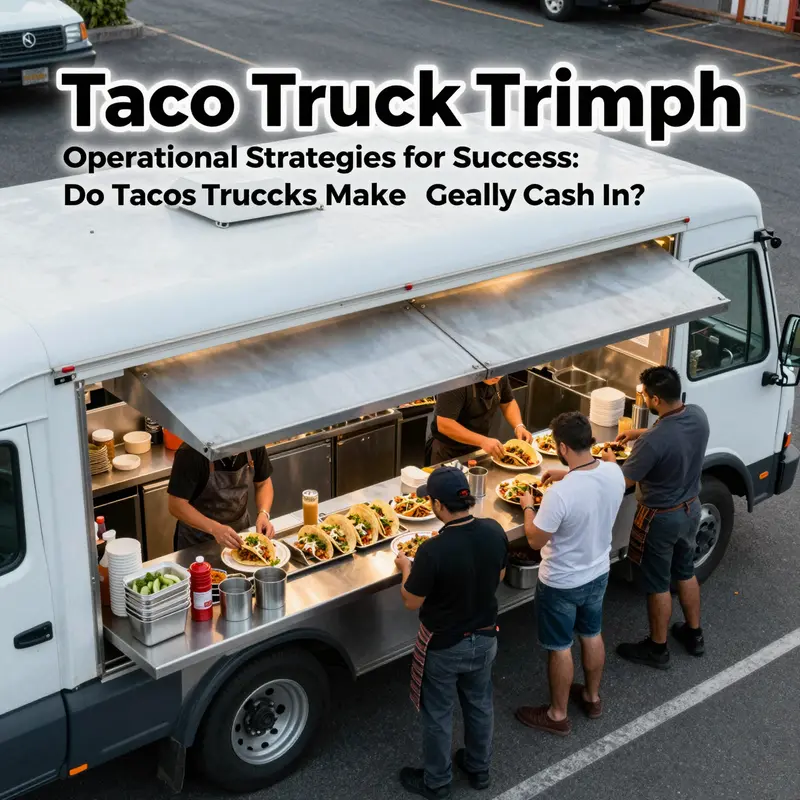
Profitability in the taco truck space isn’t accidental; it’s the product of disciplined decisions about throughput, equipment reliability, and how a team manages every shift. The financial horizon outlined by credible forecasts places a practical stake in the ground: a well-run truck can rise from roughly $495,000 in revenue in Year 1 to about $3,610,000 by Year 5. EBITDA may be negative through the early years, with breakeven arriving as volume and efficiency compound, but the trajectory points toward a profitable operation once a business reaches scale. Those numbers aren’t guarantees, but they map a credible path that hinges on operational discipline as much as on culinary appeal. The lesson is simple: money follows rhythm. When service is predictable, wait times are controlled, and the menu aligns with what crowds want, revenue grows more reliably. This chapter explores the concrete, day‑to‑day practices that translate that potential into real earnings, showing how a taco truck becomes less a roadside curiosity and more a reproducible, scalable enterprise.
A logistics‑first mindset sits at the heart of durable profitability. It begins with a relentless focus on throughput—the speed at which a truck can move customers through the line without sacrificing accuracy or quality. A practical model that some high‑performing operators use centers on serving a fixed target of about 100 customers within a 25‑minute window. This cadence isn’t a hard limit but a benchmark that shapes every other decision: the layout of the cooking and serving area, the flow of ingredients, the sequence of cooking tasks, and the choreography of the staff. When a team can consistently meet a rapid turnover, the same truck can complete more cycles in a shift, which translates directly into higher daily revenue. Put simply, each minute shaved from peak service increases the probability of turning a casual passerby into a regular customer. The discipline of this rhythm also nurtures customer satisfaction. When lines move smoothly and orders arrive on time, patrons feel the operation is reliable, and reliability becomes a differentiator in a crowded market where nearby competitors loom.
The operational framework also insists on a streamlined, predictable menu. A smaller, well‑curated selection that can be cooked and plated quickly reduces the chance of bottlenecks and mistakes. The goal is consistency across shifts and days, not novelty for novelty’s sake. In practice, that means standardizing ingredients, portions, and cooking times, and preparing as much as possible before the truck hits the street. Prepping components in advance, while maintaining freshness, lowers the risk of understockouts in the field and minimizes the scramble that undercuts speed and accuracy. The finance side of this is clear: fewer moving parts inside the kitchen reduce waste, shrink food costs, and stabilize labor requirements. And because the operation relies on high throughput rather than long, expensive preparation, it is easier to scale by adding shifts, adding a second truck, or expanding to new locations without breaking the bank.
A second pillar of profitability hinges on equipment and vehicle strategy without naming specific brands. The road to reliability starts with a robust, four‑wheel‑drive pickup configured for mobile food service. The emphasis is on uptime, ease of maintenance, and the flexibility to operate in varying weather and locations. A durable chassis, weather‑proof electrical and plumbing systems, and efficient power management all reduce the risk of downtime that can derail a day’s revenue. The operational plan should include a preventive maintenance schedule, a responder kit for small repairs, and contracts with trusted mechanics who understand the mobile kitchen model. Budgeting for regular wear and tear helps maintain consistent service—even on back‑to‑back busy days. This approach isn’t about chasing the newest gadget; it’s about ensuring that the truck is always ready to step onto the curb and serve customers when demand peaks. For operators seeking deeper guidance on vehicle procurement, consider the broader discussion in the choosing the right food truck guide, which outlines the pros and cons of different configurations and procurement strategies. Choosing the right food truck offers a practical framework for aligning the truck’s capabilities with your expected traffic, climate, and locations.
Operational discipline extends into the monitoring of key performance indicators that reveal the health of the business in real time. The most actionable KPIs for a taco truck track customer wait times, order accuracy, and sales volume per location. When wait times creep upward, it flags potential issues in the workflow—perhaps the line isn’t moving efficiently, or the kitchen staff is stretched too thin. A dip in order accuracy signals training gaps or miscommunications between team members, which can erode customer trust and slow turnover. By comparing performance across locations and shifts, operators can identify hotspots of demand and times when the truck should move or stay put. Data should drive staffing decisions as well: aligning labor schedules with anticipated demand reduces idle time and overtime while preserving service quality. A precise lens on sales per location helps identify where expansion or relocation might deliver the best returns, guiding capital decisions with an eye toward sustainability rather than short bursts of interest.
The financial alignment with operations is deliberate and forward‑looking. A well‑constructed operational plan starts with a clear path to breakeven by Year 5, recognizing that early profitability may require careful cost control and targeted growth. The plan translates into practical actions: refining the menu to support higher gross margins, standardizing recipes to minimize waste, and negotiating favorable supplier terms that keep food costs predictable. It also means building a scratch map of potential locations and routes, then testing in a few high‑traffic areas to observe how customers respond and how long lines form. A crucial part of this framework is branding and business development tied to physical presence. The more consistently a truck appears in desirable venues—events, campuses, business districts—the more quickly word spreads and repeat business accrues. This kind of scale relies on an engine built from repeatable processes: a fixed operating rhythm, reliable equipment, and a data‑driven approach to adjust menu items, pricing, and staffing.
A broader strategic dimension in this landscape is the careful orchestration of procurement, people, and place. Vehicle reliability and maintenance go hand in hand with the ability to manage supply chains for fresh ingredients, keep the menu within a feasible kitchen footprint, and plan for contingencies like weather or traffic disruptions. The strategy rewards those who invest in training and cross‑training, enabling staff to cover multiple roles during peak times. Cross‑training reduces the need for specialized staff for every shift and supports a smoother handoff when roles shift with demand. In practice, that means cooks who can also assemble orders, and servers who can restock and replenish ingredients during slower periods. When the team operates as an integrated unit rather than a collection of specialists, the physical footprint of the truck becomes a platform for efficiency and revenue rather than a constraint on growth.
The operational narrative described here is not a mere blueprint for day‑to‑day excellence. It is an investment thesis. It links the monthly income statement to the shift schedule, the inventory turns to the customer flow, and the branding to the steady cadence of repeat business. The numbers in the financial model reflect this balance: revenue growth is driven by throughput and market presence, while costs fall in relative terms as fixed overhead per unit of revenue declines and operating efficiencies compound. The path to profitability, then, is less about a single clever tactic and more about a consistent, disciplined pattern of decisions that align every component of the business toward dependable service and scalable growth.
To keep this integrated approach coherent as the business grows, operators should maintain a strong link between operations and strategic planning. Regular reviews of location performance, customer feedback, and supplier reliability create a feedback loop that informs both menu evolution and expansion plans. When a truck proves successful in one district, the operator can replicate the model in another, armed with what worked and what didn’t. The result is a replicable system that preserves quality while multiplying the opportunity to serve more customers. As the plan scales, the same principles apply: a logistics‑first mindset, dependable equipment and maintenance, disciplined KPI tracking, and a financially grounded roadmap toward Year 5 profitability. This is how a taco truck transforms from a transient roadside offering into a durable, profitable business capable of weathering competitive pressures and market fluctuations. For those seeking concrete guidance on truck procurement and configuration, a practical starting point is the Choosing the right food truck guide linked above. It offers a structured way to align vehicle choices with your expected routes, climate, and operational tempo.
For readers who want to explore the supplier landscape and how durability and uptime factor into total cost of ownership, there is a widely cited industry resource on sourcing durable, capable 4×4 work trucks for mobile food service. The guide emphasizes reliability, maintenance accessibility, and the ability to minimize downtime through smart maintenance planning. While specific models are less important than how well a truck fits the operating model, having a grounded approach to procurement reduces risk and supports long‑term profitability. See the external resource for a deeper dive into truck sourcing considerations and market trends: https://www.b2bmarketinsights.com/used-tacoma-truck-sourcing-guide.
Profit in Motion: Navigating Competition and Economic Currents in the Taco Truck Marketplace
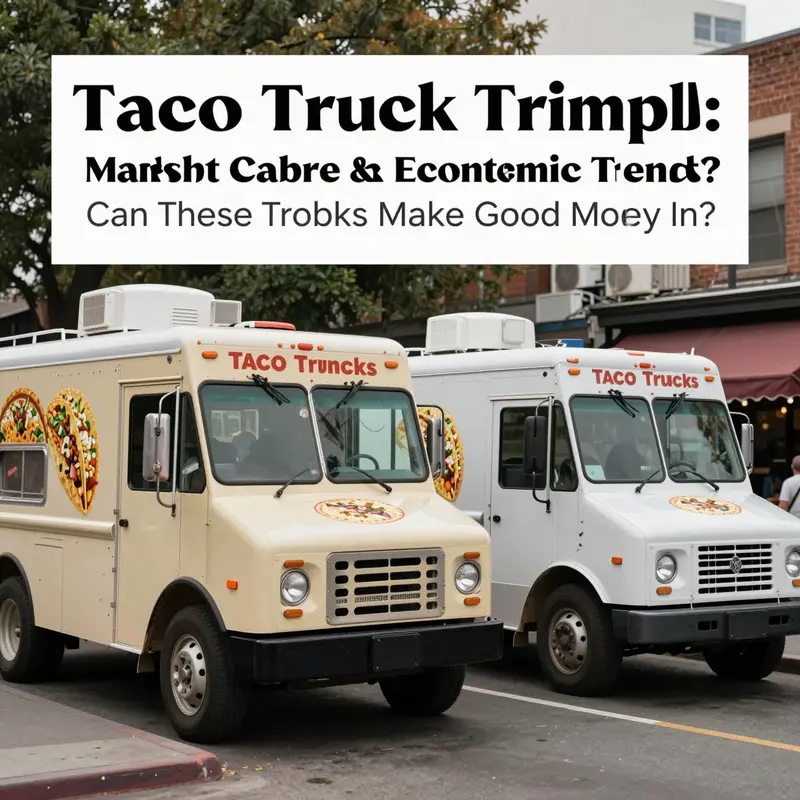
Profit in Motion: Navigating Competition and Economic Currents in the Taco Truck Marketplace
The street-level economy that taco trucks inhabit is a perpetual negotiation between appetite, space, and timing. These mobile kitchens thrive where foot traffic is dense enough to sustain a steady line of customers, yet flexible enough to move when crowds shift. Because the business sits at the intersection of hospitality, logistics, and real estate, profitability cannot be reduced to a single formula. It rests on how a truck owner choreographs location, cadence, and product mix against a set of economic forces that shift with seasons, festivals, and broader market dynamics. In this sense, the question Do taco trucks make good money is not a static yes or no; it is a judgment informed by how well a trader reads cash flow, manages variable costs, and anticipates the next wave of demand in a crowded field.
A central driver of revenue and cash flow is the annual contract volume. In the gossip of the street and the ledgers of more formal operators, recurring contracts with corporate campuses, large festivals, and event venues provide a backbone that can stabilize income far beyond the unpredictable cadence of walk-in traffic. Think of a schedule where a truck signs a rotating calendar of lunchtime events on a campus or a recurring festival slot. These contracts smooth the peaks and valleys, letting the operation forecast ingredient purchases, staffing, and maintenance with greater confidence. When a truck can count on predictable visits week after week, it builds a financial cushion that reduces reliance on a single high-traffic day. For someone weighing the economics of spinning up a new taco route, the preference should tilt toward opportunities that convert sporadic street traffic into a dependable rhythm of revenue. The discipline of securing volume through contracts becomes a strategic asset, not just a sales tactic.
Alongside contracts, the business benefits significantly from high-margin add-ons. Core tacos, while essential, typically carry thinner margins than items designed to cross-sell with premium accompaniment. Beverages, specialty drinks, and desserts can transform a simple bite into a more complete experience, lifting the average ticket size and pushing the overall margin upward. The math matters because every incremental dollar earned on a high-margin add-on often travels with less cost than the dollar earned on core goods. This is not merely about upping prices but about thoughtfully pairing offerings that suit the location and the crowd. A truck near a daytime office park might optimize for quick, affordable drinks and snack desserts to complement lunch; a street fair might lean into more elaborate shareable options and a dessert concept that stands out in a crowded lineup. The interplay between add-ons and core sales is where many operators find the leverage that shifts a business from being viable to being persistently profitable.
Yet, the competition landscape is evolving in ways that complicate the path to consistent profitability. The market is growing, but so is the number of entrants. A global supply chain development—driven by major manufacturing hubs in places like Henan and Shandong—has made it easier and more cost-effective to source modular trailers and kitchen systems. This lowers startup costs and enables more would-be operators to enter the field. Lower capital barriers, combined with the mobility advantage of trucks, intensify competition in high-traffic corridors. In many urban centers, a dense mix of fixed restaurants and mobile units has created a constant push to differentiate through speed, flavor, and experience. The result is a race not only for a place to park but for a reason for customers to choose one truck over another.
Differentiation, then, becomes a core strategic capability. Successful taco trucks are less about compounding a fixed menu and more about agility. Unlike brick-and-mortar concepts, mobile units can pivot menus quickly in response to local tastes, seasonal ingredients, or neighborhood demographics. The most robust players test ideas in small windows, gather feedback, and scale winning concepts with disciplined operational discipline. This agility is particularly valuable in cities that prize authenticity and speed, where a new recipe or a limited-time offering can become a talking point that draws curious crowds. In practice, differentiation might mean refining a signature preparation method that respects local preferences, or developing a streamlined service that reduces wait times during peak hours. The key is to make the truck feel intimate and responsive, even as it operates in a busy, crowded environment. When customers sense that the operator cares about their experience, the cash register follows with a steadier flow.
The road to profitability also passes through challenges that can erode margins if not managed with discipline. Health perceptions pose a real aesthetic challenge; perceptions that street food is less healthy can dampen appetite among health-conscious diners. Operators must balance speed with quality, ensuring that freshness and food safety are non-negotiable. There is also a matter of physical constraints. The mobile kitchen is a compact engine of production, and the choice of vehicle size affects capacity and fuel efficiency. While smaller rigs offer maneuverability and lower upfront costs, they may struggle with scale if demand spikes or if a venue requires larger throughput. Conversely, larger, purpose-built trucks demand greater initial investment and ongoing maintenance, underscoring the importance of careful planning around capital expenditures and depreciation. Operationally, crafting a lean crew model, selecting reliable suppliers, and implementing predictable prep and service routines helps manage costs and sustain profitability across seasons.
From a financial forecasting perspective, the arc of a taco truck business often features an early period of investment and learning, followed by an eventual path to profitability. Projections that have circulated within industry discussions outline revenue growth from roughly $495,000 in the first year to about $3.6 million by the fifth year. Such growth paths typically accompany improved efficiency, enhanced branding, and a more predictable harvest of orders as the operator allocates time and capital toward the most lucrative routes. It is common for EBITDA to be negative in the initial years as investments in equipment, permits, and branding weigh on the bottom line. However, with disciplined cost control and revenue diversification, the model anticipates breakeven by year four and profitability by year five. None of this is a guarantee, but it reflects a plausible talent- and capital-enabled trajectory when the operator learns to balance speed, quality, and scale.
Anchoring these numbers in real-world practice is the notion that an individual truck may attract roughly 300 customers per day in well-trafficked markets. Even with modest average ticket prices, this level of flow can create meaningful daily revenue in the aggregate, while presenting an opportunity to deploy add-on strategies and cross-sell to each guest. The scale, of course, depends on the location, the hours of operation, and the season. A truck that can shuttle between neighborhoods, events, and workplaces at peak demand times stands a greater chance of sustaining those daily counts and expanding them as relationships with venues and customers deepen. The city fabric matters here: dense urban cores with high foot traffic, combined with event calendars and campus activity, provide fertile ground for the mobile kitchen to thrive. It is not merely about existing in a high-traffic area; it is about carving a predictable rhythm that aligns with the lives of potential customers.
Within this macroeconomic frame, the competitive environment is also shaped by how operators source equipment and scale capacity. The global supply chain has reduced costs for many operators; however, it has also increased the number of players who can offer similar configurations. This intensifies price competition, making differentiation and reliability even more critical. A thoughtful approach to sourcing—whether it concerns an efficient, easy-to-service vehicle, durable kitchen equipment, or dependable point-of-sale systems—can reduce downtime and keep the business focused on serving customers rather than chasing replacements. The economics of scale enter this conversation as well. As operators accumulate more events, secure more contracts, and optimize their routes, they can leverage volume discounts on ingredients and more predictable labor costs through steady scheduling. This, in turn, strengthens margins and supports a more stable revenue profile.
The narrative above does not imply that success is inevitable. It suggests that profitability in the taco truck space rests on a convergence of strategic location, contract-driven revenue, aggressive but prudent add-ons, and an adaptive business model. A tacit premise is that customers reward speed, consistency, and authenticity. The more a truck can deliver a high-quality experience quickly, the more it can justify premium add-ons and maintain a steady cycle of repeat visits. To the extent that a truck can build a portfolio of contracts, it reduces exposure to the fickle nature of daily street traffic. This portfolio approach—combining recurring events with opportunistic walk-ins—offers the resilience necessary to weather market fluctuations, regulatory changes, and seasonal shifts.
For readers who want to align these ideas with practical decision points, a good starting point is to consider the guidance offered in Choosing the right food truck. This resource emphasizes vehicle selection, layout, and how matching capacity to demand matters for long-run profitability. A thoughtful choice of chassis, kitchen configuration, and service workflow can dramatically influence throughput, speed, and, ultimately, the bottom line. The emphasis is not merely on stylish design but on designing for operational reliability and ease of maintenance. When the focus is on reliability, every hour of operation becomes a lever for more revenue and better margins. The lesson is clear: a well-chosen vehicle is not a cost center but a foundation for scalable profitability that can adapt to shifting demand patterns.
Even in the face of these opportunities, the reality remains nuanced. The taco truck business is not immune to macroeconomic pressures, such as inflationary trends in food costs and fuel, or local regulatory hurdles that increase operating complexity and compliance costs. The prudent operator tracks not only day-to-day sales but also the broader economic indicators that affect discretionary spending on casual meals. When inflation squeezes consumer budgets, a menu design that emphasizes value without sacrificing perceived quality becomes essential. Conversely, in periods of growth or celebratory city life, innovative menu items and engaging events can capture upside demand that translates into higher revenue per visit.
This dynamic landscape invites a holistic approach to planning and execution. The most successful operators blend a keen eye for market signals with a disciplined operational model. They invest in so-called non-core capabilities—strong branding, efficient supply chains, and robust customer engagement channels—that amplify revenue beyond the core taco product. They also recognize the value of prudent diversification, whether in the form of cross-promotions with nearby vendors, occasional catering for private events, or leveraging a rotating schedule of seasonal offerings designed to attract new customers while retaining core fans. The balance between diversification and focus matters: too much scatter can dilute brand identity and erode margins; too little diversification can leave an operator vulnerable to changes in foot traffic or event calendars.
From this vantage point, the profitability of taco trucks emerges as a function of strategic choices made over time. It hinges on a clear view of where revenue comes from, how costs behave, and what kind of audience the operator can reliably serve. It also depends on recognizing when to lean into stability through contracts and when to chase opportunistic high-value moments that deliver outsized returns. In practice, this means aligning the business model with the realities of the local market and the global supply chain, while staying nimble enough to pivot when a neighborhood crowd shifts its tastes or a festival increases its appetite for distinctive cuisine.
For readers seeking a broader market context, industry analyses project ongoing growth in the food truck segment from 2026 to 2034, underscoring that the space remains vibrant, albeit competitive. The trajectory suggests a landscape in which profitability is within reach for operators who couple strong execution with strategic revenue diversification. In that sense, the question does not hinge on whether taco trucks can make money, but rather on whether an operator can craft a business model that turns speed, flavor, and mobility into durable financial performance. The road ahead is crowded, yes, but so is the demand for accessible, authentic, and convenient dining experiences that travel with the city as it grows.
External resource for broader context: https://www.marketsandmarkets.com/Market-Reports/food-trucks-market-179859351.html. For readers seeking practical paths to starting and sustaining this business, a closer look at Choosing the right food truck can provide concrete guidance on vehicle choice, layout, and the operational discipline that underpins profitability. See the linked guide for a concise framework you can apply before committing capital or signing a contract.
External link: Markets and Markets projects and market dynamics offer a broader set of data points that complement this chapter’s discussion, illustrating how capacity, demand, and competition co-evolve in the food-truck economy.
Final thoughts
The journey through the financial landscape of taco trucks reveals an exciting narrative of potential and opportunity. With projected revenue growth that places a well-managed taco truck in a strong position for profitability over time, these mobile eateries showcase the possibility of success. By focusing on customer engagement, operational efficiency, and strategically navigating the competitive landscape, taco trucks can indeed make good money! As a new or aspiring taco truck owner, embracing these insights could be the key to turning your culinary dreams into a profitable reality. Ultimately, with the right ingredients and a dash of determination, your taco truck could become the next local favorite!