
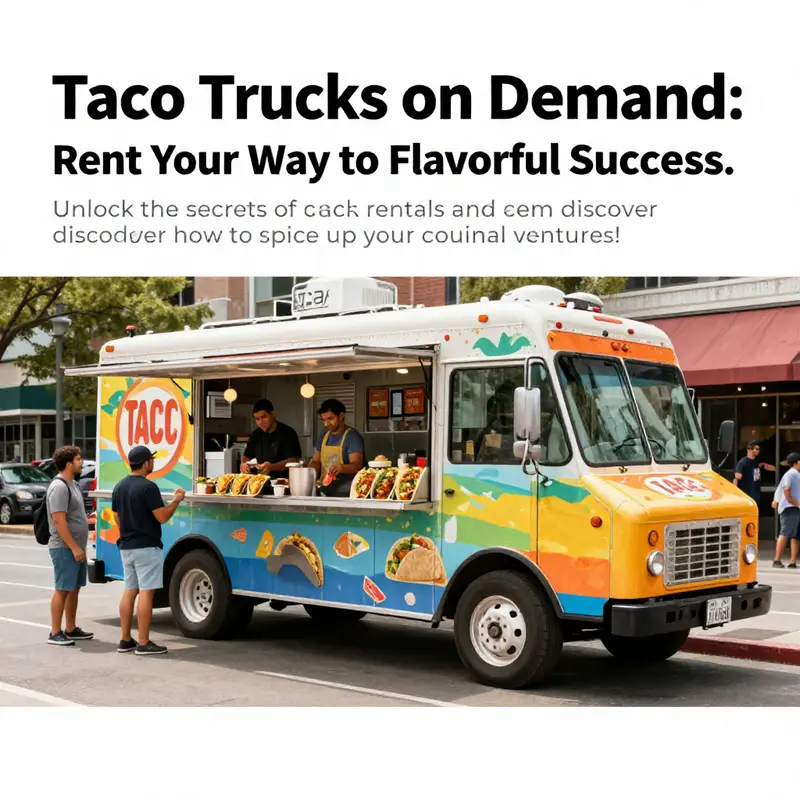
Imagine the sizzle of fresh tortillas, the savory aroma of marinated meats, and the vibrant colors of fresh salsa swirling around you as you share your love for tacos. Renting a taco truck isn’t just a trendy food service; it’s a deliciously innovative route for entrepreneurs and taco lovers alike! As street food culture blossoms in the U.S., renting a taco truck has become a feasible option for foodies wanting to cater events or launch food businesses with flair and flavor. In the following chapters, we’ll dive into taco truck rental services in major cities, explore the essential equipment included, highlight the growing popularity of taco trucks at events, and guide aspiring business owners on how to kick off their culinary dreams with these mobile cuisines. So, let’s roll into the flavorful world of taco truck rentals!
Rolling Kitchens on Demand: How Taco Truck Rentals Make Mobile Food Ventures Real in Major Cities
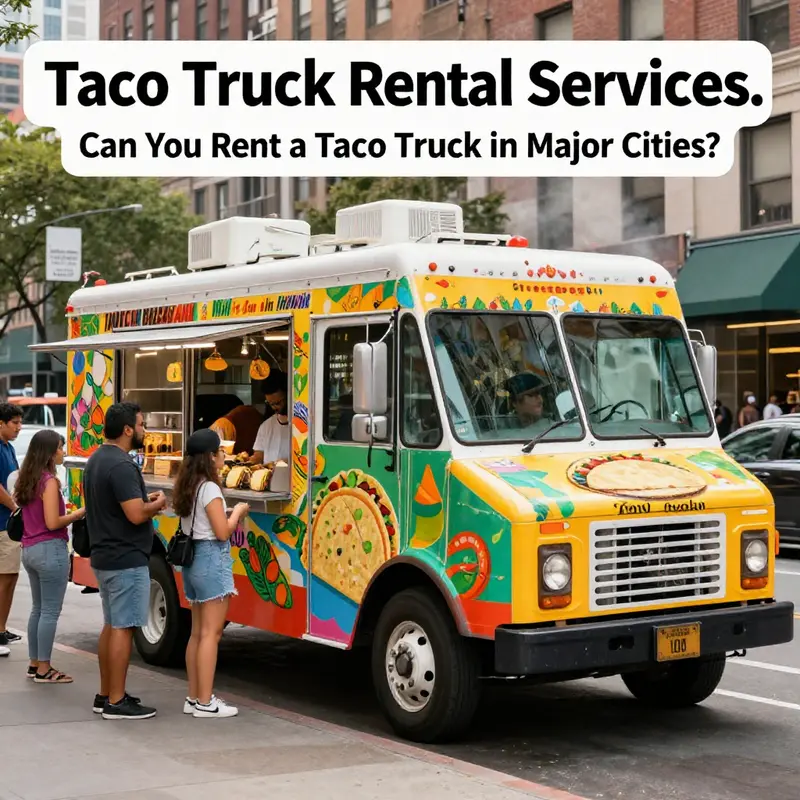
Rolling kitchens on demand have transformed the idea of a mobile food business from a forked dream into a practical, scalable venture. In cities with dense populations and bustling street food cultures, entrepreneurs are trading the high risk of a storefront for the flexibility of a taco truck rented for a season, a weekend, or a single signature event. The concept rests on access rather than ownership. Instead of committing tens or hundreds of thousands to buy and outfit a vehicle, a would‑be vendor can secure a fully equipped mobile kitchen for the duration needed to test a concept, build a following, or staff a large event. The appeal is straightforward: lower upfront costs, access to professional-grade equipment, and a shorter runway to revenue. The core idea resonates with a broader shift toward on‑demand, asset‑light business models that have shown up in everything from car sharing to pop‑up commerce. In food service, the taco truck is a natural fit for this model because its layout concentrates workflow, speed, and cold or hot storage in a compact footprint that can operate in tight spaces and crowded streets alike.
From a practical standpoint, taco truck rentals typically come with an ecosystem of essential equipment baked into the package. A well-designed unit may feature a built-in grill lineup suited to Mexican and Tex‑Mex profiles, warming stations to keep tortillas and toppings ready, a tortilla station for fresh assembly, refrigeration for perishables, and sufficient prep space to support fast service without bottlenecks. The interior is designed to support assembly-line style operations, which translates to high throughput at events, markets, and weddings where guests move quickly and expect consistency in taste and timing. For organizers and caterers, the benefit is not merely novelty; it is predictability. A rental package tends to include all the basics a new business would otherwise have to accumulate piecemeal, eliminating the guesswork around what equipment works best in a mobile kitchen and what is safe to operate under a particular permit or building code.
The rental pathway also aligns well with the realities of testing concepts before committing to a full launch. For someone who wonders whether a taco concept will land with a local crowd, a rental can act as a controlled lab. You can assess demand, worker efficiency, menu depth, and service speed without the overhead of a permanent location. If the concept proves itself, the learning gleaned from the rental period can inform a future investment decision—whether upgrading to a bespoke unit, expanding to a second truck, or moving into a brick‑and‑mortar setting with more room for a broader menu. Even when the eventual goal is long‑term independence, rental arrangements offer a way to short‑circuit risk by letting you begin with a proven, professionally equipped platform rather than building everything from scratch.
In major U.S. markets, the market for taco truck rentals has grown alongside the broader ecosystem of mobile food services. The density of events, festivals, and neighborhood gatherings in large metropolitan areas creates a natural demand for flexible food concepts. Moreover, the cultural fabric of cities with strong street food traditions—places that celebrate bold flavors, quick service, and visually appealing setups—supports the viability of a mobile taco operation. Prospective renters naturally discover that the available inventory is not limited to a single vehicle or a fixed route. Instead, there are multiple mobile kitchens with varying layouts and features, designed to accommodate different volume levels, peak times, and service styles. This diversity means a renter can select a unit that matches the scale of their plan, from intimate pop‑ups to formal wedding catering or corporate events.
The practical search process in a major city often begins with a local search for rental services and the broader appetite of the market. While specific provider names drift in and out of the public eye, the essential truth remains clear: there are rental options that can deliver a turnkey mobile kitchen, with turnkey support, within the city’s regulatory environment. For event planners and aspiring operators, the first step is to articulate goals clearly—how many events, what size, what geographic radius, and what kind of customer experience you want to deliver. With that clarity, a rental can be matched to the right unit, the right power and water provisions, and the right level of on‑site assistance.
When you pursue a rental, be prepared to navigate a few operational realities that are less obvious at first glance but critical to success. For one, the interior’s design performs several roles at once: it houses the equipment, optimizes workflow for speed, and helps maintain safety standards in a moving kitchen. The layout must support a disciplined assembly line: raw ingredients move in, products move out, and waste is managed without disrupting throughput. The kitchen’s grease management, including trap systems for fryers, is not merely a compliance checkbox. It’s a functional backbone that impacts cleanliness, odor control, and long‑term maintenance costs. Understanding these technical standards early helps renters avoid surprises when a venue inspection or health department review occurs.
Another practical consideration is the scope of permitted operations. A rental can be deployed at a private venue, a public street fair, a farmers market, or a corporate event—yet each setting has its own rules about fire safety, ventilation, waste disposal, and traffic flow. A seasoned rental partner will help negotiate permits, provide guidance on insurance, and coordinate with organizers to ensure a smooth experience. This collaborative support is one of the underappreciated advantages of renting: you gain access to professional know‑how that helps you navigate local ordinances, rather than facing complexity alone.
From a menu perspective, rentals are often well suited to concise offerings that emphasize speed and consistency. Taco concepts thrive when the kitchen can deliver fresh tortillas, sizzling fillings, and garnishes in rapid succession. The interior’s limits, however, may constrain how deeply one can expand the menu; additional items or more elaborate cooking methods may require reconfiguration or an additional unit. This reality matters for someone who dreams of a broad, evolving menu. The right rental unit, selected with an eye toward your long‑term plans, can provide a platform that scales with demand while keeping operational risk manageable.
Renting also introduces financial flexibility that is appealing in uncertain markets. A season, a wedding season, or a cluster of spring and summer events can become a test bed for revenue without locking you into a long‑term ownership decision. A simple way to frame it is this: the cost of entry is contained, service quality is maintained, and you can adjust your footprint as you learn. If things go well, you may decide to transition to a larger or more customized unit later; if they don’t, you can conclude the experiment with fewer sunk costs than a traditional business setup would entail. In either case, the experience provides real data on demand, profitability, and customer response—crucial inputs for any future strategy.
For operators evaluating whether rental is the right path, a sensible approach is to map the decision to a broader guide about choosing the right food truck. A well‑structured decision framework considers the vehicle’s interior layout, the available equipment, the rental terms, the level of technical support, and the geographic fit for your events. The conversation often pivots on a few core questions: What is the expected peak service volume? Will the unit need to operate on generators or be connected to power sources? How will you handle water, waste, and fire safety? What is the plan for branding, signage, and customer flow? Answering these questions helps you compare rental options not in isolation, but against your operational goals and budget. For readers who want a deeper dive into evaluating the best match between concept and hardware, our guide on choosing the right food truck offers a practical lens to assess fit and future growth. Choosing the right food truck.
In terms of market context, the story of taco truck rentals mirrors broader trends in urban dining. Major cities have cultivated a robust ecosystem for mobile food vendors—festivals that draw large crowds, neighborhoods that celebrate street food culture, and event seasons that create predictable demand. This ecosystem supports not only the demand side—customers seeking convenient, flavorful bites—but also the supply side: rental operators who can amortize equipment across multiple clients and keep fleets up to date with safety and compliance standards. The result is a virtuous circle in which more people can experiment with a mobile food concept, more events can attract attendees by offering diverse options, and more communities gain access to vibrant, affordable street cuisine. The rental model thus serves as a bridge between culinary curiosity and scalable entrepreneurship, lowering both the risk and the barrier to entry for a new generation of food entrepreneurs who want to test flavor concepts in real‑world settings.
Of course, the decision to rent should be balanced with an awareness of competitive dynamics. In metropolitan areas, competition is high and venues are selective. A successful rental period often hinges on not just a great recipe, but a well‑managed operation, dependable equipment, and the ability to deliver consistent quality at speed. A rental unit magnifies the importance of reliability, because any equipment hiccup or staff misstep has immediate implications for guest experience. To maximize success, operators frequently pair the rental with a clear service script, a branded but simple setup, and strong coordination with event organizers or venue managers. The goal is not only to serve tacos quickly, but to offer a repeatable experience that builds a loyal following and repeat business when the unit is deployed again.
In closing, renting a taco truck in a major city is not a philosophical question so much as a practical one. The model makes mobile food entrepreneurship accessible to a broader group of people, while maintaining professional standards and regulatory compliance. It provides a platform to test ideas, scale responsibly, and participate in a market that increasingly prioritizes speed, flavor, and flexibility. The rental choice can also be a strategic precursor to ownership when the operational data, customer feedback, and cash flow align with a long‑term plan. If your aim is to encrypt a fast, efficient, flavorful experience into a portable kitchen that can move where the demand takes you, renting a taco truck can be a compelling entry point. For many operators, it’s the right first step toward building a durable, scalable mobile food business in the cities where street‑level appetite for bold flavors never wanes.
External resource: https://www.yelp.com/search?cflt=tacotruckrental&find_loc=Los+Angeles%2C+CA
Turnkey On Wheels: What You Get When Renting a Taco Truck
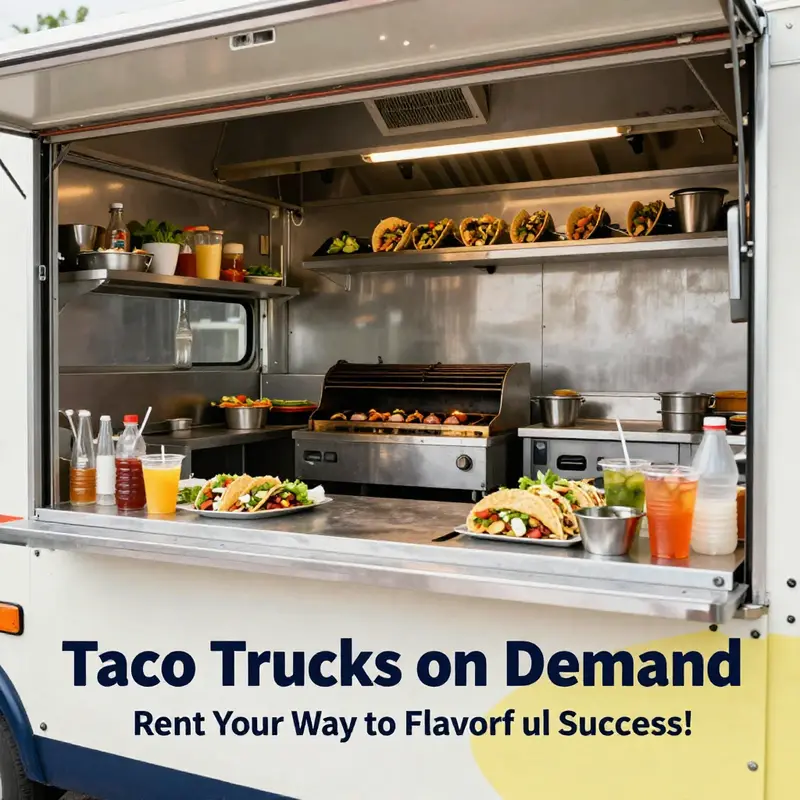
Renting a taco truck is less about acquiring a single asset and more about gaining access to a complete, turnkey mobile kitchen that is ready to operate from day one. In practical terms, a rental package typically includes a fully built-out kitchen on wheels, designed to meet the demands of fast, consistent food service in dynamic settings. The core of any rental is the commercial-grade kitchen setup. Expect a robust grill for searing and flavor development, a high-efficiency griddle for quick cooking of tortillas and proteins, and a deep fryer that handles the crisp, golden textures customers expect in a taco lineup. Refrigeration units are essential not only for keeping proteins and toppings safe but for preserving delicate ingredients like fresh salsas, cheeses, and produce until service. A generous amount of counter space is more than a convenience; it is a practical requirement for prep work under the rhythm of a busy truck window, where speed and accuracy determine the flow of orders. Depending on the menu, ovens or steamers might be included to broaden capabilities beyond standard street fare, enabling warm, fluffy tortillas, steamed fillings, or chafing of prepared components in a portable, controlled way. All of this is supported by a dependable ventilation system, which is critical for safe operation in open-air environments and in venues with strict health standards. Adequate ventilation keeps the air inside the truck clear and safe, and it also helps maintain comfortable working conditions for staff who are the face of the business during peak times. Waste disposal units and a reliable water supply are not glamorous, but they are indispensable. A proper waste system minimizes odors and maintains hygiene, while a steady water connection ensures hand washing, utensil cleaning, and the sanitization of surfaces throughout service. The packaging and waste handling strategy that comes with a rental is often tailored to the truck’s route—festivals, corporate events, university campuses, or daily curbside foot traffic each place different demands on how waste is managed and how cleanup is performed at shift’s end. This attention to sanitation, often coupled with guidance on local health codes, helps a new operation avoid common startup missteps that can derail a launch before momentum builds. The platter of equipment, though impressive, is only the first piece of the picture; the true value of rental programs lies in the additional operational support that accompanies the hardware. Many rental packages extend beyond the knobs and burners to include branding options and ready-to-use marketing materials. This is not merely about putting a logo on the side panel; it is about presenting a cohesive, market-ready offering to customers who encounter the truck at a festival, at a campus quad, or in a busy office district during morning rush. The branding elements can help a new business establish identity, communicate the menu at a glance, and create a memorable presence that travelers and locals recognize as they move between events. In tandem with branding, rental providers often offer practical guidance on permits, licenses, and other regulatory steps that are essential for mobile food operations. Navigating the permitting jungle can be a barrier for first-time operators, especially when the truck will be in different jurisdictions or event venues with their own rules. Some rental outfits take on much of that legwork, sharing checklists, providing templates for insurance certificates, and offering direct referrals to approved vendors who can help secure health department approvals, fire safety compliance, and event-specific permissions. This kind of support is not an afterthought; it directly influences how quickly a business can reach the point of sale and begin turning a profit. The education component of rental programs can also extend to food safety training and customer service best practices. Even seasoned cooks who are new to the mobility of a truck benefit from refreshed protocols for temperature control, cross-contamination prevention, and clean-as-you-go routines that keep the service smooth and compliant throughout a busy shift. A well-structured program can translate into fewer service gaps, more consistent quality, and higher guest satisfaction, which in turn translates into repeat business and word-of-mouth growth. The practical side of these offerings is made tangible by the way many rental providers integrate technology to streamline operations. Some trucks arrive with integrated digital tools for reservation management, real-time location updates, and customer messaging during events, so operators can coordinate arrivals, set up in advance, and manage lines with fewer hiccups. The modern taco truck is as much a software-enabled service as a kitchen on wheels, and this combination of hardware and software reduces the friction of launching a food business, allowing entrepreneurs to focus on the heart of their craft: the menu and the guest experience. In this sense, the rental experience resembles a turnkey platform rather than a simple vehicle rental. The objective is to remove as many non-core hurdles as possible so that a new venture can begin serving customers with confidence in a matter of days rather than months. The case for turnkey rentals becomes even more compelling when you look at the kinds of locations that typically attract mobile food operations. Office districts with morning commuter traffic, university campuses with student footfall, and festival grounds crowded with both locals and visitors each provide unique revenue opportunities. A rental producer that emphasizes clean, well-maintained vehicles and a consistent service history can be a reliable ally in those environments, because it reduces the risk associated with breaking down during peak times and improves the predictable delivery of service. Several rental programs highlight this reliability through additional conveniences that extend beyond the kitchen itself. For instance, some providers offer branding and design services to tailor the truck’s exterior to a particular concept or event theme, ensuring that visual storytelling matches the flavor profile being served. Others provide training modules on food safety, line management, and customer interactions, enabling operators to maintain high standards even as they scale up. The practical upshot is a path to launch that minimizes the capital barrier, shortens the time to market, and creates a support network that can be essential for long-term growth. To illustrate how this plays out in real-world settings, consider a turnkey approach that positions a taco truck as a launchpad for a food business rather than a one-off pop-up. The truck becomes a mobile storefront with a curated menu that can be deployed at high-traffic venues, with the infrastructure in place to scale as demand grows. A strong rental partner may also enable opportunities for recurring engagements or multi-venue itineraries, where the same truck appears at different events on a rotating schedule, allowing the operator to build a recognizable presence while learning the nuances of each market. Operational familiarity develops quickly when the truck comes with training on food safety protocols and staff management. This combination of hands-on standards and practical know-how can reduce rookie mistakes that erode margins and delay profitability. It also helps in cultivating relationships with venues and organizers, who often prefer working with operators who demonstrate reliability, cleanliness, and compliance. A robust rental program thus functions as a learning platform as well as a kitchen-on-wheels. It invites entrepreneurs to iterate on recipes, refine service routines, and experiment with menu adaptations for different audiences without incurring the full cost of a permanent build-out. For those who want to explore specific examples of turnkey providers and the kind of setups they bring, the literature on industry practice highlights how these services are structured to meet demand in busy urban areas. The focus tends to be on high-traffic corridors, where a stable supply of customers is balanced by the need for speed, consistency, and safety. The equipment packages are designed to support rapid turnarounds, with efficient workflow layouts that minimize bottlenecks in the window and allow staff to deliver orders with accuracy and speed. When you factor in branding and marketing materials, the rental becomes a practical launch kit: a carrier that can be deployed quickly, a kitchen that scales with the menu, and a team that helps new operators translate culinary ideas into a reliable business model. In evaluating what you get when renting a taco truck, it helps to anchor expectations in the realities of day-to-day operation. A typical shift may begin with the truck arriving on-site, a setup that includes gas or electric power, water connections, and a clean workspace ready for the first orders. The cooking equipment is the engine, but the surrounding infrastructure—the ventilation, the sanitation, the waste management, and the on-site support—determines whether that engine runs smoothly for hours. For many owners, this balance is the key to maintaining quality across multiple service windows and events while keeping labor costs manageable and margins healthy. To readers who want to delve deeper into the practicalities of operating a mobile kitchen, a visit to the Firedup Taco Truck blog can offer a wealth of practical tips and experiential insights, including real-world considerations for choosing the right truck and optimizing ongoing maintenance. For a broader perspective on how turnkey solutions intersect with business planning, you can also consult the external resource that examines the standards, properties, and industry support surrounding mobile food trucks: https://www.apecarfoodtruck.com/inside-ape-car-food-truck. This combination of hardware, support, and technology is what underpins the growing appeal of taco truck rentals as both a launchpad for new culinary ventures and a flexible, scalable platform for established operators testing new concepts. In short, renting a taco truck provides more than a vehicle; it provides a framework for fast, compliant, and market-ready food service that can adapt as a business grows. The best rental experiences align the quality of the kitchen with practical operational support, strong safety practices, and a clear path to profitability, so that chefs can focus on flavor, guests, and growth. For further exploration of related themes, you can reference the fireduptacotruck blog for practical tips and case studies that illuminate the day-to-day realities of running a mobile kitchen. See, for example, fireduptacotruck blog.
null
null
Rent to Launch: Renting a Taco Truck as Your Mobile Food Startup Launchpad
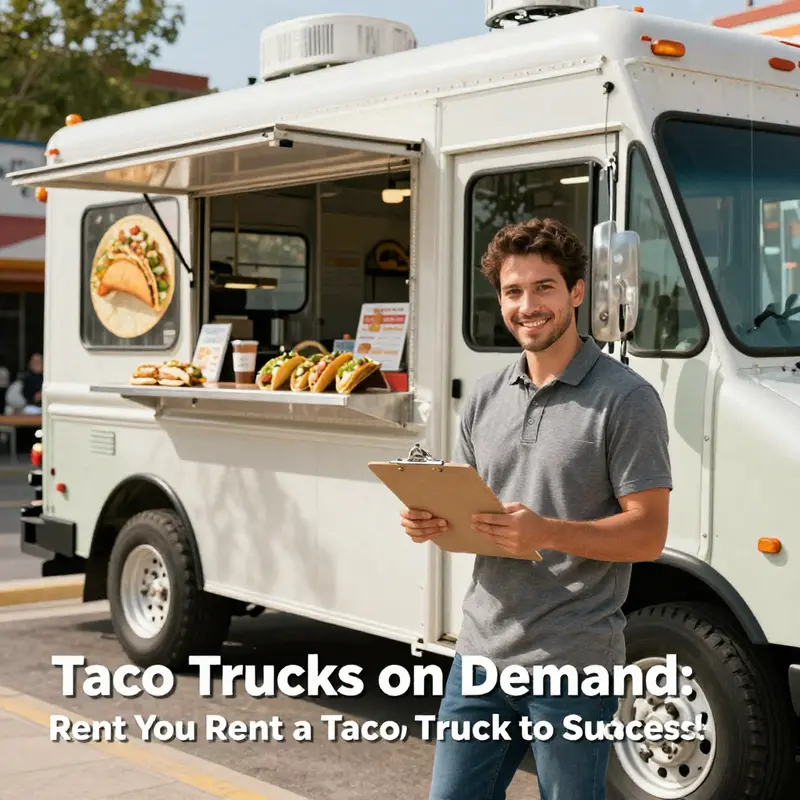
A taco concept often moves faster on the street than a full brick-and-mortar launch. Renting a taco truck gives you a portable kitchen to test ideas, refine your menu, and learn operations with lower upfront risk.
Key advantages include lower upfront costs, which frees capital for recipe development and branding, and the flexibility of short-term leases that align with seasonal opportunities and local events.
A turnkey rental provides the essential equipment—grill, refrigeration, counters, and ventilation—so you can focus on taste and service rather than installation headaches. You still own the testing phase: you schedule events, track revenue, and measure demand before committing to ownership.
Operational discipline remains important. You’ll handle permits, insurance, health compliance, and cash handling. Many rental providers offer onboarding materials and support to help you navigate regulations, which reduces the learning curve during your pilot.
If the test proves viable, you can then decide among continuing renting at scale, upgrading to a more permanent arrangement, or purchasing your own vehicle. The goal is learning with each event: learn what resonates with customers, how long service takes, and how to optimize your menu for speed and consistency.
For readers seeking a practical next step, start by identifying a few local rental providers, compare what’s included in the lease (maintenance, insurance, and emergency support), and design a small pilot menu that can be executed quickly at a few events.
Final thoughts
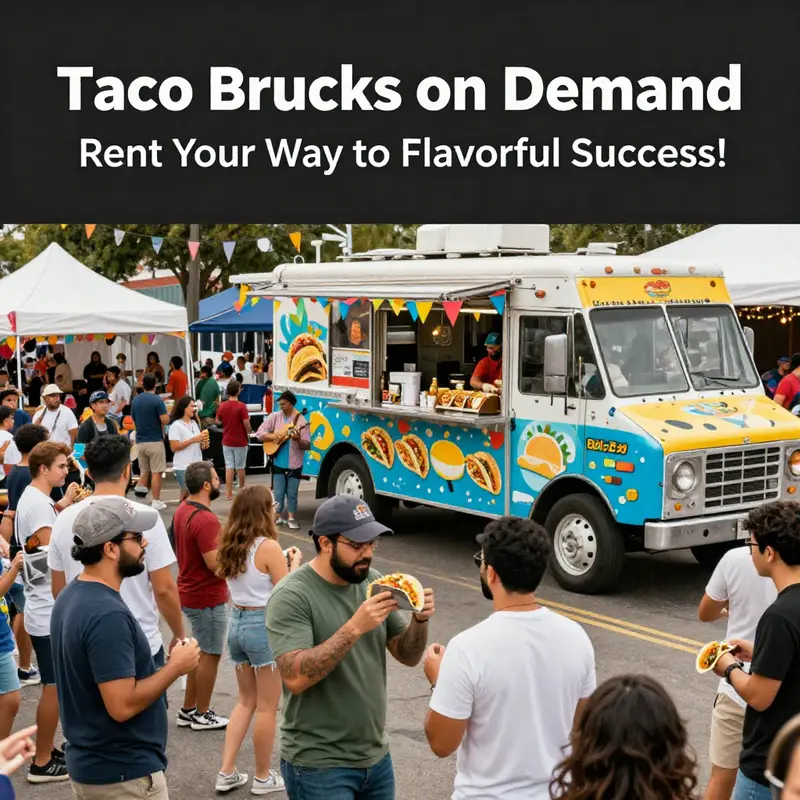
Renting a taco truck is not just about serving delicious tacos—it’s about creating unforgettable experiences! With flexible options available in major cities, a full range of equipment included, and the irresistible trend of taco trucks capturing hearts at events and festivals, there’s never been a better time to spice up your culinary ventures. Whether you’re looking to cater a memorable event or take the plunge into the world of mobile food, a taco truck rental can provide the tools and flavors to bring your aspirations to life. So, grab your friends, fire up the grill, and let the tasty adventures begin!