
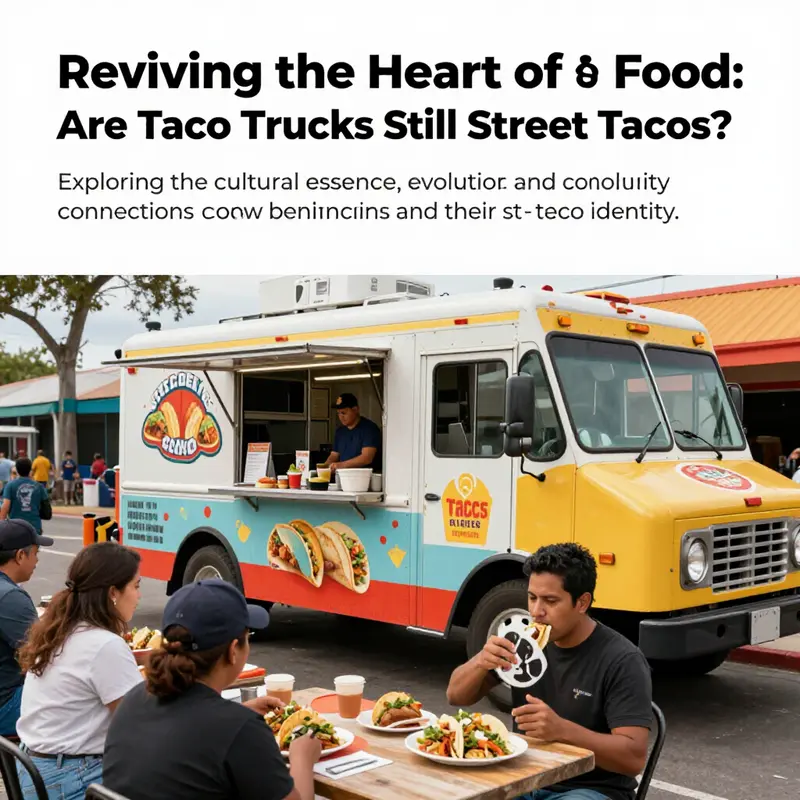
Taco trucks have long captivated food lovers with their delicious street tacos, serving bold flavors and cultural richness on wheels. But as the culinary landscape evolves, the question arises—are taco trucks still about street tacos? This article unravels the essence and cultural significance of taco trucks, revealing their vital role in urban identity and community life. We will delve into market dynamics that shape their ever-evolving menus while examining how gourmet offerings align with the traditional street taco spirit. Join us on this flavorful journey to appreciate how taco trucks remain not just food vendors, but vibrant contributors to the street food culture.
Wheels of Authenticity: Why Taco Trucks Still Stand for Street Tacos
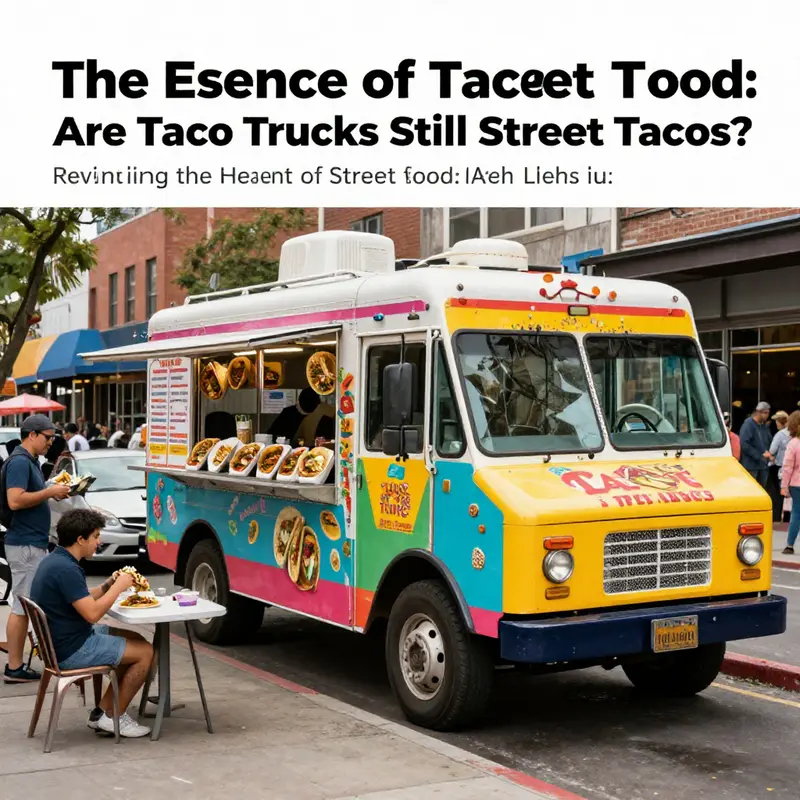
In cities where the hum of traffic blends with the sizzle of a grill, taco trucks move like punctuation marks in the ongoing sentence of urban life. They are not merely convenient lunch stops; they are portable theaters where flavor, memory, and community collide. In places such as Austin, these mobile kitchens have become part of the city’s fabric, a living reminder that street food is not a relic but a dynamic practice that keeps evolving while staying true to its roots. The question at the heart of this chapter—whether taco trucks continue to define street tacos—requires more than a yes-or-no answer. It asks us to follow the trail of ingredients, labor, and mobility that ties these trucks to a broader idea of street culture: accessibility, immediacy, and shared appetite. The essence lies not in the form alone but in the spirit that sustains it—a spirit rooted in family traditions, neighborhood networks, and the stubborn joy of cooking for the moment when someone is hungry and curious enough to stop, look, and taste.
From humble family stands that gathered steam on weekend markets to the scattered rows of metal, these kitchens traveled with purpose. Their origins are less about grand business plans and more about necessity and affection: mothers and fathers teaching recipes passed down through generations, siblings turning a practice into a livelihood, friends gathering at a corner to feed a block after work or school. The mobility of taco trucks is a literal freedom they borrowed from the ritual of the street. They could set down roots in a new neighborhood one week and shift to a different part of town the next, all while keeping the core product—street tacos that are quick to assemble, affordable, and bursting with flavor—intact. This flexibility is not a gimmick; it is a practical expression of a culinary philosophy that prizes immediacy without sacrificing quality. In a city’s palate, this is a kind of rhythm, a tempo that respects tradition while inviting change.
The enduring appeal of the street taco—simple tortillas, bright salsas, and meat cooked to order—has never been about opulence. Yet the modern taco truck often expands its repertoire without surrendering its street-level identity. The same kitchen that would pop a few cash-and-carry staples can also host chef-inspired toppings, craft spice blends, and seasonal ingredients sourced from markets near and far. The result is a continuum rather than a division: traditional carne asada or al pastor sitting comfortably alongside premium fillings that emphasize technique, balance, and story. This evolution is visible in the packaging as well as the plate. Hinged, reusable containers designed to protect and present higher-end tacos demonstrate a deliberate move to preserve freshness while elevating the guest experience. The packaging becomes a small theater, a signal that the truck is attentive to the journey from grill to hand. It is not a betrayal of the street taco impulse but a refinement of it, much like upgrading a home kitchen without changing the core purpose of feeding people quickly and joyfully.
If one looks beyond the obvious, the broader culinary ecosystem acknowledges taco trucks as legitimate protagonists in modern gastronomic culture. They participate in the same conversations as brick-and-mortar restaurants, bakeries, and festival vendors, where debates about technique, sourcing, and authenticity unfold with equal seriousness. The best homemade seasonings—those that balance lime, cumin, garlic, and a touch of citrus—are often the result of countless hours of trial, repetition, and shared meals. This craftsmanship is a quiet form of artistry that travels well, travels far, and travels with a pocket of money saved by not maintaining a steady dining room. The street taco, in its most living form, remains a symbol of accessibility: food that invites a bite, invites a conversation, invites a memory. The truck’s wheels carry the narrative of a community’s appetite, a constantly renewed invitation to eat where you stand and where you feel most connected to the city around you.
The question of whether taco trucks are still street tacos becomes clearer when we listen to how they respond to changing urban conditions. They are not immune to a more discerning market that sometimes pushes toward premium ingredients or more refined presentation. Yet the core is unchanged: the speed, the simplicity, and the sense that food is a shared act rather than a solitary luxury. A truck can still turn a simple pork or mushroom taco into an experience that tastes of neighborhood markets, late-night chats, and family recipes, while also offering a tasting menu of sorts for those who crave novelty. This is not a contradiction but a testament to adaptability. It shows how street food can honor its origins by letting neighborhoods remix the menu in real time. The same grid of streets, once populated by limited options, now hosts a spectrum of flavors that reflect what a city eats and how it loves to eat it.
To accept that the street taco remains central is to recognize how mobility itself preserves its soul. When a chef moves from a fixed kitchen to a mobile one, they gain the freedom to meet people where they are. They can test a new spice, a new topping, or a new technique with immediate feedback from diners who are ready to respond with a quick thumbs-up or a thoughtful suggestion. The dynamic exchange is a hallmark of street culture, where food is less about perfection in the abstract and more about resonance in the moment. In this sense, taco trucks do more than deliver meals; they deliver cultural exchange. They serve as itinerant classrooms where regional influences—soft tortillas from one region, smoky chiles from another, a salsa that recalls a grandmother’s pantry—can mingle and mature, always with the patient cadence of a line that grows longer when the city’s appetite grows.
Framing the discussion through a contemporary lens, one can see how the best trucks balance tradition with experimentation. The same kitchen that produces a classic carne asada can also introduce a high-quality carnitas with a clever citrus finish or a vegetarian option that surprises with its depth of flavor. This is not a brand-new recipe system but a matured sensibility: the discipline of good technique married to the willingness to listen to the street. Packaging innovations, like the hinged, reusable containers designed to protect and present premium tacos, encapsulate this philosophy. The container says as much about the care of the product as the toppings do. It signals respect for the ingredients, for the customer’s time, and for the environment. The packaging becomes a quiet ambassador for a tradition that refuses to be stagnant.
For readers curious about the practical side of sustaining such a vibrant street-food culture, consider how a vendor chooses to operate within a dense urban fabric. The decision to move across blocks, to adapt menus to the shifting demographics of a neighborhood, and to cultivate relationships with local markets all contribute to a flexible, resilient model. If you are thinking about starting or evolving a taco operation, a crucial first step lies in thoughtful planning about mobility, licensing, and kitchen setup. Choosing the right food truck is a decisive move, and it can set the tone for how effectively a business mirrors the street’s energy while maintaining a level of quality that encourages repeat visits. Choosing the right food truck invites readers to explore this practical dimension without losing sight of the broader cultural conversation.
Ultimately, the answer to whether taco trucks are still street tacos rests in how one defines street food. If the criteria include accessibility, immediacy, community, and a flavor that captures a neighborhood’s spirit, then taco trucks remain quintessential street tacos. They carry forward the essential spirit—fast, affordable, flavorful, and undeniably social—while embracing tools and techniques that allow the format to grow. They are both custodians of tradition and laboratories of innovation. They remind us that street food is not a static relic but a living practice that travels with the city’s evolving tastes and rhythms. In this sense, the street taco persists not as a fixed image on a storefront sign but as a dynamic, on-the-move experience that continues to define and redefine what it means to eat well on the go.
External resource: https://www.austinchronicle.com/food/2026-02-17/discover-the-best-tacos-in-austin-tx-strictly-from-food-trucks/
Taco Trucks as Living Street Tacos: How Mobile Kitchens Shape Urban Identity and Cultural Memory
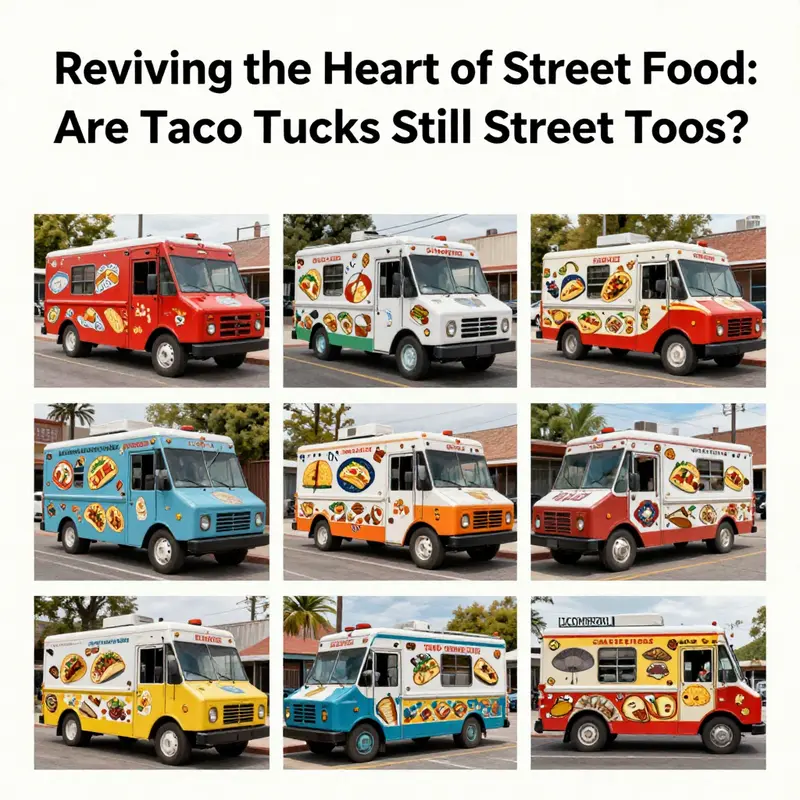
In many American cities, the sight and scent of a taco truck are not merely culinary cues but cultural signals. Are taco trucks still street tacos? The answer lies less in strict definitions of where a meal is sold than in what those meals symbolize: a mobile, affordable, flavor-forward experience that arrives with the energy of the street and carries a memory of generations. Street tacos began as intimate family enterprises, often seasonal or weekend ventures that transformed side streets into improvisational kitchens. Today’s taco trucks retain that core essence even as they drift into new neighborhoods, experiment with menus, and respond to changing urban tastes. The continuity is not about repeating the same recipe but about preserving a method of cooking and sharing that feels immediate, communal, and unpretentious. If one were to trace the lineage, it would start with traditional home kitchens and small stalls, move through immigrant experiences, and end up in cityscapes where the truck itself becomes a portable stage for Mexican culinary heritage. In this sense, street tacos endure as a living practice, more than a fixed form, offering quick, accessible, and deeply flavorful bites that survive the test of time through movement and adaptation.\n\nCultural memory is not a museum display but a living map, and taco trucks function as its navigational markers. The roots of this culinary tradition reach back to the broader currents of the Mexican and Mexican American experience, where migration braided together ingredient knowledge, family recipes, and a shared sense of community. In the late twentieth century, California and neighboring regions became pivotal hubs for the mass mobility of food laborers who carried familiar flavors into new urban ground. Each truck carried not just food but a story of settlement and resilience, translating the flavors of homeland into something portable enough to traverse sidewalks, markets, and parking lots. The result is a cuisine that travels, but does not surrender its identity; it adapts to place while retaining a recognizable signature: a quick, crisp tortilla, concentrated aromatics, and a balancing of meat, lime, cilantro, onion, and heat. The street becomes the kitchen and the stage, and the city—its audience and its judge. In this sense, taco trucks are not simply vendors of sustenance; they are cultural ambassadors who translate a regional culinary dialect into the shared urban experience.\n\nThe urban body, in turn, responds to the presence of these mobile kitchens in ways that reveal broader social dynamics. Taco trucks occupy public space at scales that ordinary restaurants cannot. They dot the margins of formal planning, slipping into vacant lots, curbside lanes, and festival grounds where they renegotiate the urban fabric. This visibility challenges conventional ideas about order and control in public space. In communities that have long lived at the margins of city budgets and development plans, the truck becomes a visible assertion of presence and entrepreneurship. It asks: who has the right to define what counts as a legitimate food landscape, and who gets to decide where people can gather, eat, and socialize? The ongoing dialogue around siting, safety, and zoning is therefore not just bureaucratic wrangling. It is a cultural conversation about belonging, access, and the right to shape local identity through everyday acts of cooking and sharing.\n\nIn cities like Los Angeles and other urban centers with layered histories of immigration, taco trucks have become dynamic nodes in a broader cultural landscape. They are spaces where language, music, family rituals, and memory converge around the act of eating. They enable intimate exchanges between cook and customer, often across generations, between elders and youth, between long-standing residents and newcomers. In this sense, the trucks function as living archives, preserving traditional techniques while allowing room for experimentation. The adaptation is unmistakable: while the core is a street-level taco, the repertoire expands with new fillings, techniques, and influences that reflect the city’s evolving palate. Yet even as menus diversify, the core practice remains grounded in speed, accessibility, and a sense of immediacy that only a mobile kitchen can deliver. This is the heart of street tacos in the contemporary city—a form rooted in history, yet continually reimagined in the present moment.\n\nScholars who study the phenomenon carry a similar thread of interpretation. The taco truck appears in literature and fieldwork as a lens through which to examine issues of identity, belonging, and spatial justice. Rather than simply describing a food trend, researchers use mobile kitchens to interrogate how marginalized communities negotiate space, labor, and legitimacy within urban growth. The taco truck becomes a case study in how immigrant entrepreneurship reshapes the built environment and redefines what it means to belong in an American city. In this frame, the trucks contribute to cultural vitality by offering an accessible platform where stories can be spoken and shared at street level, in public space, where everyday life unfolds most authentically. A key insight from this scholarship is that the presence of taco trucks challenges dominant narratives about urban redevelopment by centering voices that are frequently sidelined in planning and policy discussions. They remind us that the city is not merely a backdrop for growth but a living habitat built by people who cook, sell, and gather together around food.\n\nWithin the broader arc of urban evolution, the economy of the taco truck has endured because it remains both practical and expressive. The mobility of the setup—gas, propane, portable grills, and a lean staff—makes it possible to navigate shifting regulations and changing consumer patterns without the overhead of a fixed restaurant. This flexibility is a formal reflection of their cultural mission: to deliver authenticity with velocity, to respond to what people crave in the moment, and to bring the heat and fragrance of traditional street cooking into new neighborhoods. Even as some trucks have experimented with more refined or novel approaches, and even as some menus incorporate elements of fusion or premium ingredients, the fundamental proposition persists: a good street taco captures the essence of a place in a few bites, and those bites travel with the people who seek them. The clamshell packaging that later gained traction in some discussions of premium or gourmet tacos, for instance, points to the continuity of form. It shows how a practice anchored in street food remains adaptable enough to present itself with elevated presentation without abandoning its essential identity as street food. The packaging story, far from undermining the tradition, signals a maturation that coexists with the original impulse of rapid, informal dining.\n\nTo visitors and city dwellers alike, the taco truck scene offers a language of belonging that does not depend on origin myths or exclusive clubs. It invites a shared experience that is accessible, social, and forgiving of difference. When a cook speaks through the sizzle of a grill and the aromas that rise into the street air, they are not just feeding a body but nourishing a sense of place. The truck becomes a small civic stage where conversations about language, memory, and community take place as naturally as conversations about spice and heat. In this sense, the modern taco truck is not simply a mobile kitchen; it is a vessel for urban storytelling, a mobile monument to migration, and a testament to the enduring relevance of street food as a public good.\n\nFor readers curious about how such ventures are navigated from a planning and entrepreneurial perspective, consider the practical path of starting or supporting these efforts. There is practical guidance available on selecting and running a food-truck operation that speaks to the realities of street food entrepreneurship. See the guidance on Choosing the Right Food Truck for a grounded look at the decisions that accompany turning these cultural practices into sustainable livelihoods.\n\nUltimately, the persistence of street tacos through taco trucks speaks to a larger truth about cities. Urban life is healthiest when its edges are porous, its cultures are interoperable, and its meals are shared on sidewalks and in public spaces. The taco truck embodies this ethos: it is a mobile stage where tradition and innovation meet, where families sustain themselves, and where strangers become neighbors for a few delicious minutes. In that sense, street tacos remain not just as a dish but as a living practice that continues to shape urban identity, memory, and belonging. For a broader scholarly perspective on how Mexican street food helps transform American cities, readers may explore external scholarship such as The Taco Truck: How Mexican Street Food Is Transforming the American City. https://www.press.uillinois.edu/books/9780252042454
Wheels of Flavor: How Taco Trucks Keep Street Tacos Alive in Modern Cities
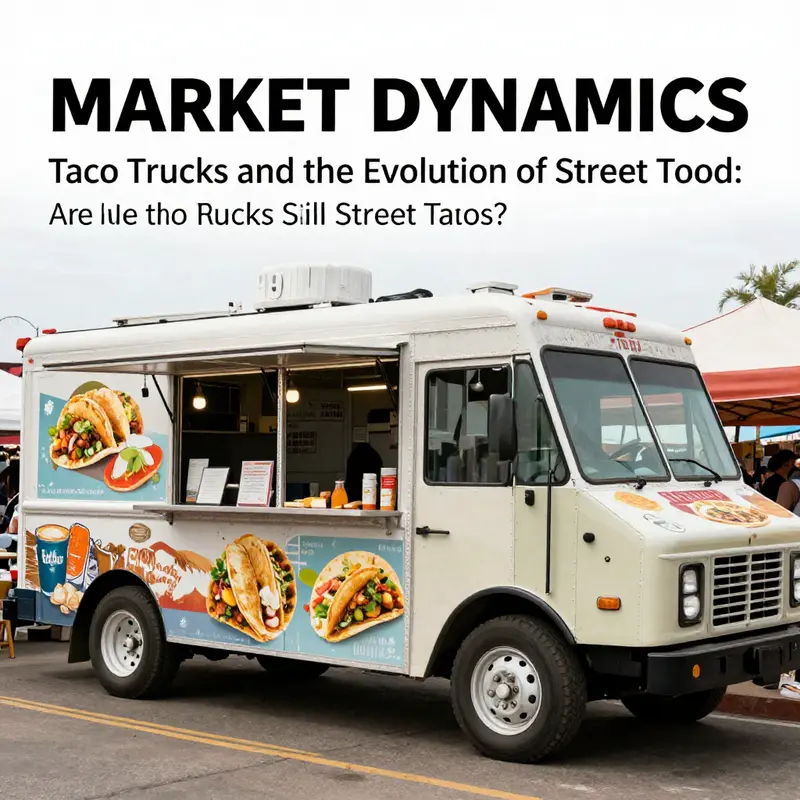
On a warm street corner, a line curls around a parked truck, the air thick with lime, cilantro, and the hiss of sizzling oil. The question, are taco trucks still street tacos, has a straightforward answer: yes. They remain the most direct expression of the street-level tortilla ritual—the quick, fragrant, customizable bites that many people instinctively call street tacos. Yet the scene around them has grown more complex. These mobile kitchens once hovered at the margins of urban life; today they anchor neighborhoods, festivals, and even city branding. What seems like a shift in style is really a shift in market dynamics: mobility, affordability, and the democratization of flavor creation are rewriting who sells street tacos, where they are sold, and how people experience them.
Historically, the story of food on wheels grows from scarcity and urban pace. Early lunch wagons and cow carts served night-shift workers and travelers when brick-and-mortar spaces were closed or out of reach. By the 1870s, horse-drawn carts in places like Providence became recognizable precursors to modern food trucks, offering affordable meals to working-class communities. The Great Depression amplified that logic: low-cost meals that could travel across neighborhoods became lifelines for people facing economic squeeze. This lineage travels well beyond one city or one culture, but it found a particular resonance in places where immigrant cuisines and local palettes could fuse quickly, creating a portable, everyday form of sustenance and culture.
In the twenty-first century, the arc bends toward speed, artistry, and experimentation. The rise of gourmet food trucks after the 2008 financial crisis transformed street tacos from simple fare into a form of culinary theater. Mobility remains the engine: cooks can test ideas in real time, tailor menus to a given block, and avoid the sunk costs of a fixed dining hall. The packaging breakthroughs—hinged, reusable-style containers designed to protect premium fillings—signal a larger shift. Even as menus drift toward higher-end ingredients and curated experiences, the core rhythm stays intact: fast service, a portable kitchen, and a taco that is easy to eat on the go. This is not a break from street tacos; it is a broadened definition that embraces new markets, aesthetics, and price points.
Cities like Austin offer a vivid example of how this evolution plays out in public life. A February 2026 article captured the essence: taco trucks aren’t just about convenience—they’re embedded in the city’s identity. The trucks flex with urban life, swapping menus to respond to seasonal events, shifting demographics, and the pulse of neighborhood festivals. Their adaptability is not merely operational; it is cultural. The truck becomes a mobile hearth where family recipes travel and a cook’s experiments can become a local staple overnight. In this sense, the street taco’s core—speed, flavor, accessibility—remains intact even as the surrounding ecosystem becomes more sophisticated and diverse.
Beyond taste, market dynamics reveal deeper currents. Consumers seek authenticity, speed, and customization. People want food that reflects their communities, not just a generic offering; they want to know the person behind the cart and the story behind the recipe. The entrepreneurial model has broadened access: low overhead, small teams, and adaptable menus let more aspiring cooks enter the food economy. The city thus becomes a canvas where culinary identity is shaped through real-time interaction—customers and cooks negotiating flavors, meanings, and budgets in a shared space that could be a single corner or a network of rotating stops.
Technology reinforces mobility and openness. Digital ordering, social media, and online reviews enable a truck to reach audiences far beyond a familiar handful of regulars. The modern street food scene is as much about announcing a new flavor or a pop-up location as it is about grilling. This cadence keeps the street taco dynamic—a living tradition rather than a fixed menu. Even when trucks pursue fancier ingredients or tasting menus, the service architecture remains lean and fast. The social dimension—stories shared, memories linked to a recipe, family tradition honored—grows alongside the equipment and logistics, making the experience richer without losing its immediacy.
Crucially, the essence of street tacos endures in the core product, even as the umbrella of offerings expands. The taco truck is a portable stage where heritage and novelty perform together. The kitchen may branch into fusion influences or seasonal specials, but the essentials—quantity, speed, portability—remain central. Trucks can serve affluent districts and underserved corners alike, mediating between immigrant flavors and mainstream appetites. They bridge home kitchen and urban dining, sustaining a resilient core that explains why many communities still regard taco trucks as street tacos at heart, even as the scene grows more diverse and technologically sophisticated.
Business models also matter in shaping this ongoing story. Operators balance thrift with ambition, testing concepts before scaling. For readers curious about how mobile kitchens choose their strategic path, consider exploring Top food truck models for success. The point is not a single blueprint but a spectrum: a lone truck feeding catering gigs, a fleet forming a neighborhood orbit, or a hybrid that partners with events and pop-ups. The central question becomes how to preserve the accessibility that defines street tacos while enabling branding, experimentation, and sustainable revenue in markets where costs rise and competition intensifies. In this light, the memory of the lunch wagon and the resilience of small-scale entrepreneurship converge in practical decisions about location, menu, and pace.
If the arc of taco trucks teaches anything, it is that street tacos endure by embracing a flexible philosophy of service. They travel, they adapt, and they reveal the city as a living stage for shared meals. The culinary map expands with immigrant influences, yet the demand for honest, fresh, and fast food remains constant. The crews behind these trucks—often rooted in family or community networks—keep traditions alive while menus shift under urban pressures: zoning, transit, and evolving consumer tastes. The street taco becomes a portable culture, moving from neighborhood to neighborhood with each bite and with each new vendor who adds a local memory to the tapestry.
Looking ahead, packaging, routing, and scheduling will likely become more sophisticated, with a focus on sustainability and worker welfare. The appetite for authentic, high-quality, affordable meals will probably deepen as cities grow denser and more cosmopolitan. The story of taco trucks, once a modest solution to budget and time constraints, now sits at the intersection of urban culture, entrepreneurship, and cross-cultural exchange. The question of whether taco trucks are still street tacos thus becomes less about a fixed category and more about a living practice—one that welcomes newcomers, honors tradition, and keeps the street-food flame alive in today’s fast-paced urban environment.
External context: For historical context and a broader narrative of this movement, see The Rise of the Taco Truck. https://daily.jstor.org/the-rise-of-the-taco-truck/
Beyond the Cart: Are Gourmet Taco Offerings Still Street Tacos?
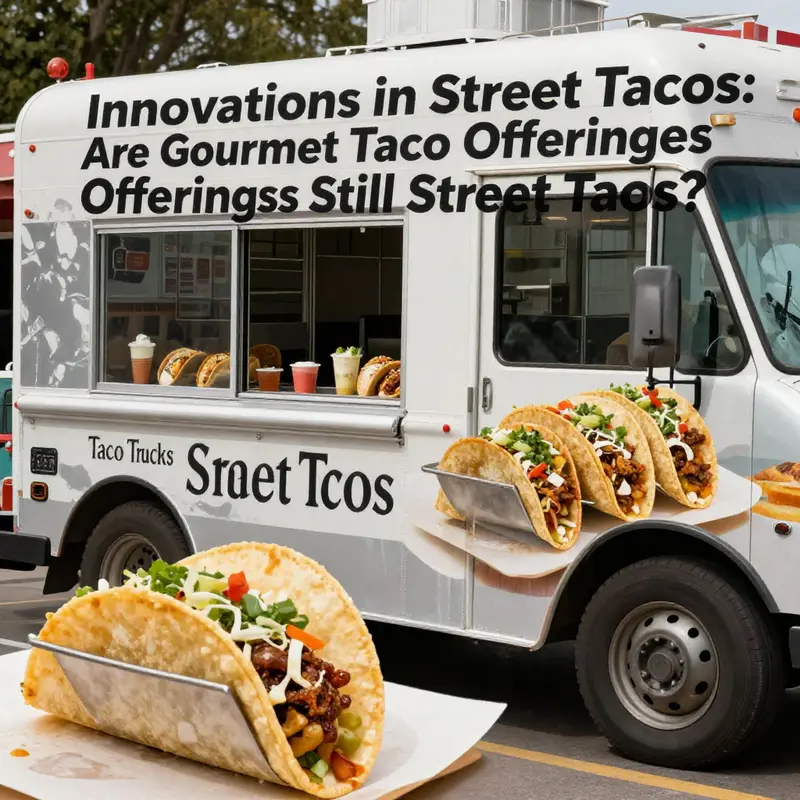
The question of whether gourmet taco offerings can still wear the label street tacos sits at the intersection of memory and experimentation. It invites us to listen for the echo of flame and smoke that once marked a simple, hurried meal and to hear the current hum of chefs who treat the taco as a moving canvas. Taco trucks were born from modest beginnings—family stalls at markets, makeshift grills under the sun, and a dream to bring warm, honest food to people wherever they gathered. The core appeal then remained the same: a quick, handheld bite that carried a nation’s flavors in a compact shell. In cities like Austin, this story is not a quaint backstory but a living identity. The trucks are not merely sources of sustenance; they are cultural threads that knit neighborhoods together, offering a street-level theater where technique and taste perform on the curbside stage. Their mobility translates into a form of culinary democracy, letting cooks respond to local palates as swiftly as the wind shifts at a crowded intersection. The essence of the street taco—immediacy, authenticity, and a direct line from fire to mouth—quietly resists the idea that sophistication must be incompatible with speed or accessibility.
From such roots, the path toward gourmet expressions unfolds with both finesse and tension. On one track, there is a deep reverence for the traditional methods that define a true street taco: corn tortillas toasted on a comal, meat cooked with patience, and a restraint in toppings that honors the meat’s personality. Authentic versions, as illustrated in accounts of González Street vendors, celebrate simplicity—tiny cubes of onion, bright cilantro, a house salsa that crackles with freshness, and a tortilla whose warmth invites every bite to linger a moment longer in the mouth. This is not nostalgia dressed up as heritage; it is a discipline that prizes the continuity of technique and the regional voice of a dish that has traveled from village to street corner and beyond. When these elements remain intact, a taco can still have the spark of a street corner memory, a reminder that the food is as much about the space where it is eaten as the ingredients on the plate.
Yet innovation travels with the same wind that carries the aroma of charcoal and spice. Across the modern street food landscape, the taco has scarcely stood still. It has become a playground for hybrid flavors, cross-cultural techniques, and playful reinventions that push the boundaries of tradition without severing the line to its origins. A pop-culture inspired approach to taco fillings demonstrates how the format can absorb new influences while preserving its core function—portable, quick, and deeply personal. The question then shifts from whether a dish qualifies as a street taco to how a dish remains faithful to its spirit while embracing new techniques and tastes. It is a paradox that more chefs seem willing to live with: a dish that is at once rooted and unafraid to roam. In this landscape, a sausage-inspired taco or a bold fusion creation might sit alongside a classic barbacoa plate on a single truck, each informing the other and expanding what a street-founded tradition can contain.
Packaged innovation is a practical companion to culinary curiosity. The same forward motion that fuels new flavors also drives better ways to protect and present them. Engineers and designers have developed clamshell containers that hinge and fold back, providing sturdy protection for premium tacos during transit and delivery. These innovations are not cosmetic add-ons; they are essential to maintaining the experience of a street meal when the consumer is choosing speed over seating, or when a crowd is gathered in a parking lot, a park, or a festival corner. The packaging that supports gourmet street tacos speaks to a broader philosophy: keep the dish portable, keep the experience intact, and remove friction between the cook and the eater. When a truck can deliver a high-quality taco without sacrificing the sense of immediacy that defines street food, the distinction between street and restaurant blurs in a satisfying way. The physical means of presentation—how a taco travels from flame to hand—becomes part of the aesthetic, not just a logistical detail.
In this evolving ecosystem, the meaning of authenticity expands without abandoning it. The debate about whether gourmet offerings can still be called street tacos is less a battle of terms than a conversation about context. If authenticity rests on origin, immediacy, and the sense of community around a fire and a flip of the tortilla, then many modern variants still carry street-taco DNA. If authenticity is defined by restraint and focus on regional identity, some innovations may be read as departures. The literature and field observations suggest that innovation need not erase the soul of a street taco; it can renew that soul by proving how adaptable and resilient it is. Street tacos become less a fixed category and more a spectrum, one that travels with cooks who use the format to tell new stories while honoring old ones. The challenge and opportunity lie in balancing reverence for tradition with curiosity for what comes next.
For cooks on the move, this balance is not a philosophical exercise but a practical one. It translates into how a truck menus itself, how it communicates with customers through a rotating set of offerings, and how it crafts an experience that feels both intimate and exciting. The casual observer can still recognize the telltale signs of a street taco—the quick flame, the hand-held format, the casual atmosphere of the service line—but closer inspection reveals a more complex truth: the format is a scaffold on which a living art can be hung. A truck that shifts toward premium components or unusual combinations does not magically abandon its street origins; it makes space for those origins to coexist with more elaborate techniques, better ingredients, and more refined presentation. The risk of losing sight of what makes a taco truck essential is real, but the payoffs of embracing a broader repertoire can be profound. A vehicle that serves authentic bites with integrity and couples them with thoughtful innovations can broaden its audience without alienating its core community.
This is where the practical and the poetic meet. The chefs who operate these mobile kitchens often speak of listening to the neighborhoods they serve. They adjust menus not merely to chase trends but to reflect changing tastes, seasonal availability, and the evolving palate of a city. The result is a dynamic ecosystem in which a traditional corner favorite and a more experimental creation share the same curb space. In places where cultural exchange is part of everyday life, the taco truck becomes a field for collaborative flavor development. The same grill that crisps a carne al pastor can also bloom with new techniques that honor the tortilla’s texture and the meat’s fat. In such moments, the term street taco expands its scope to include a broader dialogue about what good, quick food can be when it is anchored in community memories and still open to invention. The challenge remains to keep the flame visible, the aroma honest, and the experience approachable, even as the menu grows more sophisticated. If these are achieved, the distinction between street and gourmet becomes a bridge rather than a barrier.
The journey then is less about policing a label and more about preserving a spirit. The street taco’s essence lives in its immediacy, its ability to be eaten on a curb or a sidewalk as a person moves through a city. It lives in the sense that a line can form even when there is no table waiting, and in the shared recognition that flavor can travel quickly through a crowd and land warmly in a pocket or on a plate. Modern chefs who embrace the format understand that a barcode of tradition does not preclude a barcode of invention. They learn to calibrate heat, texture, and composition so that each bite carries both memory and discovery. In this light, gourmet street tacos are not a corruption of a classic form but an encore performance. They retell an old story with new language, inviting old fans to explore and new audiences to listen. The street taco, in short, remains a living act—anywhere a grill glows, a tortilla warms, and a community gathers to share a meal.
For readers seeking a deeper sense of the tradition behind the modern ideas, the trajectory is instructive. The traditional version has taught countless cooks that the tortilla must be the right vehicle for the meat, and the meat must be cooked with respect for flavor and texture. The modern layer invites experimentation with technique, global influences, and creative pairings. The result is a culinary landscape where the street still matters as a public square of flavor, even as the square expands to include new corners and cross-cultural conversations. The taco truck thus remains a powerful symbol: a traveling kitchen that trusts in its own ability to adapt while holding fast to a method and a memory. The question may linger, but the answer will keep evolving as long as there are cooks who believe in the magic of a hot tortilla folded around a story.
Internal link: Food Truck Fusions: A Culinary Revolution
External reading: https://www.foodandwine.com/recipes/authentic-tacos-gonzalez-street-vendors
Where the Street Breathes Flavor: Taco Trucks as Community Anchors in Urban Street Food Culture
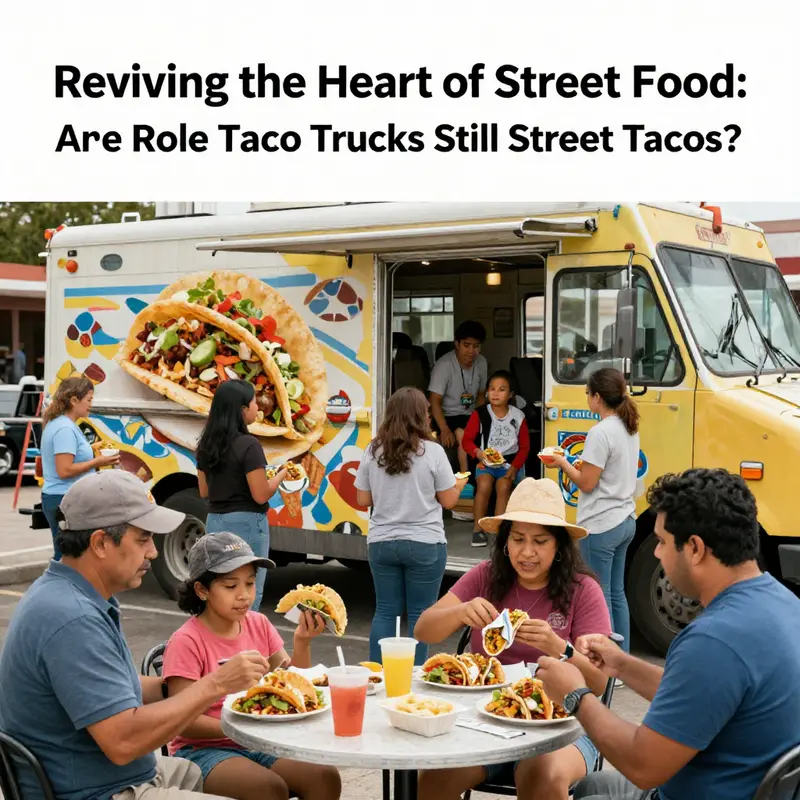
Across city corners and along curbside markets, taco trucks remain more than mobile kitchens; they are open-air forums where neighbors meet, voices rise with smoke and salsa, and the familiar scent of lime and chile signals an invitation to belong. The question at the heart of this chapter—whether taco trucks are still street tacos in the truest sense—finds its answer not in a single bite, but in the way these small engines of flavor keep urban life moving. They are, in effect, living embodiments of street food’s core promise: fast, affordable, and intensely flavorful food that travels with the people it feeds. In cities like Denver, Austin, and San Francisco, the truck remains a portable public table, a way for great cooking to slip into daily routines without the frills of a formal restaurant. They are not nostalgic artifacts but evolving laboratories where tradition and innovation meet in real time, on the pavement where city life unfolds. The core identity of street tacos—simple tortillas, bright toppings, quick assembly, and a focus on bold regional flavors—continues to guide these mobile kitchens even as their menus become more dynamic and their presentation more thoughtful. A recent reflection on Austin’s scene put it plainly: taco trucks there aren’t just about convenience—they’re embedded in the city’s identity. That line captures a larger truth: street tacos have become a city’s edible emblem, a visible thread weaving neighborhoods into a shared culinary memory. And the trucks’ mobility is central to that memory. They can move with events, festivals, and neighborhood shifts, testing new flavors and adjusting to the places they serve without undergoing the slow, expensive process of opening and closing brick-and-mortar spaces.
In Denver, the scene is regularly celebrated as a crucible of risk-taking and creative energy. The Colorado Street Food Alliance’s leadership has spoken about the way a compact footprint can yield a surprising volume of culinary invention. Carlos Mendez, the Alliance director, emphasizes that you’ll find more creativity per square foot in the truck world than in many downtown restaurants. That assertion isn’t merely about novelty for novelty’s sake; it speaks to accessibility as a design principle. Trucks innovate quickly because they operate with lean budgets, flexible schedules, and direct feedback loops from diverse communities. The payoff is not only new flavors but also the capacity to keep meals affordable and readily available to a broad cross-section of residents. In practice, this means menus that respond to seasonal ingredients, neighborhood demographics, and immediate cultural moments, all while maintaining the core appeal of street food: speed, charisma, and a sense of shared abundance. The result is a culinary ecology where the same truck can offer a humble taco at lunch and a more adventurous, carefully composed option at a late-night market, each iteration tethered to its community rather than to a fixed dining room’s ambition.
That elasticity is mirrored in Austin’s own culinary atmosphere, where trucks contribute to a city-wide culinary identity that thrives on authenticity and accessibility. The short distance between a truck’s griddle and a park, campus, or neighborhood event makes flavor a common language. In San Francisco’s Mission District, the street remains a stage for cultural storytelling through food. Longstanding trucks in the area have anchored the neighborhood’s culinary history, serving deeply flavored, regional styles that reflect broader Mexican culinary traditions while also absorbing new influences from other immigrant communities. Street food here is more than sustenance; it’s a durable form of cultural memory, a way for residents and visitors to experience a layered, evolving story of the city through each bite. A truck might offer a carnitas-inspired plate that nods to traditional Guanajuato preparations, or a fusion taco that blends flavors across continents, signaling how street food can bridge communities through shared meals. By design, these offerings are flexible enough to honor roots while inviting new interpretations, a balance that keeps street tacos relevant in a city defined by constant change.
The material life of these trucks—their packaging, their service pace, their visible branding—also testifies to an industry that respects the craft even as it tightens margins. A notable example from the technical side of the trade describes a packaging evolution that preserves the essence of the food while elevating its presentation. Hinged, reusable-style containers provide excellent protection for premium or gourmet twists on the basic street taco. This detail matters because it signals a broader shift: even as trucks lean into higher-quality ingredients or more intricate preparations, they remain rooted in the street-food ethic of portability and sharing. The clamshell, once a mere utilitarian shell, becomes a symbol of how the form can carry a more refined culinary experience without sacrificing speed or accessibility. It is a reminder that the street taco has not vanished into some sanitized, upscale niche; instead, it has grown more nuanced while remaining unmistakably of the street.
Another dimension of accessibility lies in how trucks extend social reach. They are not just purveyors of food but catalysts for neighborhood connection. The mobility they enjoy translates into a social mobility of a different kind: fast access to meals for workers who need a reliable lunch, families seeking a casual dinner, students chasing cheap, flavorful fare, and elders looking for familiar memories in a new city. The trucks create informal public spaces where conversation flows as freely as the salsa and the conversations can cross languages and backgrounds with ease. In this sense, the street taco is not merely a dish but a social practice—the art of sharing a quick, delicious meal with strangers who become neighbors for the moment and perhaps longer than that.
For readers who want to explore field stories and practical takeaways, the Fireduptacotruck blog offers a breadth of perspectives from operators and advocates who keep this ecosystem vibrant. Fireduptacotruck blog provides case studies, operational tips, and community-focused thinking that complements the narrative of these pages. The core takeaway remains consistent: taco trucks today are not relics of a bygone era but living threads in the fabric of urban food culture. They adapt, they respond, and they invite people to gather in shared spaces around a simple, satisfying meal.
The chapter’s throughline—tacos as street food and trucks as community stages—also aligns with a broader sense of urban identity. The ability of trucks to respond quickly to community needs makes them inherently inclusive. They can serve diverse populations by offering familiar flavors alongside inventive adaptions, all at accessible price points and with hours that fit working schedules. It’s this accessibility that underscores the enduring relevance of street tacos in the modern city: a promise that good, honest food can travel with the people, across neighborhoods, across dialects, across the week’s changing rhythms. The street becomes a network of micro-restaurants that preserve heritage while inviting experimentation, a dynamic that keeps the form alive and meaningful for new generations of diners and dreamers alike.
As this narrative moves through Denver, Austin, and San Francisco, it becomes clear that the question of whether taco trucks remain street tacos is less about a strict definition and more about what the trucks symbolize: a public table, a shared hunger, and a flexible canvas for flavor that travels. They are, in every sense, living embodiments of street food’s core values—speed, affordability, community, and the mad, delightful breath of creativity that happens when cooks meet a street corner and a waiting crowd. If anything, the trucks’ ongoing evolution—whether embracing premium ingredients in reusable packaging or embracing fusion ideas that honor plural histories—reaffirms that street tacos remain at the heart of urban dining. They are the edible reminder that food can travel freely, connect strangers, and keep a city’s appetite honest and alive.
External context helps anchor this perspective. For a broader look at Denver’s food-truck ecosystem and innovation, see the Colorado Food Alliance’s press release: https://www.coloradofoodalliance.org/press-releases/denver-food-truck-innovation-2026.
Final thoughts
Taco trucks continue to embody the spirit of street tacos, serving as cultural landmarks and culinary innovators in urban landscapes. Their ability to adapt while staying true to their roots showcases the vibrant and evolving nature of street food. As we savor these delicious offerings, it’s clear that taco trucks are not just about the food; they represent community, identity, and a shared love for flavor that connects us all.