
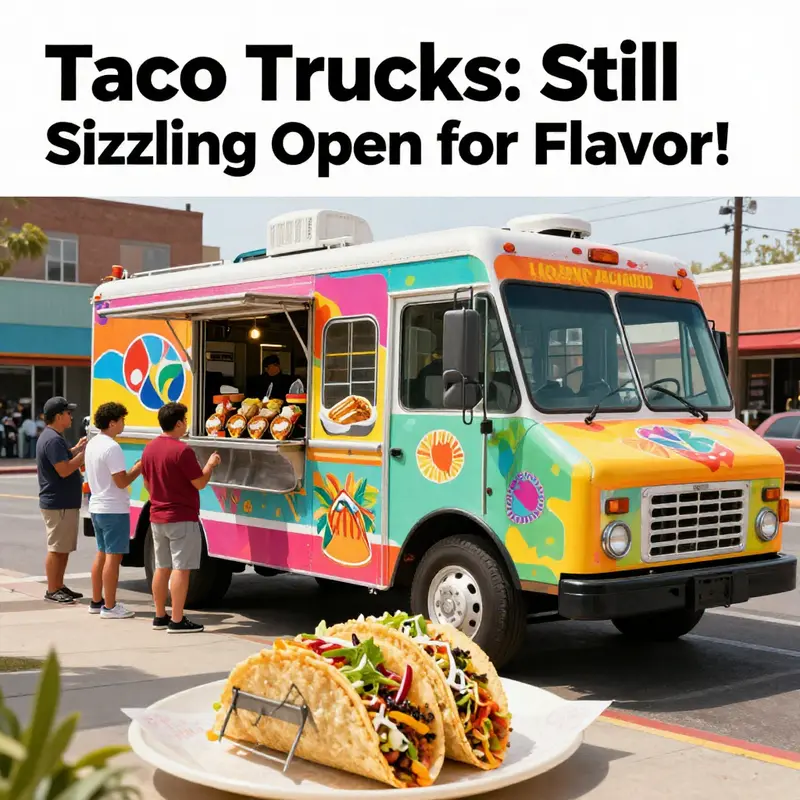
Taco trucks continue to spice up the streets of American cities, serving up mouthwatering flavors and cultural significance that resonate deeply with locals. These mobile kitchens do more than just feed—they connect communities and create lasting culinary traditions. From Austin’s iconic taco trailer parks to San Francisco’s fusion delights, taco trucks are thriving, even amidst challenges like regulations and urban planning hurdles. In the chapters ahead, we will explore how taco trucks maintain their status as culinary staples, their impact on local festivities, the hurdles they face, and how they adapt to evolving tastes, proving that taco trucks are more than just food—they’re a celebration of culture and community.
Rolling Through the City: Taco Trucks as a Living Culinary Staple in Urban America
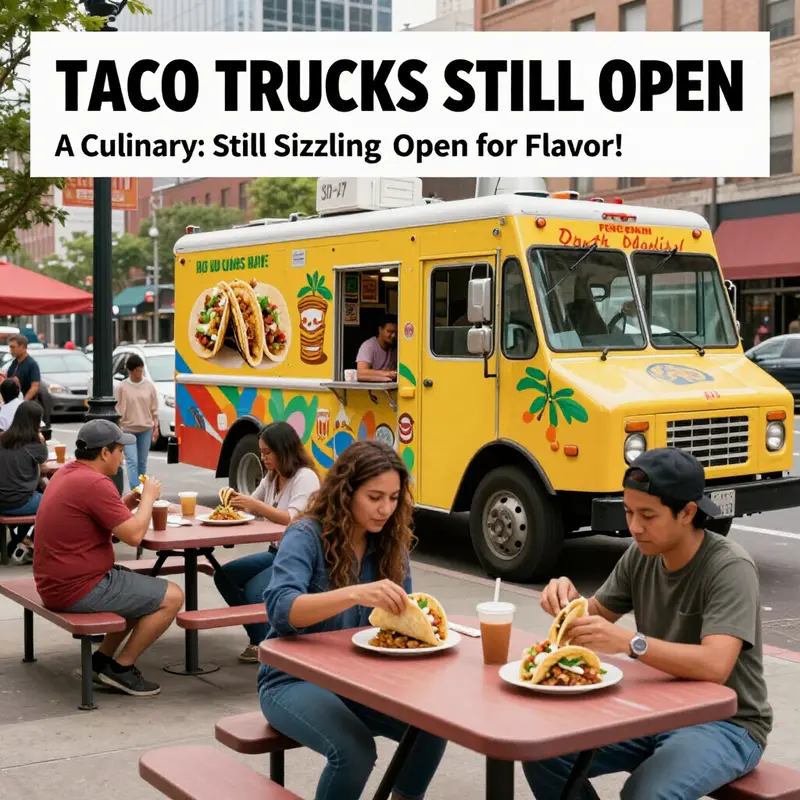
In many American cities, the sight of a taco truck rolling into a market lot or along a busy street signals more than a quick meal. It signals a living culinary ecosystem where heritage meets entrepreneurship and daily life. Taco trucks are not mere curiosities but durable urban institutions that appear at dawn and linger into the evening, turning parks and streets into brief festivals where neighbors catch up, families celebrate, and visitors discover something new without the formality of a sit-down restaurant.
The enduring appeal of taco trucks rests on two intertwined forces: cultural continuity and entrepreneurial agility. They carry a lineage of home-style preparation, time-honed techniques, and recipes that travel across generations, while their mobility and modest overhead invite experimentation. They can switch proteins with the seasons, test new salsas, or fold in flavors that reflect the city’s evolving demographics. This combination of rooted authenticity and flexible innovation keeps them relevant in places where tastes are diverse and the food scene is lively.
In communities like Austin and other fast-growing urban cores, taco trucks anchor neighborhoods as much as parks or markets do. They become neighborhood fixtures, offering a daily reminder that food can be a shared experience, a bridge across cultures, and a democratic form of civic life. Across the country, these trucks have etched themselves into the fabric of daily life in ways that go beyond quick convenience. They provide a practical alternative to brick-and-mortar restaurants while preserving the artistry that characterizes the best street fare. A quick stop for al pastor, slow-roasted on a trompo and dressed with pineapple, can unlock a doorway to a memory of home cooking.
The economics of taco trucks are approachable. Meals priced under ten dollars per person are common, making a regular meal feasible for students, workers, and families even on a budget. The affordability does not come at the expense of flavor; a good taco can be generous in portions, bold in seasoning, and fresh in its finish. The result is a reliable dining option in urban cores where time is precious and options are abundant.
Beyond the plate, the appeal lies in the social and cultural dimensions of street food. The mobility of these kitchens allows cooks to respond quickly to customer preferences, seasonal produce, festivals, and city events. Large, well-equipped carts can host pop-up meals at festivals, private gatherings, or community fundraisers, while maintaining safety and consistency. Platforms that map locations, hours, and reviews have grown essential, turning a simple curbside bite into a planned event in a city’s rhythm. The branding of trucks — bright exteriors, eye-catching graphics, and a friendly vibe — functions as a second job as a mobile billboard, guiding conversations online and in person.
Yet no study of taco trucks would be complete without acknowledging the challenges they face. Regulatory hurdles, zoning rules, and the competition for prime real estate can complicate access to high-visibility locations. Responsible policy responses—such as designated food-truck corridors, streamlined permitting for events, and clear sanitation standards—can help more communities benefit from mobile food without compromising safety or quality. The goal is to balance mobility with place, competition with opportunity, and convenience with healthful options.
If there is a guiding thread through these dynamics, it is that taco trucks are not merely places to eat but vessels of culture and commerce that adapt as cities change. They catalyze cross-cultural exchange, provide a stage for culinary experimentation, and remind us that the curb can be a reliable stage for flavor. The story of taco trucks offers reassurance that good food can travel and that urban life can be inclusive, accessible, and flavorful. For readers curious about taking a more active role, the path involves learning from ready-made examples while charting a route that respects local laws and community needs. Whether you’re a customer, an aspiring operator, or a community sponsor, start with a clear culinary voice, a respect for safety and sanitation, and a plan to engage your neighborhood with curiosity and care.
In sum, taco trucks today stand as resilient, dynamic, and deeply social components of urban life. They respond to demand, reflect cultural exchange, and demonstrate how mobility can be a powerful engine for culinary creativity. They remind us that food can travel quickly across borders and back streets, landing on a plate that feels both comforting and adventurous. The curb remains a stage for flavor, where the next bite could redefine how we think about street food in America.
Still Rolling: The Enduring Presence and Community Power of Taco Trucks
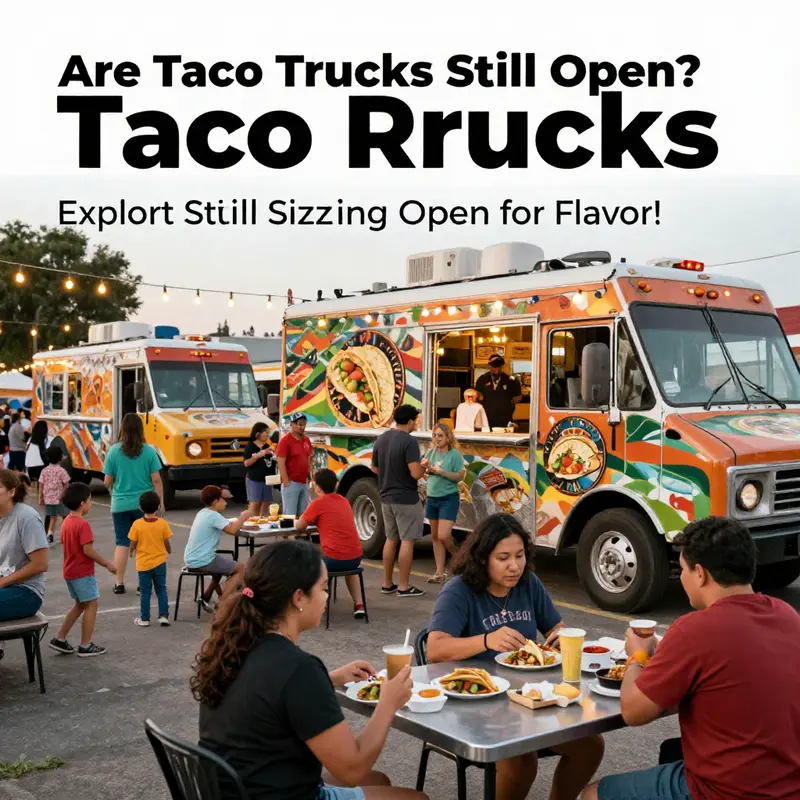
The question in many city corridors and neighborhood blocks is simple, even urgent: are taco trucks still open? The answer, more often than not, is yes—but that yes carries a deeper resonance. In many American cities, the mobile kitchens that began as weekend acts of family cooking have grown into steady, everyday presences. They map the city not with bricks and mortar, but with schedules, routes, and a rhythm that follows the appetites and stories of nearby communities. Across sunlit intersections, at curbside gatherings, and beside parks that pulse with weekend activity, these mobile kitchens continue to serve not just meals but a sense of place. They are still open because they matter—because they anchor culture, provide affordable nourishment, and offer a flexible platform for cooks who want to respond quickly to what people crave and where they live.
Adaptability is the other side of the same coin. The mobile kitchen has a natural advantage: it can move as tastes shift and as economic winds change. When foot traffic, local events, or the proximity of a workday crowd shifts, a truck can respond by adjusting its hours, tweaking its menu, or placing itself where it is most visible. This freedom is not privilege alone but a practical tool. It reduces overhead compared with brick-and-mortar operations and allows cooks to experiment without the heavy risk of a fixed storefront. Menus become laboratories where tradition meets invention. A familiar classic can sit beside a chef’s new creation inspired by a seasonal ingredient or a neighboring culinary influence. In this way, the trucks become rolling classrooms and pop-up galleries of taste, continuously refining what a taco can be while staying faithful to core flavors that keep customers coming back.
Accessibility forms another essential pillar. Because these kitchens operate with lower fixed costs, they can often offer high-quality meals at prices that work for families, students, and night-shift workers who might otherwise skip a warm meal. The advantage extends beyond price. The portable format means trucks can serve neighborhoods that lack a dense concentration of dine-in options, weaving into local networks and public spaces. A curbside stop near a transit hub, a food-truck park that concentrates several vendors in one place, or a pop-up at a community center can make a simple lunch an affordable, reliable ritual. This accessibility matters, especially in cities where economic disparities intersect with food deserts and uneven access to fresh options. The trucks do more than feed; they map out a more inclusive culinary geography and invite people to share a meal without the friction of a long wait or a steep bill.
Community interaction is the social grammar that gives taco trucks their social aura. They are not isolated vendors but social nodes where neighbors pause, share a moment, and exchange news as much as they exchange bites. The lines form not simply for food but for conversation—about school runs, neighborhood improvements, or the latest local event. In this sense, the truck becomes a kind of public square, a portable venue for connection that travels with the menu. People who might not cross paths in a fixed restaurant still meet in front of a truck, where the exchange feels intimate despite the bustle. This social fabric strengthens neighborhood ties and helps create a shared sense of ownership over the city’s culinary identity. The result is not only sustenance but social cohesion—a soft infrastructure that supports neighbors looking out for one another while enjoying a meal that feels both familiar and new.
Economically, taco trucks contribute more than money changing hands. They nurture small-business ecosystems, offering pathways for aspiring chefs and families to transform cooking into work with meaningful stakes. The low barrier to entry means more people can navigate the early steps of entrepreneurship without incurring the debt and risk associated with a traditional storefront. Some operators grow to run fleets of trucks or expand into other mobile formats, while others remain lean, nimble, and deeply rooted in a single community. Each success ripples outward: it creates jobs, sustains suppliers, and stimulates nearby vendors who rely on steady foot traffic. The broader economy benefits when cooks are empowered to earn a living doing something they love, and the city gains by retaining talent that might otherwise seek opportunity elsewhere. This is not just about feeding people; it is about building a resilient micro-economy that can bend and endure under pressure.
Regular operations form the practical backbone of this persistence. The trucks that remain open often establish predictable rhythms—weekly appearances at known parks, recurring routes through neighborhoods, or alignment with popular weekend markets. Consistency matters because it creates reliability for regular customers and builds trust within the community. People come to know where a truck will be on any given day, what it tends to serve, and when it tends to be busiest. The dependable presence matters as much as the flavors themselves. In an era where urban life can feel ephemeral, a few hours of steady, welcoming service can become a quiet anchor for residents who value speed, quality, and a sense that someone cares enough to show up regularly with hot food and a friendly greeting. Platforms that relay updates about hours and locations—like map services, review sites, and local blogs—help maintain this reliability. The ability to read a current schedule before heading out turns a casual lunch into a small act of planning, reinforcing the truck’s role as a practical local fixture rather than a sporadic spectacle.
Yet the story of openness is not without its tensions. Regulatory hurdles, urban-planning constraints, and the uneven distribution of prime, visible spaces can complicate a truck’s daily reality. Some districts have rules that limit where and when a mobile kitchen can operate, and others may favor established venues over street-front locations. Those frictions can feel like gatekeeping from a distance, especially when the same neighborhoods already understand and celebrate the cultural value of the trucks. The tension touches questions of access, equity, and representation: which voices get to claim the most visible street corners and the most favorable hours? These concerns remind us that the open status of taco trucks is not simply a matter of business viability; it is also a matter of policy, stewardship, and the ongoing negotiation of public space. In conversations about urban life, the trucks show how food becomes a lens for examining who gets to shape the street and who gets to eat there without barriers.
The real-time dimension of staying open is part of the learning curve for operators and communities alike. When people want to know where to find a particular truck, they turn to digital guides and public posts. Platforms that track hours, menus, and locations transform food mobility from rumor into reliable service. This transparency matters, because trust compounds over time. A customer who sees a truck arrive on a predictable schedule may choose to plan future visits, bring friends, or become a regular. The community benefits when there is clarity about when and where to find meals, especially for those juggling work, caretaking, and school schedules. The ongoing visibility of these mobile kitchens also gives neighborhoods a sense of continuity and celebration. Even as city life evolves, the simple ritual of choosing a truck, stepping close to the window, and watching tortillas crisp becomes a reassuring constant in a changing urban texture.
Behind the scenes, cooks and operators reflect a pragmatic optimism. They know that the city can reel with changes—economic shifts, evolving tastes, and new regulations—but they also know how to adapt without surrendering what makes their food special. The mobile format invites collaboration as well: cross-promotions with local artists, partnerships with parks and community centers, and joint appearances with other vendors all shape a broader, more resilient ecosystem. This collaborative energy helps the trucks weather slow periods and lean seasons. It also invites customers to see the trucks as part of a wider community conversation about food equity, cultural exchange, and the public value of affordable, high-quality meals prepared with care and pride. In this light, opening hours are more than a schedule; they are a promise that the city still believes in the value of shared meals, even when the world seems crowded with alternatives.
For readers seeking practical context, the chapter invites a quick step toward deeper engagement without losing the narrative’s flow. If you want to explore how to embark on a food-truck venture with a clear sense of direction, consider a resource that outlines the essential considerations before launch and during growth. Choosing the right food truck can offer a grounded glimpse into the decision-making landscape—from equipment basics to regulatory awareness and the realities of operating within urban grids. This internal link anchors practical guidance within the broader story of resilience and service that defines today’s taco trucks. By tying the general cultural and economic sketch to a concrete starting point, the chapter keeps a steady drumbeat: food, community, and the mobility that keeps both alive.
As a closing note within the larger arc of this article, taco trucks are not merely surviving; they flourish in ways that illuminate how cities can support diverse culinary voices. They demonstrate that nourishment and neighborhood identity can travel together, even through bureaucratic mazes and shifting markets. The trucks’ continued openness mirrors a city that remains curious, generous, and adaptive. Their stories remind readers that food is part memory, part innovation, and part neighborhood infrastructure. The line at the curb becomes a tiny version of civic life, where strangers become neighbors over shared plates and a warm greeting. In that sense, the question Aren’t they still open yields a richer answer: yes, and that openness sustains more than meals; it sustains community itself and the everyday acts of care that keep a city from fraying at the edges. External reference: https://www.austinchronicle.com/daily/food/2026-02-17/discover-the-best-tacos-in-austin-tx-strictly-from-food-trucks/
Open Doors on the Move: Navigating Regulation, Resilience, and the Enduring Life of Taco Trucks in America’s Cities
In many American cities, the sight of a taco truck parked at a curb or rolled into a bustling square remains a living, breathing symbol of urban food culture. They are not relics of a bygone street-food era but dynamic micro-restaurants that extend the reach of traditional flavors far beyond the fixed walls of a brick-and-mortar shop. The question are taco trucks still open? is not a simple yes or no. It is a doorway into a larger conversation about how cities regulate, support, and sometimes constrain the mobile chefs who keep these kitchens rolling. Across places as different as Austin, with its sunlit avenues and vibrant night crawls, and San Francisco, where the Mission District has long welcomed street-level experimentations, taco trucks endure because they adapt, advocate, and align with the rhythms of their neighborhoods. They are an ever-shifting mosaic of family history, entrepreneurial improvisation, and municipal policy—part tradition, part policy, all part of the same urban tapestry that makes a city feel alive.
The enduring presence of taco trucks rests on more than appetite; it rests on the recognition that mobility itself is a form of ingenuity. A truck is a small, portable kitchen that travels with the seasons, the crowds, and the feedback of diners who might be discovering a favorite bite for the first time. In cities where parking lots transform into holiday markets or where pop-up plazas become canvases for culinary experiments, the truck has the flexibility to test menus, tweak sauces, and shift service hours with a responsiveness that a fixed restaurant can rarely match. This adaptability helps explain why, even as regulatory frameworks tighten in some districts, taco trucks not only survive but flourish. They become, in many cases, the first rung on a ladder that leads a young cook into a broader culinary career, offering an entry point that lowers the barriers to entry and opens the door to real economies of scale through shared commissaries, cooperative marketing, and community alliances.
Yet the same mobility that fuels their vitality also invites scrutiny. Regulatory challenges—permit requirements, parking rules, and zoning constraints—anchor the reality that there is no universal license for the street-food truck. The specifics vary widely from city to city, district to district, and even block to block. In San Francisco, for example, the governance framework is a careful balancing act. It seeks to protect public safety, manage crowded streets, and preserve a fair playing field for older, established businesses, all while not stifling the energy and creativity that mobile vendors bring to neighborhoods. The patchwork can be complex, and enforcement can feel uneven, with some operators reporting streamlined processes and others encountering delays that slow down a launch or a seasonal pivot. In Austin, the regulatory landscape is equally real, though different in tone. The city has built a structured Mobile Food Vendor Program that articulates permitted zones, application processes, and compliance expectations. This institutional framework does not erase the burden of paperwork, but it does translate it into predictable steps for those who decide to roll a truck onto a public stage. The path to compliance becomes a map rather than a maze, a distinction that matters when the goal is to serve hot, fresh meals to neighborhoods that crave both authenticity and variety.
What emerges from these structured environments is a picture of contingency and collaboration. The regulatory hurdles—permit requirements and the maze of parking restrictions and zoning laws—are real, but they are not insurmountable, especially for operators who bring a spirit of collaboration to the table. Advocacy, for many truck operators, is a route to a friendlier operating environment. The most enduring stories of taco trucks include chapters where owners engage with local councils, participate in neighborhood associations, and partner with community organizers to create space for their business within a broader urban food ecosystem. This is not merely about one truck surviving; it is about a community’s willingness to see mobile vendors as legitimate contributors to the city’s cultural and economic life. When neighborhoods recognize a taco truck as more than a quick meal option—when they see it as a community anchor, a source of livelihood, and a cultural conduit—the regulatory conversation begins to shift from obstruction to co-creation.
The practical realities also reveal why tacos along a curb persist despite the friction. The truck’s lower overhead costs compared to brick-and-mortar operations make it a more accessible entry point for aspiring chefs and food entrepreneurs. A modest investment in a kitchen-on-wheels can yield a robust path to profitability, especially when coupled with a strong local following. This is not mere nostalgia; it is a model of entrepreneurship that aligns with the way many urban residents increasingly seek out affordable, high-quality meals that reflect diverse culinary heritages. The best taco trucks do not simply fill a stomach; they tell a story about place, memory, and the collaborative energy that fuels neighborhood life. The sensory experience—smoky meat, bright cilantro, lime’s tang, the crack of a fresh tortilla—becomes a shared micro-memorable moment that anchors a community’s sense of place.
Of course, the reality on the street is never purely celebratory. There are real challenges—regulatory, economic, and logistical—that can complicate even the most cherished mobile concepts. In cities where access to prime public spaces is uneven, or where permit queues grow longer than the customers’ patience, tacos can become a story of perseverance. The tension between accessibility and control is a constant leitmotif in the life of a taco truck operator. Some vendors experience delays in permit processing, while others navigate the complexities of parking codes that restrict where a truck can legally stop to serve. Others still contend with zoning classifications that effectively carve out certain avenues or neighborhoods as less hospitable to mobile vendors, even as those same areas are hungry for vibrant food scenes. These are not anomalies; they are the everyday texture of urban governance that shapes who can thrive as a mobile chef and where.
Despite these frictions, the overall trend remains hopeful. As of March 2026, there is no widespread closure trend affecting taco trucks across major American cities. The trucks are still open, still rolling, and still evolving. The appetite for authentic flavors, community connections, and the energy of a daytime or late-night curbside meal remains strong. Real-time updates about location and hours—surfaced through search platforms and local food blogs—continue to guide curious eaters toward new discoveries and familiar favorites. The mobility that underpins their business model makes them uniquely suited to respond to the city’s rhythms. When a neighborhood feels under-served or a street festival creates an unforeseen surge in demand, a well-positioned taco truck can adjust its schedule, its menu, and even its partnerships to meet the moment. This capacity to improvise is one of the truck’s greatest strengths, and it helps explain why, in a landscape of shifting policies and evolving consumer expectations, taco trucks persist as a resilient, beloved component of the urban foodscape.
The social and cultural dimensions of regulation also deserve attention. In discussions about who gets access to prime spaces, conversations about equity and privilege surface with surprising clarity. Some observers point to historical patterns in which certain neighborhoods, often those with and without strong political voice, attract more traffic and more favorable enforcement. Others emphasize the importance of community alliances that translate social capital into practical advantages: a cluster of vendors forming a coalition to lobby for shared staging areas; a neighborhood association hosting a weekly market that routinely features mobile vendors; or a city council hearing where tenants, residents, and business owners converge to craft better rules for mobile commerce. The point is not to attribute blame but to illuminate how policy, community support, and entrepreneurial energy can align to expand opportunities for vendors who bring meals that reflect the city’s multicultural fabric. It is a reminder that regulation is not just a constraint; it is a framework within which innovation can be stewarded when all parties commit to a shared vision of what a thriving street food culture looks like.
As this chapter threads together the practicalities of permits and the poetry of curbside cuisine, it also acknowledges the everyday rituals that keep taco trucks relevant. A family line of cooks might wind through a weekend stand and into a fleet of trucks that appears at a farmers market, a concert in the park, or a late-night corridor of dining. The sense of belonging—a community that recognizes a mission of hospitality, flavor, and accessibility—provides a social safety net that policy alone cannot create. This is perhaps the most compelling argument for keeping the regulatory conversation constructive: when the rules acknowledge not only safety and fairness but also the cultural and economic value of mobile food culture, the streets become laboratories for shared abundance rather than battlegrounds for competing interests.
For readers seeking up-to-the-minute specifics on how a truck can legally operate in a given city, the best path is to consult official municipal resources and to engage with local vendor associations. The reality of enforcement can vary widely from block to block and from quarter to quarter, but the overarching pattern is one of steady negotiation, collaborative problem-solving, and a refusal to yield a place at the curb for a cuisine that many people consider essential. The most reliable approach to staying open is to approach regulation as a living contract with the city: a document that can be negotiated, revised, and improved as it proves itself in practice. And for operators who want a compact, practical entry point into the labyrinth, there are clear steps to take. A quick reference would be to explore the legal steps for launching a food truck, a resource that distills complex requirements into actionable guidance and helps aspiring truck owners avoid common missteps. Legal steps for launching a food truck is a useful starting point for anyone who wants to understand how to translate culinary vision into a compliant, durable street food operation.
In the end, the question of whether taco trucks are still open in major cities is less about the status of a single business and more about the resilience of a mobile, culturally resonant form of dining. It is about recognizing that the street is a place for conversation, for apprenticeship, and for the slow, satisfying work of building a kitchen that can fit into a van, a lot, or a plaza—and then becoming part of the city’s ongoing story. The trucks’ continued presence signals a broader willingness in urban life to accommodate, celebrate, and often embrace the sounds, smells, and sights of a street-level culinary economy. When a city chooses to invest in ways to keep these kitchens moving—through permitting clarity, active community engagement, and predictable scheduling—the open doors on the move remain not only possible but inviting. And as diners, policy-makers, and operators continue to learn from one another, the street becomes a place where meals travel, cultures mingle, and the most portable form of hospitality remains the most vital: a meal served with a side of neighborhood pride.
External resource: https://austintexas.gov/department/mobile-food-vendor-program
Open Roads, Open Kitchens: The Enduring Life of Taco Trucks in a Changing Cityscape
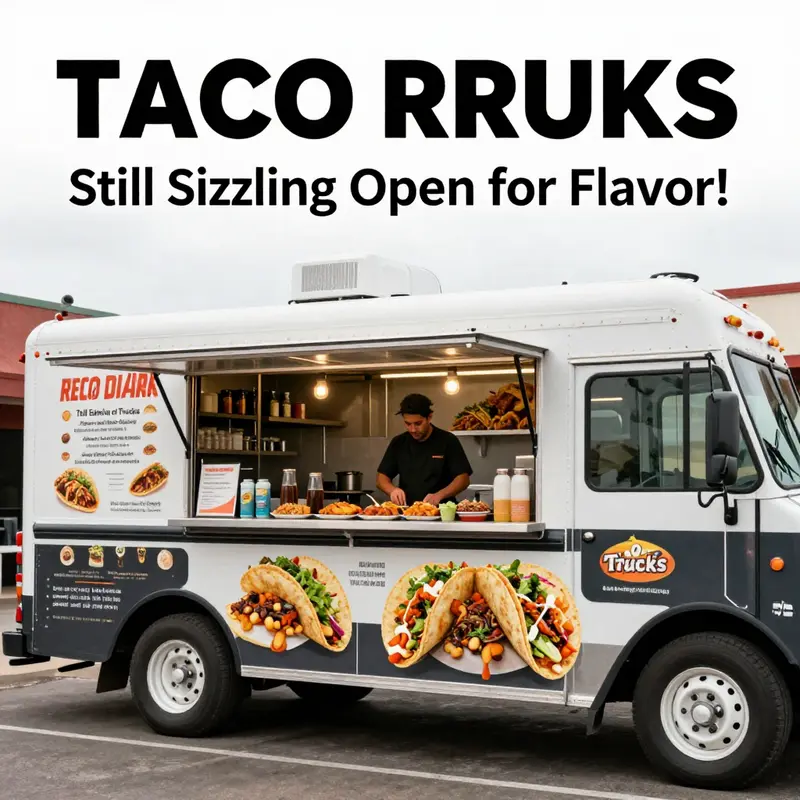
Ask a resident of a growing American city what a taco truck means to their daily rhythm, and you’ll hear a story that doesn’t begin or end with a single dish. It begins with mobility, with a kitchen that can chase a night market, a neighborhood festival, or a sudden surge of foot traffic in a park plaza. It continues with a willingness to experiment, to test a new idea on the fly, and to adapt when tastes shift or when regulations rearrange where a cook can park for the evening. What the scene reveals today is not a relic of a past street-food boom but a living, breathing micro-economy that travels with the people it serves. In many U.S. cities, taco trucks are still open, still busy, and still changing the way communities think about food, access, and belonging.
In places that have long depended on the rhythm of street commerce, the taco truck has grown from a weekend family affair into a cultural institution. These mobile kitchens originated as low-overhead, high-soul ventures—immersed in neighborhood life, where a grandmother’s recipe or a cousin’s twist on a classic could become a reliable daily meal for dozens of families. They offered a way to circumvent the costly upkeep of brick-and-mortar spaces while maintaining a constant pulse with the street. That core logic—that you can bring a warm, comforting plate to people where they are—has endured and even deepened in cities that value culinary experimentation as a public good. The result is a network of rolling kitchens that continues to diversify the spectrum of what “taco” can mean. Traditional fillings share the stage with regional and global inspirations, turning a simple street-food concept into a platform for cross-cultural exchange.
In urban analytic terms, the taco truck’s endurance makes sense. Their mobility gives them a degree of resilience that brick-and-mortar operations struggle to muster in the face of rising rents, zoning changes, and the occasional bureaucratic frictions that can slow or halt a project. The same mobility that allows a cook to chase the best weather and the best crowd also enables rapid menu experimentation. If one block becomes saturated with casual eateries, a truck can relocate to a different corridor and still reach the same broad audience. If a neighborhood’s palate shifts toward lighter or bolder flavors, the truck can pivot without the heavy burden of redecorating a storefront. This flexibility is not just about survival; it is about staying responsive to a city’s evolving appetite for flavor, technique, and speed.
Culinary innovation does not wait for a formal kitchen to approve it. The research landscape surrounding these mobile kitchens reveals a pattern: fusion ideas that might have seemed risky in a fixed restaurant now feel natural when tested from a curbside window. Consider the emergence of menus that blend Mediterranean elements with Mexican street food traditions. A grilled lamb or chicken taco with tzatziki and feta, a concept described in contemporary culinary discourse as Greek tacos, illustrates how a single dish can carry multiple cultural memories. The physical constraints of a truck—limited space, a short prep window, and a need for quick, repeatable execution—often push cooks toward high-impact, minimal-run ingredients and bold contrasts. In practice, this means menus designed around bright, crisp textures, and sauces that can be prepped quickly and held safely in a compact kitchen. The result is not chaotic fusion but a curated interplay of textures, temperatures, and aromas that travels well and satisfies a broad audience. This trend reflects a larger truth about modern taco trucks: they are less about copying a fixed recipe and more about translating a culture’s comfort foods into a street-food format that travels well and resonates broadly.
The adaptive logic of taco trucks also intersects with advances in how customers engage with food at the street level. The rolling kitchen operates as a kind of culinary social hub, a place where people from different neighborhoods converge, share recommendations, and expand their palates together. In practice, this means trucks rely on more than just the food they serve; they cultivate relationships through timeliness, consistency, and clarity in their communications. In a data-informed environment, a truck’s success hinges on predictable hours, a dependable queue, and the ability to respond to customer feedback in near real time. The nature of mobile dining makes it uniquely suited to digital-era tools—optimized routes, responsive menus, and promotional events designed to deepen loyalty. When a truck posts a limited-time fusion taco for a weekend market or announces a special price for a new item, the response can ripple through a community overnight. The combination of culinary curiosity and nimble logistics empowers trucks to remain relevant in a marketplace that prizes novelty but also appreciates reliability.
From an urban-planning perspective, the open-air kitchen is a living fragment of the city’s fabric. It occupies a space that is often contested between sidewalk vendors, formal retailers, and the need for pedestrian flow. Some neighborhoods contend with limited access to prime locations, raising questions of equity and opportunity in who gets to operate where and when. Critics have noted how historical patterns of privilege can influence the placement of vendors and the visibility of certain cuisines. Yet the ongoing vitality of taco trucks suggests that mobility and community ties can counterbalance these imbalances. A well-placed truck—near bus lines, schools, markets, and housing clusters—serves as a practical anchor for residents who might not have easy access to sit-down meals or expensive takeout. The portability of these kitchens turns food into a service that travels, reaching places where traditional restaurants may not consider economically viable. In parallel, regulatory landscapes are gradually maturing. Cities that once treated food trucks as temporary nuisances now recognize them as integral pieces of the local economy, offering tax streams, permitting structures, and safety standards that nurture sustainable operation. Still, the work is ongoing: licensing, space allocation, and the needle of equity in access to popular corners remain ongoing conversations, and the industry continues to adapt with a pragmatic spirit.
What keeps these trucks in motion is more than a pragmatic calculus of cost and risk. It is the sense of community they foster—stories passed along in line, the exchange of recommendations from one block to the next, and the way a single plate can carry memories of home, work, and celebration. In many cities, the taco truck scene is woven into the city’s identity the same way a favorite bakery or a beloved corner café is. You hear locals describe a neighborhood by its trucks the way others might describe the weather—an informal barometer of vitality. That vitality shows up not only in the warmth of the service but in the willingness of cooks to reimagine what a taco can be, to push against the boundaries of tradition while honoring the street-food roots that earned the genre its following. The Greek-taco concept, while a recent note in a longer musical score, serves as a metaphor for the broader trend: a movement toward culinary conversation, where the truck becomes a traveling ambassador for how cultures can learn from each other in delicious, accessible ways.
If one searches for real-time operating patterns, one finds a consistent thread: open kitchens on wheels are in perpetual dialogue with their surroundings. They respond to weather, to community events, to street closures, and to the ebb and flow of foot traffic. They adapt their hours to school calendars, farmers’ markets, and late-night commutes. They respond to customer feedback by tweaking seasoning levels, adjusting the heat of the salsa, or offering a vegetarian option that preserves the integrity of a dish while widening its appeal. This capability to respond quickly to preferences is not merely a convenience; it is a core component of why the format remains relevant. In a culinary ecosystem that prizes speed and variety, the truck offers a nimble alternative to the slower, more capital-intensive processes of brick-and-mortar kitchens. The meal is not merely sustenance; it is an event, a moment of connection that travels with the truck and leaves a memory behind.
In practice, the visibility and appeal of taco trucks now emerge through a blend of old-world hospitality and new-world digital engagement. Invite a customer to sample a fusion taco, and the promise is often tied to an experience: a taste that travels, a sensory map of the city—the smells of cumin and lemon, a crunch of fresh vegetables, a whisper of smoke that signals a kitchen has worked late. The trucks thus function as pop-up ambassadors for neighborhoods: quick, affordable, and deeply local. They meet people where they are, serving as a reminder that delicious meals can be both portable and personal. When a truck masters speed without sacrificing quality, when it crafts a new recipe that still feels “right” in the hands of someone who grew up eating these flavors, the result is not a one-off novelty but a durable offering that can endure the cycles of fashion and the fluctuations of tourism.
For readers curious about the human stories behind these rolling kitchens, the field reports gathered by community voices and local operators emphasize a recurring theme: resilience is built into the business model. The intimate knowledge of a neighborhood, the trust built through consistent hours, and the willingness to share a quick method for reproducing a favorite flavor at home—all these contribute to a sense of belonging. The role of the truck, in this sense, extends beyond the plate. It becomes a space where people from different backgrounds assemble, swap stories, and test new ideas in a shared, communal setting. And because the truck’s menu can adapt to the community’s evolving needs, it remains a relevant and appealing option even as the city changes around it.
For those following the broader food-ecosystem conversations, the fusion-driven approach is not seen as an ephemeral flourish but as a natural extension of the street-food ethic. The idea that one can celebrate both tradition and novelty in a single bite resonates with a generation hungry for accessible, affordable, and adventurous meals. The Greek-taco blueprint—lamb or chicken with tzatziki and feta on a tortilla—has served as a case study in this conversation. It demonstrates how a truck can carry an idea across cultural borders and present it in a form that is instantly familiar and warmly unfamiliar at the same time. Such innovations become less about shocking the palate and more about inviting curiosity, a quality that the best mobile kitchens have always possessed. It is this sense of curiosity that keeps the trucks open and the requests for them to return day after day, week after week.
An equally important dimension of ongoing vitality is the way trucks leverage community networks and storytelling. A successful operator treats the street as a venue for connection, not just commerce. The best trucks schedule collaborations with local artists, speak to neighborhood associations, and participate in street fairs that draw families and workers alike. These engagements make the truck not only a place to eat but a place to gather, a tiny public square moving through the city’s arteries. The stories that emerge from these gatherings—about recipes, memories, and shared plates—are what turn a quick lunch into a ritual. In turn, these rituals reinforce the legitimacy of the truck as a staple in the city’s culinary portfolio. The result is a sustainable loop: the more a truck contributes to a neighborhood’s social fabric, the more likely it is to thrive on the next market night, the next street festival, or the next festival of lights, parade, or block party. Open roads become open kitchens, and the city’s palate grows with them.
In terms of practical guidance for readers planning to engage with this landscape, the story is simple but powerful. The first step toward embracing the taco truck is to adopt a mindset of discovery: give space to new flavor combinations, show up at markets and events, and listen to the community’s feedback. The second step is to recognize that the experience goes beyond the plate. Efficiency, consistency, and clear communication matter as much as the food itself. A timetable unveiled in a friendly voice, a consistent level of service, and a willingness to accommodate dietary considerations create trust, which in turn translates into repeat visits and advocacy within neighborhoods. The third step is to acknowledge how mobility remains an asset. In cities where land is expensive and competition for storefronts intense, the truck’s capacity to reposition is not just a risk-management tactic but a strategic advantage. It allows cooks to reach different audiences—students, workers during shift changes, families during weekend activities—without incurring the financial burden of a permanent site. That combination of adaptability and accessibility is at the heart of why taco trucks remain a vital, enduring thread in the urban culinary fabric.
As a closing reflection for this chapter in the larger article, consider how the open road mirrors the open kitchen. The truck’s itinerary is not a straight line; it is a flexible map that responds to weather, crowds, and the city’s ever-shifting mood. The dishes that emerge from this map are both anchored in tradition and liberated by experimentation. They honor the street-food origins while inviting new audiences to participate in the story. When the ingredients of a Greek-inspired taco meet the sun-warmed corn shell and a drizzle of lime, the result is more than novelty—it is a symbol of a culinary ecosystem that prioritizes accessibility, curiosity, and resilience. Taco trucks survive not by clinging to a single trend but by weaving together community memory, experimental chefs, and the practical know-how of mobile food service. In that weaving lies the chapter’s core insight: yes, taco trucks are still open, and their continued presence speaks to a city’s appetite for flavor that travels, connects, and endures. The road, in short, is both the route and the kitchen.
For readers seeking more context on the growing cross-cultural experimentation that characterizes this era, a useful reference on how Mediterranean flavors are being integrated into street-food formats can be found in contemporary culinary writing that explores fusion trends. This broader exploration complements the local, on-the-ground stories and helps situate the taco truck within a wider pattern of culinary exchange. And for ongoing, community-focused narratives about these rolling kitchens, the Fire Up Taco Truck blog offers field notes and profiles from operators across the country. Fire Up Taco Truck blog
External perspective on cross-cultural taco ideas can be found here: https://www.foodandwine.com/recipe/greek-taco-recipe
Final thoughts
Taco trucks have not only withstood the test of time, but they have also become a cherished aspect of local identities across the U.S. These mobile culinary marvels play a pivotal role in community life, bringing people together and diversifying culinary experiences. As they continue to adapt to the challenges of regulation and evolving consumer tastes, taco trucks are not simply surviving—they’re thriving. So the next time you spot a taco truck, remember that you’re not just getting a meal; you’re participating in a rich cultural experience that flavors our cities with diversity and joy.