
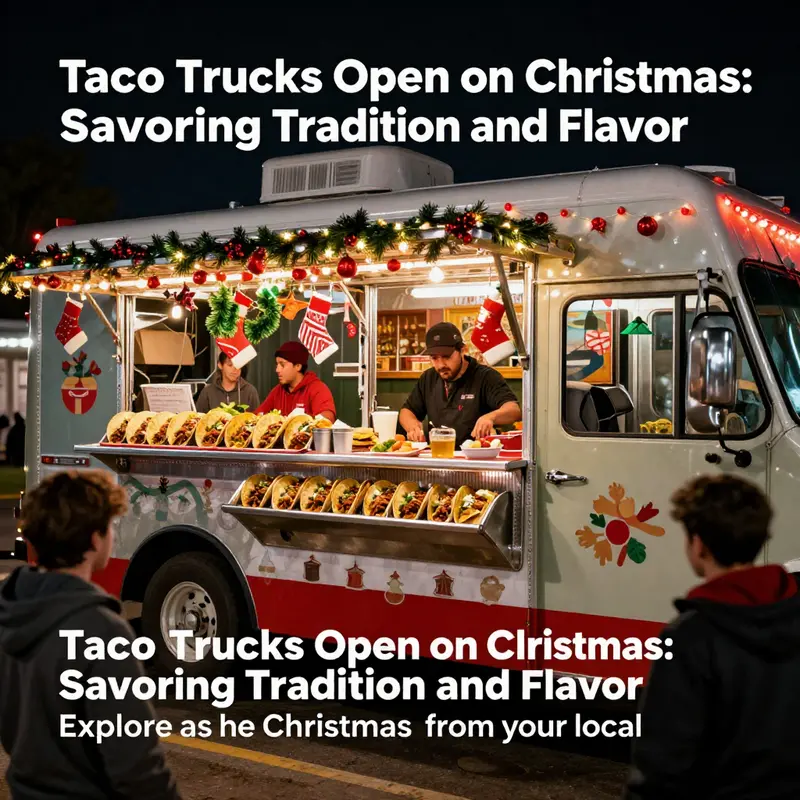
Christmas is a time filled with family gatherings, festive lights, and of course, delicious food. Many culinary enthusiasts and taco aficionados might wonder: are taco trucks open on Christmas? The answer is a hearty yes! In various cities, especially those rich in Mexican-American culture, these vibrant kitchens on wheels keep the holiday spirit alive by serving mouth-watering tacos. Not only do they offer a festive dining alternative for families, but they also contribute significantly to the local economy. This article will explore the cultural significance of taco trucks on Christmas, delve into their economic impact, and provide handy tips for finding the best taco trucks open on this cheerful holiday. Get ready to embrace the delicious vibrancy of tacos this Christmas!
Open on Christmas: How Taco Trucks Anchor Community, Culture, and Holiday Routines
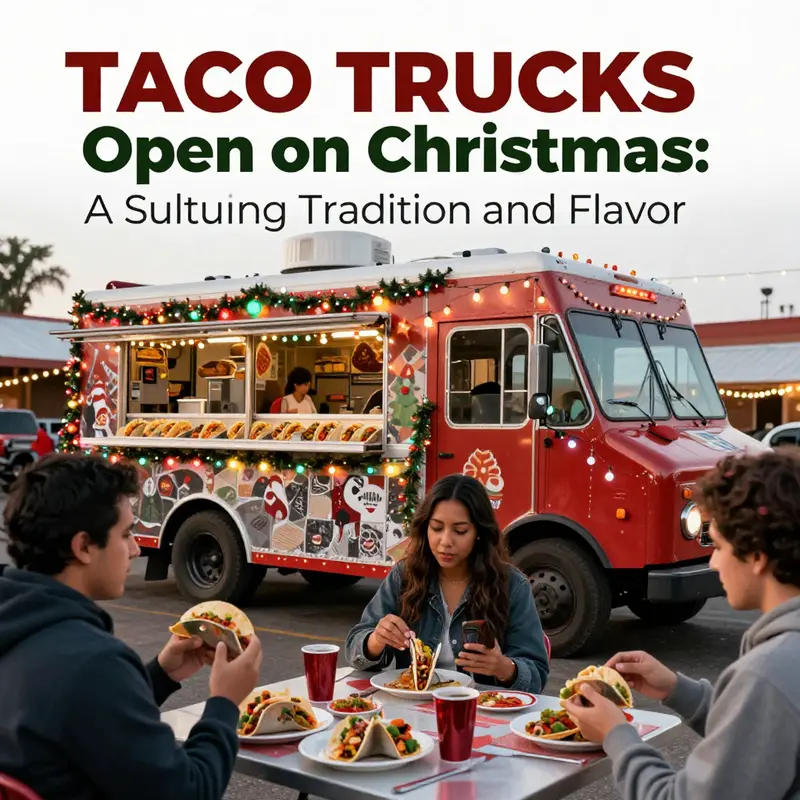
Culture, Labor, and Community: Why Taco Trucks Run on Christmas
The sight of a neon-lit taco truck serving crowds on Christmas Eve or Christmas Day tells a story about more than hunger. It reveals how food, migration, and urban life weave together. In many American cities, taco trucks are not simply vendors. They are social anchors for neighborhoods. They provide comfort food and familiar flavors for people who are far from home. They also reflect the economic realities of small businesses run by immigrant families.
Working a holiday can be a sacrifice. Yet many vendors see it as a continuation of cultural practice. Preparing tamales, pozole, or other familiar dishes during the holidays keeps traditions alive. When a taco truck opens its window on a cold December night, it often offers dishes that echo family gatherings. Those meals bring warmth beyond the plate. They link people to rituals they grew up with.
Taco trucks on Christmas also respond to unmet demand. Not everyone spends the holiday in a private home. Some people work shifts over the holiday. Others are traveling. Some simply prefer to eat out. Hospitals, airports, and emergency services still operate. Night shift workers need food. In cities with significant Mexican-American populations, the expectation that street food will be available is part of daily life. Vendors adapt to that expectation by staying open when others close.
Economic necessity matters too. Small food businesses operate on thin margins. The holiday season can be among the busiest times of the year. For many vendors, the revenue from a holiday service day helps pay bills and wages. Running a truck on Christmas can mean paying staff and making up for slower days earlier in the month. That reality shapes decisions about opening hours and menus. Families balance the need for income with the desire to celebrate.
The decision to open also involves community care. Taco trucks frequently act as informal community centers. Regulars stop by not just for tacos, but for conversation. Vendors often know their customers by name. On holidays, that familiarity becomes a kind of social safety net. People who would otherwise be alone can find company and human warmth in a well-lit serving window. For some, grabbing a quick plate from a truck is a modest way to mark the holiday.
Cultural affirmation is another important angle. Operating through Christmas can feel like asserting cultural presence. In cities where Mexican street food is integral, taco trucks represent continuity. Celebrating the season with recognizable foods reinforces identity. Nochebuena, the traditional Christmas Eve meal, can overlap with street-food offerings. Vendors may prepare specific items for the season. Seeing those foods on the street sends a clear message: these traditions are here to stay.
The culinary side of this phenomenon also matters. Over time, taco trucks have innovated and fused cuisines. They often create dishes that are seasonal or celebratory. Specials might include richer stews, festive salsas, or holiday-accented fillings. This kind of creativity keeps menus exciting. It shows how street food adapts to cultural moments. For a deeper look at how trucks blend traditions and innovate, consider the piece on Food Truck Fusions: A Culinary Revolution. Food Truck Fusions: A Culinary Revolution
Operating on a major holiday also highlights labor issues. Food truck workers put in long hours. They do so in a business that depends heavily on local foot traffic and events. Holiday shifts can mean working through family celebrations. That reality surfaces questions about compensation and respect for labor. Some operators offer higher pay for holiday shifts. Others rotate schedules to let staff observe certain traditions. Ultimately, vendors make practical choices according to their priorities and resources.
Regulation and permitting add another layer. Cities vary in how they treat food trucks during holidays. Some allow flexible operating zones. Others restrict locations or require special permits for holiday events. Weather is also a factor, especially in colder climates. Truck operators balance these constraints with customer demand. The result is a patchwork of practices. In large metro areas, you are more likely to find trucks open. In smaller towns, trucks may close or operate limited hours.
The customer experience on a holiday is distinctive. Lines at a truck often feel festive and communal. People swap stories while waiting. Strangers become companions over shared plates. The atmosphere can be lively, even solemn at times. Families with small children, late-night revelers, and workers heading home all mix. For many, ordering from a truck on Christmas is both practical and symbolic. It allows people to observe the day while staying part of public life.
Practically speaking, anyone seeking a taco truck on Christmas should plan. Social media matters. Many vendors post holiday hours in advance. Others rely on word of mouth. Shifts or special menus might be announced just a day before. Cash remains common, though many trucks now take cards. Be ready for limited menu items and for lines. Bring patience and cash, and consider tipping extra to acknowledge holiday labor.
Supporting vendors on holidays has social impacts. Spending at a truck helps sustain small businesses and local economies. A well-timed order can mean more than a meal. It can keep a family business solvent. When customers choose a truck on Christmas, they participate in a cycle of mutual support. This dynamic shapes how neighborhoods function year-round.
The phenomenon is also visible in how cities celebrate. In some neighborhoods, taco trucks cluster near public celebrations. They provide fast, accessible food for crowds at tree lightings, parades, or open-air services. Their mobility allows them to follow demand. In this way, trucks extend the culinary infrastructure of a city. They complement brick-and-mortar restaurants and provide options for those who want quick, authentic meals.
Vendors themselves sometimes turn the holiday into a moment of pride. Preparing special recipes for customers can feel like sharing one’s heritage. Some owners report that serving traditional dishes on Christmas feels like opening their home to the public. It’s a performance of hospitality on a communal scale. That ritualistic aspect gives a deeper meaning to the work.
At the same time, staying open is not universal. Some vendors close to observe the holiday with family. Others choose a middle path, opening on Christmas Eve but closing on Christmas Day. Neighborhood context and personal beliefs influence these choices. Diversity of practice means the answer to whether a truck is open will always vary by location and operator.
For visitors and newcomers, understanding this culture requires sensitivity. Show respect in small ways. Line up politely. Ask about special dishes. Be mindful of the vendor’s time. Recognize that a small business is offering more than food. It offers connection, history, and labor. Tipping, asking about ingredients, and expressing appreciation all matter.
Policy can help too. Cities that create clear permitting and supportive frameworks for mobile vendors make it easier for trucks to operate safely and fairly. Access to power, sanitation, and winter permits can reduce the burdens on operators. Such measures help sustain the cultural fabric that taco trucks contribute to local life. Thoughtful policy recognizes street food as part of a city’s ecosystem, not as a nuisance.
In the end, the presence of taco trucks on Christmas reflects broader patterns. It shows how immigrant cuisines become woven into urban routines. It highlights how work, culture, and community can converge in a small service window. For many people, a plate from a truck on a holiday is a simple pleasure. For vendors, it can be both livelihood and cultural expression. That overlap is what makes the phenomenon meaningful.
For firsthand reporting on how this plays out in specific cities, see coverage of vendors who choose to serve on the holiday. It offers grounded examples of the choices vendors make and the communities they serve. https://www.texastribune.org/2023/12/25/austin-taco-trucks-christmas/
Holiday Hustle: How Taco Trucks Drive Local Economies on Christmas
Economic Ripples from Mobile Kitchens
Christmas may look like a quiet stretch for some businesses, but for many neighborhoods, taco trucks create a steady pulse of commerce and social life. When traditional restaurants close or scale back, these mobile kitchens often stay open, serving residents, visitors, and late-night revelers. That activity does more than feed people; it channels money into local economies in ways that ripple outward. Though direct studies on taco trucks specifically operating on Christmas are scarce, existing research on holiday spending, night economies, and mobile food services allows a clear, reasoned picture of their economic role.
Taco trucks tap into holiday patterns. During the festive season, people travel more, attend events, and seek quick, celebratory meals between gatherings. Cities with robust public festivities attract foot traffic into districts that would otherwise be dormant. Mobile vendors placed near these gatherings capture immediate demand. Each transaction at a taco truck represents not just a sale; it is part of a chain of spending. Customers may buy tacos on the way to after-parties, while waiting for public performances, or after closing time when sit-down restaurants are unavailable. This behavior increases overall night-time spending, benefiting nearby stores, entertainment venues, and transportation services.
The multiplier effect magnifies that impact. Research on holiday travel and themed attractions shows that money spent by visitors tends to circulate through the local economy multiple times. When tourists walk past illuminated displays or markets and stop for food, the dollars they spend often find their way into wages for truck staff, supplies ordered from local wholesalers, and tips that fund household spending. Local workers then spend earnings on housing, groceries, and other services, continuing the economic chain. While we lack a specific multiplier estimate for taco trucks on Christmas, studies of holiday attractions suggest multipliers can be large. That means even modest taco truck sales can have disproportionate benefits for the neighborhood.
Beyond the multiplier, the concept of the night economy helps explain the trucks’ strategic importance. Cities invest in winter festivals, light trails, and late-night programming to animate public spaces during darker months. When these efforts succeed, they draw crowds that need convenient food options. Fixed restaurants sometimes close for holidays or limit hours due to staffing challenges. Mobile vendors are nimble. They can relocate to high-footfall points, set up quickly near events, and operate outside standard dining hours. This flexibility fills a market gap. It discourages potential spending leakage to other neighborhoods or online ordering options and keeps money circulating locally.
There are clear benefits for small-business owners. For operators of taco trucks, open hours on Christmas provide a vital revenue stream during a period when other income sources can dip. Holiday operations can offset slow weekdays or seasonal variability. That helps with cash flow, helps owners meet rent and permit payments, and supports investments in equipment maintenance or menu development. For workers, holiday shifts may translate into higher earnings due to increased demand or premium pay for festive-day labor. These gains are meaningful for micro-businesses and households that depend on consistent, year-round income.
The community benefits are social and economic. Taco trucks often position themselves at community hubs—near churches after services, outside event grounds, or by transit stops. Their presence enhances the vibrancy of public spaces, making neighborhoods feel safer and more welcoming. People linger, window-shop, and discover local retailers as they pass by. That spontaneous activity can spark repeat business for nearby stores. For neighborhoods that rely heavily on independent micro-businesses, the steady stream of visitors drawn in part by mobile food vendors can be a lifeline.
Taco trucks also support broader supply chains. They purchase tortillas, meats, produce, and condiments from local or regional suppliers. Even when some ingredients are sourced wholesale, increased holiday sales can boost orders for distributors and small farms. Larger events may lead trucks to hire temporary staff or contract for extra supplies, creating short-term employment and demand spikes that benefit the supply network. These linkages underscore how seemingly small, individual transactions at a taco window can strengthen parts of the regional food economy.
Municipal policy and planning can amplify or restrict these effects. Cities that consciously include mobile food vendors in holiday planning capture more of the local spending. Permits, designated vending zones near event sites, and streamlined safety inspections make it easier for trucks to serve in high-demand locations. Conversely, restrictive policies that prevent mobile vendors from operating near events can push visitors away from smaller neighborhoods and concentrate spending in a few established hubs. Thoughtful policy design recognizes mobile food services as partners in public programming. Providing clear guidelines and designated spots invites more vendors, enhances variety for visitors, and spreads economic benefits across communities.
There are cost considerations for operators that affect the net economic contribution. Running a truck on a holiday can mean higher operational expenses. Fuel, generator use, extra staff wages, and the need for larger inventory purchases increase outlays. Owners weigh these costs against projected sales. Successful holiday operations often hinge on careful planning: estimating foot traffic, choosing high-visibility sites, and tailoring menus for quick turnover and festive appeal. Some owners create special holiday offerings that capture attention and justify slightly higher price points. With prudent cost management, the incremental profits add to owner income and support broader local spending.
Equity and inclusion topics surface when considering who benefits. Taco trucks are often owned by immigrant entrepreneurs or small family businesses. Holiday revenue can be essential for these operators’ financial resilience. Ensuring that municipal policies, event organizers, and community stakeholders include and support these vendors becomes a matter of economic justice. When cities invite a diverse array of food vendors to public celebrations, they not only enrich culinary options but also distribute the economic gains to groups that might otherwise be excluded from mainstream commercial opportunities.
Measuring the precise impact remains a challenge. Most economic studies aggregate holiday spending without isolating mobile food vendors. To get clearer answers, cities could add targeted metrics to tourism and event reports. Simple data points would include vendor counts at events, average sales per truck, and spending patterns of visitors who purchase from mobile vendors. Surveys and short-term vendor reporting during major events would produce actionable data. Municipalities that invest in such measurement will better understand how mobile food services contribute to tax revenue, employment, and neighborhood vitality.
There are practical strategies that enable taco trucks to maximize their positive economic effect. First, visibility matters. Operators who partner with event organizers or local business associations to secure prime vending spots will see stronger sales. Second, menu simplicity increases throughput. Holiday crowds often prefer quick, recognizable options that pair well with drinking or walking. Third, pricing that reflects holiday demand—but remains accessible—keeps customers returning to the same neighborhood rather than seeking alternatives. Fourth, transparent communication about hours and locations drives patronage. Social media updates, community bulletin boards, and collaboration with organizers keep customers informed and can increase turnout dramatically.
Organizers and city planners can adopt complementary measures. Designated vendor corridors at holiday attractions create predictable patterns of foot traffic. Coordinated vendor rosters prevent clustering and encourage even distribution of visitors across neighborhoods. Subsidized permit fees or temporary licensing for holiday events lower barriers for smaller operators. Investments in shared sanitation facilities, lighting, and secure power sources around event zones improve safety, reduce operational friction, and increase vendor participation. These investments produce returns through enhanced visitor experiences and increased local spending.
Risk management matters for both owners and municipalities. Weather and safety concerns can disrupt operations. Cold, rain, or snow reduces foot traffic and alters menu appeal. Operators may need contingency plans, such as weather-proofing equipment or offering warm beverages and seasonal items. For cities, ensuring accessible transit and well-lit pedestrian routes during winter events helps maintain steady crowds. Liability and health inspection frameworks should be clear and proportionate, enabling safe operation without imposing excessive burdens that discourage participation.
There are storytelling and branding opportunities too. Holiday events present chances for micro-businesses to build loyal customer bases. Owners who craft a memorable holiday experience—whether through a unique seasonal salsa, free samplers, or a welcoming service style—turn one-off holiday purchases into repeat patronage. That ongoing relationship converts holiday spikes into sustained revenues across the year. For neighborhoods, local culinary identity grows stronger when independent vendors become a part of holiday traditions.
Finally, the lack of direct data is itself a call to action. Policymakers, researchers, and business advocates should collaborate to quantify the role of mobile food services during holidays. Targeted studies will inform better policies, such as where to place vending zones and how to streamline support. Researchers could pair transaction data with visitor surveys to estimate multipliers specific to mobile vendors. Local chambers of commerce and tourism boards are natural partners. Their annual reports could incorporate mobile vendor metrics to reflect this important, yet underrecognized, economic activity.
For business owners thinking practically about a Christmas open schedule, the economic case is compelling. Being open captures unmet demand, generates wages, and keeps money inside the local economy. For city planners, incorporating taco trucks into festive programming enhances the visitor experience and spreads economic benefits across more businesses. For communities, taco trucks add warmth, convenience, and social energy that make holiday events more inclusive and vibrant.
For those who want deeper context on holiday spending patterns, a detailed report by a national travel association explains how holiday attractions and travel generate significant local economic activity. That research helps frame why mobile food vendors can play an outsized role during seasonal festivities: https://www.ustravelassociation.org/research/holiday-travel-economic-impact-report-2023
For food truck operators seeking actionable financial guidance, practical tax planning can help preserve holiday earnings. Resources on maximizing deductions and structuring finances reduce the friction of operating on high-demand days. Consider reading a practical guide on food truck tax deductions to learn strategies that keep more revenue working for your business: food truck tax deductions.
Taken together, the economic logic is clear. Taco trucks operating on Christmas serve immediate customer needs and contribute layered benefits: they multiply local spending, support supply chains, create jobs, and activate public spaces. The exact magnitude of these effects merits further study. Meanwhile, cities and operators that recognize and plan for these dynamics will likely see stronger holiday economies and more resilient small businesses.
Where to Find Taco Trucks on Christmas: Smart Strategies for Holiday Cravings
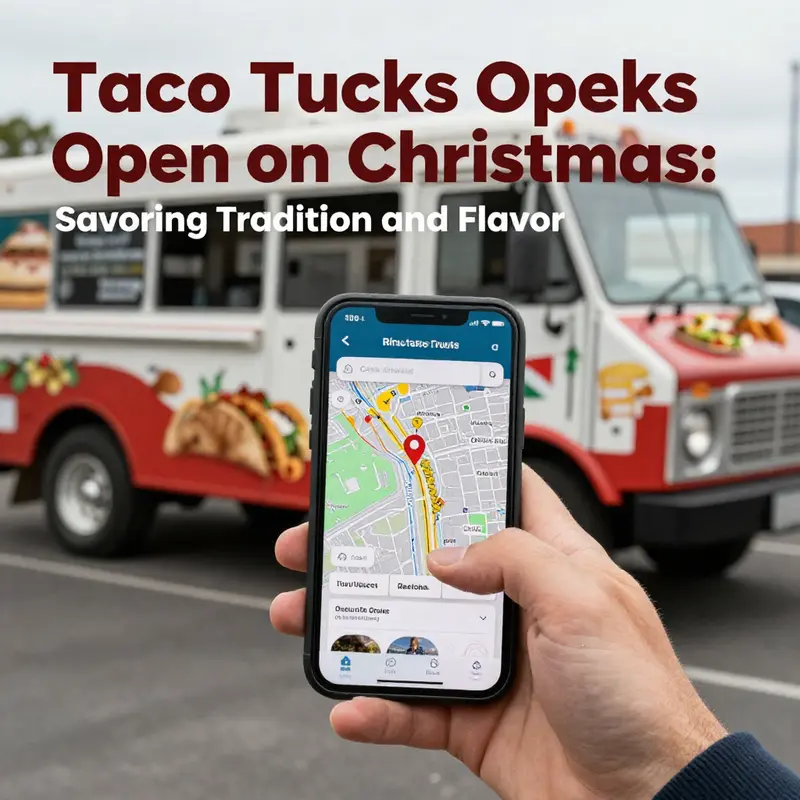
Where to Find Taco Trucks on Christmas: Smart Strategies for Holiday Cravings
Craving tacos on Christmas can turn an ordinary search into a small urban adventure. In many cities, taco trucks keep serving through the holiday, offering a mix of routine routes and surprise pop-ups. To find one quickly, you need a blend of real-time sleuthing, neighborhood knowledge, and a little empathy for the people running the truck. This chapter walks through pragmatic methods that work whether you are a local eager for a late-night bite or a traveler relying on street food to make the holiday feel like home.
Start with social platforms. Truck operators often post their Christmas hours, menus, and last-minute location changes on social feeds. Instagram stories and Facebook posts are common channels for that information. Stories are ephemeral, so check them the morning of or just before you leave. Look for pinned posts on a truck’s Facebook page; they often contain holiday schedules. TikTok has become surprisingly useful. Users film their discoveries and tag locations, creating a living map of bites and crowds. A short clip of a truck firing up on Christmas afternoon can save you an hour of driving. When you search, try phrases that combine the locale and the food, such as the neighborhood name and “taco truck,” then refine by date.
Map apps and review platforms are your next tool. Google Maps and Yelp let you filter by places that are open now. That filter is not perfect, but it often nudges you toward vendors who updated their hours. Many food trucks also register their expected route on these platforms. Before you go, check user photos and recent reviews for Christmas-related comments. If a truck lists a phone number, call it. A quick call will confirm hours and avoid wasted trips.
Local community groups and neighborhood boards are invaluable. Neighborhood apps and local Facebook groups often share tips about which vendors are open on holidays. Members will post street corners where trucks gather, or where a particular vendor has set up for the evening. Nextdoor and community forums can point you toward smaller, less-followed trucks that don’t always post widely but still operate on holidays.
There is a rhythm to taco truck service on holidays. In cities with large Mexican-American communities, trucks often stay open to feed people who prefer traditional flavors for holiday meals. They may appear near parks, community centers, or church parking lots where people gather after services. In entertainment districts and near hospitals, vendors sometimes remain available for workers and patrons looking for an easy, comforting meal. Knowing where people gather on a holiday gives you a strong clue about where a truck might be.
Timing matters. A common pattern is midday and early evening operations, with a spike around late afternoon and early evening as families and shift workers look for a quick meal. If you search early in the morning, you may find announcements of evening pop-ups. Conversely, late-night runs are also common in some neighborhoods. If you prefer a quieter experience, aim for either the first hour after opening or the last hour before closing. Crowd size often correlates with the popularity of a location, not necessarily with food quality, so be willing to travel a bit off the beaten path for shorter lines.
Plan like a local. If you will be in an unfamiliar city, identify neighborhoods with strong street-food cultures. Areas with dense populations or community events are reliable. Look for plazas, strip malls, and parking lots that commonly host food trucks. Many trucks rotate through regular spots during the week. On holidays, they may stick to those spots or seek places with higher foot traffic. Assemble a short list of two or three likely locations, then use social or map apps to confirm.
If you are traveling, prepare ahead. Bookmark truck pages, follow a handful of vendors on social media, and subscribe if they offer text or email alerts. Operators who plan to open on Christmas often announce in advance. For locals, it helps to follow the same vendors yearly; many repeat their holiday presence. For operators, these advance announcements require planning—staffing, supplies, and permits—so public posts are often accurate.
Operators planning to open on holidays must balance demand and resources. They need to estimate customer flow, order extra ingredients wisely, and prepare for variable weather. If you own or run a truck, think about a lean, well-curated menu for the holiday. Fewer items reduce waste and speed service. Consider family packs or pre-ordered specials to smooth demand. Partnerships with nearby vendors can help share space and customers. For compliance and safety, ensure your equipment meets the necessary standards. Many operators source equipment that complies with international safety and quality benchmarks, which supports reliable operations under high demand. If you’re a vendor, clear, visible signage and updated online hours reduce confusion for customers.
Communication is the core advantage for both seekers and operators. Sellers should post clearly and often in the days leading up to Christmas. Buyers should check updates frequently on the holiday itself. For truck owners, email lists and short-message systems are powerful. A quick afternoon blast saying, “Open at 4 p.m. at X lot,” draws regulars and curious newcomers. If you run a truck, consider offering a small incentive for pre-orders, such as a discounted bundle. That eases cash flow and helps forecast inventory needs. For customers, pre-ordering often guarantees food during peak periods when trucks might sell out.
Use hashtags and geotags strategically. When a vendor posts, precise geotags remove guesswork. Search community-driven hashtags that combine the food type and the city. If the truck you want doesn’t publish a location, look at recent tagged posts from customers. People often add their location when sharing a meal, creating an indirect trail. Keep an eye on the comments under vendor posts. Customers often mention where they are standing or the approximate wait time. That small detail can be the difference between a successful trip and a long line.
Be mindful of sanitation and safety on holiday runs. Busy service days require constant attention to food safety. Vendors should maintain safe temperatures and use clean handling practices. For customers, choose vendors who keep food covered and who use gloves and clean utensils. If a truck looks overwhelmed, consider coming back later or choosing another vendor. A short wait at a clean setup is preferable to quick service that cuts corners.
Payment options matter. Many trucks now accept cards and contactless payments. But some still prefer cash. On holidays, card readers can fail or networks can slow down, so carry a modest amount of cash. If you rely on digital payments, ask about backup systems before you order. Vendors often post accepted payment methods in their stories or pinned posts. Having both options keeps transactions smooth and helps you avoid long waits.
Think beyond the obvious neighborhoods. Trucks sometimes set up at gas stations, hospital parking lots, and near transportation hubs. These locations serve shift workers and travelers who need convenient meals. Also look for community events and charity efforts. On holidays, trucks sometimes team up with local shelters or churches to feed people, or they set up in volunteer-driven feeding events. These setups may be shared widely on community channels and can be a great option for both a meal and a chance to support community efforts.
When a truck is closed, have a fallback plan. Restaurants and cafes may provide holiday service too, but their offerings differ. If your craving is specific, consider local markets that sell prepared foods. Some restaurants and larger food vendors publish holiday guides online. For travelers, curated lists from local tourism boards and commerce chambers often include food vendors operating on holidays. The guide used in broader searches can point you toward confirmed options and save time.
If you plan to go out on Christmas, keep convenience and safety in mind. Holiday traffic patterns vary. Some areas are busier than others. Park in well-lit areas and follow local parking rules. If you plan to pick up food for a family gathering, call ahead and place an order to reduce stress. Many trucks are happy to prepare larger orders if you give them notice.
There is also cultural value in seeking out a taco truck on Christmas. For many people, street food embodies tradition, community, and comfort. A vendor open on a holiday is often doing it to serve a neighborhood, keep a family tradition alive, or maintain a business rhythm. Respect that context. Be patient, tip fairly, and remember that holiday service may demand extra work from small teams.
For truck operators, marketing the holiday schedule pays off. A focused, well-timed update on social accounts is effective. If you run a truck, consider a brief message series in the week before the holiday, followed by an immediate update on the day. An email or SMS list can reach loyal customers directly. For guidance on promoting and sustaining a food truck business, explore practical resources like the post on email marketing for food trucks that covers useful tactics and timing. email marketing for food trucks
Finally, when you need a reliable quick reference, consult curated guides that confirm holiday openings. These lists compile verified hours and locations, which is useful for travelers and locals alike. They often include major cities and highlight areas with a strong street-food presence. A recent guide provides a helpful overview of vendors and their holiday patterns. If you want a single resource to check, that guide is a practical starting point. https://www.alibaba.com
The search for tacos on Christmas is part practical and part communal. Use social media and map apps for live updates. Check neighborhood boards for insider tips. Respect vendors’ schedules and safety practices. If you are a truck owner, plan your menu and communication carefully, and consider simplified service to meet holiday demand. With the right mix of planning and on-the-ground checking, you can find a satisfying meal on Christmas and support the small businesses that make city streets taste like home.
Final thoughts
This Christmas, don’t settle for the usual holiday fare—embrace the spirit of the season with festive tacos from your local taco trucks! With many of them keeping their windows open, you can savor the flavors of tradition and community in every bite. Not only will you enjoy delicious meals, but you’ll also support local businesses in your area, contributing to the lively tapestry that makes the holiday season special. So grab your loved ones, find a taco truck, and let the flavors of Christmas bring joy to your holiday celebrations!