
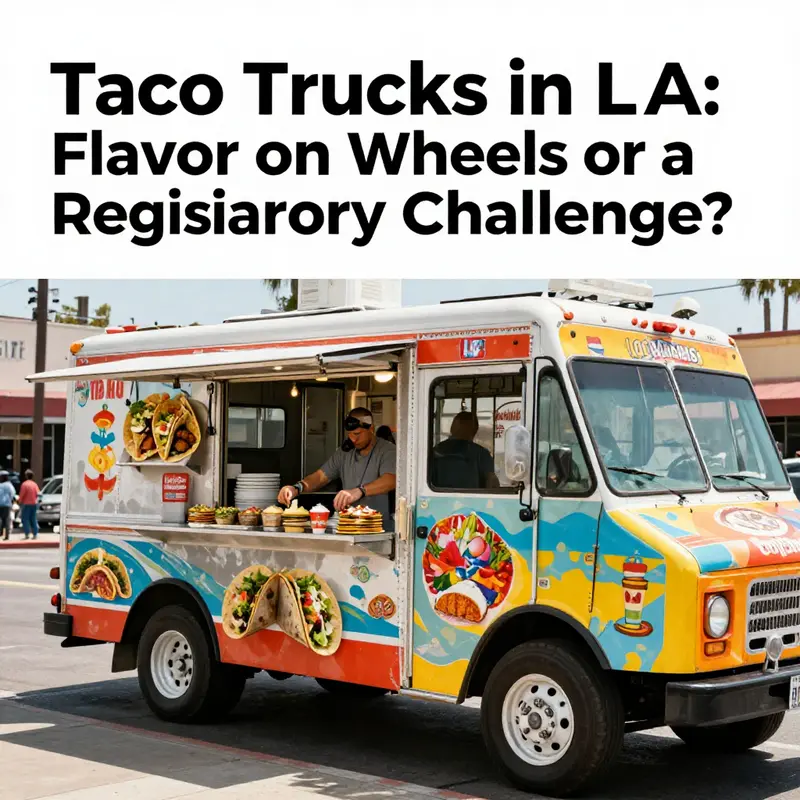
Los Angeles is a city that tantalizes the taste buds, filled with diverse culinary delights, and none quite capture its essence like the ever-popular taco trucks. These mobile kitchens not only serve mouth-watering tacos but also weave a narrative of cultural significance, community spirit, and entrepreneurial courage. But, the question remains: Are taco trucks allowed to operate in the City of Angels? Understanding the regulations that govern their presence, the health standards they must meet, their economic impact on local restaurants, and their role within the vibrant food scene will provide you with a complete picture of their contribution to LA’s rich tapestry of flavors. Each chapter of this exploration will dive deeper into these aspects, revealing why taco trucks are not just allowed but embraced by the city and its inhabitants.
Navigating the Regulatory Landscape: How Los Angeles Allows Taco Trucks to Roll
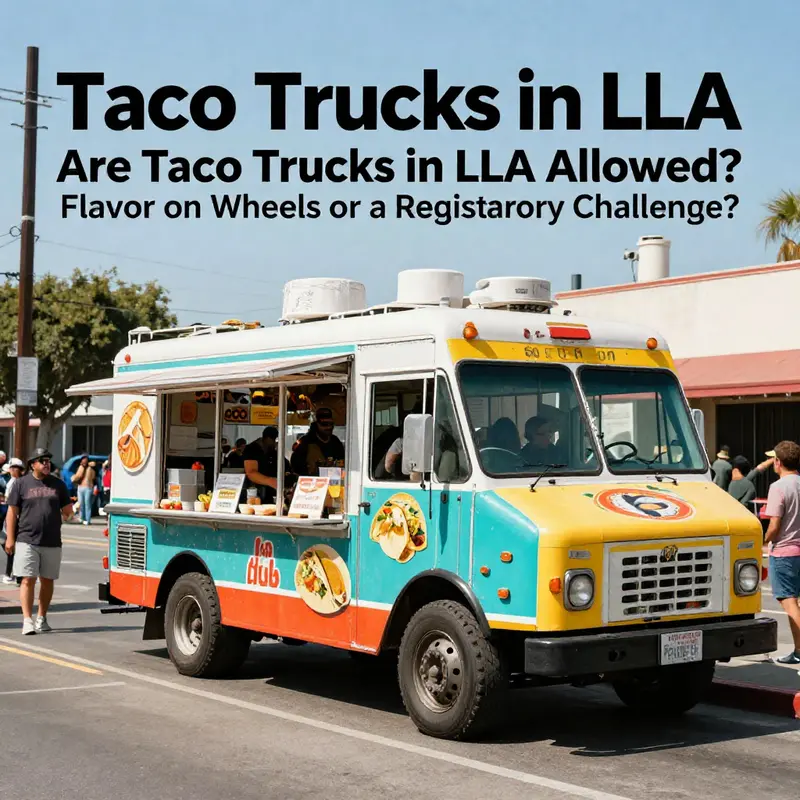
Los Angeles is a city defined as much by its open-air taco economy as by its skyline. The sight of a brightly lit cart or a compact truck parked along a curb at golden-hour intersects with the city’s legal framework in ways that are both practical and symbolic. The regulatory regime surrounding taco trucks—often labeled as catering trucks in official discourse—creates a baseline of public health and safety standards that allow vendors to operate across neighborhoods while maintaining accountability to residents and visitors. This balance has persisted through shifting political winds and fiscal realities, shaping not only the logistics of where and when a truck can park but also the broader social narrative around street food as an essential urban amenity.
The core of the regulatory framework is straightforward in its intent: ensure that the food sold on wheels meets health and sanitation requirements, while permitting mobility and community access. Historical references point to a set of operating presumptions that have guided enforcement since at least the late 2000s. The Los Angeles Times noted in 2008 that catering trucks must pass health inspections before they could be permitted to operate. They also highlighted a spatial condition—these trucks typically must be parked within 200 feet of a restroom facility. The logic behind this proximity rule is simple yet practical: convenient access to restrooms is a proxy for hygiene, reducing the risk that workers will need to leave the immediate worksite in ways that might compromise cleanliness or workflow. In a city that relies on a dense, rotating cast of food vendors to meet diverse palate demands, such rules function as a floor, not a ceiling: a baseline that keeps operations safe without placing an undue burden on street-level entrepreneurship.
Yet the enforcement landscape is not a neat, uninterrupted arc. The same material that documents the regulatory requirements also reveals the friction that arises when governance intersects limited municipal capacity. A September 2024 report brought into sharp relief the tension between rule-making and enforcement. New parking laws had been introduced to respond to evolving street-use patterns, but the city’s finances—reaching nearly $400 million in debt—translated into layoffs and budget constraints that could weaken the ability of inspectors to monitor compliance consistently. This is not a story of lax oversight versus overbearing regulation; it is a case of a city attempting to sustain a complex ecosystem of mobile vendors within a fiscally stressed environment. When inspectors are scarce, the obvious risk is uneven application of rules. Some operators may experience timely inspections and clear guidance, while others navigate delays or ambiguity around compliance. The result can feel, to street vendors and neighborhood residents alike, as if the law is a moving target, not a fixed standard.
This tension is not a purely administrative footnote. It intersects with the broader social and economic fabric of Los Angeles. Taco trucks are more than a business model; they are nodes of cultural exchange and economic resilience. The popularity of mobile Mexican cuisine in LA speaks to historical migration patterns, family networks, and the demand for affordable, authentic food in a city characterized by high living costs. A 2026 study on food truck culture positioned these vehicles as both culinary enterprises and symbols of identity and community resilience. They become spaces where migrant labor, informal networks, and urban taste converge. The regulatory regime, therefore, is not merely about permits and penalties; it is a mechanism by which a diverse urban community negotiates access to nourishment, livelihood, and place. In this sense, enforcement gaps or staffing shortages can ripple beyond the bureaucracy, affecting neighborhoods that rely on mobile vendors for daily meals, particularly in areas underserved by brick-and-mortar restaurants.
A feature of the LA framework worth underscoring is its dual governance structure, which involves city ordinances paired with health department oversight at the county level. While city-specific rules govern parking, location, and operational hours, the health inspections and sanitation standards are administered through public health authorities who set the production and service parameters for any food sold on wheels. This layered approach helps ensure that the product—from storage to preparation to service—meets consistent safety benchmarks, even as the exact parking spot and neighborhood context can vary widely. In practice, a truck might be cleared by a health inspector yet encounter neighborhood-level constraints—varying street widths, permit zones, or competing demands from residents and small business associations. The result is a dynamic choreography of permits, inspections, and local knowledge that trucks and regulators navigate together.
For practitioners and scholars alike, one practical implication of this framework is the ongoing need for clarity about licensing steps and compliance expectations. The process is not simply about obtaining a single permit; it is about aligning a suite of requirements across health, zoning, and municipal services. The “legal steps for launching a food truck” resource itself serves as a bridge between the abstract rules and the practicalities of daily operation. It translates regulatory language into actionable guidance, helping operators prepare for inspections, understand where they can park, and anticipate the conditions they must meet to stay in good standing. The value of this guidance is amplified in a city where street food is woven into the fabric of the urban experience. A well-informed operator can anticipate potential friction points—such as the proximity requirement to a restroom by the time the vehicle is deployed, or the seasonal variability in parking availability—and plan accordingly, minimizing disruptions to service and ensuring that customers enjoy a safe, reliable dining experience.
Still, the regulatory story remains contingent on the state of city governance and fiscal health. The 2008 framework existed in a different fiscal climate than today. As cities recalibrate parking norms, traffic patterns, and public health expectations in response to growth and changing mobility trends, the rules themselves can evolve. The Los Angeles Department of Public Health and the City of Los Angeles Food Truck Ordinance are the official touchstones for operators seeking current guidance. While the broader narrative of “Are taco trucks allowed in LA?” is answered affirmatively by these institutions, the practical answer is nuanced. There is permission to operate, provided the operator remains compliant with a set of standards that balance public health with the vitality of street-level commerce. The pace and precision of enforcement, however, depend on the city’s capacity to staff and train inspectors and to coordinate with county health authorities on shared standards. In other words, operability is conditional, not guaranteed in perpetuity, and subject to the political and fiscal tides that shape municipal budgets.
To readers and researchers, this underscores a critical takeaway: the story of tacos on wheels in Los Angeles is inseparable from the story of governance. The city invites mobile vendors to participate in the urban economy, but it does so through a framework designed to protect health, regulate space, and manage public expectations. The cultural significance of this arrangement cannot be separated from the practical realities of enforcement and funding. The taco truck, then, becomes a lens through which the city’s priorities are negotiated in real time—food access, economic opportunity, and public safety all contending in the same street corner.
For anyone considering stepping into this space, the path is illuminated by both precedent and practicality. The regulatory framework is a compass, not a cage. It points toward a set of actionable steps—inspections, rest-room proximity, clean operations, and a compliant parking plan—while acknowledging that the day-to-day rhythm of enforcement may shift with budget cycles and staffing levels. The current moment invites a nuanced understanding: the city supports mobile food entrepreneurship, yet it must balance it with successful oversight under a strained public sector. In this sense, the LA taco truck phenomenon is as much about adaptive governance as it is about flavor and entrepreneurial spirit.
As this chapter connects to broader conversations in the article, readers can explore the practical, step-by-step considerations for getting started with confidence by consulting practical guidance on launching a food truck, such as the resource linked here: legal steps for launching a food truck. This internal linkage helps knit regulatory awareness with hands-on preparation, ensuring that discussions about policy translate into concrete, on-the-ground readiness. For those seeking external confirmation of current standards, the public health authority resources provide the definitive reference points for what is required today and how those requirements are interpreted across neighborhoods and city blocks. A visit to the Los Angeles County Department of Public Health website offers the most authoritative guidance on ongoing health inspection criteria and provincial/state-level considerations that affect city-level practice. In the spirit of accountability and continuous improvement, audiences are encouraged to consult these official sources to stay abreast of any updates in ordinances, inspection protocols, or parking regulations that shape the daily life of taco trucks in Los Angeles.
External resource: For up-to-date health guidance and official standards, consult the Los Angeles County Department of Public Health at https://publichealth.lacounty.gov
Guardians of the Griddle: How Health Standards Let LA’s Taco Trucks Serve the Public
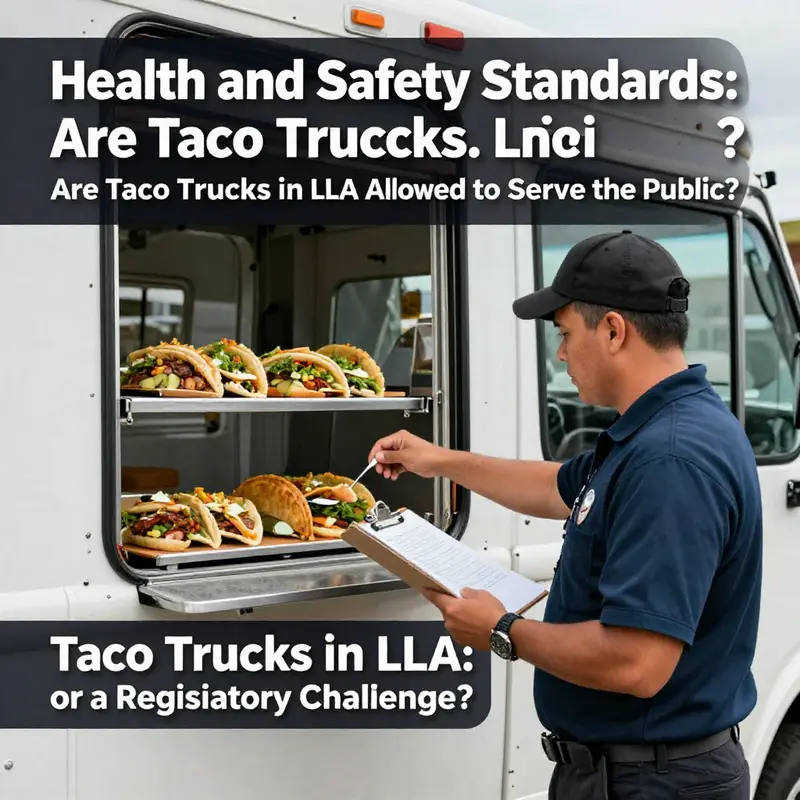
Taco trucks in Los Angeles operate within a system that values hustle and flavor as much as it prizes public health. The city’s appetite for street-level dining is real and enduring, but it does not tolerate laxity when it comes to preparing and serving food. The broader narrative—that taco trucks are allowed to serve the public—rests on a framework of health and safety standards enforced by the Los Angeles County Department of Public Health and the Los Angeles City Health Department. This framework is not a bureaucratic hurdle so much as a guarantee that the food arriving on a busy street corner is prepared, stored, and served in ways that minimize risk to customers. The result is a cuisine that is both beloved and trustworthy, a blend of spontaneity and regulation that has helped LA cultivate a vibrant, inclusive street-food culture rather than a free-for-all scramble for a quick bite.
At the heart of legality and legitimacy are permits. To operate legally, a taco vendor must obtain a valid permit from either the city or the county, depending on the precise location and operating model. This permit process is not merely a formality; it anchors the business in a framework of regular oversight. Once issued, the permit signals that the operator has met baseline requirements related to vehicle health, equipment, and the capacity to comply with inspection protocols. The permit is a living credential, one that requires renewal and ongoing compliance rather than a one-time stamp. In practical terms, this means the operator must be prepared for periodic, unannounced inspections designed to verify that practices on the ground match the standards promised during the permit application. The health department’s evaluations cover every stage of food handling—from the moment raw ingredients are received to the way leftovers are stored and disposed of at the end of service. This ensures a chain of safety that is visible to customers and respectful of the city’s dense, dynamic street-food ecosystem.
Regular inspections are the other pillar of legitimacy. They function as a continuous audit of practice rather than a punitive afterthought. Inspectors assess sanitation levels, the cleanliness of prep areas, the integrity of cooking equipment, the cleanliness and maintenance of the truck itself, and the hygiene practices of employees. They scrutinize waste disposal methods to ensure that grease, trash, and wastewater are managed in ways that do not compromise public spaces or water quality. Importantly, inspectors also review water sources to confirm that the truck uses clean, safe water for cooking, cleaning, and handwashing. In a city whose climate and density intensify the risk of rapid bacterial growth if temperatures are not properly controlled, these checks are essential to keep foodborne illness from taking root in the public sphere.
A distinctive feature of the LA health regulations is the emphasis on transparency. Public health scores are typically posted on the vehicle itself, making it possible for customers to make informed choices with a quick glance. This practice places accountability into plain sight and reinforces consumer trust in a mobile dining landscape that travels through neighborhoods with varying levels of infrastructure and amenities. It also serves as a visible reminder to operators that performance on inspection day is not a singular moment but a standard that must be sustained daily. The requirement that a current health inspection score be displayed publicly is not punitive in intent; it is a straightforward signal that safety and quality are ongoing commitments, not occasional privileges.
The details of practical compliance cover a broad set of guidelines. Food handling protocols require that cooks and prep staff follow methods that prevent cross-contamination and ensure temperature control. Sanitation standards govern how equipment is cleaned and sanitized, how utensils are stored, and how surfaces are maintained to prevent the buildup of microbes. Waste disposal policies regulate how packaging waste, grease, and other refuse are managed, with strict rules on where and how waste is stored until collection. Employee hygiene is another critical focus, encompassing handwashing practices, the use of protective gear where appropriate, and the health status of workers who may handle ready-to-eat foods.
In addition to these core requirements, some operational details can be influential, even if they vary by jurisdiction or specific location. For example, certain regulatory frames require that a taco truck parks within a prescribed proximity to restroom facilities, a rule designed to ensure sanitary access for staff and minimize public health risks associated with inadequate restroom availability. In practice, this means vendors sometimes align their choosing of service locations with nearby publicly accessible restrooms or designated facilities that meet health department standards. Such provisions reflect a broader philosophy: health and safety cannot be outsourced to chance or improvisation. They are embedded in the very spaces where food is prepared and served, and the urban fabric of LA—streets, parking lots, markets, and curbside corners—becomes a stage for responsible dining where customers can feel confident in what they eat.
The enforcement apparatus behind these standards can be stern when needed. Fines, temporary suspensions, or even permanent closures can follow if a truck repeatedly fails to meet requirements. The consequence structure is not aimed at crushing small businesses but at safeguarding public health and ensuring a level playing field. When shops and trucks all meet the same baseline, consumers can compare experiences across different neighborhoods without worrying that a subpar operation is skirting essential safeguards. The resulting ecosystem is competitive in spirit but not at the expense of safety. The discipline comes not from draconian oversight but from a shared recognition that successful, sustainable street food depends on consistency, cleanliness, and reliable food safety practices.
The broader cultural significance of these standards cannot be ignored. LA’s taco-truck culture has been the subject of scholarly discussion for years, including debates over zoning, parking, and the inevitable friction between mobile vendors and brick-and-mortar establishments. The literature on this topic, such as discussions around “LA’s Taco Truck War: How Law Cooks Food Culture Contests” (doi: 10.2139/ssrn.1694747), highlights how policy debates shape the texture of food culture in a city famous for reinventing both cuisine and public space. Health and safety standards thus function not only as protective mechanisms but as shaping forces for the city’s culinary identity. They help ensure that street food remains a trusted, vibrant part of daily life, while giving communities a sense that the city’s rapid, creative energy is paired with responsibility. In this sense, regulation is a partner to culture, not its adversary.
For readers who may be considering launching a taco-truck venture or evaluating the landscape as curious members of the public, the practical takeaway is simple and actionable. Begin with the permit process, and anticipate the need for ongoing inspections. Build a robust system for food handling, sanitation, waste management, and employee hygiene, and design operations with the clear expectation that health scores will be publicly visible on the vehicle. Choose locations with reliable restroom access when possible, and plan operations around safe water sources and clean facilities. These steps create a foundation that supports not only safe food but also a thriving entrepreneurial endeavor that can contribute to community vitality across neighborhoods. The city’s regulatory architecture is not a barrier to flavor; it is a framework that allows LA’s street-food culture to flourish in ways that are cherished by residents and visitors alike.
To explore a practical, permissions-oriented perspective on what it takes to move from concept to street operations, many would benefit from reviewing a dedicated guide on the legal steps for launching a food truck. This resource frames the process through a compliant lens, offering a concise map of the permits, inspections, and ongoing responsibilities involved in serving the public. It is a useful companion to the standards described here, and it reinforces the idea that a successful taco-truck venture is built as much on regulatory literacy as on culinary craft. For readers seeking a direct gateway to this pathway, the following internal link provides a structured overview: Legal steps for launching a food truck. The link is a starting point for practical planning, not a substitute for the official channels and databases maintained by the health departments.
Ultimately, the LA story of taco trucks rests on a balance between appetite and accountability. The city invites a diverse range of vendors to bring heat and heart to the streets, but it also demands a steadfast commitment to public health. When permits are current, inspections are passed, sanitation rules are followed, and scores are clearly displayed, LA preserves the trust that makes street food possible. This trust is the quiet engine behind the city’s beloved taco culture: a culture that feeds people with generosity and taste while honoring the essential safeguards that keep communities safe. For those who rely on these vehicles for meals and livelihood alike, that balance is a reason to celebrate the accessibility of vibrant, flavorful options without compromising health. For the latest official guidelines and updates, readers can consult the Los Angeles County Department of Public Health’s resources, which remain the most authoritative reference on mobile food vendor requirements in the region: https://publichealth.lacounty.gov
Economic Currents on the Curb: How LA Taco Trucks Compete, Comply, and Contribute to the City’s Food Economy
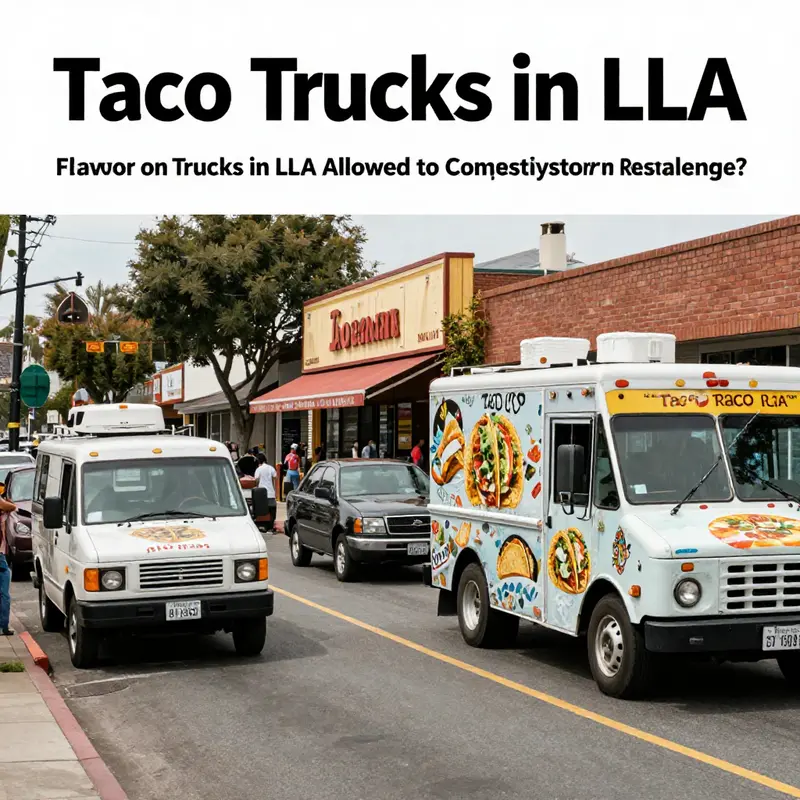
Taco trucks in Los Angeles occupy a space where mobility, regulation, and appetite intersect in a way that reveals much about the city’s urban economy. They are not simply itinerant vendors; they are a visible fraction of a large, dynamic ecosystem that keeps neighborhoods connected to affordable, culturally rich food. The city and county health departments set clear standards, including health inspections and proximity requirements that create predictable operating conditions while allowing a thriving street-food culture to flourish. These rules function as gatekeepers that protect public health while permitting a robust street-food scene to develop.
When we quantify the scale of this phenomenon, the numbers themselves tell a compelling story. Los Angeles is home to thousands of taco trucks, a figure that signals both ubiquity and a deeply embedded supply network. A typical truck draws a steady line of customers, with estimates suggesting hundreds of people visiting each truck daily. Multiply across the fleet, and the impact on local livelihoods—especially for immigrant or first-generation entrepreneurs who often drive these businesses—is substantial. The mobility of these ventures translates into lower overhead costs relative to brick-and-mortar restaurants, enabling menu flexibility and rapid pivots in response to neighborhood tastes and changing urban patterns. This mobility is not merely about moving through space; it is about mobility in opportunity, allowing operators to test concepts, scale slowly, and build a brand footprint across diverse neighborhoods without the heavy debt typical of fixed sites.
The economic contribution goes beyond individual profits. Mobile vendors act as micro-entrepreneurs who absorb risk, employ people, and sustain supply chains that include farmers, produce distributors, and cooks who bring a wide range of cuisines to the table. In many cases, taco trucks are led by immigrant or first-generation entrepreneurs who leverage family networks and local know-how to innovate on the menu while maintaining price points that are accessible to a broad cross-section of the city’s residents. In this sense, the trucks function as incubators of innovation. The flexibility afforded by the mobile format makes it easier to pilot new recipes, refine service models, and experiment with collaborations that could later mature into brick-and-mortar eateries. The broader picture is that these mobile vendors contribute to a vibrant food economy by expanding consumer choice, stimulating local entrepreneurship, and reinforcing a cultural repertoire that makes Los Angeles’ food scene distinctive.
Yet the economics of competition cannot be discussed without acknowledging the debates that have accompanied this sector. The city has not always greeted taco trucks with unanimous enthusiasm. Back in 2008, a period widely described as a Taco Truck War, regulatory restrictions and zoning concerns sparked tensions between mobile vendors and established restaurants. The arc of that conflict helps explain why today’s regulatory regime emphasizes coexistence rather than exclusion. The current framework recognizes that taco trucks are legally recognized vendors who must operate under carefully crafted ordinances. These rules govern where and when trucks can park, and they are designed to prevent any single mode of provisioning from undermining the viability of fixed-location restaurants. In this sense, the law shapes the competitive landscape by balancing two legitimate interests: the public’s right to safe, affordable food and the business interests of brick-and-mortar establishments that anchor commercial districts.
What makes the Los Angeles model instructive is not that trucks are unregulated, but rather that regulation is calibrated to sustain a healthy market. The health-inspection regime, together with location and parking constraints, creates predictable operating conditions. This predictability matters for neighborhood planners, for restaurateurs who seek a level playing field, and for the vendors who build livelihoods on the street. The outcome is not a simple story of winner-takes-all competition; it is a negotiated space where mobility, health compliance, and urban zoning converge to foster a continually evolving food economy. The sheer number of operators implies a dense network of street-food activity that can supplement and, in some cases, complement brick-and-mortar dining. In neighborhoods with limited dining options or uneven restaurant presence, taco trucks can fill gaps, while in denser corridors they contribute to a concentrated, culturally resonant street-food culture.
From a planning perspective, these dynamics invite a nuanced understanding of how competition can coexist with community goals. The trucks’ reach into diverse neighborhoods supports accessibility and cultural expression. Their presence in varied districts allows residents to access fresh, affordable meals close to home or work, reducing barriers that might otherwise push people toward longer commutes for a quick bite. The broader social benefits extend to the suppliers and laborers who depend on the trucks’ throughput—drivers, cooks, and support staff who rely on a steady flow of customers to earn a living. The cumulative effect is a city where food, mobility, and economic opportunity intersect in practical ways.
In navigating this landscape, a practical thread emerges for those curious about entering the field. For individuals considering how to participate in this ecosystem, there are clear pathways that begin with understanding the regulatory requirements and extend into strategic business steps. A starting point is to consult the official guidance on launching a food-truck operation, which outlines licensing, health compliance, and operational considerations. An accessible route to such information is found in practical guides that address the legal steps for launching a food truck. This resource helps new entrants chart a compliant course through licensing, inspections, and location rules, ensuring that ambition aligns with safeguarding of public health and neighborhood character.
In sum, taco trucks operate in Los Angeles within a framework that acknowledges their economic and cultural value while upholding essential safety standards. The city’s regulation, the health department’s oversight, and the tacit understanding among diverse stakeholders create a living system in which mobile food serves as both a livelihood and a local institution. The economic impact is tangible: thousands of small businesses, significant daily foot traffic, and the infusion of immigrant entrepreneurship into a broader urban economy. The trucks’ ability to compete with restaurants is a story of coexistence, adaptation, and the continual redefinition of what a dining landscape can look like in one of the world’s most food-curious cities.
The Street as Stage: How Los Angeles Embraced Taco Trucks and Wove Them Into the City’s Multicultural Food Scene
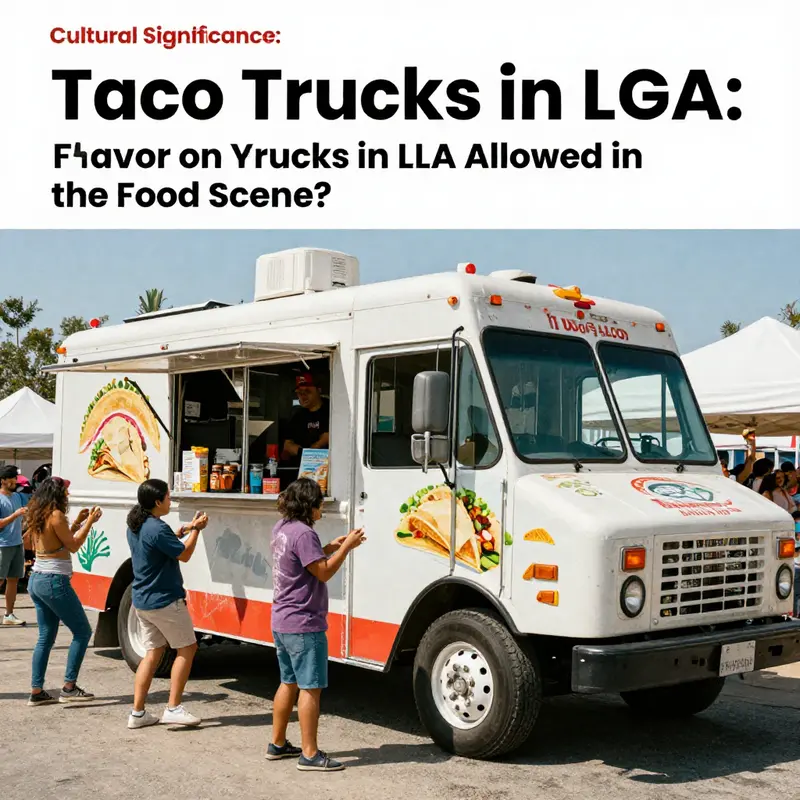
The city’s streets have long been stages where people bring memory, flavor, and a sense of home to a sprawling, restless metropolis. In Los Angeles, the taco truck is not merely a source of affordable nourishment; it is a moving thread that ties together migration, community, and creative resilience. Each vehicle carries a family story, a recipe passed down through generations, and a temporary restaurant that can pivot with the seasons. In this sense, the taco truck embodies more than a business model. It is a living archive of the city’s diverse culinary identity. The trucks travel through neighborhoods once segregated by policy and stereotype, offering a shared table where neighbors, coworkers, students, and newcomers exchange conversations as freely as they exchange pesos, dollars, and tips. The mobility of these kitchens allows them to adapt to the city’s constant flux: the changeable weather, the rhythms of festivals, and the shifting tides of population. In practical terms, mobility means opportunity. Chefs can test seasonal ingredients, respond quickly to local tastes, and serve a mosaic of communities without the heavy overhead that restrains many brick-and-mortar ventures. This accessibility matters. It lowers barriers to entry for aspiring cooks and keeps flavors deeply connected to the places where people live, work, and move about daily. The cultural significance of these trucks sits at the intersection of sustenance and story, making them emblematic of a city that values both practicality and memory. The trucks function as cultural emissaries, translating a range of identities into something universally edible: a shared moment of pleasure, a conversation about homeland, and a reminder that food is an intimate form of public culture. Yet this street-level vitality rests on a framework of rules, health safeguards, and local governance that has evolved alongside the trucks themselves. The legal landscape in Los Angeles and the broader county context is not a mere backdrop but a dynamic discourse that shapes who can operate, where, and how. In this sense, the question of whether taco trucks are allowed becomes a lens through which to view the city’s approach to public health, urban space, and cultural expression. The core message is that permission exists, but it is not license to disregard standards. Health inspections are a decisive part of the equation. The trucks must pass health checks, and they must park in proximity to restroom facilities—specifically within a 200-foot radius in many regulatory contexts. This requirement, while technical, is about safeguarding communities while enabling mobile chefs to serve a broad cross-section of residents. The practical effect is that the street food economy operates within a calibrated system that seeks consistency, safety, and fairness, even as it preserves the spontaneity and accessibility that customers expect from a late-night taco run or a weekend market bite. The result is a balancing act: recognition of the cultural and economic value of taco trucks alongside a commitment to public health and orderly urban space. The regulatory framework also reflects a historical arc. The Los Angeles story includes a period of intense legal conflict—often framed as a “Taco Truck War”—where policy battles shaped where trucks could park, how they could operate, and who benefited from the informal economy. Over time, those tensions contributed to a more nuanced acceptance. A landmark shift occurred when regulatory barriers that once hampered parking for food trucks were overturned, enabling legal parking and service in public spaces. The trajectory from contention to legitimacy mirrors a broader shift in urban policy: cities increasingly recognize the role of mobile food vendors in feeding communities, creating jobs, and showcasing culinary innovation, while still policing safety, traffic, and fair competition with established restaurants. Across the county, the ecosystem has grown to include roughly five thousand taco trucks, a number that underscores both the scale and the social fabric of this movement. Each truck, on average, serves hundreds of people daily, translating mobility into sustained economic activity and a steady stream of social encounters. This scale matters because it reframes the conversation about food access in a city as large and diverse as Los Angeles. The trucks do not merely fill gaps in supply; they illuminate patterns of tipping, payment convenience, and the integration of new technologies. A sizable share of operators have embraced credit cards, and many display suggested tip amounts, signaling a shift toward professionalized service without sacrificing the personal warmth that characterizes their early days at weekend markets and street corners. In parallel, the rise of delivery apps and curated food halls has integrated taco trucks into broader consumption patterns, challenging stereotypes about the informal nature of street cuisine and reinforcing the notion that mobile cooking can be both artisanal and scalable. The cultural significance, then, rests not only in what is eaten but in how it is produced, shared, and valued in a city that continually reinvents itself through its neighborhoods and their cooks. The legal and regulatory narrative that accompanies this cultural story is essential for understanding how the city has come to celebrate these mobile kitchens without surrendering public health and urban planning goals. The legal landscape has matured toward greater acceptance and legalization. Earlier, ordinances and enforcement practices created an uneven playing field, with some operators facing penalties or restrictions that limited where and when they could operate. A turning point came as policymakers recognized that well-regulated taco trucks could deliver safe food while expanding culinary horizons. The 2008 shift, often cited in academic and journalistic accounts, overturned a restrictive parking regime and affirmed that taco trucks could legally park and serve in public spaces when they met appropriate standards. The change did not erase the debates about zoning, competition with brick-and-mortar restaurants, or the need to manage curb space. Instead, it reframed those debates around equitable access, safety, and cultural value. The city’s embrace today is not a blanket endorsement of every possible operation but a structured system that supports responsible entrepreneurship and community service. From a practical standpoint, the trucks’ success reflects a sophisticated urban food economy. Their proliferation—together with the approximately five thousand trucks in operation—speaks to a demand that higher barriers to entry never fully satisfied. The trucks offer affordable, flavorful options in ways that many residents find essential for daily life and for community gathering. Their presence in neighborhoods also contributes to a sense of belonging for immigrant and second-generation communities, whose culinary traditions are expressed in a shared urban space. The city’s cooks on wheels thus become cultural ambassadors, bridging linguistic and regional differences through the language of taste. As the story moves forward, the conversation continues to evolve around how to balance urban design, traffic management, and public health with the open, improvisational spirit of street food. Debates persist about zoning, parking, and the fair treatment of all players in the food economy. Yet the broader trend is clear: taco trucks are no longer fringe actors in Los Angeles’ food culture. They are an integral part of the city’s creative economy and daily life. For readers who want to situate this narrative within a larger policy and cultural framework, a deeper exploration of the legal and cultural dynamics shaping this phenomenon is available. For a more in-depth analysis of the legal debates and cultural contestations, see the external resource linked here: https://doi.org/10.2139/ssrn.1694747. If readers are curious about practical steps to enter this space or to understand the regulatory pathways more concretely, a concise, action-oriented guide is also available within the city’s framework of resources. In the meantime, the field remains a vivid reminder that public life and private passion can coexist at the curb, where a warm plate, a shared smile, and a story of home travel across the asphalt to become a lasting part of Los Angeles’ evolving food culture. For those seeking a direct route into the practical side of this world, consider reviewing the guidance on how to navigate the entry process for food vendors and the necessary permitting pathways with Legal steps for launching a food truck. The permutation of community, policy, and palate continues to unfold, turning the street into a classroom, a marketplace, and a gathering place that celebrates both heritage and innovation.
Community on the Move: How LA Residents Embrace Taco Trucks Within the Law
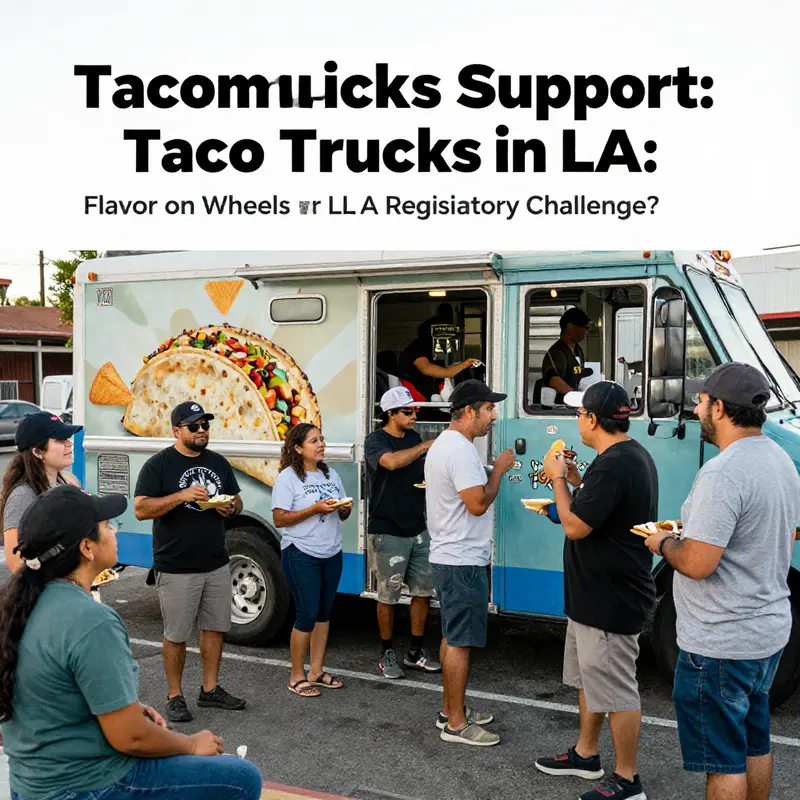
In Los Angeles, the street is a stage and the taco truck is a portable stagecoach carrying heat and aroma through neighborhoods that often crave a quick, honest bite. The question of whether taco trucks are allowed is less a simple yes or no than a layered story about regulation, public health, urban appetite, and a city that has learned to coexist with mobility as a defining culinary canvas. The core of the legal allowance rests on the fact that taco trucks and similar catering mobile units are permitted to operate within the city and county framework, provided they meet specific standards designed to protect people who live and work around them. These standards are not arbitrary hurdles but guardrails that ensure the food trucks contribute to the local economy without compromising sanitation, safety, or access to essential facilities. In practice, this means passing health inspections and, crucially, parking in locations that minimize disruption while maximizing service to the communities they serve. The official stance is pragmatic: allow the vendors to move and serve, as long as they stay within the bounds of health codes and city planning guidelines. The 200 foot rule, the aftercare of cleanup, and the requirement that a restroom facility be in reasonable proximity, together create a lattice of conditions under which the city can permit a vibrant street food scene without surrendering public health to speed and spontaneity. It is a careful balance between accessibility and accountability, between the romance of open-air dining and the discipline of licensed commerce. The result is a system that recognizes that food trucks can be a permanent feature of the city’s cultural landscape, not a transient anomaly, so long as they respect the rules that safeguard the broader public good.
The arc of this regulatory framework is not merely administrative. It mirrors a wider social contract in which residents come to value the colorful, convenient meals offered by mobile vendors while acknowledging the need for predictable standards. The Los Angeles area has embraced the idea that food trucks are not just a nuisance or a temporary fix for a hungry crowd; they are a component of urban life that expands access to affordable, authentic fare across diverse neighborhoods. This acceptance is supported by comprehensive health oversight and by a regulatory ecosystem that has evolved to accommodate a mobile food economy. For people who live near a steamy grill or a cart that rolls into a familiar corner, the daily rhythms of these vendors become a familiar relief—an accessible option during late shifts, after school, or on a casual weekend stroll. The practical reality is that a large portion of the city’s population sees taco trucks as a legitimate, valuable service when operating within the law and meeting health requirements. A citizenry comfortable with their presence is more likely to support reasonable, well-planned zoning that acknowledges trucks as part of the urban fabric rather than as a nuisance to be tolerated or policed out of sight.
The larger cultural picture matters here. About 5,000 taco trucks are cited as part of Los Angeles’s landscape, a statistic that underscores not only the scale of this phenomenon but also its persistence and integration into daily life. These mobile eateries become community landmarks, especially in neighborhoods where traditional dining options may be scarce, hours are long, and the desire for something flavorful and affordable is constant. They contribute to a sense of neighborhood identity, as each truck brings its own recipes, histories, and rhythms to the street. The trucks also function as micro-entrepreneurial engines, offering opportunities for cooks, designers, and families to experiment with flavors and livelihoods in ways that brick-and-mortar establishments cannot easily replicate. Yet even as the presence of these trucks is celebrated, the conversation remains nuanced. Residents, business owners, and policymakers continue to grapple with zoning, parking demand, and fair competition with established restaurants. Academic discussions around the so-called taco truck dynamic—how law shapes food culture and, in turn, how culture presses back on policy—highlight a city where legality and culture are not opposing forces but two sides of the same evolving narrative. The idea that regulation can both constrain and enable reflects a mature urban system in which civic life, culinary expression, and commercial enterprise intermingle.
Historically, the legal bedrock for these trucks was tested in moments when the balance seemed precarious. In 2008, a courtroom decision overturned a county-imposed one-hour parking limit that had restricted how long a taco truck could stay in one place. The judgment did not deny the trucks’ right to operate; instead, it asserted that overly restrictive local rules could run afoul of state law, specifically the California Vehicle Code, which prohibits local governments from banning or excessively limiting mobile vendors. The ruling did not erase the need for regulation; it reaffirmed that authorities must regulate with a view toward both public safety and the rights of small business operators to ply their trade. This moment, framed by both legal pressure and public sympathy, is widely perceived as a milestone in the broader narrative of LA’s street food culture. It signaled to communities that taco trucks could be part of the city’s economy and social life without becoming ungovernable. The decision helped to normalize a street food culture that many residents already loved, while also signaling to vendors and regulators that there was room for negotiation, compromise, and ongoing refinement of rules. It is a reminder that the city matured its approach to mobile food as its neighborhoods grew more diverse and its street life more complex.
Today, the presence of taco trucks continues to shape the city’s culinary imagination. They are not merely convenient late-night stops; they are symbols of mobility, entrepreneurship, and shared spaces. The experience of walking up to a humming truck, choosing a combination of fillings, watching a cook orchestrate a quick flame and fold tortillas, and hearing the sizzle mingle with conversations from passersby—this is part of what makes Los Angeles feel like a living, breathing marketplace. The trucks often arrive at intersections that lack a broad array of dining options, extending affordable meals to students, workers, and families who may otherwise rely on fast-food options with fewer cultural resonances. In this sense, taco trucks contribute to a crowd-sourced, neighborhood-centered food ecology. They become part of the day-to-day rhythm of the city, helping to knit communities together across socioeconomic boundaries by providing accessible cuisine that can be prepared, served, and enjoyed promptly.
The ongoing public discourse acknowledges that regulation must adapt as the city evolves. Balancing the needs of residents who rely on street food for practical reasons with the concerns of brick-and-mortar establishments, traffic planners, and health authorities is an ongoing project. Debates about zoning and the optimal allocation of curb space persist, yet a broad coalition of residents continues to support the trucks when they operate within established health and safety standards. This support is not naive or romantic; it rests on a recognition that street food can be a legitimate city-building instrument when managed responsibly. The community’s voice is clear: they appreciate the trucks for the accessibility, their part in preserving a diverse culinary scene, and the sense of place they create in neighborhoods that deserve both flavor and vitality.
For anyone navigating this landscape, there is a practical path through the labyrinth of permits and compliance. To navigate the licensing labyrinth, consult Legal steps for launching a food truck. The emphasis is not merely on obtaining a permit but on understanding the responsibilities that come with operating in public space: proper waste disposal, maintaining clean and compliant vehicles, keeping health certificates current, and ensuring that parking practices respect nearby residences and businesses. The city and county health departments offer the up-to-date requirements, and the best resource for the most current regulations remains their official portals. The public health authority for the county provides the latest guidance on inspections, permitted locations, and the conditions under which a truck may park near essential facilities, such as restrooms, to safeguard hygiene standards. The conversation around taco trucks thus continues to be about more than food; it is about how a city negotiates space, culture, and commerce in a way that honors tradition while protecting public welfare.
As residents reflect on what taco trucks mean to their neighborhoods, the sentiment tends to favor inclusion over exclusion, practicality over purism, and experience over monopoly. The trucks are woven into the city’s identity, contributing to a vibrant street economy, offering affordable meals, and expanding the meaning of public space to include shared tables of flavor and conversation. Yet the law remains a living partner in this story, a reminder that mobility must coexist with accountability. The future of LA street food will likely continue to hinge on how well regulators and communities can collaborate to maintain safety, preserve public space, and adapt to evolving urban needs. The conversation about taco trucks is, at its heart, a conversation about urban life itself—how a city can honor its roots while inviting new flavors to move through it, legally and harmoniously.
External reference for further reading on the legal and cultural significance of taco trucks in LA can be found in the following article from a major regional newspaper. https://www.latimes.com/archives/la-xpm-2008-aug-28-me-taco-truck28-2008aug28-story.html
Final thoughts
Taco trucks in Los Angeles are more than just food options; they embody the city’s diverse culinary spirit and community life. By adhering to regulations and maintaining high health standards, they not only thrive within the competitive landscape but also enrich the cultural fabric of LA. The support of local residents further cements their place in the food scene, proving that taco trucks are not merely allowed but celebrated across the city. So the next time you spot a taco truck, know its presence is not just legal—it’s a flavorful testament to the vibrant, varied life of Los Angeles.