
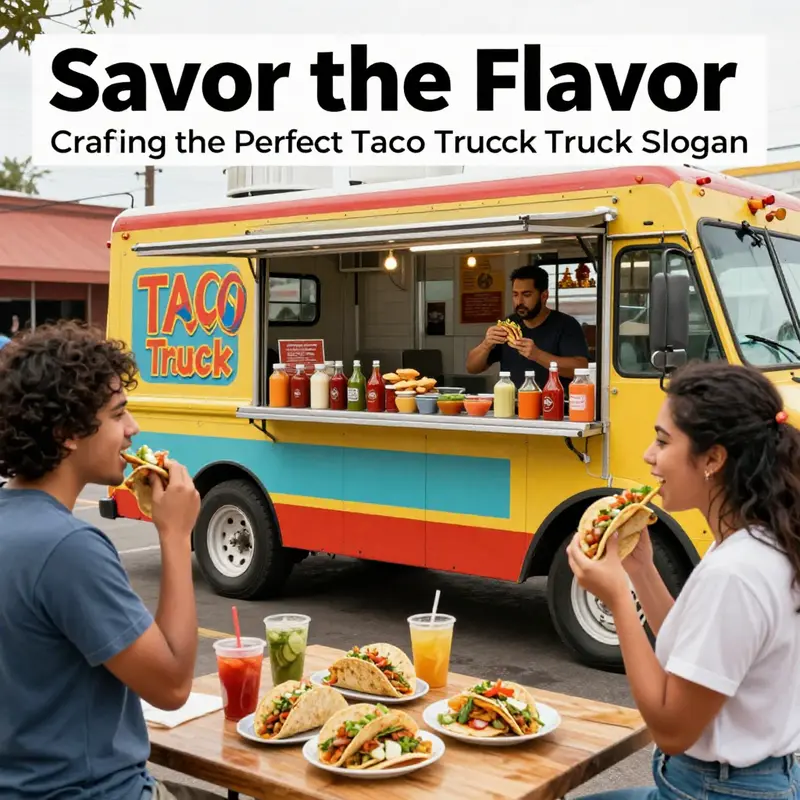
Every taco truck needs a slogan that captures its essence, appealing to cuisine lovers and taco fans alike. A well-crafted slogan acts as a beacon, drawing in eager customers and differentiating the truck from the competition. In the vibrant world of street tacos, the right phrase can ignite passion for craftsmanship and quality, serving as an effective marketing tool to build loyalty and excitement. This exploration will uncover the principles behind a compelling taco truck slogan, highlight the role of memorable phrases in branding, connect craftsmanship with quality, and showcase current marketing trends that can elevate your taco business. As we embark on this flavorful journey, let’s discover how these elements coalesce to create a powerful slogan that resonates deeply with taco lovers.
Flavor, Craft, and the Street: Crafting a Slogan That Distinguishes Your Taco Truck
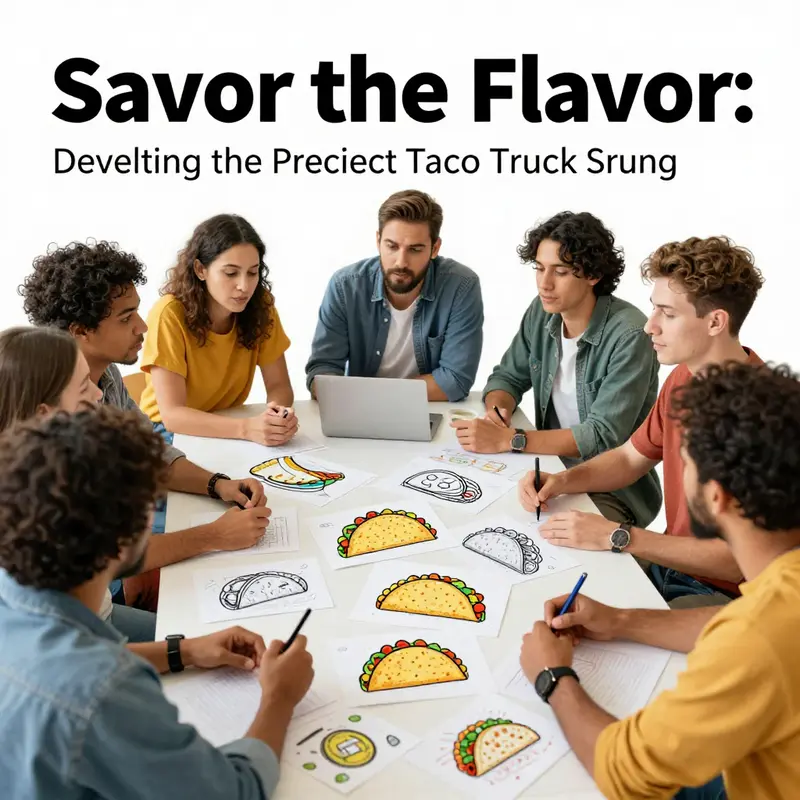
A slogan is more than a line of words. It is a compact contract with customers, a promise that travels with every chalked menu, every sizzling skillet, and every curbside hello. In the world of taco trucks, where pavement competition is as fierce as the heat from the grill, a strong slogan does more than be memorable. It crystallizes what you stand for—your flavor, your craft, and the experience you deliver in a few well-chosen syllables. The research that guides this chapter is clear: a winning taco-truck slogan must blend authenticity with appeal and be easy to recall. It should hint at a story customers can tell their friends as they linger under the awning, napkin in hand, mouth already tasting the next bite. A powerful example in the broader branding landscape is a slogan like “Taste the Difference – Tacos Are Our Craft.” It is concise, it sets a standard, and it anchors the brand in a belief that what you cook is not just food but a crafted experience. Translating that principle to a taco truck means turning a sensory impression into a portable, repeatable promise that travels with your logo, your signage, and your social posts.
The first principle is to foreground core benefits. In practice, this means emphasizing flavor, freshness, and quality as the compass for every slogan variant. A line such as “Taste that hits home” or “Freshly made, always hot” signals a standard the customer can trust. It does not rely on clever wordplay alone; it communicates a tangible outcome the eater can expect. For a mobile kitchen, where the menu changes with markets and partnerships, a core-benefit focus keeps the message stable even as the day-to-day offerings shift. Customers learn to expect something specific from your cart—consistency and a compelling flavor profile—before they even take the first bite. This anchors your brand in memory and reduces the cognitive load on a hurried passerby who is deciding whether to stop.
Equally vital is the emotional connection a slogan can cultivate. People gravitate to food brands that feel personal or culturally resonant. A slogan that evokes warmth, family, or community can transform a quick snack into a ritual. Consider lines that hint at heritage or shared experiences—“Tacos with heart” or “Family recipes, street style.” These phrases do more than describe; they invite customers to participate in a story. The emotion attached to your slogan becomes a hinge for word-of-mouth promotion. When a customer says, “That’s the place with the tacos that feel like Sunday at grandma’s,” your slogan has already done quiet, powerful work in the foreground of the customer’s memory. The best slogans carry emotion without shouting; they whisper familiarity and welcome from the moment a foot taps the curb and a hand reaches for a wallet.
A third principle centers on highlighting uniqueness or experience. A portable eatery cannot rely on a static countertop and a familiar menu alone; it must offer an experience that travels well with the customer’s mood and location. A slogan that foregrounds a distinctive journey—“Where every bite tells a story” or “Sizzling flavors, zero wait”—promises more than taste. It promises immersion. For a taco truck, this can mean highlighting a signature technique, an ingredient philosophy, or a service tempo that makes the encounter memorable. When customers feel they are not merely purchasing tacos but engaging with a narrative, their loyalty grows. The promise embedded in the slogan becomes a cue that your truck is not just a place to eat but a small, vivid episode of daily life that travels with them after the last bite has vanished.
Taken together, these principles yield a compact set of criteria for evaluating possible slogans. A good taco-truck line should be short enough to fit on a wrap or a napkin, easy to recall after one hearing, and aligned with the brand’s identity. It should signal benefit, emotion, and experience in roughly equal measure, even when read at a glance from parked curb to street corner. The research notes an important parallel: a slogan can act as a brand promise in a single line, much like the way a company’s guiding principles shape behavior across markets. In the world of mobile dining, where the setting can shift from a busy festival to a quiet neighborhood block, a resilient slogan acts as an anchor that travelers recognize regardless of the backdrop.
To make this practical, begin by naming the core attributes your truck embodies. Are you known for fiery, robust flavors, or for delicate, carefully balanced seasonings? Do you celebrate local ingredients, or a global twist that travels with you? Is your service style brisk and efficient, or warmly unhurried, designed for lingering conversations with a line of friends and coworkers? Once you articulate these attributes, fold them into a small set of candidate phrases. The phrases should reflect a consistent voice—bold, welcome, and a touch adventurous, or intimate, nostalgic, and craft-forward. A powerful slogan often leverages sensory triggers. Words like “taste,” “fresh,” and “hot” anchor expectations in the eater’s memory, while verbs such as “craft,” “meet,” or “tell a story” invite a narrative association. The strength lies in balance: concrete sensory cues paired with an emotional or experiential promise, all while remaining faithful to the truck’s actual capabilities and — crucially — the stories customers bring back to their neighborhoods.
The process should feel iterative rather than ceremonial. Start with a handful of options inspired by the brand’s essence, then test them in small, informal ways. A quick screen among staff and regular customers can reveal which slogans resonate most. Consider writing the phrases on a chalkboard outside the truck and watching how people react as they pass. A few extra seconds of attention can be more telling than a formal survey. On a more formal track, you can conduct short, anonymous polls with locals at markets or events, asking which line they would remember after a quick glance and which words best describe the experience you deliver. The key is to gauge recall, emotional resonance, and perceived authenticity. If a slogan feels clever but murky about what you actually serve, it will fail to convert fleeting attention into sustained curiosity.
Integral to shaping a slogan is how it is embedded in the broader branding ecosystem. A single line is not a solitary artifact; it is a thread that weaves through your truck’s wrap, the menu card, the receipts, the social media bio, and the way staff speak to customers. The slogan you settle on should map cleanly to those touchpoints. If your chosen line promises speed and a story in every bite, then your preparation pace, the warmth of your staff, and the way you present each taco should reinforce that promise. In the end, a slogan grounded in your real practices earns credibility and prevents the dissonance that can occur when the brand promise outstrips the actual experience. It also makes internal alignment easier: every team member can advocate for the same narrative, ensuring consistency across all customer interactions.
For those who are starting their branding journey or considering how to position a new truck in a crowded market, a useful touchpoint is to examine how the slogan connects to the broader decision of selecting the right vehicle and setup. A truck’s design, the layout of its kitchen, and the flow of service all communicate a story to customers before they ever take a bite. If you are curious about the practical fit between branding choices and the physical form of your business, you can explore guidance on choosing the right food truck here: Choosing the right food truck.
The research foregrounds a clear endpoint: a slogan should be short, easy to remember, and a genuine reflection of the brand’s identity. It should evoke taste and trust, while also signaling a distinctive experience that makes your truck recognizable in a sea of mobile kitchens. The best candidates do not rely solely on wit or trendiness; they distill what makes your cooking special and why someone should stop rather than scroll past. In the execution phase, test for recall, emotional impact, and alignment with operations. If a line passes those tests, it becomes not just a marketing label but a daily cue for how you cook, how you serve, and how you welcome each guest who steps up to the window.
As you move from concept to concrete, remember that slogans live not in isolation but in the stories people tell about your food. A line like “Taste the Difference – Tacos Are Our Craft” is a beacon that calls for craft, character, and care. But it is not a stand-alone charm. It must be supported by the hands at the grill, the aroma that drifts down the street, the careful sourcing of ingredients, and the smile that greets a first-time customer. The more your slogan echoes the lived reality of your cooking, the more durable it becomes. That durability translates into word-of-mouth momentum, repeat visits, and a sense of anticipation as people await your next pop-up or market appearance.
For readers who want to explore broader branding inspiration outside the specific world of food trucks, reliable outlets in the culinary and branding space frequently highlight how successful brands translate core values into memorable one-liners. One external resource that offers thoughtful perspectives on branding and culinary storytelling can be a helpful supplement as you refine your approach: Food & Wine branding insights.
}
Taste as Craft: How a Memorable Slogan Elevates a Taco Truck Brand
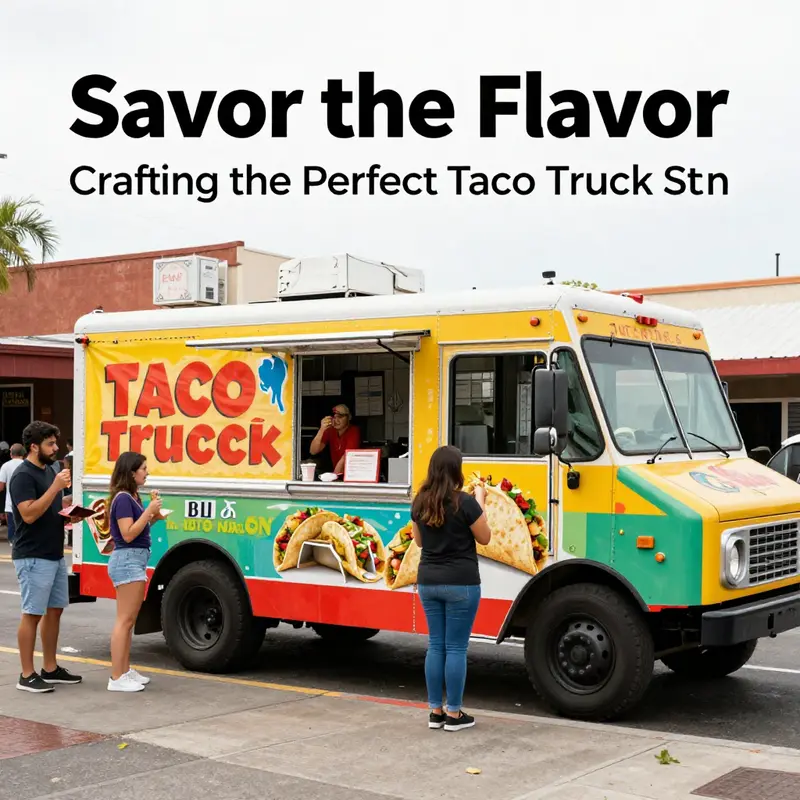
In the crowded alleys and quarterly festivals where taco trucks compete for attention, a slogan is not just a line of text. It is a directional beacon that helps a wandering kitchen communicate its compass to a crowd of strangers who might not know your story yet. A good slogan does more than describe; it invites, differentiates, and elevates. It promises a distinctive experience in a single breath. The winning slogan identified in the research—Taste the Difference – Tacos Are Our Craft—offers a compact, aggressive model for what a taco truck brand can aspire to. It is not merely a statement about flavor or technique; it is a vow about quality, an articulation of pride, and a cue to a broader storytelling arc that can run through signage, menus, social channels, and the staff’s everyday conversations. Consider what makes that phrase memorable. First, it speaks with immediacy: Taste the Difference. It suggests that a bite will reveal something beyond the ordinary, a sensory invitation that compels curious customers to pause and try. Second, it grounds the experience in craft: Tacos Are Our Craft. That clause shifts the emphasis from a product to a process—the labor, tradition, and skill that culminate in each tray or taco shell. It signals that the sellers are not simply serving food; they are practicing a craft in public view, turning the trailer into a studio where ingredients become artifacts of care. This marriage of sensory promise and artisanal identity is what a slogan needs to achieve in a mobile market where repeat visits and word of mouth dominate growth.
To translate that promise into a successful branding approach, a taco truck must ensure the slogan aligns with the brand’s core identity. A slogan lives in the same ecosystem as the truck’s name, logo, color palette, and even the pacing of the service window. When the brand claims craft, every touchpoint must feel crafted—menu boards written with a sure hand, foil wrappers that feel substantial rather than disposable, and a service style that reflects attentiveness and pride rather than haste. The slogan, then, becomes a verbal shorthand for a larger story: a story of careful sourcing, time-honored techniques, and a relational approach to customers who crave authenticity as much as convenience. In a market saturated with fast options, the promise to deliver a tangible difference—taste and craft—can make the difference between a one-off taste and a returning favorite.
Brand differentiation often hinges on voice as much as on product. A slogan like Taste the Difference – Tacos Are Our Craft conveys a voice that is confident, demanding of quality, and proudly transparent about the labor behind the food. It signals that the truck does not chase trends merely for novelty but honors a lineage of technique, seasoning, and careful attention to texture and aroma. This voice supports social media and customer conversations, where the sensory language of taste can be echoed in post captions and responses. A playful extension, such as a slogan that nods to personality—something along the lines of Tacos that invite conversation or Tacos that earn every bite—could be a natural outgrowth for fans who want to participate in the brand’s story. Yet the core of the original phrase remains powerful because it remains clear, specific, and anchored in an experience that customers can recall and articulate to friends.
The psychology behind memorable phrases also helps explain why this model is effective for mobile brands. People remember snippets that evoke a sensory or emotional rather than purely factual impression. The phrase Taste the Difference appeals to curiosity about flavor, while Tacos Are Our Craft taps into admiration for skill, craft, and authenticity. Both components together create a rhythm—one part curiosity, one part trust. The rhythm is easy to repeat in conversation, which is exactly how a food-truck brand thrives: through word of mouth, festival chatter, and social posts that echo the same sentiment. A well-crafted slogan becomes a verbal hook that invites customers to share their own mini-stories about their experiences: a particular salsa, a signature grill mark, a texture that lingers in memory. When customers can retell your story with the same cadence as the original line, your brand achieves a kind of folk branding that is robust in a mobile, transient setting.
The practical implication of this approach is not to chase cleverness for its own sake but to ensure the message travels well across different channels and contexts. The slogan must be legible at the point of sale and legible in a photo. It should inform the design choices for the signboard, the menu layout, and even the tone of the staff’s greetings. If a truck announces itself with a bold promise of difference and craft, the experience around the counter should confirm it: the scent of grilled meat and roasted peppers, the rhythm of assembly, the care in folding a tortilla, the crispness of cilantro, the brightness of a lime. Each sensory cue reinforces the verbal promise, accelerating brand recall. Once a customer’s recall is anchored in a single vivid impression, they become more likely to seek out your truck again and to tell others to try it—the essence of the mobile food brand’s growth engine.
A powerful slogan also provides a bridge to storytelling across multiple touchpoints. The line can become a recurring motif in social posts, a tagline in a QR-coded menu that leads to a short video of the kitchen in motion, and a caption for a photo of a perfectly seared shell. The trick is to keep the tone consistent with the brand’s broader narrative: the idea that the truck’s cooks see themselves as artisans, not assembly-line operators. Where the slogan can sometimes risk sounding grandiose, the practical approach is to couple it with tangible evidence—an approachable menu, transparent sourcing notes, and visible craft steps that resonate with customers who crave integrity as much as flavor. The goal is to create a coherent ecosystem where the verbal promise, the visual identity, and the dining experience reinforce each other, so the slogan never feels like a marketing voice separate from the actual product but rather the verbal articulation of the product’s essence.
For brands at the early stages of a taco-truck venture, the logistics of development matter just as much as the sentiment. The slogan should be tested not in isolation but in real-world scenes—under the glare of sunlit streets, in the buzz of a night market, or amid a cluster of thumbs scrolling a quick feed. It should survive edits for brevity and clarity while remaining robust enough to remain credible if a customer asks, quite reasonably, what makes this food distinct. This is why the concept of “craft” must be more than a word; it must be a practiced standard across all operations, from the selection of spices to the way a line cook handles a warm tortilla and from the speed of service to the housekeeping of the truck’s exterior. When customers encounter a slogan that resonates with their sensory expectations and their sense of authenticity, the memory of the word “craft” lingers with the taste of the taco themselves, and that memory becomes a cue for repeat visits and recommendations.
Beyond the mouthfeel of the product, the branding strategy anchors a broader conversation about values. In an industry moving toward artisanal and craft-driven narratives, a slogan framed around taste and craft signals a commitment to quality and human skill. It invites customers to value the process, not just the outcome. It also creates room for growth without losing authenticity. The truck can expand its repertoire of offerings, perhaps leaning into regional influences or seasonal ingredients, while preserving the core claim that each bite reflects a careful, craft-informed approach. In practice, this means the truck can experiment with limited-time toppings or craft-focused pairings that underscore the slogan, without ever letting the quality dip below the promised standard. The result is a brand that feels both rooted and adventurous—a paradox that attracts curious eaters and loyal regulars alike.
As you shape your own slogan, consider the resources that help translate a bold claim into a sustainable branding framework. For practical guidance on crafting effective branding messages tailored to food trucks, you can explore foundational insights and actionable tips that emphasize brevity, specificity, and emotion, which are essential to keep in mind as you craft a message that travels well across signs, menus, and social feeds. And if you want to see how a cohesive branding approach translates into visuals and voice, you can turn to our ongoing discussion at fireduptacotruck’s blog. The team there explores how to translate a promise like Taste the Difference into a living brand temperament across every customer interaction, from the moment a potential customer spots your truck to the moment they walk away with a full plate and a memory to share. fireduptacotruck.com/blog
In sum, a slogan functions as a keystone for a taco truck’s brand architecture. It captures the essence of what makes the food compelling, the methods used to produce it, and the experience customers come to expect. It anchors storytelling, guides design, influences service interactions, and fuels word-of-mouth promotion. A carefully conceived line like Taste the Difference – Tacos Are Our Craft does more than label a product; it signals a philosophy, a commitment to skill and flavor, and a promise that the truck’s culinary moments are worth remembering. The result is a brand that can stand out in a sea of similar offerings by attaching a crisp, memorable name to a genuine dining experience. And when that memory forms the bridge between a first-time bite and a regular habit, you’ve done more than create a slogan—you’ve helped craft a destination people seek out again and again, a culinary home on wheels for those who crave authentic taste and genuine craft.
External resource for branding reflections: 6 Tips To Rock Food Truck Branding
Craft as a Brand Promise: Elevating a Taco Truck Slogan Through Artisanal Craft
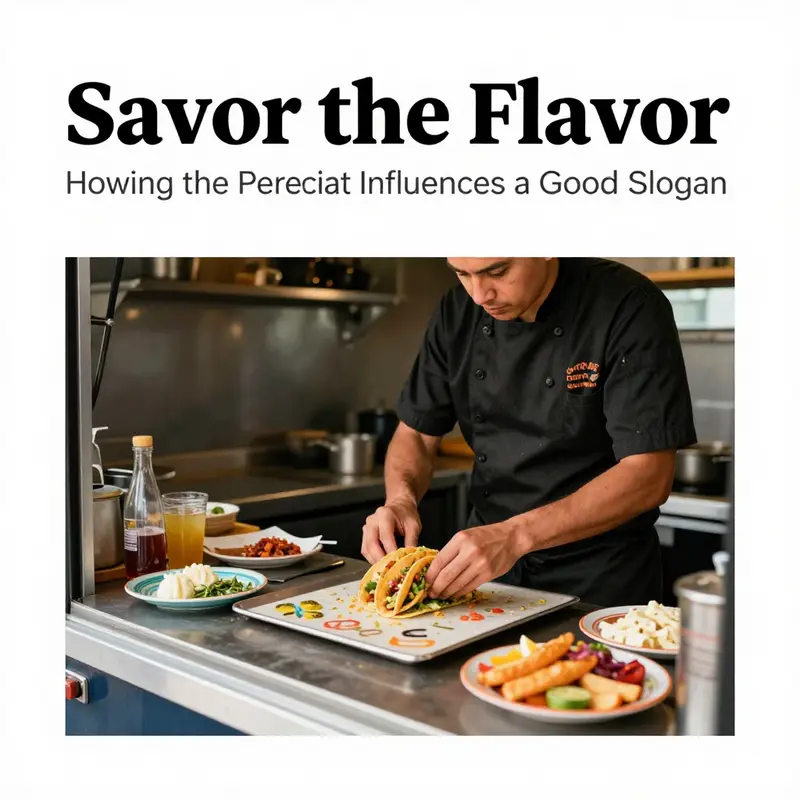
A slogan is more than a few words on a window or a T shirt. It is the moment a passerby pauses and asks, without words, what this truck stands for. In the bustling world of mobile food, where dozens of carts line the curb and the menu blurs into a sea of familiar flavors, a slogan can tilt the balance from curiosity to loyalty. When a slogan speaks to craft, it does more than promise flavor. It signals a philosophy that every taco is shaped by care, skill, and an intentional choice to honor tradition while inviting innovation. The notion of craftsmanship, quiet, persistent, and visible in every bite, translates into language. It turns a quick decision about where to eat into a longer, often repeated, relationship with a brand. If the kitchen is where craft happens, the slogan is where that craft becomes recognizably yours in the minds of customers who value authenticity, transparency, and a settled sense that they are getting more than a meal they are sharing in a practiced art form.\n\nCraft informs a slogan at two intertwined levels: the first is what the phrase says, and the second is how it is heard. The words must compress a story into a compact shape, much as a hand is pressed into the dough to create a tortilla with a particular strength and chew. The best slogans do not simply describe a product; they reveal a principle behind the product. For a taco truck, that principle might be the exacting standards of sourcing, the patient rotation of a wood fired grill, or the whisper of citrus lifted from ripe limes at the moment a lime is most alive in the air. When a truck chooses phrases like taste the difference or tacos are our craft, it sets up a tonal expectation an assurance that what the customer tastes is not a hastily assembled wrapper but a delivered event, a crafted moment in a busy day. Such phrases do more than announce quality; they invite customers into a shared process, a sense that what they order has been treated with respect for the labor and the skill that make it possible.\n\nThe construction of a slogan around craft begins with listening to the kitchen, to the bites of feedback from regulars, and to the language that communities themselves use when they talk about food that feels handmade. Craft is not an abstract ideal; it is measurable in repetition, in the consistency of heat and timing, in the way a carnitas braise yields a tenderness that can be tasted as patience in every forkful. Translating that perception into a slogan requires choosing verbs and nouns that carry weight without pomp. In a city alley or a weekend market, a truck typography and color palette do much of the heavy lifting for the slogan intent. A sign that feels crafted bold, clean lines, durable materials, a finish that catches the light with a hint of sheen reassures onlookers that the craft extends beyond the plate to the people who assemble it. The visual language mirrors the culinary language; it is deliberate, durable, and designed to endure the daily wear of exposure to sun, rain, and the street kinetic energy. A slogan thus lives in both text and form.\n\nThe value of the slogan also hinges on narrative coherence. If the sign promises craft, the menu and the service experience must reinforce it. The preparation times, the visible rituals of assembly, the careful portioning all of these are micro narratives that support the macro claim embedded in the slogan. It is easy to slip into over controlling promises, but the most enduring slogans maintain a balance; they declare a standard without promising an impossible perfection. They acknowledge the imperfect human nature of cooking while asserting a core competence that the craft is real, practiced, and continuously refined. This balance protects the brand from disillusionment and ensures that word of mouth remains a positive force. When customers feel that the slogan is tied to genuine practice, they become more than consumers; they become witnesses to a craft in action, carrying the story forward to others who seek a similar sense of authenticity.\n\nFor operators who want to explore this approach with intention, a starting point is to map the kitchen core craft moments and translate them into concise, memorable language. Consider what makes the tacos stand apart a hand ground spice blend a particular method of slow cooking or a signature finish that arrives at the moment of service. These elements become motifs in the slogan, not just descriptors. The aim is to create a phrase that resonates with sensory memory sound aroma texture so that when a customer sees the slogan they recall the bite itself. The slogan should also be adaptable to different media, from chalkboards and windows to social posts and merch. A strong slogan remains legible and meaningful when translated into a one liner for a social feed or a longer caption that explains the craft behind the dish. In this way, the promise persisted by the slogan is reinforced through every channel and every encounter, building a cohesive credible brand narrative.\n\nFor readers seeking deeper reflections on how branding intersects with craft in the food truck context, consider practical ideas about communicating quality and authenticity to customers. A craft focused slogan can translate into action across the business by guiding signage, packaging, and service style.\n\nIn the end, the choice of a slogan for a taco truck becomes a decision about how to present the kitchen as a craft. It is a compact invitation to experience a process as much as a product. When the words, the sign, and the plate align around that belief, a truck moves beyond being another quick stop option. It becomes a live demonstration of care, skill, and purpose an on the ground promise that every bite carries the signature of hands, time, and heart. That is how a craft driven slogan becomes not just memorable, but meaningful translating into repeat customers, confident referrals, and a growing sense that this little truck on the corner is indeed a crafted experience worth seeking out again and again.
Taste, Craft, and the Customer Journey: Building a Taco Truck Slogan That Delivers Experience
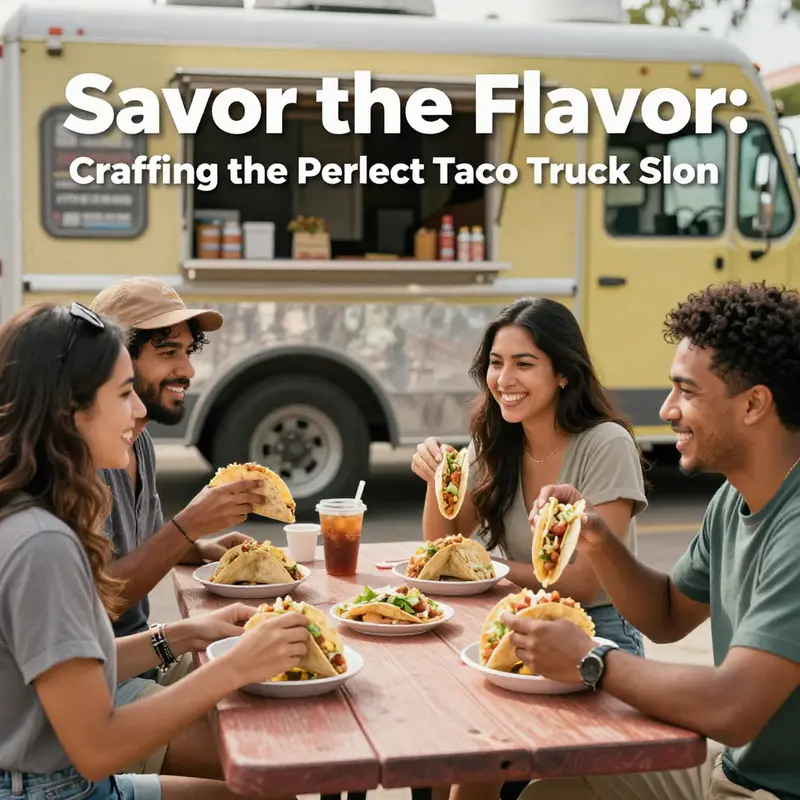
In the cluttered world of mobile food, a slogan is not merely a line on a sign; it is a compact contract with the customer. It promises a sensory encounter, a narrative about where the taco comes from, and a guarantee about the moment the first bite lands on the tongue. The research materials point to a winning slogan for taco trucks that centers on two enduring themes: quality and craft. Taste the Difference – Tacos Are Our Craft is concise enough to lodge in memory, yet specific enough to convey a philosophy. It does not merely say that the food is good; it says that the food is the product of careful technique and a devoted hand. The word difference signals a deviation from the ordinary, inviting curious eaters who seek something more than a quick sandwich or a reheated shell. And the assertion that tacos are a craft frames the operation as a deliberate practice rather than a casual routine, a distinction that matters in a market where speed often competes with substance. The slogan embodies a brand posture: serious about taste, committed to technique, proud of the artistry behind each shell, each fold, each bright squeeze of lime. In short, it communicates a narrative that aligns with evolving consumer values around authenticity and quality in a market where the best-selling asset is often trust.
That trust is not born in a single moment of signage. It is forged through a continuous chain of experiences that begins the moment a customer notices the truck and ends only after the last bite has faded into memory. A slogan that foregrounds taste and craft provides a directional beacon for every touchpoint: the design of the truck, the demeanor of the staff, the sizzle of the griddle, the aroma wafting through the air, and the rhythm of the service. The sensory promise embedded in the words sets expectations that must be met in practice. If the customer anticipates a kitchen that treats ingredients with reverence, every interaction—every interaction—must reinforce that promise. This is where the dialogue between branding and execution becomes critical. When a slogan declares that tacos are a craft, the supply chain, the sourcing choices, and the kitchen technique all fall under the same lens of quality and care. It is not enough to claim craftsmanship; the experience must prove it.
A well-crafted slogan thus acts as a bridge between what is inside the tortilla and what the customer feels when they receive it. Consider how the idea of authenticity translates into the sensory experience. Fresh, tangible markers—the crack of a well-seared tortilla, the aroma of coriander, the brightness of lime, the tender juiciness of a well-marinated filling—are all components that customers expect to encounter as they savor the meal. When the branding leans into craft, the customer expects more than a quick, passable flavor. They expect that the chef’s hands, the choice of ingredients, and the technique behind the assembly are evident in the bite. That alignment between promise and perception turns a successful slogan into a reliable preference shift: a reason to choose this truck again over others in the same lot or at the same event.
The packaging plays a crucial, sometimes underappreciated, role in delivering on the slogan’s promise. Packaging is the first physical handshake a customer experiences after deciding to order. It safeguards the quality of the food, preserves texture, and shapes the unboxing moment that can amplify or undermine confidence in what the slogan promises. Recent industry insights into cone-shaped packaging for fast-casual and mobile vendors show that the right design can support speed and durability without sacrificing presentation. A sturdy, well-designed container protects the integrity of a crafted product during transit and contributes to a positive sensory impression as the consumer unwraps or unfolds the package. In the eyes of a consumer who is seeking an authentic, handcrafted eating experience, reliable packaging communicates respect for the food as well as for the buyer. If a slogan speaks of craft, the packaging must carry that craft forward in its construction and its usability—the container should maintain temperature, prevent spills, and present the taco with an appetizing silhouette on the plate once the wrapper comes off.
The mobile setting intensifies the importance of consistency. Food trucks operate under the pressures of speed, space, and variability in the day’s crowd. The slogan’s credibility rests on the reliability of the experience: you can count on the same quality and the same sense of care no matter when you visit or who is serving. That consistency relies on a well-honed workflow, from the moment a guest places an order to the moment the bite lands, the cadence of the service, and the way the food is handled and plated. The craft-centered message compels operators to optimize every step of the process so the outcome never falls short of the promise. In practice, that means training staff to articulate the philosophy behind the food, ensuring the menu communicates a clear craft narrative, and designing signage and presentation that reinforce the workmanship behind each component—from the tortilla to the salsa to the meat or vegetable fillings.
A key insight from the research is that a slogan thrives when it is anchored to concrete, observable qualities. The phrase taste the difference signals a celebration of flavor profiles that are distinct from the familiar options people might encounter in other quick-service contexts. It invites an emphasis on the sourcing of ingredients, the balance of seasonings, and the application of traditional techniques that honor culinary heritage while adapting to contemporary tastes. If the brand leans into the idea of tradition through handmade tortillas, slow-simmered fillings, or locally sourced components, the menu should echo that ethos in its descriptions and in the daily rituals of preparation. The result is a cohesive brand ecosystem where the slogan, the kitchen, and the customer experience speak with one voice.
The customer journey is not a straight line but a circle that begins with perception and ends with memory, ideally looping back to preference. The moment a potential customer first encounters the slogan, either on a sign, a social post, or a sticker on a takeout bag, they begin to imagine the experience. The moment they order, the promise is tested. Will the tacos feel worth the perceived premium implied by a craft-forward message? Will the packaging honor the claim of quality with secure transport and appealing presentation? Will the service convey care and competence that reassure the buyer they have chosen a brand that respects both the food and the moment of consumption? When the answers align, the eater leaves with a memory that reinforces brand loyalty. Word-of-mouth buzz then becomes the natural propulsion of growth, especially important in a market where street corners, events, and long lines are saturated with competing options.
The design of the slogan also has to be adaptable. A strong slogan can support multiple product interpretations while preserving a clear identity. It should be flexible enough to accommodate seasonal specials, new fillings, or shifts in sourcing without losing its core message. This adaptability matters in a mobile setting where menus can morph with the day’s supply, weather, and audience. The brand might introduce variations on the craft theme, such as limited-run offerings that highlight a chef’s technique or a story about a particular region’s influence on the dish. In every case, the tone should remain anchored in authenticity and expertise, so that even as the menu evolves, the customer still encounters the same trusted craft narrative.
In translating slogan into signaling, attention to alignment becomes critical. The truck’s exterior design, the tone of voice used in staff interactions, the typography of the sign, and the color palette chosen for branding should all echo the craft narrative. A sleek, artisan-inspired aesthetic can communicate the same seriousness about quality that the slogan conveys. Conversely, a mismatch—bold, high-gloss graphics paired with a brusque staff demeanor, for example—can create cognitive dissonance that erodes trust. The aim is a holistic brand experience in which the slogan acts as the initial spark, and every subsequent touchpoint fans that spark into a steady flame of loyalty. In this sense, the slogan is less a marketing slogan and more a commitment to excellence customers can feel in every bite and in every minute spent with the brand.
For operators who want to leverage this approach, a practical path emerges. Start by identifying the precise aspects of your craft that are most tangible to your customers—whether it is the thickness of the tortilla, the tenderness of the meat, the brightness of the salsa, or the aroma that fills the air as you flip fillings on the griddle. Let those elements inform the language of the slogan and the design of the packaging, the signage, and the service routine. Then test your messaging in real-world interactions. A slogan should be easy to repeat, easy to recall, and easy to associate with the sensory cues that define your food. Observe how customers describe their experience after a visit and adjust your messaging to align with those perceptions while staying true to your craft. The best slogans do not merely describe; they evoke a memory—the moment when a bite confirms what was promised in the words on the side of the truck.
In this collaborative feedback loop between brand promise and customer experience, the slogan becomes a living element of the business. It informs training, shapes product decisions, and guides the sensory design of every encounter, from the first glance to the first bite. It is the quiet authority behind a hungry customer’s decision to choose one truck over another. As the research emphasizes, the future of taco truck branding lies in crafting a seamless journey from first glance to final bite—where taste, craft, packaging, and service converge to create a memorable, repeatable experience. If a truck can consistently deliver that experience, the slogan does not merely float in the air; it becomes part of the meal itself, carried forward by delighted customers who spread the word with genuine enthusiasm.
If you want to explore more about how to align practical decisions with a brand narrative, consider examining the broader context of choosing the right equipment, layout, and operations for a food truck. This background can help ensure that every interaction reinforces the craft-centered message rather than undermining it. Choosing the right food truck offers a starting point for aligning the physical and branding aspects of the business with the philosophy described above. And for those who want to dive deeper into the packaging aspect that supports this philosophy, recent industry coverage on cone-shaped packaging provides useful guidance about how design choices affect handling, presentation, and perceived quality. External resource: https://www.packagingdigest.com/food-packaging/cone-shape-food-packaging-standards-grades-performance/
Streetside Slogans, Craft, and Community: Trends in Taco Truck Branding That Make Your Flavor Stand Out
Across the curbside rush and the slow, savory lulls between lunch and late-night orders, taco trucks compete with far more than offerings. They compete for memory, for shareable moments, for the quick trust that turns a curious passerby into a regular. In this landscape, slogans are less a tagline and more a doorway—a concise statement that announces a truck’s identity, its craft, and the emotional promise behind every bite. The most enduring slogans do not shout; they resonate. They invite a pause, a moment to consider flavor, technique, and story. The recent thinking around successful taco truck branding centers on two threads woven tightly together: craft as a verb and authenticity as a feeling. When a truck can communicate that its tacos are not merely assembled but honed into a signature practice, customers respond with a sense of confidence and curiosity. A slogan like a crisp, musical line can translate a kitchen’s reverence for technique into street-level charisma, a bridge from the aroma at the window to the decision to taste.
Taste, texture, and aroma are the senses in which a slogan must live. The phrase Taste the Difference, for instance, acts as a promise that there is a discernible quality gap between this truck and the mass-market options that crowd a street. It signals that the truck treats flavor as an arena where skill, sourcing, and process matter. On another front, Tacos Are Our Craft sharpens the idea of a craftsman’s pride. It reframes the act of cooking into an artisanal vocation, inviting customers to consider the repetitive, careful work that goes into each tortilla, each salsa, each handful of herbs. Such a frame is especially effective in a crowded market where customers increasingly seek authenticity and a perceived connection to makers rather than to faceless brands. Slogans can also leverage sensory memory. Every bite Satisfies locates reliability in the brand’s vocabulary, promising consistency that can be tasted across encounters. It’s a gentle, inclusive promise—assurance that a new customer can expect the same comforting result as a returning one.
Yet a slogan is more than a solitary line. It acts within a broader branding narrative that should feel cohesive, human, and navigable. A warm line like We saved you a seat, tucked into the mouth of a slogan, evokes community and hospitality. It frames the truck not as a vending point but as a gathering place, a mobile corner where strangers become neighbors over shared food. That sense of belonging matters, particularly for mobile vendors who collide with constant movement, uncertain weather, and shifting foot traffic. A brand that invites people in—whether through a friendly tone, a playful wink, or a shared cultural memory—creates a stronger hook for social media, word of mouth, and repeat business. The power of a well-chosen slogan then extends beyond the sign at the window. It travels through the packaging, the truck’s color palette, the menu cues, the staff’s greetings, and the rhythm of interactions with the crowd. The most effective slogans act as a throughline for the entire customer experience, guiding not only what is said but how it is said and what it feels like when customers see the truck pull up on a busy street or at a bustling festival.
A practical starting point for any operator is to tell a simple human story that explains why the truck exists. The best branding often hinges on an origin tale—perhaps a memory of a family recipe, a decision to source locally, or a personal journey that transformed a kitchen into a street-side classroom. That narrative then threads through the slogan, the visuals (color, typography, iconography), the menu, and the customer service approach. When a truck’s story resonates, it invites customers to become part of that story, or at least to believe they are participating in it every time they order. In 2025, industry wisdom emphasizes authenticity and purpose as the two anchors of strong food-truck branding. A truck that can articulate why it exists—its cultural roots, its commitment to local ingredients, or its aspiration to uplift a community—gives the consumer a reason to choose it beyond price or convenience. The branding then becomes not a sales tactic but a narrative contract with the diner.
This is not to suggest that slogans should be ornate or opaque. The contemporary approach prizes clarity and memorability. Short phrases stick in the mind precisely because they do not demand heavy cognitive work from the reader. A good slogan should be scannable, understandable at a glance, and capable of surviving multiple contexts—from a quick glance at a sign to a long scroll on a social feed. The most successful slogans also retain a sense of play. A touch of humor or warmth, when aligned with the truck’s core story and personality, increases shareability. In social streams where content vies for attention, a slogan that lands with a friendly cadence or a witty twist can travel further than a more solemn alternative. Yet humor must be carefully calibrated to the brand’s voice and audience. A truck serving traditional street food to a family crowd will benefit from a warm, inclusive tone, while a more avant-garde truck might enjoy sharper, clever language that still anchors in craft and quality.
Branding is not only about what is said but how it is said. Visual identity, packaging, and menu design should echo the same promises and values found in the slogan. A slogan that leans on craftsmanship invites a packaging approach that highlights texture and technique—perhaps tactile, matte finishes that feel substantial in the hand, or colors drawn from artisanal ingredients rather than loud neon. The menu can reinforce the narrative through item naming, ingredient sourcing notes, and even the arrangement of the food on the plate or in the bag. Packaging becomes a portable miniature of the brand story. In the truck’s window, the host’s greeting, the way salsa is offered, and the pace of service all become ingredients in a living advertisement for the slogan’s promise. When a brand treats its slogan as a living element rather than a one-off crate label, customers begin to read the truck as a consistent, authentic experience rather than a quick food stop.
Another practical dimension is the social reality of word-of-mouth and user-generated content. The best slogans tend to be shareable, inviting customers to reflect their own appreciation back to the brand. A slogan such as Taste the Difference can prompt fans to describe, in their own words, what makes the truck’s flavors stand out. This is where the choice of language matters: the less technical and more sensory the wording, the more likely a customer is to paraphrase, post a photo, or mention it in a caption. A brand that fosters this kind of participatory dialogue experiences a form of organic marketing that is hard to engineer but easy to nurture. Operators can encourage it with friendly prompts at the window, a simple invitation to tag the truck in a photo, or a small, respectful call to action that fits the brand’s voice. The aim is not to manufacture hype but to cultivate moments that feel like authentic endorsements—moments when a customer’s personal experience becomes a public account that others trust and want to try.
In practice, a smart slogan strategy begins with listening—both to the market and to the truck’s own core strengths. If a truck’s edge lies in its commitment to time-honored technique, the slogan should communicate that patience and precision without sounding self-important. If the edge lies in bold, international flavors, the slogan may emphasize exploration and curiosity. If the edge lies in local, sustainable sourcing, the slogan should foreground responsibility and provenance. The tension, and thereby the opportunity, is to craft lines that feel precise yet expansive enough to grow with the business. A good slogan does not freeze a brand into a single moment but telegraphs a direction—an invitation to customers to be part of a journey rather than a single encounter. When a truck continuously aligns its visuals, its service, and its story with that direction, the slogan becomes a compass more than a slogan, guiding every new decision in menu development, partnerships, and community events.
To illustrate how this unfolds in a living brand, consider the path of an operator who places emphasis on local craft. The slogan about craft signals a dedication to technique and a longing to honor ingredients. The truck then supports that message with a narrative about sourcing from nearby farms, a menu that changes with the season, and a crew that speaks with warmth about each recipe’s lineage. The signage mirrors the storytelling through typography and color that evokes artisanal markets rather than generic fast-casual imagery. Social posts highlight farmers, a few quick, insightful notes about technique, and behind-the-scenes glimpses of the cooking process. The effect is a brand that feels almost tactile—readable in a single glance and inviting in a longer scroll. The audience senses a shared value system, not only a desire to eat well but a respect for how that food is made. In that context, even a compact line like Tacos Are Our Craft resonates as a promise of integrity, patience, and pride.
For operators who are still shaping their first slogans, the takeaway is not to chase every trend but to discover a core truth about why the truck exists and why customers should care. The process should be as disciplined as the kitchen. Start with a crisp, testable line that can sit on a sign, a sticker, or a bio, and then build a brand narrative that supports it across every touchpoint. The story should feel human and specific—rooted in place, in people, in a particular way of cooking—so that the slogan becomes a memorable, welcoming hello rather than a generic banner. As a practical resource comes into play, consider how a reader might explore broader branding guidance or community insights. For a concise reference on building a brand framework, see Choosing the Right Food Truck. Choosing the Right Food Truck
The conversation around slogans and branding also raises a subtle but crucial point: coherence. A truck cannot win with a piercing, memorable line alone if the rest of the experience contradicts it. The “craft” promise has to be audible in the staff’s tone and visible in the kitchen’s rhythm. The truck’s color scheme, the menu’s layout, the way the vendor explains ingredients, the care with which food arrives at the plate—all of these details must converge on the same message. Coherence builds trust, and trust makes a slogan’s promise feel attainable. In markets dense with choice, that trust becomes a predictor of preference, a reason a customer may seek out a familiar truck again and again rather than sample the next new option.
Looking ahead, the most resilient taco trucks will treat slogans as living artifacts of their brand. They will test phrases, observe how customers react, and refine the surrounding story to keep the promise relevant. They will blend tradition and innovation—honoring the skill behind every bite while inviting ongoing exploration of flavors and experiences. Slogans will continue to migrate across platforms—signs, packaging, menu boards, social media, and event collateral—each iteration reinforcing the brand’s core ethos. The trucks that succeed will be those that embrace the craft mindset, welcome community, and use every word as a tool to create a memorable, trustworthy, and tasty street experience that people want to repeat.
External resource: https://www.inc.com/guides/2010/06/defining-your-brand.html
Final thoughts
Crafting a compelling slogan for your taco truck is not just about words; it encapsulates the philosophy and passion behind your culinary creations. A well-thought-out slogan not only communicates what you stand for but also resonates with the evolving tastes and preferences of today’s consumers. By focusing on the key principles of slogan development, understanding the impact of memorable phrases, emphasizing craftsmanship, and aligning quality with customer experience, you can create a slogan that doesn’t just attract attention—it builds a loyal community. As you navigate the vibrant space of taco truck operations, remember, great slogans forge connections, inspire loyalty, and ultimately savor success.