
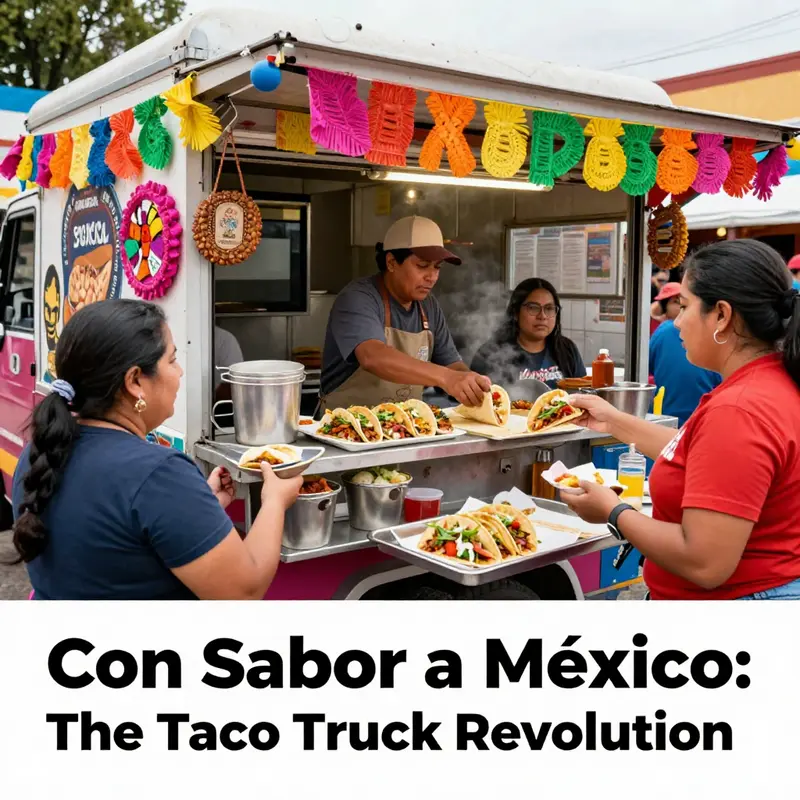
Across the globe, taco trucks have become epicenters of culture and flavor, offering more than just food; they serve up a rich tapestry of memories and traditions. “Con Sabor a Mexico” not only highlights these mobile culinary ambassadors but also tells the compelling story of their journey, craftsmanship, and the passionate people behind them. As you dive into the chapters ahead, you’ll discover how this remarkable taco truck evolved from humble beginnings into a celebrated symbol of culinary innovation. From the artful preparation of authentic recipes to the unwavering spirit of the entrepreneurs who run them, every aspect contributes to a deeper appreciation of this delicious cuisine. Join us as we explore the vibrant heartbeat of Mexican street food through Con Sabor a Mexico.
null
null
Rolling from Humble Beginnings to Global Fame: The Con Sabor a Mexico Taco Truck Story
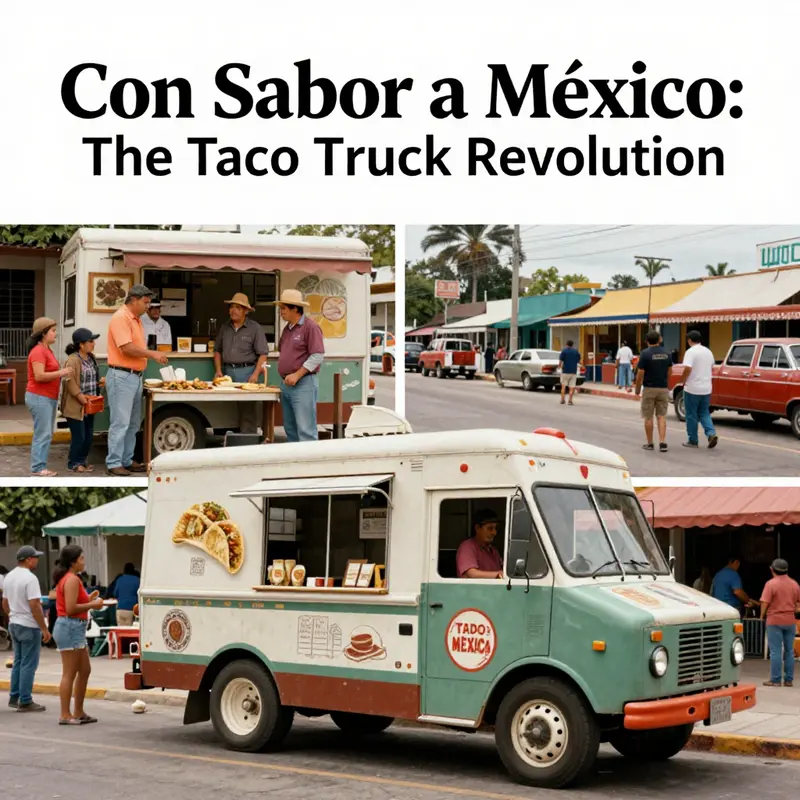
Dawn paints the street with pale gold as a sturdy, weathered truck rumbles to life. Inside, jobs are a rhythm rather than a plan: masa harina dust on the sleeves, tortillas pressed fresh, the metal grate warming with a quiet, dependable glow. Con Sabor a Mexico Taco Truck did not begin as a spectacle; it began as a living room kitchen on wheels, a notebook of family recipes, and a stubborn belief that food can carry memory as easily as heat travels through metal and air. The journey from that first fluorescent morning to a place on the world’s culinary map is not a single leap but a careful, continuous folding of tradition into invention. In the taco, as in life, there is a balance between what is inherited and what is improvised. The tortilla, for instance, is not merely a wrapper but a canvas—hand-pressed or machine-fed, made daily from masa harina or blue corn, warm and pliable enough to cradle a slow-simmered filling without betraying its own character. When the grill flares, carne asada sings, the fat cracking like tiny cymbals, while barbacoa curls in its own steam, and carnitas crisp at the edges, claiming the night air with a perfume of citrus and smoke. This is where cuisine becomes conversation and memory becomes spice. The truck’s menu is not a rigid catalog but a living library of regional tastes and personal tweaks, with pico de gallo bright as a memory of a grandmother’s garden and sauces that range from smoky chipotle crema to a verdant salsa verde that carries the brightness of a sunlit afternoon. Some days, the kitchen leans into regional curiosities—thin ribbons of chorizo that mingle with black beans, a touch of chamoy to hint at fusion and history—reminders that Mexican food is not a single map but a network of routes, each with its own weather, textures, and stories. The craft here is not spectacle but skill: a patient hand on the masa, a precise balance of salt and lime, and the discipline to serve each taco immediately, when the tortilla is at its most receptive and the fillings at their most honest. In this sense, Con Sabor a Mexico is less a brand than a vessel for living culture. The truck becomes a mobile kitchen of memory, a rolling archive that travels with the cook and welcomes the customer into a shared moment of hunger and heritage. The world outside begins to catch up in small, telling ways. In cities as different as Los Angeles, Mexico City, and pockets of Europe where immigrant markets buzz with energy, the humble taco truck is no longer just a street stall but a portable stage for tradition meeting innovation. The sizzle travels through the air and the stories travel through social feeds, where bite-size videos and warm captions turn a single plate into a signal of belonging. The appeal is not only the heat and the charring but the immediacy of the craft: tortillas made on the spot, a stack of sizzling meats, and a lineup of condiments that invites a customer to compose a taco that feels personal, even intimate. The magic is in the layering—the crisp edge of a barbacoa bite meeting the fresh brightness of pico, the tang of salsa verde balancing the earthiness of slow-cooked meat, the whisper of cilantro and lime that finishes the bite with a memory of a summer afternoon. All of this operates within a structure that is both simple and rigorous. The kitchen can be economical in its design yet safe and compliant, with equipment chosen for efficiency and reliability. There are quiet victories here too: tortillas that steam in a hot cloth, sauces kept from heat and stored so they taste like they were made just minutes before, and a rhythm that allows the cook to stay present for the customer, to read a face and adjust a flame, to swap a chili or a spice level without breaking the flow. There is an ethic of endurance beneath it all. The operators who keep these trucks rolling have learned to persevere through long hours, through the weather that can turn a street corner into a testing ground, and through the complications of permits, taxes, and the constant negotiation with urban life. It is a life lived in the shoes of a traveler and a caretaker at once: a pilot who navigates risk and a host who invites strangers into a memory they did not know they were hungry for. The personal stakes are high because the craft is personal. One vendor once captured the mood by describing the work as a way to offer more than food—to serve memories, family recipes, and a piece of home. When a customer bites into a taco and smiles at the first crack of the tortilla, it is not merely satisfaction that follows but a recognition of something shared: the long arc of generations, the labor of hands that learned to coax flavor from simple ingredients, and the stubborn hope that a street corner can become a meeting place for culture. This is how the Con Sabor a Mexico truck travels from a neighborhood business to something that feels universal. Social media has amplified the message, turning a careful craft into a visible movement. Short videos capture the steam rising from a fresh tortilla, the glint of marinade on meat, the quick assembly of toppings, and the moment of crunch when a bite happens. A Long Island taco stand and its kin across the world have shown how authenticity can ride the wave of modern platforms, how a local tradition can become a global conversation without losing its core. The rise is not about spectacle alone but about a refined honesty: recipes passed down through families, hand-cut chiles balanced with a measured hand on heat, the discipline to maintain quality even as business scales. The trucks that endure often do so because they reconcile passion with professionalism. They invest in durable, safe design while preserving the spontaneity that gives a street meal its personality. They source ingredients that honor origin—fresh masa, real cuts of meat, and vegetables chosen for brightness and crunch—and they train staff to respect the rhythm of a busy service, to read a queue and time orders so that each plate lands with the heat and texture intended by the cook. The culinary story of Con Sabor a Mexico thus becomes a story of adaptation and continuity: the same hands that press a tortilla and brush a flame also navigate permits, wage demands, and marketing, balancing tradition with the demands of a wider audience. In this sense, the journey from humble beginnings to global visibility mirrors a larger movement within Mexican street food, a movement that has grown beyond borders while refusing to erase origins. The dishes themselves tell the tale—the way carne asada can glow in a simple garlic and citrus kiss, how rib-sticking barbacoa can coax tenderness from a tough cut, how the slow braise of pork yields a texture that begs for slow chewing and longer memory. The mind behind the truck remains focused on the next plate, the next story, the next moment when a new customer looks up from a steaming taco with a question that invites an answer in a language of flavor. And yet there is a humility embedded in the ascent. Fame is not the aim; resonance is. Each customer is another pair of eyes that has the chance to see the lineage of a grandmother’s kitchen and feel the lineage in their own mouth. This is not merely a culinary achievement but a cultural one: a proof that a portable kitchen can translate a language of spices, heat, and warmth into a shared experience that travels beyond one neighborhood, one city, one country. The social arc of Con Sabor a Mexico is reinforced by the way it respects connection—between old and new flavors, between home cooks and professional kitchens, between craftspeople who know that a well-made tortilla can carry more than filling. It is a demonstration that authentic Mexican street food can speak to a global palate without losing its sense of rootedness. For operators who glimpse this path, the message is practical as much as aspirational. It is possible to grow while preserving what makes the food meaningful: daily tortillas, slow-cooked meats, bright salsas, and a front-of-house that treats every customer as a guest in a small, moving embassy of culture. The road to worldwide recognition often travels through the same expandable street: markets, festivals, city blocks that welcome something new yet resonant. The challenge lies in maintaining discipline while embracing experimentation—the willingness to adjust a recipe to reflect local tastes without surrendering the essence that makes it true. In the end, the story of Con Sabor a Mexico is a reminder that con sabor a México is not merely a slogan; it is a way of cooking that invites others to taste the past while savoring the present. It asks for attention to craft, generosity in service, and courage to become a traveling heirloom that still feels intimate. The truck’s path—humble beginnings, relentless work, social media visibility, and gradual ascent to wider appreciation—embodies a broader truth about Mexican street food: that it travels because it carries home in its scent, warmth in its voice, and a promise that every bite can be a bridge between people and places. For those who chase that bridge, the route often starts with the decision to roll out, to press a fresh tortilla, to coax a perfect chip of crispness from the edge of a carnitas taco, and to greet the next customer with a smile that says, in effect, you’re welcome here, you belong here, and your memory matters here. One can trace the arc without losing sight of the work—the labor of hands and the patience of time that transform humble ingredients into something that tastes like identity. And as the world leans closer to Mexican flavors, the Con Sabor a Mexico truck stands as a compact testament: a mobile, durable, delectable reminder that food can be a form of migration—an act of presence that invites everyone to taste a home no matter where they stand. External resources can illuminate this journey further, but the essential flavor remains the same: a careful balance of tradition, craft, and openness to the new that keeps turning a simple street meal into a global conversation. For those who wish to explore the practical side of scaling while honoring craft, guidance about choosing the right truck and model can offer a framework, while stories of day-to-day resilience keep the flame alive and the plate satisfying. Top food truck models for success. To see how modern platforms amplify these stories and to glimpse the energy behind the movement, a recent viral piece about Mexican food trucks and the people who keep them thriving offers a vivid snapshot of the stakes and the joy involved in feeding a world hungry for authenticity. https://www.tiktok.com/@thegrubfather/video/749581234567890123
null
null
Taste and Tenacity: The Hidden Hands Behind Con Sabor a Mexico Taco Truck
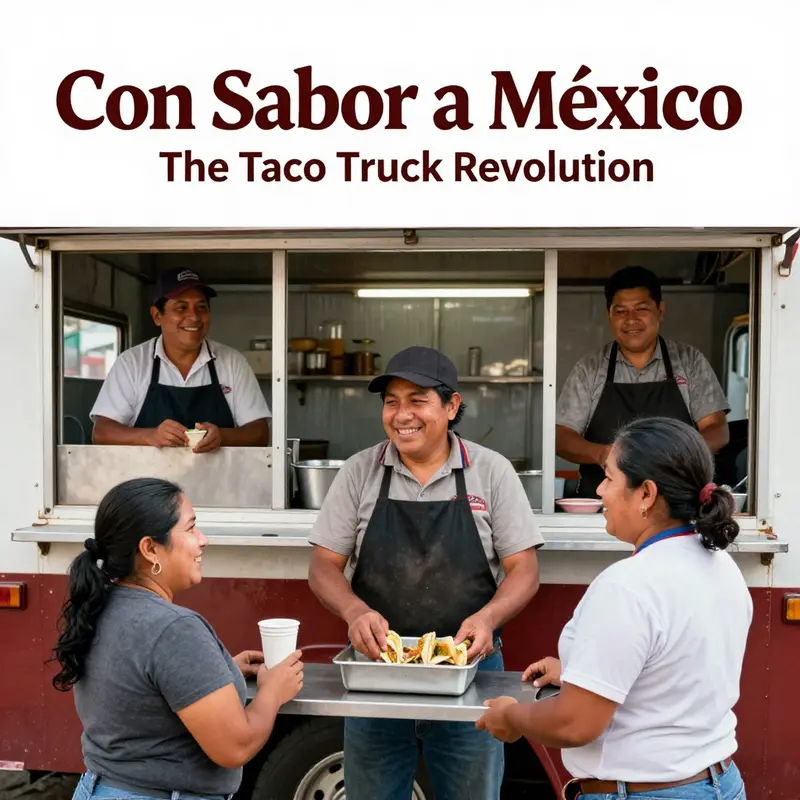
In the heart of a sunlit street in San Jose, a chrome-colored mobile kitchen hums to life each day with a rhythm that feels almost ceremonial. Con Sabor A Mexico is more than a taco truck parked at 500 W San Carlos St; it is a living archive of technique, memory, and stubborn perseverance. The stories that gather around its windows aren’t stamped into the menu board; they’re whispered through the steam rising from the grill, the clack of the masa press, and the careful fold of a quesabirria wrapped in glossy paper. The people who work there are the quiet protagonists of a larger cultural narrative, the unsung heroes who keep a piece of home moving through the street and into mouths across the Bay Area. Their craft is a practice of care as much as a business plan, and their names—often unspoken outside the kitchen—hold the scent of family traditions, late-night notes, and the stubborn clarity that sustains a small enterprise through long hours and unpredictable days. The truck’s reputation—built around giant birria tacos—has rippled outward, drawing food lovers from different neighborhoods and reminding them that the act of eating is never only about flavor; it is a form of listening to someone’s history and welcoming it into your own memories.
The essence of Con Sabor A Mexico rests on something as intimate as a grandmother’s recipe but as exacting as a chef’s mise en place. Beyond the sizzling meat and the inviting steam, there is a meticulous choreography: the broth that must simmer for hours, the masa that is ground, pressed, and formed into pliable tortillas, and the sauces that arrive at the table in layers of smoke and brightness. Birria, in its deepest sense, becomes a narrative of time—how the meat braises until it relinquishes its stubborn bite, how the consommé clings to the tortilla as if to hold a moment of memory in every bite, how the cheese threads into the quesabirria as a bridge between tradition and invention. The team behind these plates works with the quiet urgency of a small orchestra; a few hands measure, taste, adjust, and taste again. Their work is not about loud declarations but about the patient, ongoing act of giving guests a sense of arrival, of belonging to a shared table on a street that rarely grants a late-night, intimate seat at a restaurant window.
Operating with a schedule that speaks to the lived reality of many street-food entrepreneurs, the truck keeps hours that feel generous in a neighborhood where late meals can be a lifeline. The profile notes that it remains open daily from late morning into the evening, a cadence that supports families, students, and workers who need a quick, satisfying meal that also carries a sense of home. Yet the hours do not erase the strain that comes with every shift. The crew endures long days that stretch toward 14 hours, rain or shine, under the pressure of permits, licensing, fluctuating ingredient costs, and the ever-present challenge of keeping food costs aligned with a sustainable wage for those who carry the flame of the operation on their shoulders. In this world, every order is a small negotiation between desire and reality: the desire of a hungry crowd, the reality of supply and safety, the need to keep a truck moving while preserving the integrity of a family recipe accumulated over generations. The resilience demonstrated here is not a spectacle; it is a practice of daily courage. The soundscape—sizzles, soft conversations, the scrape of a spatula, a timer ticking toward a perfect doneness—becomes a quiet hymn to the labor that sustains a neighborhood’s appetite and, in turn, its sense of continuity.
What makes this chapter feel less like a travelogue and more like a portrait is the way the human elements come into focus. The cooks and servers are often not just staff but custodians of memory. They remember where the spices were sourced, which suppliers delivered the right masa on a Tuesday when rain muted the city’s rhythm, and how to adjust a recipe for a new crowd while preserving its original soul. In this sense, the truck’s birria is more than a dish; it is a living tradition, one that invites customers to witness the labor and ingenuity that lift a street meal into a shared cultural moment. When a guest tells a server that the first bite tastes like home, what they are sensing goes beyond culinary skill. They are acknowledging a lineage—people who learned to cook from grandparents who fed entire households on a single pot, who learned to balance heat and salt with patience, and who now translate that lineage into a form of hospitality that travels from kitchen to curbside and beyond. The staff, who might otherwise be invisible in the glare of social media fame, deserve the spotlight that a strong, consistent turnout provides. Their presence is a reminder that a neighborhood’s palate evolves not from a single, branded icon but through the steady hands that keep a timeless craft alive in a modern city.
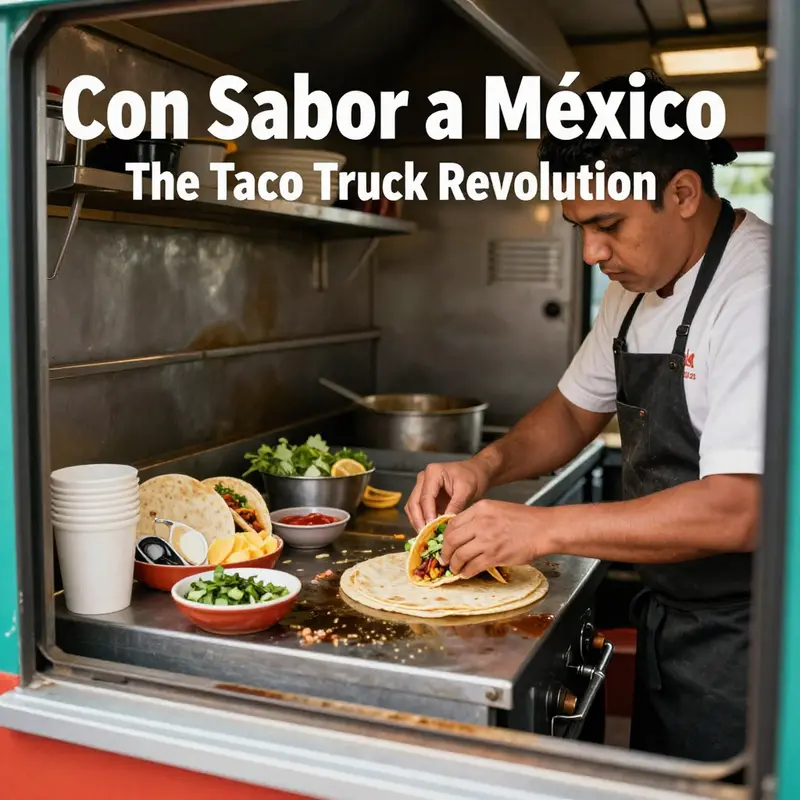
Within the daily routine, there is an almost ceremonial attention to the craft of tortillas. Freshly pressed tortillas—whether made from blue corn masa harina or a carefully chosen variant—anchor the menu’s texture and aroma. The dough’s resting, the heat of the griddle, and the moment when a tortilla yields without cracking reveal a depth of knowledge passed down through generations and adapted to a new climate and audience. The team’s ability to fold a quesabirria with a warmth that invites a second bite speaks to a larger philosophy: the goal is not to overwhelm the senses with bravado but to guide them toward a balanced harmony of char, fat, crisp, and citrus brightness. A well-placed squeeze of lime, a scatter of chopped cilantro, a dip into a smoky, pepper-laced salsa verde—these tiny acts are the punctuation marks in a sentence that begins with the first inhale of sizzling birria and ends with a satisfied sigh from a guest who has lingered long enough to hear the hum of the truck’s engine once more while tasting the closing bite.
From a practical perspective, the team behind Con Sabor A Mexico operates as steadies rather than stars. Their attention to detail extends beyond the plate to safety and efficiency, a reality reinforced by the broader industry context in which many mobile kitchens work. The careful handling of meat, the preservation of freshness through timely restocking, and the use of sanitary, organized workspaces reflect a professionalization of street food that is often overlooked when people talk about the romance of the sizzle. In this sense, the truck becomes a campus of skills: the art of tempering heat to coax tenderness, the science of layering flavors without losing the purity of a single ingredient, and the logistics of feeding long lines with accuracy and dignity. The narrative of Con Sabor A Mexico, then, is not a fairy tale of overnight success; it is the story of a community’s perseverance, the quiet discipline that keeps a kitchen running, and the belief that food can anchor a person’s sense of place even when the world is shifting beneath their feet.
The cultural resonance of this small operation extends beyond the immediate street corner. It taps into a larger conversation about how Latin American flavors have become integral to global dining cultures. It is no accident that birria has traveled from regional celebrations to food-truck menus and even into television and film discussions about what makes street food humane, sustainable, and deeply personal. In a cityscape where meals often come with labels and trends, the Con Sabor A Mexico crew offers a counterpoint: a reminder that flavor is a vessel for memory and that the act of feeding others can heal old wounds and forge new connections. This is why people return, not just for the intensity of the birria’s depth or the crispness of a perfectly folded shell, but for the feeling of being seen—of knowing that the person at the window is not just collecting money but sharing a part of their own life’s work. The 600-plus photos on Yelp that chronicle countless smiles, stacks of brimming plates, and the warm glow of a family-run operation are more than social proof; they are a quiet archive of the community’s approval and appreciation. The truck’s patrons become ambassadors of a broader story: that you can carry a culture forward through the careful practice of cooking, through the generosity of a shared table, and through the stubborn joy of showing up day after day to feed people with nothing but pride and patience.
For readers who are curious about the practical path that can lead toward the kind of impact this truck embodies, there is a common thread worth noting: the deliberate choice to build a mobile kitchen that honors both craft and safety. This is not about reinventing tradition but about accelerating its reach with a respectful eye toward the logistics that keep a business viable. In this sense, Con Sabor A Mexico serves as an instructive case study for aspiring operators who want to transform a street stall into a reliable, beloved micro-enterprise. It is about recognizing that the power of a truck lies not solely in its ability to draw a crowd but in the lives it touches—the cooks who labor with their hands, the families who keep passing down recipes, and the customers who come back for a sense of home on a crowded urban block. With every bite, the truck broadcasts a message about resilience, pride, and the enduring appeal of Mexican flavors when they are prepared with care, shared with warmth, and offered with a steady hand that never forgets the people who made the journey possible.
To explore a broader framework that supports this kind of work, prospective operators can consult the resource that emphasizes practical, people-centered considerations for choosing the right food truck. Choosing the right food truck.
External resource: https://www.yelp.com/biz/con-sabor-a-mexico-san-jose
Final thoughts
Con Sabor a Mexico taco truck stands as a testament to the flavors of Mexican culture and the passion of those who serve it. Each taco represents not only deliciousness but also stories of resilience, artistry, and deep-rooted traditions. From the kitchen’s sizzle to the joy on a customer’s face, this truck encapsulates what it means to connect over food. So, the next time you see a taco truck, remember it’s more than a meal; it’s a celebration of heritage, craft, and community spirit.