
Picture this: you’re longing for the rich, bold flavors of authentic pork tacos, but what happens when a quick food truck visit turns into a nightmare? This is a real story about a man whose craving led to severe neurological consequences after indulging in tacos from an illegal food truck, igniting essential conversations for both taco enthusiasts and business owners. Delving into the neurological consequences, we’ll also explore the health risks associated with unregulated food sources, the role of tapeworms in foodborne illnesses, and the legal implications faced by illegal food truck operators. Through these insights, we aim to foster informed choices among cuisine lovers, taco fans, and those aspiring to enter the vibrant food truck scene. Let’s taco ‘bout it!
null
null
From a Bite to a Brain Onset: The Hidden Dangers of Unregulated Food Vendors
A single bite can carry more than flavor, and in the unsettling case that sparked this chapter, a man’s choice to eat pork tacos from an illegal food truck unraveled into a medical crisis that illuminated the sobering dangers of unregulated street food. The sequence began with hunger and curiosity, a craving for something warm, smoky, and comforting on a day that offered little reassurance about where a meal came from. What followed was a cascade of symptoms that would eventually point investigators toward a parasite so small it hides in plain sight, yet can provoke life-altering brain disease. The incident is not merely a cautionary tale about one rogue vendor; it is a stark reminder that when safety checks, sourcing audits, and proper cooking standards are absent, the consequences can travel far beyond immediate gastroenteritis. They can become neurological, even fatal, because some pathogens and parasites exploit the gaps that appear when regulation ends at the curbside window.
At the heart of the clinical mystery in this case is Taenia solium, a tapeworm whose life cycle is deceptively simple and dangerously efficient. Humans harbor the adult tapeworm in the intestine, where it quietly sheds eggs into the environment through fecal matter. Pigs, drawn to a source of contaminated material, ingest those eggs, and within their tissues the parasite forms cysts known as cysticerci. When people consume undercooked or inadequately prepared pork that harbors these cysts, they may become infected with the adult tapeworm themselves. But the danger does not stop there. In some people, especially if eggs are swallowed rather than cysticerci, the larvae migrate beyond the gut and lodge in tissues, including the brain, muscles, and eyes. In the brain, these larvae can evoke neurocysticercosis, a condition characterized by inflammatory responses, cyst formation, and destructive pressure within delicate neural networks. The clinical consequences are often seizures, persistent headaches, confusion, and in severe cases, swelling of brain tissue, hydrocephalus, and death. In other words, a bite into a seemingly ordinary taco can set in motion a path from ingestion to systemic disruption that only modern medicine can manage after the fact.
The illegal food truck involved in this scenario operated outside the reach of county or state health departments, a reality that amplifies risks in several dimensions. When vendors lack licensing, inspections, and documented supply chains, there is little assurance about how meat is sourced, how it is stored, or how it is heated and held during service. Cross-contamination becomes more likely, as does exposure to pathogens that thrive where sanitation standards are lax. The absence of routine temperature monitoring, clean utensils, and staff training compounds the likelihood that parasites or organisms survive long enough to cause illness. In such environments, the possibility that pork carries parasites is heightened not merely by chance but by systemic vulnerability. The result is a food experience that begins with a familiar comfort and ends in a medical condition that demands urgent care and long-term management.
The broader public health implications extend beyond a single case. The World Health Organization emphasizes that unsafe food is a global concern, with hundreds of millions of people affected by foodborne illness each year and hundreds of thousands of deaths attributed to these diseases. Informal markets, street vendors, and unlicensed producers disproportionately populate contexts where regulatory oversight is weakest, leading to a disproportionate burden of disease among vulnerable populations. While many people assume that foodborne illness is primarily an issue of stomach upset, the truth is more nuanced. Pathogens and parasites can strike at the nervous system, the liver, or the kidneys, and their impact is not solely measured in immediate symptoms but in the long arc of recovery, disability, or, in the worst cases, mortality. The case of the pork taco illustrates this dynamic vividly: a brief exposure to a curbside meal can seed a cascade of medical events that challenges families, clinicians, and health systems alike.
This chapter also invites reflection on the spectrum of risks inherent to unregulated food. In addition to parasitic threats like Taenia solium, unregulated outlets may harbor bacterial pathogens such as Salmonella, E. coli, and Listeria, each capable of causing severe illness requiring hospitalization. Chemical contaminants pose another layer of risk, from pesticide residues to heavy metals that can accumulate in the body over time and contribute to chronic disease. The absence of proper labeling, including allergen information, can leave consumers with little chance to avoid reactions that range from mild to life-threatening. Taken together, these factors create a landscape in which a consumer’s well-being hinges not only on what is eaten but on where and how it is prepared, stored, and served. The vulnerabilities of informal markets are not simply about oversight gaps; they are about the real people who rely on accessible, affordable food and sometimes bear the burden when oversight erodes.
Against this backdrop, mitigation becomes a shared responsibility that begins with education and continues through enforcement and informed consumer choice. Educational initiatives directed at informal food handlers can instill fundamentals of personal hygiene, proper handwashing, safe cutting and cooking practices, and basic cross-contamination prevention. regulatory authorities can play a pivotal role through routine inspections, licensing prerequisites, and clear, enforceable standards that vendors understand and can meet. Consumers, in turn, can benefit from awareness campaigns that teach them how to assess a vendor’s basic safety practices—adequate refrigeration, visible cleanliness, and evidence of proper cooking temperatures—without erasing the food culture that vibrant street economies represent. A more resilient system also requires frameworks that connect informal vendors with resources to operate safely, including access to refrigeration, reliable heat sources, and guidance on safe meat sourcing. Such measures do not erase the value of street food but rather protect its essential character while elevating public health.
From a narrative standpoint, the man who consumed the illegal pork taco serves as a case study in risk communication. It is a reminder that food safety is not a single choice at a single moment; it is an ongoing interaction among supply chains, preparers, and diners. When any link in that chain falters, the consequences can travel beyond the individual, touching families, clinicians, and emergency departments. In turn, this underscores the importance of strong governance and accessible safety mechanisms that empower communities to participate in food traditions without compromising health. The take-home message is neither alarmism nor cynicism about street food markets. It is a call for pragmatic safety culture that respects cultural foodways while insisting on basic safeguards—adequate sourcing, proper handling, and rigorous cooking or processing standards.
To connect these principles to practical decisions, consider the broader ecosystem in which mobile vendors operate. The right impetus for reform includes clear licensing pathways, predictable inspections, and accessible guidance that helps vendors meet safety expectations without stifling entrepreneurship. Consumers benefit when tasting experiences come with contextual assurances—information about sourcing practices and cooking methods that enable informed choices. A practical step is to view food safety as a shared asset rather than a punitive constraint. When enforcement is fair, transparent, and coupled with education, informal markets can flourish while communities enjoy the vibrancy and cultural richness of street cuisine.
For readers seeking a concrete pathway to safer engagement with mobile food, a useful starting point is understanding the regulatory landscape and how to navigate it when considering a venture. Legal steps for launching a food truck offers a framework for approaching licensing, inspections, and compliance in a way that honors both business viability and public health. Integrating these steps into community planning and vendor support programs can reduce risk and enhance trust between vendors and patrons. This alignment is not an abstract ideal; it is a practical strategy that directly addresses the vulnerabilities exposed by cases like the pork taco incident, helping to ensure that meals shared in public spaces do not become sources of disease or fear.
In the end, the chapter’s core message rests on a simple truth: safety in the realm of street food is achievable when communities invest in the pillars of good practice, the transparency of supply chains, and the accountability of service. The neurological toll of neurocysticercosis, a preventable consequence when proper controls are absent, remains a stark reminder of what is at stake. It pushes stakeholders—policy makers, health professionals, vendors, and consumers alike—to champion a culture where delicious, affordable, and culturally rich foods can be enjoyed without compromising the nervous system, the heart, or the future of someone’s health. As the global community continues to confront food safety challenges, the lessons from this case become a touchstone for evaluating risk, refining regulation, and rebuilding trust in the shared table of public health.
External resource: For a broader understanding of how communities and governments frame food safety and respond to emerging threats, see the World Health Organization’s comprehensive overview at https://www.who.int/news-room/fact-sheets/detail/food-safety.
When a Pork Taco Becomes a Threat: How Taenia solium from an Illegal Food Truck Led to Brain Infection
The invisible passenger: how a single taco turned into a neurological emergency
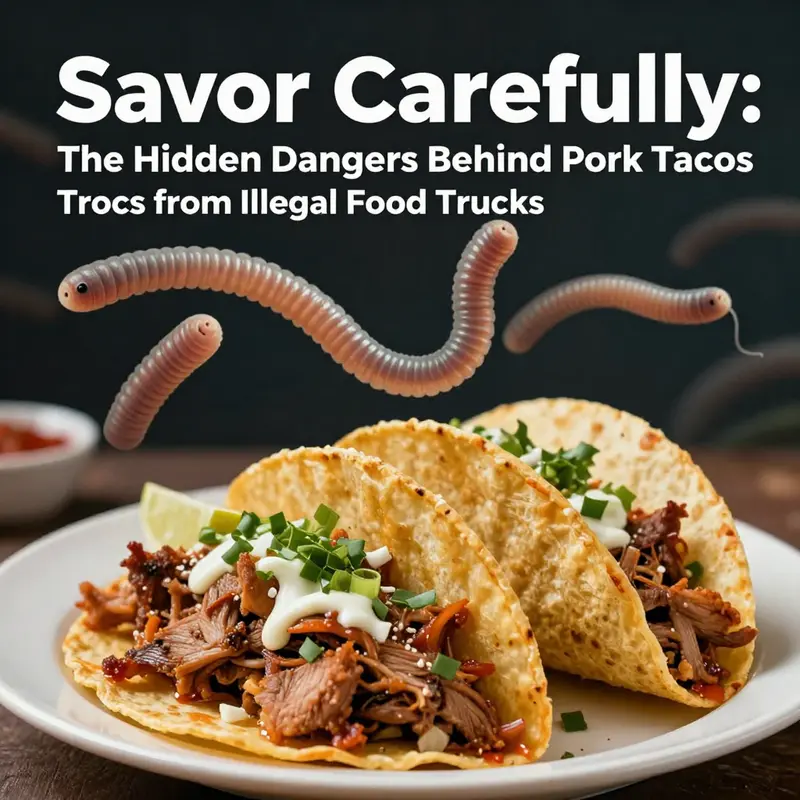
What begins as a casual lunch can become a medical crisis when parasites slip past food safety. The case of a man who ate pork tacos from an illegal food truck and later developed seizures and brain swelling shows this clearly. The culprit was Taenia solium, a pork tapeworm whose larvae invaded the brain. This chapter unpacks how that happened, why unregulated vendors raise risk, and what science and public policy can do to prevent future harm.
Tapeworms are flatworms that survive by attaching to a host’s intestine. The species tied to pork, Taenia solium, has two dangerous clinical faces. When someone eats undercooked pork with larval cysticerci, the larvae mature into adult tapeworms in the gut, a condition called taeniasis. That intestinal infection can be asymptomatic or cause mild digestive complaints. The far more serious event is cysticercosis. When a person ingests eggs—usually via fecal contamination—the eggs hatch in the gut, and larvae migrate into tissues. If those larvae lodge in the brain, the result is neurocysticercosis, which can cause seizures, headaches, confusion, and brain swelling.
The life cycle explains why hygiene and cooking matter. Pigs acquire cysticerci by eating human feces that contains tapeworm eggs. Humans get taeniasis from eating undercooked pork with cysts. But humans can also become accidental intermediate hosts by ingesting eggs from another infected person. That transfer often occurs when sanitation fails, or when food handlers with poor hygiene contaminate food. In informal or illegal food operations, both risks rise. Those vendors may buy pork from unverified sources, lack refrigeration, and prepare food without rigorous handwashing. Cross-contamination between raw meat and ready-to-eat items is common without proper procedures.
Illegal food trucks multiply the danger. They often operate without permits or inspections. That means no routine checks for storage temperatures, hygiene, or approved suppliers. Food handlers may lack training in safe cooking temperatures, which are crucial to kill parasites. Proper cooking will destroy cysticerci, but achieving that requires consistent heat and timing. A busy street vendor may prioritize speed and flavor over internal thermometer checks. The truck involved in this case reportedly served traditional-style pork tacos. Traditional recipes sometimes rely on slow-cooked or lightly cooked meat. When that meat comes from an infected animal and is not heated thoroughly, cysts can survive and infect consumers.
Beyond cooking, sourcing is central. Regulated suppliers adhere to veterinary inspections and slaughterhouse standards. Those systems reduce the prevalence of infected pork in the supply chain. An unlicensed vendor may purchase from informal markets, private farms, or intermediaries with no documentation. Those pork supplies can include meat from animals raised in unsanitary conditions where transmission between humans and pigs is unchecked. Without traceability, public health investigators struggle to identify infected supply chains and stop ongoing exposure.
The clinical progression of neurocysticercosis can be abrupt or insidious. Larvae in the brain provoke inflammation, which leads to swelling. Seizures result when cysts irritate brain tissue. Symptoms can mimic other neurologic disorders, making diagnosis challenging without imaging. CT scans and MRIs reveal cysts or calcifications. Serologic tests can support the diagnosis, though imaging remains the cornerstone. Treatment requires antiparasitic drugs to kill cysts, plus steroids to control inflammation. In severe cases, surgery may be needed to relieve pressure or remove large cysts. Early recognition and prompt therapy improve outcomes, but delayed care increases the risk of permanent damage or death.
This case illustrates failures at multiple levels: supply, preparation, oversight, and education. Preventing such tragedies requires layered defenses. Regulators must enforce permitting and inspections. Vendors should follow established cooking temperatures and avoid risky traditional practices without proper safeguards. Public health campaigns must stress hygiene for food handlers. Consumers need better awareness about where they buy prepared food and what constitutes safe practice.
Technology and food science offer tools too. Irradiation of meat can destroy cysticerci and other parasites. Studies demonstrate that appropriate radiation doses eliminate tapeworm larvae in pork and beef. While irradiation is scientifically effective, its use varies by region due to regulatory, cultural, and market factors. Where irradiation is available and accepted, it forms a valuable barrier between contaminated meat and buyers. Combined with cold chain controls and supplier verification, it helps ensure that a taco is just a taco, not a vehicle for a neuroinvasive parasite.
Public health responses after an outbreak or severe case must be swift and coordinated. Investigators trace the source, test remaining food and relevant animals, and identify other exposed individuals. They must communicate risks without causing undue panic. For food vendors, regulators balance enforcement with pathways to compliance. Informal operators often work with slim margins and limited knowledge. Providing clear guidance and accessible routes to legalization reduces the incentive to operate outside the system. For practical help on doing this properly, see resources like the clear guidance on legal steps for launching a food truck.
Clinicians also need education. Neurocysticercosis is common in parts of the world where sanitation is poor. In places with immigrant populations or travelers, physicians must keep it on their differential diagnosis when seizures or unexplained neurological signs appear. Rapid referral for imaging and infectious disease consultation can change outcomes. Public health authorities should share alerts with clinicians after identifying local exposure risks.
On the community level, prevention is simple in concept but demanding in practice. It combines sanitation, veterinary controls, safe slaughtering, proper cooking, and food handler hygiene. Each link in that chain reduces the chance that tapeworm eggs or larvae reach a human brain. For street food culture, the challenge is preserving culinary traditions while ensuring safety. Training programs tailored to vendors, accessible licensing, and sensible inspection routines can achieve both aims.
The case of the pork taco reminds us that food safety is not merely about bacteria and spoilage. Parasites can travel silently through food chains and cause long-term harm. A single meal from an unregulated source carried an organism that can live inside the brain. That stark fact changes how we view convenience and price. It also reframes responsibility: vendors, regulators, clinicians, and diners all share a role.
Science, policy, and practical steps can close the gaps. Effective regulation and vendor training reduce risky practices. Consumer awareness shifts demand toward safer providers. Diagnostic vigilance and timely treatment limit human suffering when infections occur. And when technology like meat irradiation is available, it should be part of the toolkit to protect consumers.
This narrative does not end with one patient’s recovery or one vendor’s closure. The incident is a warning and a lesson. It urges stronger oversight of informal food enterprises, better education for food handlers, and wider access to food safety technologies. When those pieces come together, a taco remains a simple pleasure, not a health hazard.
For a comprehensive review of biological hazards in food, and control measures such as irradiation and proper cooking, see this peer-reviewed overview: https://www.ncbi.nlm.nih.gov/pmc/articles/PMC5972810/
The Hidden Cost of Unpermitted Street Food: Legal Risks, Public Health, and a Call for Safer Paths
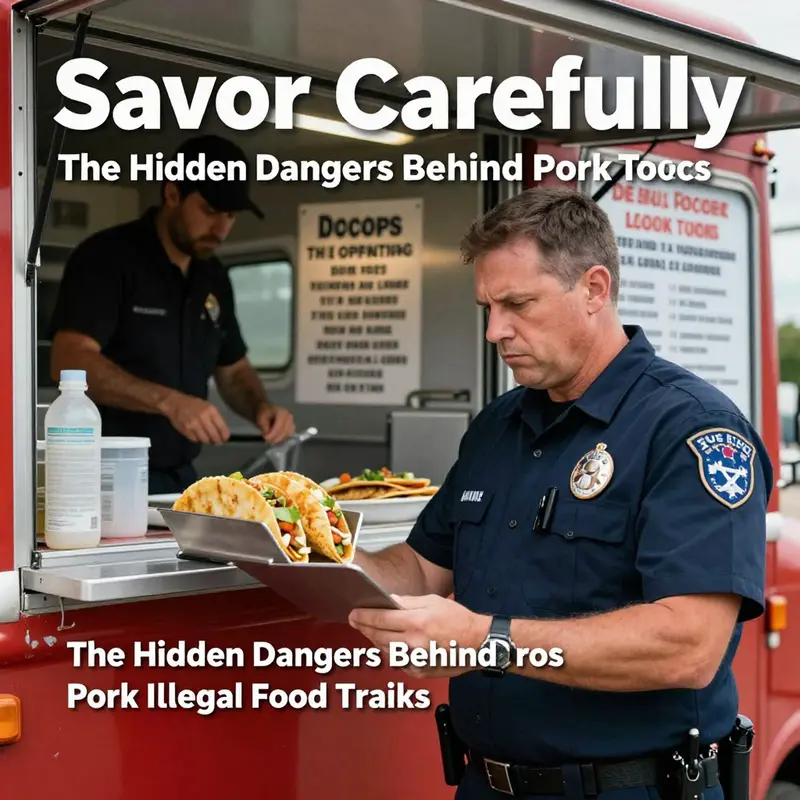
A single meal can illuminate a complex web of law, health, and community trust. When a man ate pork tacos from an illegal food truck and subsequently endured seizures and brain swelling, the incident did more than reveal a medical catastrophe. It exposed how unregulated street food economies operate, the vulnerabilities they create for ordinary diners, and the ripples these choices send through public health systems. This chapter follows that thread, tracing how illegal vendors slip between rules designed to protect people, how parasites and bacteria exploit the gaps, and why a combination of enforcement, education, and accessible licenses matters more than punitive measures alone. It is a story about choices at every level—from the individual diner to the city regulator—and about the real costs when safety standards are treated as optional rather than essential.\n\nIn the medical and scientific sense, the most alarming element of the case is not only the acute symptoms but the mechanism by which they arise. Taenia solium, a tapeworm, can inhabit a pork supply and leave cysts in tissues when it is not properly controlled. In some circumstances, the larvae migrate to the brain, a condition known as neurocysticercosis. The consequences can be devastating: seizures, severe headaches, cognitive disturbances, and, in extreme cases, death. The narrative underscores a chilling principle: food safety is not merely about taste or cleanliness; it is a frontline defense against parasitic diseases that travel through the most ordinary of avenues—shared meals from makeshift vendors operating far from formal oversight. When a truck operates without permits, the risks multiply. The regulation gap is not a sterile abstract issue; it translates into real, measurable risk for real people who assume that a street-side meal is prepared with basic, known standards of care.\n\nWhat makes illegal food vending particularly perilous is how the absence of oversight converges with practical realities on the ground. Vendors without proper licensing may lack certified kitchens, reliable sources of clean water, proven methods for safe meat handling, and tested refrigeration practices. Food kept at room temperature for extended periods becomes a nurturing ground for bacteria and parasites alike. In some cases, meat from animals infected with parasites may not be adequately processed to kill cysts and larvae. When the supply chain remains opaque and the cooking environment is improvised, the margin for error expands dramatically. The consequence is not merely a temporary illness in a single customer; it is the potential for a cluster of illnesses, difficult contact tracing, and a strain on local health departments that must respond with limited information and resources.\n\nPublic health officials have highlighted the dangers of illicit food carts, and their warnings are not abstract. In Washington State, authorities reported a surge of unpermitted vendors observed in two counties, with dangerous food practices at the core of the hazard. The concern is clear: without routine inspections, there is no standardized sanitation protocol, no equipment calibration checks, and no formal tracking of outbreaks tied to street food. Dr. Alan Melnick has been explicit about the risk, describing unpermitted carts as dangerous and a direct threat to community health. These statements crystallize a dilemma that many cities face: how to balance the economic impulse of informal vendors with the imperative to protect public safety. The absence of licensing creates a vacuum where reliable information about food handling simply does not exist, leaving consumers to navigate a landscape where trust becomes the default currency rather than verified safety.\n\nBeyond the health dimension lies the legal landscape, which repeatedly confirms that operating without permits carries consequences that extend far beyond a failed business model. Jurisdictions differ, but the core idea remains consistent: licensing is the mechanism through which cities ensure health and safety standards, accountability, and traceability. In places like Hong Kong, authorities have intensified enforcement against illegal street structures, signaling a broader policy stance that treats unregulated vending as a public order and safety concern. Initiatives that target illegal constructions show how the state leverages zoning, permits, and regulatory tools to maintain orderly urban space and protect residents from hazards associated with unsanctioned commerce. The policy logic is straightforward: if the structure exists without a legitimate channel, the risk profile for food safety rises because there is no reliable infrastructure for water, waste disposal, or safe cooking facilities. This is not merely about the letter of the law; it is about the architecture of a city’s food system and the guarantees it affords to residents who dine on the street.\n\nYet enforcement alone cannot solve the problem. The health and safety crisis surrounding unpermitted vending points to deeper structural gaps—the lack of accessible pathways to legitimate operation, the absence of practical guidance for aspiring vendors, and insufficient incentives to join formal markets. A narrow focus on penalties tends to overlook the systemic barriers that discourage compliance. Education and support become essential complements to enforcement. Streamlined permit processes, affordable licensing, and clear training on food safety can transform risk from a chronic threat into a manageable standard. The public health conversation around unpermitted vendors should therefore emphasize inclusion: create channels through which vendors can operate legally without bearing prohibitive costs or excessive bureaucratic burdens, while maintaining robust safety checks. A holistic approach acknowledges that the informal food economy does not simply vanish when regulated; it can be integrated into a safer, more transparent system that benefits both vendors and customers.\n\nWithin this framework, cities also need reliable surveillance and rapid response mechanisms. Public health agencies require timely data to detect outbreaks, identify contaminated sources, and issue recalls or advisories. When the food supply chain is opaque, surveillance becomes difficult, and the response slower. The Washington and Hong Kong experiences illustrate that regulation is not only about preventing incidents but also about building resilience. A regulated system with accessible licensing and post-sale monitoring allows swifter action when problems emerge and fosters public trust that the street corner meal is not a lottery with health outcomes.\n\nFor communities seeking a practical path forward, the balance between safety and opportunity can be achieved by combining structural reforms with targeted outreach. This means investing in education for prospective vendors about safe meat sourcing, proper storage, and sanitation. It means simplifying the permitting process while maintaining checks that preserve public health. It also means engaging local residents in dialogue about street food, zoning, and market access so that the incentives align with safety rather than avoidance of regulation. The overarching aim is not to shutter small entrepreneurial energy but to harness it within a framework that ensures the food on offer is prepared with the same care and accountability as in licensed settings.\n\nFrom a consumer perspective, the episode is a reminder to favor vendors who operate within the system and to seek meals prepared in environments where health standards are visible and verifiable. It also invites readers to advocate for policies that close the gaps between informal food economies and formal markets. Advocates can push for reforms that simplify licensing, expand training opportunities, and increase the transparency of inspections. In doing so, they help transform a perilous fringe into a legitimate channel for cultural exchange and culinary innovation. This shift does not erase the risks; it mitigates them by transforming uncertainty into verifiable practice. The end goal is not only safer food but a more equitable market where small vendors can compete on a level playing field, access essential resources, and contribute to the local economy without compromising public health.\n\nFor readers who want a concrete starting point in understanding how to pursue legal, safe operation of a food vehicle, there are practical routes to explore. A clear, legitimate pathway exists for those who wish to serve communities while upholding standards. The idea is to integrate street-level entrepreneurship with formal protection for both workers and diners. That integration requires a commitment to accessible licensing, proactive safety education, and collaborative governance with public health authorities. It requires communities to recognize that the street food economy is a legitimate facet of urban culture when it operates within a framework of accountability and safety. The task at hand is to translate that recognition into action, creating a system where the risks seen in the illegal vending scenario are addressed through legitimate, sustainable practices rather than through punitive exclusion.\n\nInternal link for readers seeking a practical starting point: when considering licensing and safety steps for a food truck, explore the guidance on legal steps for launching a food truck. This resource provides a pathway toward compliance, which is essential for turning a street-food dream into a safe, community-supported enterprise. In parallel, policy-makers and public health departments should continue to publish accessible information about inspections, certifications, and best practices so that aspirants can responsibly enter the market without undue barriers. The objective is a street food landscape that honors local culture and entrepreneurship while prioritizing the health and safety of every bite. As the case of the pork taco incident and its haunting medical consequences reminds us, safety is not optional; it is the bedrock of trust between vendors and the communities they serve. External resources offer a medical lens into the consequences when safety fails, shaping the public health imperative to preempt harm before it happens. For a detailed medical account of the brain infection linked to foodborne parasitic exposure, see the MSN report on the pork taco case that led to seizures and brain swelling.”
Tacos in the Margins: Public Awareness, Prevention, and the Hidden Dangers of Unregulated Street Food
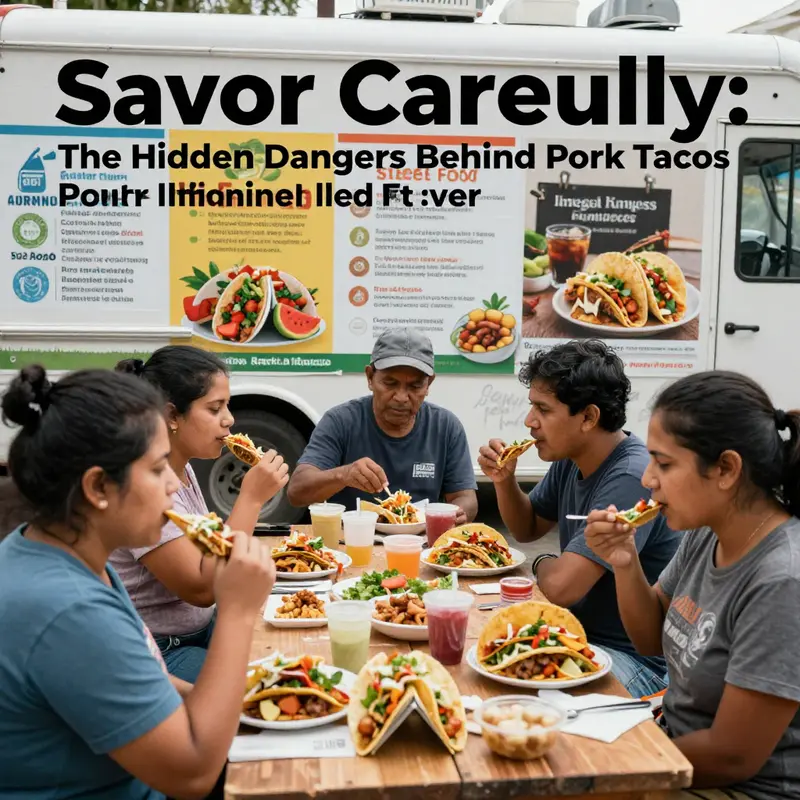
On a crowded city street, a man buys a meal from a roadside stall that advertises quick, flavorful bites and a sense of local pride. What unfolds is more than a bad meal or an upset stomach; it becomes a stark reminder of how street food can cross from cultural celebration into a public health challenge when safety nets are thin. The case of a man who developed severe neurological symptoms after eating pork tacos from an illegal food truck is not merely a medical curiosity. It is a lens through which we can examine the fragile boundary between everyday convenience and the unseen hazards that lurk in unregulated food sources. When food safety rules are not enforced, the margin where risk hides expands. In this space, the parasite Taenia solium can ride into the human body on the insulin-like rhythms of appetite and trust, and the consequence can be neurocysticercosis, a condition that unsettles wakefulness, triggers seizures, and, in the worst cases, can be life-threatening.
To understand why such an incident matters beyond a single hospital admission, it helps to trace how unregulated street food operates within the urban ecosystem. Street vendors often fill essential roles in feeding a diverse, dynamic population. They provide affordable options, support informal economies, and preserve culinary heritage. Yet when vendors skip permits, ignore health inspections, or bypass standardized cooking and storage practices, the city’s food safety net frays. The pork in this particular episode most likely originated from an animal carrying tapeworm larvae. Inadequate cooking or processing may allow cysts to survive, gnawing away at the margin of safe consumption. The consequence—neurocysticercosis—occurs when tapeworm larvae migrate to the brain, causing seizures, headaches, confusion, and, in severe cases, irreversible damage. It is a stark demonstration that the risk is not abstract; it can materialize in dramatic, measurable ways that threaten individuals and communities alike.
What follows is not a simple call for more regulation, though regulation matters. It is a call for a broader, deeper approach to public awareness and prevention that recognizes street food as a legitimate, enduring feature of urban life, while also insisting on the conditions that make it safe. The evidence from recent work on street foods points to a layered reality. On one level, common pathogens such as Salmonella, E. coli, and Shigella surface in outbreaks tied to improper handling, cross-contamination, and prolonged exposure to unsanitary conditions. A 2025 study underscores that, even as street food offers nutritional benefits and cultural value, it also contributes to the burden of foodborne diseases. The impact is often greatest among children, the elderly, and those with compromised immune systems, populations that intersect with the realities of informal food markets in densely populated neighborhoods. The lesson is not that street food should vanish, but that it must be made safer through informed choices by consumers, targeted education for vendors, and structural improvements that make safe practice feasible in bustling, resource-constrained settings.
Public awareness, then, becomes the hinge on which safety turns. For consumers, basic principles—proper handwashing, avoiding cross-contamination, ensuring food is cooked thoroughly, and watching for spoilage—form the first line of defense. Yet knowledge alone is rarely enough. Even well-educated shoppers may struggle to apply best practices in the heat of a crowded market with limited space and pressure to serve quickly. Here, communication matters as much as technique. Outreach that translates scientific guidance into practical, culturally resonant actions can shift decisions at the point of sale. For vendors, awareness translates into a daily discipline: clean surfaces, separate cutting boards for raw meat, temperature control for hot and cold items, and timely waste management that prevents contamination and pest intrusion. The Cabuyao City studies cited in the broader literature emphasize that gaps in hygiene knowledge among street vendors are a critical bottleneck. Addressing this through targeted training, simple checklists, and ongoing mentorship can transform risk into routine safety.
Building a safer street food ecosystem requires more than individual behavior changes. It demands a multi-stAKEholder approach that aligns city authorities, health departments, vendors, and civil society organizations around a shared goal. The blueprint includes practical steps that can be implemented in a range of urban contexts. Real-time monitoring systems, for instance, can provide rapid feedback to vendors when risks are detected, supporting corrective actions before an outbreak can take root. Mobile-based reporting apps, designed with simplicity in mind, empower vendors and customers to flag issues such as inadequate handwashing facilities, broken refrigeration, or unsanitary waste disposal. These technologies are not a substitute for good practice; they are a reinforcement tool that creates transparency and accountability in environments where oversight is often difficult to sustain.
However, technology alone cannot close the gap. Infrastructure matters deeply. Access to clean water, reliable waste disposal, and designated cooking zones are not novelties; they are prerequisites for consistent, safe food preparation. Without them, even the most diligent vendor can be undermined by basic environmental constraints. Sustainable improvements require political will and long-term investment, as highlighted in urban street food case studies from places grappling with rapid growth and resource constraints. When authorities collaborate with vendors and civil society groups, the results extend beyond fewer outbreaks. They create a sense of shared responsibility that legitimizes street food as both a livelihood and a public health asset.
The central idea emerging from these observations is that safety is not a product of enforcement alone but a culture—one that grows when people understand the stakes, see the benefits of safe practices, and participate in solutions. Public awareness campaigns must be precise, accessible, and inclusive. They should speak directly to vulnerable groups without stigmatizing vendors who operate in difficult circumstances. Messages can be delivered through multiple channels—community workshops, school outreach, signage at vending sites, and digital campaigns that demystify food safety concepts. Importantly, the campaigns must acknowledge the realities of street vending: crowded spaces, time pressures, mobile operation, and the need for portable, scalable safety solutions that fit into the working rhythms of sellers and the eating habits of buyers.
For readers who are considering or supporting street-dining ventures, the choice of equipment and licensing is not merely a bureaucratic hurdle. It shapes the practical ability to maintain hygiene, temperature control, and clean handling throughout service. The decision space includes how to separate raw and ready-to-eat foods, how to store ingredients securely, and how to maintain a sanitary footprint in busy outdoor environments. These considerations are inseparable from the social goal of protecting public health. In this regard, the navigation toward safer street food resembles a balancing act between commerce and care. It requires guidance that is clear, attainable, and attuned to local conditions. In practice, a vendor who understands the importance of safe sourcing, proper cooking temperatures, and routine cleaning can be both financially viable and a reliable partner in a healthier urban food system. Note how these considerations align with broader discussions about entrepreneurship in street food: not merely the economics of operation but the ethics of service, and the responsibility to protect every guest who steps up to a crowded counter.
The path forward also invites us to look at how public information translates into daily choices at the curb. Consumers must be equipped to ask the right questions without feeling overwhelmed. A simple, memorable standard—wash, cook, separate, and discard—can serve as a mnemonic for safe practice. Vendors benefit from practical tools such as checklists, color-coded storage, and portable handwashing stations that can be deployed without heavy infrastructure. The synergy of education, technology, and infrastructure can create a resilient system in which street food retains its cultural vitality while offering a higher degree of safety. This is not a distant ideal but an achievable outcome when communities, governments, and vendors commit to ongoing learning and adaptation.
Within this framework, there is a place for careful discussion about the individual choices made by consumers and the collective responsibility that underpins street food safety. When a case like the pork taco incident becomes public, it should prompt reflection rather than fear. It should encourage people to seek out vendors who demonstrate compliance with basic hygiene standards and to support policies that make safe food a standard rather than a luxury. It should also encourage vendors to invest in training and infrastructure that enable safe practice without sacrificing the speed and affordability that make street food appealing in the first place. The goal is not to eradicate the vibrancy of street markets but to elevate them so that tradition and health can thrive together.
For readers who want to explore practical paths forward, the concept of choosing the right support structure for a street food business becomes a pivotal consideration. Choosing the right food truck can reflect a broader commitment to safety, from design that supports clean separation of raw and ready-to-eat items to maintenance regimes that prevent contamination. Strong leadership in this area signals that profitability and public health are not competing priorities but complementary ones. As communities continue to experience the benefits of street food—its accessibility, its social glue, its culinary diversity—so too must they cultivate environments where every bite carries trust as well as taste. The arc from incident to awareness to action is not a straight line, but a living process of learning and improvement that requires sustained attention and collaboration.
External resource: For a broader, evidence-based discussion of consumer knowledge and attitudes toward food safety in urban settings, see the peer-reviewed study on urban food safety knowledge and its implications for behavior and policy: https://www.ncbi.nlm.nih.gov/pmc/articles/PMC11438765/
Final thoughts
With tantalizing flavors and the thrill of street food, it’s essential to navigate the culinary world with an informed palate. The unfortunate incident of the man who suffered neurological consequences from eating pork tacos from an illegal food truck serves as a critical reminder of the potential dangers lurking behind delicious morsels. By understanding the health risks, recognizing the role of foodborne parasites like tapeworms, and advocating for legal food truck operations, we can all enjoy the vibrant world of cuisine safely. Whether you’re a taco enthusiast or a business owner, let this be a prompt for vigilance, ensuring delightful street food experiences come with the peace of mind that safety is prioritized.