
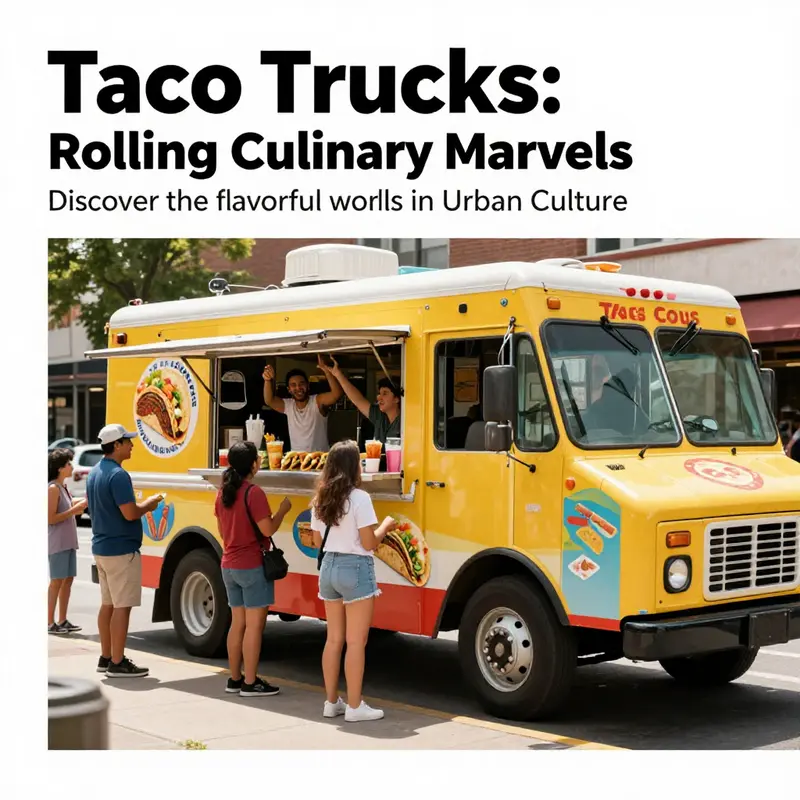
With the sounds of sizzling meat and sizzling laughter, taco trucks have become more than just a dining option; they are cultural icons that embody the rich flavor and spirit of urban America. Their vibrant presence on city streets reflects not only our love for tacos but also a deeper connection to community and tradition. From their humble beginnings to becoming culinary landmarks, taco trucks transform the everyday mundane into a lively and delicious experience. As we dive into this savory exploration, we’ll uncover the cultural significance of taco trucks in urban America, their innovative designs and operations, the economic benefits they bring to local communities, the exciting variations and menu innovations they present, and the challenges they face in a competitive landscape. Let’s embark on this flavorful journey through the world of taco trucks!
Rolling Culture: How Taco Trucks Redefine Urban Identity and Public Space
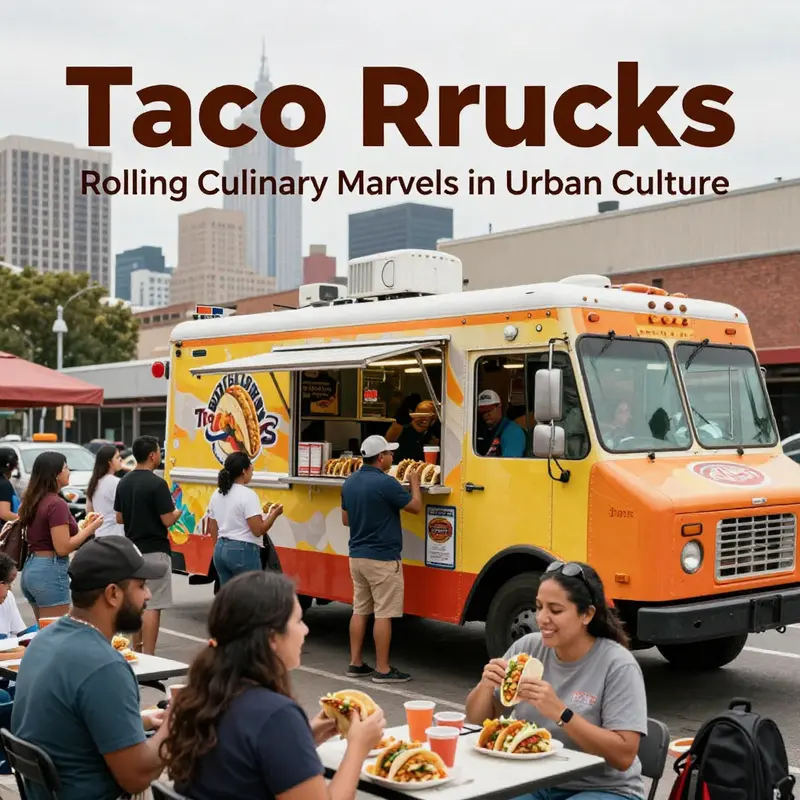
Taco trucks are more than a way to feed a craving. They are mobile kitchens that carry memory, labor, and conversation from block to block. Each truck is a compact workshop on wheels, designed to sear tortillas, melt cheese, grill meat, and coax steam into the air with the rhythm of a cooking line. Yet the real heartbeat of a taco truck lies not only in the sizzle, but in its movement across a city, moving culture along with it. The truck is a small stage where flavors travel, where neighbors share a moment, where strangers strike up a conversation that begins with a menu and ends in a shared sense of place. This mobility makes the taco truck a distinctive form of street food, one that negotiates the margins between kitchen and curb, between family tradition and entrepreneurial risk, and between everyday hunger and communal identity. It is a portable classroom of taste that travels with the weather, the workday grind, and the rhythm of festivals, parades, and late-night walks home. In that sense the truck acts as a kind of cultural connective tissue, linking diners to distant regions and to the local neighborhood in a single, flavorful exchange.
Across American cities it has become a lens on urban life. In San Francisco, Sacramento, and Columbus, the taco truck challenges fixed notions of where food should be prepared and sold. It shifts the pace of sidewalks into an informal marketplace where people gather not only to eat but to listen, watch, and learn. Journalists who study these kitchens note that their presence changes how neighborhoods develop: street corners become conversation hubs, parking lots become pop-up plazas, and curbside power becomes a shared resource for a growing culinary economy. The trucks thus extend a public imagination of the city itself, inviting residents to imagine a place where the street is a room, and every meal a doorway into cultural exchange. They also force municipal systems to adapt, from waste management to mobile safety inspections, reimagining what city life can look like when the curb becomes a stage rather than a barrier. In this way, the taco truck becomes not just a seller of flavors but a facilitator of civic dialogue about place, access, and belonging.
Austin, Texas, offers perhaps the most vivid contemporary illustration. What began as weekend stands run by immigrant families has matured into a celebrated movement that informs the city’s culinary imagination. The trucks embody a willingness to experiment, to swap recipes, and to respond quickly to what customers crave. They reach neighborhoods that brick-and-mortar places often overlook, letting residents taste authentic street fare without travel or expensive dining. The form celebrates mobility as inclusion: the same truck can serve a factory lot at dawn, a farmer’s market at noon, and a bustling corridor near a university at night. In that variability lies resilience, and in resilience, a reliable thread of community connection. Families pass down techniques across generations, from masa preparation to the balance of lime, onion, and cilantro, weaving traditional methods into contemporary menus. The city’s street corners transform into informal classrooms where elders share stories of old markets, while younger cooks push boundaries with inventive salsa blends and regional twists that still respect the core taco core.
These mobile kitchens are also powerful symbols of opportunity and pride. They are the visible edge of immigrant entrepreneurial energy, turning family recipes and local familiarity into a portable business that can scale with care and caution. The result is more than an economy; it is a living archive of memory and technique. The ritual of ordering, the quick exchange of stories, the shared joy when a new dish lands, all of this becomes part of the city’s cultural fabric. The taco truck, in this sense, is both tradition and modernity—an engine of memory that travels, mutates, and persists. It invites people to reimagine food not as a fixed product but as an evolving conversation anchored in place and time. As operators expand their fleets, they often partner with nearby farms, dance studios, or bookshops, turning a simple bite into a moment of communal encounter that can sustain neighborhoods between major grocery runs and festival weekends.
Yet the mobility that makes taco trucks so vibrant also places them at the intersection of policy and equity. Public space, safety regulations, zoning, and the distribution of power shape who gets to participate in the street-food economy and where. Debates among residents and local officials reveal older tensions about who belongs in the city’s identity and who controls its curb appeal. The trucks raise practical questions about access to electricity, water, waste disposal, and permits, but they also illuminate deeper questions about who feeds whom and on what terms. When planners consider traffic flow, pedestrian safety, and market access, the taco truck becomes a case study in how a community negotiates space, voice, and fairness. The result is a city that learns to see the street as a shared commons rather than a series of divided edges. In some places, the conversation has produced pilot programs that reserve certain blocks for mobile vendors, offering shared infrastructure rather than scattered hurdles. In others, regular enforcement and transparent permit structures help build trust between operators and neighbors, turning the curb into a reliable asset rather than a flashpoint of controversy.
Beyond policy, the sensory and social textures matter. The air fills with the aroma of roasted peppers and warm tortillas; a line of customers forms a living thread between the kitchen and the curb. Everyone has a story about the first time they tasted a particular taco at a truck corner, or the family gathering that funded their next season of cooking. In this way, street vending becomes a cultural pedagogy, teaching younger cooks, students, and neighbors about technique, flavor, and the discipline of service. The taco truck becomes a portable classroom: a place where tradition travels with the cooks, who bring their histories in every salsa, every lime wedge, every flourish of cilantro. Its stories are the stories of neighborhoods learning to welcome variety and to measure value not only by price but by memory and mood. The trucks also become anchors during events— street fairs, parades, and late-night commutes—where the crowd disperses with new recipes tucked in their pockets and conversations that continue long after the last tortilla is folded.
For aspiring operators or curious readers, the arc of the taco truck offers practical insights without reducing it to a trend. The model thrives on close ties to community, the ability to adapt menus to local tastes, and a careful understanding of where energy and water are available. If you are charting a path into mobile food, you may consider exploring how others balanced tradition with innovation, how they connected with customers at festivals and workplaces, and how they navigated the everyday challenges of permits and sanitation. For aspiring operators, consider exploring Choosing the right food truck. The point is to learn from a living ecosystem where failure and reinvention are part of the craft, not anomalies to be hidden. Even readers who never plan to sell a taco for a living can glean lessons about improvisation, branding, and the social glue that makes urban life feel possible.
Ultimately, to answer what a taco truck is, one must see it as a portable social infrastructure: a small but potent node where culture circulates, where economic opportunity emerges, and where urban life is renegotiated on the curb. It is a mobile stage for identity, a shared kitchen for neighbors, and a rolling invitation to taste the world’s crossroads. As observers across cities remind us, the taco truck is not merely a menu on wheels; it is a dynamic catalyst for conversation about who a city is, who it serves, and how it grows. The careful choreography of flame, noise, and sidewalk choreography makes public space feel more usable and more watched for moments of connection. For scholars and citizens alike, this means seeing the street not as a barrier to movement but as a forum for cultural reciprocity, where a single bite can expose someone to a neighbor’s history and invite that neighbor to share their own. For a broader perspective on how Mexican street food reshapes urban life, see the external discussion linked here: https://www.sfgate.com/food/article/The-Taco-Truck-How-Mexican-Street-Food-Is-Transforming-the-American-City-13456789.html
Rolling Kitchens on Wheels: The Design, Operation, and Street-Scale Craft of Taco Trucks
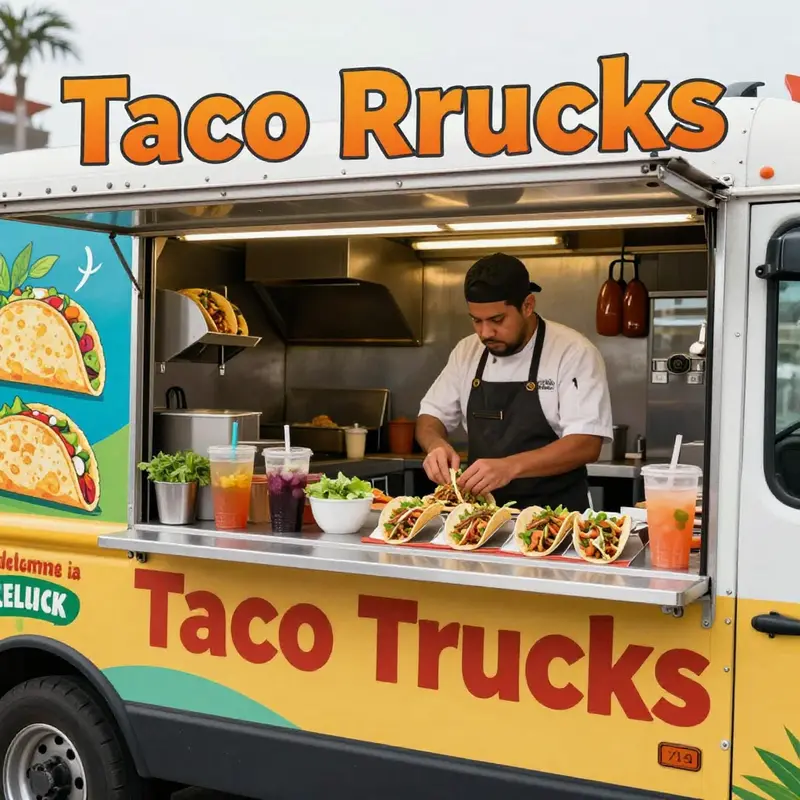
A taco truck is more than a storefront on four wheels. It is a rolling kitchen, a compact theater where heat, aroma, and speed perform in concert with space constraints and urban rhythms. The best taco trucks feel inevitable once you see them in motion: a converted delivery van or box truck that houses a compact kitchen, a small but mighty array of appliances, and a carefully choreographed workflow. In its essence, a taco truck blends form and function into a mobile platform that can reach crowded corners, busy office parks, festival grounds, and neighborhood markets with the same reliability a brick-and-mortar restaurant offers from a fixed location. Yet its magic is not merely about what is on the grille; it is about how everything fits together in a small, dynamic space that must stay clean, fast, and flexible day after day.
Designing a taco truck begins with the interior layout. The aim is to maximize efficiency without sacrificing the quality of the food. Inside, a compact kitchen typically features a triage-like arrangement: a grilling area for meats and tortillas, a flat-top or griddle for searing and finishing, and a fryer or two for crispy accompaniments. A dedicated refrigeration unit keeps perishable toppings—cabbage, salsa, onions, cilantro—chilled and accessible. Sinks, handwashing stations, and a clean-in-place mindset are orchestrated to support rapid food safety practices while minimizing the distance between the prep zone and the point of service. Every inch is purposeful; the work triangle—where the cook, the prep surfaces, and the cold storage align in a tight loop—keeps the line moving without unnecessary steps. Ventilation is not a luxury here but a necessity, with ducting that removes heat and grease efficiently, reducing fatigue and keeping staff comfortable during long shifts.
Exterior design is more than eye-catching graphics or bold color. It is a visual invitation that signals what the truck offers and communicates its personality in a sea of food options. Families, office workers, festival-goers, and night commuters all scan the street for the familiar silhouette, the readable name, and the promise of a quick, satisfying meal. The branding often extends beyond the chassis to the serving counter itself. An outdoor window or roll-up door, a perch for customers, and a retractable awning create a quasi-restaurant experience in a patch of curb space. Even the seating arrangement around a truck—sometimes a few stools or a shaded picnic area—contributes to the sense that a taco truck is a temporary, intimate dining room, a shared moment in a busy urban landscape.
Sustainability has become a practical design consideration, not a buzzword. Modern taco trucks increasingly embrace energy-efficient appliances and renewable energy sources, such as solar panels feeding a battery bank that powers refrigeration and lighting during the day. LED lighting reduces power draw, and smart power management helps ensure that a single generator or battery setup can sustain peak service hours without excessive refueling or noise. Digital ordering and payment systems speed transactions and reduce waste by guiding customers to make efficient menu choices and by enabling better demand forecasting. These technologies are not just fanciful upgrades; they are essential to maintaining a lean operation that can survive the ebb and flow of foot traffic throughout the day and across events.
Operationally, mobility is destiny. The truck’s ability to pause at high-traffic locations—office campuses, parks, stadiums, agricultural fairs, and neighborhoods—depends on a well-planned routine. Many operators cultivate a predictable cadence, visiting a handful of neighborhoods on a rotating schedule or posting real-time location updates through social channels. This mobility demands precise inventory management. Spices, tortillas, proteins, vegetables, and accompaniments must be calibrated to the expected turnout and the specific menu items that define a given day. A savvy operator balances popular staples with occasional specials, using data from past experiences to anticipate demand and minimize waste. The simplest rule is to keep the most time-sensitive items within reach of the prep area and ensure that once the line starts, it does not stop prematurely for lack of ingredients.
Food safety underpins every design and every shift. Health regulations govern how food is stored, heated, cooled, and transported. A taco truck must demonstrate consistent temperatures in its refrigeration units, clean surfaces, and proper hand hygiene practices for staff. Containers with sealed lids, labeled ingredients, and a sanitary workflow between raw components and ready-to-serve dishes are non-negotiable. This is not merely about compliance; it is about protecting the customer experience, preventing illness, and maintaining the reputational trust that sustains a mobile food business. Operators often develop checklists for daily opening and closing, audits of equipment functionality, and routine sanitization schedules that align with the realities of a compact kitchen and the varying demands of a street schedule.
The customer-facing experience, while brief, is central to a taco truck’s appeal. A well-designed truck makes the ordering process feel effortless. The serving window should be at an ergonomic height, with a clearly organized display of toppings and a clean, readable menu. A well-placed counter or window aids in efficient cash handling and makes room for impulse purchases like fresh salsas or simple beverages. In many settings, the outside space—the area under the awning—becomes part of the dining experience, offering shade, a moment of respite, and a sense of community as neighbors line up and exchange recommendations. The choreography of service, from the moment a customer steps into view to the moment their order arrives, is a subtle art: it requires speed, accuracy, and a warmth of service that makes the street feel welcoming rather than hurried.
Menu design on a taco truck often reflects a balance between tradition and adaptability. Traditional tacos—al pastor, carne asada, alambre, barbacoa—anchor the identity, while regional or fusion twists give the operator room to respond to local tastes and seasonal ingredients. The kitchen must support this versatility without bloating the workflow. Each additional item adds to prep time, storage needs, and the complexity of ordering and cooking. The most successful trucks keep the core lineup tight, with a handful of house specialties that can be produced with consistent quality even during peak periods. A practical approach is to preassemble common toppings and keep proteins ready for quick finishing, ensuring a hot, fresh finish for each order.
Operating a taco truck also means managing the economics of a lean business. Overhead is lower than in a brick-and-mortar restaurant, but capital costs remain significant: the vehicle itself, conversion to a compliant kitchen space, permit fees, insurance, and ongoing maintenance. The economics hinge on maximizing utilization of the truck’s capacity and controlling waste. A well-run operation tracks yield on every component—tortillas, vegetables, condiments—and uses that data to adjust ordering patterns and menu choices. In practice, this translates to attentive supplier relationships, reliable procurement schedules, and a system for rotating stock to reduce spoilage. The flexibility enables the operator to seize opportunities: a sudden festival, a corporate event, or a weekend farmers’ market can transform a slow day into a thriving one when the truck’s schedule and branding align with the moment.
The business model for a taco truck is also shaped by technology and partnerships. Portable payment devices, digital order ahead, and loyalty programs can reduce queue times and increase repeat customers. A strong operator might partner with event organizers, city markets, or even local workplaces to secure steady streams of daytime traffic. In addition, the choice of vehicle and its powertrain matters for long-term viability. Some operators explore electric conversions or fuel-efficient options to reduce operating costs and emissions, while ensuring that the performance remains robust enough to meet demand. Each decision, from the type of vehicle to the layout of the work surface, feeds into a larger narrative: the truck as a mobile, adaptive business that can migrate with urban life and evolving consumer preferences.
Selecting the right vehicle and planning its transformation is perhaps the most practical part of the design story. It is not only about the current needs but also about future growth, the kinds of events you want to support, and the communities you aim to serve. For those weighing the best path, there is a spectrum of considerations—size, power, exhaust, insulation, storage, and compliance—that determine how smoothly a truck can stay in service day after day. A thoughtful operator treats the process like constructing a small, efficient stage on wheels: a place where heat, movement, and flavor come together with discipline and care. For more practical guidance on choosing the right setup, see the resource focused on selecting the best fit for a food truck operation.
In the end, a taco truck is a portable micro-kitchen that thrives on disciplined design, agile operation, and a commitment to guest experience. It is a vehicle for cultural expression and culinary experimentation that travels where people gather, adapts to the realities of street life, and rewards operators who blend efficiency with hospitality. The design speaks to speed and reliability; the operation speaks to timing and relationships; the broader culture speaks to a shared appetite for good food that travels well. The result is a distinctive form of urban dining that remains intimate, approachable, and deeply rooted in local communities. For those curious about how to begin or refine this path, the proposition remains practical and grounded: invest in a well-planned space, respect the constraints of mobility, and let the truck’s design and routine do the heavy lifting of both flavor and service.
Rolling Catalysts: How Taco Trucks Drive Local Economies and Community Vitality
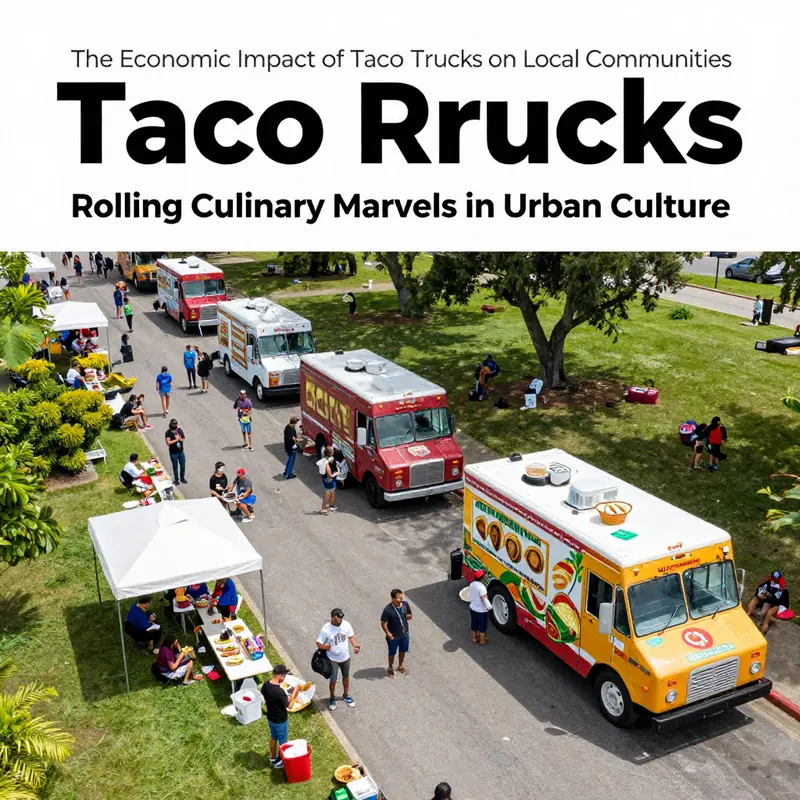
Taco trucks operate at the intersection of culture and commerce, yet their true power often flows beneath the surface of the meals they serve. They are rolling engines of local economies, moving through neighborhoods with a kinetic energy that brick-and-mortar shops rarely possess. Each vehicle is a compact kitchen, a mobile showroom, and a platform for small-business dreams all at once. The impact is not only measured in dollars spent on tortillas and fillings but in the way these units reorganize how urban space is used, how people gather, and how communities imagine opportunity. In cities across the United States, from sunlit avenues to anxious corridors near rush hours, taco trucks illuminate a principle of vibrancy: mobility can translate into meaningful economic movement without the heavy capital required to build a permanent storefront. This mobility enables chefs to test ideas, respond to nearby demand, and scale up or down with ease. The result is a culinary ecosystem where innovation doesn’t wait for a permitting process, it moves with the rhythm of the street and the appetite of the neighborhood. In Austin, this rhythm has become a cultural currency. Families who started as weekend vendors have earned a trusted spot in the city’s food culture, contributing not only flavors but also livelihoods, networks, and a sense of shared identity that neighborhoods can see and feel as they walk past a glowing grill on a curb, hear the sizzle, and choose their next meal against a backdrop of local stories and memories. The economic footprint of such operations extends beyond the cash register; it ripples through neighboring businesses, supports local suppliers, and invites a broader audience to participate in the city’s culinary conversation. The appeal of these trucks rests on a practical truth: their smaller scale lowers barriers to entry. New cooks, chefs, and business-minded individuals can launch a venture with less risk than a brick-and-mortar restaurant, while still delivering a product that resonates deeply with the tastes and identities of their communities. This accessibility matters. It helps diversify entrepreneurship, enabling people from varied backgrounds to enter a market that once seemed out of reach, and it creates a living, breathing marketplace where ideas can be tested and refined in real time. The street becomes a classroom where taste, culture, and enterprise learn to co-create value in front of customers who become participants in the process—ordering, offering feedback, and shaping the menu through their daily choices. The cumulative effect is a city that feels more responsive to its residents and more capable of uplifting small, locally rooted enterprises. The presence of taco trucks shapes the urban experience by inviting people to linger, to connect with neighbors, and to discover new flavors in familiar streets.
The economic logic underpinning this ecosystem is elegantly simple. The overhead to operate a mobile kitchen is often far lower than the fixed costs of a brick-and-mortar site. Rent, utilities, and long-term leases weigh heavily on traditional restaurants, but a taco truck can adapt its footprint with the seasons or as neighborhoods shift their flows of foot traffic. That adaptability creates a form of resilience: operators can move to high-tourist corridors for weekend crowds, pivot menus to reflect seasonal ingredients, or reallocate space to underserved blocks that lack dining options. This flexibility translates into steady opportunities for employment—cooks, prep staff, drivers, cashiers, and festival coordinators—who gain access to work that fits around family obligations, school schedules, or other commitments. The jobs created by these mobile operations tend to be hands-on and locally grounded, often with on-site training that reduces barriers to entry for first-time workers. In turn, those workers spend their earnings in nearby neighborhoods, strengthening a cycle of local spending that keeps dollars circulating within the community. The effect multiplies when trucks anchor events, office parks, and festivals, turning a one-day engagement into ongoing relationships with neighborhood residents, workers, and patrons who return week after week.
A crucial component of the taco-truck economy is the way it broadens culinary access and stimulates neighborhood vitality. The mobility of these vehicles allows operators to reach a mosaic of communities, including immigrant and multilingual populations that otherwise might have limited dining options closest to home. This reach matters for social equity as much as it does for profit. When a truck parks in a neighborhood where residents face barriers to dining experiences that reflect their tastes or cultural heritage, it does more than sell a meal; it validates lived experiences and offers a familiar, comforting presence. The social dimension of economic activity often translates into longer-lasting outcomes: repeat customers who become ambassadors for a truck, word-of-mouth networks that attract other entrepreneurs to the same streets, and a sense of shared ownership over an evolving local food scene. In cities like Austin, the blend of family heritage, skilled culinary craft, and street-level entrepreneurship becomes a seedbed for a more diverse and inclusive economy. These micro-ecosystems are not isolated; they interact with nearby eateries, farmers markets, and casual workspaces, creating a symbiotic network. A hungry lunch crowd, for example, can flood a corridor with foot traffic that benefits nearby coffee shops, bodegas, and small retailers, each benefiting from the heightened street life that the truck helps to catalyze. The neighborhood’s vitality grows not in one moment but through a sequence of daily, weekly, and seasonal cycles—cycles that the mobility and modular nature of taco trucks help sustain over time.
From a policy perspective, the opportunity lies in recognizing and shaping the conditions that allow this dynamic to flourish. Cities that streamline permitting, offer predictable health and safety pathways, and foster access to affordable, compliant equipment can maximize the positive impact of mobile vendors. When regulatory frameworks align with the realities of small, flexible businesses, the result is more than convenience; it is a broader distribution of economic activity that reaches into communities that have historically been underserved. Research and reporting in reputable outlets emphasize how mobile food vendors contribute to urban revitalization by expanding choice, stimulating local spending, and creating micro-economies within cities. They highlight the importance of minority-owned and immigrant-owned ventures in driving inclusive growth, and they point to the potential of these operators to participate in civic life through events, markets, and collaborations with local organizations. The practical takeaway is clear: taco trucks, when supported by sensible policy, can serve as adaptable, culture-rich engines of neighborhood improvement, offering an accessible path to entrepreneurship while enriching the social fabric of the city.
As these dynamics unfold, operators often weave business practicality with community engagement. For many, the truck is not just a business but a portable community hub, inviting neighbors to gather, share meals, and learn about the people behind the recipes. This human element—the stories, the flavors, the shared meals—connects economic activity to everyday life in a meaningful way. It helps explain why the success of a single truck can reverberate through an entire block, drawing new visitors, supporting other local businesses, and reinforcing the neighborhood’s identity. The potential for sustained impact grows when operators adopt prudent financial practices that sustain growth without sacrificing the ties that link them to the local community. For instance, thoughtful planning around tax considerations can help sustain a business through lean periods and enable reinvestment in equipment, ingredients, and staff. In this regard, the conversation about tacos on the curb becomes a broader dialogue about sustainable small-business growth, community investment, and urban well-being. See how that practical, bottom-line mindset intersects with cultural significance in the daily decisions that owners make about where to park, what to serve, and how to price meals so that families can eat well without compromising financial stability.
To explore the practical financial dimensions alongside cultural and economic ones, many operators consult resources on managing food-truck finances and the tax considerations that accompany a mobile kitchen. For example, one practical resource discusses tax deductions available to food-truck owners, illustrating how smart financial planning supports longevity and resilience in this sector. This is not merely about saving for taxes; it is about creating room to invest in better equipment, trained staff, and more diverse menus that keep communities coming back. The combination of careful financial planning with responsive menu design helps ensure that the taco truck remains a viable business model even as neighborhoods evolve and tastes shift. The result is a sustainable constellation of small enterprises that together strengthen the local economy, offering dependable employment, culturally resonant food, and a sense of shared ownership of the city’s evolving dining landscape.
For readers seeking a broader, evidence-based context, a growing body of research and journalism points to the empowering role of mobile vendors in urban revitalization. These analyses emphasize how such enterprises contribute to local spending, support minority-owned businesses, and help create micro-economies within cities. The New York Times, in particular, has examined how mobile food vendors participate in revitalizing urban areas and fostering economic inclusivity, underscoring why planners and business leaders pay attention to these movements and consider how to replicate their benefits across neighborhoods. This chapter treats taco trucks as more than culinary curiosities; they are a practical, scalable model for local economic development that blends flavor, mobility, and opportunity into a compelling urban story. As the street lights flicker on and the sizzle of a grill becomes a familiar soundtrack on a busy avenue, the taco truck stands as a reminder that local economies are often most dynamic when people are free to move, innovate, and invest where they belong—along the curb, in the food court of the city’s daily life, and in the shared memory of a city that tastes like home.
External reading: https://www.nytimes.com/2024/03/15/business/economy/mobile-food-trucks-urban-revitalization.html
Taco Truck Frontier: Menu Innovation on the Move
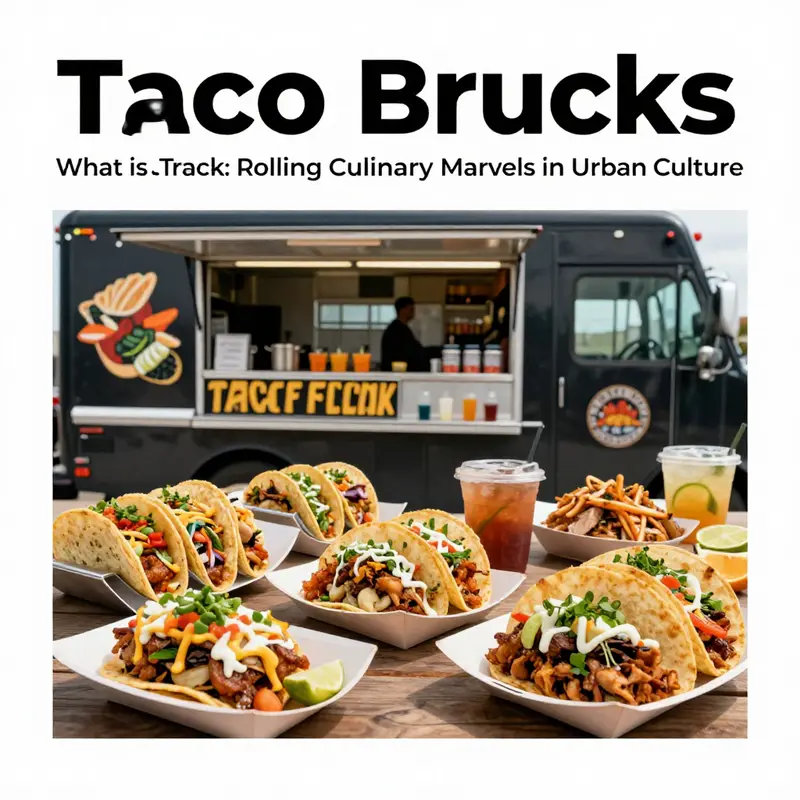
Across city blocks and crowded streets, a taco truck is more than a kitchen on wheels. It is a portable stage where tradition and experimentation meet, where the scent of char, citrus, and sizzling fat travels before the people do. The taco truck began as a simple street side operation, often weekend, a compact setup that could be parked, warmed, and dismantled with improvisation. Yet in modern urban centers, these mobile kitchens have become dynamic culinary platforms. They are small, efficient, and expansive in their ambitions. They move through neighborhoods, festivals, office plazas, and transit hubs, creating a flexible dining experience that echoes the rhythms of city life. The rise of the taco truck is about more than convenience; it is about a culture that treats food as a shared moment, a conversation carried on the back of wheels and the hands of cooks who can pivot as quickly as the crowd shifts.\n\nThe evolution from roadside stand to culinary institution is marked by design and menu philosophy. In cities where street food is woven into the social fabric, taco trucks are rooted in family traditions that traveled from neighborhood stalls to neighborhoods across town. The most enduring operations remain family-led, balancing heritage with the demands of a high-velocity service model. This lineage matters because it frames the truck not as a novelty but as a continuing cultural practice. It’s also a reminder that the best menus on wheels rely on consistency and trust: a tortilla warmed to the right temperature, a filling seasoned with a steady hand, a line that moves with the same reliability each day. When customers come back, they expect not just a meal, but a familiar story told with new urgency.\n\nMenu possibilities expand where the truck’s mobility accelerates discovery. Traditional staples al pastor, carnitas, and barbacoa anchor many menus, offering familiar anchors that weather the inevitable rushes of lunch lines and late-night cravings. The operational flexibility of a truck supports a core practice in modern cooking: experimentation that respects roots. A trompo, the old vertical rotisserie used for al pastor, remains a signature piece for those who want to offer a high-velocity, signature item. But the beauty of the mobile kitchen is that experimentation doesn’t require a loan, a lease, or a sprawling dining room. The same footprint that carries a framework for service can also support a shift in ingredients, seasonality, and technique. Chefs can test new fillings, sauces, and toppings within the same week, responding to what customers crave as soon as a few samples spark conversation on the curb.\n\nA northern edge of innovation is the deliberate inclusion of plant-based fillings. In a landscape where dietary preferences are increasingly diverse, many taco trucks now feature jackfruit, mushroom, and other plant-based proteins that mimic or reinterpret traditional textures and flavors. The result is a playful reimagining of classics—tacos that honor traditional techniques while inviting plant-forward audiences to participate in the experience. This does not simply mean replacing meat with a substitute; it means rethinking the sauce, the marination, and the texture to deliver a compelling bite that stands on its own. The same philosophy informs fusion offerings that stroll across borders in a single order. Some trucks pair smoky chiles with Asian pickles, citrus with Mediterranean herbs, or tangy toppings that recall Southern barbecue. These fusions aren’t gimmicks but informed conversations, built on the same foundation that makes a well-balanced taco satisfying: a crisp tortilla, a bright acidity, a deeply seasoned filling, and a finishing touch that invites another bite.\n\nEvery successful menu on wheels also leans on local, seasonal ingredients. A truck can be allergic to boredom because it thrives on the unexpected. The availability of produce cycles, farmers’ market collaborations, and day-of-market refreshes invites the chef to adjust tacos to reflect what’s fresh. Seasonal cilantro, roasted chiles, grilled onions, and citrus come together to shape a menu that feels alive, rather than formulaic. This flexibility becomes part of the theater of the street. Diners finish a meal and recall not just the fillings but the moment: a line forming on a busy corner, the steam lifting in the late afternoon heat, a friendly exchange with the cook who remembers their preferred level of heat. If a kitchen in a brick-and-mortar cannot pivot quickly, a taco truck can, and that agility becomes a central advantage of the form.\n\nIn practice, this means a menu that is disciplined in its curation yet fertile in its possibilities. While the classic trio of al pastor, carnitas, and barbacoa provides a robust backbone, the most vibrant trucks often present a rotating roster of offerings that align with what neighborhoods want at a given time. A thoughtful menu balances the safety of repetition with the risk of novelty. It might include a regionally inspired taco that nods to a street-food tradition from a faraway place, a plant-based taco that satisfies meat-eaters and vegetarians alike, and a chef’s choice weekly special that gives cooks a canvas to experiment without deviating from core techniques. The result is a dining experience that feels both intimate and expansive, as if a single truck could host a global tasting without ever leaving the curb.\n\nFrom a design standpoint, the truck’s kitchen must be compact yet capable. The workspace is a laboratory where heat, sanitation, and speed meet. The equipment exists in a carefully choreographed sequence: tortilla warmers aligned with prep counters, pans and skillets ready for sautes and braises, a station for chopping and finishing sauces, and a service window where the aroma of peppers and citrus becomes a welcome signal for customers. The choreography matters just as much as the ingredients because it influences how quickly a line forms, how steady a crew can work, and how consistently a dish lands on a plate. The equipment choices—and the way they’re staged—shape not only what can be produced but how reliably the truck can operate at peak times. In this sense, a taco truck is as much a craft of logistics as it is an art of flavor.\n\nThere is also a community dimension to the taco-truck phenomenon. These mobile kitchens frequently become fixtures in local networks of food vendors, celebrations, and neighborhood economies. They meet residents who may not regularly visit a brick-and-mortar restaurant but who crave a reliable, delicious interruption to their day. The social fabric built around a truck—where regulars greet the cook by name, where neighbors compare notes on the best salsa pairing, where the truck becomes a place of shared ritual—gives the menu its emotional resonance. It is not only the food that travels; it is culture, memory, and connection. In a city with a strong food-truck identity, these vessels become local ambassadors, introducing new tastes, supporting family livelihoods, and weaving a sense of place within the larger urban tapestry.\n\nThe practical realities of running a taco truck also shape what menus can become. The business model demands resilience: efficient sourcing, waste management, and ongoing maintenance must be balanced with creative risk-taking. The set of constraints—limited space, manual overhead, continuous customer flow—turns disciplined planning into a competitive advantage. A well-run truck system demonstrates that innovation does not require a large kitchen or a fixed location; it requires a culture that welcomes feedback, iterates quickly, and treats every service as a chance to refine technique. As menus evolve, so do the audiences who crave them. A neighborhood may quickly come to expect a particular combination that speaks to its history, while another corridor might favor more adventurous pairings and bolder flavors.\n\nFor readers curious about how these inventive menus take shape and spread, there is a broader conversation within the food-truck world about culinary experimentation and cultural exchange. The scene is not static; it breathes with each block, each lunch rush, and each festival. The result is a living menu catalog, a repository of taste memories that moves with the city. The taco truck, in this frame, is less a fixed restaurant and more a platform for ongoing culinary storytelling, where tradition anchors the journey and innovation expands the horizon with every new curb cut and turn at the lights. If you listen closely, you can hear the sizzle as a chorus of ideas—the familiar and the unfamiliar—collide and become a single, satisfying bite. For anyone following the evolution of mobile dining, the lesson is clear: the truck’s real edge lies not only in what it serves but in how rapidly it can reimagine the very idea of a taco.\n\nFor further reading into how menu fusions are changing the landscape of mobile dining, see Food-Truck Fusions: A Culinary Revolution. External resource: https://www.austinchronicle.com/food/2026-01-20/discover-the-best-tacos-in-austin-tx-strictly-from-food-trucks/
Wheels Under Regulation: Navigating the Regulatory Terrain and Real-World Challenges of Taco Trucks
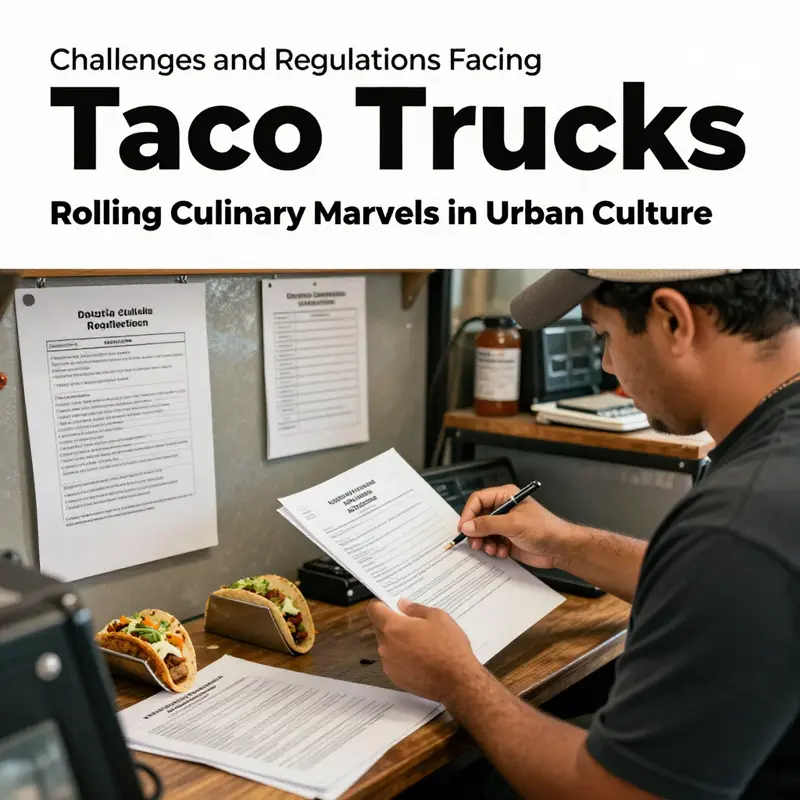
A taco truck is more than a grill on wheels; it is a compact kitchen that must function under the speed and pressure of a city’s rules as deftly as it handles heat and flame. The mobile nature of these units is both an asset and a constraint. They can reposition for festivals, office parks, or crowded street corners, chasing demand with the same agility that a chef uses when switching from carne asada to al pastor or from a classic corn tortilla to a brisk fusion twist. Yet this mobility sits inside a framework of local regulations that can shift as quickly as weather patterns. In many American cities, including Los Angeles, the regulatory landscape is a labyrinth of permits, health codes, parking rules, and zoning approvals. The numbers alone are telling: thousands of taco trucks navigate a patchwork of jurisdictions, each with its own version of the playbook for where and when a truck can operate, how long it can stay, and what inspections are required before it can serve a single bite. This is not merely red tape; it is a daily operational reality that shapes menus, locations, hours, and the very viability of an independent taco business.
Local regulations form the scaffolding around which a taco truck builds its day. In practice, these rules determine whether a truck can pull up near a high-rise office complex at 11 a.m. or must seek a permit for a weekend street fair. They set the pace for inspections that verify food safety, proper waste handling, and compliance with electrical or gas hookups, all of which affect costs and service quality. The complexity intensifies in large metropolitan areas where multiple agencies share jurisdiction. Small operators, often family-run, must learn to dance between licensing offices, health departments, and traffic or parking authorities. Each permit has a price tag, a processing time, and a set of conditions that can change with new administrations or city budgets. The upshot is that a thriving taco operation can stall or stall less for lack of cooking skills and more for lack of the right paperwork.
In Los Angeles, a city famous for its diverse street food ecosystem, the scale of opportunity sits shoulder-to-shoulder with equally rigorous compliance demands. The city’s parking rules are famously tight, with time limits, meter regulations, and zone restrictions that can push a truck away from venue-worthy spots or require expensive relocation strategies. The competition for prime corners near office towers, busier intersections, or nightlife hubs adds another layer of pressure. When dozens of trucks are vying for a single block, the ability to secure a reliable, legal location becomes as critical as the quality of the tortillas or the warmth of the flame. And the financial side mirrors this tension: fees accumulate for licenses, routine inspections, and possible surveillance by code enforcement, all of which must be recouped through steady, well-timed sales. It is a practical reminder that entrepreneurship in street food is as much about navigating statutes as it is about mastering salsas.
Operational risk is the companion to regulation in this landscape. Demand can surge with a sunny afternoon or a local event, only to dip during a sudden downpour or an unseasonably cool spell. A taco truck must be prepared to weather these fluctuations through schedules, menu design, and logistics that keep costs under control when foot traffic thins. The absence of a fixed storefront means there is little room for a missed shift or a sudden equipment failure; a faulty grill, a busted generator, or a clogged grease trap can halt service and mar a reputation built on consistency. The equipment itself is a moving shoreline: it must withstand urban vibration, the rigors of long hauls, and the occasional jolt from a city street or a crowded festival. Reliable power sources, waste management plans, and contingency protocols become as essential as the recipes and the heat management. In practice, many operators learn to balance risk by curating a lean menu that travels well and can be adapted to different venues while maintaining quality and safety standards.
Together with regulation and operational risk, financial pressures sit at the core of the taco truck equation. Labor costs rise with minimum wage adjustments or benefits expectations, and even skilled cooks require fair compensation in a business where margins can be razor-thin. Ingredient costs swing with supply chains, seasonality, and the volatility of markets for fresh produce, meat, and tortillas—items that are the heart of a taco and the spine of a truck’s value proposition. Vehicle maintenance compounds these pressures: engines, generators, refrigeration units, and safety systems demand routine investment to prevent breakdowns in the field. The economic reality is that a day of high-volume sales can be offset by the cumulative toll of permits, insurance, maintenance, and the need to remain competitive in a crowded ecosystem where brick-and-mortar restaurants, delivery apps, and other mobile vendors vie for the same diners. The result is a business that rewards efficiency and resilience as much as culinary craft. It is no accident that some operators become masters of menu engineering—offering rotating specials or regional riffs that entice curious patrons while keeping the core lineup efficient to execute under tight timelines.
Despite these challenges, the taco truck has a distinctive resilience that comes from its mobility and its intimate ties to community and culture. A truck can pivot quickly: a chef can test a new flavor profile with minimal overhead, switch to a seasonal ingredient, or tailor a menu to reflect a neighborhood’s tastes or an event’s theme. The flexibility to move means not being locked into a single storefront footprint, which can be a lifeline when rents rise or when a neighborhood desires new energy. In places like Austin, taco trucks have become woven into local identity, their stories carried in family-run operations that pass from one generation to another. The broader street-food ecosystem thrives on this blend of tradition and adaptation. The combination of mobility and culinary curiosity invites a wide range of offerings—from traditional street tacos with heritage ingredients to innovative fusions that reinterpret familiar flavors. Yet every innovative plate must still clear the same gates: health codes, parking rules, and safety standards that guarantee diners a reliable, clean, and safe experience. The chain from grill to bite remains a chain of compliance as well as cuisine, and a robust understanding of that chain is essential to sustaining the vibrancy of taco trucks in any city.
For operators who want to formalize their understanding of the regulatory path, practical guidance exists. The road to compliance begins with recognizing that legal steps are not mere hurdles but a framework that supports safe operation and long-term viability. Prospective operators often start by exploring the official steps for getting licensed, inspected, and licensed again if needed for new venues or event appearances. This process is not a one-time hurdle but an ongoing relationship with city agencies, as operations expand or relocate. The knowledge gathered through this process influences where trucks park, when they operate, and how they design menus that can be executed cleanly in a mobile kitchen. It also shapes collaborations with event organizers, property managers, and neighborhood councils, all of which influence access to spaces where tacos are not only tasty but legally and safely served.
In the broader arc of the article, understanding these regulatory contours helps illuminate what a taco truck is: a portable, adaptable kitchen that thrives when it can confidently navigate both the public-health requirements that keep diners safe and the urban logistics that determine where food can be served. The story of taco trucks is not merely about flavor; it is about the choreography of street-level entrepreneurship, where culinary innovation and regulatory prudence move in parallel trajectories. As cities continue to evolve—new zoning policies, changing enforcement patterns, shifts in labor markets, and the ongoing demand for diverse, high-quality street food—the taco truck remains a barometer of urban appetite and civic infrastructure. For those who want a deeper dive into the legal steps for launching a food truck and building a compliant foundation, see the associated guide: legal steps for launching a food truck.
External resources offer further context on the regulatory framework and health-safety expectations that mobile vendors must meet. In Los Angeles, the Mobile Food Facility Program provides official guidance on licensing, inspections, and compliant operation across mobile units, which can help operators plan a path through the city’s regulatory landscape: https://www.publichealth.lacounty.gov/mff/.
Final thoughts
Taco trucks embody a unique intersection of culinary delight and community spirit, becoming an irreplaceable part of urban America. As we’ve journeyed through their cultural significance, innovative designs, economic impact, menu variations, and the challenges they face, it’s clear that these rolling kitchens are more than just food on wheels. They are vibrant hubs that connect people, cultures, and flavors, making our cities all the more exciting and delicious. Whether you’re a taco lover, a culinary entrepreneur, or someone just curious about this flavorful phenomenon, taco trucks have something to offer, and their story is still unfolding on the streets of America.