
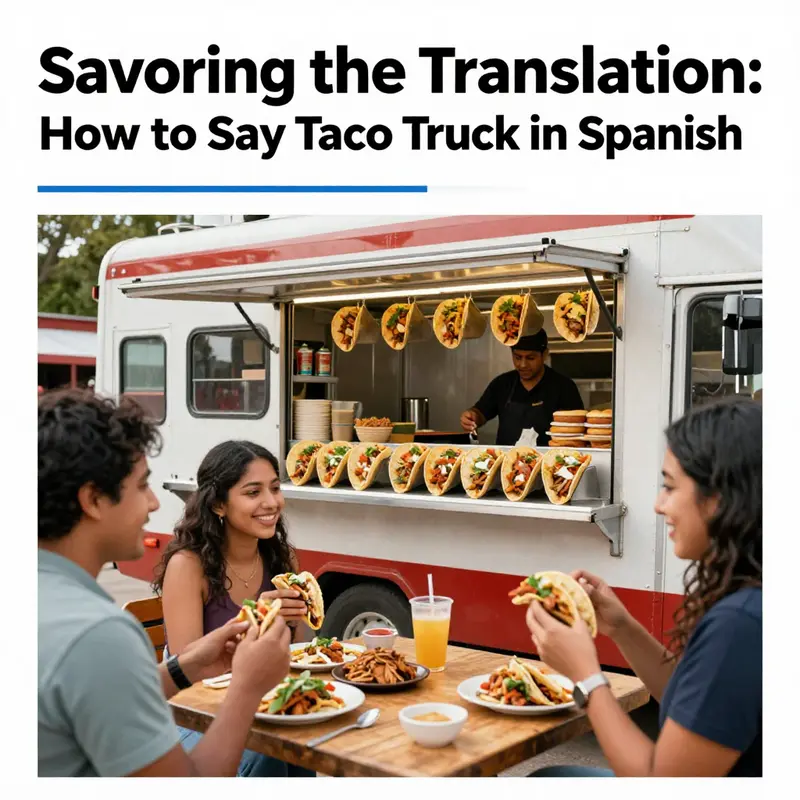
For cuisine lovers and taco enthusiasts, the humble taco truck isn’t just a mobile kitchen; it’s a vibrant part of culinary culture. But how can you express your love for this delightful food phenomenon in Spanish? This exploration takes you through the intricacies of translating ‘taco truck’ into Spanish while uncovering the cultural significance, common uses, and the evolving language surrounding these cherished food ventures. Get ready for a flavorful journey that enriches your understanding and appreciation for taco trucks in all their glory!
Beyond Camión and Puesto: Navigating the Living Spanish of Taco Trucks
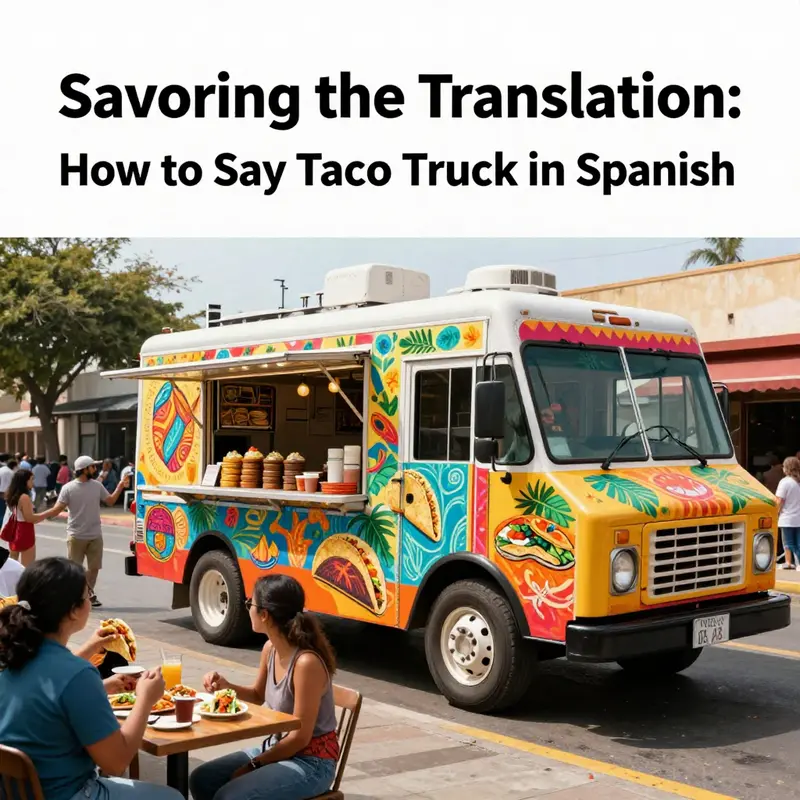
Language often travels with food, and the phrase taco truck is a practical case study in how meaning shifts with context, culture, and audience. When you translate a term that has become a staple of street life in one country, you are not simply replacing words; you are carrying a thread of local practice into another linguistic habitat. The Spanish equivalents for a taco-serving vehicle sit at the intersection of mobility, commerce, and cuisine. Among the most common renderings you will encounter are camión de taco, puesto de tacos, and the loaned phrase taco truck. Each carries its own nuance, and choosing among them depends on who is being addressed, where the truck operates, and how formal or informal the setting is. The most accurate and natural translation for a mobile food truck serving tacos, especially in Mexico and many Spanish-speaking regions, tends to be camión de taco. Yet in everyday speech, you will hear a spectrum of expressions that reflect local habits, street-smart shorthand, and the evolving language of food entrepreneurship.
To start with the most widely understood and portable term, camión de taco foregrounds the vehicle itself. Camión is the standard word for a truck or lorry, and de taco anchors the purpose of the vehicle to tacos. In practical usage, such as an informal conversation on the street, a sign outside a mobile taco business, or a social media post, camión de tacos is the natural phrase to evoke the image of a truck loaded with tortillas, toppings, and steam, bringing the taco experience directly to customers. The plural form is equally common: camiones de tacos. In Mexico and much of the Spanish-speaking world, this expression is unambiguous and widely understood. It emphasizes mobility, a key attribute of a service model that charges by location and time rather than by a fixed storefront.
But camión de taco is not the only way to talk about the phenomenon. Puesto de tacos accentuates the stand aspect of the operation and is often associated with the vendor as a street-side or plaza fixture. A puesto de tacos might refer to a stationary stall carved into a curbside, a temporary setup during a festival, or a truck that has effectively become a traveling stand when parked in a busy square. In some locales, the terms blend in practice: a truck that parks, opens its shutters, and becomes a ready-to-serve taco stand can be described as a camión de tacos or a puesto de tacos depending on the speaker’s emphasis. The nuance here lies in the implied permanence or performative act of selling; a puesto con ruedas—figuratively speaking—captures both mobility and the appearance of a fixed counter. In daily discourse, puesteros and street vendors often select one label over another based on tradition, neighborhood habit, or the vibe of the moment.
A third option, the direct Anglophone loanword taco truck, has gained traction in bilingual contexts and in regions where the fusion of US street food culture with Mexican flavors creates a shared linguistic space. In signage, menus, and social media in the United States and cross-border communities, you may see taco truck used as a recognizable brand-like identifier. While this form can be understood and widely recognized, it is not always the most idiomatic choice in formal writing or in regions with strict translation norms. The loanword form can serve as a bridge for audiences already comfortable with English, yet it may feel out of place in a formal permit document or a purely Spanish-language publication. The beauty of a flexible language is that you can switch styles: camión de taco for everyday conversation and official documents, taco truck as a colloquial English-influenced label for marketing, and puesto de tacos when the focus is on the vendor’s stall or the physical setup.
Context matters as much as vocabulary. In Mexico, camión de tacos is the default for a mobile taco service in most informal settings, and it carries a confident, local resonance. In other Latin American countries, the same term is often understood, though regional preferences can push speakers toward puesto de tacos or a more descriptive phrase that highlights the specific format, such as camión de tacos ambulante (ambulant taco truck) when the mobility or route is a focal point. In the United States, where bilingual signage and cross-cultural fusion are common, the choice between camión de tacos and taco truck can depend on the audience. For a crowd familiar with both languages, camión de tacos conveys authenticity; for a broader audience, taco truck may communicate clearly and quickly, while camión de tacos adds a touch of local color for Spanish-first readers.
The research materials point to a clear practical takeaway: for most formal and semi-formal contexts, camión de tacos is the most accurate and natural translation for a mobile food truck serving tacos. When the goal is immediate recognition by a Spanish-speaking readership, camión de tacos does the most work with the fewest ambiguities. Puesto de tacos, meanwhile, is effective when the narrative centers on the vendor’s stall, the location, or the environment in which the food is sold. It can imply a more intimate or streetwise setting, where the emphasis shifts from the vehicle to the service point, the counter, and the social texture of queuing for a bite. The loanword taco truck can be a useful stylistic or marketing choice in bilingual contexts, or in regions where English-language signage is common and the audience expects a bilingual branding approach. But the terms do not merely map to forms of business; they carry cultural cues about mobility, space, and the relationship between vendor and customer.
This linguistic mapping is not merely a matter of preference. It has real implications for how a business communicates with customers, how legal documents are drafted, and how journalists describe street food economies. In formal or official documents—permits, licenses, health codes, and city registrations—the recommendation from translation professionals often leans toward camión de tacos. This preference helps ensure consistency across documents and aligns with how regulatory bodies and the public understand the vehicle’s purpose and operation. It also reduces the risk of misinterpretation when authorities, inspectors, or partners review materials that describe the vehicle’s function. When translating permits or compliance paperwork, maintaining a consistent terminology helps prevent miscommunications that could stall a project or lead to compliance gaps.
Language is a living thing, especially in the busy world of food trucks where vendors constantly adapt to new neighborhoods, customers, and events. The phrase camión de tacos travels well across borders and registers, maintaining clarity while allowing for regional embellishments. If a business wants to emphasize the flavor, origin, or culinary concept of its tacos, the surrounding description can inform the choice of translation. A menu, for example, might present a bilingual section that reads: “Camión de tacos: the mobile taco truck that brings fresh tortillas, salsas, and fillings to your neighborhood.” The same idea can be conveyed with “taco truck” in bilingual contexts, but the Spanish phrasing anchors the content more firmly in local culture and pronunciation habits. For readers who study or apply translation in professional settings, this is a reminder that vocabulary is not a static ladder but a flexible toolkit, capable of mutating to fit audiences and venues.
In everyday speech, the success of a translation often rests on the listener’s familiarity with the scene. When a friend says, “There’s a camión de tacos parked outside,” most listeners immediately imagine a truck with a small window, steam rising, a line of customers, and the smells of roasted meat or fried tortillas. The same scene, described as “a taco truck outside,” invites a bilingual listener to picture a familiar image in a different culture, but the Spanish phrasing still conjures the same social dynamics: a mobile service, a quick meal, a sense of urban energy. These word choices do not just convey information; they curate experience. They paint a picture of the street-food economy, where mobility, accessibility, and shared appetite meet in a few syllables and a lane of traffic.
The chapter on translation would be incomplete without acknowledging sources and the ways readers can deepen their understanding. The Cambridge Dictionary and Reverso Context offer reliable examples and usage notes that help anchor the vocabulary in real-world sentences. For readers who want to cross-check usage and explore variations, these resources provide verified examples and nuance that go beyond a single translation choice. In addition, professional translation services remain a prudent option when the stakes are high—such as bilingual menus for permits, marketing collateral for formal audiences, or legal documents involving food service vehicles. Consistency across materials is not just a stylistic preference; it is a dependable practice that underpins trust and compliance in the busy world of street cuisine.
In terms of practical guidance for learners and professionals, a few core rules emerge. First, favor camión de tacos when the subject is the vehicle itself and mobility is central. Second, use puesto de tacos when the focus is on the stall, the counter, or the instantaneous selling environment, especially if the discussion centers on location or setup. Third, reserve taco truck for informal, bilingual, or marketing contexts where English influence is deliberate and part of the brand voice. Fourth, in formal documents, maintain consistency with a preferred term across chapters and sections to avoid confusion. When ambiguity arises, lean on standard usage in the local market and consult a professional translator to harmonize terminology across materials.
The broader takeaway connects language to place. A taco truck is not just a vehicle; it is a mobile cultural experience that travels across neighborhoods and borders. The Spanish terms for this encounter carry not only literal meanings but also memories of street corners, late-night lines, and the aroma of sizzling toppings. Whether one speaks of camión de tacos or puestos de tacos, the essence remains the same: a portable kitchen on wheels that brings a quick, flavorful feast to people who are often on the move. And in the end, the translation is less about finding a single perfect label than about selecting a linguistic lens that most accurately conveys the scene to the intended audience.
For readers who want to situate this topic within a broader planning or business context, consider exploring resources that discuss how to approach food-truck ventures in multilingual settings. A useful starting point is a guide that describes practical steps for selecting, branding, and operating a mobile food business, including considerations around signage, customer communication, and localization. Such guidance often emphasizes the importance of terminology consistency across marketing materials, signage, and permits, which reinforces the point that language is not an afterthought but a strategic asset in street-food entrepreneurship. If you want to dive deeper into how these vehicles fit into a larger business framework, you can consult a resource focused on choosing the right food truck and aligning language with brand and audience. See the internal link for further exploration: choosing-the-right-food-truck.
From a cultural perspective, the exploration of camión de taco versus puesto de tacos echoes a broader conversation about how languages reflect urban life and culinary innovation. Food trucks emerged as symbols of convenience and creativity, offering a platform for cooks to experiment with regional flavors and global influences. The vocabulary that surrounds these vehicles mirrors that creativity. It allows speakers to describe not only the mechanics of the operation but also the sense of place—the curb, the market square, the festival, the highway rest stop—where tacos are served and enjoyed. Translation thus becomes a bridge between kitchens and sidewalks, a bridge that helps people recognize that the language of food is as dynamic as the ingredients on a griddle.
To close this reflection, it is helpful to keep two practical habits in view. First, when you translate or describe a taco-serving vehicle, think about the audience’s expectations. If you aim for broad comprehension, camión de tacos is the most reliable and natural choice. If your emphasis is on the vendor’s space and the tactile experience of buying, puesto de tacos may carry the right emphasis. If your tone is casual, bilingual, or marketing-forward, taco truck can serve as a readable and familiar cue. Second, whenever possible, anchor your translations with examples that reflect everyday usage, such as the sentence snippets that researchers and linguists record from real conversations. These examples ground language in life and ensure that translations remain vivid rather than abstract. By embracing these practices, translators and writers can honor both the language’s precision and its humanity, preserving the story of street food as it travels from one linguistic neighborhood to another.
For readers seeking an authoritative, externally sourced reference on the term that anchors this discussion, the Cambridge Dictionary provides a reliable English-to-Spanish entry for taco. This external resource can help validate usage and offer additional sentence examples to inform future work in bilingual materials. External resource: https://dictionary.cambridge.org/dictionary/english-spanish/taco
Taco Trucks on the Street, Stories in the Language: Cultural Significance Across Spanish-Speaking Regions
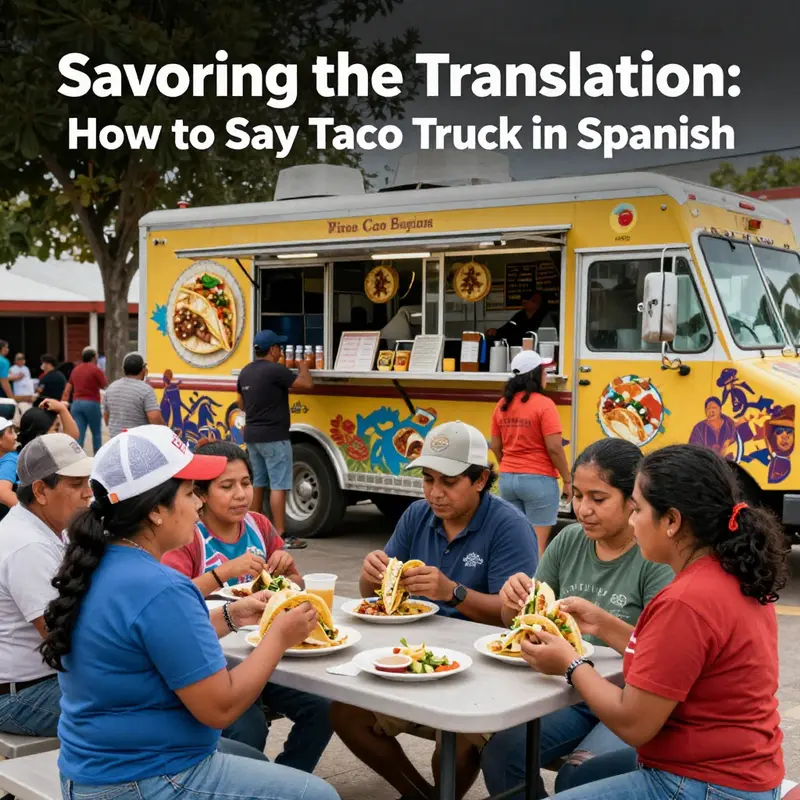
In the growing tapestry of Spanish-speaking spaces, the taco truck is more than a mobile kitchen. It is a moving thread that ties language, memory, and community into daily traffic and quiet moments of sharing. When translators debate the best way to say taco truck in Spanish, they are not just choosing a word; they are negotiating a living tradition. The phrase camión de taco is the most natural, widely used form in many parts of Mexico and beyond, yet puesto de tacos speaks to a different texture of street life—a stand, a vendor, a small, intimate business that often accompanies a truck. And in urban neighborhoods where bilingual signs and multilingual menus coexist, the borrowed term taco truck appears with ease, a nod to global recognition as much as to local practice. This linguistic blend is not merely practical; it reflects a social ecosystem in which food, language, and neighborhood identity travel together.
To understand the cultural weight of taco trucks, one can begin with their role in everyday life. In Mexico, the taco remains a cornerstone of national cuisine, a symbol of regional variation and shared nourishment. The mobile taco truck is a natural extension of this culinary logic. It brings meals to workers who begin early and stay late, to students who need quick sustenance between classes, to families who gather after work to share a plate and catch up on the day. The truck is a compact kitchen on wheels, but its impact is expansive. Behind its simple steel frame, families often carry generations of recipes, each family adding a personal touch through spice blends, slow braises, or a signature technique that travels from one generation to the next. The street, then, becomes a classroom where technique is learned in the open air, and where the scent of chiles and citrus carries memory from one block to another.
Regional diversity shines through the trucks as they move across landscapes that shape flavor as surely as climate and soil. In inland regions, a hearty, peppery profile can accompany pork or beef tacos, while along the coast, seafood tacos arrive with bright acidity and a touch of ocean breeze in the seasoning. These variations are not accidents but expressions of place and history. The mobile taquería captures this regional kaleidoscope in real time, making the street itself a gallery of culinary geography. The truck’s mobility enables communities to access a style of cooking that might otherwise be tied to a fixed restaurant or a seasonal market. Thus the camión de taco is less about a single dish than about a portable archive of regional craft, a rotating exhibit of what cooks in a given neighborhood know and love.
The social significance of taco trucks extends beyond nourishment. They are gathering places where conversations begin. A queue becomes a cross-cultural exchange, where neighbors from different generations, languages, and backgrounds stand shoulder to shoulder for a few minutes of shared experience. In diasporic contexts, especially in large U.S. cities with vibrant Latino populations, taco trucks evolve into powerful symbols of belonging. They offer a space where immigrant stories can be told in small, tactile ways—through a friendly greeting, a suggestion about a spicy level, a memory sparked by a familiar aroma. The truck serves as a diasporic anchor, a mobile home that travels with people and their histories, reminding everyone that culture persists even when it is carried long distances from its origin.
In interviews and in academic discussions, the taco truck is often described as a political space as well as a social one. The visibility of Latino culture in urban landscapes prompts questions about labor, immigration, and the right to public space. In neighborhoods where street vending shapes the texture of the city, truck operators navigate licenses, health rules, and the logistical realities of working outdoors in all kinds of weather. This negotiation with regulation is not a mere compliance story; it is a negotiation of dignity and livelihood. The truck becomes a platform where workers claim their place in the city, where family labor is validated as enterprise, and where everyday entrepreneurship challenges stereotypes about who belongs in public commerce. Language plays a crucial role here. The choice of phrases on a menu, the use of bilingual signage, and the tone of a street-side conversation all contribute to a sense of presence that can transform a quiet corner into a citizen space. The linguistic economy—how to phrase a menu, how to describe heat, how to signal freshness—becomes part of the political discourse around visibility and voice.
Across the Atlantic, the appeal and adaptation of taco trucks extend into Spain, where the urban appetite for global street foods has grown in tandem with a cosmopolitan street culture. In Spanish cities with bustling markets and late-night energy, you can find mobile taco concepts that echo the same bilingual, multiethnic dynamics that characterize Mexican street food elsewhere. The contemporary spread of this tradition demonstrates how a culinary form born on one continent can travel and transform in new contexts while retaining its core values: accessibility, speed, communal eating, and a direct link between cook and consumer. The mobility that defines the truck is especially resonant in dense urban centers where space is at a premium and where people prize flexible, informal dining that fits into busy schedules. In these settings, the truck becomes a small cultural event, inviting both locals and visitors to engage with a form of food that is at once familiar and excitingly new. The social energy of the taco truck, then, travels well: it crosses borders, negotiates languages, and continually reinterprets itself in response to new palettes and new neighborhoods.
Language and identity are inseparable in this story. The simple question of how to say taco truck in Spanish opens into questions of who speaks, who is seen, and who is heard in public spaces. Camión de taco is a precise, descriptive phrase that anchors the concept in a particular image: a truck that carries the sound of sizzling meat, the aroma of citrus, and the rhythm of gossip exchanged across a counter. Puesto de tacos focuses on the people who stand and serve, the stand that sits on a curb or a plaza, a more intimate portrait of the human face behind the meal. The loanword taco truck acknowledges global familiarity with the phenomenon, a bridge between languages that makes the concept legible to travelers and newcomers. In multilingual neighborhoods, these terms circulate with ease, sometimes coexisting side by side on storefronts or menus. The language of the street is a living archive, updating itself with each new speaker, each new rider, each new night shift. In such spaces, the act of ordering becomes a small act of cultural participation, a moment when a person chooses a verb and a noun that reflect their relationship to the food and the place where they eat it.
For those who seek practical insight into how this tradition endures, the taco truck offers a compelling case study in community-based economy. A mobile kitchen lowers the barriers to entry for families and entrepreneurs who possess culinary skill but lack fixed storefront resources. The truck embodies nimbleness: it can chase work across neighborhoods, pivot to seasonal ingredients, and respond to evolving tastes without the overhead of a brick-and-mortar restaurant. In many communities, the truck also functions as a seedbed for small business networks, linking cooks to suppliers, to other vendors, and to customers who become regulars. This networked vitality keeps costs manageable and fosters resilience in the face of economic shifts that can squeeze traditional restaurants. The result is not merely a marketplace for food but a living, collaborative ecosystem where language, labor, and local identity reinforce one another.
If you want to see how these dynamics play out in public life, turn to the everyday scenes along city streets where people gather around a steel counter, a griddle, and a bright pan of onions. Listen to the voices—spontaneous exchanges about heat, spice, and the best toppings. Watch how conversations migrate from casual pleasantries to shared recommendations. The social choreography around the truck—who gets served first, how the line forms, how the cook explains a choice—becomes a microcosm of neighborliness and cultural exchange. In such moments, the language is not simply a tool for ordering food; it becomes the medium through which community is spoken into being. The taco truck is a moving classroom in which everyone—cook, customer, passerby—learns a little more about who they are when they stand beside another person for a few minutes over a shared meal.
If readers want a compass for how to engage with this culture in a respectful and informed way, think of the truck as a doorway rather than a destination. Approach with curiosity about the regional flavors and the labor behind the food. Acknowledge the people who stand behind the grill as partners in a tradition that travels with them as they move through cities and across borders. And recognize that language is never neutral here: it can invite someone to feel at home or remind them of the distance they have traveled. The simple act of learning to describe the truck in Spanish—whether you say camión de taco, puesto de tacos, or even taco truck in English when appropriate—becomes a gesture of cultural acknowledgment. It affirms that food is a language too, spoken through smoke, steam, and the shared ritual of eating together.
For further reflection on how Mexican street food intersects with urban life and diaspora, consider the broader conversations about street vending as a form of cultural expression and economic agency. The transnational journey of the taco truck reveals how a culinary form can be rooted in place yet capable of traveling with its people. It shows how language adapts without losing its core meanings, how community spaces are negotiated in the margins of the public sphere, and how a dish as simple as a taco can carry a world of history, memory, and hope. In this sense, the taco truck becomes a microcosm of cultural exchange itself, a mobile stage on which language, labor, and lineage converge in real time. As you move through cities and observe these trucks, you’re watching more than a meal being served; you are witnessing a living practice of belonging, a small but powerful argument that culture persists and evolves wherever people gather to eat together.
Readers who want to explore this topic further can visit a resource-rich blog that follows the practicalities and stories behind mobile eateries and their communities: Fire Up Taco Truck blog. This resource offers perspectives on entrepreneurship, maintenance, and the everyday humor and heartbreak that accompany life on the road. While the specifics of each city differ, the underlying narrative remains strikingly similar: a family, a grill, a crowd, and a promise of something tasty shared under the open sky.
External reading for a broader, cross-cultural view of how taco trucks shape urban life can be found in a thoughtful exploration of their impact in American cities. The article in BBC Culture discusses how the taco truck is transforming cityscapes and the ways Latino culture enters public spaces with color, flavor, and texture. It offers insights into the social and political dimensions of street food and invites readers to consider how mobility and visibility interact in diverse urban futures.
External resource: https://www.bbc.com/culture/article/20190501-how-the-taco-truck-is-transforming-american-cities
Say It Right: Spanish Terms for Taco Trucks Across Regions
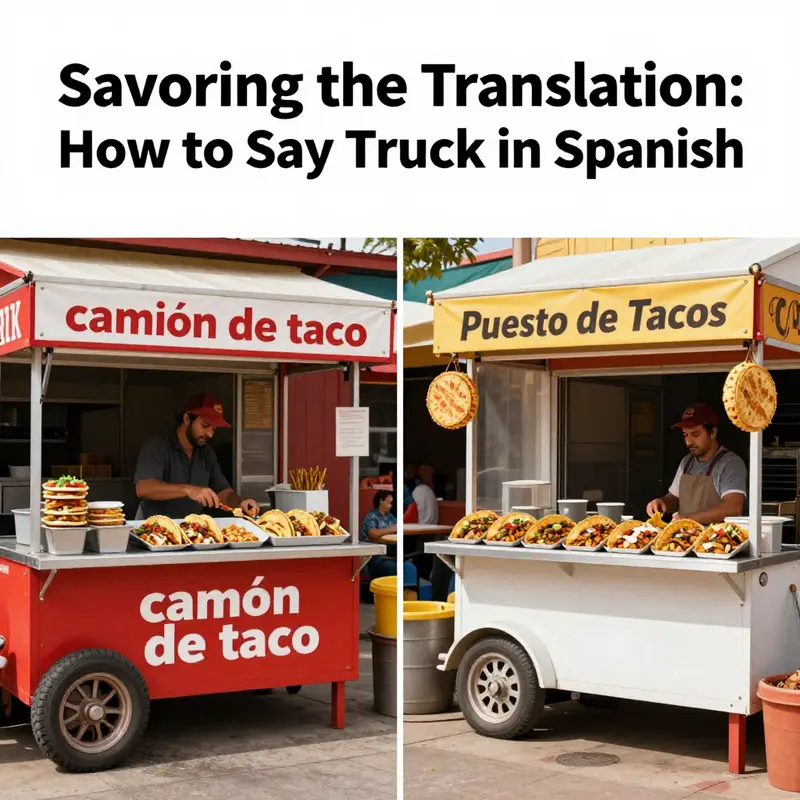
There isn’t a single word that covers every taco-vendor scenario in Spanish. The most direct term for a moving taco seller is camión de tacos, which signals a vehicle that doubles as a kitchen-on-wheels. Puesto de tacos emphasizes a stand or stall, often semi-permanent or street-level, with less focus on the vehicle itself. Truck de tacos is a bilingual/Anglophone loan common in cross-border contexts and urban signage. Caminón de tacos and Carrito de tacos offer regional flavor: caminón connotes a larger, heavier vehicle; carrito de tacos points to a nimble cart or small mobile unit. The best choice depends on context, audience, and branding. In everyday speech you might choose camión de tacos when you want to stress movement, or Puesto de tacos when you want to highlight a social, neighborhood presence. For bilingual audiences, Truck de tacos can read as contemporary and accessible. Observing local signage and listening to native speakers helps select the right term. A savvy communicator may use multiple terms to reach different listeners or to describe different aspects of the same operation.
From Camión de Taco to Everyday Speech: The Linguistic Journey of Taco Trucks
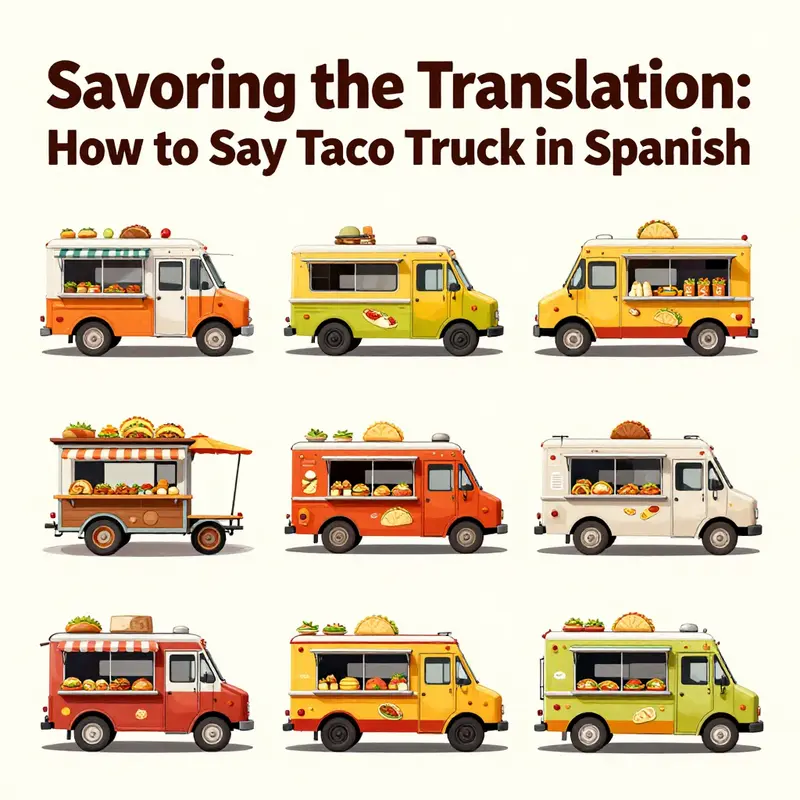
The taco truck appears on a corner as if summoned by scent itself, a rolling stage where memory, hunger, and language mingle. Its evolution is not just a change in form from cart to vehicle; it is a narrative about how a mobile kitchen becomes a living archive of the way people talk, share, and claim space in a bustling city. In Spanish, the most natural way to name this emblem of the street is often camión de taco, a phrase that carries the weight of mobility and tradition in a single breath. Yet this term sits alongside puesto de tacos, a descriptor that foregrounds the vendor as much as the fare, and alongside the simple adoption of taco truck, a loanword that travels with the truck itself into English-speaking landscapes. The layered usage of these terms reveals how language evolves in response to place, function, and audience. The distinction matters because it is a window into how Spanish speakers imagine a mobile eatery: camión de taco conjures both the vehicle and the journey, puesto de tacos emphasizes the social kiosk that gathers neighbors, and taco truck, when heard in bilingual neighborhoods, signals a linguistic bridge rather than a barrier.
The story of taco trucks begins in the heart of Mexican street food culture, where small, portable kitchens already carried a geography of taste. Over time, these caravans traveled beyond city limits and, later, beyond borders. When these trucks parked in U.S. cities with large Latino populations—places where the street became a shared dining room—their language acquired new textures. The Spanish spoken at the window is practical, warm, and efficient, an everyday instrument for negotiating flavors while negotiating life. Ordering at a taco truck becomes more than a mere exchange of money for food; it becomes a social moment that affirms belonging. The phrase un taco de pollo, por favor, is not a script; it is a living sentence that carries with it preferences, rhythms, and the unspoken etiquette of mutual respect between cook and customer. The language here is flexible and iterative, shaped by the pace of the line, the glare of the afternoon sun, and the hum of conversation around the truck.
In places where bilingual signage lines the curb—English and Spanish sprawled side by side—the language of the taco truck looks a lot like a linguistically mixed neighborhood. The sign may advertise camión de taco in bold letters, with a smaller note in English clarifying hours or specials. This dual display is more than cosmetic; it is a concrete acknowledgment that Spanish and English share the street where the truck operates. For many customers, the ability to navigate the menu in both languages becomes a practical skill, a small triumph of confidence that opens doors to conversation and community. The presence of Spanish on the menu or on the side of the vehicle is an invitation to practice, a cue that the truck is a space where language thrives rather than a barrier to commerce. The bilingual exchange is rarely a mere transactional moment; it is a microcosm of cultural exchange, a place where identity is performed and reinforced in real time.
The language of the taco truck also travels through social media and everyday media culture. Platforms like video and short-form content have turned the act of ordering into an art form of language learning. The everyday scenes—someone asking for a pollo taco, someone asking whether guacamole is available—become living examples of how Spanish is used in real-world settings. For learners, these clips offer a close-to-life model of pronunciation, rhythm, and idiomatic usage. The street becomes a classroom, and the taco window a language lab. The educational potential of these interactions rests on authenticity: the noises of the grill, the cadence of the vendor’s voice, and the immediate feedback of a customer who confirms or asks for clarification. In this sense, the taco truck is not just a purveyor of food but a portable school of language where cultural memory and linguistic practice travel together.
Language in these spaces is also deeply social. Ordering is an act of community participation. The simple act of asking for a taco de pollo translates into a broader social ritual: a polite request, a naming of the dish, a confirmation of extras, and finally the shared moment of receiving warmth in a wrapped bundle of corn tortilla and flavors. The verbs and nouns that populate these exchanges are precise and efficient, but they are also infused with affection and regional nuance. A vendor who supplies fresh salsa or spicy peppers creates a particular linguistic moment: a short sentence that becomes a doorway into a larger conversation about taste, origin, and family recipes. The language at a taco truck does not stay static; it morphs with the city and the community, picking up slang and idioms, dropping them, and reshaping phrases to suit the pace of the street.
This evolution is not merely linguistic trivia. It reflects broader social shifts—the way Spanish becomes more visible in American urban life, the way immigrant entrepreneurship uses language as a tool of inclusion, and the way younger generations rehearse identity in a shared food landscape. The presence of bilingual signage and the negotiation of parameters in two languages signal a shift in how Spanish is valued in public commerce. It is no longer seen as a barrier to entry for a vibrant street economy but as a language resource that enriches business, culture, and civic life. The taco truck, in this sense, becomes a symbol of resilience and adaptability. It is a mobile forum for language, a rolling classroom of practical Spanish that enables people to request, confirm, negotiate, and smile through meals.
The linguistic life of the taco truck is also a study in translation accuracy and local adaptation. For the most accurate and natural rendering of a mobile taco operation, camión de taco remains the preferred translation in many Spanish-speaking contexts. Yet the world of language is not monolithic; puesto de tacos offers a different shade, denoting the vendor as a station in a street economy, a place to line up, place an order, and move on with the meal. The English term taco truck is increasingly heard in bilingual areas, reflecting a convenience and shared vocabulary that crosses language boundaries. The interplay among these terms demonstrates how translation functions in everyday life: not merely as a dictionary swap but as a negotiation that aligns language with function and audience. In this way, the research results suggest a practical rule of thumb: for most formal or traditional contexts within Spanish-speaking communities, camión de taco provides the fairest, most natural sense of mobility and culinary purpose; puesto de tacos foregrounds the social hub; taco truck functions as a cross-cultural bridge where bilingual customers recognize the same thing in two words.
As the street becomes a cultural archive, the taco truck remains a potent symbol of Latinx culture in the urban food economy. It embodies a continuum from immigrant labor to culinary innovation, from neighborhood staple to a national and even international icon of mobility. It is easy to overlook the way language stabilizes identity in this context, but the careful observation of everyday speech at the window reveals otherwise. The student of language can listen for phrases that carry the weight of tradition, like the respectful use of gracias and por favor, the careful pluralization in orders, and the explicit preference for specific toppings. The apprentice of culture can hear how these phrases build trust and invite conversation, turning a simple transaction into a moment of shared humanity. In many ways, the taco truck teaches us that language is not a separate project from cuisine but its companion, guiding people through tastes while naming the spaces where those tastes are enjoyed.
The evolution of the taco truck and its language also invites readers to consider practical steps for those who want to operate in this space. For anyone contemplating a venture on four wheels, the language lesson begins with the basics—how to name the vehicle in the local language, how to present a bilingual menu, and how to welcome customers in a way that honors the cultural context of the area. In practice, this means a few straightforward choices: use camión de taco as the primary label where the audience is predominantly Spanish-speaking, supplement with puesto de tacos for the social, neighbor-centric sense of the vendor, and offer the English version where customers expect to read in English. It also means making sure that the staff can handle phrases that arise naturally during service, such as asking about spice level, confirming ingredients, and offering substitutions. And beyond the mechanics, it means fostering a space where language is used with respect, where customers feel seen and valued, and where the truck’s voice reflects a sense of pride in cultural heritage and culinary craft.
The narrative of how to say taco truck in Spanish—how camión de taco, puesto de tacos, and even the English loanword coexist—mirrors the way communities use language to navigate difference without losing connection. It shows that translation is not only a linguistic act but a cultural one, a means by which a street market can become a forum for dialogue and identity. As taco trucks continue to evolve, they hold up a mirror to the resilience, creativity, and linguistic vitality of Latino communities across cities and neighborhoods. They remind us that the street is not merely a place to eat but a space where language is alive, where people practice, teach, and celebrate their heritage in every order and every smile.
For readers curious about how to approach future explorations of the food truck landscape, a practical starting point is to explore how vendors navigate the business side of language in real time. The act of choosing the right branding and messaging—whether to lean into camión de taco, puesto de tacos, or a blended bilingual approach—can influence customer trust, community perception, and even regulatory clarity. A balanced approach respects linguistic heritage while remaining accessible to a broader audience. This balance, like the balance of flavors in a well-reduced salsa, yields a recipe for both cultural retention and commercial success. And given the ongoing conversations about language, immigration, and urban culture, the taco truck remains a compelling case study in how communities build meaning through mobility, taste, and speech.
External resource for further reading on the cultural and linguistic impact of taco trucks: https://www.npr.org/2021/07/26/1019453825/the-rise-of-the-taco-truck-a-culinary-and-cultural-phenomenon
Internal link: for those interested in practical considerations of operating a mobile kitchen in tandem with these linguistic realities, see Choosing the right food truck. This resource offers insights into establishing a mobile venue that respects language and culture while aligning with business realities.
Final thoughts
In essence, knowing how to say ‘taco truck’ in Spanish, whether as camión de taco or puesto de tacos, not only enriches your vocabulary but also deepens your appreciation for the cultural tapestry woven through these beloved mobile eateries. Taco trucks represent more than just food; they are hubs of community, tradition, and innovation, bringing people together through shared flavors and experiences. This delightful journey across the language and culture of taco trucks highlights their significance in the culinary world. So the next time you find yourself at a taco truck, remember the richness of its expression in Spanish and the flavors it brings.