
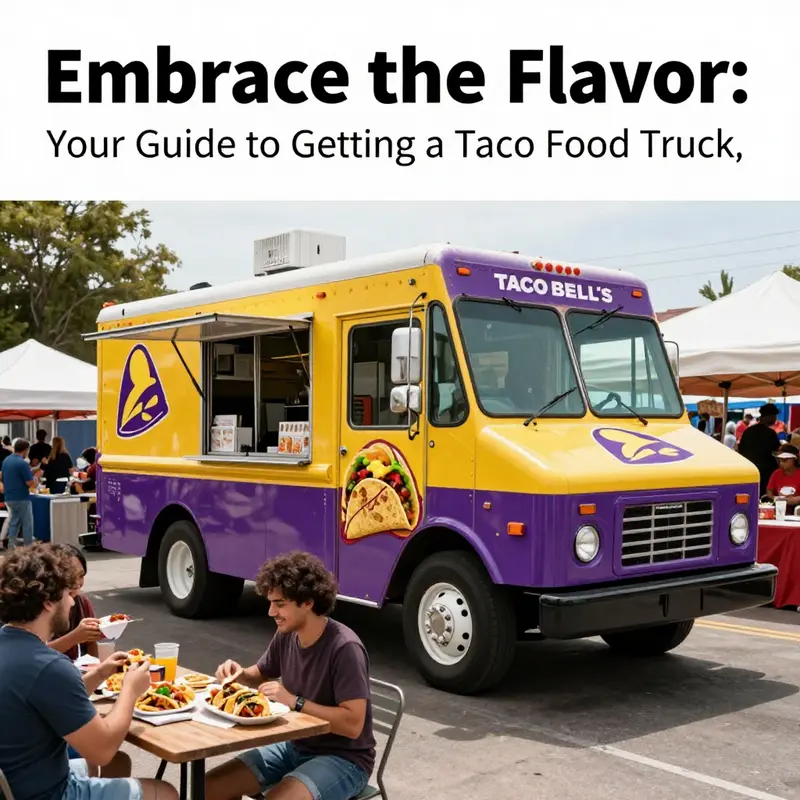
Imagine the tantalizing aroma of tacos wafting through your town, with a colorful Taco Bell food truck ready to serve your favorite cravings! As cuisine lovers and dedicated taco fans, you know there’s nothing quite like the zing of fresh ingredients wrapped in a warm tortilla. For aspiring taco entrepreneurs, venturing into the world of food trucks can level up your culinary dreams, but securing a Taco Bell food truck comes with its own steps and rules. This guide will take you through five essential chapters: from applying for a franchise that lets you call the shots, to understanding mobile unit programs, and connecting with authorized vendors. You’ll also learn about brand licensing restrictions and discover current trends and opportunities in the food truck franchising world. Buckle up, because we’re setting off on a flavor-packed journey!
Brand on the Move: Navigating the Franchise Path to a Taco Bell Food Truck
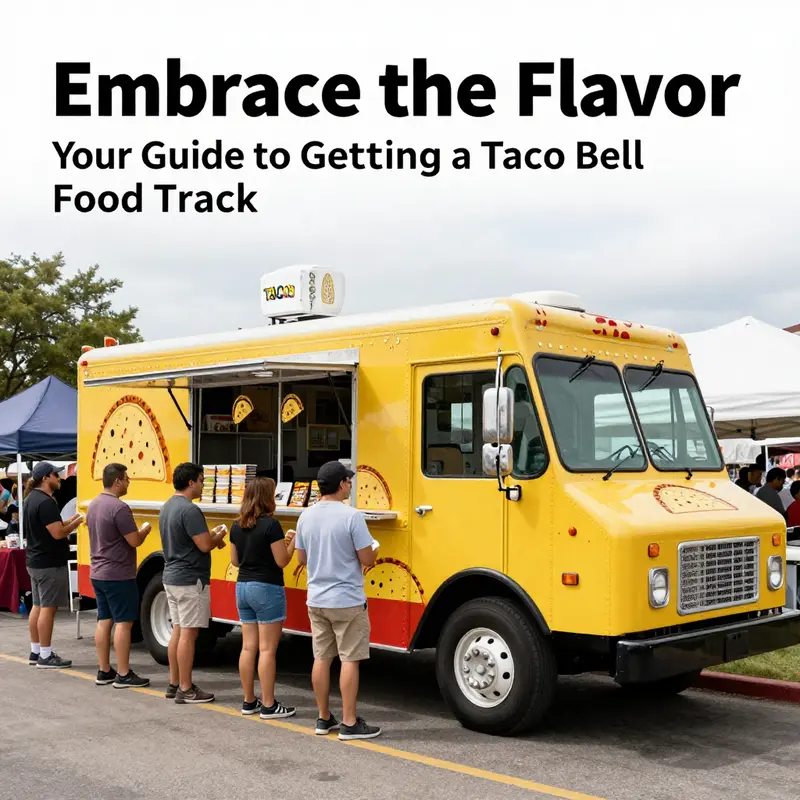
The allure of a branded mobile food operation is powerful. A Taco Bell food truck promises the familiarity of a national brand, the efficiency of a tested system, and the chance to bring a recognizable dining experience to events, campuses, and busy street corners. Yet the path to operating such a vehicle is less about buying a truck and more about joining a carefully managed ecosystem that centers on brand integrity, consistency, and long-term partnership. If you’re considering this route, your compass should point toward franchising, not a standalone vehicle, because the branded experience is safeguarded through a structured program that extends far beyond the chassis and kitchen equipment. This chapter follows the real-world arc of pursuing a Taco Bell mobile unit through the franchise process, exploring what it takes to align with a brand that treats its name and its customer experience as a tightly regulated asset.
The first step is to understand where the opportunity actually lives. Taco Bell operates primarily through a franchise model, and the company’s official franchise opportunities page is the gateway to any mobile or drive-thru concept that bears its name. This is not a place to shop for a generic food truck or to improvise branding; it is the portal to a sanctioned format that has been vetted for consistency, menu discipline, and service standards. Before you even imagine the wheels rolling, you must study the requirements, the investment range, and the procedures that govern who may operate under the brand. The numbers are substantial. Initial costs can range broadly, often reaching half a million dollars or more, depending on location and the abstracted format, which can include mobile or semi-permanent configurations. The emphasis here is not just capital but capability: the business experience to steward a high-volume, customer-driven operation while upholding a brand that prizes uniformity and reliability across every unit.
With that framework in mind, the practical journey begins online. A preliminary online application opens the door to a more detailed evaluation of your readiness. You will supply personal and professional data, and you should be prepared to present financial statements, credit history, and evidence of capital availability. The franchise team looks for a combination of financial strength and business acumen—the ability to invest, manage growth, and maintain operational discipline. It is not enough to be passionate about the idea; you must demonstrate a track record of responsible management and a commitment to the standards that define the brand. If you clear this initial hurdle, you’ll be invited into a more substantial interview and assessment phase. Here, leadership style, operational vision, and alignment with the brand values come under scrutiny. The process is designed to ensure that every partner not only executes a profitable venture but also acts as a steward of the customer experience that customers expect from a nationally recognized name.
Assuming you advance, the next milestone is the franchise agreement. This document codifies your rights and responsibilities as a franchisee, including the precise standards for store or unit layout, menu accessibility within the brand’s parameters, marketing support, and the royalty structure that funds ongoing corporate services. The agreement is not a mere formality; it is a covenant that binds you to the brand’s operating playbook. In a mobile context, this playbook extends to how the truck is branded, how it is staffed, how it is staffed, and how compliance with health and safety rules is demonstrated daily on the road. The training phase follows, and this is where the practical bridge from theory to execution truly appears. Taco Bell typically offers comprehensive programs that cover food preparation standards, customer service expectations, inventory management, and the day-to-day rhythms of running a branded unit. For mobile operations, training may emphasize route planning, event scheduling, mobile compliance, and how to adapt the core menu to a temporary footprint without compromising the brand’s reputation.
Brand discipline does not end with training; it flows into licensing, permits, and site readiness. Even with a franchise in place, a mobile unit requires a constellation of permissions. Local business licenses must be secured, and health codes, zoning laws, and parking regulations must be navigated. The process often begins with a targeted search for the applicable requirements in your city or town—an essential step that can reveal nuanced demands around food handling, waste disposal, and vehicle inspections. In practice, becoming a Taco Bell franchisee with a mobile unit means building a compliance backbone that supports consistent operations, while also adapting to the variable landscapes of cities and event venues. The brand’s emphasis on standards is not a constraint to stifle entrepreneurship; it is a framework that reduces risk and calibrates expectations for a customer who encounters the same service quality, regardless of location.
If you are exploring this path, it helps to keep in mind that the official franchise route is not the only way to bring a branded experience to audiences. Taco Bell has experimented with mobile concepts and has partnered with franchisees or regional representatives to explore mobile unit opportunities in select markets. This is not an invitation to operate autonomously under the brand without authorization, but it is a reminder that the ecosystem includes mobile concepts that are treated within the same governance structure as traditional restaurants. Engaging with authorized vendors or equipment providers can be part of a broader strategy if you are involved in event-based activities or pop-up experiences. They can advise on sourcing kitchen equipment, branding materials, and the practicalities of fitting a branded workflow into a mobile footprint while ensuring compatibility with brand standards. It is important to approach any such avenue with a clear understanding that brand licensing restrictions require proper authorization and oversight. Using the brand name, logo, or any trademark without approval remains illegal, and attempting to operate a branded food service without a franchise or corporate path can jeopardize your plans and your future in the brand’s ecosystem.
A careful reader of these steps will recognize that the path involves more than a vehicle or a recipe. It is a structured partnership that requires capital readiness, a proven business track record, and a readiness to operate in concert with a defined corporate playbook. For many, this means building a solid business plan that outlines anticipated volumes, return on investment, operational milestones, and a sourcing strategy that respects the brand’s procurement standards. It also means rehearsing a leadership narrative that demonstrates how you will recruit, train, and retain a crew capable of delivering the same level of service under pressure—on a busy street corner or at a crowded festival. The journey, while demanding, is designed to protect the customer experience and to ensure that franchisees contribute to a cohesive national presence rather than a loose aggregation of independent operators.
As you weigh the timing and feasibility of this route, it is prudent to consult the official franchise information continuously. The franchise site supplies the most up-to-date requirements, investment expectations, and application procedures. It is the baseline reference for anyone serious about attaching a vehicle to a national brand and translating a concept into a scalable, compliant operation on wheels. Alongside franchising, you can educate yourself on the practical steps for launching a food truck by visiting the legal steps for launching a food truck. This resource, while not brand-specific, offers valuable context on the licensing, permits, and safety practices that form the foundation of any mobile food operation. The two tracks—brand affiliation and lawful execution—together pave the way for a credible, sustainable venture that can sustain brand integrity while delivering a memorable customer experience across diverse venues.
This chapter does not minimize the complexity of entering a franchise system. It is, instead, a map for serious entrepreneurs who understand that a branded mobile unit is a strategic asset, one that requires meticulous planning, disciplined execution, and a long-range view of growth and brand stewardship. The process may be lengthy, and the financial commitments are nontrivial, but the payoff can be a reliable platform backed by a national brand and ongoing corporate support. If you proceed with patience, thorough preparation, and adherence to the brand’s standards, the opportunity to operate a Taco Bell mobile unit moves from speculation to a carefully engineered business venture. The door is not merely a truck; it is a partnership that requires trust, investment, and an unwavering commitment to quality that customers can count on wherever the wheels take you.
External resource: https://www.tacobell.com/franchise
Branded Mobility on the Menu: Navigating Taco Bell’s Mobile-Unit Pathways
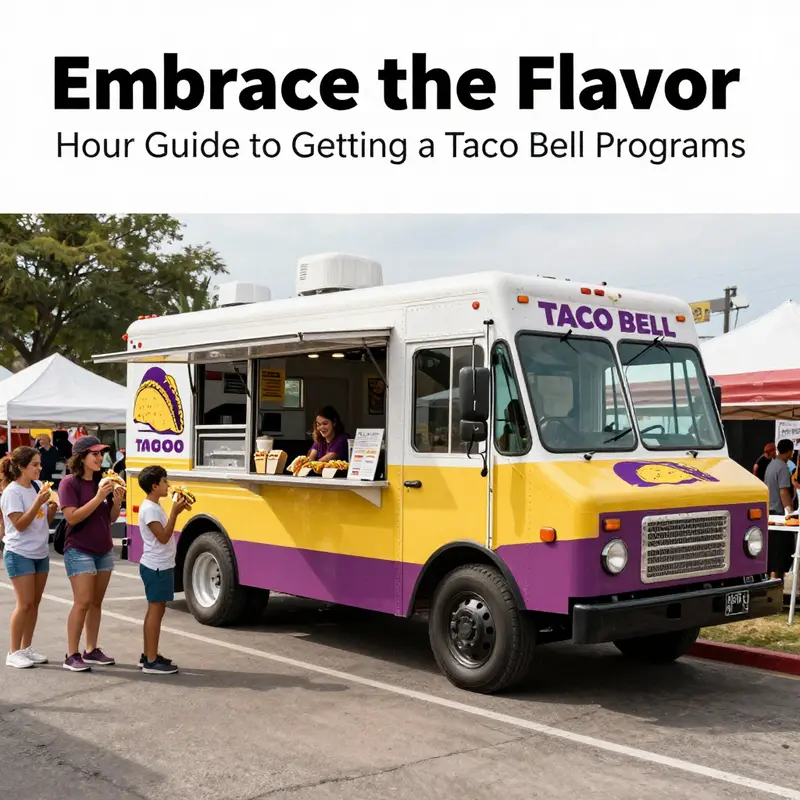
When people imagine turning a beloved fast-food brand into a rolling storefront, the impulse is to grab a bright truck and hit the road. Yet the reality behind a Taco Bell–branded mobile unit is less a grab-and-go hustle and more a carefully orchestrated partnership. The brand generally guards its identity and standards through a structured franchise framework or through corporate mobile pilots. This chapter takes you to that crossroads where entrepreneurial drive meets brand governance, showing how a prospective operator can chart a credible course toward a branded mobile format without compromising the equity that comes with the name. The road to a branded truck is not a shortcut; it is a permission-based journey that hinges on financial readiness, operational discipline, and a clear alignment with the brand’s expectations for quality, safety, and customer experience. Understanding this dynamic helps separate fantasy from feasible opportunity and positions you to engage with the brand in a way that strengthens both sides of the equation.
Taco Bell has experimented with mobile concepts in select markets, using them as laboratories for new ideas and as vehicles to extend brand visibility beyond fixed locations. These mobile units are not improvised stand-ins for a restaurant; they are part of a broader strategic toolkit designed to test concepts, reach dense crowds, and fill gaps where a traditional site would take longer to justify. When a franchise operator takes responsibility for a branded mobile unit, the arrangement is anchored in governance that preserves menu integrity, service standards, and safety protocols. This is not simply a vehicle with a logo; it is a complete, rules-driven operating platform that enables the brand to gather actionable data while maintaining a consistent customer experience. The nuance here matters because it clarifies why a standalone “buy-a-truck-and-go” approach doesn’t align with how the brand protects its identity and ensures predictable performance across markets.
For most aspiring operators, the practical entry point remains the franchising track. The franchise system supplies the procurement of goods, training, supply chain access, and ongoing support that a branded mobile unit requires. Some programs may include mobile or small-format variants, but they are folded into a larger franchise agreement rather than offered as an isolated, independent venture. Pursuing this route requires a mix of personal qualifications and corporate alignment. Financial capability is essential; a potential franchisee must demonstrate the capacity to fund startup costs, cover operating expenses, and endure the early stages of the venture when revenue streams may be uncertain. Experience in hospitality, retail, or consumer service strengthens credibility, because the brand seeks leaders who can translate standards into reliable on-site execution. The final gate is approval from Taco Bell’s corporate franchise team, an evaluation that weighs past performance, market potential, and a demonstrated commitment to upholding brand requirements. In short, the pathway to a Taco Bell–branded mobile unit is a formal partnership, not a casual business arrangement.
Beyond the boardroom, there is a practical layer that every would-be operator must respect: regulatory compliance. A mobile unit bearing a major brand’s marks must comply with local health codes and the rules that govern mobile food service in a given jurisdiction. Zoning plays a decisive role in determining where a truck can operate, how long it can stay in place, and what permissions are needed to park in high-traffic locations. The vehicle itself represents a compact kitchen on wheels, and it must be designed and operated to exacting standards. Expect multiple cooking stations, reliable refrigeration, robust ventilation, and plumbing capable of handling both water supply and waste disposal. The cost of outfitting such a kitchen is substantial, but it reflects the scale of the operation the brand is willing to back through a structured partnership. The size and capability of the mobile kitchen are not vanity features; they are essential to ensuring consistency with the brand’s menu execution and safety practices across events and markets.
Operational discipline is the backbone of any successful branded mobile venture. A mobile unit requires more than appetite and charm; it demands a refined plan for supply chain management, staffing, and quality control. Sourcing becomes a balancing act between maintaining brand-standard ingredients and managing the perishability and logistics of a mobile environment. A well-conceived plan maps out procurement cycles, inventory levels, and backup suppliers to keep the kitchen humming regardless of where the truck rolls. Staffing must align with brand service expectations—training that instills standard procedures for food handling, order accuracy, and guest interactions. The physical realities of a moving kitchen—limited back-of-house space, variable outdoor conditions, and the need for rapid setup and teardown—make a robust operational playbook non-negotiable. The result is not just a tasty experience but a dependable one that travels with the brand’s reputation wherever the truck appears.
If you are exploring this path, your most practical step is to engage with the brand’s franchising and mobility channels. The official opportunities page serves as a roadmap for eligibility, investment ranges, and the procedural steps involved in applying. Importantly, this process is not a one-size-fits-all invitation; it invites you to present a credible plan that demonstrates you can meet the financial commitments and the operational rigor required by the brand. In parallel, reach out to authorized representatives or regional developers who can illuminate whether mobile-unit options are currently active in your market and how those options fit within the broader franchise framework. A well-prepared aspiration gains credibility when it is grounded in a credible business plan that details market analysis, revenue projections, and a plan to sustain brand standards over time.
As of 2026, the brand has continued to refine its stance on mobile formats, signaling a measured, strategic approach to growth. Mobile units are deployed where they can deliver value—urban centers with high foot traffic, or events with large, temporary audiences—without compromising the discipline that sustains a national chain. This is not a blanket invitation to acquire a branded truck; it is a signal that the door remains open, but only for operators who can prove fit, readiness, and a long-term commitment to the brand’s operating standards. The consequence for aspiring operators is clear: cultivate preparedness, secure the right approvals, and pursue a scope that aligns with the program rather than chasing an unsanctioned venture. The emphasis on controlled deployment protects brand equity while still offering meaningful opportunities for qualified partners to grow within an established ecosystem.
From a planning perspective, the journey blends practical readiness with strategic patience. Begin with a disciplined review of the franchising pathway and any mobile-unit pilots that may exist in your region. Your business plan should articulate not only a financial forecast but a customer-centric proposition that demonstrates how you will deliver dependable service, maintain cleanliness, and manage the complex logistics of a moving kitchen. The brand’s emphasis on consistency means every element must mirror established standards—from the layout of the kitchen to the presentation of the menu items, from the way orders are captured to the manner in which customers are greeted. This consistency is what transforms a branded mobile unit from a novelty into a scalable asset that can be replicated across additional markets if the operator proves capable of maintaining quality.
Networking within the franchise ecosystem can accelerate your progress. Engage with regional franchisees or development representatives who understand the market dynamics, the competitive landscape, and the support mechanisms available for a mobile unit. They can provide candid feedback on feasibility, competition in the area, and the likelihood of a program opening or expanding. Remember that the ultimate objective is a durable, service-oriented operation that reliably reflects the brand’s values, which means you should be prepared to invest time and resources into training, compliance, and continuous improvement. Events attract attention, yes, but sustained success comes from a well-run, compliant, and consistently executed mobile format that customers associate with quality and reliability.
If you are seeking a practical touchstone as you embark, consider this: legal steps for launching a food truck. The linked guide helps demystify permits, inspections, and documentation you’ll need as you pursue a branded path. It is a reminder that the branded opportunity sits at the intersection of entrepreneurial will and institutional standards. It is not a mysterious loophole; it is a formal partnership that demands preparation, integrity, and a plan that aligns with a national brand’s long-term growth strategy. While the prospect of hitting the road with a familiar menu is alluring, it is the careful, methodical alignment with the brand’s processes that ultimately determines whether the dream becomes a sustainable operation.
For readers who want a clear starting point, the first move is to consult the franchise opportunities portal and initiate conversations with a corporate representative. Bring a well-constructed business case, a history of leadership in hospitality or retail operations, and a concrete plan for maintaining brand standards on the road. The path may begin with questions and paperwork, but it leads to a structure that supports growth and reduces risk. The branded mobile unit is a compelling concept, but its success rests on disciplined execution, strategic partnerships, and a shared commitment to quality that transcends the spectacle of a rolling brand. If you pursue this route with clarity and patience, you can position yourself not as a lone operator chasing a truck, but as a trusted partner within a network designed to scale responsibly.
External resource: Official franchise information about the brand can be found on the corporate site, which outlines eligibility, investment considerations, and the process to apply. This external reference provides a compass for those who are serious about pursuing a branded mobile format within the franchise network.
legal steps for launching a food truck
From Dream to Drive-Thru: Navigating Taco Bell’s Mobile Franchise Path
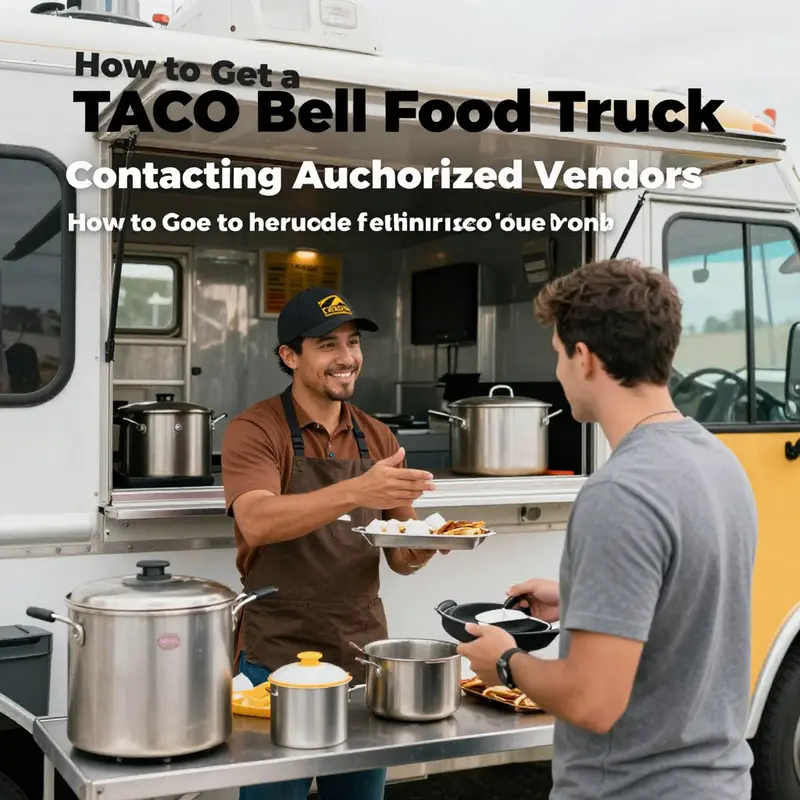
Turning a dream of a Taco Bell mobile kitchen into reality requires more than passion. It demands understanding of how Taco Bell expands and recognition that branded food trucks sit within approved models, not free-standing DIY projects. The Taco Bell growth strategy relies on a controlled mix of franchised locations and mobile concepts, all aligned with standards, training, and supply chain. In markets with high demand but costly real estate, a mobile unit can be an entry point—but only if it sits inside an approved framework. The journey is about a disciplined partnership that preserves the brand experience while offering operators a scalable platform to serve customers on wheels.
The practical route begins by focusing on franchise channels: authorized franchise opportunities, regional representatives, and vetted mobile-unit programs. This approach protects brand consistency, ensures compliance with food-safety and branding standards, and preserves guest experience across markets. Those who dream of a branded truck should prioritize becoming a franchise partner or engaging through an approved mobile-unit initiative rather than pursuing a stand-alone branding project.
A realistic plan should frame a business case beyond culinary creativity. It should demonstrate capital readiness, leadership experience, and the capacity to operate at the pace of a national fast-food brand. Operators commonly bring restaurant management or multi-unit ownership experience, sound financial stewardship, and a strategy to sustain brand standards in flexible environments. Benchmarks vary by market but typically include a minimum net worth and liquidity to cover equipment, licensing, insurance, and a compliant kitchen setup on wheels.
With groundwork in place, the official route starts at the franchise level. The franchise opportunities channel is where prospective partners learn about mobile concepts and the exact requirements. Answering questions about managerial experience, financial wherewithal, brand compliance, and supply chain readiness helps refine expectations and avoid misaligned investments.
The franchising process usually involves a preliminary application, an information session, and a review of the franchise agreement. You’ll be asked to share your business experience, location preferences, and financial profile, plus your plan to reach customers in chosen markets. A positive response moves you toward training, ongoing corporate support, and integration with the broader brand ecosystem.
During the information session, you’ll gain clarity on operational expectations, training, supply chain compatibility, and the brand’s proprietary systems. You’ll also learn about mobile-unit eligibility, available regions, and decision timelines. Negotiations on the franchise agreement come next, with a shared understanding that a Taco Bell franchise—whether brick-and-mortar or mobile—requires commitment, a solid business plan, and collaboration with approved vendors and builders.
If the agreement proceeds, the next steps involve securing a legal right to use the brand, access to training, and operating a mobile unit under brand standards. You’ll establish a location framework and choose a qualified mobile-unit builder who can translate Taco Bell’s design language into a road-ready kitchen. Many projects involve corporate-approved equipment providers to meet layout, safety, and workflow requirements. Building and outfitting the truck is a careful balance of compliance and practicality, ensuring each kitchen station, ventilation, sanitation, and storage align with health codes and brand specs.
Training then bridges theory and daily operation. Programs cover kitchen operations, food safety, inventory management, order flow, and customer service that reflects the Taco Bell guest experience. Trainees learn to source ingredients from approved suppliers, stage mise en place for quick service, and maintain consistent portions and timing. The goal is reliable performance across shifts, events, and environments, supported by the franchisor’s training network.
Operating with brand integrity also means respecting licensing and usage constraints. The Taco Bell name, logo, and menu items are protected assets, and unauthorized use carries risk and potential penalties. The approved route requires operating under a formal license within the franchise system, with strict adherence to menu specifications, pricing guidelines, and supplier relationships. Regular training and oversight help ensure consistent menus and brand experience across markets.
There are also mobile-unit programs that Taco Bell has explored in certain markets. These programs demonstrate the brand’s willingness to experiment with formats while maintaining governance through franchising or corporate partnerships. If a local market offers a mobile concept, regional representatives or current franchisees can share opportunities that aren’t broadly advertised. Regional conditions and supplier networks often influence mobile unit availability, underscoring the importance of engaging through authorized channels rather than pursuing shortcuts.
To stay grounded, practical steps include: visiting the official franchise opportunities page for investment ranges, site requirements, and application steps; preparing a robust financial plan showing liquidity and net-worth readiness; drafting an operations playbook that scales with growth, including mobile-unit maintenance and compliance checks; identifying a trusted, brand-approved mobile-unit provider; and aligning with the brand’s mission to deliver a consistent guest experience across markets.
For readers seeking a concise, experience-based perspective on choosing a food-truck path, consider evaluating vehicle selection, kitchen layout, and branding alignment. If you’re pursuing a Taco Bell mobile unit, explore resources focused on mobile units and branding alignment. There is no shortcut to the front door of a branded mobile unit: the route protects the brand, safeguards quality, and ensures every guest experience meets Taco Bell standards. With careful preparation, a clear franchising pathway, and engagement with authorized providers, an aspiring operator can position themselves to participate in a mobile concept that complements the broader restaurant network. Patience, diligence, and adherence to the franchise framework translate aspiration into a compliant Taco Bell truck, not merely a truck with a logo.
External resource: https://www.sba.gov/business-guide/plan-your-business/start-franchise-business
Brand on Wheels: Navigating Licensing Boundaries on the Road to a Taco Bell–Themed Food Truck
Dreams of rolling through city streets with a familiar savors and a recognizable badge can be powerful. For many culinary entrepreneurs, a Taco Bell–themed food truck represents the peak of branding drama and market visibility: a vehicle that doubles as a moving billboard and a kitchen that travels to where people gather. Yet the reality behind that dream rests on a strict map of licensing, franchising, and corporate control. Before you invest in equipment, permits, or a flashy wrap, it’s essential to understand how Taco Bell actually licenses its brand today and what this means for someone who wants a branded, mobile version of the chain. The question isn’t simply, “Can I buy a truck and serve Taco Bell?” The question is, “What legitimate paths exist to operate a branded mobile unit, and what boundaries must you respect to stay on the right side of the law and the brand’s governance?” The simplest answer is that Taco Bell does not offer franchising or licensing for standalone, mobile trucks. The brand maintains its image and menu standards through a carefully controlled system that focuses on full-size, permanent restaurants and specific, authorized partnerships. This is not a lyrical limitation but a business model that centers on consistent guest experience, supply chain control, and rigorous franchise oversight. What this means in practice is that a personally owned van or trailer cannot be branded as Taco Bell or operate as a Taco Bell unit unless you are an approved franchisee or partner under a specific corporate- or franchise-led program. If you are hoping to plow ahead with a branded mobile operation, you must first acknowledge the licensing reality and then chart a course that aligns with official pathways. The most reliable route to a branded experience involves pursuing the franchise or corporate channel designed for stability, scale, and legal clarity. The first and most straightforward path is to apply for a Taco Bell franchise to operate a traditional restaurant. This route is not a throwaway line in a business plan; it represents the brand’s primary growth mechanism. Franchise opportunities, investment thresholds, site criteria, and ongoing support are laid out by the company through its franchising division. The process typically requires solid capitalization, proven management experience, a well-thought-out site strategy, and a compatibility with the brand’s standards for service, cleanliness, and guest experience. If your interest centers on mobile or drive-thru concepts, there may be specific mobile formats that align with the broader framework of a franchise or corporate pilot. These programs tend to be market-specific, and opportunities can come with unique requirements that differ from traditional storefronts. They are not universally available, and availability can shift with corporate strategy and regional market conditions. To explore these pathways, you would engage with the franchising team and regional representatives who can explain eligibility, costs, and timelines. The second legitimate channel to consider is a brand-aligned mobile unit program, which Taco Bell has experimented with in the past. Programs like mobile Taco Bell concepts have operated in certain markets under franchise or corporate arrangements. They are not generic “buy and operate” opportunities; rather, they are integrated into the company’s operating philosophy and require close coordination with existing franchisees or corporate leadership. The practical implication is that you can’t simply purchase a van, slap on a logo, and call it a Taco Bell unit. A coordinated program, governance by a franchisor or the company, and strict adherence to brand standards are essential. If you’re a restaurateur or entrepreneur who wants to bring Taco Bell-inspired experiences to events or pop-ups without misrepresenting the brand, there is a different, safer path. You can operate an independent mobile concept that evokes the craveable, fast-casual taco style—without using Taco Bell’s marks, logo, or exact menu items. This approach allows you to build a loyal following around a concept that shares the spirit of fast, flavorful tacos but remains clearly distinct from the Taco Bell brand itself. For someone who has a passion for events and mobility, this can be a powerful way to test a mobile menu, refine operations, and establish a solid local brand before evaluating any formal partnership. In this scenario, you can source equipment from reputable suppliers and design branding and packaging that comply with intellectual property laws. The key is to avoid any direct use of Taco Bell’s name, logo, proprietary menu items, or protected packaging. You’ll want to clearly distinguish your business identity from the brand while creating a memorable dining experience that echoes the “fast-taco culture” without crossing legal lines. It’s also important to consider regulatory and operational realities that accompany any mobile food venture. Health department permits, food safety certifications, liability insurance, and vehicle compliance are not negotiable. They apply whether you pursue a branded franchise, a mobile pilot, or an independent concept. Your business plan should reflect not only culinary and customer-experience details but also a robust compliance framework that reduces risk and protects your investment. If your goal is long-term alignment with a major brand, there is a third, slower, but often more durable path: pursue a traditional Taco Bell restaurant franchise, and be prepared for a rigorous approval process, a substantial capital outlay, site acquisition, and adherence to a highly structured operating model. This route may unlock broader opportunities for growth within the company’s ecosystem, including potential involvement in brand-appropriate innovations or pilots that could someday include mobile concepts under formal supervision. While the prospect is exciting, it’s important to calibrate expectations. Corporate strategies evolve, and mobile brand licensing, if reintroduced or refined, would come through official channels with specific criteria, training, and support. In other words, the dream of a Taco Bell–branded food truck is not simply about wheel and engine; it hinges on governance, brand protection, and a tested framework for expansion. For many aspiring operators, the most practical approach is to treat the Taco Bell path as a standard, franchise-based career track—one that anchors you firmly within a system designed to preserve the guest experience, the supply chain, and the brand’s prestige. If your passion lies in mobility and tacos, you can still pursue success by building a strong, independent truck business that captures the essence of the concept—without the direct brand connection. This strategy avoids legal risk while offering room for creative menu development, branding originality, and a direct connection to customers in your region. The journey from concept to operation, then, centers on clarity about licensing, a respect for trademark boundaries, and an alignment with official channels. It means recognizing that the road to a branded, Taco Bell mobile unit is paved not by mere purchase power, but by corporate alignment, franchising protocols, and carefully negotiated partnerships that establish legitimacy and sustainability. As you navigate this landscape, you’ll also want to tap into practical resources that help you structure a mobile food operation in a compliant, cost-conscious way. Consider starting with a solid baseline on general food-truck readiness—from choosing the right vehicle and layout to understanding permits, taxes, and insurance. You’ll benefit from a pragmatic, rights-respecting approach to branding; in other words, you can chase the thrill of street-side service while staying firmly on the right side of the law. For individuals who want a branded, on-brand experience, the official route remains the franchise path or a corporate partnership under controlled conditions. For everyone else, there is value in building a distinctive, non-branded mobile concept that can evolve, scale, and, if the opportunity arises, interface with the broader ecosystem on terms that protect both legality and reputation. To further explore the logistics of launching a mobile food venture—whether branded through permissible channels or as an independent concept—refer to the practical guidance on legal steps for launching a food truck. This resource provides actionable, real-world steps for planning, financing, and operating a truck in ways that respect regulations and brand boundaries. legal steps for launching a food truck helps ground the discussion in concrete actions you can take today. For those seeking the official franchise pathway, and a clear map of opportunities that are truly sanctioned by the brand, the authoritative starting point is the brand’s franchise information hub. External resource: https://www.tacobell.com/franchise
Forging a Taco Bell Fleet: Navigating Franchise Pathways to a Mobile Brand Experience
In a market hungry for quick, predictable experiences, Taco Bell has expanded beyond the fixed storefront into mobile formats that travel to crowds rather than waiting for crowds to find them. The logic is straightforward: when you can bring the brand to college campuses, festivals, or urban districts during peak hours, you create a direct link between speed, consistency, and location. Yet the path from fan to operator is not the same as buying a used food truck and slapping a name on the side. The brand’s approach remains anchored in franchise and corporate partnerships, with clear standards designed to preserve the customer experience and the operational discipline that the brand is known for.
If you are drawn to the possibility of a Taco Bell food truck, the reality is that ownership generally means joining the franchising ecosystem, not acquiring a standalone branded unit and going solo. The company has built its mobile ambitions around franchise opportunities that align with its nationwide supply chains, training programs, and compliance frameworks. This means that instead of a generic, off market transaction, aspirants pursue a formal application through the franchise channel. The official franchise information page emphasizes investment ranges, footprint requirements, and the procedural steps to begin the conversation with the brand’s development teams. This structure is not a barrier; it is a system designed to reduce risk and maintain quality as the brand circulates in new markets, including high-traffic urban cores, college campuses, and event venues that crave dependable, fast service Mexican inspired cuisine on the go.
The most important distinction to understand is that the Taco Bell name carries the weight of a national standard. The branding, signage, recipe integrity, and even the way the trucks are equipped are governed by precise specifications. For individuals who want to explore a mobile route, the franchising path offers a vetted route to operate under the same umbrella as brick and mortar restaurants, with the added advantage of a flexible footprint. In short, you are not buying a truck and calling yourself Taco Bell; you are stepping into a carefully structured partnership where the brand’s guidelines and supply chain become your daily operating reality. The risk calculus shifts from guessing at demand to leveraging a preexisting customer base, a centralized distribution network, and ongoing support that can streamline the often daunting costs of starting a mobile food venture.
This is where the current trends in food truck franchising come into sharp focus. The marketplace has increasingly rewarded brands that offer seamless digital ordering, loyalty programs, and a scalable model that translates well to a fleet of mobile units. Taco Bell stands out in this regard because it couples a recognizable identity with a robust operations backbone. Franchisees benefit from centralized procurement, training, and field support that can shorten the time to launch and improve consistency across multiple units. The rise in remote work and flexible lifestyles has expanded the pool of potential event locations and pop up opportunities, making a mobile footprint not merely a novelty but a strategic asset. The department of branding and operations within the firm has shown that the mobile format can expand visibility without sacrificing the standardized experience that customers expect when they encounter a familiar brand on wheels.
For those who decide to pursue a Taco Bell mobile opportunity, the application process remains the gateway. The most relevant and up to date information is housed on the official franchise site, which outlines the steps from inquiry through training and launch. The journey typically begins with a formal inquiry or submission of a business profile. From there, prospective operators are evaluated against criteria that include governance, liquidity, and operational experience. The process often involves meetings with franchise consultants who can map out a development timeline, verify market viability, and present a candid view of investment ranges and royalty structures. As a result, the runway to opening a mobile unit becomes a collaborative project rather than a one off acquisition. The safety net here is precision: you enter a system where site selection and branding standards are vetted at multiple levels, reducing the risk of failed deployments and misaligned concepts.
Preparation, then, becomes a central theme. To optimize your odds, you should approach the opportunity with a solid business case that demonstrates how a Taco Bell mobile unit would perform in your target market. This means analyzing foot traffic, competitive dynamics, and seasonal patterns while respecting the brand’s kitchen standards and supply chain constraints. You’ll need to articulate a plan for staffing, training, and nighttime or weekend operations if the truck is intended to serve busy events or college campuses. Insurance, health and safety compliance, and vehicle standards all figure prominently in the due diligence process. A well prepared applicant is better positioned to negotiate site access, maintenance arrangements, and financing options that align with the brand’s expectations for uptime and service quality.
The practical realities of owning a branded mobile unit through a franchise are many, yet they are navigable with a careful, strategic mindset. The franchise model offers benefits that are especially meaningful in the mobile space. The centralized supply chain ensures consistency in food quality and branding. Training programs help operators master the brand’s cooking protocols, quality control measures, and customer service standards, while ongoing support channels provide troubleshooting, marketing guidance, and access to a network of fellow operators. This is not merely about choosing a truck; it is about joining a system that makes the logistics of running high-volume, fast service cuisine more predictable. Even the permitting and compliance journey tends to be smoother under a corporate umbrella because auditors and brand auditors are aligned in their expectations for facility design, equipment, and sanitation.
The practical step forward is to visit the official franchise pages and speak with a franchise consultant who can translate the general description into action steps tailored to your situation. Your conversation will typically cover what markets are currently prioritized for mobile expansions, the balance between initial investment and working capital, and the types of mobile concepts that the brand is actively supporting. In many cases, the brand will want to see a credible plan for site development, event scheduling, and a pathway to scale with future units. Because the channel prioritizes brand integrity, you should be prepared for frank conversations about site access, branding requirements, and the operational discipline that underpins every successful unit. If you want to deepen your understanding of the broader dynamics of starting and running a mobile food business within a framed franchise environment, you can explore practical insights and operational tips in a trusted industry resource that covers the fundamentals of getting started with a mobile kitchen. Fire Up Taco Truck Blog
As you move through the process, you may encounter moments when events or pop ups look instantly attractive as a path to brand involvement. While these opportunities can serve as ways to build recognition and test market demand, they rarely substitute for a formal franchise arrangement if you aim to operate a Taco Bell branded mobile unit. If your ultimate goal is sustained growth under the brand, the franchise route remains the recommended channel. It offers a combination of credibility, brand alignment, investment clarity, and access to structured support networks that are hard to replicate through independent branding arrangements. In the context of the broader trends in mobile food service, Taco Bell’s function as a franchised mobile operator is a case study in how a well known brand translates demand into a scalable, controllable fleet. The model reduces some of the risk that often accompanies solo ventures in the on the go food space, particularly for operators who value a predictable supply chain, reliable equipment standards, and a national standard for customer experience.
Finally, for those who want to anchor their planning with official sources while still exploring the practical implications, the most reliable starting point remains the franchise information hub on the brand’s site. There you will find the latest criteria, disclosures, and contacts who can guide you through the application, review, and launch timelines. The channel emphasizes a measured approach: you apply, you are evaluated, and if approved, you enter a comprehensive onboarding process that pairs you with training, equipment standards, and site development guidance. The process can be rigorous, but it primes you for a mobile operation that benefits from a ready to scale platform and a brand reputation that resonates with customers regardless of location. For a broader perspective on the licensing and operational considerations involved in branded food trucks, external resources provide additional context on franchise models and the realities of launching a mobile food business.
External resource: https://www.tacobellfranchise.com
This is an extended integrated narrative about the pathways to owning a Taco Bell mobile unit through franchising, balanced with an emphasis on the brand’s standards and the operational realities of the mobile era.
Final thoughts
As you wrap up your journey to securing a Taco Bell food truck, remember that the road ahead is paved with flavorful possibilities. By understanding the intricacies of franchising, exploring mobile unit programs, liaising with authorized vendors, and grasping licensing restrictions, you will be well-prepared to bring Taco Bell’s distinctive flavors to your community. With current trends favoring mobile dining experiences, the opportunity to delight taco fans is ripe for the picking. So take that first step, connect with Taco Bell, and get ready to roll out your taco-delivery dreams!