
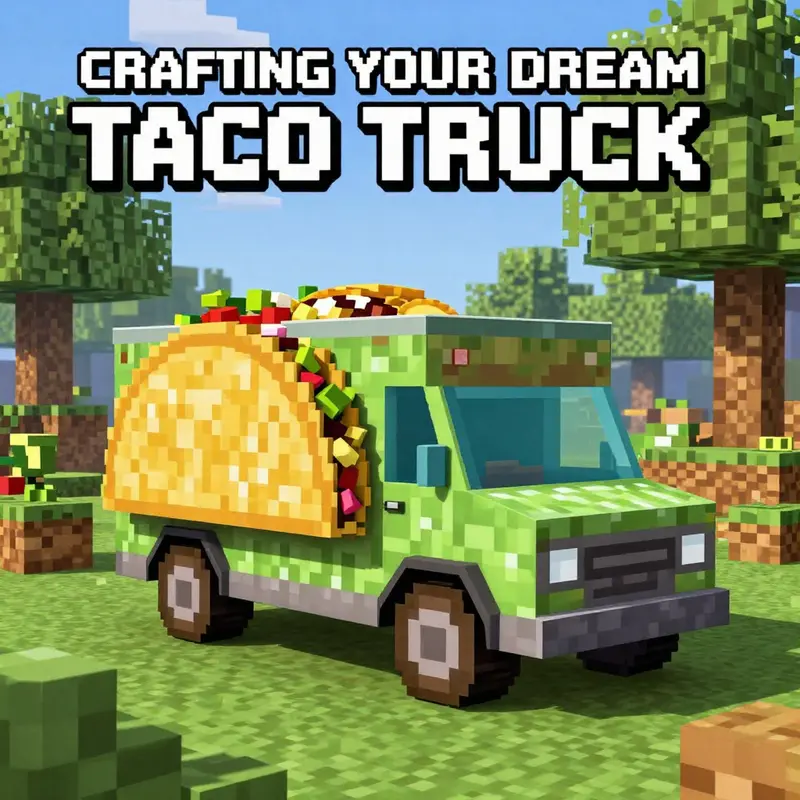
Are you a taco enthusiast dreaming of serving delicious morsels in the blocky world of Minecraft? Building a taco truck is the perfect way to combine your love for this iconic dish with creativity in the game. From structuring the base with character to enhancing the truck with functional elements and dazzling decorations, get ready for a vibrant journey that brings the essence of cuisine to your virtual adventures. Each chapter will guide you on how to create a taco truck that reflects your passion, making it the go-to spot for all taco lovers in your Minecraft realm!
Foundations First: Crafting the Solid Base of a Minecraft Taco Truck
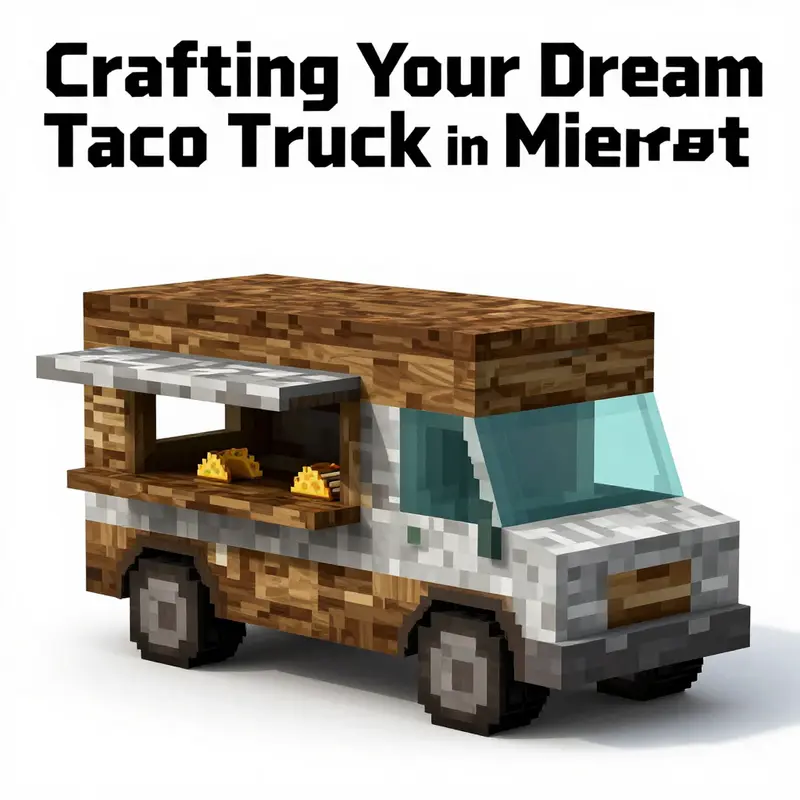
The base is more than a platform in Minecraft; it is the heartbeat of a taco truck that wants to feel real enough to visit. When you start with a sturdy foundation, the rest of the build falls into place with confidence. The base sets the proportion, the weight, and the rhythm of every future detail—from the way a counter reads in your inventory to how the wheels kiss the ground and how the roof cap sits above. In this chapter we weave practical choices with the quiet aesthetics of a street food vehicle, showing how to translate the idea of a taco truck into a blocky, tangible object that can carry your cuisine and your imagination alike. The approach is crafted to be cohesive, so the base becomes a reliable stage for the performance that follows, the display of sizzling tacos and the bustling energy of a quick service spot in your Minecraft world.
Begin with materials that fit your world’s mood. A solid foundation can be built from stone or wood blocks, each offering a different texture and atmosphere. Stone suggests durability and a slightly industrial vibe that producers in real life often embrace for food service fronts. Wood blocks, especially darker varieties, offer warmth and an approachable feeling that invites players to linger and explore. The choice matters beyond looks; it also guides how you texture the truck later, how you texture the floor under the counter, and how the interior will read to visitors when they wander inside. Your selection should harmonize with the surrounding terrain. If you favor a rustic desert landscape or a canyon biome, stone might feel natural; in a forested setting, dark wood can blend beautifully while still looking deliberate and crafted. The foundation becomes a narrative device, telling a small story about the truck before you even add any signage or a display case.
The next step is to decide on the base dimensions. A compact, portable feel is often best for a taco truck, so a footprint around five to seven blocks long and three to four blocks wide gives you generous interior space without overreaching the world’s scale. This size supports a comfortable interior workflow: counter space on one side, a small storage nook, and room for a display area that communicates to travelers outside. If you want a bigger, more expansive storefront look, you can stretch the length to eight or nine blocks, but keep the width consistent to preserve a believable chassis. The goal is a rectangle that looks like a real vehicle with a defined front and back, not a vague blob. When you map out the dimensions, lay down the floor first with your chosen material. A smooth sandstone or polished planks can read as a clean, easy-to-clean surface that players will recognize as practical. The floor anchors the interior arrangement and helps you visualize where the counter will sit and where guests might queue. The base also becomes the canvas on which future details will land with precision, such as the wheel wells and the line of the chassis running along the sides.
With the floor in place, you can begin constructing the main frame. Build a perimeter wall that closes in the space while leaving doorways or access points at the front and rear. The wall material should feel sturdy yet accessible. Cobblestone or bricks can convey gravity and structure, while dark oak planks offer a modern, robust silhouette. The choice of wall texture influences how light plays across the truck. A rough stone surface catches rough shadows and hints at a weathered street corner; a smoother wood finish reflects a friendlier, more inviting vibe. Whichever you choose, aim for consistency around the entire perimeter so the truck reads as a cohesive machine rather than a patchwork of parts. Leave deliberate openings for a front door and a back door if you want to access the interior easily, or plan to create a side entry behind the counter for a cleaner storefront look. These openings are not mere gaps; they are the channels through which the truck breathes and functions in your world.
Now consider the wheels, a defining feature of any mobile shop. The base deserves deliberate wheel placement to sell the illusion of mobility. Place minecarts with chests or regular minecarts on either side of the base, aligning them with the corners for symmetry and realism. The cart wheels at the corners visually anchor the build, while the chests add a hint of storage that you can transform into a simulated inventory line later. To enrich the wheel area, you can add subtle details along the sides that mimic a chassis or fender lines. Slabs or stairs placed along the lower edges can suggest a recessed wheel well, giving the truck a grounded, deliberate stance rather than a floating shelf look. The goal is to produce a convincing silhouette at a glance, so players understand immediately that this is a vehicle built to move, serve, and endure the demands of a street kitchen—at least in a sandbox world where your imagination does the driving.
Achieving stability and symmetry is not mere pedantry; it is the foundation for the interior and exterior rhythm that will follow. A symmetrical base helps you map features with ease—where to place the taco display, how the countertop aligns with the wheel wells, and where to tuck the storage behind the counter. Check for balance by stepping back and visually scanning the base from multiple angles. If one corner looks heavier or a side seems to tilt, reinforce that area with blocks that match the surrounding texture. The porch of the truck, if you imagine one, becomes a metaphorical stance rather than a mere add-on. The symmetry also extends to the roof line that will sit above, even if you plan to introduce an awning or a canopy later. The base is a stage where the rest of the team will perform; ensure it remains the most convincing, most reliable anchor of the entire build.
Interior potential is what makes the base truly valuable. The ground floor you lay now will soon host a counter, a storage chest lineup, and a display zone for the signature items that define your taco truck in the game. Consider placing a clear, easy-to-navigate path that leads from the back or side entry to the front counter. This flow matters because it mirrors real life and helps you imagine the physics of your world: players grabbing items, staff moving, and customers queuing without blocking the doorway. The base needs to support these flows with space and access. If you plan a display shelf, you might reserve a narrow strip along the front wall for item frames or carved blocks that will hold the pretend tacos, lettuce, and cheese. If you want to simulate a prep area behind the counter, set aside a recessed nook that can hold chests of ingredients, plus a small slot for a pretend sink formed from a trapdoor and a water stream elsewhere. This foresight ensures the base becomes a living platform that stays coherent as you add more layers to the build.
Incorporating details without clutter requires restraint. You can introduce subtle features such as a line of smooth stone or polished wood along the top edge to suggest a counter lip, or a thin row of glass panes to imply a pass-through window. A front facade can embrace a storefront feel with a small overhang, created by slabs or stairs that project slightly beyond the wall, giving the base a sense of protection from the sun and rain in your Minecraft climate. If the world favors light, consider a few lanterns or glowstone tucked beneath the overhang so the truck remains visible at night. Good lighting makes the base inviting and legible, inviting viewers to imagine the hustle that happens in the space before the sizzling display behind it.
The base is not a static shell but a spine that will carry the rest of the project. As you add the next layers, you will layer on a counter, a display, and perhaps even a tiny kitchen corner where imagined tacos are assembled. The base will determine the scale of every feature: the height of the counter, the width of the display shelf, and the reach of the front window. For this reason, you may want to keep the base modular in your planning. If you discover during construction that you want more counter space, you can extend the base in the same direction and maintain your proportions. If you feel that the truck should sit lower, you can shave a few blocks from the height while ensuring the wheel wells remain consistent with the new floor level. The base is your compass; it tells you where to go next and how to maintain a sense of purpose as you transform the idea into concrete, blocky reality.
In this chapter the base becomes a living blueprint, guiding decisions about the interior features you will add next. The base has to support a functional kitchen, a display area, and a welcoming exterior one block at a time. The design must remain coherent whether you are building alone in your creative world or sharing the project with friends who want to help. If you are curious about further design philosophies or want to see how professionals balance function and style, you can explore broader guidance on choosing the right food truck as a starting point for a design mindset. This internal reference helps you calibrate your expectations and refine your choices as you move toward the counter, the display, and the finishing touches. For broader context on design choices and the shaping of a mobile eatery in a game world, see Choosing the right food truck. Choosing the right food truck.
As you close this stage of the build, visualize the future flows of your taco truck in the Minecraft universe. The base is not a final product but a functional platform that invites you to insert a counter, a display, a kitchen corner, and even a simple interactive feature if your world allows it. The base must endure the test of time as you add doors, windows, and a roof. It must accommodate storage and movement without crowding. It must present a believable silhouette that mirrors the energy of a real life street unit while preserving the charm and constraints of the game. In practice, that means keeping proportions consistent, ensuring the wheel placement aligns with the chassis, and maintaining a clean line from front to back. It means creating a stable stage where future embellishments—signage, lighting, awnings, and perhaps a tiny chiller or fridge block arrangement—will harmonize rather than fight for visual attention. The base is the quiet strength beneath the lively theater of your taco service; treat it with care, and the rest of the build will respond with a confident, cohesive glow that feels both handcrafted and perfectly suited to the world you are shaping.
External reference and visual guides provide additional inspiration for this stage of construction. While the specifics of hardware and scripts are beyond the scope of this chapter, the core idea remains universal: start with a solid rectangle, lay a level floor, frame durable walls, position authentic wheels, and verify symmetry before adding the next layers. The result is a base that stands firm in your Minecraft world, ready to support the sizzling display that will soon announce your taco truck to explorers and neighbors alike. The base is a promise you make to yourself about the kind of build you want to create—steady, practical, and full of character—so when you begin the next chapters, the counter, the display, and the service window will feel inevitable, as if they were always part of the same well-considered machine.
To deepen your understanding of how this base aligns with broader design and operation strategies, you might consider broader industry resources and practical guides on how a food truck is conceived and sustained in the real world. A complementary external resource can offer visual cues and real world logic that you can transpose into the Minecraft plane. External resource: https://www.youtube.com/watch?v=example-tacotruck-tutorial
Serving Up Code and Corn Tortillas: Building a Functional Taco Truck in Minecraft
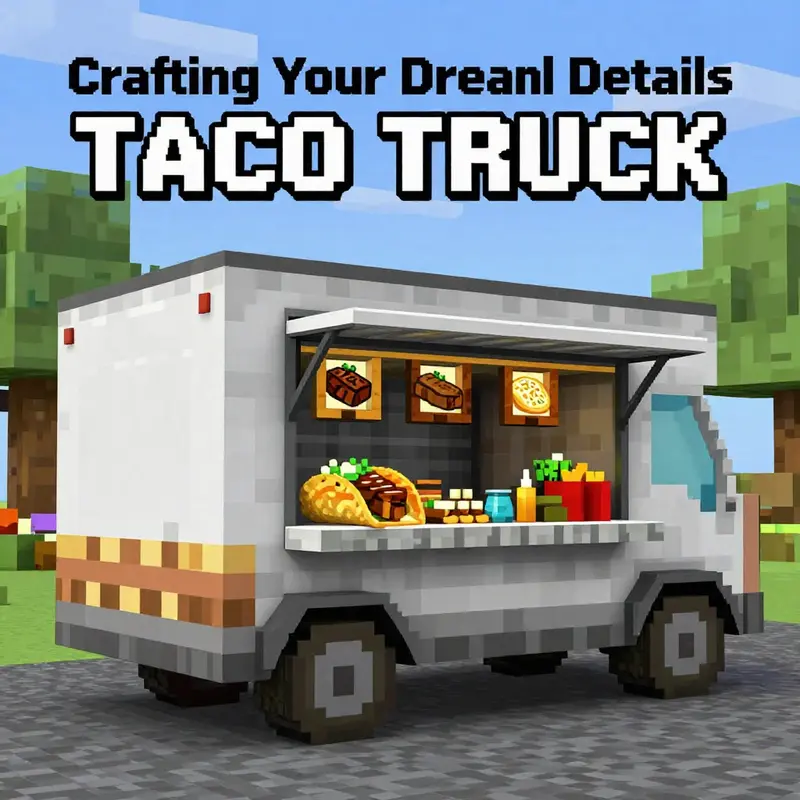
The idea of a taco truck in Minecraft blends two kinds of hunger—creative hunger for clever builds and a gamified appetite for interaction. The goal of this chapter is to walk a player through turning a playful aesthetic into something that actually responds to the world and the players who visit it. A well-designed taco truck should do more than sit pretty in a build; it should invite others to engage, trade, and explore. To get there, we start by embracing a philosophy that fuses structural design with programmable behavior. The truck is not just a set of blocks; it is a tiny, mobile venue that can welcome guests, dispense virtual tacos, and react when a passerby stops to peek inside. In Minecraft terms, this means balancing the look and feel of the exterior with a practical, expandable layer of functionality that can be added through packs, commands, and clever redstone or data-driven systems. The result is a taco stand that feels alive, even if it exists in a square world made of blocks and bits, and the process of building it becomes a tutorial in marrying form with function, art with automation, and fantasy with player agency.
The journey begins with the base and the silhouette of the vehicle. The truck’s body should read as a vehicle yet remain friendly to players who need to approach, interact, and browse. A slightly elongated rectangular shell works well, with a color palette that resembles glossy metal and warm wood accents. Dark oak planks or concrete tones can serve as the primary hull, while lighter slabs and trims give the counter a tactile, ready-to-serve surface. The wheels, a visual cue that anchors the vehicle in the world, are best implied rather than fully mechanical at first. Two options exist: use minecarts with chests at the corners to stand in for wheels, or craft a more stylized wheel stance with solid blocks, slabs, and a subtle layer of wheel arches. In either case, the goal is to make the truck look sturdy and travel-ready while preserving interior space for a display, a prep area, and a small control zone for interactivity.
The next major step is to create a counter area that communicates purpose. The front side of the truck becomes a working surface—an order window, a display shelf, and a tiny stage for the imagined taco staff. Build a counter with smooth stone or wood slabs to give a clean, accessible feel. A compact platform behind the counter acts as a display space, where item frames can host emblematic ingredients. Here you can arrange virtual tacos and toppings using culturally familiar stand-ins: cooked meats, leafy greens, and cheese representations created with baked potatoes, carrots, or other suitably colored items. The display communicates what the truck offers and also becomes a tactile cue for players to interact with items. Signs can be used to label the truck with a name, while a window made of glass panes invites players to peak inside and see the operation in action. A roof made from slabs and stairs seals the truck against the weather of your Minecraft biome, while a simple awning—crafted from fences and carpet—gives the feel of a shaded alcove where customers might line up.
With the exterior established, the focus shifts to adding a functional layer that makes the taco truck feel like a living part of the world. This is where the idea of a custom entity, a data-driven behavior, or a command-driven routine becomes central. In Bedrock Edition, behavior packs offer a clean path to define a dedicated entity that represents the taco truck itself. Such an entity can have components for movement, interaction, and simple AI so it can respond when a player approaches, stop briefly near a stand, or even move toward a player who signals intent to buy. In Java Edition, or as a cross-platform concept, you can approximate this dynamic with a network of command blocks and data packs that orchestrate events when a player comes into proximity or taps a display counter. The core principle is not to hard-code a single script, but to create a modular system that can be adjusted as your build evolves. If you want a hands-off approach early on, start with a summon command to spawn a taco truck avatar and script basic behavior around that avatar. The idea is to spend time on the interaction layer before you lock in every movement detail, so you preserve flexibility for future upgrades.
A practical approach to interactivity is to frame a small “menu” that players can access without needing a complex GUI. A straightforward method uses command blocks that detect proximity and present a simple, text-based menu on the screen. When a player nears the counter, a prompt can appear, such as a multi-line message listing taco options and prices, followed by a response that dispenses items when the player makes a choice. This is where the concept of a custom trading system comes into play. You can emulate a storefront by calling on the village or wandering trader mechanics, but with a twist: using command blocks to redirect trades to a dedicated taco menu. It is possible to configure a talking point at the counter that acknowledges the player by name, cheers their selection, and completes the transaction by giving the chosen item or by adding a stack of tacos to the player’s inventory. If you want to push the illusion further, a trader-like NPC or a stationary “vendor” entity can be introduced, so a player speaks with a character rather than interacting with a block. The endpoint is a satisfying exchange where the display items become tangible in the player’s inventory, and the truck hums softly with ambient sound or a subtle redstone-powered mechanism that signals an order is complete.
The practical construction of these systems hinges on the balance between aesthetics and logic. A display counter with item frames is both decorative and functional, because it provides a natural anchor point for a trading-like interaction. Placeframes give you a live, changing display—swap in a choice from your stock to reflect seasonal toppings or limited-time specials. The supply chain is deliberately simple at first: a chest or a trained dispenser connected to a tamed sorting mechanism can provide a finite set of items that you present as “tacos.” The key is to establish a loop of cause and effect: player approaches, a signal is triggered, the menu updates, the chosen item is dispensed, and the player receives the item in exchange for a preferred payment method—gold ingots, emeralds, or a simple barter using food items. You can call this a “recipe for interaction,” because it invites players to participate in the narrative of the truck and to make choices that affect the flow of the experience.
To make the taco truck feel alive beyond trades, add a few extra touches that dramatize its presence without complicating the core mechanics. Lighting is essential. Lanterns or glowstone subtly placed under the awning create a warm glow that makes the counter inviting at night. Colorful banners or dyed carpets can be arranged along the vehicle’s sides to give the appearance of a branded vehicle, a visual cue that this is a destination. A small speaker-like block arrangement could emit a looping ambient sound or a playful jingle when a player approaches, turning the truck into a memorable moment in the world. Even a tiny amount of signage—crafted from signposts with minimal text—can tell a story about the truck’s origin, its recipe, or its specials for the day. The goal is not to overwhelm players with features but to craft a cohesive, lightweight system that feels complete and ready for expansion. If you keep your code modular, you can always add new flavors, adjust prices, or swap in new display items without tearing down the truck’s core.
The structural and interactive layers can be connected further through advanced techniques that show how Minecraft’s tooling can be repurposed for complex behavior while staying accessible to builders who want to keep things simple. One path is to leverage the placefeature command to spawn the finished taco truck directly into the world. This command, introduced in 2022, enables you to place a predesigned structure at exact coordinates, ensuring that your truck appears exactly where you want it—on a street corner in a desert city, beside a coastal market, or in a bustling village plaza. The command frees you from repetitive placement, letting you reproduce a beloved design with a single line of instructions. When you couple placefeature with a prebuilt, highly detailed structure, you unlock a workflow where your tacos are not only visually appealing but also consistently placed in the world you’ve crafted. The ability to spawn your contraption at different times or coordinates can help you choreograph events, such as a market day when several customers appear and the taco truck becomes the focal point of a mini-event or quest line within your world.
Beyond placement, the notion of a fully functional taco truck can be extended through a lightweight data-driven system. Command blocks and data packs can script a menu, a payment mechanic, and a limited inventory that resembles a kitchen workflow. For example, you can set up a simple command chain that, upon a player’s selection, dispenses a prepared item (a meat item plus toppings) into the player’s inventory and debits a virtual currency from a scoreboard value. This approach keeps the gameplay simple for beginners while offering a robust framework for players who want a deeper, more automated experience. You might also create a tiny backend that tracks how many tacos are sold, the revenue generated, and the day’s specials. The telemetry, while basic, adds flavor to the world by giving it a sense of commerce and rhythm, much like a real food truck’s calendar informs its offerings.
As you build toward these functional details, keep your workflow organized. Start with the exterior, then add the counter and display, and finally layer on interactivity. The modularity matters because it aligns with how most builders iterate in Minecraft: you draft, you test, you refine. If a feature feels heavy or fragile, you can scale it back or replace it with a simpler, more stable alternative. For instance, if a full AI-driven taco truck feels beyond your current comfort level, you can begin with proximity-triggered text prompts and a basic item dispenser. As your confidence grows, you can replace that with a more sophisticated entity or a full trading NPC, gradually expanding the truck’s capabilities without breaking the underlying design.
In this sense, the truck becomes a showpiece for a larger principle: Minecraft invites you to translate real-world systems into blocky simulations. A taco truck is a vending machine with personality, a tiny business in a world where gravity is gentle and textures are forgiving. Its success hinges on a balance between clear visuals and intuitive interactions. The display, the counter, and the sign all prepare players for what happens when they engage. The interactive layer then delivers a tiny narrative—an exchange, a smile, a small triumph—that makes the experience memorable. When this is done well, the truck doesn’t just sit on your map; it becomes a recurring stop, a place where players gather, trade stories, and enjoy the little theater of a digital street corner. The beauty lies in the flexibility: you can keep the truck lean and functional or grow it into a bustling, feature-rich kiosk with menu updates, seasonal specials, and even social events within your Minecraft world.
If you want to explore a broader kit-and-caboodle approach, you can tie in external learning resources that deepen your understanding of customizing entities and behavior logic. A good starting point is a community resource hub that tracks how to implement custom entities and behavior logic in Bedrock Edition. It provides high-level patterns for defining an entity that resembles a taco truck, how to spawn it with a command, how to wire its movement to a set of coordinates, and how to trigger interactions when players approach. The benefits of this approach are twofold: you gain a robust mechanism for interactions that scales with your ambitions, and you preserve the creative flexibility to reframe the truck as a moving mobile shop if you decide to relocate your world or stage a new event. In the end, the vessel—your taco truck—becomes less about a specific recipe and more about the system that makes the recipe feel alive in the world you’ve built. The experience will stay elegant and approachable even as you adopt more advanced techniques, because the heart of the project is a clear concept, a solid structure, and an open invitation for others to participate.
To bring the chapter full circle, consider linking your in-world taco truck to the broader community of builders who share simple, elegant ways to translate real-world ideas into Minecraft experiences. A quick tour of the community’s shared writings can reveal useful patterns for naming conventions, for consistent in-game economies, and for ensuring that your truck remains accessible to players of varying skill. If you want to peek into ongoing conversations or see how others approach similar projects, a resource hub can be a good starting point. The idea is to borrow proven strategies while preserving the unique flavor of your build, so your taco truck remains both technically sound and delightfully personal. The fusion of a visually appealing vehicle and a dependable, scalable interactivity model is exactly what makes a Minecraft project feel substantial rather than ornamental. By layering design, automation, and narrative—one on top of the other—you can create a taco truck that serves up not only virtual meals but also a sense of place, a sense of community, and a sense that in your world, even a snack can carry character and meaning.
For builders who want a practical path forward, a few concrete steps can help you transition from concept to a functioning, testable installation. Draft a simple schematic of the truck, focusing on the counter, the display, and the access point for players. Build the outer shell first, then install the display items in frames, and finally set up the interaction triggers. If you are using behavior packs, map out the basic AI: the truck should respond when approached, perhaps move just enough to feel alive, and pause near the counter for a moment as if it is preparing a batch. If your environment is Java-edition friendly, you can simulate this behavior with a chain of commands that detect a player’s distance to the counter, then use a small set of commands to push the “menu” and dispense items. When you’re ready to make the system more dynamic, introduce a trader-like NPC and a vendor chest that restocks at intervals, so you get a sense of continuity and consequence—the truck is on a schedule, not just a prop. Finally, test across different biomes and lighting conditions to ensure that the truck remains legible and functional in every corner of your world. The beauty of Minecraft is that you can iterate quickly; you can reposition the vehicle, adjust the color balance, or tweak the display items to reflect seasonal themes, all while retaining a consistent framework for interaction.
As you weave these ideas together, you will find that the taco truck becomes a narrative device as much as a functional build. It offers a stage for micro-stories—the way a player negotiates a price, the flash of a display when a topping is added, the small reward of a taco item appearing in the inventory after a successful exchange. This is where the craft of building meets the craft of storytelling. The world you create will feel alive because it is run by design choices that anticipate player behavior and reward curiosity. The vehicle’s shape, its color, the glow of the lights, and the cadence of its interactions all feed into a single, cohesive experience. The more you invest in the layers of behavior and the more you test with players who approach your truck, the more you’ll learn about how to structure future projects. You may begin with a simple, static vehicle and a basic display, and over time you will add layers of automation, AI interactions, and even a full, custom trading system that makes the truck a genuine stop for travelers and a hub for your world’s little economy. In the process, you will have created not just a美 taco stand but a miniature, living microcosm of commerce, community, and color in Minecraft’s blocky neighborhood.
To remind you of where this path can lead, I offer a small nudge toward a broader resource that can support you as you expand your taco truck’s functionality. It’s a hub where builders discuss custom entities, behavior logic, and world-spanning automation in Bedrock Edition, and it links back to practical tutorials that align with the ideas described here. And if you are looking for more inspiration on how a food-focused project can intersect with the world of building, you can explore a general blog that often features modular projects and design tips that resonate with the concept of a mobile eatery in a voxel world. This kind of cross-pollination—between real-world culinary design and game-based automation—can spark new ideas for future chapters as you continue to refine your taco truck’s character and capabilities. For further reading on the topic of customizing and automating in Minecraft, reference the Bedrock Edition creator documentation and related community guides. Finally, if you want a quick pointer to a longer guide on the subject, the dedicated community blog can be a useful companion on your journey. Fireduptacotruck blog. The practical elements described here are designed to be adaptable, so you can scale up or down the complexity of your system depending on how ambitious you want your build to become. As you experiment, you will discover that a well-planned taco truck can become a memorable landmark in your world, inviting others to participate in the playful economy you’ve designed and to enjoy the sensation of a real-world snack delivered from a blocky, digital street corner. For builders who want to delve deeper into the technical foundations behind such features, refer to the official documentation and community tutorials referenced in the broader guide below. External resource: https://learn.minecraft.net/.
From Frame to Fiesta: Decorating and Personalizing Your Minecraft Taco Truck
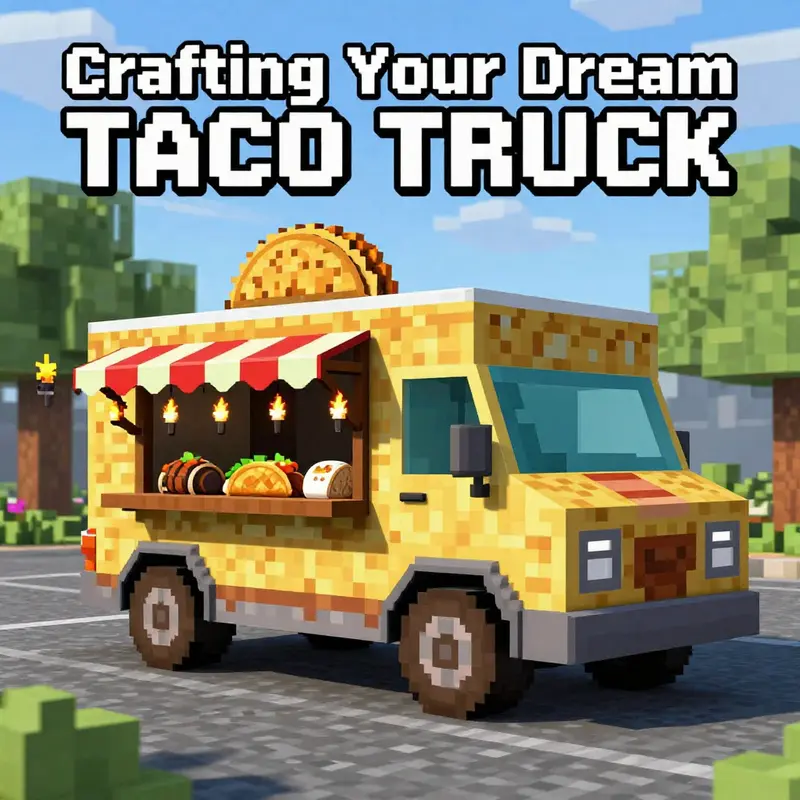
Every build in Minecraft tells a story, and a taco truck is a story of quick flavor, street-side bustle, and a sense of place that turns a square plot of world into a temporary, cheerful market. Decorating and customizing a taco truck isn’t about throwing in every block you own; it’s about composing a visual rhythm that feels both inviting and practical. The steps you take to embellish the vehicle—the color of the exterior, the texture of the roof, the glow of the lamps, and even the placement of a pretend oven—all work together to create a scene players want to explore. In this chapter, we move beyond the basic shell and into the heart of the truck’s character. You’ll see how a thoughtful palette, several well-chosen textures, and a few clever functional touches can elevate a simple mobile stall into a pocket-sized culinary theatre within your Minecraft world.
The most satisfying decorating choices begin with a clear sense of flow. Picture the truck as both a storage unit and a stage where the cook’s imagined performance unfolds. The base structure, shaped around a compact 3×5 footprint, sets a stable platform from which color, light, and texture radiate. The foundation itself becomes a quiet stage for the more flamboyant elements that follow. In this build, the base uses oak slabs to emphasize a sturdy, approachable chassis. The chosen size—the 3×5 grid—gives you enough room for a display area, a working counter, and a small decorative interior without sacrificing mobility or readability from a distance. When you stand back to assess the silhouette, you’ll notice the way the truck reads as a vehicle rather than a mere blocky blob. That perception is crucial because it invites players to approach, inspect, and imagine ordering a taco in a world where blocks become flavor and texture becomes taste.
A successful taco truck exterior starts with a color story. The color palette should feel warm and inviting, like the welcome of a bustling street corner. In this design, the body leans into natural wood tones—oak for the base and accents—with crisp, restrained contrasts that help the truck pop against a varied landscape. The front panel gains definition with oak stairs that form a distinct line, offering a visual cue that this area is where the public face meets the kitchen. The corners get height and structure through spruce fence posts, which act as architectural columns rather than purely decorative posts. A back wall of spruce trapdoors closes the body with a clean, compact finish; it provides a sense of containment that mirrors real-world compact food vehicles. The upper edges are wrapped with stone brick walls to create a subtle, sturdy frame, and the transition from wall to roof is softened with spruce fences and trapdoors. This combination—warm wood with cool stone accents—helps the truck feel both approachable and durable, a small business that can withstand the conditions of a busy map without losing its charm.
The roof is perhaps the most expressive element of a taco truck. The roof design can shift the entire mood—from utilitarian to festive—depending on how you finish it. Here the top is clad with spruce slabs, a material choice that continues the natural, clean look while keeping the surface visually calm from a distance. The centerpiece of the roof is a neat little hatch of activity: in the center three blocks, a composter sits, capped with a trapdoor to simulate a cooking lid. It’s a playful nod to the kitchen’s heart without turning the roof into a busy, overwhelming feature. Extending the roof outward by one block along the three sides, and an extra block on the longer side, creates a practical overhang. That canopy mimics a real-world awning, providing a sense of shelter for customers and a deliberate shading effect for anyone peering at the display or stepping inside to pretend cook. The overhang also offers a chance to layer lighting and banners, which helps the truck glow softly in the evening or under dim server skies.
The details you add to the sides and front of the truck do more than decorate; they ground the build in a sense of physicality. Oak fences and fence gates on the sides can act as handles or decorative framing, hinting at a portable, work-ready vehicle. The wheels, surprisingly, deserve attention as a design statement in their own right. In this concept, sandstone blocks sit beneath the corners as wheels. They provide a grounded, tangible feel that reads clearly as mobility while keeping the aesthetic-logic consistent with the wood-and-stone palette. This choice also gives you a hint of texture variety without complicating the design with too many moving parts or mechanical elements. To add depth to the front, the slabs extend one block beyond the edge of the oak stairs, creating a slight protrusion that makes the front face read more realistically. Subtle shifts like this—tiny, almost unnoticed edges—make the truck feel crafted rather than randomly assembled.
Inside, the truck becomes a small, functional kitchen with layers of meaning. The interior should be legible to players who imagine the operation as a tiny theater: a flame for cooking, a door for the oven, a dedicated surface for prep, and a stock of ingredients. The interior setup uses a campfire as the primary cooking flame source. In front of the campfire, a white birch trapdoor forms a makeshift oven door or front panel, giving the impression of a cooking chamber where the aroma of sizzling fillings might be imagined wafting out to passing customers. A gray wool carpet laid over the area above the campfire suggests a cooking surface—an abstract nod to the slick, heat-resistant surfaces found in real kitchens, translated into the geometry of Minecraft blocks. Beside the campfire, a furnace acts as a secondary cooking element, perhaps for warming or processing ingredients. The whimsical touch of a withered coral fan placed atop or near the furnace evokes a swirl of steam or a dancing pot of noodles, a playful visual metaphor that invites players to laugh and linger near the counter.
In the same corner, a chest and a barrel symbolize storage for ingredients and stock. The chest becomes a practical pantry for potatoes, carrots, tomatoes, and other mock taco supplies, while the barrel reinforces the sense of a contained, organized workspace. Positioning these storage elements close to the working area keeps the design coherent; it implies a workflow where ingredients are brought from storage to counter to cooking surface in a familiar loop that mirrors real-world kitchen routines. The overall layout is not just about function, but about storytelling—the idea that this truck is more than a transport unit; it is a small, humming hub where food is imagined as much as it is prepared.
The atmosphere is simply as important as the architecture. A truck that looks inviting from a distance can still feel hollow if it lacks the human touch. Here, ambiance arrives through lighting, textiles, and small decorative cues. Scaffolding around the truck can hint at a casual, outdoor market setting, with red wool carpets laid along the scaffolding to offer a sense of comfortable seating. Flags flutter around the vehicle, infusing color and energy that evoke a bustling festival or a busy street market. The signage plays an equally important role; a few signs can label the truck and its offerings, with names that echo the whimsical flavor of a neighborhood taco stand. The goal is not to cram every possible motif into a single frame but to cultivate a warm, responsive environment—one where players can approach, inspect, and imagine a quick taco ordered with a flourish.
Texture variety, too, matters. The blend of oak, spruce, stone, and sandstone creates a tactile experience that rewards careful observation. The texture rhythm guides the eye from the front panel to the roofline, down to the working interior, and finally out to the customer-facing elements. The balance between wood warmth and stone coolness helps the truck feel sturdy and dependable, a little business on wheels that fits into a village market or a neon-lit night block within a larger city map. When you stand back again and take it all in, you’ll see the truck’s personality—part efficient vendor, part carnival booth, all crafted with a consistent design language that respects both form and function.
In terms of display elements for the counter, consider an arrangement that reads as both decorative and functional, without becoming a cluttered eyesore. Use item frames on the display platform to suggest taco offerings. In a playful nod to the game’s inventory logic, fill those frames with simple, representative items: cooked meats for proteins, lettuce blocks for greens, and cheese-like substitutes such as baked potatoes or carrots for color and texture. It’s an imaginative display that communicates the idea of “tacos here” without requiring actual food items that might break the illusion. The sign system can label the items as “Tacos” or “El Taco Rápido,” tying the whole scene to a sense of place, time, and cultural flavor.
If you want to push the realism a step further, you can add a few surface elements that feel like real-world touches without complicating the build. A small awning made from fences or carpets can shield customers from rain and sun, while a subtle red carpet at the entrance invites visitors to step onto the counter space and imagine placing an order. Lanterns or torches can be arranged to cast warm glows, turning the evening scene into a welcoming glow rather than a harsh spotlight. The result is a cheerful, approachable truck that looks ready to serve at any hour and any weather.
The beauty of this approach lies in the opportunity for personalization. You’re not locked into a single set of materials or a rigid design. You can adapt the palette to suit the landscape of your map, the surrounding village theme, or your personal taste. If your world favors a more rustic, farm-to-street vibe, you might swap the stone accents for cobblestone and a darker wood for the body. If you prefer a neon-boom urban look, you might replace some textures with more vibrant blocks and add glass panes to simulate a storefront window. The skeleton of the build—the base, the roof, the counters—remains consistent, but the cosmetic details offer endless opportunities to express your creative voice. In this sense, decorating becomes a dialogue with the world you are building. Each choice communicates something about the vendor’s story, the neighborhood’s culture, and even the day’s weather, which can influence how you light and present the display.
To weave all these elements into a cohesive experience, consider the sequence in which a visitor would encounter the truck. Approach, read the exterior, notice the front panel’s definition, look up at the canopy and the center-composter feature, then step closer to the counter to observe the oven-like zone and the cooking surface. The interior should feel navigable, with a logical path from storage to cooking to display. Lighting should guide the eye to the display frames and the warm glow of the cooking area, inviting players to linger and imagine placing an order. The final touch is to keep a sense of motion alive even when the player stands still. A slight tilt in the roof edge, a gentle overhang, or a playful flutter of banners can all suggest that the truck is part of a lively, moving market—an icon of a community that values flavor, craft, and shared moments.
If you want a practical reminder of how these decisions translate into your own builds, a quick reference point is to browse community creations and tutorials that emphasize practical aesthetics and accessible materials. These resources often highlight how small, deliberate choices—like using a single block type for a roof or combining two textures for visual interest—can produce a strong, consistent visual language. The best part is that you can iterate. Leave space for signage, try a different roof texture, or swap the wheels for a more stylized design. The taco truck becomes your own canvas, a playground of fabrics and fixtures that you can adjust as your map evolves or as you discover new textures that fit your theme.
For readers who want a quick pointer to related ideas or community inspiration, consider this as a starting point: the Fireduptacotruck blog, a hub where you can explore design notes, build tips, and shared experiences that center around mobile food concepts in Minecraft. Fireduptacotruck blog. This resource can spark additional ideas about how to tune the color palette, adjust the overhang, or stage the interior for different role-playing scenarios without sacrificing the core, clean, accessible aesthetic that makes a taco truck appealing to players of all ages.
As you refine your truck, remember that the charm of Minecraft builds often comes from the little details—that moment when a player spots a thoughtfully placed trapdoor or a clever use of a fence to imply a handle. It’s in the careful balance of color and form, texture and spacing, that your taco truck gains life. The goal is not to replicate a real-world vehicle with exactitude but to evoke the same sense of place—an inviting, efficient space where the idea of food and community meets the tactile imagination of a blocky world. By embracing a cohesive design language, you create a glowing focal point that can anchor broader stories in your map, whether it sits in a thriving village market or a quiet corner of a bustling city plaza. And when that sense of place comes together, your Minecraft taco truck stands not just as a model, but as a little beacon of shared flavor and friendship, a reminder that even in a world built from simple squares, complex, delightful experiences can take shape through thoughtful decoration.
External resource for further decoration ideas: https://minecraft.fandom.com/wiki/Decoration
Final thoughts
By following these lively steps, you can create a stunning taco truck in Minecraft that not only reflects your culinary passion but also enhances your gaming experience. Each element, from the base structure to the final decorative touches, works in harmony to form a vibrant hub for taco lovers in your blocky universe. Dive into this tasty adventure and watch as your taco truck becomes a key culinary destination in your Minecraft world!