
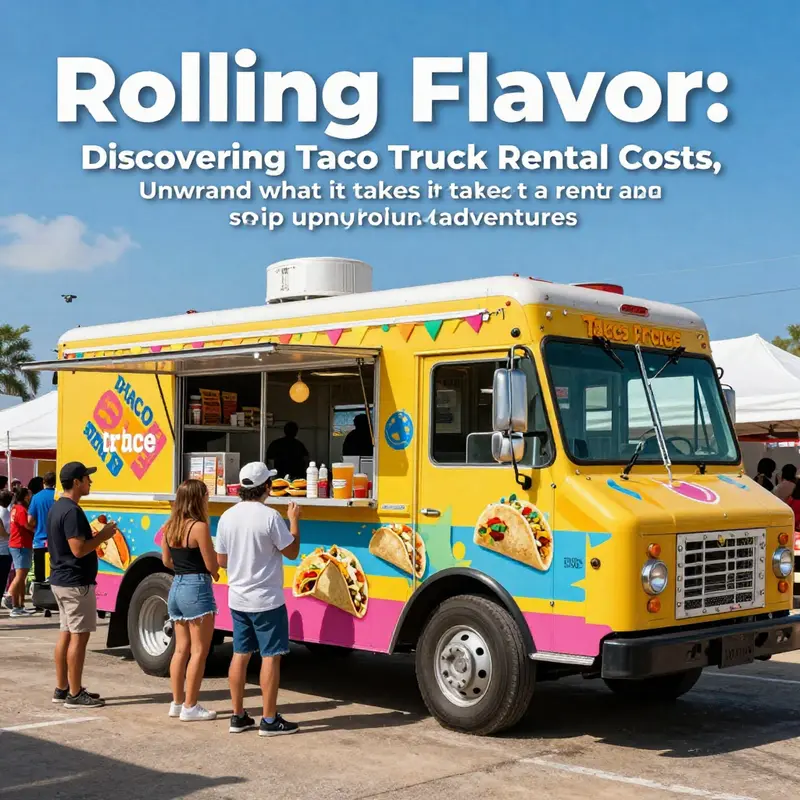
Are you a taco lover dreaming of hitting the streets with a taco truck, or perhaps a savvy taco business owner looking for a rental option? The mouthwatering lure of taco trucks has captivated foodies and entrepreneurs alike, serving vibrant flavors on four wheels. Yet, one important question looms: How much does it actually cost to rent a taco truck? In this flavorful journey, we’ll dive deep into the nuances of taco truck rental costs, exploring the key factors that contribute to pricing and comparing regional variations. By the end, you’ll have a spicy understanding of taco truck rentals and be ready to choose the perfect wheels for your culinary ventures.
The True Price Tag of a Mobile Kitchen: Navigating Taco Truck Rental Costs and What They Include
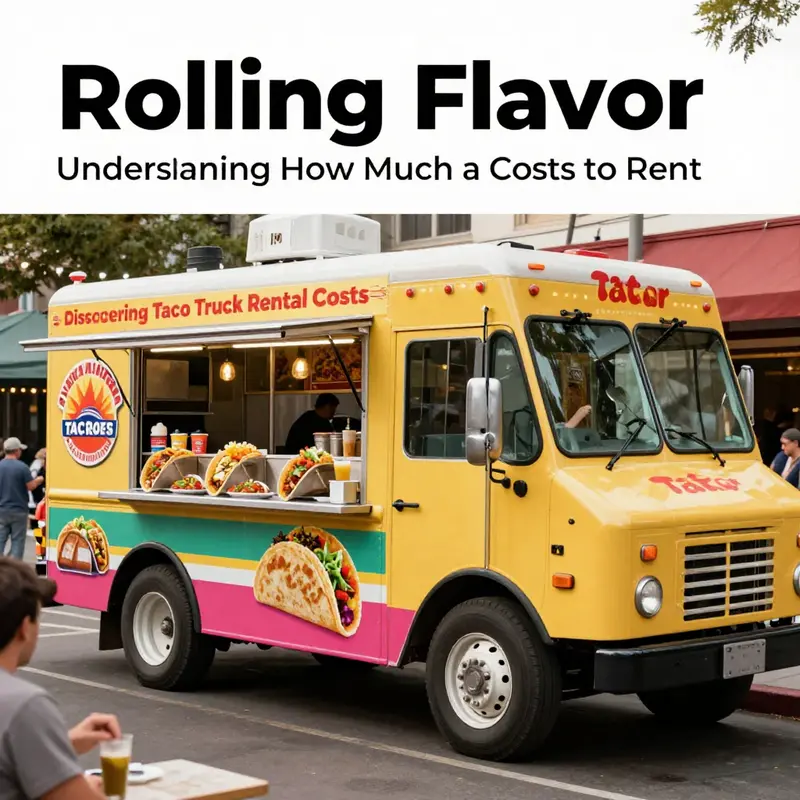
Renting a taco truck is not a straightforward daily fee. It is a practice that sits at the intersection of hospitality, logistics, and compliance. When you consider the question, how much does a taco truck cost to rent, the obvious answer would be: it depends. Yet that answer only scratches the surface. Behind any daily rate lies a complex package that covers a kitchen on wheels, the manpower to operate it, the permits that authorize its movement, and the safeguards that keep customers and staff safe. The rental price, in other words, is a reflection of what the truck can do for you, where you operate, and how long you plan to keep it rolling. In the conversations around event catering and street-food entrepreneurship, the price you see advertised is rarely the entire story. The real cost has many layers, each with its own logic and potential for savings or escalation, and understanding these layers helps avoid cash-flow surprises that can derail a pop-up concept before it gains traction.
To begin, imagine a taco truck as a fully functional, compact commercial kitchen on a chassis. It is designed to cook, hold, and serve food under conditions that meet health, safety, and local regulations. That alone explains why its rental outlays are substantially higher than those for personal pickup trucks or standard delivery vehicles. A taco truck carries not only a driver but a small culinary team, a power supply, an exhaust system calibrated to vent steam and smoke, refrigeration for perishables, and specialized appliances such as grills, skillets, fryers, sinks, and a cleanable work area. Each of these components adds to the monthly or daily rental bill and informs the operational capabilities you can expect from the vehicle when it arrives at your location. The rental agreement is not merely about motorized transport; it is about access to an on-site kitchen with the reliability and sanitation standards that food service demands every time the doors open.
A practical way to frame the discussion is to separate the price into a base rental component and a series of ancillary costs that typically accompany mobile food service. The base rental covers the vehicle, basic kitchen equipment, and perhaps a generator. That base is what makes a taco truck a kitchen on wheels rather than a car with a few appliances strapped on the back. But beyond that foundation come several add-ons and responsibilities that can swing the overall figure by hundreds or even thousands of dollars. The presence or absence of a fully equipped kitchen, the size of the truck, and the level of service included with the rental all influence the bottom line. You will hear terms like all-inclusive, semi-inclusive, or flat-rate with add-ons. Each of these structures has its own trade-offs and risk profiles, so choosing among them should be the result of a careful assessment rather than a quick gut choice.
Location is one of the strongest determinants of price. In dense urban markets with high demand, rental rates tend to climb. The same truck in a smaller town or rural setting might be more affordable, all else equal. But the story does not stop at geography. The time of year matters as well. Peak seasons—traditionally spring through early fall in food-focused locales—bring heavier demand. That demand translates into higher daily rates, longer lead times for securing a truck, and sometimes premium charges for weekend or event-driven use. If your calendar is flexible, you can often negotiate a more favorable rate by aligning your rental period with off-peak windows or by arranging multi-day blocks that reduce the per-day cost. The duration aspect is crucial: short-term rentals often command higher daily rates to reflect the churn in demand and the costs associated with set-up, on-site support, and the administrative overhead of rapid turnarounds. Long-term partnerships, by contrast, may yield discounts that reduce the daily cost but require a commitment that locks you into a particular vendor for weeks or months at a time.
The capabilities of the taco truck themselves form another substantial axis of price variation. A truck that simply provides a minimal cooking line with hot holding and a basic refrigeration setup will carry a lower rental tag than one that offers an expanded kitchen. The latter may include multiple cooking stations, higher-capacity ventilation, more robust sanitation stations, and additional prep areas. In practice, you might find a truck that includes a full grill, a fry station, rapid-chill refrigeration, water heating, and a professional-grade handwashing station. Each additional feature increases not just the rental price but also the operational stability of your event. A fully equipped truck reduces the need for extra borrowed gear and on-site coordination, but it also reduces the margin you retain if you are calculating per-event costs against ticket sales or a contract price. The balance between equipment breadth and rental cost is central to budgeting for any serious food-service venture with a mobile kitchen.
Beyond what is inside the truck, what is outside matters a great deal. Insurance, permits, inspections, and compliance costs add layers of protection for both the operator and the customers. Insurance is near-universal in food truck rentals, typically covering general liability and sometimes additional coverages such as product liability or property damage. The exact requirements are shaped by local regulations, the venue, and the expected risk profile of your operation. Insurance costs are not trivial; they reflect the perceived risk of operating a mobile kitchen, the food types you handle, and the potential exposure when you park in different locations. Some municipalities and venues require proof of insurance before you can deploy your truck for service. Even if insurance is optional in some contexts, many operators choose to carry it because it protects their business and the host site from liability. This is one of the cost areas that often catches first-time renters by surprise, because it does not always appear on the base rate and can take a bite out of cash flow if you are not prepared.
Permits play a parallel role. A taco truck cannot operate in most jurisdictions without a permit that authorizes the vehicle to cook on-site, prepare and serve food, and park in designated zones or at particular events. Permit costs vary widely by city and county. Some places require a health department inspection of the kitchen layout before the truck can be used publicly. Others require fire safety inspections to confirm that ventilation, fuel storage, and emergency shutoffs meet the local code. These permits can be annual or event-specific. In some markets, the permit is bundled into the rental package as a turnkey service; in others, it is a separate expense you must secure yourself. If you operate in multiple jurisdictions, you may find yourself juggling a portfolio of permits with different renewal dates, fees, and reporting requirements. The administrative overhead can be substantial, but it is non-negotiable if you want the truck to be a legitimate, walk-up alternative to a brick-and-mortar kitchen.
Then there is the question of energy and fuel. A taco truck that includes a generator as part of the rental is more predictable in performance, especially in venues without ready access to power. However, generators incur fuel costs, maintenance, and potential noise restrictions around certain venues. If the generator is not included, you must arrange a separate power supply at the event site, which can add both logistical complexity and cost. In either case, the daily rate often rises to account for the power solution. Water and waste handling are other operational costs that can appear in the rental agreement or as separate line items. A functional handwashing station, a clean water line, and proper waste disposal are not mere afterthoughts; they are core to meeting health and safety standards and to delivering a credible customer experience.
An equally important factor is the quality and reputation of the rental provider. In markets where food trucks are a common solution for festivals, fairs, and private events, a few operators may be perceived as premium because they provide higher-touch service, better maintenance, and more reliable support. The premium can show up in the price, but it often comes with a lower risk of on-site hiccups. A well-regarded operator may offer a turnkey experience that includes on-site setup assistance, a dedicated contact for the event, and a more predictable schedule window. Conversely, lower-cost options may require upticks in complexity for the event planner, as you coordinate multiple vendors, address logistics gaps, or absorb gaps in service when things do not go as planned. In both cases, the decision is not simply about the sticker price; it is about the whole experience and the reliability you can bank on when you are counting on strong food service to drive attendance and satisfaction.
With all these variables at play, it becomes clear why a single number cannot capture the cost of renting a taco truck. The price is a composite signal that depends on where you are, when you need it, how long you need it, and exactly what the truck is capable of doing for your event. To navigate this landscape, prospective renters should adopt a structured but flexible approach to budgeting. Start with the base rental rate as a floor and then account for the layers that might be added on top. Map out the essential components you must have for your concept—such as a specific cooking setup, refrigeration, and handwashing facilities—and identify which of these come standard with the truck and which require add-ons. This clarity helps you compare offers more accurately and avoids the trap of assuming that two quotes with similar daily rates will deliver equivalent value.
In practice, renters often find themselves negotiating a blended package rather than a flat line. A vendor might propose a higher base rate but include a longer rental window with setup, break-down, and a set of mandatory services that otherwise would be priced separately. Another common approach is the all-inclusive package, where the vendor quotes a single daily fee that covers basic use, fuel, generator, limited maintenance, and some forms of support. While attractive on paper, all-inclusive arrangements can mask additional costs if the scope of what is included changes from event to event. The careful reader will read the fine print, noting elements such as mileage charges, delivery fees, early-day or late-day surcharges, cleaning fees, security deposits, and any penalties for cancellations or rescheduling. These items, though sometimes small, accumulate quickly and should be budgeted for just as rigorously as the base rental.
For anyone new to the market, the prudent path is to treat rental pricing as a lottery where you want predictable outcomes rather than the thrill of a bargain that leads to volatility. The best practice is to seek quotes from multiple providers and to request a comprehensive breakdown of all line items. In a context where permits and insurance often live outside the daily rate, a comparative quote should clearly separate the base rental from the ancillary requirements. A transparent quote helps you assess whether the price reflects a more complete service package or simply a higher headline rate that still leaves you paying for essential compliance elsewhere. It is worth noting the importance of contractual protections. A robust rental agreement should spell out the responsibilities of each party, the exact scope of service, the deliverables on event day, and the process for dispute resolution if something does not go as planned. A well-drafted contract reduces the risk that you wake up on event morning facing unexpected charges or gaps in capability that threaten the guest experience.
As you weigh options, you can also pause to compare the economics of renting a taco truck against owning one, or against commissioning a pop-up kitchen with temporary concessions equipment. Ownership changes the math by shifting the emphasis from per-event cost to monthly or annual depreciation, maintenance, financing, and the need to staff and operate the vehicle between events. A purchase offers the potential for long-term cost containment if you operate at scale and schedule a steady cadence of events. Yet ownership also introduces capital risk, maintenance obligations, and the challenge of consistent performance across a diverse range of venues. If your business plan involves frequent events, a hybrid model can be appealing: rent trucks selectively for peak seasons or high-stakes events while maintaining a smaller kitchen in a fixed location for other work. The specifics of your market, the cadence of events, and your access to capital will shape whether renting or owning provides the better return over a two-year or five-year horizon.
The practical takeaway is not a single figure, but a disciplined approach to budgeting. Start with a transparent base rate, then layer in the costs that carry forward into every event—permits, insurance, fuel or generator usage, and regulatory compliance. Then consider the variable elements that can swing the price for any given booking: event size, hours of operation, the number of staff, delivery and setup distance, and the availability of on-site technical support. It is also wise to guard against unknowns by setting aside a contingency. A modest contingency—often 10 to 15 percent of the estimated total—can cover last-minute changes, permit delays, or additional cleaning and turnover costs. In the end, the price you pay is not just a number to be minimized; it is a reflection of reliability, compliance, and the confidence that your guests will receive high-quality food, prepared and served under controlled conditions.
If you are dipping your toe into the world of taco truck rentals for the first time, a practical next step is to engage with specialized vendors who focus on mobile food service. These providers typically have the most experience translating a concept into an executable setup. They can offer guidance on the right equipment configuration for your menu, your anticipated crowd size, and your target venues. They can also help you anticipate permit and insurance needs based on your location and the events you plan to attend. When you speak with vendors, ask for a complete written breakdown of all costs and the assumptions behind them. Ask about what is included in the daily rate and what would trigger additional charges. If you are evaluating an all-inclusive offer, clarify the exact scope of included services and any limits on usage, mileage, or staffing.
A practical way to frame your evaluations is to compare, across vendors, a few consistent scenarios. For example, consider a small neighborhood festival with two to four hours of operation in a single location. Compare the base rental, the needed permits, the insurance minimums, the generator usage, and any on-site support. Then assess a mid-size outdoor market with broader hours, potentially requiring a second service window or a second cook station. Finally, imagine a large private event in an urban setting with a crowd that demands rapid service, multiple menu items, and a robust kitchen on wheels. Each scenario will illuminate different facets of cost and risk, and the vendors who can deliver predictable service across these scenarios are often the most reliable partners. In all cases, you will benefit from anchoring your discussions with a clear understanding of your menu, your expected throughput, and your standards for food safety. The more precisely you can describe your needs, the more accurately a rental quote will reflect the true cost of delivering your vision on event day.
For those who want an entry point into the broader decision-making process, it helps to look at one guiding resource that discusses how to choose the right food truck. This kind of guide often helps translate the abstract notion of “rental cost” into concrete considerations—equipment layout, power needs, and compliance checks—that ultimately shape the price. You can start with a concise overview that highlights the essential criteria for a successful mobile kitchen, and then proceed to vendor consultations armed with a well-formed checklist. Linking to a reputable guide on choosing the right food truck can keep you focused on what matters most: delivering a consistent, compliant, and enjoyable guest experience while managing the economics effectively. Choosing the right food truck offers a practical starting point for framing your conversations with rental providers and clarifying your menu and service model before you secure a truck for a high-stakes event.
In closing, the total cost of renting a taco truck is a function of how you define value in your operation. It is not only the daily price but also the expected level of service, the reliability of permits and compliance, and the ability of the equipment to support your menu without surprises. The best practice is to treat the rental decision as a comprehensive project: quantify all the mandatory and optional line items, compare quotes with a consistent framework, and build a conservative budget that accounts for contingencies. If you do this, the answer to how much a taco truck costs to rent will be less about a single figure and more about the clarity and confidence you gain in turning a culinary idea into a successful, operating event.
External resource: For broader context on permits and licenses that frequently apply to mobile food operations, see https://www.sba.gov/business-guide/launch-your-business/permits-licenses.
Beyond the Daily Rate: Unraveling the Key Factors That Shape Taco Truck Rental Costs
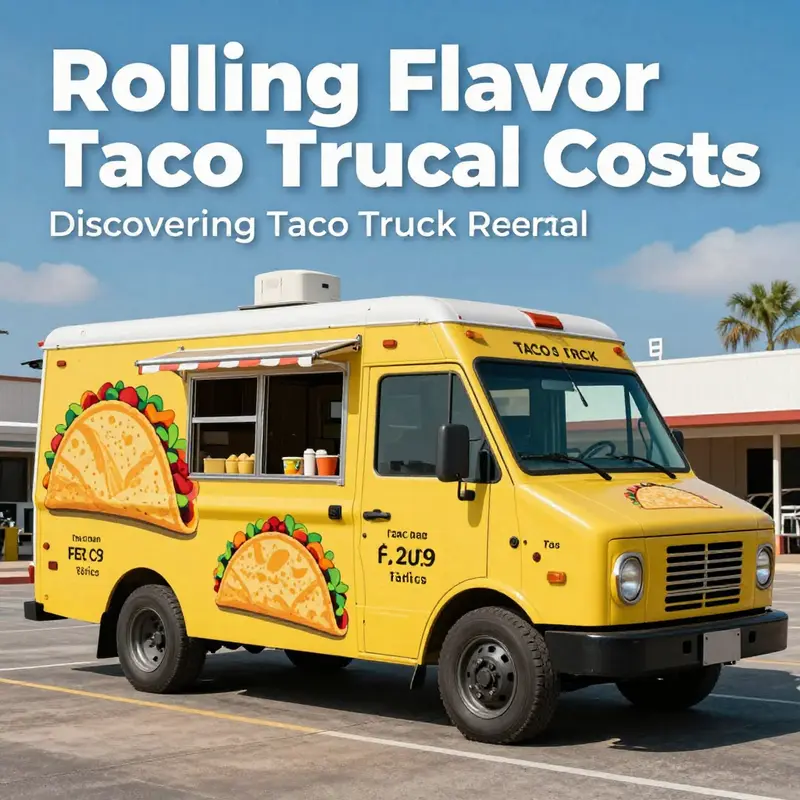
Renting a taco truck is more than selecting a single daily price. It is a negotiation with space, equipment, demand, and time, folded into a number that can determine whether a pop-up menu becomes a thriving business or a fleeting experiment. The initial research landscape frames rental costs as a mosaic of interlocking variables. While a plain pickup might fetch a modest daily fee, a taco truck—built to operate as a mobile kitchen—carries a premium that reflects its specialized purpose. The trajectory from curiosity to contract often follows a recognizable pattern: understand the upfront trade-off between renting and buying, gauge how location and timing shift the price, and account for the extra costs that arrive with compliance, insurance, and ongoing maintenance. In the end, the question isn’t simply “What’s the daily rate?” but rather, “What combination of location, equipment, duration, and compliance will deliver the best return on investment for the specific event, market, and menu you have in mind?”
To begin, it is useful to frame the decision in two broad horizons: the immediate cost to use a fully outfitted taco truck for a short-term event, and the longer-term economics of renting versus purchasing a permanently stationed kitchen-on-wheels. The upfront cost to own a fully equipped taco truck can range from roughly $100,000 to $300,000, depending on the truck’s size, interior layout, and the suite of appliances it carries. That spectrum captures differences in kitchen robustness, refrigeration capacity, ventilation, fire suppression, and the overall build quality that vendors and health departments recognize as essential for food service on the street. For an operator weighing renting against buying, the math pivots on scale: a flexible rental portfolio can unlock experimentation with different menus and venues, while a purchase locks in a fixed cost that must be amortized across operating days, events, and seasons. In this calculus, the daily rate is only the surface layer; deeper price components lie in location, duration, and the ancillary obligations that accompany a mobile kitchen.
Location matters profoundly because it is a proxy for demand, risk, and the costs baked into operating in a given ecosystem. Urban centers with dense foot traffic can offer more opportunities to sell tacos, but they also embed higher costs—from permit fees and required insurance to stricter health inspections and competitive rental markets. In practice, the same taco truck might command a noticeably higher rental price in a downtown business district during peak season than in a rural route with fewer events and less sustained turnout. For prospective renters, this means a careful mapping of where the truck will be deployed: a high-traffic city block on a Saturday afternoon, an arts festival that attracts thousands, or a corporate lunch rush near a large campus—all place different pressures on rental pricing and utilization. The result is a dynamic price environment where near-term opportunities can be offset by long-term commitments, or where a strategic calendar of events allows a savvy owner to negotiate favorable terms by planning in advance and locking in slots before the rush.
The condition and quality of the truck itself are equally consequential. A newer vehicle with modern, energy-efficient equipment—commercial-grade grills, fryers, refrigeration rated for continuous operation, and compliance-ready ventilation and fire-suppression systems—will typically pull a higher rental rate. The reason is straightforward: newer equipment reduces the risk of breakdowns, minimizes health and safety concerns, and increases operational reliability. Clients hosting events want predictability; a rental that guarantees consistent performance is a premium commodity in crowded markets. The age of the vehicle interacts with ongoing maintenance status. A well-maintained older truck with up-to-date safety features can sometimes command rates similar to a new unit, especially if it has a track record of reliability and clean health department inspections. The implication for renters is simple: allocate budget for a pre-rental inspection, and use the negotiation phase to confirm that the specific truck you’ll receive has the equipment you need, all in good working order, before any deposit is placed.
Size and layout play a notable role as well. A truck with more kitchen square footage, extra storage, and a customer-facing service counter offers greater menu versatility and faster throughput. Those advantages, in turn, tend to drive up the rental price because the operator can service more customers, more efficiently, at an event. Conversely, compact configurations that squeeze a smaller menu into a tight footprint may be lighter on rent but limit the operator’s capacity and, in turn, the revenue potential. For businesses exploring niche concepts or rotating menus, a modular or customizable layout can be especially valuable, yet it often comes with a premium. The distinction between a two-axle trailer-style truck and a larger, full-service rig isn’t merely about space; it’s about the degree to which the unit can scale operations, support complex cooking lines, and accommodate additional staff. Each incremental square foot or extra counter can translate into meaningful sales opportunities, but it also translates into higher rental quotes that reflect the value of that capability.
The duration of a rental is a critical hinge point in the pricing structure. Short-term rentals—think one-day events, weekend pop-ups, or a single festival appearance—tend to carry higher daily rates. The rationale is straightforward: the vendor bears higher per-day logistics costs when filling a sparse calendar, along with the risk of underutilization if demand suddenly drops. Long-term leases, by contrast, can unlock discounted monthly or quarterly rates and provide a predictable operating baseline for planning. For a small business just starting out, a mix of shorter rental blocks that align with peak dates and a longer anchor rental that covers the most reliable revenue days can offer a balanced approach. The interplay between duration and price also influences cash flow planning and inventory management. Relying exclusively on short-term rentals may yield flexibility but can pressure profit margins if festival fees, weather cancellations, or competing vendors push demand down on particular dates. A well-structured rental strategy, therefore, weaves together a calendar that secures desirable slots while preserving price protection through longer-term commitments.
Permits, licenses, and compliance requirements are not trivia; they are fundamental components of the true cost of operation. Some rental agreements roll in the cost of essential permits and licenses—health department approvals, mobile vendor permits, and food handler certifications—while others require renters to secure these independently. The difference can be substantial. In many jurisdictions, the mobile nature of a taco operation brings a suite of regulatory hurdles: certifications for food safety and safe operation, vehicle registration updates, and sometimes local health department inspections specific to mobile food units. The price tag attached to compliance can be easy to overlook during negotiations but is never negligible in the long run. When a rental includes compliance coverage, it does not merely absolve the renter of paperwork; it provides a level of operational peace of mind. When it does not, the renter must budget for license fees, inspections, waste disposal compliance, and potentially city or county health department reporting. In either case, this category is a reminder that the rental price reflects not only the kitchen on wheels but the legal framework that enables food service on the street.
Insurance and liability coverage compound the financial picture in a similar way. Most rental providers require renters to carry general liability insurance, and some venues or event organizers may demand additional coverage for alcohol service, special permits, or high-traffic contexts. The premium is generally calculated from several factors: the size of the business, years of operating experience, prior claims history, and the scope of events covered by the policy. Insurance costs can become a meaningful line item, especially when the calendar features multi-day festivals, crowds with heightened risk of injury, or collaborations with other vendors. It is wise to treat insurance not as a one-off hurdle but as an ongoing expense that scales with the operator’s growth. This is also a place where the economics of renting become clearer: a package that bundles insurance, maintenance, and cleaning can be more convenient and cost-effective than negotiating each element separately, even if the headline rental rate appears higher.
Beyond the essentials, many rental arrangements offer add-ons that sweeten the deal but also raise the price. Maintenance services, routine cleaning, staff training, or marketing support can be bundled into a package or offered à la carte. These value-added services can reduce operational friction: maintenance reduces unexpected downtime, cleaning ensures compliance with health standards, and training equips staff to operate more efficiently under pressure. The upside is evident in smoother events and faster service, which in turn can translate to higher sales and better customer satisfaction. The downside is visible in the sticker price; the more comprehensive the package, the higher the rental cost. For operators, a practical approach is to map the anticipated revenue impact of these services. If a maintenance plan saves an hour of downtime per event and prevents a late-night equipment failure, the paid premium may be a prudent investment. If, however, a package merely shifts administrative tasks from the renter to the provider without measurable operational gains, it may be wise to negotiate a leaner arrangement.
Seasonality and market competition complete the mosaic of price influences. In markets where taco trucks are common and the competition is intense, rental rates can trend downward as supply meets demand. In peak seasons—summer festivals, street fairs, and holiday markets—the same markets can command higher prices as organizers recognize the value of having a reliable mobile kitchen on site. This cyclical dynamic means that timing is a strategic tool. A buyer who can secure a coveted date long in advance or who can align with a recurring event series may negotiate favorable terms, while last-minute bookings in crowded markets often come with premium pricing. For operators, tracking competition and adjusting plans to exploit slower windows or pre-booked event slots can yield meaningful savings. A practical practice is to build a calendar that identifies high-value dates with discount opportunities and low-competition windows where a more modest rental could still achieve strong sales.
In sum, the cost of renting a taco truck is a function of eight interlocking factors: location and demand, truck condition and equipment quality, size and layout, rental duration and flexibility, permits and compliance, insurance and liability, additional services, and market seasonality. Each factor does not operate in isolation; together they shape the final price and, more importantly, the business case for using a truck as a mobile kitchen. When these elements are understood in concert, an aspiring restaurateur can translate an opaque daily rate into a transparent plan that covers revenue projections, cost of goods sold, staffing needs, and regulatory obligations. The goal is not merely to minimize price but to maximize value: to choose a configuration that delivers reliable operations, consistent quality, and a pathway to sustainable profitability.
For readers who want to ground these considerations in practical decision-making, a useful starting point is to explore how to choose the right configuration for a specific business model and venue mix. A structured approach can help you balance the dream of a fully equipped, high-throughput kitchen on wheels with the realities of cash flow, event calendars, and local rules. In that spirit, consider how you would negotiate terms that align with your menu strategy, your target customers, and the number of events you anticipate each month. If you’re unsure where to start, it can be helpful to review general guidance on selecting the right equipment configuration and service layout, and to imagine how different menus and service speeds would fit into a given rental package. For a broader overview that mirrors the spirit of this discussion, you can explore resources that discuss the decision-making framework behind choosing a mobile food venue and the associated costs. Choosing the right food truck offers a practical lens into how layout, equipment, and operational plan intersect with price to shape the business you are building.
As a final note on the economics, it is worth acknowledging that the literature on food-truck pricing often points operators toward a balanced calculus: consider not only the visible sticker price but also the hidden costs and the potential revenue lift associated with better equipment, smarter layouts, and cleaner compliance. Short-run events might justify a higher daily rate if they come with guaranteed customer turnout and predictable cash flow, while long-run partnerships and multi-event calendars can justify more favorable terms that reduce the annualized cost of operation. The most successful renters approach pricing as an integrated system, where every cost feeds into a forecast of sales, customer satisfaction, and operating risk. The result is not a solitary figure on a contract but a dynamic plan that grows with the business and adapts to the evolving tastes of the market.
External reference for deeper technical context: Understanding Food Truck Prix: Material Properties, Technical Standards, and Uses in Engineering. https://www.engineering.com/article/understanding-food-truck-prix-material-properties-technical-standards-and-uses-in-engineering
Where Your Cart Rolls: How Regional Price Variations Shape Taco Truck Rental Costs
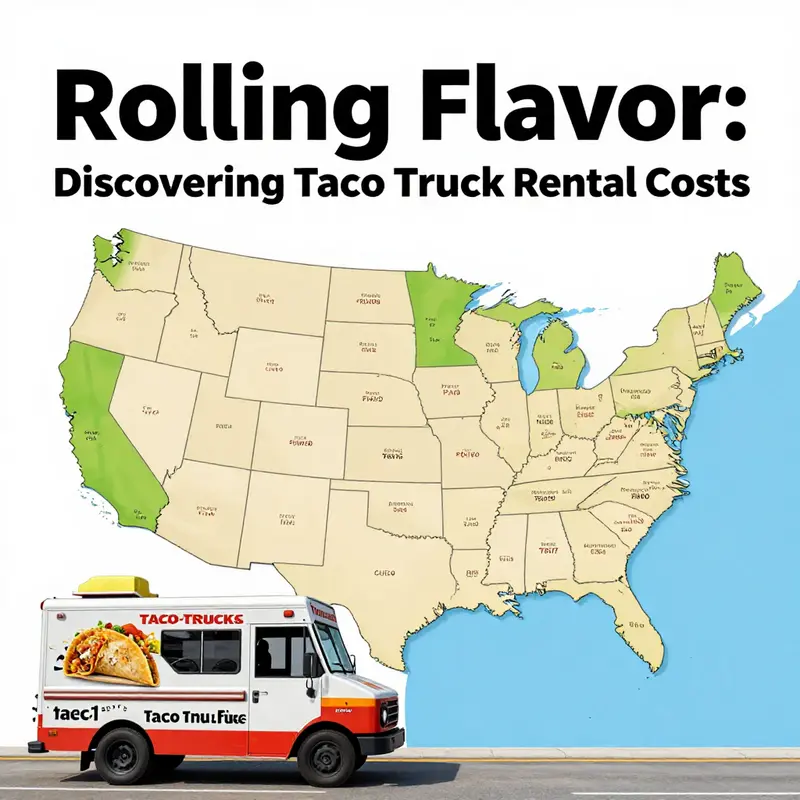
Renting a taco truck is more than picking a vehicle and signing a rental agreement. It is a decision that sits at the intersection of city economics, seasonal demand, and the practical realities of operating a mobile kitchen. The question that opens most conversations about this topic—how much does a taco truck cost to rent?—unfolds into a broader exploration of regional differences, rental terms, and the invisible costs that can surprise first-time operators. The premise that a vehicle rental is a simple daily fee dissolves quickly once you factor in what the truck is actually intended to do: feed people with a reliable, compliant, and efficient kitchen on wheels. If you want to start planning with clarity, you need to understand the regional fabric that shapes price, the duration of use, and the ancillary requirements that come with running a mobile food business.
The most immediate influence on rental pricing is location. Urban centers with high traffic, dense office parks, and large events naturally create more opportunities to sell food. They also impose higher costs on vendors who operate there: city permits, health inspections, fire safety compliance, and insurance premiums are not optional add-ons; they are integral to the operation. In these markets, rental providers must cover elevated overheads—safety inspections, equipment maintenance, and service response times, all of which filter into every quote given to a renter. The intuition that demand drives price holds true here: when more people want to rent a taco truck on a given weekend, the price level nudges upward. Conversely, in smaller towns or regions where demand is thinner, rental fleets may offer more flexibility. The same truck that fetches a premium in a big city might be more negotiable in a mid-sized market that has fewer peak events but a steady stream of local business.
Beyond geography, the duration of the rental matters as a practical lever on cost. Short-term rentals, such as those for a weekend festival or a pop-up event, typically carry higher daily rates to compensate for the rapid mobilization, setup, and potential insurance spikes that accompany last-minute logistics. Long-term arrangements, by contrast, often unlock volume discounts or flatter daily rates because the provider can optimize utilization and forecast maintenance needs more reliably. This is not merely a price preference; it is a reflection of how rental fleets are managed. A truck that rolls off the lot for a three-day charge needs to be ready for a tight schedule, and the provider’s risk assessment—covering potential damages, food-safety compliance, and spill management—will be embedded in the pricing structure.
The equipment and kitchen configuration inside a taco truck is perhaps the most tangible driver of rental cost, and it is layered in a way that rewards buyers who prioritize essentials over bells and whistles. A truck outfitted with a robust stainless-steel kitchen, certified food-grade appliances, a reliable refrigeration system, specialized waste handling, and high-output ventilation will demand a higher rate than a more stripped-down unit. The same conceptual rule applies to the level of brand or the model line associated with the rental—the vehicle’s perceived reliability, energy efficiency, and ease of operation enter into the price by way of projected downtime and maintenance needs. In other words, when you pay a little more for a truck with more complete commercial-grade equipment, you are not just paying for features; you are paying for the assurance that the kitchen will perform consistently in a busy service window.
Then there are the compliance and ancillary costs that often sit out of plain sight in the initial quote. Insurance is a must-have for any food truck operation, and the premium is very much a function of local risk factors, the truck’s payload, the equipment installed, and the operator’s prior claims history. Permits and health department approvals, which can range from general business licenses to mobile food vendor permits, are region-specific. In some jurisdictions, you may also need fire suppression system certification, carbon monoxide monitoring, and regular equipment inspections. Permits can be time-bound and price-sensitive; some localities offer seasonal permits that align with festival calendars, while others require year-round compliance. When a rental agreement itemizes these components separately, the headline daily rate is only the start. The true cost of renting a taco truck is the convolution of the daily rate plus the predictable recurring fees and the occasional surprise charges—cleaning fees, fuel surcharges, generator usage, and special event surcharges, to name a few.
Brand, fleet size, and vendor expectations also color the price picture. A rental provider with a larger, more visible brand may command higher rates during peak demand, particularly if the truck is associated with a certain level of service or equipment reliability. The fleet mix itself affects pricing; a smaller operator might offer lower rates but have fewer trucks available during high-demand weekends. In practice, this means a renter should consider not just the headline price, but the entire service package: the speed of maintenance responses, the ease of swapping in a backup unit if a problem arises, and the availability of add-ons like propane setups, ice makers, or extra hand-washing stations. A careful comparison of vendors becomes essential to ensure that the cost aligns with the service quality and reliability you need for a successful event.
What does this mean for someone planning to rent a taco truck for the first time? It means you must approach the process with a cost framework that accounts for variable factors. Start by clarifying the purpose of the rental. Are you testing a concept for a weekend festival, or are you planning a multi-week promotional tour? The magnitude of your engagement will govern which features you prioritize in a rental package. If your aim is a launch event in a major metropolitan area, you should anticipate higher base rates and a premium for trucks that guarantee tight scheduling and robust customer service from the provider. If your plan is to run a few city blocks for a pop-up in a suburban corridor, you might be able to negotiate a more favorable daily rate, provided that your event calendar is clear and the equipment needs are modest.
In the broader arc of costs, it is helpful to situate rental pricing in the context of long-term planning. The upfront cost to purchase a fully outfitted taco truck is widely cited as a range from around one hundred thousand to three hundred thousand dollars, depending on size, kitchen configuration, and the sophistication of amenities. Renting, by contrast, is a way to approach market testing without tying up capital or assuming the maintenance burden. If you view rental costs through the lens of opportunity cost, you can begin to quantify whether renting for a defined period makes more sense than purchasing outright or leasing. Some operators, after a season of testing, choose to transition to ownership, while others prefer a flexible rental model that allows them to scale up or down with demand. Either path requires a clear view of the sustainability of your sales model, the typical footfall in your target areas, and the regulatory environment in which you operate.
To translate these considerations into practical steps, a prospective renter should gather quotes from multiple vendors and insist on a transparent breakdown of what is included in each quote. A single number without context can obscure critical cost drivers. You want to know, for every quote, whether the daily rate includes refrigeration, ventilation, water supply, waste management, and basic safety features. You should ask whether there is a separate charge for generator fuel, for on-site setup and teardown, and whether the price adjusts based on the length of the rental window. It is equally important to confirm what happens if you need to extend a rental period or if you cancel at the last minute. In some markets, the policies around cancellations carry financial penalties, and those penalties can be material for a small-budget event. A vendor who can provide a transparent, itemized quote and a straightforward cancellation policy will usually give you a clearer sense of what you are paying for and why it matters.
The role of the rental provider extends beyond simply supplying a vehicle. A good partner offers insights into the operational realities of running a mobile kitchen in your target regions. They may share practical information about typical event footfall in different seasons, the best times of day to service crowds, and the regulatory quirks that can influence costs in certain jurisdictions. In this sense, the rental relationship becomes a collaborative one, where the objective is to minimize downtime and maximize service reliability while keeping the budget on track. For those who are uncertain where to begin, a practical guide on Choosing the Right Food Truck can offer a framework you can apply to rental decisions. It can help you map the core features you need—such as a dependable grease trap setup, efficient ventilation, and easy-to-clean surfaces—and then filter available rental options against that map. See Choosing the Right Food Truck for a structured starting point and a sense of how to articulate your equipment priorities in vendor conversations.
Even with a well-structured plan, you should budget for the ancillary costs that accompany any mobile food operation. Insurance requirements vary by region, but virtually all markets will require some form of general liability coverage and potentially products liability if you are serving packaged or prepared foods. Permits for operating a food truck are typically issued at the municipal or county level, and some venues require additional approvals for outdoor vending, parking, or street closure events. Many operators underestimate the time and paperwork needed to secure these permissions, which can derail a planned launch if not anticipated. Health department requirements for temporary kitchens—such as food handling certifications, temperature controls, and sanitary facilities—are not optional; failing to meet them can halt service and result in penalties. Finally, it is prudent to consider the costs associated with fuel, maintenance, and necessary consumables like disposable serving ware, napkins, and cleaning supplies. These items, while small on a per-event basis, accumulate quickly over a season and can influence the overall viability of a rental strategy.
To the extent that the market offers a patchwork of solutions, you may find that some regions display conspicuously different dynamics. Where one city sees a robust ecosystem of vendors competing for event rental business, another may have fewer fleet options but a higher concentration of large festivals, which can squeeze the inventory and push pricing upward during peak periods. The effect is not simply a function of distance; it is a function of the economic ecology of food trucks in that region—the number of operators, the prevalence of portable kitchen configurations, the presence of event organizers who prefer turnkey service, and the willingness of venue managers to pay premium for reliability. Within this landscape, your strategy for securing a taco truck rental should be anchored in proactive planning, vendor due diligence, and a clear understanding of the total cost of ownership for the rental period. In practice, this means starting the conversation early, compiling a short list of vetted vendors, and requesting detailed, apples-to-apples quotes that reveal the true costs you will incur for the duration of your event or campaign.
If you are curious about where to begin your search for reliable guidance and examples of how others have navigated the market, you can consult resources that discuss how to evaluate food truck options and align them with business objectives. A practical starting point is the guide on Choosing the Right Food Truck, which offers a framework for prioritizing equipment and features in line with your anticipated service model. This is not a sales pitch but a step-by-step approach to ensure that your rental choice aligns with your needs, budget, and risk tolerance. There is no one-size-fits-all answer to regional pricing, but there is a repeatable process that helps you illuminate the path from a broad price range to a concrete, site-specific quote. As you gather information, keep your eye on the core question—what does it cost to rent a taco truck in my region for my particular event—and translate the answer into a practical budget that accounts for the full spectrum of inputs that shape success in mobile food service.
For those who want to anchor these considerations in a broader business context, it is worth recognizing how rental decisions fit into overall financial planning for a food venture. When you map revenue projections to rental costs, you may discover that renting a truck for a defined period is the optimal bridge between experimentation and scale. You might also realize that a more durable plan—whether it involves longer-term rental commitments or eventual ownership—depends on the predictability of your market, the stability of your event calendar, and your appetite for capital expenditure. The regional reality is that there is no universal price tag that fits every scenario. What you gain by understanding these regional dynamics is a more precise language for negotiating with vendors, a better sense of the true financial commitment you are making, and greater confidence as you plan to bring your culinary concept to the streets where your customers are.
As you finalize your approach, remember that the rental quote is not the final word. The total cost is the sum of the quoted daily rate, the length of the rental period, and the extraneous charges that often accompany any mobile operation. It is the combination of equipment level, regulatory compliance, and service reliability that determines whether a regional price is a fair one for your ambitions. If you seek a structured starting point, consider perusing resources on picking the right food truck to ensure your rental decisions are grounded in practical, field-tested criteria. By moving from regional price awareness to a vendor-informed quote, you turn a vague notion of cost into a concrete plan that aligns with your business goals. External resource: https://www.sba.gov/business-guide/plan-your-business/start-business.
Final thoughts
Renting a taco truck is more than just an expense—it’s an investment in culinary dreams and flavorful experiences. With rental costs varying widely based on location, duration, and truck features, understanding these elements can empower you to make informed decisions. Whether you’re a hatchling taco entrepreneur or a parties-planning taco enthusiast, knowing the rental landscape will help you get the most out of your taco truck experience. So hit the streets, serve those delicious tacos, and let the flavors roll into the hearts of your fans!