
Hello, taco lovers and cuisine enthusiasts! If you’re dreaming of a festive fiesta with sizzling taco trucks at your next gathering, the first question that pops up is often, ‘How much does it cost?’ Taco trucks are not just a feast for the eyes; they’re a feast for the palate too! But before you dive into delicious menus and vibrant beverages, let’s unravel the costs associated with renting a taco truck for your party. In this exploration, we will break down the overall rental costs, the factors that influence pricing, exciting menu options that can impact your expenses, and how taco trucks stack up in various regions. Let’s taco-bout the details!
From Quote to Crunch: Mapping the Real Cost of Hiring a Taco Truck for Your Party
Planning a party around a taco truck blends whimsy with practical math in a way few catering options do. The idea of a mobile kitchen pulling up to your event, flames flickering, and the scent of cilantro and lime wafting through the air is instantly appealing. Yet the sparkle of that image rests on a grid of prices and packages that determine what you actually get for your money. The numbers aren’t arbitrary; they reflect decisions about location, how long the truck will be on site, the menu’s complexity, and the level of service you expect. In practical terms, the typical party rental sits in a broad range: about seven hundred to a little over a thousand five hundred dollars for a four- to six-hour window, with a meal plan that usually serves around one hundred to two hundred tacos along with basic sides like rice and beans, and sometimes beverages. When you tilt toward premium fare—gourmet ingredients, distinctive or seasonal items, or extra staff—the total can climb quickly, sometimes surpassing two thousand dollars. This is not just a price tag; it is a menu of choices that can reshape the party experience itself. The more you customize, the more the cost reflects not only the food but the labor, logistics, and the little conveniences that can matter on the day of the event. A basic rental might be a straightforward exchange—truck for hours, a handful of tacos, a few sides, and perhaps a drink option—but many clients discover that the value lies in what is included beyond the food. Setup, staffing, fuel, and cleaning can become meaningful line items, and depending on the venue and the distance, travel charges may add a noticeable sum as well. The practical takeaway is clear: you must read the quote with an eye for what is included and what is not, and you should be prepared for a price band that reflects the chosen level of service as much as the base rental. In other words, the headline price is only the first page of a longer, more detailed contract. To truly understand the cost, you must unpack what the vendor is delivering, and how flexible the package is toward your event’s needs. When you begin preparing, think of the cost in layers. The base rental is the foundation, but the layers above it—the menu’s scope, the number of staff, the equipment provided, and the venue’s demands—are where the total takes shape. A four- to six-hour window may seem ample, but a party with a longer duration, or one that requires a larger truck to accommodate a bigger guest list, will push the price upward. Likewise, the menu’s breadth matters. A simple lineup of a few taco varieties, vegetarian options, and a few sides will stay on the affordable side, while a curated tasting menu with premium toppings, house-made salsas, and specialty meats will expand the bill. The distribution of these costs is not a mystery; it follows the realities of food service on wheels. You pay for the truck and staff who will prepare and serve, you pay for the fuel that keeps the operation moving, you pay for cleanup afterward, and you may pay for the travel time to and from your venue. Some vendors also charge for the initial setup, which can involve several minutes of coordinated activity to connect equipment, verify power and water supply, and arrange the serving area to suit your space. These charges are not mere afterthoughts; they reflect the work of technicians and the time required to ensure everything runs smoothly. The pricing landscape is further nuanced by location. In large markets, the price ceiling can be higher simply due to demand and the logistics of moving a mobile kitchen through crowded streets and tight spaces. A broader geographic canvas can also reveal a more favorable baseline in smaller towns, where the same truck and service model might carry a lower price tag due to lower overhead and less intense competition. As a rough point of reference, some general comparisons from the broader transportation and mobile service data illustrate how price can vary by market and by how the product is packaged. Pickup truck rentals in some large markets can begin at surprisingly modest daily rates—illustrative baseline figures that underscore how the basic vehicle cost can diverge dramatically from a fully equipped, staffed taco truck meant for events. In other places, more specialized or larger mobile units command higher daily rates, reflecting their capabilities, equipment, and the expertise required to operate them safely and efficiently. This contrast helps clients understand that the taco truck rental price is not a single number but a spectrum that widens or narrows with choices about service level and menu ambition. In practice, that spectrum shows up in a few predictable ways. If you choose a straightforward package with standard fillings, a modest number of tacos, and light staffing, you’ll stay near the lower end of the range. If you add more variety to the menu, more guests to feed, and full-service staffing, the cost increases in tandem with the scope. It’s common to see packages that bundle the essentials—food, basic sides, and serving staff—with a fixed guest count. The more guests you have or the more you want to customize, the more you should expect the price to rise. It’s worth noting that the published price often represents a baseline that assumes a fixed number of tacos and standard beverages; any deviation from that baseline—whether more tacos, different dietary options, or elaborate accompaniments—will typically shift the price upward. To stay financially grounded, many clients request detailed quotes and itemized breakdowns. That’s where the value of a precise estimate comes into play. A detailed quote will separate the rental fee, the cost of food per item or per guest, the staffing costs, and any ancillary charges for setup, travel, equipment, and cleanup. It may also spell out what is included in the package and what is optional, so you know exactly where your dollars go. In this sense, the process of budgeting for a taco truck is an exercise in clarity as much as it is a test of appetite. When you’re navigating this decision, it can be helpful to look beyond the headline price and ask pointed questions. How many staff members will be on site, and what are their duties? Is there a set menu, or can the chef tailor dishes to dietary restrictions and guest preferences? Will the quote include plates, napkins, gloves, and serving utensils, or will you need to supply some of these items yourself? Does the price include cleanup, and if not, what is the expected cost for post-event tidying? Is there a travel surcharge or a fuel estimate that could impact the total, especially if your venue is far from the truck’s home base? These questions aren’t mere pedantry; they’re practical steps to prevent price creep after the fact. The way you answer them will shape your expectations and your party’s mood. Even with a well-constructed quote, timing matters. Seasonal demand, holidays, and peak event windows can push prices up because vendors are juggling multiple events and limited resources. Booking early often yields better availability and can also secure more favorable terms, such as a preferred menu or a modest staffing package at a stable rate. Conversely, last-minute arrangements may require flexibility or an uptick in cost to compensate for the rush and the challenge of coordinating on short notice. The value of planning becomes especially apparent when you consider how easy it is for different menus to look similar on a single page, yet diverge in what they deliver on the day. A vendor might advertise a comparable number of tacos and the same sides, but the difference could lie in the quality of ingredients, the experience of the staff, or the efficiency of the service. These intangible elements—how smoothly the operation runs, how accurately dietary needs are met, how quickly the line progresses, how well the setup integrates with the venue—often determine the true worth of the investment. To navigate these decisions with confidence, a practical approach is to seek customizable packages that can scale with your guest count and dietary requirements without reinventing the wheel for every modification. The aim is to find a vendor who can adapt a core package to your event’s realities rather than forcing you into a fixed, one-size-fits-all offer. In the spirit of thoughtful planning, you can explore guidance on vendor selection that emphasizes alignment between your event goals and the truck’s capabilities. For an overview of how to choose the right food truck, consider the resource that lays out practical considerations and decision-making criteria, including how to balance menu ambition with budget reality: Choosing the right food truck. This kind of guidance helps you translate the numbers into a meal that satisfies both the appetites of your guests and the contours of your budget. Ultimately, the question of how much a taco truck costs for a party is not only a matter of dollars and cents; it is a reflection of what your event intends to be and how you want your guests to experience it. If you want a festive, interactive culinary moment with consistent quality, a taco truck can deliver that, but it comes with a price that reflects the full package, from the moment the truck arrives to the moment the last plate is cleared. When planning, you should also be mindful of the most reliable way to anchor expectations in reality: obtain multiple, itemized quotes from nearby vendors, compare what is included, and write in some padding for the inevitable add-ons or incidental charges. A well-constructed budget accounts for the base rental, the food plan, the staffing level, and the logistics that ensure the catering effort integrates seamlessly with the venue’s schedule. This careful approach reduces the chances of unpleasant surprises on event day and preserves the celebratory spirit you set out to create. To place these considerations in a broader context, you can consult real-world data on pricing and availability from platforms that aggregate rental options. These sources show a baseline for general vehicle rental costs that informs budgeting, even though taco trucks add a layer of service that goes beyond a simple vehicle rental. For additional context on how these benchmarks can play into your planning, see the external resource at the end of this chapter. External reference: https://www.kayak.com/rental-cars/pickup-trucks
null
null
Menu as Budget Engine: How Taco Truck Choices Shape Party Costs
When you plan a party around a taco truck, the menu you choose is not just a flavor map; it is the compass that guides every line on the invoice. The costs you confront at the outset—from the basic rental price to the final tab for sides, toppings, and staff—grow or shrink in direct proportion to how elaborate your menu becomes. A well-balanced menu can deliver crowd-pleasing variety without turning your budget into a scavenger hunt, while a menu that leans into premium ingredients and customization can transform a casual gathering into a culinary event with a price tag to match. The relationship between menu choices and cost is not a rigid rule, but a practical pattern that event planners and hosts can leverage to align taste with budget, mood with value, and expectations with reality.
Begin with the most economical approach and let it set the frame for the rest of the decision-making process. A simpler menu typically centers on a handful of core items—tacos with familiar fillings, basic sides such as rice and beans, and perhaps a straightforward beverage option. This approach minimizes the number of ingredients that must be stocked, minimizes prep time on the day of the event, and reduces the need for specialized cooking equipment. For the taco truck operator, a streamlined menu translates to fewer moving parts: fewer specialty sauces to stock, fewer cooking stations to set up, and less complexity in the cooking sequence. In practical terms, this can lead to lower upfront costs and steadier operational costs during the event. The service flow becomes predictable, which matters when you’re juggling timing constraints, venue access windows, and guest arrival patterns. For startups and new concepts, a simple menu is especially advantageous in dense urban areas where space is at a premium and speed is a currency critics often measure by.
As the menu grows more elaborate, the cost calculus shifts in several interlocking ways. Gourmet ingredients—think higher-quality proteins, specialty cheeses, hand-crafted salsas, or regional twists—demand not only higher ingredient costs but also more versatile cooking tools and better storage. A kitchen-on-wheels with a basic setup can push the envelope by accommodating a broader array of items, but it does so at the price of additional inventory, more frequent re-stocking runs, and increased risk of waste when demand for a particular item drifts. Each added menu item multiplies the complexity of the preparation process, and that intensity tends to echo through the bill in multiple line items: extra labor hours, more refrigeration requirements, additional disposables, and sometimes even additional staff to handle the different stations and plating needs. In other words, complexity compounds quickly: what begins as a single premium item can become a small constellation of paired sauces, toppings, and side options that collectively transform the event from a straightforward culinary service into a curated dining experience.
This is where the design of the truck itself intersects with menu decisions. Catering-specific trucks are built around efficiency for off-site service. They come equipped with warming ovens, insulated storage, and serving counters designed to handle bulk, temperature-controlled service. In theory, such trucks enable more expansive menus without sacrificing throughput or quality because they are already tuned for speed, consistency, and the ability to keep food hot while moving from kitchen to crowd. Yet even with this design, there is a limit to adaptability. The trucks cannot wholly replace the need for a primary kitchen if the menu requires a high degree of live-fire cooking, delicate preparations, or a surprising number of small-batch components. When you opt for a more elaborate menu, you often find yourself walking a fine line between relying on the truck’s built-in efficiencies and still leaning on a centralized kitchen for some of the more specialized tasks. The trade-off shows up in the bottom line: more elaborate menus demand more sophisticated equipment, more curated ingredients, and more precise timing, all of which push up both startup and ongoing costs.
Beyond equipment and ingredient costs, staffing footprints become a decisive lever in the cost equation. A simple menu can often be executed with a lean crew that mirrors the basic flow of a standard taco bar: a few cooks, a couple of attendants for serving, and perhaps one person to manage beverage service. When the menu moves into the realm of customization—say, multiple protein options, regional sauces, build-your-own toppings, or live assembly stations—the operation typically requires additional hands. More staff means more shifts to cover and a greater likelihood of wage and payroll overhead increasing. And because many party clients expect a certain level of service finesse, those extra staff members aren’t just a matter of labor hours; they become a factor in maintaining consistent portion control, managing guest flow at peak moments, and ensuring that the quality of each plate remains uniform across the event. The net effect is a layered cost structure where personnel costs rise alongside menu ambitions.
The dynamic nature of events also means that menu flexibility—or lack thereof—can affect costs in real time. A menu designed for a six-hour window with fixed offerings might sit comfortably within a predetermined budget, but if a host asks for a late addition or a substitution mid-service, the vendor’s capacity to accommodate can either be a win or a financial spur. Some operators build in buffers for changes, but these buffers come at a price. Limited menu flexibility can lead to service bottlenecks during busy periods, affecting guest experience and potentially triggering additional staffing needs or overtime. Conversely, a highly adaptable menu can offer guests a more customized experience, which is attractive but can push costs higher as the operation scales to accommodate surprise orders, last-minute substitutions, or item swaps.
Location and duration remain silent partners in this conversation. A party held in a high-cost market with stringent permitting and logistical challenges will push every cost up, including menu-driven items. The same menu deployed in a more forgiving setting with easier access, cheaper ingredient supply, and simpler transport will translate into a more favorable price tag. The duration of the event matters as well: a longer service window usually means more labor hours, more sides, and greater likelihood of leftovers that must be managed, all of which contribute to the overall cost. In practice, hosts should map out a menu that achieves a balance—an appealing mix of familiar favorites and selective premium items—that can be delivered in the time frame and space available, without overtaxing the kitchen or the staff. It’s here that a thoughtful menu becomes a budget engine, shaping not only the guest experience but the rhythm and cost of service.
To translate these ideas into a practical planning approach, start with a rough target of guest count, duration, and peak service period. From there, draft two menu scenarios: a core menu with essential items and a premium option with a few carefully selected upgrades. Estimate the incremental costs for each scenario, including ingredients, equipment needs, and staffing. The aim is to understand how much each additional item or upgrade adds to the bottom line and, crucially, how it changes the guest experience. If you want a reliable benchmark, consult the broader industry trend data that tracks how mobile food trucks are evolving in response to labor costs, ingredient prices, and consumer demand. The numbers can help calibrate expectations and reveal which menu choices produce the most cost-efficient gains in satisfaction and value. For further context on current price dynamics and how vendors respond to shifts in the market, see the external industry insights below.
Choosing the right menu path is not a one-off calculation; it’s a continuous balancing act between culinary appeal and operational practicality. The decision should be grounded in the event’s priorities: is the goal to maximize guest variety, or to ensure rock-solid reliability and speed? Do you want a striking, chef-driven experience, or a warm, crowd-pleasing spread that keeps lines moving and downtime to a minimum? The answers will illuminate the most prudent menu choices and reveal where to invest or where to trim. In this sense, menu design becomes a strategic tool rather than a mere list of offerings. It is the lever that can lift the entire event—transforming a simple taco gathering into a memorable occasion—while keeping the budget in check. For a host seeking guidance on aligning the selection of the truck with the kind of culinary execution desired, a resource like Choosing the Right Food Truck can provide a thoughtful framework for evaluating truck capabilities, kitchen support, and menu integration as you narrow down the options. Choosing the Right Food Truck offers a practical lens through which to view an initial decision matrix, helping you anchor expectations to the realities of what a vehicle can handle and how menu ambitions translate into costs.
As you move from theory to planning, remember that the ultimate aim is to deliver a satisfying experience that guests remember for its flavor and its warmth, not only for the price tag attached. A well-chosen menu can harmonize taste, speed, and service with a reasonable and transparent budget. The taco truck model—with its mobility, efficiency, and potential for on-site customization—gives you a flexible canvas to craft an event that feels both polished and personal. In the end, the price you pay is not merely a number on a proposal; it is the reflection of a menu that balances appetite with practicality, ambition with feasibility, and delight with dependability. For a broader, data-driven view of costs and trends in the mobile food-truck space, you can explore industry insights that capture how operators adapt to changing economic forces and customer expectations. External resource: https://www.foodbusinessnews.net/articles/2024-10-15-mobile-food-truck-trends-and-costs.
Decoding Regional Taco Truck Pricing: How Much a Party-Ready Mobile Kitchen Really Costs
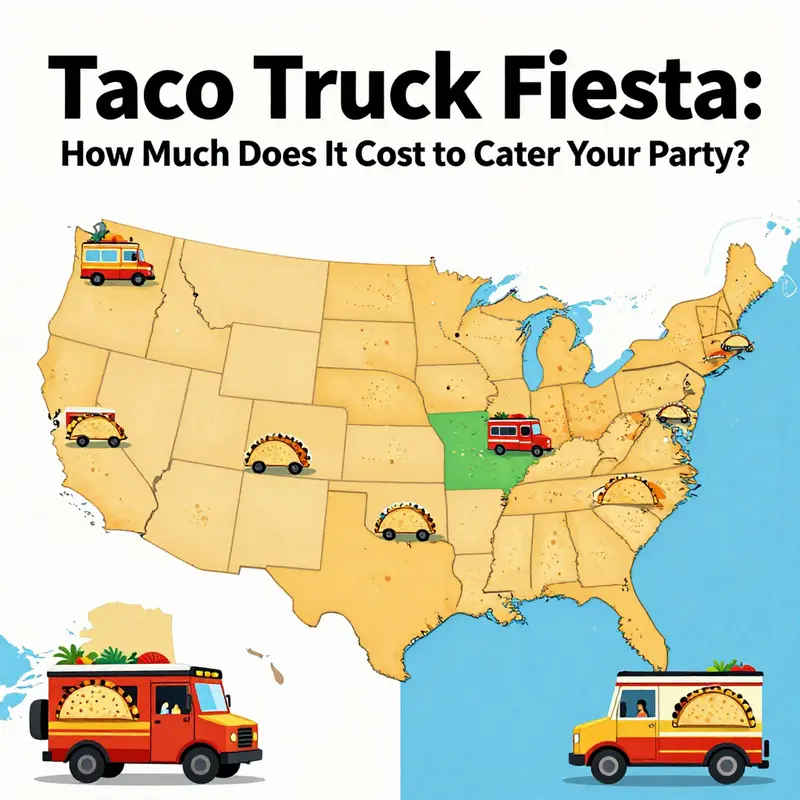
Pricing for a taco truck at a party is not a single number but a spectrum shaped by geography, scale, and the ambitions of the menu. When guests arrive, the first impression often comes from that wall of sizzling aroma and the sight of a gleaming kitchen on wheels. But behind the smile-inducing flavor promise lies a practical math problem: what does it cost to bring a party-ready taco truck to your doorstep, and how do those costs shift from city to countryside? The answer is more nuanced than a flat rate. It begins with the basic economics of ownership versus rental and then threads through location-specific realities that can bend the final bill in surprising ways. For most party planners, the question isn’t just what you’ll pay, but what you’ll receive for that price—how many tacos, what kinds of sides, what level of staffing, and what kind of reliability and service accompany the dish you’re serving.
At the surface, regional pricing for a per-event taco truck rental tends to cluster around a few familiar bands. In bustling, food-loving hubs where trucks compete for attention and consumer appetites are high, a typical 4- to 6-hour taco truck rental can land somewhere in the range of seven hundred to fifteen hundred dollars. That bracket covers entry-level offerings with standard menu items, a set number of tacos often in the neighborhood of a hundred to two hundred, and the basics like rice and beans. It’s not unusual for drinks to be included in some packages, but beverages more often come as an add-on. This setup reflects the reality that many vendors bundle essentials into a turnkey experience to make planning predictable for hosts who want one clean line item on the event invoice.
Meanwhile, in smaller cities, rural areas, or regions with slower kitchen demand, the same 4- to 6-hour window can tilt toward the lower end—roughly five hundred to nine hundred dollars. The spread here isn’t about lower quality; it’s a function of overhead, competition, and the cost of doing business in those markets. In towns with fewer trucks and less competition, vendors may have more flexibility to offer bundled packages or to grace hosts with slightly lower base rates. In contrast, in high-cost urban centers where permits, parking logistics, and labor costs run higher, the premium for proximity, speed, and brand reputation can push prices upward.
To understand why those prices move, it helps to separate the two big cost buckets that influence a party taco truck experience. The first is the event charge that covers the labor, travel, setup, and the on-site performance. The second is the value embedded in the menu complexity and the equipment on the truck itself. A basic mobile taco truck—typically built on a van or trailer—often carries a base price range akin to five thousand two hundred to eight thousand dollars when you’re looking at the purchase or long-term lease price for a basic model. That base number includes the core hardware: cooking equipment, refrigeration, and branding elements. It reflects the cost of the vehicle, the essential cooking technologies, and the ability to operate safely in a mobile environment. However, that purchase price sits outside the per-event rental equation, which is what most party planners depend on when budgeting for a single event.
The per-event charge, then, becomes a function of several regional and logistical factors. In Austin and other vibrant metro areas, the appetite for premium or gourmet offerings and the density of food trucks translate into higher event pricing. A 4- to 6-hour event in such markets is often pushed toward the higher end, particularly if the truck features standout menu items or distinctive branding that resonates with local food culture. In practice, a host in a major market might pay for an experience that includes a particular number of tacos, upgraded sides, and specialized toppings that elevate the overall offering beyond the most basic package. The premium is not merely about better food; it’s about the convenience of a vendor with reputational proximity, reliable on-site service, and the willingness of guests to savor a curated menu rather than a simpler, mass-market lineup.
Conversely, hosts in smaller cities or rural regions may find more straightforward, bundled pricing that remains competitive without sacrificing service quality. Vendors in these markets often emphasize value through bundled packages, which can be especially attractive for hosts who want predictable budgeting and a less complicated planning process. The reduced overhead in these areas not only helps keep the sticker price down but can also translate into more flexible options for staffing and setup, sometimes including basic drink services or straightforward side dishes as part of the package.
The real-world impact of regional pricing becomes clearer when you compare what’s included in the price. In many markets, the base per-event charge covers a fixed menu—say, a set number of tacos in a defined range of flavors—along with common sides and perhaps modest beverages. But tailor-made menus, premium ingredients, or elaborate toppings push the price up. If a host wants a custom experience—unique sauces, chef-led demonstrations, or specialty items beyond the standard taco lineup—the vendor’s cost structure shifts accordingly. More labor on site, longer setup times, and the procurement of specialty ingredients all feed into the bottom line. The chain of decisions thus weaves together geography, culinary ambition, and the operational realities of mobile kitchens.
An essential factor that often accompanies regional differences is the cost of permit and labor compliance. Urban markets typically require more intricate permits for street-facing operations, parking, and food handling, which can add to the day-of expense. Large metro markets may also command higher travel fees or minimums to offset the logistical complexity of moving a fully equipped kitchen through dense traffic and urban landscapes. In more rural settings, those same permits may be simpler or less expensive, and travel fees can be lower if the truck is operating within closer proximity to its base of operations. The result is a mosaic of pricing that reflects not just what is produced on the truck, but how easily it can be delivered to your exact party location.
For hosts seeking a practical way to navigate this landscape, the first step is to translate guest counts and desired service levels into a clear budget range. If your guest list sits around a few dozen to a hundred people, a standard 4- to 6-hour package in many markets will typically align with the mid-range price and can be expected to deliver enough tacos to satisfy without forcing a scramble for leftovers. If the guest count climbs into triple digits, or you’re aiming for a more expansive menu with multiple proteins and an array of toppings, you’ll probably encounter higher per-event pricing, and you’ll want to discuss portion expectations up front. It’s also wise to build in a contingency for carryout logistics, travel time, and potential rush charges that arise when a location presents special access challenges or limited parking.
The budgeting conversation is as much about expectations as it is about numbers. People who want a party experience that feels curated—think food shows in a parking lot, chef-led toppings stations, or a display that doubles as a photo moment—should anticipate that the price will reflect the experiential components as much as the food itself. In those cases, it’s appropriate to ask vendors for itemized quotes that separate the core costs from add-ons. A crisp quote can illuminate what is included in the base package, such as the exact number of tacos, the specific sides, the beverages (if any), the number of staff on site, and whether setup and teardown are included in the per-event price. If a quote lumps everything together without transparency, this is a sign to push for a clearer breakdown.
To further sharpen your shopping approach, consider the value of a vendor’s reputation and reliability in your region. In markets where the taco truck scene is dense and budget competition is fierce, price may be a strong determinant, but beyond price, consistency of service, food quality, and timeliness can make or break a party experience. A vendor who can deliver a dependable on-site performance, handle custom requests with ease, and maintain kitchen hygiene standards under field conditions is often worth a modest premium. Those intangibles—calm communication, punctual arrival, and a smooth service flow—free hosts from stress and contribute to a successful celebration.
For hosts who want to approach this decision with a framework rather than guesswork, there is a practical route: start with the basic regional pricing bands as a baseline, then layer in menu ambition and staffing needs. If you’re leaning toward an Austin-style vibe with a premium menu, prepare for the higher end of the price spectrum and look for a vendor who can demonstrate a track record of executing sophisticated setups. If you’re planning something more straightforward or budget-conscious, seek bundled packages that simplify decision-making while still delivering reliable food and service. In either case, it helps to read guidance on evaluating trucks beyond price, such as a resource focused on Choosing the right food truck. This broader lens can prevent you from inadvertently shortchanging expectations about equipment quality, safety standards, and long-term value. Choosing the right food truck.
When the numbers finally land on a preferred range, you’ll still want to verify a few operational details before signing. Confirm whether the price includes on-site staffing for the full duration, who handles setup and teardown, and whether food safety standards are monitored by on-site personnel. Clarify the menu scope, including the types of tortillas, proteins, toppings, and any vegetarian or allergen accommodations. If beverages are part of the package, ask whether mixers, ice, cups, and straws are supplied, and whether the vendor provides a beverage station or relies on the host for service. Patent gaps in these areas tend to become budget surprises on the day of the event. You’ll also want to confirm travel distance and timing, as a short drive from the vendor’s base may reduce fees compared with a longer run through traffic or stairs and elevators at a venue. The virtue of clarity is not only a matter of budgeting; it also helps align expectations among guests, organizers, and the truck team so that the guest experience is cohesive from first bite to final bite.
In the end, the question of how much a taco truck costs for a party across different regions reveals more about the decision process than about a single price. You’re weighing the reliability of a mobile kitchen against the flavor profile you want, the staffing needed to keep the service smooth, and the logistics of location and timing. The regional differences reflect differences in demand, labor, and permit ecosystems, but they also reflect a common truth: good food on wheels is not just a price point but a planning philosophy. When you approach pricing with a clear sense of what matters most for your event—speed, variety, and service quality—you empower yourself to choose a solution that delivers joy, not just calories. For continuity and deeper context as you plan, you can explore resources that discuss how to evaluate and select the right mobile kitchen in your area. And as you compare quotes, remember that the goal is a cohesive experience that feels effortless to guests while staying within your budget. Real-world region-specific quotes and vendor comparisons can guide you toward a decision that satisfies both appetite and planning prudence. External resource for regional insight: https://www.austintexasfoodtrucks.com.
Final thoughts
As you gear up to host your event, remember that the joy of a taco truck goes beyond just flavor; it’s about creating lasting memories with friends, family, and fantastic food. Whether you’re planning a grand fiesta or an intimate gathering, understanding the costs involved helps you make informed decisions. From average rental prices to how menu choices and regional differences can affect your budget, you’re now equipped with the know-how to navigate taco truck rentals. So go ahead, get those tacos rolling and let the flavors of your event excite your guests!