
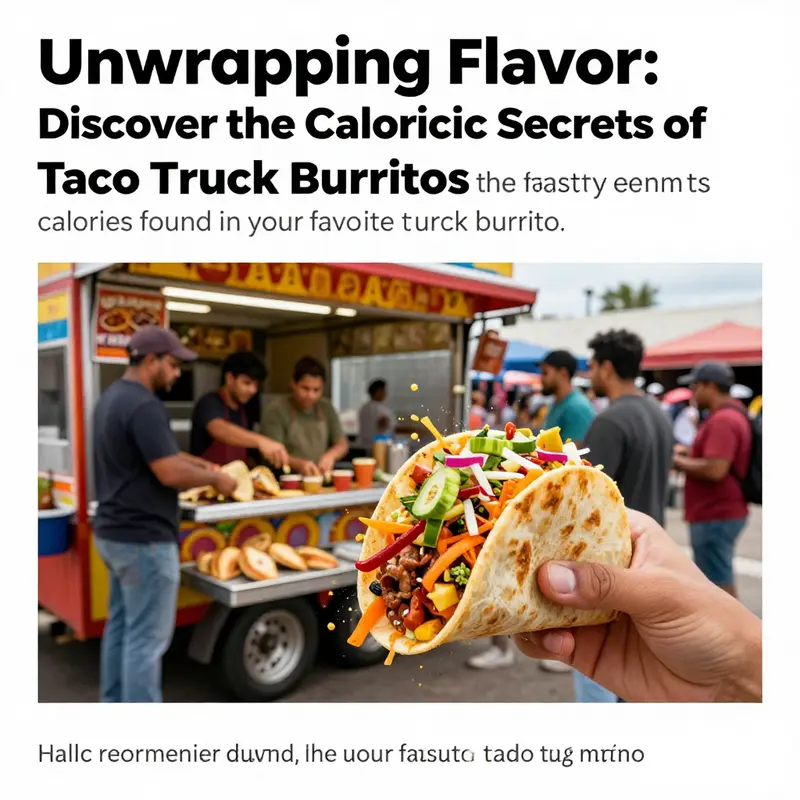
Taco truck burritos have become staples in the foodie world, tantalizing our taste buds with bold flavors and hearty fillings. But how many calories are lurking in these delicious bundles? As we unravel the caloric content of a typical taco truck burrito, we will dive into various factors like ingredients, toppings, and the overall culinary experience. From the basic breakdown of calories to the impact of oh-so-tempting extras, each chapter will illuminate how these burritos fit into your dietary lifestyle while fueling your passion for great cuisine. Whether you’re a taco fan at heart or looking to turn your taco truck dreams into a delicious reality, this guide will ensure you savor every bite mindfully.
Calorie Cartography: Reading the Numbers Behind a Taco Truck Burrito
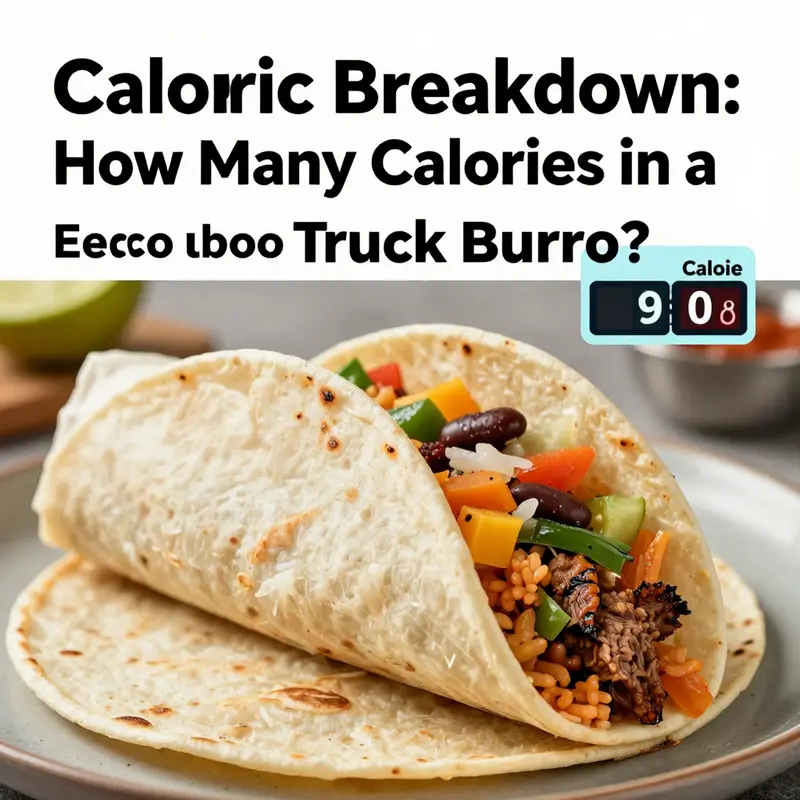
A street-side burrito, rolled in a flour tortilla and steamed with steam and sizzling fat, invites more than a craving. It invites a conversation about numbers—calories, portions, macro balance, and the everyday choices that shift a meal from indulgence to a plan. The topic at hand, how many calories in a taco truck burrito, is not a single figure but a spectrum. The spectrum is shaped by size, the exact mix of ingredients, and the way a kitchen or cart handles cooking, assembly, and toppings. What begins as a simple, comforting combination—rice, beans, meat, cheese, vegetables—can quickly escalate into something far larger in energy content if portion sizes grow or if sauces, sour cream, or fried components tag along. The range most nutritionists point to, based on common taco-truck preparations, sits roughly between three hundred and five hundred calories per burrito. This baseline is useful, but it understates the real variability in the field where cooks improvise and customers customize.
The flour tortilla itself is a major determinant. A typical 10-inch tortilla can hold a burrito that weighs in around four hundred calories when paired with rice, beans, lean meat, and modest cheese. Yet the moment toppings arrive—guacamole, sour cream, or extra cheese—or the tortilla is swapped for a larger size or a chain-style wrap, the calories climb with a surprising confidence. The initial survey of nutrition data from trusted sources supports this pattern: a medium Mexican-style burrito, commonly described as “Taco truck style” in many menus, averages in the vicinity of four hundred fifty to five hundred calories when the fillings remain within the familiar bounds of grilled meat, rice, beans, and cheese in a flour tortilla.
For readers who want a precise snapshot, the U.S. Department of Agriculture’s FoodData Central provides detailed nutrient profiles for similar items, and it is not unusual to consult those official data when planning a meal or preparing for a diet. The link to one such nutrient profile is included in the reference notes for those who want to dive into the numbers themselves, acknowledging that the exact values will vary from cart to cart and day to day.
The practical takeaway is simple: know the baseline, recognize the amplifiers, and remember that real-world burritos rarely stay within a single fixed count. If you are tracking calories closely, you’ll want to consider not just the average burrito but the specific components and how they’re prepared on a given day. A quick mental model can help. Start with the tortilla as the base—roughly 100 to 200 calories for a standard flour tortilla, with larger or thicker tortillas pushing the number higher. Add a modest serving of rice and beans that might contribute another 150 to 250 calories, depending on the portion. Then layer in meat such as chicken or beef; a typical meat portion can bring in 150 to 250 calories, depending on fat content and cooking method. Cheese can add 50 to 110 calories for a moderate amount, while vegetables are usually modest in calories but can contribute to fiber and volume. Finally, sauces and toppings—sour cream, guacamole, pico de gallo, salsa—can swing the total by 50 calories or more, and in some cases substantially more if crema or fried elements are included.
When you add all of these elements together, you can see how the final tally can land anywhere from well under five hundred to well over six hundred calories for a single burrito. And in extreme cases—though they are less common in everyday street food, but possible in oversized or indulgent builds—the number can rise even further. The spectrum, then, is not just about a single number; it is about the story of how ingredients, sizes, and preparation methods converge in a taken-for-granted meal that many people rely on for convenience, flavor, and budget.
In exploring this spectrum, it helps to examine concrete examples that illuminate where those numbers come from. One large taco truck burrito, measured in the context of a high-volume kitchen with generous portions, can climb to an astonishing two thousand calories. In one illustrative case I encountered, a large taco truck burrito clocked in at approximately 1,991 calories, with a fat contribution of about 123 grams, protein around 90 grams, and carbohydrates near 136 grams. Such a burrito represents a substantial portion of the daily energy needs for many adults and underscores how quickly calories accumulate when sizes swell and ingredients rich in fat and starch are employed. This is not a routine choice for most people, but it serves as a useful upper-bound reference for the upper range of meal sizing in the taco-truck world. It also helps explain why some customers who aim to align meals with strict daily targets or fitness goals might opt for smaller options or leaner fillings, especially on days when they know another high-calorie meal might follow later in the day.
On the other hand, the market also offers leaner, more balanced alternatives that demonstrate how a burrito can be a practical part of a health-conscious plan. A pepper jack chicken burrito, for instance, is often cited as a lower-calorie option that still delivers meaningful protein. In commonly observed cases, such a burrito can come in around 468 calories, with protein contributions of roughly fifty grams. The profile is especially appealing to those who want a satisfying meal without pushing past the half-thousand-calorie mark. It shows that a burrito can function as a well-balanced, protein-forward option, pairing lean poultry with vegetables, beans, and a modest amount of cheese. Of course, the exact totals depend on the size of the tortilla, the portion of rice and beans, and the level of cheese and sauces, but this example demonstrates that a single menu choice can realistically sit in a narrow, predictable range while still feeling generous in taste and texture. The contrast between this 468-calorie option and the nearly two-thousand-calorie behemoth also highlights how customers tolerate different trade-offs: some prioritize protein density and satiety, while others may be more sensitive to total calories but still crave a robust flavor experience and variety of textures.
Beyond these specific examples, the composition of a burrito is a constant reminder that the tortilla plays a central role in the overall energy profile. Even when the fillings are relatively modest, the tortilla itself can contribute a sizable chunk of calories because it is the vessel that carries everything else. In a generic taco-truck setting, small corn tortillas—the kind used to wrap taquitos or to complement a street-style burrito—can be surprisingly efficient if prepared with non-fattening methods. While a single pair of small tortillas may total around fifty calories, the precise allocation depends on whether you count a pair or a single wrap and on the type of tortilla used. In real-world practice, such tortillas are often used in multiple configurations, with some carts choosing corn for a lighter profile and others using flour for a heartier, calorie-dense bite. The macronutrient distribution of a typical small tortilla can skew heavily toward carbohydrates, with carb shares commonly dominating the ratio—though fat and protein are never negligible. A rough macronutrient breakdown for a pair of small corn tortillas might be in the realm of eighty-two percent carbohydrates, nine percent fat, and eight percent protein, illustrating how the tortilla can shape the meal’s energy and nutrient composition as surely as any filling. These details matter for readers who are tracking macro targets or fiber intake, because even seemingly small choices—the kind of tortilla, the size of the wrap—can produce meaningful shifts in daily totals.
The interaction of ingredients is where calories reveal their true behavior. A burrito is not a single nutrient; it is a synergy of starches, fats, and proteins, all of which interact with your digestive system in distinctive ways. Rice and beans bring not only calories but fiber and plant-based protein; meat sources deliver varying degrees of fat, protein, and micronutrients; cheese adds calcium and flavor while contributing saturated fat and calories; vegetables add volume, micronutrients, and a refreshing crunch without piling on energy. Sauces and toppings can deliver flavor and moisture but often come with hidden calories in the form of fats, sugars, and oils. A burrito loaded with sour cream and guacamole, for example, can add not just a handful of calories but also a portion of fats that can escalate the total calorie count quickly. This is the kind of real-world nuance that statistics sometimes obscure: two burritos that look similar on the plate can be miles apart in caloric content based on how they were assembled and what was added at the table.
For anyone trying to track calories with a disciplined approach, accuracy comes from two practices: knowing standard portion benchmarks and seeking out nutrition data when possible. If you cannot obtain an exact nutrition label from a taco truck, you can still employ a practical estimation framework by anchoring to baseline figures and then adjusting for known amplifiers. Start with a conventional burrito baseline of roughly four hundred to five hundred calories for a standard flour-tortilla wrap with rice, beans, meat, and modest cheese. Add or subtract calories based on the tortilla size, the amount of rice and beans, and the protein portion. Add another hundred to two hundred calories if sour cream, guacamole, or fried elements are included. Consider swapping to leaner meats or reducing cheese to cut calories, or selecting corn tortillas to lower the overall energy content without sacrificing texture and flavor. This practical approach helps people who want to enjoy street food while staying mindful of daily targets. It also aligns with the idea that nutrition data published by official sources and tracked through credible platforms can guide decisions, even when dining in informal settings where exact labeling is not always available.
As you navigate the menu, the choice to explore nutrition data can be empowering. The ability to compare a few options side by side—such as a robust burrito with higher fat and calories versus a leaner, protein-forward version—transforms a casual meal into a deliberate nutrition decision. The process is not about enforcement but about awareness: knowing that a burrito can range from roughly three hundred to two thousand calories depending on how it is built invites a more intentional approach. And it invites a broader reflection on how everyday meals contribute to long-term health goals. If your aim is to learn more about practical strategies for food-truck meals, there are resources that delve into menu planning, cost considerations, and nutritional balance. For readers who want to explore broader discussions and case studies from a food-truck perspective, the Fire Up Taco Truck Blog provides a useful repository of insights and practical tips that can be read alongside the nutrition data. See the internal link for a helpful collection of posts and reflections on street-food operations. Fire Up Taco Truck Blog.
In the end, the question “how many calories in a taco truck burrito?” does not have a single, universal answer. It is a question rooted in choice, portion size, and ingredient quality. It asks us to weigh flavor and satisfaction against the energy content of what we eat. It challenges us to understand the impact of a tortilla’s size, the heft of the fillings, and the addition of toppings that, while delicious, push the numbers higher. It invites readers to develop a framework for estimation, to seek out nutrition information when available, and to consider practical swaps that can make a burrito fit into a balanced diet without sacrificing the pleasure of the street-food experience. And while the numbers tell a story, they do not dictate the story in full. They are a guide, a language you can read at a glance, and a tool to help you decide what kind of burrito you want to eat, and when, so that every bite aligns with your goals.
For those who wish to see how these numbers are derived in practice and to explore the broader nutritional landscape of similar items, a detailed external reference provides an in-depth breakdown. You can consult the CalorieLab resource for a broader arithmetic and context about taco-truck burritos and related items. This external source gives a structured view of calories, fats, carbohydrates, and proteins across a range of burrito compositions, which can be a helpful complement to the real-world examples discussed above.
Why Taco Truck Burrito Calories Swing So Widely: The Ingredients, Portions, and Choices That Shape the Total
Variability in Caloric Content: Why a Taco Truck Burrito Can Be 300 — or 700 — Calories
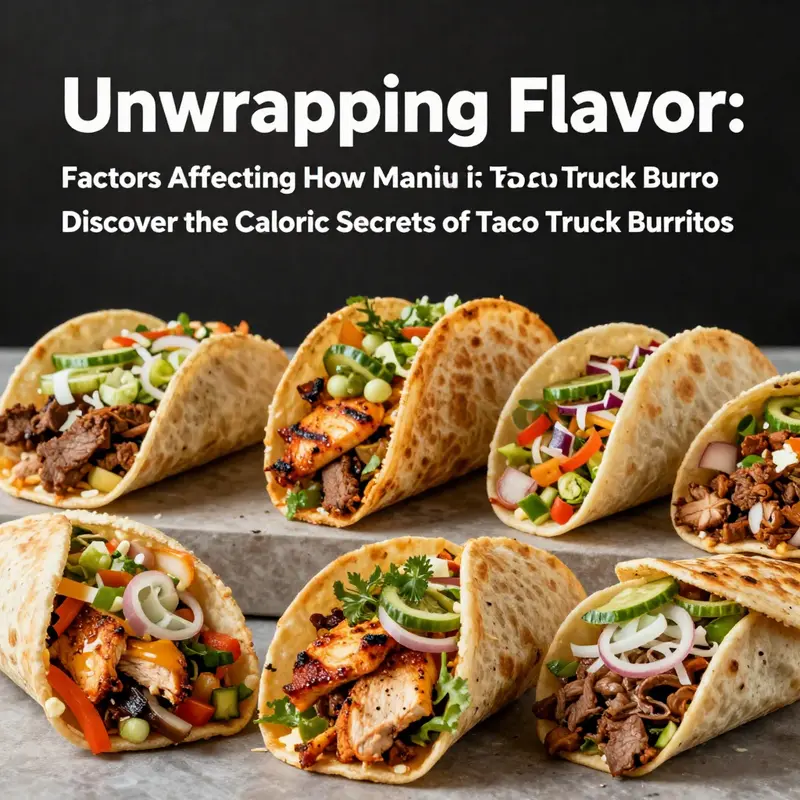
A single bite from a taco truck burrito can feel familiar, but the caloric math behind that bite is anything but predictable. Unlike items produced on rigid assembly lines, taco truck burritos are shaped by human choices at nearly every step: the protein selected, the way rice and beans are cooked, the tortilla that wraps it, and the extras piled on at the end. Those choices compound. A lean grilled protein here and plain beans there produce one calorie profile. Swap in a fattier cut, a buttered rice, and a rich sauce, and the count jumps. Understanding why calorie estimates for taco truck burritos range from roughly 300 to over 600 calories means following the burrito from ingredient to final wrap and recognizing where variability amplifies.
Start with the protein. Proteins differ not only in their base calorie density, but also in how they are prepared. Grilled chicken, trimmed of visible fat, is comparatively lean. A modest serving of grilled chicken adds a moderate number of calories while contributing protein that helps with satiety. By contrast, carne asada or carnitas often come from fattier cuts or are slow-cooked with added fats. Fried proteins—anything battered and deep-fried—introduce substantial fat from the cooking oil. Even plant proteins vary: a scoop of seasoned black beans will generally be lower in calories than a plant-based imitation meat prepared with oils and starches. The practical effect is straightforward: different proteins create a baseline difference of tens to hundreds of calories before any other ingredient is considered.
Sauces and toppings are another common source of hidden calories. Condiments commonly offered at taco trucks—cheese, sour cream, and guacamole—are calorie-dense because fat contains nine calories per gram. A heaping spoonful of guacamole or sour cream can easily add 100 to 200 calories. Cheese, depending on the type and amount, adds both fat and protein and can push a burrito from light to indulgent. Even otherwise low-calorie toppings like salsas change the sensory impression: a tangy salsa might encourage adding cheese or crema, and those additions quickly raise the total. Mayonnaise-based dressings or creamy sauces used to finish a burrito are especially potent calorie increasers. Small portions add up when customization is encouraged.
Rice and beans often form the carbohydrate backbone of a taco truck burrito, and their preparation matters. Plain steamed rice or simply seasoned beans are relatively modest contributors. But when rice is sautéed in oil, butter, or flavored fats, its calorie content rises. Beans may come canned, seasoned, or cooked with lard—each choice affects calories. In some preparations, cooks intentionally enrich rice and beans for flavor, stirring in oil, butter, or fat-laden broths. A double portion of rice or the addition of both rice and potatoes will increase the carbohydrate—and therefore caloric—load. Since many customers select rice and beans as default fillers, these components are common levers that operators use to balance cost and satisfaction, sometimes leaning toward richer preparations that elevate calories.
The tortilla that holds everything together is easy to overlook but crucial. Tortilla size varies widely: small corn tortillas contain far fewer calories than large flour tortillas. A typical 10-inch flour tortilla can add 200 to 300 calories on its own, depending on ingredients and thickness. Tortillas made with lard or enriched flours have higher calorie counts than thinner, whole-grain, or corn options. Some taco trucks offer oversized tortillas to create a larger, more filling burrito; others wrap tightly with smaller rounds. That choice alone can swing a burrito’s calories by hundreds.
Portion size and customization multiply these effects. Taco trucks often thrive on flexibility: request extra meat, double rice, or add guacamole, and the vendor accommodates. Each extra portion increases the total energy. Research into customizable meals shows that people who customize entrées typically consume more calories than those who choose pre-set options. Customization encourages accumulation: once one topping is added, additional items often follow because they enhance flavor or perceived value. Vendors also vary serving utensils and scoops, so what one customer receives as a “single scoop” of meat might be measurably different from the next person’s serving.
Preparation method and cooking fat tie many of these variables together. Foods cooked with oil—whether sautéed vegetables, seared meats, or fried tortillas—absorb fat. That fat is calorie-dense. Two otherwise similar burritos may only differ in whether the vegetables were soft-sweated in oil or lightly grilled; the difference in absorbed fat can be meaningful. Cleaning and reuse of pans, the frequency of adding new oil, and the style of the cook contribute to this invisible variance. Additionally, some taco trucks craft flavor by finishing items with a drizzle of oil or schmear of butter, a small step that substantially raises calories.
Because most taco trucks lack printed nutrition facts, estimating calories requires educated guesses or asking questions. Customers tracking intake can ask about portion sizes and specific ingredients. Some vendors will disclose whether rice is cooked with oil, whether beans contain lard, and whether meats are marinated in fatty sauces. When precise data is unavailable, using averages derived from similar items helps. Studies and national databases provide reference points: a medium-sized Mexican-style burrito filled with grilled meat, rice, beans, and cheese generally averages around 450–500 calories. But that average masks the extremes: minimalist combinations can sit closer to 300 calories, while indulgent builds with extra cheese, sour cream, and guacamole can exceed 600 calories, and occasionally approach 700 when large tortillas or fried proteins are involved.
The social and situational context also subtly influences calories. A late-night craving may lead to choosing richer options. Sharing among friends can encourage ordering extra portions or sides. Perceived value influences decisions; larger portions often feel like better deals. Vendors, eager to satisfy customers, may default to generous scoops. These human factors are part of the ecosystem that causes wide variation in calorie counts across nominally similar burritos.
For those who want to manage intake without sacrificing the taco truck experience, a few practical strategies reduce uncertainty. Choose lean proteins and ask for grilled rather than fried. Request smaller tortillas or opt for corn if available. Limit high-fat toppings or ask for them on the side to control portion. Swap full portions of rice for extra vegetables to boost volume with fewer calories. Finally, when precise tracking matters, ask the vendor directly about cooking methods and portion sizes; many operators are transparent and helpful.
Estimating calories for a taco truck burrito will never be as precise as reading a packaged label. The best approach blends observation, selective questioning, and reasonable defaults. Count the tortilla, then add estimated calories for protein, rice, beans, and toppings. If in doubt, use a conservative estimate that assumes added fats in preparations.
If you want deeper context on how customization affects calorie estimation, a useful study examines how personalized ingredient choices influence total energy intake. That research highlights how customization leads to increased consumption compared with preset options, reinforcing the idea that the very flexibility that makes taco truck burritos appealing also makes their calorie content harder to pin down.
For practical reading and local suggestions from operators, check out the FireUp Taco Truck blog for general food-truck insights and tips. External nutrition data used as a reference in this chapter can be found in the USDA FoodData Central repository: https://fdc.nal.usda.gov/fdc-app.html#/food-details/170683/nutrients
How Toppings and Extras Drive the Calories in a Taco Truck Burrito
Toppings and Extras: The Hidden Calorie Architects of a Taco Truck Burrito
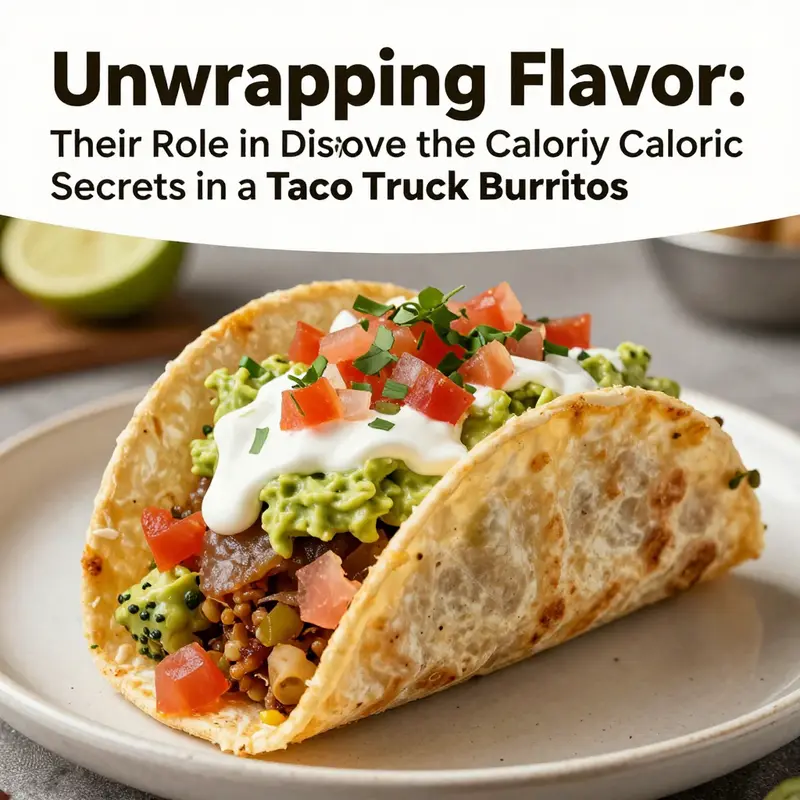
A taco truck burrito arrives as a compact bundle of tastes and textures. The tortilla folds around rice, beans, meat, cheese, and a scatter of vegetables. But the final calorie count is rarely decided by those base items alone. Toppings and extras — sour cream, guacamole, fried elements, extra cheese, and the way vegetables are cooked — act like volume dials on the burrito’s calorie meter. Small choices at the window can add hundreds of calories. Understanding which additions matter most lets you predict a burrito’s caloric load and make choices that match appetite and goals.
Think of the burrito like a layered equation. The tortilla and core fillings set a baseline. Each topping adds a specific calorie value. A tablespoon of sour cream tacks on roughly 30 to 40 calories. A quarter cup of guacamole, rich from avocado and often oil, contributes about 120 to 150 calories. Cheese, depending on type and amount, can add from 60 calories for a small sprinkle to 200 calories or more for generous portions of shredded or melted cheese. Even grilled vegetables, usually framed as the healthy option, can increase calorie totals if they’ve been sautéed in oil or slathered with buttery sauces. Collectively, these additions shift a medium burrito from a modest 400–500 calories into the 600-plus territory.
Protein choices amplify the effect. Lean shredded chicken carries fewer calories than shredded pork or carnitas. Carne asada and carnitas tend to be higher in fat. A 3-ounce serving of carnitas can exceed 200 calories because fat stores more energy per gram than protein or carbohydrate. Ground beef or fattier cuts will likewise inflate totals, especially when combined with cheese and creamy sauces. If the taco truck slow-cooks meat in oil or adds marinades rich in sugar and fat, the calorie estimate must be adjusted upward.
The tortilla is often underrated but is among the largest single contributors. Flour tortillas are dense and can supply 200 to 400 calories depending on size. A standard large flour tortilla used for a taco truck-style burrito may account for roughly 300–400 calories alone. Corn tortillas are smaller and provide fewer calories, but they are less common in burritos at many taco trucks. Choosing a smaller or thinner flour tortilla, or swapping to corn when possible, can reduce the base significantly. However, many people prioritize the chew and pliability of a large flour tortilla; the trade-off is higher caloric intake.
Refried beans deserve special mention. Their calorie density depends on whether they are prepared with lard, oil, or simply mashed and seasoned. When cooked with fats, refried beans can become a caloric powerhouse. A generous scoop in a burrito can add 150 calories or more. In contrast, black or pinto beans prepared simply will be lower, yet still meaningful contributors due to their carbohydrate and protein content.
Condiments and finishing touches are where calories accumulate stealthily. Sour cream and crema add creamy richness with modest volume but concentrated calories. A single dollop can be 30–40 calories, yet many burrito fans ask for double or triple. Guacamole is nutrient-dense and satisfying, but its fat content translates into higher calories — around 120–150 calories for a quarter cup. If a burrito orders extra guacamole, the calorie tally rises quickly. Salsa varieties, salsa verde, pico de gallo, and chopped onions and cilantro add negligible calories and are safe ways to boost flavor without heavy impact. But keep an eye on queso or creamy chipotle sauces; these elevate caloric and fat content substantially.
Preparation methods also change the arithmetic. Frying a protein or adding crispy tortilla strips or chicharrón creates crunchy contrast but comes with added oil. Grilled vegetables prepared with a splash of oil retain more flavor and calories than steamed or raw vegetables. Even the technique used on a burrito at the truck — pressed and charred on a flat top with butter or oil — can increase surface fats and calories. Small procedural differences repeat across vendors and contribute to the wide calorie range observed for taco truck burritos.
Portion sizes are a repeating theme. Terms like “regular,” “large,” or “super” vary by vendor. What one truck calls a medium might be another’s large. A modest serving of cheese or a single spoon of guacamole becomes double or triple when a larger portion is requested. Similarly, the amount of rice or beans added per burrito affects bulk and energy density. Requests for “extra rice” or “extra beans” are simple ways to add a few hundred calories without noticeably changing the burrito’s profile.
Balancing flavor and calories is possible with thoughtful swaps. Choosing grilled chicken over carnitas drops fat and calories. Requesting light cheese or a single ounce instead of a heaping handful trims energy. Opting for pico de gallo, grilled peppers without oil, or a squeeze of lime adds brightness with minimal calories. If guacamole is non-negotiable, asking for a smaller portion still preserves that creamy note while saving calories. For tortilla-conscious eaters, some trucks offer alternatives or smaller tortillas; reducing tortilla size can be the largest single calorie-saving move.
For those tracking intake precisely, building a mental database of typical calorie contributions helps. Estimate tortilla calories first, then layer in protein and beans. Add fixed values for common condiments: sour cream (30–40 calories per tablespoon), guacamole (120–150 calories per quarter cup), shredded cheese (roughly 70–100 calories per ounce depending on type), and refried beans (variable, often 100–150 calories per half-cup when cooked with fat). Add another 50–100 calories for grilled vegetables cooked in oil. Summing these values will land you in the broad range noted by nutrition databases, where a medium taco truck-style burrito with common fillings typically sits between 400 and 500 calories, and richer versions exceed 600 calories.
Dietary priorities influence which extras feel worthwhile. For satiety and nutrient quality, a small amount of guacamole brings healthy fats and fiber, which may help prevent snacking later. Extra cheese or sour cream lengthen the feeling of indulgence but add saturated fat and many calories. If sodium is a concern, pay attention to processed toppings and preserved salsas, which can raise sodium significantly without adding much energy.
Vendors sometimes publish nutrition data, and larger chains maintain detailed menus. When available, those sources are the most direct way to quantify calories. In their absence, use typical values from reputable nutrition databases to estimate. This approach won’t be exact, but it will narrow the range and align expectations. A taco truck burrito is not a fixed number; it is a sum of individual choices. Treat each topping as an ingredient in a small budget, and you can spend calories intentionally rather than accidentally.
Finally, remember that enjoyment is part of a meal’s value. Toppings and extras deliver flavor, texture, and cultural authenticity. The point here is not to eliminate them, but to recognize their power and make informed choices. With a few mindful swaps — smaller tortilla, leaner protein, measured guacamole, and salsa forward — you can tailor a taco truck burrito to fit both taste and caloric goals.
For a deeper dive into typical calorie figures for taco truck-style burritos and ingredient-level breakdowns, see the USDA nutrient profiles and related analyses. (External source: https://fdc.nal.usda.gov/fdc-app.html#/food-details/170683/nutrients.)
For more general tips on running and marketing food trucks — useful if you operate a taco truck and want to offer lighter options — check the Fireup Taco Truck blog for practical insights and ideas: https://fireduptacotruck.com/blog/
null
null
Sizing Up the Burrito: How Taco Truck Calories Fit into Your Daily Eating Plan
Understanding what a taco truck burrito contributes to your daily calories is the first step to making it fit your goals. Burritos vary wildly. A modest taco truck burrito with a 10-inch flour tortilla, grilled meat, rice, beans, cheese, and vegetables often lands between 300 and 500 calories. But portions and add-ons matter. Some popular truck-style burritos can balloon to 1,000 to 2,000 calories when packed with extra rice, queso, sour cream, fried fillings, or oversized tortillas. One documented example reached nearly 1,991 calories—far beyond a typical single-meal portion. Knowing those extremes helps you plan food choices without sacrificing enjoyment.
Calories are a unit of energy. Your body needs them for everything from brain function to walking to digestion. Average daily needs vary. They range roughly from 1,600 to 3,000 calories a day, depending on sex, age, body size, and activity. For someone on the lower end, a single 1,000-calorie burrito might be two-thirds of their daily allowance. For a highly active person at the upper end, the same burrito is a third of the day’s energy. That contrast shows why context matters. Consider the burrito’s role within your whole day of eating, not as an isolated event.
Look beyond total calories. Macros—protein, fat, and carbohydrates—shape how filling a meal feels and how it affects hunger later. A burrito with 90 grams of protein, 123 grams of fat, and 136 grams of carbs will feel very different from a leaner version with 30 grams of protein, 15 grams of fat, and 40 grams of carbs. High protein helps preserve muscle and increase satiety. Excessive fat, especially from frying or heavy cheese, raises calorie density quickly. Refined carbs, like a large flour tortilla and extra white rice, raise carb totals and can spike blood sugar for some people. If you pay attention to macros, you can customize a burrito to support specific goals like weight maintenance, muscle building, or better blood sugar control.
Portion control is the most practical tool. Ask for a smaller tortilla or a half-size burrito. Many trucks will prepare a burrito with less rice and beans on request. Request double veggies instead of extra cheese. Choose grilled meat rather than fried carnitas or battered fillings. Swapping sour cream for salsa cuts fat and calories. Guacamole adds healthy fats, but it is calorie-dense. Consider a measured portion of guac rather than an extra scoop. These swaps can reduce calories substantially while keeping flavor and satisfaction.
Another approach is to treat the burrito as part of a meal strategy. If you know you will eat a hearty burrito for lunch, plan lighter meals before and after. A breakfast focused on fruit, yogurt, or eggs and a dinner based on vegetables, lean protein, and a small grain portion will balance the day. Alternatively, split a large burrito with a friend or save half for later. This reduces immediate calorie intake and spreads enjoyment across two sittings.
Physical activity can absorb extra calories too. A long walk, a bike ride, or a robust workout after or before a bigger meal helps maintain energy balance. That said, exercise should not be used solely to justify overeating. Combine movement with sensible portioning. Remember that regular activity influences daily calorie needs, so the occasional large burrito fits more naturally into an active lifestyle.
For people tracking calories, use available nutrition data. Many food tracking platforms and official databases provide estimates for burritos and individual ingredients. Official sources help when the truck does not provide nutrition facts. Weighing ingredients at home after a DIY truck-style prep gives more precision. If you rely on tracking apps, be aware of variability. One recipe entry might represent a modest burrito, while another mirrors an oversized truck special. When in doubt, estimate conservatively and account for extras.
Quality matters as much as quantity. A burrito rich in vegetables, lean grilled protein, and beans offers fiber, vitamins, and sustained energy. Fiber from beans and vegetables slows digestion, helping you feel fuller longer. Cheese, crema, and fried components add richness. Enjoy them in moderation. Prioritize ingredients that provide nutrients alongside calories. That way, even a slightly higher-calorie meal contributes positively to overall nutrition.
Frequency is another factor. Eating a high-calorie burrito occasionally is different from making it a daily habit. An occasional indulgence has limited effect on long-term weight when balanced across time. Daily consumption of very large burritos makes it hard to match energy expenditure and may lead to gradual weight gain. If a favorite truck becomes part of routine eating, consider rotating orders. Choose lighter options on some visits and reserve the fully loaded burrito for special occasions.
Mindful ordering at the counter yields big wins. Ask how the burrito is prepared. Request half the rice, light cheese, or more vegetables. Many vendors are accommodating if you specify your preferences. You can also ask for sauces on the side to control portions and taste as you go. Small adjustments before the cookline can lower calorie totals without changing the essence of the meal.
Homemade versions give the most control. If you recreate a taco truck burrito at home, measure tortillas, control oil, and portion fillings. Use whole-grain tortillas for more fiber. Swap white rice for cauliflower rice or a smaller portion of brown rice. Cook meats with less oil and more seasoning. Add fresh pico de gallo, grilled peppers, onions, and lettuce to increase volume without many calories. If you enjoy guacamole, measure half an avocado rather than adding it by eye.
Consider nutrient density in meals surrounding the burrito. If lunch will be calorie-heavy, choose a dinner rich in vegetables and lean protein. Hydration also helps with satiety. Drinking water before a meal can slightly reduce intake. Don’t skip meals to “save” calories for a big burrito; that often backfires and increases overeating. Aim for consistent, balanced meals and let the burrito be a planned part of that pattern.
Certain populations need extra caution. People managing diabetes, heart disease, or high cholesterol should be mindful of saturated fats and refined carbs in some burritos. Those with specific calorie prescriptions—such as clinical weight-loss plans—should consult a professional. A nutritionist or registered dietitian can translate burrito choices into a personalized plan that maintains health goals while allowing cultural and culinary pleasures.
Finally, use data to inform choices. When available, consult the truck’s nutrition facts. If not, use reputable databases for estimates. Tracking a few meals helps you see trends and adjust. Aim for balance across days and weeks rather than perfect control every meal. With simple swaps, portion control, and planning, a taco truck burrito can fit into most eating patterns. It can be a satisfying, culturally rich meal that aligns with nutrition goals when you make mindful choices.
For precise nutrient profiles and to compare common burrito ingredients, refer to the USDA FoodData Central for detailed entries and guidance: https://fdc.nal.usda.gov/fdc-app.html#/food-details/1705948/nutrients. You can also explore practical truck-focused advice on the Fire Up Taco Truck blog for tips on ordering and customizing your meal.
Final thoughts
In conclusion, taco truck burritos are not just delicious but also present an exciting array of flavors and calorie counts to explore. Understanding the caloric content and various influences, from the basic ingredients to the tempting toppings, empowers you, whether as a food lover eager to savor each bite or as a taco business owner striving to meet customer needs. These flavorful rounds not only nourish the body but also satisfy the soul, making each experience worthwhile. So next time you visit a taco truck, you can enjoy your burrito knowing just how special that meal is! Dive into the deliciousness while being mindful of what’s inside.