
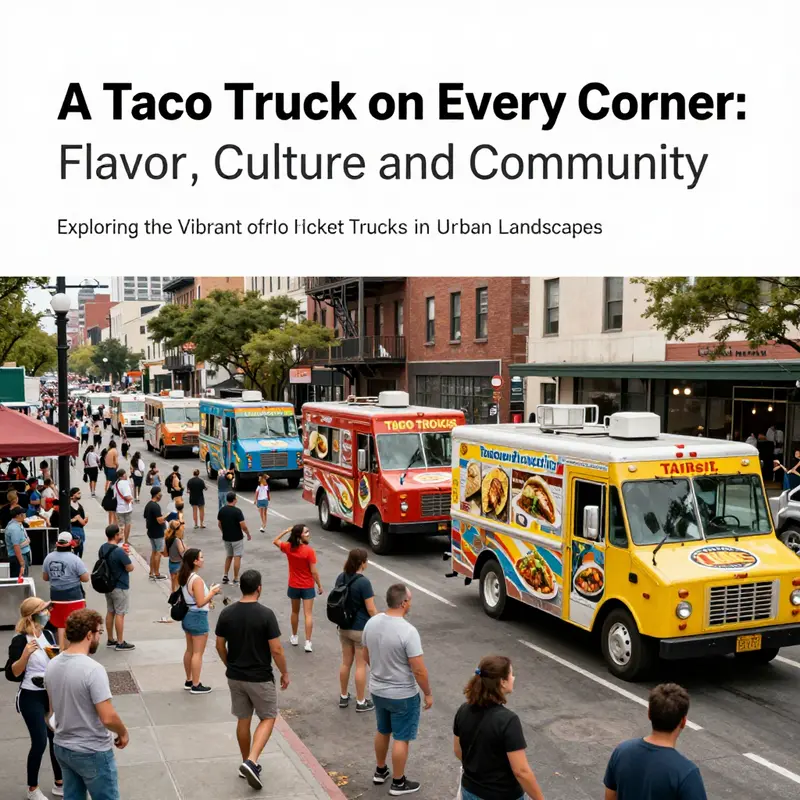
Let’s spice things up and celebrate the kaleidoscopic world of taco trucks, those flavorful wheels that have rolled into our hearts—creating a taco truck on every corner! This article dives into the cultural significance of taco trucks that connect diverse communities while serving up delicious bites directly from their mobile kitchens. Exciting economic impacts emerge as they create job opportunities, influence societal trends, and adapt to an ever-evolving food landscape. As we explore the technological innovations that enable these culinary artists to thrive and the geopolitical context that shapes their journey, you’ll discover just how deeply woven taco trucks are into our urban identity. Get ready, taco lovers and food truck aficionados, for a journey that highlights every aspect of this beloved culinary tradition.
On Every Corner: The Taco Truck as a Living Thread in Urban Culture
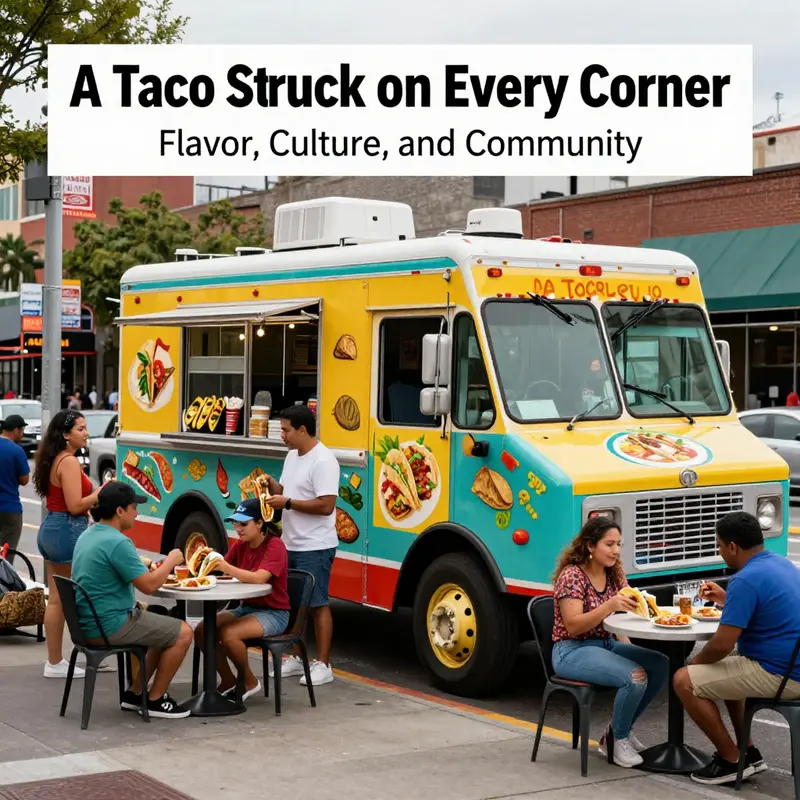
Across the urban map, the taco truck is more than a bright pop of color and a quick meal. It is a moving thread that ties neighborhoods to memory, family, and future possibilities. Where bricks and mortar endure, a truck rolls through with a rhythm of wheels, sizzling pans, and the language of shared plates. In cities that never quite settle into one flavor or one skyline, the taco truck represents a flexible, intimate form of public culture. It travels not just to feed but to affirm, to scaffold social ties, and to test new ideas in real time. The idea of a taco truck on every corner speaks to a vision of density in which food becomes the common language that language alone cannot fully capture. Mobility is its instrument, and adaptation is its craft. A truck can stop for a festival or hover near a workers’ line at dawn, offering sustenance and a listening ear. In a world where urban life often presents barriers to community, these mobile kitchens become accessible commons, informal town halls where people from diverse backgrounds converge, share, and imagine together.
Culturally, the taco truck occupies a unique space at the intersection of labor, memory, and land use. It arises from families who traded weekends for weekdays, from recipes handed down in kitchens where the menu was as much a story as a set of techniques. In many American cities, immigrant and day-laboring communities find in the truck a reliable point of contact with a larger city that can be both generous and unyielding. The truck’s presence on a street corner signals more than appetite; it signals belonging. Those who gather around these mobile stalls exchange news, form informal networks, and offer mutual aid in practical ways. In other words, the truck becomes a social center, a place where vulnerability is acknowledged and resilience is practiced. The power of these spaces lies in their everyday-ness: the way a simple meal becomes a vessel for identity and solidarity amid the pressures of work, housing instability, and shifting immigration policies. The truck’s mobility allows it to serve as a connected tissue between neighborhoods that might not otherwise intersect, weaving patterns of exchange that are as important as the food itself.
A taste of home is one of the most poignant dimensions of the taco truck’s cultural significance. For many people from rural Mexico and other Latin American regions, the truck offers more than nourishment; it provides a sensory link to memory and place. The smell of cumin, cilantro, and roasted peppers acts as a familiar beacon in a landscape that can feel alien. Menu items—whether a particular salsa, a specific kind of carne asada, or a soft corn tortilla warmed on a comal—become edible anchors to a family history. When people eat together on a curb or under a striped awning, they are performing a cultural ritual that reconstitutes a sense of self in a new environment. This is not nostalgia without agency. It is the practical act of preserving a tradition while translating it into a living, evolving practice that can speak to the needs and tastes of diverse urban audiences. The same dish may appear with local adaptations—regional ingredients, regional spice levels, or creative twists—that honor origin while acknowledging the realities of the city at hand. In this way, the taco truck becomes both a symbol of continuity and a laboratory for culinary innovation.
Entrepreneurial spirit is inseparable from the cultural story of the taco truck. Many of these ventures began as modest family operations, fueled by resourcefulness, hard work, and an eye for opportunity. The truck’s lower overhead compared with a brick-and-mortar restaurant means risk is more manageable and experimentation more feasible. Chefs can alter menus in response to crowd preferences, to seasonal ingredients, or to labor-market shifts without the heavy financial penalties that would accompany a storefront move. The mobility itself is an economic instrument: trucks can reposition to where demand is strongest, test new locations, and negotiate with different communities about what they want to eat. That entrepreneurial fluidity is a social good not only for the owners but for the neighborhoods that gain access to new flavors and new stories. Each truck, in this light, stands as a testament to the capacity of immigrant communities to turn modest means into thriving local businesses. It is a reminder that resilience can be economic as well as cultural, and that a street corner can become a site of prosperity as well as sociability.
The social life of taco trucks extends beyond hunger and commerce into the realm of community and political engagement. These mobile kitchens often serve as informal gathering points where workers organize, share information about labor rights, and mobilize around shared concerns. They can be places where families coordinate schedules, where neighbors talk through safety and transportation needs, and where celebrations— birthdays, weddings, cultural fiestas—spill out into the street with the same energy with which they spill into kitchen spaces. In this sense, food on wheels contributes to social cohesion by lowering the barriers to civic participation. The presence of taquerias and trucks on city corners also signals a broader cultural exchange: Mexican culinary practices meet American urban life in a way that complicates tidy culinary borders, inviting cross-pollination with other immigrant cuisines and with the broader gastronomic culture of the city. The result is not a melting pot in which flavors vanish or homogenize, but a tapestry in which diverse contributions keep their distinct textures while binding together through shared spaces, shared meals, and shared moments of levity and relief after a difficult shift.
The urban landscape itself, shaped by zoning, parking, and pedestrian flow, interacts with the taco truck in meaningful ways. The truck’s footprint is modest, but its social footprint can be enormous. It negotiates curb space, interacts with foot traffic, and responds to what a neighborhood wants to eat at different times of day. In this negotiation lies a democratic thread: the community’s tastes, schedules, and needs influence the movement of these mobile kitchens as much as the owners’ business plans do. As cities grow and diversify, the ubiquity of taco trucks can become a visible expression of inclusive urbanism—the idea that the city assets, including foodways, belong to a broad spectrum of residents rather than to a narrow elite. Yet this is not a triumph without complexity. Trucks face regulatory constraints, health and safety standards, and competition with other vendors. They also confront the broader question of how urban policy can support small, immigrant-owned businesses without creating bureaucratic roadblocks that push them to the margins. In this sense, the dream of a taco truck on every corner is both a cultural aspiration and a policymaking challenge: a call to design cities that celebrate mobility, encourage local entrepreneurship, and ensure that the social benefits of these spaces are accessible to all.
The idea resonates beyond individual stories and neighborhood economies because it is anchored in a larger narrative about immigration, belonging, and American urban life. The taco truck, in its nimble presence on city streets, reframes questions about who makes a city and how. It puts a human face on the discourse about labor, culture, and the daily act of feeding people. It asks us to consider not only what we eat but how we come to know one another through food. When a tortilla crackles on a hot griddle and a line forms under a bright sun, strangers become neighbors, and neighbors become part of a shared urban experience. The truck thus becomes a portable monument to the power of culinary storytelling to bridge gaps, to democratize access to flavor, and to remind us that cities are not only grids of transit and towers but living tapestries of taste, memory, and aspiration. The broader implication is clear: if we imagine a taco truck on every corner, we imagine a city that values accessibility, diversity, and mutual aid as essential urban goods.
For readers who want to explore how food businesses shape community dynamics and civic life further, a thoughtful perspective on these themes can be found in the broader scholarly discussion linked in the original article cited in the research. And for practitioners looking to connect more deeply with communities while growing a mobile food operation, practical reflections on legal steps, model configurations, and market adaptability are available in the blog resources and planning guides referenced in related materials. To gain a sense of how these ideas translate into policy and practice on the ground, consider visiting a community-focused resource that chronicles the everyday realities of street food cultures and the people who sustain them: fireduptacotruck.com/blog.
External reading on the cultural significance and social roles of street food networks can enrich this chapter further. For broader academic context, one may consult the scholarly analysis linked in the research materials: https://www.sciencedirect.com/science/article/pii/S0190740919302465.
A Taco Truck on Every Corner: The Economic Pulse of a Mobile Food Renaissance
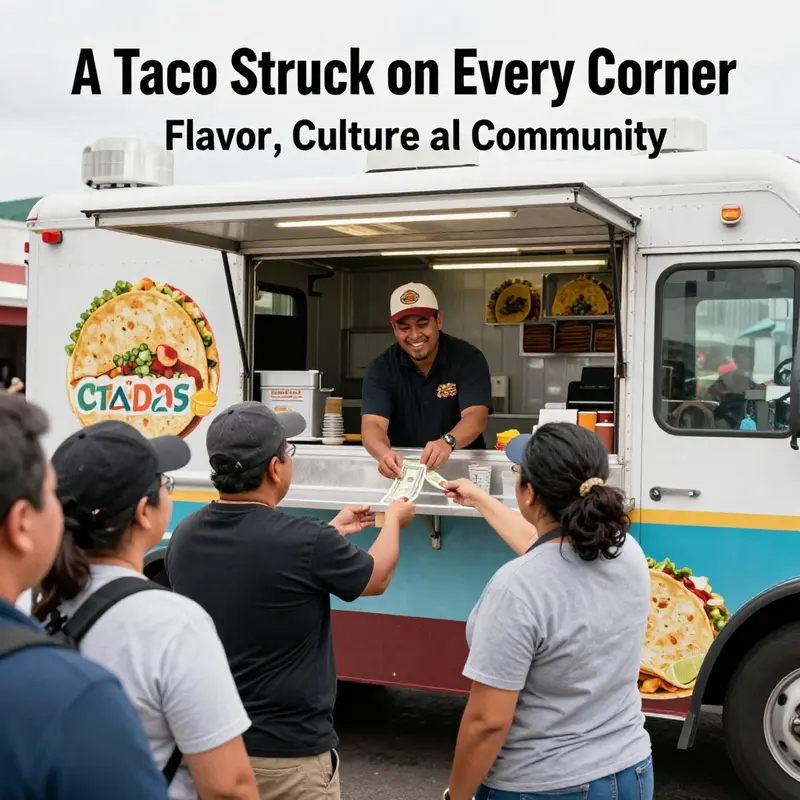
Across a city block, a taco truck can become a moving anchor of activity, drawing people and dollars into places that might otherwise sleep after dusk. The idea of a taco truck on every corner is more than a sensory delight; it is a living model of how flexible, small- scale enterprise can weave itself into the fabric of urban life. In cities that treasure street-level culture, these mobile kitchens do more than feed bodies; they feed the economy with jobs, partnerships, and a cadence of commerce that adapts as neighborhoods shift. The story begins with people. A taco truck creates direct employment opportunities for cooks, servers, and drivers, but its reach extends far beyond the sandwich counter. Each truck requires suppliers who stock tortillas, peppers, limes, and cilantro, and those suppliers often operate locally, keeping money circulating within the regional economy. The labor created by a fleet of trucks also spawns related roles in maintenance, scheduling, and vendor coordination, turning a handful of wheels into a network of livelihoods. In many ways, a mobile culinary operation lowers the friction of entry. A family that starts with a weekend stand can test recipes, refine service, and build a customer following without the heavy upfront cost of a brick-and-mortar restaurant. When the concept proves resilient, expansion can take place in the form of additional trucks rather than a single, costly building. The mobility of these businesses, then, translates into a mobility of opportunity, enabling more people to pursue entrepreneurship with a relatively modest initial outlay yet with the potential for meaningful, ongoing revenue. Yet the economic impact radiates beyond jobs and supplier relationships. The cash-based, on-the-ground nature of many taco trucks introduces a set of tax considerations that communities must reckon with. The informal feel of daily cash transactions can complicate revenue tracking for municipal authorities, especially when fleets operate across multiple districts or zoning zones. This is not a critique of the entrepreneurial spirit, but a reminder that robust regulation and clear licensing pathways matter just as much as inventive menus and brisk service. When tax structures are transparent and accessible, they do not damper the energy of small operators; they channel it into a more stable, legible economy that can sustain schools, roads, and public services through predictable revenue streams. In that sense, the economic value of a taco truck on every corner is not only measured by the dollars it earns but also by how it sits within a city’s fiscal ecosystem. The effect on consumer spending is equally compelling. In many neighborhoods, these trucks provide affordable dining options that fit a range of budgets, from students to families. The affordability, combined with quick service, nudges people toward choosing a taco over other quick- service meals, extending the reach of downtown and neighborhood commercial districts into places that might otherwise see limited foot traffic. The presence of multiple trucks in a corridor does more than satisfy hunger; it changes the rhythm of evening life, inviting casual strolls, spontaneous conversations, and a sense of place that rewards repeat visits. When foot traffic increases, nearby businesses often feel the spillover. A busy corner can become a magnet for pop-up merchants, small retailers, or coffee carts, creating a micro-economy that relies on sustainable, repeatable traffic. In this sense, the urban vitality associated with taco trucks contributes to what planners call the “placemaking” effect: the transformation of underutilized space into a vibrant, mixed-use area where people want to linger. The drivers of this vitality are not only the trucks themselves but the stories they carry. Many operators bring recipes inherited from family kitchens, regional influences, and seasonal adaptations that reflect the neighborhoods they serve. This fusion of culture and commerce fosters a kind of entrepreneurial experimentation that bricks-and-mortar venues sometimes struggle to match. The ability to shift menus with the weather, cultural calendars, or local tastes means a fleet of trucks can respond rapidly to changing demand, testing new flavors with relatively low risk. Innovation in this space often blooms through collaboration. Trucks might share supply chains, cross-promote in adjacent markets, or combine offerings at block parties and night markets. In practice, this means a more diverse and resilient local food economy. It also invites a broader audience into the conversation about what constitutes a meal, a neighborhood, and a public square. From the perspective of urban revitalization, a taco truck on every corner helps reclaim vacant lots or unused curb space and repurpose them into social hubs. A parked truck becomes a temporary stage for performance, a meeting point for neighbors, and a source of informal security through the simple presence of activity. This dynamic can breathe life into late-night economies, extending the hours during which streets feel safe and welcoming. The long arc of such revitalization has implications for property values, parking demand, and the balance between nightlife and resident quiet. To navigate these tensions, communities need clear guidance about licensing, health codes, and street-use policies that acknowledge the realities of mobile food vendors. When policymakers reduce friction—without compromising safety—the ecosystem supports more operators, more local sourcing, and more diners who discover flavors that might otherwise stay hidden in a handful of neighborhood stores. The broader implications extend into entrepreneurship education and access to capital. A fleet of trucks demonstrates that entrepreneurship does not always require a single, large investment; it can be built through careful learning, deliberate network-building, and strategic partnerships. This is entrepreneurship as a process of iterative learning, with each new vehicle representing a small, tangible step toward a larger dream. The success of such a model invites innovation in business practices—shared maintenance facilities, joint purchasing agreements, and cooperative marketing—that help improve margins for individuals while maintaining the affordability that attracts a broad customer base. The possible downsides deserve attention as well. The same flexibility that powers resilience can complicate regulatory oversight. The mobile nature of these businesses makes enforcement of health standards, wage laws, and licensing across jurisdictions more complex. And because the business is cash-rich and inventory-light, it can be perceived as easier to evade certain taxes than a single, fixed-location restaurant. These concerns underscore the need for thoughtful policy design that protects public revenue while supporting small operators. The challenge is not to curtail opportunity but to channel it through predictable rules that communities can administer fairly and consistently. When tax and licensing regimes are transparent and easy to navigate, operators feel supported rather than burdened, and communities reap the benefits of a steady, compliant, and dynamic food economy. The dialogue between operators and city officials matters here. A tacit social contract emerges as trucks proliferate: vendors invest in safe equipment, comply with health standards, and contribute to local economies; cities provide accessible licensing, predictable inspection cycles, and modest fee structures; and residents gain affordable, diverse meals and a sense of place that makes their neighborhoods feel alive. In essence, a taco truck on every corner embodies a moving microcosm of urban economic life. It highlights how people, meals, and streets intersect to create value that is greater than the sum of its parts. It also points to a future where mobility, adaptability, and shared spaces coexist with traditional urban economies, offering a model for how cities can nourish growth without sacrificing character. For those curious about practical frameworks and policy considerations, a deeper look into the broader literature on mobile vendors offers helpful context. While the core chapter here centers on the economic pulse created by these mobile kitchens, the broader conversation recognizes that such ventures intersect with labor markets, supply chains, and local governance in meaningful ways. As stakeholders explore this model, they often turn to evidence from comparable mobile food businesses and to emerging analyses of how street-level commerce shapes neighborhoods over time. For a broader framework that situates these findings within local economic development, the Brookings Institution provides a comprehensive analysis of how food trucks affect local communities, including the dynamics of employment, spend patterns, and urban design. See https://www.brookings.edu/research/the-economic-impact-of-food-trucks-on-local-communities/. For readers seeking practical, on-the-ground guidance on managing finances and compliance, a helpful resource is a dedicated guide to tax considerations and deductions for food-truck operators, which offers concrete steps to navigate cash flow, deductions, and regulatory requirements. For an accessible synthesis of operational strategies and community impact, consider the resource linked in the internal notes on tax planning and licensing: tax deductions for food truck owners. This chapter does not pretend to settle every policy question, but it aims to illuminate how a network of taco trucks could contribute to a city’s economy by creating jobs, supporting local suppliers, and animating streets with energy, color, and conversation. The vision is not merely about filling corners with food but about filling them with opportunity, collaboration, and a shared sense that a simple meal can become a catalyst for economic and cultural exchange. In the end, the chapter invites readers to imagine the city as a living marketplace where mobility, craft, and community converge. The taco truck becomes less a novelty and more a mechanism for inclusive growth, offering a template for how neighborhoods can sustain themselves through local entrepreneurship, adaptive supply chains, and public policy that recognizes mobility as a legitimate, valuable form of economic activity. External resource: https://www.brookings.edu/research/the-economic-impact-of-food-trucks-on-local-communities/.
null
null
Technological Innovations Enabling a Taco Truck on Every Corner
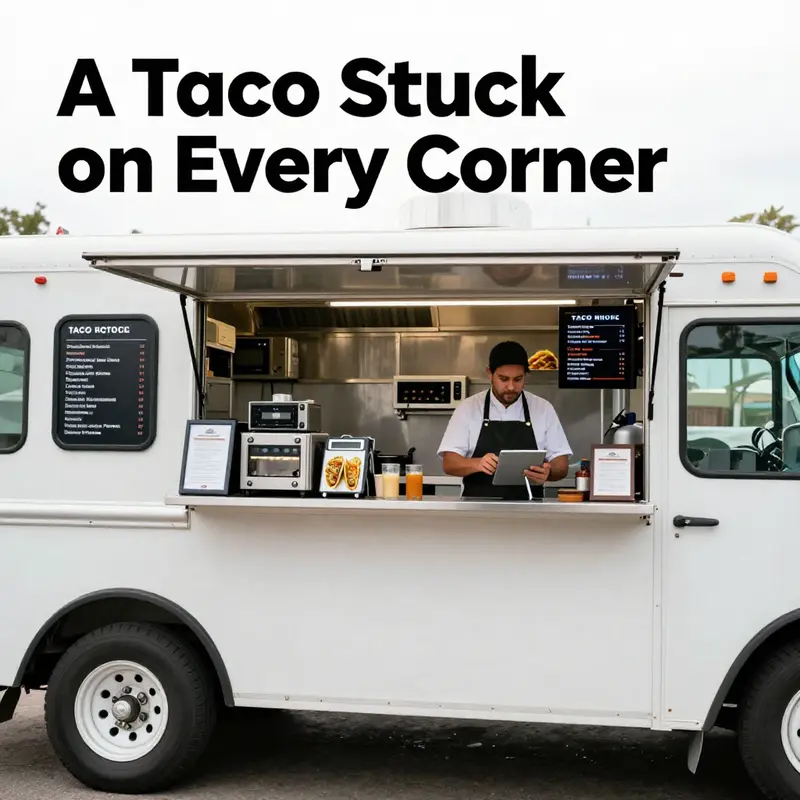
The image of a taco truck on every corner has always carried a certain promise: a compact kitchen, a burst of aroma, and a chance for communities to gather around a shared street-level dining experience. In cities where street food is not just a stopgap but a cultural fixture, the dream of scale without surrendering personality has moved from bold aspiration to practical possibility. What makes this growth sustainable is not merely a clever business model but a convergence of tools that streamline operations, broaden visibility, and honor the neighborhood character that gave birth to these mobile kitchens in the first place. At the heart of this evolution is a suite of technological innovations that keep a fleet of small kitchens running efficiently while still letting each truck tell its own story, its own recipes, and its own sense of place. What follows is less a manual for expansion and more a reflection on how technology reshapes the appetite for mobility, accessibility, and authenticity in street food.
First, the rise of mobile point-of-sale systems has redefined the simple act of taking payment into a broader, data-driven workflow. A compact device paired with a tablet or phone can process transactions quickly and securely, but the value goes far beyond speed. Inventory increments in real time as ingredients are used, so mismatches between supply and demand are fewer than ever. Sales analytics offer a window into which items resonate with different neighborhoods, which times of day see the greatest traffic, and how weather, events, or local trends shift patterns. Real-time order management weaves into the workflow without bottlenecks, allowing cooks to adjust preparations on the fly if a popular item begins to outsell the rest. This orchestration reduces overhead—less waste, less labor churn, tighter control of margins—while preserving the improvisational charm that makes a street cart feel alive rather than scripted. The net effect is a fleet that can respond with precision, aligning resource use with customer appetite across diverse blocks without saddling operators with heavy fixed costs.
Second, the visibility afforded by location-based services changes the geometry of a city’s taco map. Trucks become discoverable not only by their regulars but by curious newcomers who wander into a neighborhood and rely on maps to guide them. The ability to pin down a truck’s location, share it, and adjust it in response to demand reduces the friction that keeps a great idea static. Predictive routing, informed by historical data and near-term signals such as events or school bell times, helps operators plan where to set up next, smoothing the peaks and valleys of demand. The mobility itself becomes a feature rather than a constraint: a kitchen that migrates with the sun, catching lunch crowds near offices by day and late-night wanderers near music venues by evening. In this light, a single, well-tuned truck can seed a vein of micro-outposts that feel both temporary and permanent, a paradox that many city dwellers instinctively understand and welcome.
Another pillar in this transformation is the shift toward sustainable energy solutions that honor urban sensibilities while expanding what a truck can do. Electric-powered cooking units, paired with solar charging when feasible, reduce dependence on gas while lowering emissions. The benefits ripple outward: quieter operations in dense neighborhoods, lower odor concerns near residential blocks, and a more flexible platform for overnight or multi-site runs that may not have easy access to traditional gas lines. The implications extend beyond environmental impact. For operators, electric systems can simplify maintenance, reduce fuel costs, and create opportunities to park where diesel fumes would have previously deterred customers. Of course, these advantages come with practical considerations—battery life during high-volume service, the need for reliable charging options, and ongoing maintenance—but the trajectory is clear. A growing cohort of operators is discovering that sustainable power is not just a platitude; it’s a strategic enabler of broader coverage without sacrificing the intimacy that makes street food so compelling. For readers curious about energy options and how they can integrate these technologies, see Electric-vehicle conversion kits for food trucks.
Alongside efficiency and reach, digital storytelling and social presence have become essential for turning a single truck into a neighborhood sensation and, eventually, a small fleet with recognizable personality. Without a big advertising budget, operators leverage visual storytelling on platforms that reward appetite, craft, and community connection. A well-timed post can showcase a searing flame, a colorful salsa, or a family recipe passed down with pride, transforming a simple lunch into a ritual that locals anticipate. The most successful operators blend consistent branding—colorful canopies, unique naming, a signature flame—with a flexible, behind-the-scenes look that invites customers into the kitchen and into the decision-making that shapes the menu. Rather than shouting for attention, they invite dialogue: what should tomorrow’s special be, which neighborhood should we serve next, how can we better accommodate dietary needs while preserving flavor? In this ecosystem, a single cart becomes a living, evolving project, a catalyst for conversation and community-building that can ripple across a city through word of mouth and shared posts.
The power of these technologies is not merely in adding features but in weaving together the business and the cultural dimensions of street food. A mobile POS system creates a data backbone that informs decisions about where to be, when to be there, and what to cook when. GPS-enabled visibility converts every block into a potential testing ground for new ideas, allowing operators to pilot menus without committing to a permanent location. Sustainable energy choices align the business with rising consumer expectations for eco-conscious dining and create a practical framework for longer operations without the constraints of traditional fuel supply. Digital storytelling builds the relationship between truck and community, turning customers into advocates who return not only for the food but for the sense of belonging they discover in a shared, evolving experience. Together, these technologies don’t just make a taco truck more efficient; they enable a cultural expansion—an invitation to bring a favorite mobile kitchen to more corners without diluting the sense of place that drew people to it in the first place.
This is not a story of technology replacing tradition. It is the reverse: technology lowers the barriers to replicating, sharing, and preserving a regional culinary identity. In a city where a taco truck can become a familiar landmark, each new truck that joins the orbit carries with it a story, a family recipe, and a local memory. The digital tools help keep those stories legible and sustainable across multiple operators and multiple blocks. They make it possible to maintain high standards of food safety and consistency while preserving the flexibility that makes street food unique. The balance is delicate: scale without homogenization, speed without sacrifice, accessibility without eroding craft. When done well, the expansion becomes a form of civic hospitality—more corners with great food, more ways for neighbors to connect, and more opportunities for aspiring cooks to translate a weekend dream into a lasting local institution. The dream, in other words, is not merely to multiply the number of trucks but to multiply the quality and character they bring to a city’s streets.
For readers who want to explore these ideas with practical depth, the conversation does not end with the novelty of a single innovation. It continues in how operators combine these tools with smart menu design, thoughtful maintenance, and adaptive marketing to build resilient micro-ecosystems. Regular maintenance tips, best practices for choosing the right equipment, and strategies for legal compliance all intersect with technology in a way that strengthens the entire ecosystem rather than creating new points of friction. The best operators harness data not to trap their choices in a spreadsheet but to illuminate the next move: which block, which time, which dish will capture a larger share of the street’s appetite without sacrificing the personal touch that makes a taco truck so beloved. As cities grow more characterful and more diverse, the taco truck on every corner becomes less about ubiquity and more about a tapestry of neighborhood encounters—each truck a thread in a broader web of urban cuisine, mobility, and community.
External resource: Discover The Best Tacos In Austin Tx Strictly From Food Trucks can offer broader context on how street food culture in a city renowned for its taco scene evolves when technology meets tradition. Discover The Best Tacos In Austin Tx Strictly From Food Trucks
Mobility as Policy: The Geopolitics of a Taco Truck on Every Corner
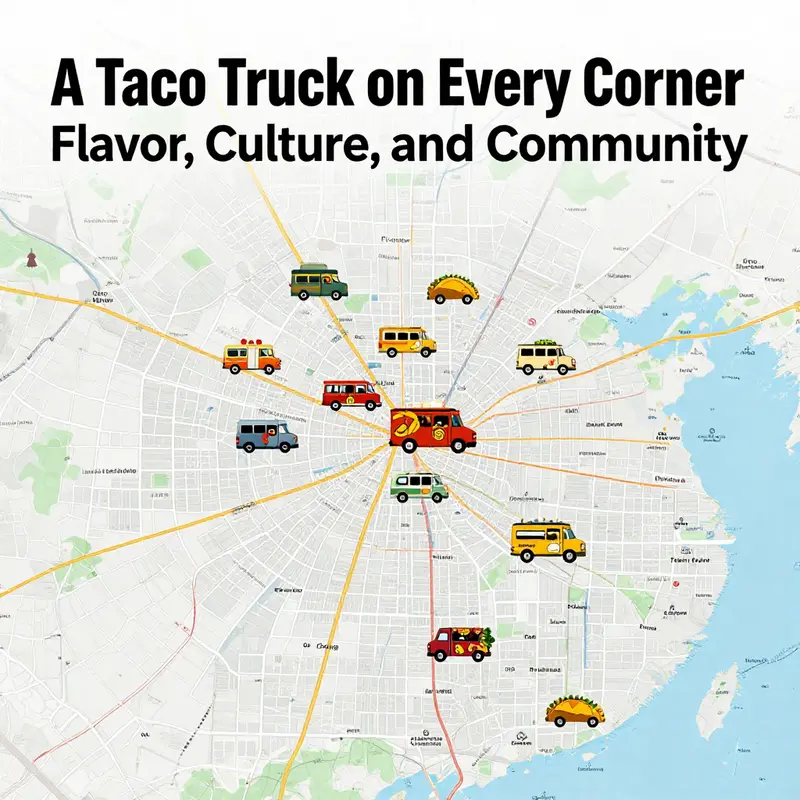
In a city where street corners pulse with the cadence of daily life, the taco truck becomes more than a portable kitchen. It is a moving forum for culture, labor, and law, a microcosm of how urban space is negotiated among neighbors, city agencies, and the immigrants who bring it to life. The image of a taco truck on every corner is not merely a culinary fantasy; it is a lens on power—who gets to claim space, how rules are made or bent, and what happens when mobility challenges the fixed geography of zoning, permits, and prestige. When we look at this idea through a geopolitical frame, we see a story that travels from family weekend ventures to citywide debates about immigration, economic opportunity, and urban sustainability. The truck is a flexible instrument for mapping privilege and inclusion, opportunity and risk, in a society that increasingly measures value by access to place and voice in the public square.
To understand the deeper currents at work, it helps to recall a specific historical moment in Los Angeles, a city where the street becomes a stage for negotiation between cultures and economies. Here, taco trucks emerged not as a novelty but as a lifeline for immigrant households who saw mobility as both a strategy for survival and a means to share a tradition. What began as weekend stands—families cooking for friends, neighbors, and church gatherings—often evolved into permanent presences in neighborhoods that might have lacked accessible dining options. The trucks moved with the rhythms of family life, adapting menus to evolving tastes and local feedback, a form of culinary entrepreneurship that could pivot as quickly as the city itself. In this way, mobility became a form of innovation, a way to test flavors and approaches without the enormous upfront costs of brick-and-mortar establishments.
Yet mobility also produced friction, and nowhere was that more evident than during the infamous 2008 period known in Los Angeles as the “Taco Truck War.” The frictions were not merely about taste or competition but about the basics of access: where a truck could park, who controlled a given curb, and which permits were required to operate after dusk. The conflict pointed to a broader conflict over urban space itself. It highlighted how small, everyday decisions—where a vendor could stop, who paid what fee, how long a cart could linger—could become flashpoints in debates about immigration, economic equity, and the right to participate in the city’s life. The war exposed a spectrum of interests: established restaurant owners defending their market, policymakers navigating a labyrinth of zoning codes and health regulations, and immigrant families leveraging mobility as a pathway to economic resilience. The narrative of the taco truck, then, becomes a case study in governance—how city systems adapt to rapid change, how rules can either enable or constrain opportunity, and how communities push back when they feel unseen or unheard.
The political dimension of these mobile kitchens widened as the public conversation around immigration and small-business vitality escalated in the mid-2010s. Across the country, candidates and local leaders began to invoke the visibility of taco trucks as shorthand for larger questions: What kind of economic policy best supports small operators from immigrant backgrounds? How do we balance neighborhood concerns—traffic, litter, noise—with the social benefits of diverse cuisines, employment, and cultural exchange? The trucks’ presence in diverse neighborhoods offered a living argument for inclusion and mobility: it demonstrated that immigrant labor could animate local economies, create pathways to citizenship of a sort, and enrich urban life with new tastes and stories. But the same visibility also underscored persistent regulatory challenges and systemic inequality. Some neighborhoods bore the heaviest regulatory burdens, while others benefited from loosened rules or strategic enforcement, creating a tapestry of uneven opportunity that many observers described as a policy fault line. In this sense, the taco truck on every corner becomes a political symbol as well as a pragmatic business model: a touchstone for debates over who gets to shape the urban fabric and who pays the price when policy lags behind practice.
The intersection of geopolitics and mobile food vending extends beyond local anecdotes into broader questions about migration, labor rights, and governance. The mobility of the taco truck mirrors migratory flows—both in the ways people move to new places in search of opportunity and in how policies move slowly yet powerfully to either enhance or curtail that mobility. In many cities, the presence of mobile vendors intersects with labor protections, wage standards, and the right to organize—issues that have long framed debates about fair work and dignity in the informal economy. At the same time, urban planners and policymakers are increasingly compelled to think about the logistics that underpin mass mobility of food: waste management, electrical and water needs, health inspections in a non-traditional kitchen, and the practicalities of scheduling and curb usage in dense neighborhoods. These considerations reveal that a taco truck on every corner is not simply an entrepreneurial ideal but a demand for coordinated policy that can harmonize culinary innovation with public health, safety, and livability.
A practical thread running through these discussions is how cities translate the metaphor of mobility into tangible reforms. The idea invites policymakers to imagine flexible permitting, rotating parking zones, and shared public spaces that accommodate a rotating cast of vendors, each contributing to neighborhood vitality while respecting neighbors’ concerns. It also prompts a reevaluation of how permits are issued and renewed, moving away from every-truck-for-itself competition toward a more strategic, equity-focused framework. In this sense, a deeper geopolitics emerges: the capacity of a city to absorb, regulate, and benefit from a mobile, immigrant-driven economy becomes a measure of its modernity and resilience. The tension between speed and structure—the quick pivot of a street-side kitchen and the slower cadence of regulatory processes—frames the ongoing negotiation about what urban life should look like in a diverse metropolis.
This chapter does not pretend to resolve the tension overnight. Instead, it situates the conversation within a historical arc that recognizes both the promise and the pitfalls of mobility as policy. It asks us to consider how a city can preserve the spontaneity and cultural richness that mobile vendors bring, while ensuring safety, fair labor practices, and clean, organized streets. It invites readers to think about the practical steps that would enable a future with more, not fewer, street-level culinary voices. One pathway is to normalize the legal pathways for launching and sustaining a mobile food operation, including clear requirements for licenses, health standards, and parking. For readers curious about the formal steps involved, an accessible starting point is the set of guidelines offered in the legal steps for launching a food truck, which distill complex municipal codes into a navigable process that can help aspiring vendors meet requirements while preserving the city’s order and public trust. Legal steps for launching a food truck
As the city contemplates a future where mobility is demographic strength rather than regulatory obstacle, the social contract around urban space shifts. A taco truck on every corner implies a city that can absorb rapid change and translate it into opportunity for residents who might otherwise be left on the margins of the formal economy. It calls for thoughtful design of public spaces that welcome collaboration, not conflict; for equitable access to permits that does not penalize newcomers; and for labor frameworks that recognize the dignity of workers who build and sustain these mobile kitchens every day. It also invites a broader public conversation about migration as a source of cultural exchange and economic vitality, rather than a challenge to be managed away. In this sense, geopolitics and street-level cuisine converge: policymakers must craft rules that protect public interests while honoring the entrepreneurial spirit and cultural significance that mobility brings. The result could be a city that does not merely tolerate diverse vendors but actively collaborates with them to create a more vibrant and inclusive urban life. That is the political potential of a taco truck on every corner—a potential that requires courage, clarity, and a shared commitment to shaping space in a way that reflects the city’s evolving identity.
For readers seeking to explore the broader political and social contours of mobile vending in American cities, this conversation sits within a larger discourse on immigration, labor rights, and urban governance. The Tacoma-to-Los Angeles arc, the San Diego to Chicago variations, and other regional stories all converge on a single insight: mobility is a platform for empowerment when paired with thoughtful policy, and a flashpoint for inequality when policy stalls. The city’s willingness to align zoning, permits, and labor standards with the realities of immigrant entrepreneurship will determine not only how many trucks populate its streets but how justly those streets are shared. The idea of a taco truck on every corner, then, is not simply a culinary goal; it is a governance challenge, a chance to reimagine how urban life accommodates movement, culture, and work in a rapidly changing world. It is an invitation to see street food as a public good, a form of civic expression that requires investment, transparency, and collaboration across communities and sectors. The path forward will be shaped by continued dialogue among residents, policymakers, operators, and workers, each bringing a piece of the puzzle to the table and collectively deciding how to balance appetite with accountability, flavor with fairness, and speed with safety. The result, if achieved with care, could redefine urban life for a generation, turning mobility from a policy hurdle into a shared asset that sustains communities, preserves culture, and expands opportunity on every corner.
External resource for further context: https://www.washingtonpost.com/graphics/2016/local/taco-truck-war-los-angeles/
Final thoughts
In conclusion, a taco truck on every corner embodies much more than just a convenient food option; it serves as a symbol of cultural exchange, economic opportunity, and community spirit. With their adaptive nature and embracing of technology, taco trucks continue to flourish, reflecting the diverse identities of urban landscapes. As we navigate through societal trends and geopolitical nuances, it becomes clear that the humble taco truck is an iconic staple that will keep spinning wheels of flavor for generations. So, whether you’re an avid taco enthusiast or a business owner riding the food truck wave, let’s celebrate the impact these culinary wonders make—one corner at a time.