
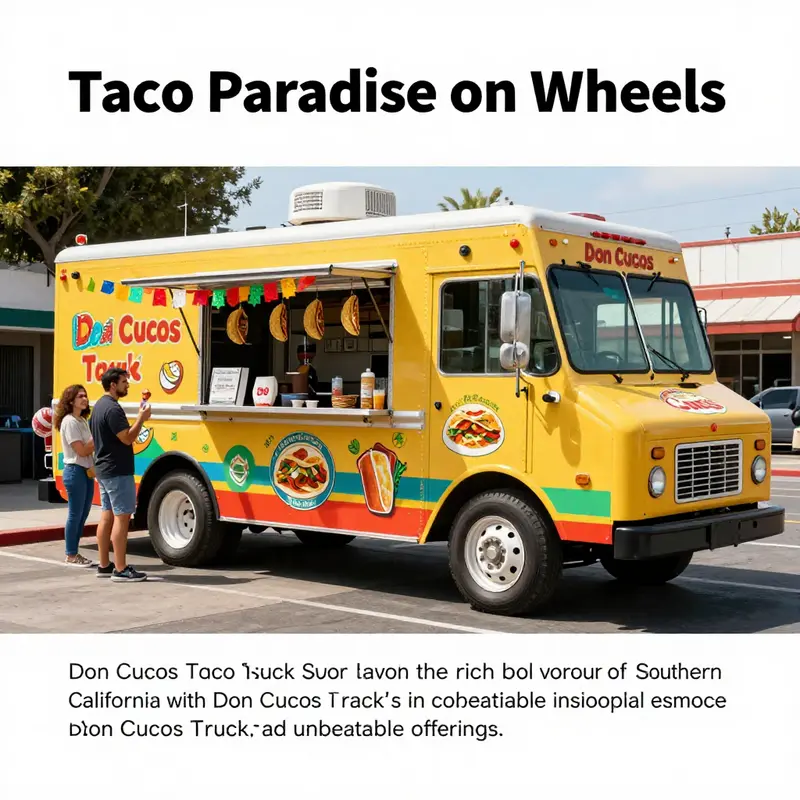
If you’re on the hunt for an unforgettable taco experience, look no further than Don Cucos Taco Truck, a gem nestled in the heart of Southern California. With its vibrant menu centered on authentic Mexican cuisine, this food truck has garnered a loyal following of taco lovers and culinary enthusiasts alike. Spanning across multiple locations, Don Cucos is not just a stop for a meal—it’s a celebration of flavors, fresh ingredients, and the joy of good company. In the chapters ahead, we’ll take a deep dive into what makes Don Cucos Taco Truck a standout in the bustling food truck scene, from its mouthwatering menu to the rich customer experiences, pricing that delivers value, and its cultural impact in the community.
From Masa to Market: A Deep Dive into Don Cucos Taco Truck’s Menu
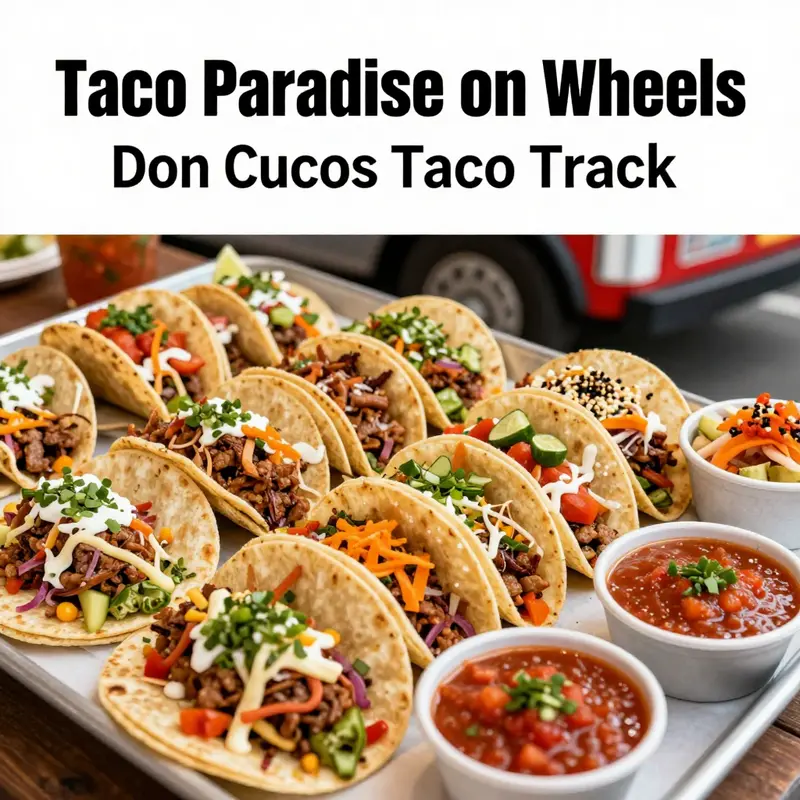
From Masa to Market: A Deep Dive into Don Cucos Taco Truck’s Menu unfolds as a living map of a street-food tradition that travels with a modern pulse. The truck, a bright beacon in Southern California neighborhoods, carries more than just food; it carries a conversation about craft, culture, and value. At its core lies the masa—the ground corn dough that becomes the face of every tortilla. The skill of turning fresh masa into warm, pliable tortillas is the quiet engine of the menu, the element that makes each bite feel both familiar and exciting. The tortillas arrive soft and fragrant, the surface dusted with a subtle sweetness that hints at the corn’s origin. They are warmed to the point where they blister gently, just enough to release a toasty aroma, and then folded around fillings that celebrate simplicity and balance. The result is a taco that does not shout for attention but invites you to notice how the tortilla itself carries the flavor, allowing the meat, the salsas, and the little accoutrements to harmonize in a single, satisfying moment.\n\nThe truck’s protein options move the flavors through a spectrum of textures and aromas. One style showcases a smoky, grilled beef that remains tender and juicy, the kind of bite that rewards a slow chew and a careful saucing. Another option features pork that has spent time bathed in a seasoned marinade, a depth of savory notes that remain bright and approachable. A third path offers pork that has been slow-roasted, yielding a melt-in-your-mouth experience that makes a strong case for comfort food done well. Across these choices, the tortillas carry the fillings with ease, never competing with them but rather providing a warm, flexible platform for the eating experience. The emphasis on fresh masa and careful heat underscores a commitment to authenticity, a thread that travelers and locals alike have learned to recognize in every bite. It is a reminder that the best street-food moments often come from respect for the process as much as the product itself.\n\nFor those seeking plant-based or simple fare, the menu makes room for a thoughtful vegetarian channel. Grilled vegetables and beans offer a lighter counterpoint to the richer meat options, proof that the kitchen values inclusivity without compromising the essence of the cuisine. A well-rounded plate might pair the vegetables with beans, a combination that textures well against the soft tortilla and creates a satisfying meal that doesn’t rely on meat to deliver its personality. The emphasis on vegetables not only broadens the appeal but also highlights a kitchen philosophy that values balance—color, crunch, and a touch of brightness from fresh toppings that wake the palate.\n\nWhen the appetite calls for more than a single taco, burritos appear as a generously proportioned route to a heartier dining experience. These wraps bring together rice and beans with a chosen protein or a veggie option, then crown the ensemble with toppings that add creaminess, tang, and a whisper of spice. The burrito format invites a different kind of engagement: unwrapping a compact package and savoring the layered flavors in a single, sustained bite. It is a reminder that the same craft that textures a standalone taco can scale up to deliver comfort in a portable, shareable form, perfect for a quick lunch break or a casual dinner on the go.\n\nAmong the menu’s most memorable moments are the signature items that speak to a sense of personal interpretation. They invite guests to imagine variations on a classic theme, to create combinations that reflect individual tastes while staying rooted in traditional techniques. These creations emphasize customization, offering guests a pathway to mix textures and flavors in a way that feels personal without demanding a culinary dictionary to understand. It is this spirit of flexibility that turns a simple stop into an event, a chance to curate a meal as unique as the day’s plans.\n\nSides enlarge the experience rather than merely accompany it. Spanish rice provides a fragrant, subtly saffron-kissed base, while black beans contribute earthy depth and protein to the plate. House-made chips and salsa add a bright, snappy counterpoint, offering a crunch that stands up to bolder fillings. The chips arrive with a crackle that hints at careful fry care and a respectful nod to texture. The salsas themselves, regardless of heat level, carry a house-made freshness, a brightness that makes the palate sing and invites another bite rather than deter it with heaviness.\n\nThe beverages introduce a refreshing counterpoint to the heat and richness of the fare. A traditional, lightly sweetened drink made from rice and almonds might appear in the lineup, delivering a cooling sweetness that clears the palate between bites. A tangy, tamarind-inspired option rounds out the choices, offering a bright acidity that cuts through the richness and invites the next bite with renewed curiosity. These drinks are not mere accompaniments but integral threads in the overall flavor story, chosen to complement the tortilla’s dependable warmth and the filling’s evolving character.\n\nThe overall experience is anchored by accessibility and community. Don Cucos operates in a way that makes it simple to connect, whether you are driving by in the Mission Hills region or planning a stop during a late lunch or dinner run. With multiple locations in Toluca Lake, Downtown Burbank, and Simi Valley, the truck cultivates a sense of neighborhood belonging that speaks to the way food trucks function as roaming kitchens and social hubs. The value proposition is equally compelling; tacos begin at highly accessible prices, reflecting a philosophy that high-quality, flavorful eats should be within reach. Patrons consistently praise the combination of fresh ingredients, bold yet balanced flavors, and the warmth of service that often feels like a quick chat with a friend rather than a transaction. The experience is not merely about eating; it is about sharing a moment of street-food culture that honors tradition while welcoming modern tastes and expectations.\n\nOperationally, the truck adapts to city rhythms, extending its hours to accommodate after-work cravings and weekend wanderings. The San Fernando location has seen hours that stretch into the evening, typically from early evening into the night, a schedule that recognizes the needs of diners who want something satisfying after a long day. The cadence of service—friendly, efficient, and focused on consistency—helps build trust with regulars who know they can count on a dependable plate that brings a sense of home to a busy street corner. In this environment, the food is elevated not merely by technique but by timing, by the way the kitchen team reads a crowd and channels that energy into the plate that lands on the table or in a warm takeout bag.\n\nFor those curious about the broader conversation around this style of cuisine, the menu and the experience it supports reveal a philosophy that values craft, accessibility, and community. This isn’t a fleeting trend but a cultivated practice, rooted in masa, in the careful balancing of salt, fat, acidity, and pepper, and in the way a tortilla can carry a chorus of flavors without overwhelming them. It’s a reminder that the most compelling flavors often emerge from restraint—the decision to let the tortilla speak first, then invite the fillings to join in harmony rather than competition. In a world of fast meals and disposable options, Don Cucos Taco Truck offers a counterpoint: a mobile kitchen that treats each component with respect and lets the eater complete the story with personal choice.\n\nIf you want to explore more about the voices and stories behind mobile kitchens, you can read further reflections on related topics at the Fire Up Taco Truck blog. Fire Up Taco Truck blog. For readers who crave a broader cultural context about the dish that anchors this menu, a quick external reference on the history and construction of the taco can be found here: https://en.wikipedia.org/wiki/Taco.
Rolling Through Southern California: Tracking Don Cucos Taco Truck’s Reach, Doors, and Accessibility
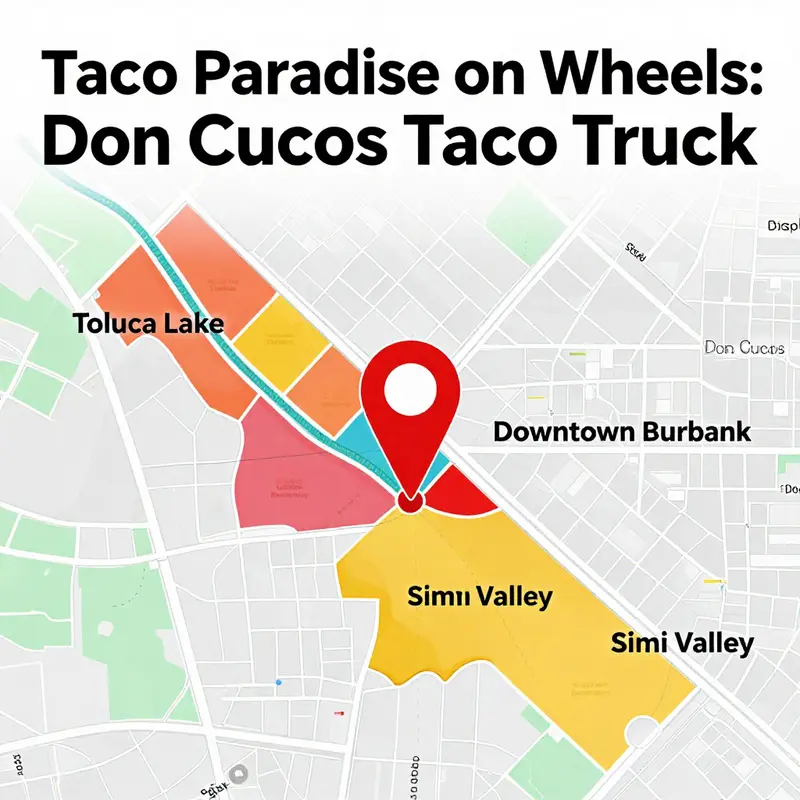
Don Cucos Taco Truck moves across Southern California like a roaming tide, a mobile kitchen fans can find and follow from Toluca Lake to Downtown Burbank, Simi Valley to the Sylmar foothills. This chapter traces how a single, agile operation threads through a mesh of communities, balancing location, time, and the practical realities of accessibility. To a visitor arriving hungry, the truck offers a familiar ritual: a bright footprint that appears where people gather, delivering a menu of handmade-inspired fare that feels casual yet rooted in tradition. The appeal is not just the food, but the way the truck becomes a reliable stop in a shifting city, an anchor in a busy day where a familiar voice meets street energy. This is the story of how Don Cucos expands its reach while staying true to the sense of neighborhood that first drew diners in the first place.
Across the Greater Los Angeles area, multiple locations create a deliberate choreography. Toluca Lake offers a steady corridor of lunchtime foot traffic and evening wanderers seeking quick, flavorful options without a long sit-down. Downtown Burbank benefits from a dense mix of office workers, students, and families wandering through a downtown corridor where trucks are a fixture alongside brick-and-mortar eateries. In Simi Valley, the truck punctuates car-oriented routines—a reliable stop amid errands, outdoor activities, or a post-drive craving. The Sylmar location at 12898 Foothill Blvd extends reach into a corridor that blends residential neighborhoods with pockets of commerce, giving a sense of a truck that is both traveler and neighbor, moving through a landscape that is expansive yet intimate. Geography matters: mobility keeps the truck close to where people live, work, and play, reminding us that good food can travel without losing its sense of place.
Accessibility is multidimensional. At least one fixed site, Tacos Don Cuco at 752 S Fetterly Ave, Los Angeles, is wheelchair accessible, with seating designed to accommodate mobility needs. This matters beyond compliance, signaling inclusion and a willingness to welcome a broader audience. For the mobile stops—Toluca Lake, Downtown Burbank, and Simi Valley—specific accessibility details are not always published. The practical reality is that each stop can differ in space, window access, and nearby seating. This is not a critique but a truth about mobile operations: success depends on read-and-adapt flexibility. The most reliable way to confirm accessibility is to contact the location directly, recognizing that up-to-date information is as important as the menu.
Pricing and hours further support accessibility in everyday life. Tacos begin at approachable prices, lowering barriers for students, late-shift workers, and families seeking an inexpensive yet satisfying meal. Extended hours, typically late morning to evening, position the truck as a flexible option for lunch, dinner, or a casual bite during a stroll. The cash-only detail, common among mobile vendors, invites practical planning—checking ahead or budgeting for a quick stop can prevent delays at the window. These are small but meaningful aspects of accessibility: not only can people get there, but the act of getting there—how they pay, how they queue, and how they move from curb to service window—matters to the welcoming feel of the experience.
Beyond the physical and logistical, there is a social geography to the truck’s locations. Toluca Lake’s cosmopolitan vibe invites casual mingling around a cart that travels with a local legend. Downtown Burbank’s urban canyons offer a counterpoint—a place where a quick bite punctuates a museum visit, a meeting, or weekend exploration. Simi Valley’s broader, car-oriented rhythm invites a different cadence, where the truck fits into longer drives and family outings. Sylmar’s Foothill corridor brings balance—a stretch where a street food operation helps knit together neighborhoods that distance and traffic might otherwise separate. The idea that a single vehicle anchors multiple communities becomes a comforting narrative about mobility in a sprawling region and shows how good food travels without losing its sense of home.
From a practical standpoint, readers may wonder how mobility and accessibility factors play out day to day. The reality is that roaming life balances street-smart planning, consistent quality, and the ability to accommodate a diverse patron base. The menu’s heart—fresh masa and handmade tortillas—remains consistent across locations, a thread that ties the stops together even as street corners differ. The focus is value, speed, and a sense of care that follows customers from one location to another. The sense of value is not only about price; it is about a reliable experience—the tortillas’ flavor, the brightness of the salsas, and the warmth of service that makes a routine feel easy and friendly. The result is a model of accessibility that prioritizes inclusion, clarity, and courtesy born from attention to the ordinary and essential alike. If you are exploring how a mobile operation navigates space, time, and community, this chapter offers a practical example of sustaining broad reach while maintaining a personal touch.
For readers charting a course through Southern California and wondering how a roaming operation might fit their plans, consider how the locations, hours, and seating realities interact with your day. A quick glance at routes plus a quick call to confirm accessibility can transform what looks like a puzzle into a smooth, rewarding experience. This approach—being mindful of where the truck stops, what each stop can accommodate, and how hours align with your schedule—echoes broader questions about choosing the right vehicle or format for a mobile food venture. If you’re exploring mobile culinary operations more generally, you may find it useful to study guides that discuss mobility’s intersection with neighborhood needs, parking realities, and the balance between spontaneity and reliability. For a broader perspective on mobile operations within the spectrum of food ventures, you can explore resources on strategic choices when launching or scaling a mobile food presence.
In practice, Don Cucos’ footprint across multiple locations demonstrates a thoughtful model: one that respects local rhythms, adapts to daily conditions, and maintains a steady commitment to quality and warmth. The truck’s presence in several zones is more than a business expansion; it is a statement about listening to communities and delivering a consistent experience wherever the wheels take it. The result is connective tissue across neighborhoods, a sense that this roaming kitchen can be found nearby not just by chance but by design. And as the city evolves, the truck’s path will likely widen again, inviting new routes and new communities to savor the same signature, satisfying meal that has earned a loyal following.
If you want a broader perspective on how such mobile operations optimize space and mobility, one practical resource outlines strategic considerations for choosing the right type of food-venture vehicle and approach. It offers a grounded take on balancing flexibility with structure, especially when expanding into multiple sites. Choosing the right food truck provides a framework for thinking about how mobility, capacity, and location interact to preserve the core identity of a culinary concept while reaching more people.
If you want to hear community voices about this operation, verified customers frequently share observations on local review platforms, where hours, accessibility notes, and impressions are collated. The page is a useful companion to the narrative above, offering a ground-level sense of what it feels like to encounter the truck at different times and places. For a fuller picture, you can consult the platform’s Los Angeles page dedicated to this roaming kitchen, which aggregates feedback from a diverse crowd. https://www.yelp.com/biz/don-cucos-taco-truck-los-angeles
Savoring the Streets: A Deep Dive into the Customer Experience at Don Cucos Taco Truck
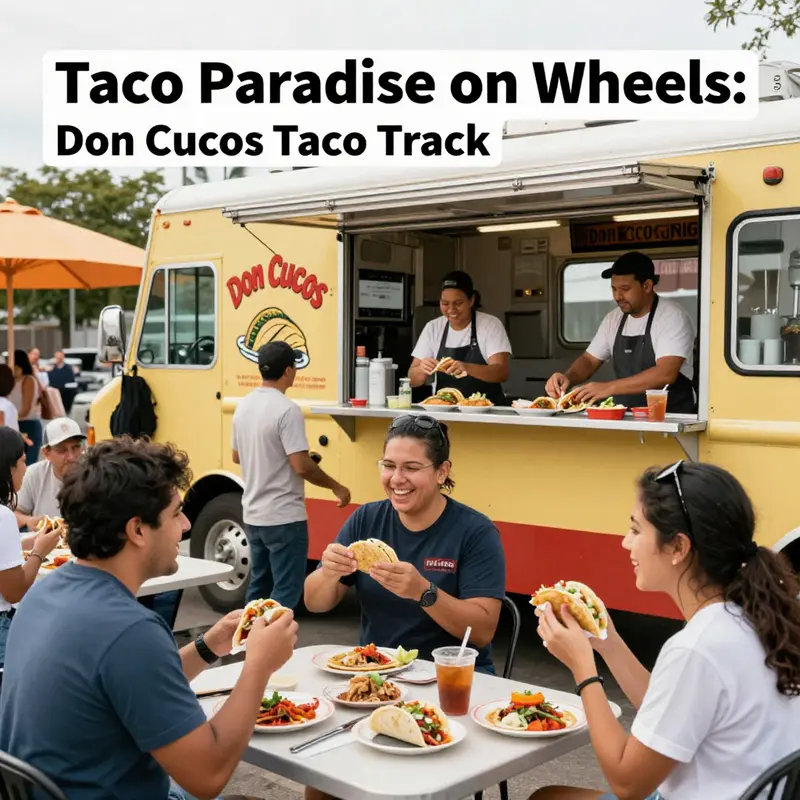
The first bite of a Don Cucos taco is not merely about flavor; it is a moment of connection. In Mission Hills, where the truck sits at the curb like a bright beacon, the air fills with the scent of warm corn, citrus, and sizzling pork. The scene is casual and welcoming, the kind of warmth you feel before a word is spoken. People queue with the unhurried patience of those who know that what they are about to taste has been crafted with care. Don Cucos is not just another fast meal on wheels; it is a sum of small decisions, from masa to salsa to the way the staff greet a regular who knows the menu by heart. This chapter follows that thread, tracing how a simple street-food experience can become a memorable, repeatable moment for locals and visitors alike, across multiple sites that share a common culinary philosophy even as they adapt to distinct neighborhoods.
The core of the Don Cucos experience sits in the tortillas themselves. Reported repeatedly by patrons is the unmistakable texture and flavor that masa, ground fresh and pressed on site, lends to every taco. The tortillas carry a gentle sweetness and a subtle toast from the griddle, a characteristic that elevates even simple fillings. Among the available options, the carnitas stand out for their balance of savor and succulent fat, a combination that invites lingering bites rather than quick, robotic consumption. It is a reminder that great street food thrives when technique and tradition converge: the masa is not a mere wrapper but a vessel that delivers the entire taste profile of the filling. The salsas, too, contribute to the overall impression. They are bright with character, offering a spectrum of heat that respects the palate while inviting exploration. Each salsa feels intentional—like a musical note that complements the melody of the meat, herbs, and lime rather than overpowering it.
Value is a central promise here. With tacos starting at very accessible prices, Don Cucos invites a variety of customers to sample the menu without fear of overindulgence or overspending. The affordability is not a concession to quality but a deliberate choice to keep the experience inclusive. The menu features a range that speaks to families, students, and workers repeating the daily ritual. The presence of handmade tortillas, fresh masa, and a careful curation of fillings signals a commitment to authenticity that resonates with customers who seek more than convenience in their meals. It is this combination of tradition, affordability, and consistent quality that endears Don Cucos to a broad audience, from first-time visitors to devoted regulars.
The social texture of the experience matters as much as the food. Promotions like Taco Tuesdays generate anticipation and foster a sense of community around the brand. These events do more than move inventory; they create shared moments, photos, and conversations that ripple through social networks and drive return visits. The extended hours, typically from 11:00 AM to 9:00 PM, reinforce the idea that Don Cucos is a reliable go-to for both lunch and dinner. The truck’s flexibility is a tactical advantage in a crowded market where residents and workers alike value a meal that fits a busy schedule. For those who prefer to plan ahead, ordering by phone or through local food platforms provides a bridge between the street-food theater and the efficiency of a familiar workflow. The convenience of gift cards further extends the relationship, turning a casual meal into a potential gift, a gesture that acknowledges the role of Don Cucos in daily life and celebrations alike.
What makes the experience feel truly human is the warmth of the service. Patrons often describe a staff that is friendly, approachable, and attentive, even during peak hours. There is a rhythm to the interaction: a quick greeting, a concise explanation of the day’s specials, and a steady stream of orders that move with a steady tempo rather than a startling sprint. It is easy to imagine that the same people who welcome you at the window also remember your preferences over time, lending a sense of continuity to each visit. In a landscape of quick-service options, this personal touch stands out. Yet even as the queue length can test patience, the positive sentiment remains high, buoyed by the evident care that goes into every plate.
The feedback landscape around Don Cucos is nuanced, and the chapter of customer experience is never complete without acknowledging the tension between quality and speed. The most often cited critique—an expression some patrons brand as the “order today, eat tomorrow” pace—speaks to a structural tension in street-food logistics. The same care that yields perfect masa skins and harmonious salsas can slow down service as cooks focus on each creation. This is not a flaw so much as a design choice that invites opportunities for optimization. In practice, a few adjustments could preserve the integrity of the product while improving throughput: streamlined queuing concepts, a clearer separation of duties during peak times, or a simple, transparent communication script that manages expectations without sacrificing warmth. These improvements could reduce perceived wait times while preserving the sensory richness that defines the Don Cucos experience.
Across the three locations—Toluca Lake, Downtown Burbank, and Simi Valley—the consistency of the core offering remains striking. The menu rotates around a reliable backbone of tortillas, carnitas, and a curated set of fillings that celebrate traditional Mexican flavors while accommodating diverse tastes. That consistency matters because it reinforces trust. When a customer discovers a favorite at the Mission Hills truck and then later encounters the same flavor profile at another site, the continuity reinforces loyalty. The extended-family vibe, which many customers value, becomes a scalable asset. It translates into repeat visits, the gift-card purchases that families make for birthdays, and the sense that Don Cucos is more than a temporary stop on a food-tourist itinerary—it is a dependable neighborhood fixture.
From a management perspective, the Don Cucos model offers a compact laboratory for understanding how food trucks can build a durable customer relationship without losing the spontaneity and joy that make street- cuisine compelling. Personalization can emerge from small interactions—remembering a guest’s preferred salsa level, offering a quick recommendation based on what filled their cart in the previous visit, or suggesting a combo that aligns with the time of day and the crowd. These micro-instances of care accumulate into a broader narrative of hospitality, one that is as critical as the taste itself. The brand’s ability to accommodate forward-thinking practices, such as gift cards and ordering ahead, demonstrates a willingness to adapt to modern consumer expectations while preserving the tactile charm of a hand-made tortilla and a conversation with a familiar team member.
For readers seeking deeper guidance on how to translate such lived experiences into broader customer-experience strategies, a deeper dive into the literature on personalization and seamless service can be enlightening. The following resource offers a broader framework for thinking about how small moments contribute to a larger, cohesive experience: Fireduptacotruck blog. This internal pointer provides examples of practical storytelling and practical tactics that food-truck operators can adapt to their own settings, ensuring that every contact point with a customer supports a consistent narrative and value proposition.
In reflecting on Don Cucos as a microcosm of the street-food ecosystem, it becomes clear that every element—from masa to market promotions, from open-air ambiance to the quiet competence of the crew—converges to produce an impression that lingers. The smell of corn and lime, the sight of a tortilla being formed by hand, the sound of sizzling carnitas, and the tactile warmth of a friendly greeting together create a sensory tapestry that is hard to replicate in a conventional dining room. The experience is not merely about eating; it is about belonging to a moment in which food, place, and people converge. It is a reminder that a successful food truck thrives on the integrity of its craft and the generosity of its hospitality, and that the best customer experiences become part of the daily life of a community.
External resources can broaden this lens beyond one truck or one neighborhood. For a broader perspective on what makes customer experiences enduring, see an overview of the field at https://en.wikipedia.org/wiki/Customer_experience.
Pricing and Value at Don Cucos Taco Truck: Flavor That Feels Worth the Walk
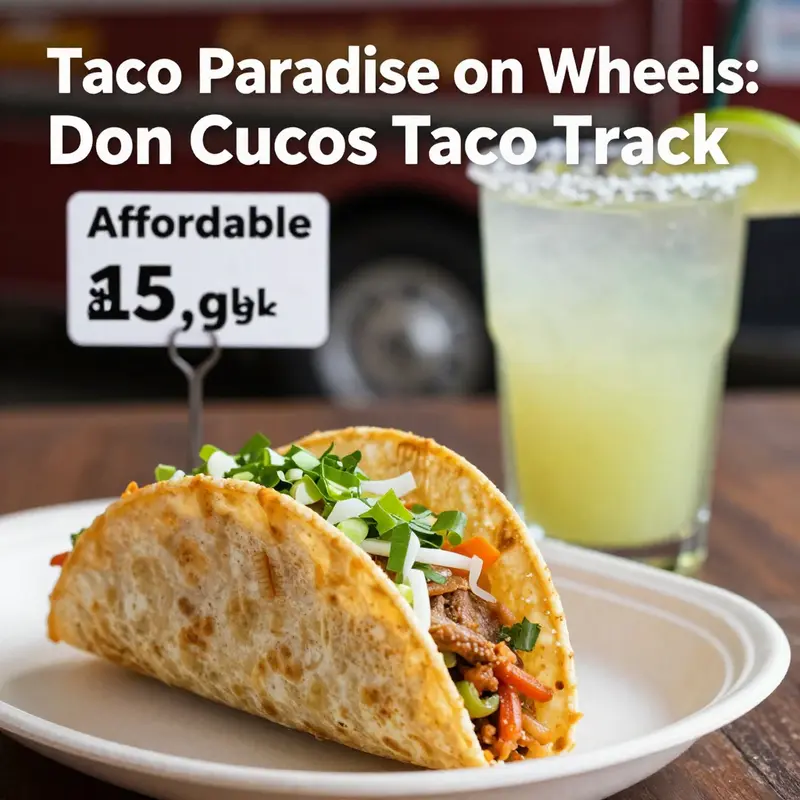
The pricing conversation around a street-food favorite is rarely just about numbers. It is about a shared experience, a memory of a first bite, and the quiet confidence that what you’re paying reflects care, craft, and consistency. In this chapter, we look at how pricing and value work in tandem for Don Cucos Taco Truck, a mobile eatery that has carved out a steady following in Southern California by balancing affordability with a bold, pantry-fresh flavor profile. What makes value feel tangible here is not merely the dollars saved, but the way each taco carries the weight of handmade tortillas, fresh masa, and salsa that tastes like it was prepared on a grandmother’s kitchen table. The result is a perception of value that extends beyond the plate to the overall experience—the tempo of the truck, the warmth of service, and the sense that you are part of a neighborhood ritual rather than a one-off meal.
From the outset, the pricing ethos is straightforward: dishes that respect tradition should also respect the pocket. Across its footprint, the truck has become known for keeping favorites accessible, with price points that welcome repetition rather than phoning in restraint. It’s not unusual to hear that tacos can start at a dollar or so, a benchmark that quietly signals an invitation to try more than one. Yet the price floor does not imply compromise. The tortillas are handmade from fresh masa, a process that requires time, attention, and a measured devotion to texture and flavor. Those textures—thin yet pliable edges, a gentle chew, and a savory maize aroma—are the anchors of the value proposition. When a bite delivers both comfort and complexity, a low sticker price lands not as a bargain bin but as a deliberate choice that respects both palate and budget.
The value equation is further enriched by the way the menu is structured and executed. A mobile kitchen typically faces a set of constraints—logistics, space, and speed—that would tempt a simplification of ingredients. Don Cucos instead leverages its constraints as a source of value. The masa-based tortillas are a central differentiator; their homemade nature elevates a simple taco into something with character. This craft-driven approach means that the core product—taco, salsa, and tortilla—delivers more sensory value than many quick-service options that can taste standardized or mass-produced. The salsas, for instance, go beyond a quick dip. They offer brightness, heat, and regional nuance that remind guests they’re consuming something made with intention. When customers describe the taste as vibrant and fresh, the underlying message is clear: the price is a fair return for the effort spent on quality.
In tandem with this quality, the operational model plays a crucial role in sustaining value. The truck’s mobility reduces some overhead that brick-and-mortar venues contend with, enabling pricing that remains approachable even as costs rise in nearby urban markets. The extended hours—typically from late morning through the evening—maximize everyday traffic and help spread fixed costs across a broader audience. This efficiency is not about skimping on ingredients; it’s about ensuring every bite is consistent with the truck’s tradition of using fresh masa and carefully prepared toppings. The result is a reliable value experience: you know what you’ll get, you know you’ll enjoy it, and you know it won’t break your budget if you want to try a couple of different fillings.
The value story also travels through perception. A consumer evaluating value isn’t just calculating price in their head; they are weighing the perceived effort behind the dish. Handmade tortillas communicate care in a way that a pre-made alternative simply cannot. The corn flavor carries a hint of sweetness, the tortilla has a delicate elasticity, and the aroma invites a second bite before the first is even finished. Add to that the salsa’s brightness and a choice of toppings that celebrate color and balance, and the meal becomes a small win of the senses. Price becomes a companion to joy rather than a gatekeeper to flavor. In markets where a single, less-authentic option might offer similar calories, the authenticity embedded in each tortilla—made with fresh masa—shifts the evaluation from a price tag to a taste bet worth making again.
The social dimension of value should not be overlooked. For many regulars, the pricing structure supports repeat visits and a sense of community. When a customer can split a couple of tacos among friends without worrying about the check, it fosters a social ritual. That ritual then reinforces value, because each repetition adds cumulative positive experiences—friendly exchanges with staff, a familiar lineup of salsa options, and the tactile joy of warming a tortilla between fingers before it makes contact with fillings. The result isn’t merely a transaction; it’s a small, shared moment that transports a passerby into a familiar street-food cadence. It’s in these moments that price anchoring—where a few standout items hover near the upper end of the casual quick-service spectrum while most staples remain affordable—becomes a strategic asset. The truck invites curiosity with its lower-priced entries and then rewards curiosity with depth of flavor at every turn.
Of course, pricing and value don’t exist in a vacuum. For a family planning a casual dinner or a student seeking a quick, satisfying meal between classes, the ability to assemble a satisfying plate without a long wait or a steep bill matters. The truck’s footprint across multiple Southern California locations signals a consistency of value across different neighborhoods. This consistency reassures first-time visitors that they won’t overpay simply because they chose a high-traffic spot; rather, the experience they expect—a quick, flavorful, and affordable meal—aligns with what they actually receive. In this way, price acts as a signal of reliability and scale, suggesting that the operation has learned to balance demand with the careful sourcing and preparation that give the food its distinctive character.
If there is a cautionary thread in the pricing narrative, it’s the reality that menu costs can shift with changing circumstances. Ingredients, labor, and logistics are dynamic components of any mobile business. The Don Cucos model remains transparent about affordability as a core value; when costs feel squeezed, the focus tends to be on preserving the tortilla craft and salsa integrity first, while making incremental adjustments elsewhere. Price sensitivity among guests also shapes how promotions and bundles are deployed, reinforcing the idea that value is not about discounting the product but about enhancing the overall experience. A well-timed combo or a modestly priced starter can elevate perceived value, inviting guests to explore more of the menu without feeling priced out. In this sense, pricing becomes a living dialogue between the kitchen, the truck’s crew, and the people who walk up to the window hungry for something crafted with care.
For readers seeking a practical lens on the financial mechanics behind this value, there is a useful angle to explore: how owners of mobile kitchens leverage financial tactics to maintain fair pricing while investing in quality. It’s not merely about cutting costs; it’s about understanding the levers that influence profitability while staying true to the craft. One useful resource that lays out the broader reasoning behind strategic tax considerations for food-truck operators can be found here: tax deductions for food-truck owners. This intersection of pricing psychology and smart financial management helps illuminate why value remains durable even as markets shift, and why Don Cucos can continue to offer affordable flavors without compromising on the things that distinguish it from the rest of the curbside landscape.
The chapter closes with a simple reminder for what value feels like in this context. It is the moment when a warm tortilla cracks softly, releasing its corn-sweet fragrance, followed by a bite that is both familiar and surprising. It is the bright heat of a salsa that wakes the palate without overwhelming it. It is the ease of paying a reasonable price and walking away with a meal that feels earned. It is also the sense that this is not a one-off encounter but part of a larger pattern of street-food hospitality that respects the idea that good food, made well, should be accessible. In this light, pricing is not merely a number. It is a promise: that flavor, craft, and community can coexist with everyday affordability, and that your next taco trip—whether you are a local or a curious traveler—will offer value that endures beyond the moment of purchase.
External reference: https://www.doncucostacotruck.com
How Don Cucos Shaped Community, Memory, and Modern Street Food Culture
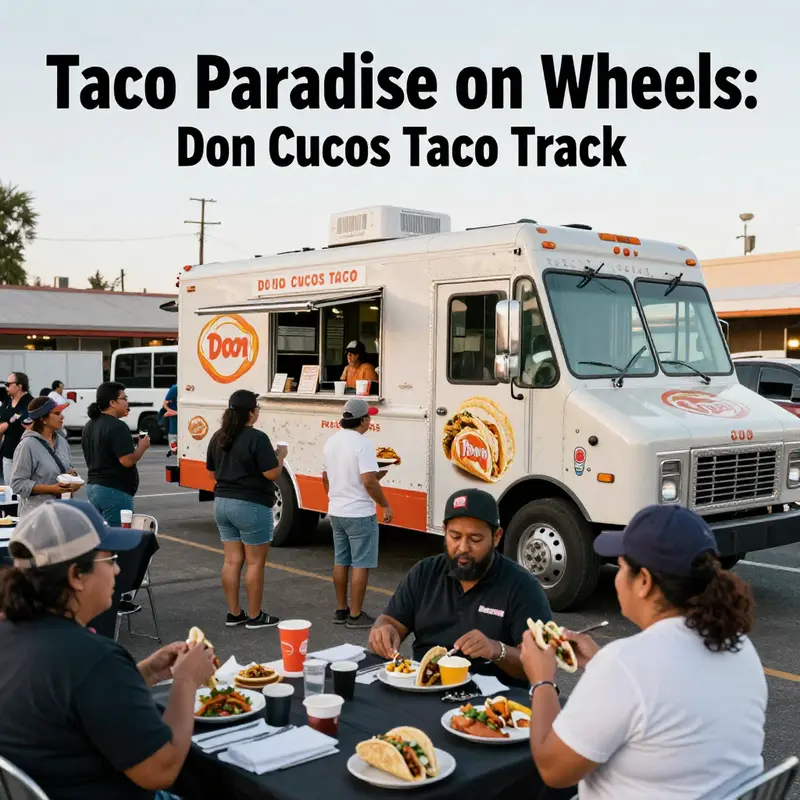
A living tradition on wheels, Don Cucos Taco Truck represents more than a menu of tacos; it is a cultural anchor that connects neighborhoods, memories, and evolving foodways across Southern California. Over decades, the truck’s steady presence has stitched itself into daily routines and special occasions alike. People meet there after work, bring visiting friends to taste a formative bite from their youth, or plan late-night runs when the flavors of handmade masa tortillas and smoky adobada call louder than anything else. This chapter traces how a single family-run operation turned street food into a site of communal identity and cultural continuity, reflecting broader patterns in the region while retaining a distinct, local character.
From the start, Don Cucos rooted itself in neighborhoods where food is both sustenance and language. Serving areas like Mission Hills, East Los Angeles, and the San Fernando Valley, the truck did not aim to be a fleeting trend. Instead, it cultivated fidelity through consistency: fresh masa tortillas pressed and griddled to order, salsas layered with heat and acidity, and proteins that honored traditional marinades and slow techniques. Those choices mattered. They transformed each taco into a small ceremony, a reliable gesture that promised the same comfort every time. For many residents, the truck became a marker on the map of life events — first dates, late-night study sessions, and family reunions — moments where the flavor of a particular place became inseparable from memory.
Cultural influence rarely moves in straight lines. Don Cucos’s impact grew by threading the practical with the symbolic. On the practical side, affordable pricing and extended hours made the truck accessible to a broad cross-section of the community. Tacos priced from the equivalent of pocket change allowed students, service workers, and families to partake in a shared food culture without barrier. The affordability fostered repeat visits and word-of-mouth reputation. On the symbolic side, the truck’s aesthetic — the modest vehicle, the call-and-response of orders shouted across a small crowd, the visible craftsmanship of tortilla-making — resonated as authenticity. It signaled continuity in a landscape of rapid urban change, where small businesses often disappear under redevelopment or shift away from traditional techniques.
That tension between continuity and change is central to the truck’s cultural role. While staying true to foundational recipes like adobada, chorizo, and asada, the operation has also adapted to shifting tastes and demographics. The result is a hybrid approach: the food preserves core elements of Mexican street cooking while allowing space for new preferences. This flexibility created bridges across generations. Elders find comfort in familiar flavors; younger customers appreciate the hand-made aspects and occasionally experiment with different condiments or drink pairings. Such cross-generational appeal is a form of cultural transmission. It keeps practices alive by bringing them into conversation with contemporary life, rather than locking them into a nostalgic past.
Communal rituals around the truck reveal how food mediates social bonds. Waiting in line, exchanging recommendations about salsas, negotiating orders for large groups — these are small acts that build neighborhood rapport. For many patrons, the truck functions as an informal public square. Regulars recognize each other and the staff, and newcomers quickly learn the rhythms. The human scale of a food truck reinforces interpersonal connection in a way that larger, anonymous dining spaces rarely achieve. That intimacy translates into loyalty that food critics or marketing cannot buy: people return because they feel known and because the truck participates in the lifecycle of the community.
The truck’s long presence has also allowed it to become an informal storyteller. Over time, the flavors and service accumulate narratives: recipes passed down through family lines, culinary improvisations perfected on busy nights, and the small adaptations that keep the truck responsive to health regulations and customer feedback. These stories are part of oral history, carried by residents and shared in local gatherings. They anchor the truck in a past that is not static but actively retold. In this way, Don Cucos functions as a cultural memory site, where culinary practices carry social histories of migration, labor, and neighborhood formation.
Beyond local nostalgia, the truck contributes to a broader culinary landscape in Southern California where street food now occupies a respected place alongside sit-down restaurants. Food trucks like Don Cucos helped demonstrate that a mobile operation could deliver consistent, high-quality food rooted in tradition. Their success opened pathways for other small entrepreneurs, setting expectations about ingredient quality, technique, and community engagement. The truck’s durability counters a narrative that equates modernization with homogenization; rather, it shows how modern business models can accommodate heritage practices without diluting them.
At the same time, the truck negotiates modern pressures: zoning changes, rising rents, and competition in a crowded food scene. Its survival reflects strategic choices — maintaining family involvement, choosing locations with strong community ties, and preserving culinary benchmarks like handmade masa. Those choices underscore an important lesson for small operators: cultural capital is both an asset and a responsibility. When a business becomes woven into community identity, it inherits expectations and a role in cultural stewardship.
Visiting the truck is, therefore, an immersive cultural experience as much as a gustatory one. The tactile pleasure of a warm tortilla, the layered heat of a freshly made salsa, the smoky finish of slow-marinated meats — these are physical memories that embed culinary knowledge. Patrons leave not only with satiation but with an embodied sense of place. That embodied knowledge gets transmitted when people teach others how to order, where to stand, and which combinations to try.
For those interested in the practical side of running a successful mobile eatery, learning from long-standing operations offers valuable insights. Considerations about vehicle choice, operations, and community engagement shape longevity. For guidance on selecting the right platform for launching a mobile culinary venture, see this resource on choosing the right food truck: https://fireduptacotruck.com/choosing-the-right-food-truck/.
Finally, the story of Don Cucos is not only local. It speaks to how food sustains identity across diasporas and urban landscapes. When a neighborhood gathers around a truck, it reenacts a form of cultural belonging that resists erasure. The truck stands as a reminder that food is a durable medium of cultural expression — portable, adaptable, and deeply rooted in human connection. For more on this establishment and its history, visit their official site: https://www.doncucos.com
Through taste, ritual, and presence, Don Cucos Taco Truck continues to shape how Southern Californians eat together, remember together, and remain connected to the culinary threads that define their shared lives.
Final thoughts
From its mouthwatering tacos crafted with fresh masa to the friendly service that welcomes each patron, Don Cucos Taco Truck exemplifies what quality street food is all about. A visit not only delivers a satisfying meal but also a sense of community and a connection to authentic Mexican cuisine. The truck’s growing popularity is a testament to its cultural impact and the heartfelt vibes it brings wherever it parks. Whether you’re a devoted taco enthusiast or a budding taco business owner seeking inspiration, Don Cucos stands as a flavorful beacon in the bustling Southern California food landscape.