
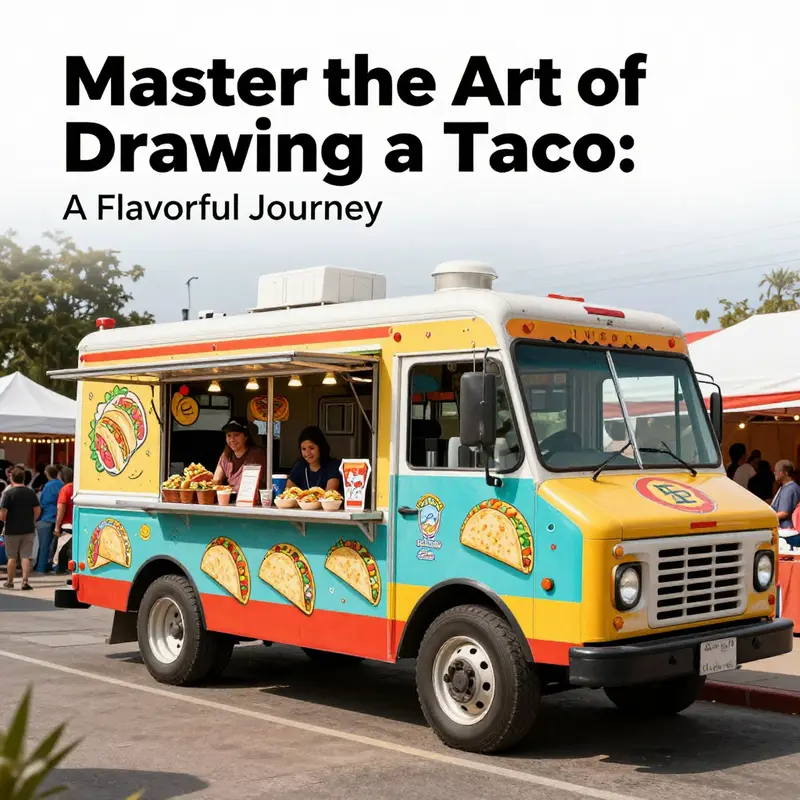
Step into the vibrant world of taco trucks, where culinary delights and creativity come together! Drawing a taco truck isn’t just about representing a vehicle; it’s about channeling the delicious spirit that these mobile eateries embody. Whether you’re a cuisine lover, a taco enthusiast, or someone who dreams of running their taco business, this guide will help you sketch a taco truck that oozes flavor and fun. We’ll start with the structure in our first chapter, then layer on the details in the second, and bring everything together with final touches in the last chapter. Let’s dive into this delicious artistic adventure!
null
null
From Box to Baja: Detailing and Decorating Your Taco Truck Illustration
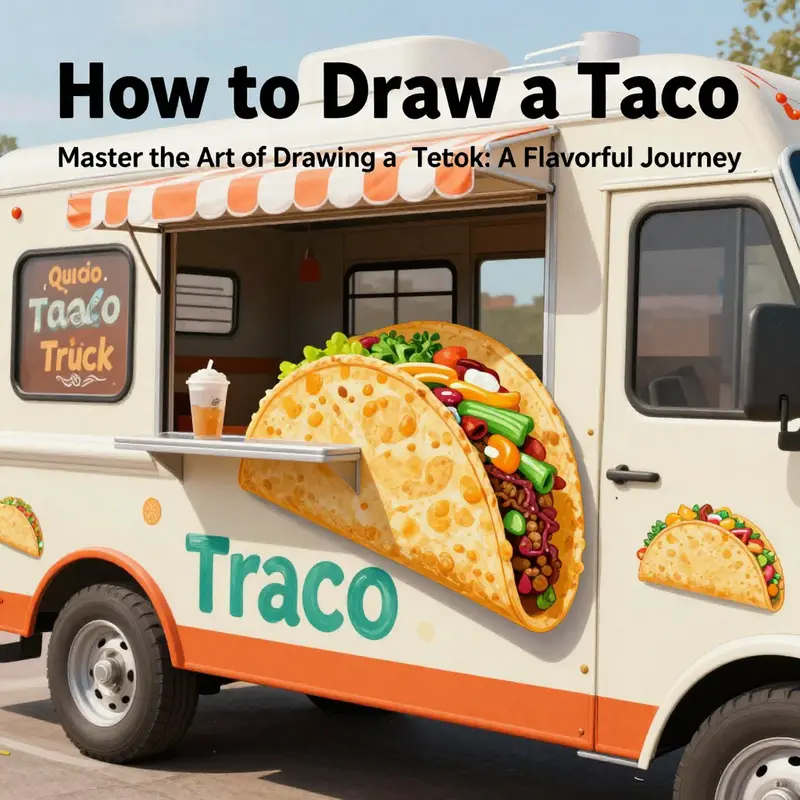
Drawing a taco truck is more than recreating a vehicle; it’s a small celebration of mobility, flavor, and street-side hospitality translated into line and color. The process invites you to balance a believable mechanical silhouette with a playful personality. The chapter you’re reading folds the practical steps of structure into the artful language of decoration, so the result feels both convincing and vivid. You start with the idea of a mobile kitchen on wheels and end with a scene that hums with sizzle and color. In that journey, every choice—how the roof tilts, where the serving window sits, what motifs flank the sides—becomes a deliberate design decision rather than a random flourish. The goal is not mere replication but a confident sketch that can stand up to a closer look while still inviting a childlike sense of wonder. Think of this as a painting that wears a uniform of metal and fabric, a flavor-ready chassis that carries an appetite for art as well as food.
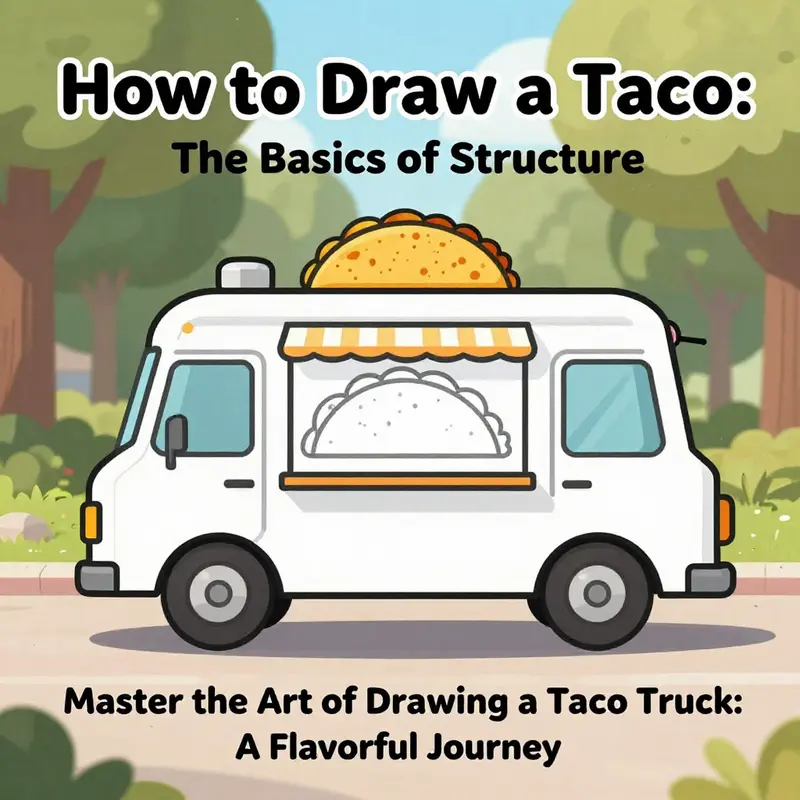
The core structure of a taco truck is surprisingly simple: a boxy, truck-like body perched on a chassis with four wheels, and a roof that hints at the stretch of a compact kitchen. The research you’ve gathered emphasizes a few reliable cues. Start with a main body—a large, slightly rounded rectangle that anchors the drawing. This shape communicates sturdiness without rigid stiffness, which keeps the illustration approachable. In the simplest cartoon logic, the body can feel almost like a rounded rectangle wearing a smile, a friendly foundation over which all other elements will rest. The proportions matter. The wheels must align with the front and back of the truck so the silhouette reads as a vehicle rather than a floating box. Two long rectangles extending from the sides of the main body help imply the truck’s depth and its function as a movable kitchen unit. If you want to push toward realism, you can reference actual taco trucks for layout cues, but the aim here is a cohesive, stylized drawing that still respects the functionality of the design.
As you lay in the essential details, you begin to give the truck its character. The serving window becomes the heartbeat of the piece. It’s more than a slit in the side; it’s an invitation to the viewer to imagine the bustle of a street cart. The window is typically framed with metal trim in the real world, and you can echo that metallic edge in your drawing with a bold, slightly reflective line that catches light. The serving counter inside the window is where the drama happens: a small grill, a stack of tortillas, and little jars or cups for garnishes. The idea is not to shade every minute utensil but to suggest tools of the trade through economy of line. A display of salsas can be hinted at with small ovals or rounded rectangles suggestively colored to imply red, green, and orange sauces. This interior suggestion nourishes the exterior—the viewer reads the vehicle as a working food truck rather than mere decoration.
The signage area is a place where the truck starts to speak its language. A bold name above the truck, perhaps something like “Taco Loco” or “El Rodeo,” immediately telegraphs the culture of the cuisine. The research notes encourage colorful and stylized lettering, with cursive or hand-drawn fonts that evoke authenticity without becoming unreadable. The lettering is a place to experiment with rhythm and shape. You can vary the thickness of the strokes to imply metal trim, neon glow, or painted wood. The sign is not only a name; it’s a negotiation with the viewer’s eye, guiding it along the side of the vehicle, inviting a closer look at the details you’ve built into the scene. The awning, when present, acts as a frame for the window and a capacious splash of pattern and color. It can be striped, solid, or a quilt of motifs, but it’s best treated as a friendly, welcoming canopy that signals the truck’s shopfront to the street.
Decorative elements are where the drawing begins to breathe with personality and cultural resonance. The guidelines you’re following encourage incorporating motifs drawn from Mexican folk art, such as alebrijes, serape patterns, or tile-inspired azulejos. These motifs do more than decorate; they anchor the truck in a sense of place and tradition without veering into cliché. When you place decorative patterns along the sides, think in terms of rhythm—repeating shapes that echo the curves of the wheels or the angles of the windows. A serape-inspired border can wrap around the lower edge of the body; geometric shapes in bright reds, oranges, yellows, and turquoise can march across the doors or sides. The eye travels along these bands and then spirals back to the serving window, drawn by the glow of the interior light or the gleam of metal trim. If you prefer a subtler approach, a handful of smaller motifs near the corners—little triangles, diamonds, or sun-inspired shapes—can carry the cultural vibe without overwhelming the central silhouette.
A crucial part of the design is the color palette. The research results urge warm, inviting tones—reds, yellows, oranges—with a splash of turquoise to evoke energy and appetite. Color choices are not cosmetic; they determine how the truck feels in a scene. A bright red body with yellow accents can convey heat and spice, while turquoise details threaded through the chrome and trim offer a cool counterpoint that reads as a touch of Mexican street fashion. The metal surfaces, like the serving window frame and vent panels, should have subtle highlights to suggest reflectivity. You can achieve this with light strokes of white or a pale gray, applied along the top edges or where the light would naturally fall. The aim is to exploit color to suggest both material properties and mood: heat and heart, street life and artistry, all in harmony with the food being sold.
Inside the truck’s interior, the scene can come alive with a few careful touches. The research results recommend a few concrete shapes that imply a working kitchen without turning the drawing into a crowded blueprint. A small grill in the serving window area, a stack of tortillas, and a display of garnishes are enough to suggest a functional space. If you want to heighten the sense of motion and activity, you can sketch a thin wisp of steam rising from the grill, curved slightly to suggest the breeze of a busy street. A character can inhabit the interior—perhaps a cook in a traditional hat or apron—adding life to the static form. This figure doesn’t need to be full-bodied or photographic; a few gestural lines can imply a posture and presence that viewers will recognize instantly. In a drawing aimed at both children and adults, the character can become a gentle comedic focal point, a friendly host of the street corner who invites the viewer to linger.
The wheels, as mentioned, are more than just round shapes. Their placement and scale anchor the truck in space and support believability. Even in a stylized cartoon, the wheels should be proportionate to the body and aligned with the chassis lines. You can show the wheel wells as simple arcs along the lower edge of the body, with the tires themselves indicated by bold circles. A touch of shading at the contact point with the ground helps anchor the vehicle in a scene—consider a faint shadow that follows the curvature of the wheels. The ground line you choose can influence the entire composition. A horizontal baseline across the page suggests a calm street setting, while a slight perspective line can create the impression of three-quarter view, where the front and side of the truck are visible at once. If you opt for perspective, keep the lines light and confident, so they support the form rather than overwhelm it.
As the drawing comes together, you begin to think about the overall scene in which the taco truck exists. A simple background—perhaps a curb, a line of street lights, a few distant silhouettes of other stalls—can provide context without stealing focus from the truck itself. The goal is to create a sense of place that feels lively but still clear enough to appreciate the design. You might add decorative flags or a small awning extension above the serving window to imply a market environment. Subtle cues, like a steam pigtail of a grill or a few floating chili peppers near the name sign, can communicate freshness and activity. Such details are not mere garnish; they contribute to the narrative of the illustration, suggesting that the truck is a hub of flavor and community rather than a static object.
This approach to detail is precisely the balance the chapter intends. The illustrations you create from the guide are meant to be readable from a distance and rich up close. A child viewing the drawing should be drawn into the scene by the bright colors and clear shapes, while an older viewer will appreciate the cultural motifs and the careful handling of the light and texture. The natural tension between the boxy, functional form and the exuberant decoration mirrors the tension in street food culture itself: a simple cart that becomes a festival when its design is allowed to speak. In other words, the taco truck drawing thrives on a disciplined core doubled by exuberant surface treatment. You establish the core with the body, wheels, and window; you enrich it with signage, awning, and decorative patterns; you complete it with color, texture, and a sense of bustling life inside and around the truck.
There is a rhythm to this process. Start with the basic outline to lock the proportions in place. Then layer in the essential details—the serving window, the signage, the awning. Next, temper the composition with decorative motifs that reflect cultural influences without reducing the subject to stereotype. After that, give the scene its interior life and a human touch that makes the truck feel inhabited, not just drawn. Finally, apply color and shading to bring depth and heat to the piece. When you step back, you should see a cohesive scene in which form and function are elegantly fused with culture and vitality. The result is not only a well-drawn vehicle but a small urban vignette: a doorway into a world where food, art, and movement mingle on a public stage.
If you want to explore how this drawing fits into broader practice, you can see more about how design choices connect to the scale and scope of food-truck visuals in contemporary contexts. For readers curious about broader implications and practical connections, consider looking at the discussion on top food truck models for success. It provides a broader sense of how different trucks are styled to communicate their identity and offer a sense of continuity across a fleet, which can be instructive when you plan multiple drawings or a portfolio in a similar vein. top food truck models for success
As you complete your taco truck illustration, you might feel the urge to push the decorative envelope further. Small changes can change the entire mood of the piece. A brighter sun gleaming on the chrome, a softer dusk shadow behind the vehicle, or even a row of colored pennants fluttering in the wind can transform the scene from a simple caricature into a lively street tableau. The trick is to introduce these elements sparingly and with intention. Each mark—whether a gleam on the metal, a braid of color on the awning, or a pattern repeated along the side—should serve a purpose. If you find a motif you love, let it become a signature across future drawings. A consistent visual language—colors, motifs, and line weight—helps your work feel recognizable and deliberate, a hallmark of a skilled artist who translates everyday commerce into a vibrant visual experience.
The beauty of drawing such a subject lies in the possibility of storytelling without speech. The taco truck becomes a character with a mood and a history, even if it is only a silhouette and a splash of color. The viewer’s eye travels along the body, across the serving window, and up to the signage, then dips back into the interior activity or the decorative border that frames the scene. That dynamic is what makes the exercise more than a tutorial; it becomes a practice in visual narration. The chapter’s aim, then, is to empower you with the confidence to sketch the truck with architectural accuracy while allowing room for whimsy and cultural resonance. You’ll notice that the technique encourages both deliberate planning and spontaneous flourish—the hallmark of a flexible artist who can improvise with the same ease with which a chef improvises a menu.
To close this reflection, remember that the best taco truck drawings are those that invite a viewer to linger. They reward careful looking with small details that can be discovered again and again—the glint on a metal edge, a hint of steam curling from a grill, the knotwork of a decorative pattern tucked into a corner where two panels meet. The process rewards patience and playful experimentation in equal measure. If you keep the outline clean, the window generous, the signage bold, and the decoration culturally thoughtful, you will have created a piece that feels both authentic and imaginative. The truck will look ready to roll out of the page and onto a street where it can feed a crowd and inspire a storyteller’s imagination.
For further inspiration and to see how this approach translates into broader practice, you may consult additional resources that explore how design choices shape the perception of mobile food spaces across contexts. By studying how designers wield color, motif, and typography, you can deepen your understanding of what makes a taco truck feel inviting, legible, and culturally resonant. External reference to ongoing observations of street food culture can enrich your own drawings, offering fresh ideas for textures, reflections, and atmosphere. External resource: National Geographic.
From Sketch to Streetfront Flavor: Final Touches that Make a Taco Truck Come Alive
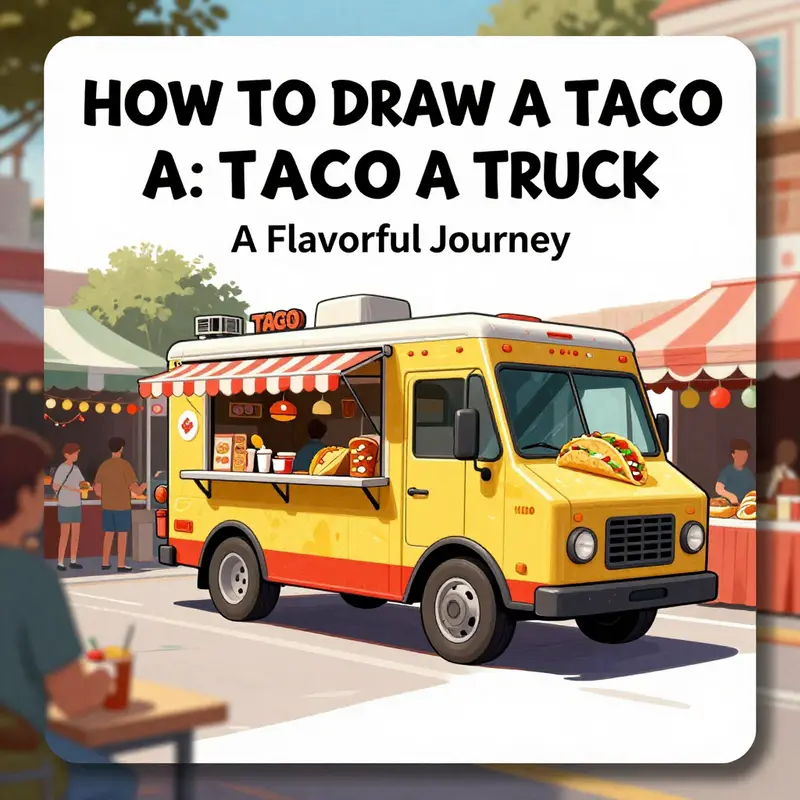
The moment you put ink to paper after a long session of planning is less a finish than a doorway. Final touches on a taco truck drawing are less about adding more lines and more about letting the scene breathe, move, and tell a small story all at once. When you layer in steam curling from the grill, a scalloped awning fluttering in a friendly breeze, and a bright sign that hints at the menu inside, the flat shapes of your earlier steps begin to behave like a real object in space. The aim is not perfection in line, but capture in color and texture the life of a busy street corner where a bright, inviting truck becomes a magnet for a moment of shared appetite and joy. This is where technique meets storytelling, and where your drawing stops being a static image and starts feeling like a scene you could step into, even if only for a moment, just before someone reaches for a taco and the world around it grows a little warmer.
To start shaping that life, you return to the core of your composition: the proportions and perspective you settled on earlier. Check how the chassis sits on the ground and how the wheels align with the length of the body. A real truck sits on a plane that isn’t perfectly flat in your mind; it tilts slightly toward the viewer or away, and your shadows should echo that tilt. Use light guidelines to reestablish alignment after you fill pockets of shadow or highlight. The front grill can become a guiding beacon in your drawing, guiding the viewer’s eye along the length of the machine to the serving window, and then outward to signs and details on the far side. Small perspective checks—like testing whether the windows’ verticals stay parallel to the frame or if the roof line remains consistent as you rotate the view—help prevent the piece from feeling drawn in a limp, cartoony way. A subtle shift in the angle of the truck can breathe energy into the scene, turning a simple side view into a dynamic three-quarters angle that invites the viewer to walk around the truck with their eyes.
Texture and shading are the second compass you should follow as you finalize the drawing. Metal bodies pick up highlights in a way that invites careful attention; the surface can gleam in long, curved bands that betray the curvature of the truck. Use light hatch marks or soft blends to simulate reflected light running across the panel edges, especially where the paint meets the chrome trim or where a small dent catches a glint. The tires deserve a gentler, yet crucial, attention. Their rubbery texture is defined not by uniform darkness but by a ring of shadows around the treads, a thin rim of light catching the sidewalls, and a tiny pool of shade beneath the truck where the tire meets the ground. Grills, vents, and rails on the sides carry the look of robust, usable metal. Add tiny rust specks or patches of wear to suggest years of friendly service rather than a brand-new stage prop. The grill area becomes a focal point where you can push the contrast a touch, letting the metallic bars reflect a touch of the world around the truck—perhaps a street light, the colors of the sky, or a passing sign that hints at a local neighborhood.
Beyond metallic realism, the storytelling layer blooms when you introduce small, intentional signs of daily life. A wavy line of steam can rise from the grill to suggest hot, ready-to-serve tacos just out of view. A hanging banner or a fluttering flag can introduce color and motion, lending a sense that the scene is alive even as the lines remain still. Menu items—simple words, rough numbers, a couple of prices—do not have to be legible from afar to contribute to the mood. They can be suggested with a few bold strokes or color blocks that imply abundance and variety. The side panels can wear decorative elements as well: a bold color pattern, a stylized flame motif, or a friendly mascot peeking from behind the serving window. These decorative cues create a mood that resonates with the flavor and warmth the truck promises, turning a technical exercise into a carnival of color and character.
Personalizing the truck is where your own voice becomes visible in the work. A quirky mascot can give the truck a character that makes it memorable, whether it’s a smiling taco with sunglasses or a sunlit pepper dancing across the side. If you enjoy typographic play, you can craft lettering on the signage in a way that echoes street art—rough, exuberant, a little imperfect in a way that feels earned. A fictional name like a bold moniker across the side, or a playful slogan that nods to the neighborhood, can anchor the illustration in a specific place and culture without becoming a map of exact real-world locations. The trick is to balance whimsy with clarity so viewers who are scanning quickly still grasp what the truck is and what it offers. In this balance, your drawing stops being a simple exercise and becomes a story that invites dialogue—small conversations that might happen as a customer points at a taco and smiles at the person behind the window.
The final polish also involves how you present the piece. The choice of frame or display method can elevate a strong, lively drawing into something that feels finished and ready for sharing. If you plan to print, choose smooth, heavyweight paper that supports crisp line work and holds color well. A matte surface can calm bold hues and reduce glare, letting viewers study the lines without distraction. For digital art, work at a high resolution, particularly if you anticipate prints or a portfolio. When you photograph or scan your piece, consider the lighting: a soft, even light reduces glare on reflective surfaces and reveals the subtle texture you built with shading. Your aim is not to stage a perfect, studio-grade image but to preserve the integrity of the original drawing while presenting it in a way that invites the viewer in without misrepresenting the work.
An essential part of final presentation is storytelling through captions and context. A caption can note the moment you imagined the truck rolling into a neighborhood festival, the flavor profile you aimed to evoke, or the way you used color to express mood. The best captions are concise and evocative, offering a doorway into the scene rather than a full catalog of every technique used. They become a companion to the image, a verbal postcard that helps viewers see what you saw when you drew the piece. In addition to captions, consider how you frame the artwork in your portfolio. A short paragraph at the top of the page can orient the viewer to the scene’s intent, while a brief bullet list beneath can highlight a few technical choices—proportions refined for a street view, a palette that emphasizes warm tones, or texture studies that give the metal a lifelike glow. These elements avoid turning the portfolio into a dry ledger of steps and instead produce a cohesive narrative that makes the drawing feel like a place you could walk into, even if it exists only on a two-dimensional page.
If you want to explore how others talk about this craft, you can explore additional perspectives that bridge drawing and storytelling. For a deeper look into the craft of vehicle illustration and food trucks, consider visiting a resource dedicated to helping artists grow their work. Fire Up Taco Truck Blog offers a space where practical tips meet imaginative experiments, a reminder that final touches are as much about confidence and play as they are about technique. The blog can serve as a touchstone for artists who want to keep refining their eye for texture, light, and character while staying connected to a community that values food culture and urban art. In the end, your taco truck drawing should feel hospitable, as if it is inviting anyone who sees it to step closer, lean in, and imagine the scent of fresh tortillas and sizzling peppers drifting from the window. The magic is not in the precision of the lines alone but in the way the piece invites a story to unfold around it, a small moment where drawing and street life intersect.
As you prepare to share your work, remember that presentation matters just as much as the art itself. The right frame, the right lighting, and the right caption can turn a sketch into a memory, a color study into a mood, and a simple vehicle into a symbol of community gathering and shared meals. This is why the final touches matter so much: they are the moment when your craft aligns with your intention, when the truck you drew feels not merely seen but experienced. A strong taco truck illustration sits at the crossroads of design and story, where lines, color, and texture collaborate to tell a lively, heartwarming anecdote from the street. Keep your sketchbook open, your pencil ready, and your eyes tuned to the little signals around you—the way a flag catches a breeze, the curve of a metal panel catching a sunlit edge, the way a customer’s hand briefly pauses at the serving window. Those micro-details will carry your work forward into a place where it can live in someone’s memory long after the page is turned.
For readers seeking additional practical guidance on care and presentation for food-themed illustration, the following external resource offers broader context on illustration tips for vehicles and food trucks, complementing the personal approaches described here. https://www.scbwi.org/blog/illustration-tips-for-drawing-vehicles-and-food-trucks/ Also consider visiting a dedicated platform that explores the basics of starting and maintaining a successful creative practice in related domains. This broader view can help you frame your taco truck drawing within a larger portfolio and a longer arc of growth as an artist. External inspiration, when engaged thoughtfully, deepens the confidence with which you approach final presentation and storytelling.
In short, the last miles of an illustration are about keeping your eyes on the human moment at the heart of the scene. The steam, the color, the texture, and the character you inject into the truck all converge to invite someone to imagine the life of the street. When you present the piece, your care with framing, lighting, and caption helps others feel the warmth that drew you to this image in the first place. And when someone glances at your work and smiles at the sight of a street-side taco, you know you have succeeded in turning a simple drawing into a living, shareable moment on the page. The taco truck, with its doors open and its wheels steady on the pavement, becomes more than lines on a page; it becomes a doorway into a story about food, community, and the everyday magic found in a neighborhood corner.
External resource: https://www.scbwi.org/blog/illustration-tips-for-drawing-vehicles-and-food-trucks/
Final thoughts
Drawing a taco truck is more than just sketching a vehicle; it’s a celebration of flavors and creativity! By breaking the process down into manageable steps, you can create a charming representation that will resonate with taco lovers everywhere. From the foundational structure to the vibrant details and final touches, each step serves to enrich your art and serve your passion for tacos. Keep practicing and unleash that artistic flavor in your drawings – your taco truck masterpiece is just a sketch away!