
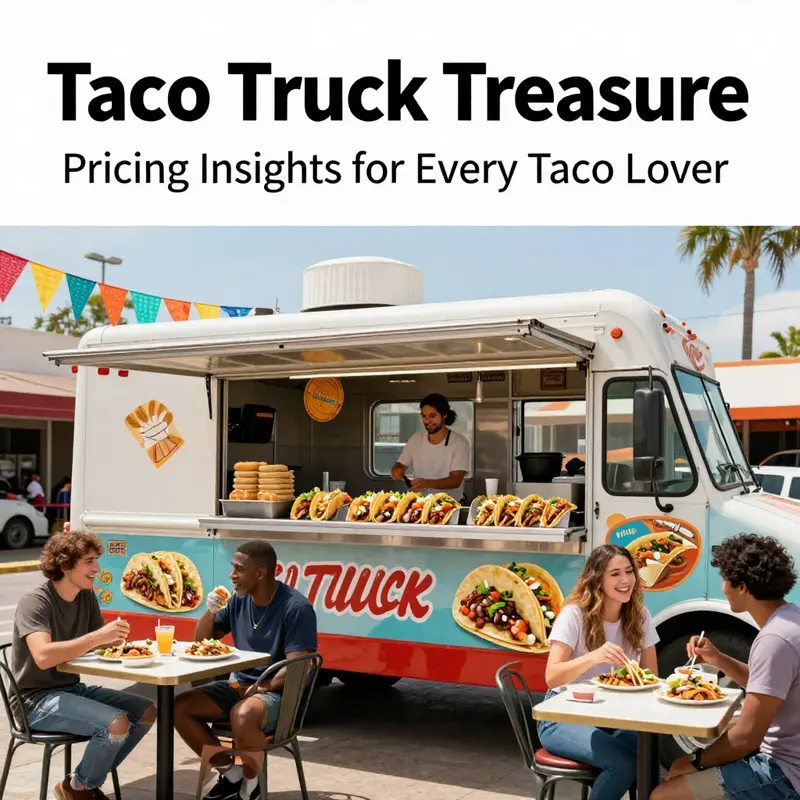
Who doesn’t love the decadent crunch of a freshly made taco? For taco enthusiasts and culinary entrepreneurs alike, the dream of owning a taco truck is vibrant and sweet. Yet, understanding how much it costs to own such a treasure is paramount. In this flavorful journey, we’ll explore the pricing spectrum—from delightful used taco trucks to luxurious new models—shedding light on what really goes into the price tagging. We’ll dive deep into the specifics of used taco truck pricing, grasp the numbers behind new and high-end models, and uncover the factors that influence these costs in this tantalizing taco world. Ready to crunch the numbers and plan your taco adventure? Let’s taco ‘bout it!
null
null
The True Price of Prestige: Decoding High-End Taco Truck Costs from Purchase to Profit
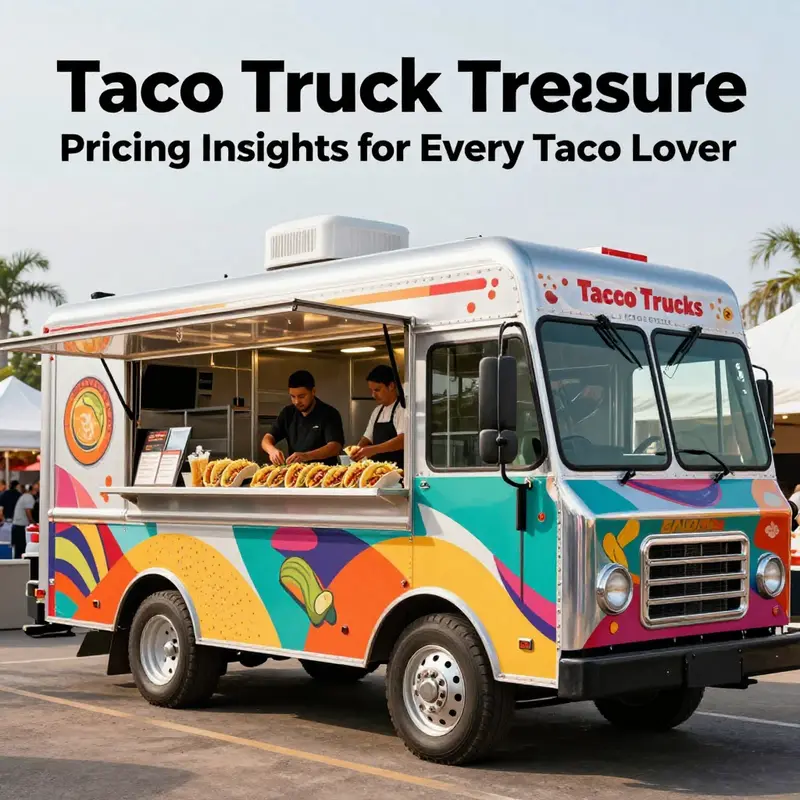
A high-end taco truck embodies more than a glossy exterior and a line of hungry customers. It is a carefully engineered mobile kitchen designed to withstand the pressures of urban lunch crowds, late-night shifts, and the unpredictable rhythm of a city street. Yet the gleam of premium materials and the promise of efficiency can obscure the fuller math behind the purchase. For operators stepping into the market, a high-end unit is not just a price tag; it is a gateway to reliability, scalability, and long-term profitability. The sticker price, which typically sits in the range of sixty thousand to seventy thousand dollars or more for top-tier configurations, is only the first facet of a broader financial equation. To understand what a buyer truly pays for when they invest in a high-end taco truck, one must unpack the layers that follow the initial exchange of funds and peer into the realities of ongoing costs, regulatory compliance, and the operational discipline that sustains a mobile kitchen in a competitive environment.
The base price of a high-end taco truck tells a story about the craft and the materials that underwrite the unit. Premium models employ stainless steel and high-grade aluminum that resist corrosion, stand up to continuous cleaning, and provide a sanitary, food-safe surface that health departments across the United States scrutinize with meticulous standards. These materials are not merely cosmetic; they are the foundation of durability in a vehicle that endures road vibrations, frequent door openings, and the daily wear of a bustling service. A high-end chassis meets stringent specifications for safety and efficiency, with insulation designed to keep energy use predictable and temperatures steady across peak service periods. What looks like a simple kitchen on wheels is, in reality, a compact, purpose-built facility that must perform like a commercial kitchen yet fit into the constraints of a street-side footprint. The layout is not an afterthought; it is a carefully engineered workflow, sequenced to reduce motion waste, minimize cross-contamination risks, and speed service at the window when demand surges.
Even within those premium shells, there is variation. Some trucks foreground speed and throughput with robust grills, commercial fryers, and wide prep benches; others optimize for specialized offerings and energy efficiency, weaving in efficient refrigeration zones and modular tortilla stations that streamline assembly. The result is a price spectrum that mirrors the operator’s priorities: maximum reliability and batch readiness for high-volume days, or a more tailored setup that emphasizes branding, energy management, and the ability to pivot between menu demands. In practice, most high-end models sit toward the upper end of the mid-range food truck market, reflecting not only the hardware but the value of a turnkey, compliant, and ready-to-operate mobile kitchen.
But the sticker price is only one thread in a larger fabric. After you push the purchase button, the true cost picture expands to include ongoing expenses that are easy to overlook when the initial exhilaration of a new investment is strongest. Ongoing fuel costs are no trivial matter, especially for diesel-powered units that are built to travel across regions, parks, and business districts throughout the day and into the night. Even within diesel fleets, fuel efficiency varies with engine type, exhaust after-treatment, and load, meaning that two identically configured trucks can incur markedly different daily fuel bills depending on the routes and events they chase. Maintenance follows a similar logic. Premium trucks demand regular, sometimes nuanced maintenance—calibrating refrigeration compressors, ensuring gasket integrity on a high-usage hood, or checking generator performance before an event can make the difference between a smooth service and an abrupt breakdown. The cost of parts, labor rates, and the frequency of servicing are all magnified by the high utilization patterns that define food trucks in busy markets.
Insurance, too, becomes a more sophisticated line item as you scale. A high-end unit, equipped with advanced heating and cooling systems, mobile power infrastructure, and a brand that travels across neighborhoods, often commands higher liability and property coverage. Permits and licenses chill into the day-to-day rhythm of the business as well. Each jurisdiction may require distinct health department certifications, fire suppression inspections, and vehicle registrations, all of which boil down to steady administrative costs and occasional capital outlays for compliance upgrades. There is also the matter of grease management; many municipalities require grease traps, regular servicing, and proper disposal protocols, which not only affect monthly expenditures but also the frequency of service calls and the schedule of maintenance workers.
The total cost of ownership, or TCO, is not a static figure but a moving target that shifts with the operator’s scale, location, and the market environment. A 2025 analysis of TCO for commercial vehicles underscores a practical truth: long-run costs can erase or justify the initial premium, depending on how intelligently the business operates and where it deploys its fleet. For some operators, an electric food truck (an eTruck) lowers fuel and maintenance costs over time, reducing certain line items by obviating regular diesel refills and some engine-related wear. However, the higher upfront price, the current charging infrastructure gaps in many urban cores, and the slower retirement of capital can tilt the balance away from electrification for operators who need immediate ROI or who run routes with limited charging opportunities. In other words, the best choice hinges on the operator’s geography, schedule, and the density of opportunities that can sustain revenue throughout the day.
Incorporating these dynamics into a practical budgeting approach means acknowledging that a high-end truck is a platform for a business we expect to grow. It is not merely a kitchen on wheels but a scalable stage for brand, service speed, and culinary consistency. A premium truck supports an efficient kitchen workflow, which translates into shorter service windows and higher throughput. It can enable a menu that includes multiple stations—tortilla prep, hot line, fry station, cold prep, and cold storage—without compromising safety or speed. The ability to deliver a consistent product at peak times is as valuable as the hardware itself. This is where the decision to invest in premium equipment diverges from a more minimal setup. If a vendor accepts longer service times, smaller windows for peak sales, or a more limited menu, they may justify a lower upfront price. If, however, their strategy is to expand to festivals, corporate events, and busy urban corners with a brand that demands speed and consistency, the premium truck becomes a strategic asset that earns back its price premium through revenue stability and customer perception.
To understand the purchase in context, it helps to think through the economics of a typical week in a high-demand market. A high-end truck is engineered to handle lunch rushes, weekend events, and late-night service with predictable performance. It ensures that coolers, warmers, and refrigeration systems stay within safe temperature bands, so product quality remains high even as door hours pile up. The reliability of a premium truck reduces the risk of unscheduled downtime, which can be costly not only in immediate sales but in brand trust and repeat business. It is not unusual for operators who invest in robust fleets to see a lower rate of breakdowns, smoother replenishment cycles, and faster restocking during transitions between events. When a kitchen is dependable, staff can focus on execution rather than troubleshooting, and that clarity of operation becomes a competitive advantage that translates into higher customer satisfaction and, in turn, stronger word-of-mouth and repeat attendance.
The interplay between hardware and location cannot be overstated. In dense urban districts, during lunch hours, or at cultural festivals, the demand curve often resembles a cliff—sharp spikes that require rapid turnover and the ability to scale up service quickly. A high-end truck’s kitchen layout, with efficient prep zones and ready-to-plate stations, is designed to capture those spikes and convert them into consistent sales. Yet the same truck that thrives in a festival environment might incur opportunity costs if assigned to a slow weekday park where competition erodes margins. In this sense, the value of a premium unit is not a fixed multiplier on revenue but a strategic instrument that, when deployed intelligently, expands the operator’s capacity to serve more customers in more contexts with the same workforce and the same capital structure.
The decision to invest in a high-end truck also intersects with branding and customer experience. A premium interior and exterior finish can become a tangible marketing asset, signaling quality and reliability to clients, partners, and event organizers. A strong brand and a well-executed customer experience are not incidental; they influence pricing power, the willingness of clients to book repeat events, and the frequency with which a truck is invited to premium venues. This is particularly relevant for operators who target corporate events, festivals, and cultural districts where competition is intense and the bar for service quality is high. In such markets, the premium truck can act as a differentiator that justifies premium pricing and fosters a perception of value that extends beyond the food itself. The branding is not a separate expense; it is integrated into the hardware, the service flow, and the overall market positioning that the business cultivates over time.
What does this mean in practical terms for a buyer who is trying to forecast costs? The base price places a ceiling on the initial investment, but the ensuing costs create a floor for the ongoing operational budget. A prudent operator builds a budgeting framework that includes: a realistic monthly fuel allowance (for diesel units) or charging and electricity costs (for eTrucks), a maintenance reserve that covers scheduled service and unexpected repairs, insurance premiums that reflect the truck’s usage and geography, and a permit and compliance fund that anticipates annual or biennial inspections and licensing. A thoughtful plan also anticipates the cost of outsourced services such as grease trap upkeep and waste disposal, which, while not glamorous, are prerequisites for staying compliant and avoiding penalties. The number you arrive at is not a static figure; it is a projection that needs regular revision as routes, service patterns, and regulatory landscapes shift.
At this point it is helpful to acknowledge a truth that seasoned operators often learn through trial and error: the best choice for a high-end taco truck is not solely the unit that minimizes upfront expense or the one that maxes out the latest features, but the one that aligns with the operator’s long-term strategy. If the plan is rapid scaling through events and partnerships, the premium unit’s reliability and throughput may deliver a faster path to profitability. If the plan centers on stabilizing a fixed daily route with consistent revenue, a more modest configuration may suffice, leaving capital available for marketing, staffing, and regular portfolio expansion. The essential discipline is to quantify how each cost element contributes to the bottom line and to place emphasis on those factors that drive throughput, customer satisfaction, and repeat business.
Within this framework, the choice between a diesel-powered high-end truck and an electric alternative becomes a strategic test. Diesel models are often favored for their potential balance of upfront cost and long-run performance, particularly in markets where charging infrastructure is still catching up or where schedule variability demands flexible range. Electric trucks, while appealing for lower fuel and maintenance costs and a growing appetite for sustainable branding, require a different investment calculus. Charging stations, grid capacity at home bases, and the impedance of long charging times during peak service windows can compress or extend the time needed to break even on an eTruck. Industry analyses point to a nuanced conclusion: for some operators, the cost delta over the truck’s lifetime justifies the electric option as a way to tame ongoing expenses, while for others, diesel remains the more reliable and cost-effective path given current infrastructure realities. This is not a universal verdict but a set of conditions that operators must map against their operating footprint and event calendar.
Amid all these considerations, there is a practical, almost philosophical, element to the decision: the operator’s willingness to invest in a system that can be trusted to endure. A high-end truck, built with robust materials, fortified with a thoughtful layout, and supported by a disciplined maintenance plan, acts as a platform for consistent service delivery. It is a device that enables the chef to execute a recipe with speed, the server to manage lines with less stress, and the brand to project a sense of reliability and quality that customers can count on across multiple visits and multiple neighborhoods. It is, in short, a capital asset that sings the same tune as a well-tuned kitchen—the more dependable the instrument, the more confidently a business can scale its operations, and with scale comes the opportunity to improve unit economics in a way that a less substantial platform cannot sustain.
As you consider all of these layers, it is worth keeping in view a guiding idea: the value of a high-end taco truck emerges not merely from the speed at which it can produce plates, but from the steadiness with which it can deliver a consistent, safe, and compliant service in the very markets that buyers hope to crack. When a truck arrives at a festival, a corporate campus, or a busy street corner, it must perform without fail for hours on end. Its stainless surfaces must be easy to sanitize; its cold chain must hold; its lighting must illuminate prep surfaces without creating glare; its ventilation must manage grease and heat so the kitchen remains comfortable for staff; and its suspension must tolerate the bumps of back-alley routes and highway transfers alike. In that sense, the premium investment is not simply about the present-day menu but about the operator’s future willingness to race toward opportunities and weather the inevitable, recurring maintenance cycles that accompany any mobile food enterprise.
For operators who are close to making a decision, a practical next step is to anchor the price in a framework that translates the sticker price into a credible path to profit. Start with the base cost, then layer on the essential equipment package that defines throughput, followed by the branding and wrap that draws customers, and finally add a conservative contingency for maintenance, licenses, and unforeseen repairs. The sum of these parts becomes the price ceiling for the business plan’s several variables: daily sales expectations, event frequency, driver labor costs, fuel or electricity expenses, and the seasonal cadence of deployment. This approach clarifies whether a high-end unit remains the prudent anchor for growth or whether a leaner configuration could accelerate market entry and cash flow. In either case, the underlying principle holds: a high-end taco truck is a durable, purpose-built business tool, not a one-off purchase. Its true value is realized only when it operates with precision across the full spectrum of costs, opportunities, and constraints that define the mobile food landscape.
For readers seeking deeper guidance on the vehicle selection process and a framework for evaluating options, the resource Choosing the right food truck offers a thoughtful lens on how to align hardware choices with business goals. You can explore it here: https://fireduptacotruck.com/choosing-the-right-food-truck/.
On the market side, industry analyses provide a broader market context that can anchor your expectations about pricing and long-term cost bands. An established benchmark for pricing, configuration, and long-term cost management is available through market-focused outlets that survey the dynamics of high-end food trucks, including the costs associated with premium configurations, planned upgrades, and lifecycle management. These resources emphasize the reality that while new, top-tier units can elevate a business’s operational profile, they do so at a cost that requires disciplined budgeting and strategic deployment. They also underline the importance of engaging with dealers who understand the lifecycle of a commercial vehicle, including maintenance plans, service networks, and warranty coverage that protects against the small and large unexpected expenses that can disrupt a growing business.
In closing, the decision to invest in a high-end taco truck rests on a balanced appraisal of asset quality, operating discipline, and market opportunity. The initial price is a doorway, not a destination. The real journey unfolds as you map the ongoing costs, calibrate for the location-specific realities of your service calendar, and embed your operation within a broader strategy for growth, brand building, and customer loyalty. When this work is done with rigor, the premium truck becomes more than a status symbol. It becomes a scalable platform that underwrites reliability, accelerates service, and supports a business designed not just to survive but to thrive in a crowded, dynamic urban food scene.
External resource for extended market context and pricing frameworks can be found at https://www.foodtruckbusiness.com/.
The Price Puzzle: How Equipment, Build Quality, and Local Market Dynamics Shape a Taco Truck Budget
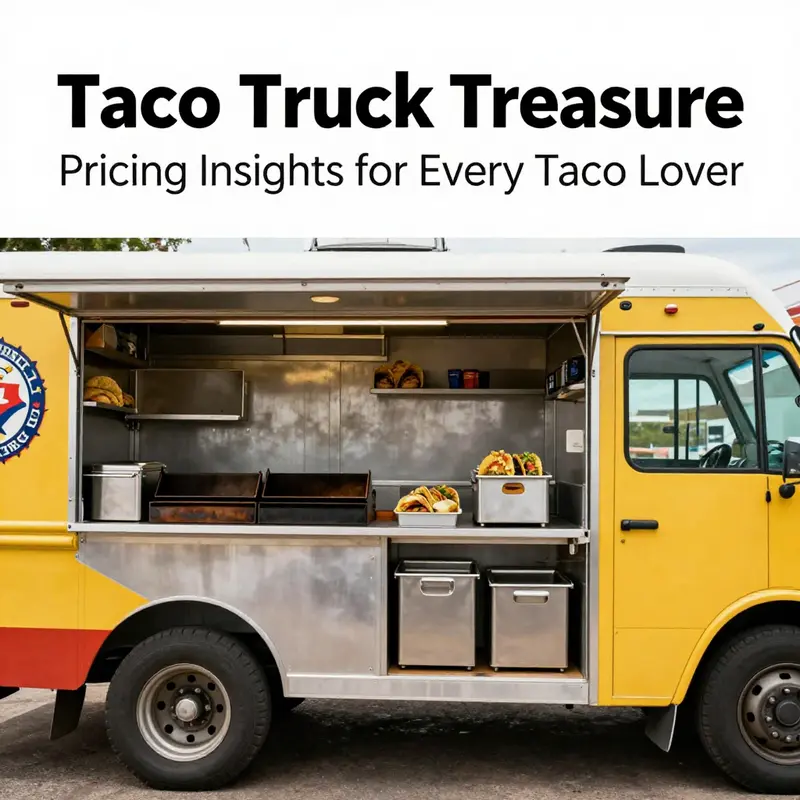
Prices for a taco truck do not arrive in a single number. They emerge from choices, constraints, and the market you intend to serve. The same truck that turns heads in a busy city street might look less attractive in a rural setting if the equipment does not match the menu or the local health codes. The core drivers are the equipment quality, the construction materials, the level of customization, and the location where you buy and operate the unit. When you map these factors, a clearer picture appears: the sticker price sits atop a broader stack of costs—some obvious, some concealed. This is not merely a math exercise. It is a planning narrative about how a small business survives and thrives in a competitive street food landscape. The journey from idea to open window hinges on understanding how the price is built, what the price covers, and what you must budget beyond the initial invoice to keep operations smooth, compliant, and profitable over time.
New buyers often begin with a rough sense of range and then refine expectations as they learn the three broad tiers of new taco trucks. In general terms, new units tend to cluster in three bands. The economy or entry level sits around eight to fifteen thousand dollars and typically comes with a shorter lifespan, roughly two to three years of service if it is used intensively and maintained carefully. The mid range spans roughly sixteen to twenty-five thousand dollars and tends to offer a longer lifecycle, usually five to seven years, with sturdier frames and more reliable kitchen components. The premium or commercial grade tier begins at about twenty-six thousand dollars and can extend beyond forty thousand, sometimes with a warranty horizon of eight to twelve years. These figures reflect not only the raw price tag but the quality of build, the durability of the kitchen equipment, and the level of compliance baked into the design. A premium unit may feature more robust stainless steel construction, better insulation, integrated fire suppression, and appliances that are built to run a full shift day after day without the fatigue of a lighter, less durable setup. The categorization is not a guarantee of performance, but it is a useful map for budgeting and for aligning expectations with the menu you plan to offer and the volume you anticipate.
Beyond the sticker price, another decisive factor is where the truck is produced and how it is assembled. In recent years, manufacturing clusters in parts of Asia have become dominant exporters of turnkey units. The appeal is clear: scale logistics, standardized components, and streamlined electrical and plumbing integration can deliver ready-to-run kitchens at prices Western refurbishers cannot always beat. The economic logic is simple—large factories optimize for throughput, reuse proven layouts, and lock in supply chain efficiencies that translate into lower upfront costs. Yet these advantages come with caveats. Importing a turnkey unit from overseas reduces upfront dollars but shifts risk into shipping logistics, customs clearance, and after-sales support. Buyers must scrutinize warranties, service networks, and the availability of replacement parts in their region. In practice, this means asking hard questions about lead times, the ease of retrofitting local compliance features, and the long tail of maintenance costs that may not appear as a line item on the initial quote.
As this price puzzle unfolds, many buyers also weigh the value proposition of used taco trucks. The price advantage sometimes looks dramatic: a well-maintained used truck can run in the range of fifteen thousand to forty thousand dollars, depending on age, mileage, and earlier refurbishment quality. The upside is immediate cash savings and faster time to market. The downside, however, lives in the details. A used unit often carries more unknowns about the condition of the kitchen equipment, the health of the electrical system, and the state of seals and insulation intended to control heat and noise. A thorough due diligence routine becomes essential. This includes verifying critical certifications and safety compliances, such as ISO quality management credentials and the presence of UL or CE certified components in the installed equipment. It also means requesting precise material specifications so you know whether the bodywork uses corrosion-resistant stainless steel of a suitable grade or a less durable alloy that can degrade under frequent washdowns and high humidity. A buyer must examine the overall integrity of the chassis, the integrity of the propane or electrical systems, and the reliability history of the vendor or refurbisher. The goal is to avoid a situation where the low initial price turns into a sequence of expensive repairs, frequent downtime, or compliance gaps that could jeopardize the license to operate.
Location matters almost as much as the build itself. Regulatory regimes and health and safety codes can shape the practical price of entry. Regions with stringent inspections, required modifications for so-called health code compliance, or limited space for vehicle inspections can push upfront costs higher, even if the base price of the truck is attractive. In contrast, markets with more flexible zoning or a higher tolerance for evolving food truck practices may offer smoother paths to operation with potentially lower upfront adjustments. The effect is cumulative: where you plan to operate can add a layer of cost that sits on top of the base purchase price. For entrepreneurs who plan to import, the decision to source from overseas adds another set of variables. Shipping logistics, customs duties, insurance during transit, and the question of whether warranties remain valid after the unit clears customs all become part of the financial calculus. A practical takeaway is to treat price as part of a holistic acquisition plan that accounts for the end-to-end journey—from factory floor to curbside service.
The ongoing costs also deserve careful scrutiny. A well-constructed unit that meets modern safety and energy standards can reduce long-term expenses by lowering downtime, minimizing repair frequency, and delivering steadier energy and fuel efficiency. Maintenance costs, insurance premiums, permit renewals, and potential downtime for preventive servicing all accumulate over the life of the truck. A higher upfront investment in better insulation, more efficient refrigeration, and durable cooking equipment can pay off in lower operating expenses and fewer emergency repairs. This is the part of the conversation that many new owners overlook when chasing the lowest upfront price. The math is straightforward but not simplistic: a cheaper truck that requires regular, costly fixes can eat into margins just as surely as a higher loan payment would if the revenue model remains unchanged.
To move from theory to practice, consider how a realistic budget might be constructed. A practical approach starts with the menu and target location. If the plan is to serve a compact but popular menu in a dense urban corridor, you may prioritize reliability and speed over exotic or highly specialized equipment. In that scenario, a used or mid-range new unit with solid stainless steel construction and efficient, easily cleaned surfaces could hit the sweet spot between cost and performance. If the menu features long shifts, high-volume fry work, or heavy grilling demands, the investment in a premium, heavy-duty chassis and state-of-the-art ventilation can reduce risk and improve throughput. A budget exercise then translates into a two-step forecast: first, estimate the upfront capital needed to acquire a compliant, road-ready unit, and second, forecast the ongoing monthly operating costs, including gas, electricity, water, waste disposal, insurance, permits, and staffing.
For someone starting with limited capital, a careful blend of a used chassis with a thoughtful refurbishment plan can be the most prudent path. The refurbished route often requires a careful evaluation of the refurbishment partner, the range of equipment installed, and the long-term service reliability you can expect. It can also offer a clearer sense of the return on investment by isolating the line items that drive profitability: the cost of the truck itself, the cost to outfit the kitchen to the menu, and the incremental improvements in efficiency from upgraded equipment. In contrast, a brand-new mid-range unit provides a clean slate with modern compliance features and better energy efficiency from day one, but it demands a larger upfront investment and a reassessment of working capital. The choice between these pathways should be guided by a precise business plan, a realistic sales forecast, and a clear sense of the break-even point under local demand conditions. A robust plan will include a cash flow projection that weighs the upfront loan or personal capital against monthly revenue, COGS, and fixed costs, all while accounting for seasonal fluctuations and potential regulatory changes that could affect operating hours or permit costs.
In this context, learning how to evaluate suppliers becomes essential. The supplier landscape ranges from domestic manufacturers and refurbishers to overseas manufacturers offering turnkey units. Each option has a different profile of risk and reward. When you assess suppliers, you want to understand not just the price but the reliability of delivery, the clarity of the warranty, and the accessibility of post-sale support. A reputable supplier should provide detailed material specifications for major components, such as the type of stainless steel used in the kitchen and the frame, the grade of aluminum for nonstructural panels, and the insulation standards that ensure energy efficiency. They should also disclose the expected life span of critical components under typical daily usage. If you are working with an overseas supplier, you will need confirmation of their compliance with local codes and the availability of replacement parts and service centers in your region. A balanced decision emerges when you contrast delivered price with the cost of compliance, maintenance, and potential downtimes. The goal is a unit that remains reliable under the demands of a busy service window, not a bargain that collapses under the strain of a single dinner rush.
To ground this exploration in a broader market view, many buyers find it useful to scan listings and compare across regions, recognizing that price is a function of supply and demand as much as it is of quality. Platforms that connect buyers with commercial vehicles can reveal the price anchors for used and new trucks in different markets, and they can help you calibrate your expectations. A disciplined sourcing approach also includes a checklist for evaluating the technical capability, compliance readiness, communication reliability, and after-sales support of potential suppliers. The checklist helps you move beyond the loud pitches to verify the fundamental capabilities you require to operate safely and profitably. It is not unusual to discover that a slightly higher upfront price nets a significantly lower total cost of ownership when you factor in maintenance, energy use, and risk exposure over the life of the unit. The higher quality build can translate into better resale value as well, preserving capital if you decide to upgrade in a few years.
Integral to this process is a clear sense of your market positioning. Do you want to be a nimble, low-cost option that thrives on high turnover and simple menus, or a more specialized concept that commands premium pricing for a unique offering? The answer shapes the equipment you prioritize, the level of customization you pursue, and the region you choose to operate in. It also informs your negotiating posture with suppliers. For instance, a buyer who prioritizes speed and reliability over every last bell and whistle may negotiate differently on warranties and spare parts when purchasing a mid-range unit versus a premium build. The more precise your menu and service model, the easier it becomes to align the truck’s features with the business plan rather than letting the truck dictate the plan. In practice, the phrase you carry into negotiations is that you are not just buying a vehicle; you are investing in a mobile kitchen capable of delivering a consistent, safe, and scalable customer experience.
If you want a practical route to framing your decision, consider the idea of choosing the right food truck as a framework rather than a destination. This concept emphasizes the fit between the unit and your operation, rather than chasing the lowest price or the flashiest features alone. A well-chosen truck is the foundation upon which your entire business rests. It determines how quickly you can open, how smoothly you can run, and how resilient you will be under pressure. The linked guide to choosing the right food truck offers a concise framework for evaluating options, balancing initial cost with long-term value, and aligning the purchase with your business model. Choosing the Right Food Truck.
While the price puzzle can be complex, the central message remains clear. There is no single best price; there is a price that best serves your menu, your location, and your capacity to manage and grow a small business. The optimal choice is one that minimizes risk—compliance risk, equipment failure risk, and downtime risk—while maximizing reliability, efficiency, and the potential for a solid return on investment. This requires a disciplined approach to evaluating new versus used options, to the implications of location-driven costs, and to the long-term costs of ownership. It also invites a disciplined view of supply chains and warranties, especially for buyers who intend to import. In other words, the price you pay is a signal about the overall quality, resilience, and sustainability of your business model.
External resource for deeper supplier dynamics and market trends can be found in a broader industry overview of strategic sourcing in the commercial truck sector. This material offers a wider lens on how suppliers compete on price, quality, and service, and how buyers can navigate the market to secure value over time. https://www.made-in-china.com/products-detail/StrategicSourcingofUsedTacoTrucksSupplierEvaluationMarket_Trends/165851478905.html
Final thoughts
Navigating the taco truck price landscape can feel overwhelming at first, but with a closer look into the world of flavors, equipment, and market dynamics, you can make an informed decision. Understanding the variations in price for used and new taco trucks and recognizing how factors like equipment quality and location play a role will empower you to invest wisely. So whether you’re dreaming of dishing out tacos at the local festival or opening your first food venture, equip yourself with this knowledge. Now, let the journey deliciously unfold!