
Embarking on a journey through the vibrant world of taco trucks is not only a quest for deliciousness, but also an exploration of the investment needed to bring these mobile kitchens to life. Whether you’re a cuisine lover eager to explore the latest trends, a taco enthusiast dreaming of your own food venture, or a seasoned business owner ready to expand—understanding the price dynamics of taco trucks is essential. Each chapter will whisk you through the thrilling spectrum of prices, from those shining new trailers to unique customized options and even valuable bargains found in the used market. By the end, you’ll not only know how much taco trucks cost but also where to get the best deals and how to make savvy financial decisions in your taco truck journey!
New Taco Trucks Unwrapped: Decoding Price, Craft, and the Path to a Profitable Kitchen on Wheels
Price tags on new taco trucks rarely tell the whole story. A single unit can be a straightforward cart on wheels, or a fully insulated, stainless steel kitchen on a mobile trailer with multiple cooking zones, refrigeration, and a dimmable lighting system that keeps prep spaces efficient during peak service. The market for these vehicles is shaped by a mosaic of choices: where the truck is built, what materials are used, how much customization is added, and how the buyer plans to operate the business day after day. In recent market analyses, the price spectrum for new taco trucks has stretched from modest beginnings to premium configurations, and the reasons behind that spread illuminate how a buyer should think about cost as a whole, not just as a list price. The underlying calculus involves not only the sticker price but also the durability, operating costs, and logistics that determine the true value of a mobile kitchen over time. This chapter dives into those dynamics with care, drawing a map from basic models to fully customized systems, and showing how buyers can separate sound investments from vanity upgrades that do little to improve service quality or profitability.
The broad spectrum of new units begins with basic configurations that carry a surprisingly low upfront cost. In some market segments, basic street vending carts and small mobile kitchens can start around a little over a thousand dollars, with the lower end of the spectrum dipping toward the $1,200 mark. Those figures reflect lean setups that focus on the essentials: a shell, a simple cooking surface, basic ventilation, and minimal insulation. The logic behind these lean options is straightforward. A first-timer might prefer to test demand or maintain a tight cash flow while the business proves its model. At this tier, buyers often trade off advanced insulation, heavy-duty materials, and comprehensive electrical systems in favor of affordability and speed to market. Yet even at the low end, hidden costs begin to accumulate if you consider shipping, assembly, and initial permits, which can push the total below the ceiling of a modest investment but above that opening price in meaningful ways.
Moving into the mid-range, the price band broadens to accommodate sturdier construction and more capable kitchen layouts. Mid-range units frequently offer improved durability, better insulation, more complete cooking ecosystems, and higher-grade materials such as 304-grade stainless steel. In practical terms, a mid-range taco trailer or mobile kitchen might typically land between roughly $3,000 and $6,000, depending on size and the specifics of the kitchen configuration. This range makes room for better insulation, more robust refrigeration, more versatile cooking stations, and service windows designed for faster customer turnover. A buyer entering this tier often gains features that materially reduce downtime and service interruptions—reliability that translates into a more predictable flow of revenue during busy shifts. The mid-range tier often includes a thoughtful balance of upfront cost and long-term value, with attention to energy efficiency, waste management, and ease of cleaning, which collectively reduce operating overhead over the life of the unit.
Beyond mid-range, fully customized or high-end models push the price upward in a way that reflects both premium materials and sophisticated design. In these builds, the emphasis is on modularity, adaptability, and long-term scalability. High-end configurations frequently exceed $9,500, driven by premium appliances, optimized layouts, high-grade insulation, advanced HVAC or ventilation packages, energy-efficient components, and warranties that promise durability across many service seasons. For operators with high-volume expectations or those targeting special menus and rapid service models, these investments can be justified by the resulting gains in throughput, consistency, and staff ergonomics. The higher end of the market also tends to favor components selected for longevity, ease of maintenance, and compliance with safety standards that reduce risk and downtime.
A crucial practical distinction in this universe is the origin of the build. Chinese manufacturers, especially those in eastern hubs like Shandong and Henan, have become dominant players in the global mobile food industry. They leverage vertically integrated supply chains, shared tooling, and bulk materials access to drive unit costs down. In such ecosystems, unit prices for new units can span a wide range—from roughly $1,200 up to $9,500, depending on configuration and installed equipment. The economics behind these numbers are nuanced. For Western buyers, the base price often serves as FOB—free on board—from a factory in China. That means shipping, insurance, and import duties are added on separately by the buyer or the freight forwarder. The result is that the delivered cost to a U.S. or European municipality can be substantially higher than the quoted factory price once logistics are accounted for. This reality underscores an essential point for any buyer: the sticker price is only the first chapter in the total cost story. The shipping lanes, port charges, and the incipient need for compliance certifications can tilt the final cost by a meaningful margin, especially for buyers with strict procurement requirements or limited in-house logistics expertise.
For buyers seeking cost certainty through scale, there is another pricing dynamic worth noting. Suppliers frequently offer bulk discounts for 3 or more units. In some cases, the per-unit price falls to around $4,000 when orders scale to seven or more units, with intermediate tiers offering prices near $4,100 for 3–6 units. These bulk discounts reflect not only the efficiencies of mass production but also the importance of securing a stable supply for a growing fleet. When a single business envisions multiple trucks rolling out to new territories or busy markets, these discounts can meaningfully improve the return on investment by spreading fixed design and tooling costs across more units. However, even in bulk deals, buyers must remain vigilant about the incremental costs that accompany each additional trailer, such as bigger or more complex electrical systems, additional plumbing, and the logistical complexities of coordinating multiple shipments and warranties across borders.
That is where the decision calculus becomes richer. The price is not a simple one-dimensional figure; it folds in the materials chosen for the body and the kitchen. Corrosion-resistant 304 stainless steel is a recurring decision point because it improves longevity in harsh, food-preparation environments. The extra cost of higher-grade steel can be justified by reduced maintenance and fewer repairs—a comfort to operators who depend on consistent service and minimal downtime during peak hours. Insulation quality, the presence and quality of refrigeration, the number of cooking stations, the inclusion of sinks, and the layout’s ergonomics all feed into the final price. Operators who design for energy efficiency may recoup higher upfront costs through lower utility use and longer-lasting equipment that resists corrosion and heat damage.
In addition to the physical build, the logistics of getting a unit to a customer’s door cannot be ignored. Shipping and import duties add a substantial line item to the overall expense. Buyers must consider not just the cost of the unit but also the cost of delivering it to their site, including potential charges for handling, inland transport, and customs clearance. Compliance certifications such as UL or CE standards—often perceived as a premium feature—can influence the market acceptance of a unit, particularly for operators who plan to operate across multiple jurisdictions with strict regulatory expectations. A unit that meets these standards may command greater confidence among lenders, landlords, and customers while potentially reducing the friction of renting or leasing negotiations.
To navigate these costs with confidence, buyers often turn to reputable sourcing platforms that verify suppliers, provide warranties, and document the offers in a format that allows apples-to-apples comparisons. A widely cited resource notes the value of verified supplier networks that include video instructions, parts guarantees, and one-year warranties. Such assurances help buyers separate promising vendors from less stable options and reduce the risk that a major component—like a refrigeration system or a cooking module—will fail soon after delivery. The procurement journey, then, moves from a simple price inquiry to a structured evaluation of supplier reliability, post-purchase support, and the clarity of spare parts access. This is especially critical when the business plan depends on rapid expansion or deployment of multiple units in a single season.
Amid these considerations, it is worth acknowledging how buyers can ground their expectations in practical realities. For instance, the theoretical price range of $1,200 to $9,500 for new units from Chinese manufacturers masks a spectrum of real-world experiences. The lower end represents lean configurations that minimize upfront risk but require a clear plan for upgrades and equipment investments as the business scales. The mid-range embodies a pragmatic balance, delivering a kitchen that can cope with steady demand and a modest growth trajectory. The upper end reflects operators who aim for peak efficiency, versatility, and long-term durability, coupled with the resilience needed for high-volume events or year-round operations. In all cases, the buyer should anticipate that the final delivered cost will almost always exceed the base price quoted by the factory, driven by shipping, duties, and compliance costs that influence the bottom line.
To help buyers make smarter choices, a practical path involves a careful cost-benefit assessment that weighs not only the price but the total lifecycle value of the unit. This means estimating the expected lifespan of the trailer, maintenance requirements, the cost of licensing and insurance for a mobile kitchen, and the potential revenue uplift from improved kitchen efficiency and service speed. A well-designed unit may enable a single operator to serve more customers in the same window of time, thereby driving higher daily sales and a quicker payback on the initial investment. Conversely, investing in features that promise little real-world benefit—such as extravagant finishes or highly specialized appliances that see limited use—can erode profitability without delivering meaningful returns.
For readers who want to anchor these ideas to practical steps, the question often becomes: How do I verify a supplier and ensure a fair, transparent deal? A good start is to explore platforms that list verified suppliers and include buyer guides, video instructions, and warranties. Such steps can dramatically reduce the risk of encountering substandard builds or misrepresented capabilities. In parallel, prospective buyers should consider requesting detailed specifications and side-by-side quotes that itemize equipment, materials, and installation work. A thorough quote should spell out the exact kitchen layout, the number of burners, the presence and capacity of refrigeration, water supply lines, siphon systems, and the method of waste disposal. It should also clarify the timeline for delivery and the post-sale support commitments that come with the unit. With these checks in place, price comparisons become a more meaningful exercise, and the path to a successful rollout of a taco truck fleet becomes clearer.
For readers seeking a quick, practical nudge in the right direction, consider how the decision to purchase new compares with exploring used or refurbished options. The market for used taco trucks has seen rapid growth driven by underdeveloped competition in refurbishing, especially from large refurbishing clusters abroad. In some markets, refurbishers can offer substantial savings even after outfitting a unit with a new kitchen. Still, the cost equation must account for refurbishment lead times, post-sale support, and potential retrofits required to meet current safety and health standards. In a dynamic market, the best choice will depend on a buyer’s risk tolerance, available capital, and appetite for managing ongoing maintenance.
If you are weighing your options, a useful starting point is to consult resources that help buyers compare the practical aspects of choosing the right food truck. For readers, the topic resonates with the challenge of translating a price tag into a reliable business asset. A concise path is to seek out a resource that emphasizes not just price, but the tradeoffs between price, build quality, and long-term operating costs. In this spirit, consider the practical guidance offered on the linked resource that discusses choosing the right food truck. It helps steer buyers toward a configuration that aligns with their menu, service style, and location strategy, while not getting lost in vanity features that do not add real value over time.
External considerations also matter when placing a formal order. The global supply chain, currency fluctuations, and regional labor costs all influence the ultimate cost of a new taco truck. Buyers who plan to expand across states or countries should ask about compliance with multiple regulatory regimes and whether the vendor can provide documentation for inspections and permitting that may be required in different jurisdictions. The vendor’s willingness to coordinate with a buyer’s local inspector can be a meaningful determinant of a smooth launch. The reality is that a good deal isn’t merely a low price; it is a package that includes dependable service, clear warranties, and a reliable supply chain. When the unit arrives, the operator’s workflow should feel intuitive, with minimal adjustments needed to begin serving customers and generating revenue.
For further reading on price strategies and supplier strategies in the context of global taco truck procurement, see the external resource that examines strategic sourcing of affordable taco trucks in China. This broader market analysis presents a framework that helps buyers compare not just the price tag but the underlying economics behind each quote, including factory capabilities, logistics, and post-sale support. The insights from that resource can help readers translate a sticker price into a sustainable business plan and avoid common missteps that erode profitability across the first season of operation.
In sum, new taco trucks sit at the intersection of craft, cost, and logistics. The sticker price is only the starting point. A thoughtful buyer will weigh materials, insulation, kitchen configuration, and energy efficiency against the realities of shipping, duties, and compliance. Bulk purchases can offer meaningful savings, but they require careful coordination and planning. The cheapest option may deliver a lower upfront risk, but the most durable and reliable unit often turns out to be the better long-term investment, especially for operators who expect high-volume service, frequent relocation, or expansion into new markets. By approaching the decision with a clear picture of total cost of ownership and a disciplined sourcing process, a taco business can launch with a fleet that is not only affordable but also capable of delivering consistent, high-quality service to customers across a busy service day.
If you want a practical, industry-aligned starting point for navigating these choices, you can explore resources focused on choosing the right food truck and the broader considerations for launching a mobile kitchen business. For additional context on price ranges and supplier dynamics, the external link provided above offers a broader industry perspective. As you plan, keep in mind that the most valuable asset is not the trailer itself but the ability to deliver great food quickly, consistently, and safely to a steady stream of customers.
External resource for price comparison and supplier insights: https://www.foodserviceinnovations.com/strategic-sourcing-taco-trucks-china-supplier-guide
Price Signals in the Used Taco Truck Market: Insights, Trends, and the Value of a Mobile Kitchen
The used taco truck market functions like a living barometer for a broader shift in how entrepreneurs approach food on wheels. Price signals in this space are not just about a sticker price; they encode a bundle of realities—condition, configuration, branding, and the confidence that a mobile kitchen will perform when the first order is placed in a crowd. Across urban centers and festival grounds, seasoned buyers and first-timers alike watch those price bands tighten or stretch in response to demand, supply chain quirks, and regulatory expectations. In recent years, the widely cited range for pre-owned units has settled into a practical band: roughly thirty-five thousand to seventy-five thousand dollars. Within that band, the variance is dramatic. A truck with full refrigeration, a robust cooking line, and a branded look can push toward the upper end, while older frames with fewer upgrades, or portable setups with limited storage, sit closer to the lower edge. The distinction is rarely simple. It is a reflection of whether the truck will arrive ready to operate or require a longer ramp to profitability.
This market dynamic is not merely a function of age. It hinges on how well the vehicle blends mobility, durability, and customer experience. A unit that comes with a comprehensive display, a service window tuned for fast turns, and a layout that minimizes gas and electrical risks may command a price well above its bare mechanical condition would suggest. Conversely, a mechanically solid chassis lacking refrigeration, with a narrow corridor between grill and sink, may seem like a bargain at first glance but can siphon away margins with ongoing upgrades and compliance costs. The valuation process therefore reads like a balance sheet, weighing ongoing operating costs against upfront investment and the potential for differentiation through branding and menu specialization. In other words, the unit’s price is a proxy for a future stream of revenue, not just a sum of current capabilities.
As buyers navigate this terrain, the meaning of price becomes clearer when viewed through the lens of supply sources and the broader procurement ecosystem. The market has seen a pivot toward direct sourcing from international manufacturers and refurbishers via B2B platforms. That path can unlock substantial savings and customization options, but it also imposes a heavier responsibility on buyers. Duties, shipping, insurance, and compliance with local health and electrical standards can add a meaningful 15% to 25% to the landed cost. The delta may appear modest at first, but it can reshape the financials of a six- or seven-figure plan for scaling a fleet. A 20% swing in landed cost can alter the pace of expansion, the feasibility of financing, and the decision to pursue long-term maintenance contracts or warranties. This is why, in the 2025 procurement landscape, savvy buyers are advised to go beyond glossy listings. They are urged to pursue due diligence that substantiates materials, workmanship, and the reliability of performance data across the life cycle of the unit.
The materials that line a used taco truck carry heavy weight in pricing. Corrosion-resistant stainless steel, often specified as 304 grade, is not merely a durability feature. It is a long-term cost control mechanism. It reduces the frequency of replacements, minimizes sanitation risks, and supports faster cleanup during high-volume service periods. Yet it also adds to the initial purchase price. The trade-off is clear: buyers who insist on top-tier materials may pay a premium today for lower maintenance costs tomorrow. The same calculus applies to electrical components, insulation, and refrigeration systems. A full, factory-standard cold chain with dependable compressors and energy-efficient insulation is a stronger selling point than a basic warming cabinet. In markets where health and safety regulations drive inspections and licensing, equipment quality translates directly into smoother operations and fewer regulatory headaches. These factors help explain why two trucks that look similar on the surface can diverge by tens of thousands of dollars once compliance, reliability, and long-term operating costs are factored in.
The sourcing dynamic, particularly with Chinese refurbishers and manufacturers, has become a central thread in price discussions. The competitive cost structure in several Chinese industrial clusters allows for aggressive pricing and rapid customization. Buyers, however, must account for the entire journey from factory floor to curbside. The 15%–25% landed cost window captures taxes, duties, freight, and insurance, but it does not measure the less predictable elements: port congestion, currency fluctuations, and the time value of funds during lengthy lead times. A prudent buyer will factor in these variables into a comprehensive budget that also accounts for compliance with local health laws, vehicle inspections, and permits. The cautionary notes delivered in the 2025 procurement guide are consistent: relying solely on product listings can invite operational risks. Technical due diligence becomes not a luxury but a necessity. One should verify corrosion resistance across all critical surfaces, confirm electrical safety standards, and seek documentation about the performance history of refrigeration and cooking equipment. The benefits of this diligence are not abstract. They translate into fewer post-purchase surprises, steadier cash flow, and a sounder platform for growth.
Market trends reinforce the idea that a used taco truck is more than a moving kitchen; it is a visual and cultural artifact that resonates with local tastes. In cities where the street-food culture is tightly interwoven with music, arts, and neighborhood identity, buyers often pursue trucks with branding that signals a clear culinary niche. A unit that embodies a distinctive look and a curated menu—say, a slow-braised barbacoa concept or a regionally inspired al pastor-inspired profile—tends to attract repeat customers and create a loyal following. That loyalty, in turn, yields stronger resale values because the vehicle carries not only the edible value but also a proven brand story. The demand for such trucks tends to outpace generic, feature-lean configurations, particularly in vibrant markets where food trucks have become a social event as much as a quick-service option. This trend underscores a broader market reality: the value of a used taco truck extends beyond mechanics and into the realm of customer experience and market fit. A well-branded truck can unlock premium pricing and facilitate easier navigation of regulatory landscapes through a clearly communicated value proposition.
From a strategic view, buyers who are open to sourcing from overseas often blend this approach with local refurbishing and rebranding. The combination creates a hybrid value proposition: a lower base cost that is enhanced by careful design, high-quality equipment, and a strong local identity. The price becomes a negotiated outcome rather than a fixed target. In practice, this means that a buyer who is prepared to manage import logistics, warranty expectations, and service arrangements can realize a lower upfront investment while still achieving a market-ready setup that performs in crowded venues or festival circuits. Yet the risk profile shifts accordingly. The buyer must plan for longer lead times, more complex maintenance schedules, and the possibility of needing post-purchase adaptations for electrical or ventilation systems to accommodate local codes. In the end, the price paid is a reflection of risk appetite, project planning, and the ability to turn a mobile kitchen into a recognizable brand with repeat customers.
With these considerations in mind, the process of evaluating a used taco truck becomes an exercise in scenario planning. A buyer may begin with a baseline inspection of mechanical condition, then layer on the value of the kitchen layout, the reliability of refrigeration, and the integrity of the service window. A third layer involves branding and branding-related equipment: signage quality, color schemes, and the alignment of the truck’s exterior with the intended culinary concept. This layering explains why two trucks at the same price point can yield very different cash-on-cash returns. The more a truck aligns with a clear menu and market, the more the price feels like a strategic investment rather than a cosmetic upgrade. To support a buyer’s decision, several industry-standard practices have emerged. A structured supplier evaluation framework is recommended by procurement experts toward the end of 2025, emphasizing the importance of after-sales support, transparent performance data, and a track record of reliability. In short, the best buyers are those who pair due diligence with disciplined budgeting and a clear plan for growth.
For someone taking the first steps into the used taco truck market, a practical starting point is to explore the breadth of configurations that exist within the price envelope. The lower end often corresponds to older chassis with minimal kitchen equipment and basic service capabilities. The middle range may offer a more balanced mix of refrigeration, efficient cooking lines, and moderate branding. The upper end clearly signals turnkey readiness, with comprehensive systems, substantial branding, and a menu designed for high-volume service. A critical discipline when contemplating a purchase is to evaluate the total ownership cost, not just the list price. This means assessing maintenance contracts, warranty offers, spare parts availability, fuel efficiency, and the cost of energy consumption across peak service periods. It also means considering how quickly the truck can be redeployed to a high-traffic location, which reduces downtime and accelerates return on investment. A fast turnover is especially valuable in festival-heavy months when demand spikes and the time between gigs matters as much as price.
At the heart of this discussion is the recognition that used taco trucks cannot be treated as generic assets. They are, in effect, living platforms for culinary expression and local culture. The price reflects this multifaceted value—an intersection of utility, design, and market fit. Buyers who approach the market with a clear concept and a robust plan for growth are more likely to land a unit that not only fits within a budget but also provides a durable foundation for expansion. In this sense, price insights function as an early signal about risk and opportunity. They guide buyers toward configurations and supplier relationships that maximize long-term value rather than short-term savings. If you are charting a course through this market, it helps to anchor your plan in a disciplined evaluation framework, to seek verifiable performance data from suppliers, and to keep sight of the larger objective: a mobile kitchen that can scale with demand while maintaining quality and compliance.
For readers who want to explore practical pathways after reading this chapter, consider examining a broader decision framework that addresses the right balance between price, performance, and brand impact. A good starting point is the idea of choosing the right food truck as a strategic asset rather than a one-off purchase. In that context, the linked guide emphasizes how to align the truck’s capabilities with your menu, service model, and target communities. This approach helps ensure that price simply becomes a function of strategic fit rather than a barrier to entry. Choosing the right food truck offers a structured lens for evaluating the core trade-offs. While the chapter’s focus is on pricing and market dynamics, this companion resource anchors the decision in practical, real-world considerations that influence long-term profitability.
In closing, the used taco truck market is a dynamic ecosystem where price signals are shaped by material quality, equipment configuration, sourcing routes, and branding potential. Buyers who read these signals well—who factor in landed costs, regulatory expectations, and the value of niche differentiation—are best positioned to turn an initial investment into a thriving mobile operation. The story of price, after all, is not a single price tag. It is a narrative about how much a community is willing to invest in a shared food experience, how quickly a business can scale, and how reliably a truck can perform under pressure while delivering consistent, delicious offerings. For professionals and enthusiasts alike, the path forward lies in thoughtful due diligence, strategic purchasing, and a clear sense of how the truck will live and grow in the markets it serves. External research confirms that the procurement landscape continues to evolve as buyers seek safer, more transparent ways to source used concessions. External resource: https://www.supplychaindigital.com/industries/food-and-beverage-trends-and-procurement-metrics (an industry-wide view of sourcing, pricing, and procurement metrics for used food trucks).
From Base Price to Plate-Ready: The True Cost of Customizing Taco Trucks
Every aspiring taco entrepreneur starts with a question that feels simple on the surface: how much are taco trucks? The answer, in practice, stretches far beyond a sticker price. It is a layered conversation about what you want to serve, how fast you need to be in business, and how durable you want your kitchen-on-wheels to feel under the pressure of daily service. The base price of a new mobile food trailer can be a useful starting point, but it is only the first line in a longer forecast. When you add customization, you are not just buying a kitchen on wheels; you are building a portable operation that has to perform reliably, comply with health regulations, and project a brand that customers remember. The customization costs, therefore, are not an afterthought — they are the scaffolding that supports your entire business concept, menu, and location strategy.
If you trace the roadmap of customization costs, you begin with the fundamentals: interior layout, the cooking work zone, and the plumbing and electrical systems that enable a kitchen to function on the street. A typical customized mobile street-food kitchen or BBQ grill truck can land somewhere between US$2,500 and US$9,850 per set, with a minimum order of one set. That broad range is not a single price point but a spectrum that reflects choices in design, materials, and the level of turnkey readiness the supplier provides. At the lower end, you might be looking at a fairly lean build that prioritizes just enough workspace to plate a few tacos, fry a handful of shells, and keep the prep area clean and compliant. At the higher end, the unit becomes a fully equipped micro-kitchen, where every inch of space is optimized for speed, repeatability, and branding. In either case, the essence of the cost is the degree of customization: how much you insist on tailoring to your concept, your workflow, and your target market.
The components of customization costs are not abstract add-ons; they are concrete decisions that change both price and performance. The interior layout design determines how efficiently cooks move from grill to fryer to service window. If you want multiple cooking surfaces, a robust ventilation system, and an ergonomic work triangle that minimizes the distance between tasks, the price climbs with the complexity. Installation of cooking equipment—grills, fryers, steamers, or specialized toasting devices—adds another layer of cost, driven by the power requirements, heat management, and the need for durable mounting that keeps heavy equipment secure during transit. The electrical system is not just about having enough sockets; it includes wiring routes, circuit protection, power conditioning, and often dual-power options so you can run off-grid batteries on busy days or ensure a constant supply from a generator. Plumbing, including water tanks, pumps, sinks, and wastewater management, is another domain where precision buys you longevity and compliance. Each of these elements influences not only the upfront price but also ongoing maintenance and the likelihood of service downtime.
The specialized units demonstrate the range even more starkly. A customized outdoor food kiosk or a mobile beverage cart is typically priced from around US$6,100, reflecting not only more elaborate branding but also more advanced refrigeration, beverage dispensing systems, and the storage configurations needed to support a higher throughput. In this segment, the differences are often tied less to raw cooking capacity and more to how the equipment supports a broader or more refined menu, how the unit conveys a distinct concept through exterior and interior finishes, and how it integrates with a point-of-sale system that can handle a queue with minimal friction. The story of a kiosk or beverage cart shows that customization is as much about experience and brand velocity as it is about the kitchen itself.
Where the numbers truly diverge is in the total outlay for materials and the supplier’s location. The choice of materials has a direct impact on durability and upkeep. Corrosion-resistant 304-grade stainless steel is a common baseline for professional food-service environments because it holds up to heat, moisture, and the daily rigors of street service. But this choice comes at a premium relative to milder steels or painted surfaces, and it becomes a meaningful portion of the initial investment. The extent of exterior branding also matters. If you want a wrapped, color-mragined exterior with custom graphics, trim, and signage, you must factor in the costs of design services, vinyl production, and installation, all of which add to the bottom line. Insulation levels, climate control, and insulation types are another cost lever, especially if you plan to operate in hotter climates or in regions with strict temperature control requirements for certain menu items.
Another reality centers on where you source the vehicle and its components. In today’s global marketplace, Chinese hubs like Zhengzhou and Shanghai have become notable for turnkey mobile-food-unit production. Suppliers there can deliver customized taco trucks within 15 to 30 days after payment, with inspection, documentation, and container loading included. This speed comes partly from efficient labor markets and bulk-material economies, including easy access to stainless steel and off-the-shelf kitchen components. Yet speed has a price in the form of freight, duties, and the need for careful supplier vetting. The FOB (Free On Board) model often cited in these transactions means the buyer is responsible for shipping and import fees beyond the quoted unit price. For a buyer who prioritizes speed to market and a lower upfront cash outlay, this arrangement can be compelling, but it also requires you to add the logistics costs and the risk management steps to your budgeting and timeline planning.
With these realities in mind, most buyers use a straightforward heuristic: estimate the base trailer or cart cost, add a customization budget that reflects the breadth of what you want to accomplish, and then add a contingency for regulatory compliance and potential surprises. The base trailer or cart itself sits within a broad market range, depending on size, features, and whether it is a basic street-food vending cart or a more premium trailer with a fully equipped service window, refrigeration, and cooking zones. The data you shared earlier about new mobile food trailers—ranging from a few thousand dollars to just over seven thousand—provides a reference point. But once you translate that into a fully operational unit, you must accommodate the realities of interior workspaces, the need for ventilation compliance, and the kind of service window that integrates with a cash-wrap or POS system.
To navigate this effectively, it helps to start with a clear picture of your menu, your throughput goals, and your brand’s storytelling through design. If your menu emphasizes grilled meats and fried components, you’ll want robust ventilation and strong fire suppression, which adds to the cost through equipment and installation. If you envision a more beverage-forward concept—think custom coffee and limited food items—the emphasis shifts toward refrigeration capacity and beverage-dispensing hardware. The extent of branding becomes a meaningful cost factor when you want your truck to be a moving billboard. Exterior graphics, color schemes, and durable, easy-to-clean finishes all contribute to first impressions and long-term wear. In each scenario, the customization budget must align with your revenue model: the ticket price for your most frequent menu items, expected daily volume, and the services you intend to offer on peak days, such as catering for events or daily street operations.
Another layer of complexity is the regulatory and compliance landscape. Local health departments require specific sanitation standards, including how water is supplied and how waste is managed. Inspections, certifications, and ongoing compliance checks can add both upfront costs and recurring expenses. The intention for a quick, sleek, image-driven setup must be weighed against the practicalities of meeting health and safety requirements, which might necessitate extra equipment, specialized storage, and more robust wastewater systems. Even if a vendor promises a turnkey solution, buyers must budget for inspection fees, potential retrofits after initial service, and the possibility that certain components may need to be upgraded to comply with local codes. These considerations are not secondary concerns; they are a natural part of the cost of turning a concept into a functioning, compliant food operation.
What does this mean for someone trying to answer, how much are taco trucks? The short answer is that the price you pay for customization can be as important as the price you pay for the base vehicle. If you aim for a narrow lineup and minimal features, you can land closer to the lower end of the customization spectrum, perhaps around US$2,500 to US$4,000, particularly if you are willing to accept basic equipment, fewer branding assets, and a simpler interior. If you need a more sophisticated kitchen with multiple cooking modalities, advanced refrigeration, and tailored branding, you will likely be in the US$6,000 to US$10,000 zone or higher. When you push into premium ranges, you are paying for design polish, premium materials, and advanced technology that can support a high-throughput operation under demanding conditions. A high-end mobile unit may cross the US$10,000 threshold, especially when you couple premium finishes with state-of-the-art POS integration, climate control, and heavy-duty, transport-safe fixtures.
In this landscape, quotes and due diligence become essential. A buyer should request a detailed bill of materials and a precise scope of work that enumerates each customization item, the materials used, and the installation sequence. You should ask for warranties on both the structural aspects and the installed equipment and seek references from other operators who have purchased units from the same supplier. Because some vendors offer fast delivery from global hubs, it is crucial to verify the supplier’s capacity for after-sales service, including spare parts availability and service support, particularly if you plan to operate in multiple locations or in regions with challenging weather conditions. The reality is that many buyers rely on a combination of new and refurbished elements, especially when they want to balance cost with speed to market. In this context, Chinese suppliers and refurbishers can offer cost-competitive options with faster turnaround times, but diligence in vendor verification remains vital.
For readers who want to explore how these choices translate into practical decisions, a stepwise approach helps. Start by articulating your menu blueprint and throughput targets. Translate those targets into a required cooking area, ventilation, and refrigeration footprint. Then map out the service workflow from order to plating to pickup. This exercise often reveals which pieces of equipment are non-negotiable and which aspects can be staged for later upgrades. With that clarity, you can begin to compare quotes not just on total price, but on the robustness of the construction, the flexibility of the interior layout, and the vendor’s ability to deliver a unit that will hold up under daily use. It is also wise to consider a phased approach: begin with a functionality-focused setup that can scale as your business proves its concept and demand grows. A measured deployment reduces risk and provides a clear path to a more elaborate, brand-heavy unit once your sales velocity justifies it.
As you weigh these considerations, one resource stands out for those seeking deeper insights into choosing the right configuration and supplier. You can explore a practical guide to selecting a model that aligns with your goals at the article titled Choosing the right food truck, which offers a framework for evaluating different builds and the trade-offs between price, speed to market, and long-term reliability. The choice of supplier matters as much as the choice of design; a thoughtful partner can help you translate a menu concept into a kitchen that travels with you, while staying within a budget that remains aligned with forecasted revenue. For every prospective buyer, this is the moment when the numbers meet the plan and the plan begins to translate into a street-level business:
In sum, the customization costs for taco trucks sit at the intersection of design intent and practical execution. They reflect not just how you plan to cook, but how you plan to serve, sustain, and grow a brand on wheels. The first price you see is rarely the final figure; the full story unfolds as you choose materials, equipment, brand presentation, and compliance hooks. Those decisions, together with shipping terms and regional supplier dynamics, shape the total investment required to place a functioning, compliant, and brand-consistent taco operation on the road. By approaching customization as a structured design problem rather than a single purchase, you increase your odds of delivering a compelling customer experience while maintaining a viable financial trajectory. For anyone examining how much a taco truck costs in total, the essential takeaway is that the value of customization is judged not only by the immediate sticker price but by the long-term performance, reliability, and branding impact that your investment enables. And that is where a clear, informed approach to customization becomes not just a cost discussion, but a strategic decision about what your street-food concept will become over time.
External reference for further technical and market context: https://www.alibaba.com/showroom/mobile-food-truck.html
Bulk Purchasing Taco Trucks: Unlocking Real Value Beyond the Sticker Price
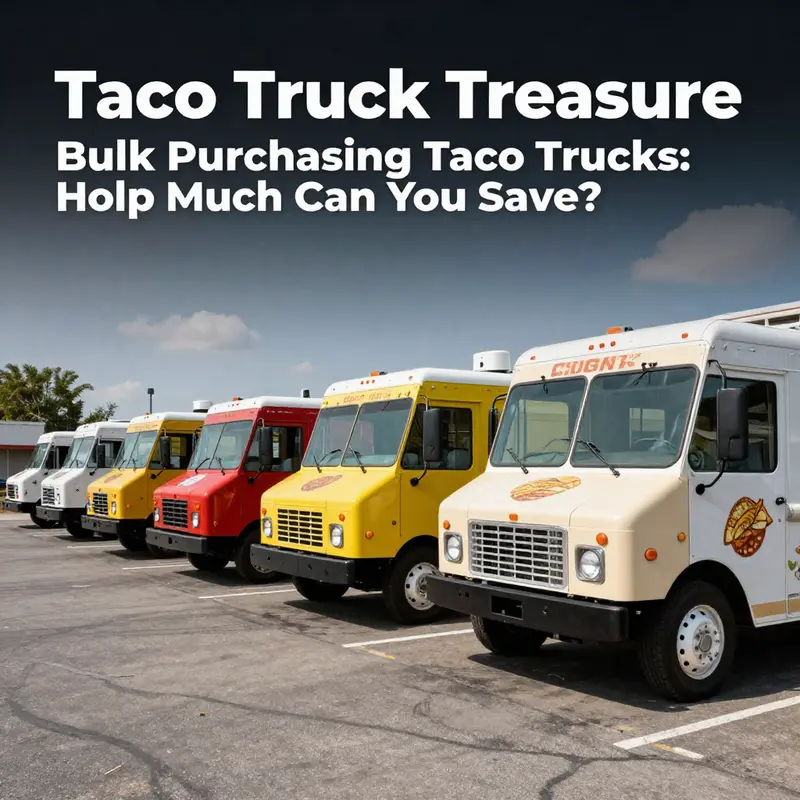
When a fleet of taco trucks becomes a strategic backbone rather than a single storefront on wheels, the math shifts. Bulk purchasing is not simply a discount hunt; it is a capacity strategy that blends price, reliability, and operational coherence into a single decision framework. The broad spectrum of prices for new mobile food trailers already tells a story: tiny basic street cart launches can start around three thousand six hundred dollars, while more elaborate, fully equipped units can push toward seven thousand three hundred. The real leverage emerges when a buyer negotiates for multiple units. In practice, suppliers often offer a lower per unit price as volumes climb. For orders of seven or more units, the typical target sits around four thousand dollars per unit, and for three to six units it can be a touch higher around four thousand one hundred dollars per unit. These figures are not just numbers; they signal how scale changes supply terms, financing options, and the rhythm of your rollout plans. The decision to bulk buy should always be weighed against total cost of ownership, not only the upfront sticker price. In a fleet scenario, the savings accumulate from more than one lever being pulled in unison: price per unit, shared shipping logistics, standardized parts, and streamlined training. The effect is a cascade of efficiency that multiplies as your footprint grows, and the math becomes a narrative about long term value rather than immediate bargains.
The raw price data also points to another essential truth: import dynamics and regional sourcing can redefine what value means in bulk. A large portion of the market for taco truck bodies and trailers still hinges on FOB pricing from manufacturing hubs in Asia. When you account for shipping, duties, and compliance costs, the difference between a seven unit order and a three or six unit order extends beyond the per unit sticker. The FOB origin can unlock a lower base price, but the accompanying freight, insurance, and import fees can tilt the scale depending on how a buyer structures the deal. In practical terms, this means that a bulk purchase from overseas manufacturers requires a well orchestrated logistics plan, a familiarity with import compliance, and a clear forecast of where each unit will operate. If you are bundling units for a single market, the advantage can be substantial; if you are spreading across continents, the complexity rises in step with potential savings.
Beyond the price tag, the choice of materials matters. A substantial portion of the price variance across new trailers is driven by the materials used in the chassis and body. 304 stainless steel, widely valued for its corrosion resistance and durability, can push up upfront costs but reduces the likelihood of costly repairs and replacements over the life of the fleet. When you bulk purchase, you can negotiate standardization on core components whether you insist on the same refrigeration systems, the same cooking modules, or the same service windows across every truck. Standardization lowers training costs, simplifies maintenance, and makes it easier to stock a unified spare parts inventory. The long term effect is not just fewer downtime events; it is faster onboarding for new staff, quicker turnover in the kitchen, and a sharper, more predictable maintenance schedule that keeps each truck on the road rather than in the shop.
There is also the question of customization. A bulk order still needs some degree of tailoring, especially if you are building a branded concept or a chain based operation. In bulk, you can bundle customization features more efficiently by designing a modular kitchen setup. You might standardize a core layout and then apply minor module level variations to accommodate regional spice profiles, menu rotations, or vendor partnerships without creating seven separate supply chains. Customizations inevitably sharpen the value proposition, but they also add to the unit price and the complexity of after sales support. The optimal bulk approach balances standardization with the necessary flexibility to meet diverse menus while preserving the advantages of common parts, training curricula, and service intervals. A fleet operator that coordinates design threads across multiple units will find maintenance easier, and the procurement cycle shorter, when the trucks are built around a shared blueprint.
Price is only one axis of value. Another critical axis is risk, specifically the risk of hidden costs tied to quality, compliance, and reliability. The literature on bulk sourcing emphasizes the importance of due diligence, sometimes labeled as technical due diligence, to ensure that the equipment you buy will meet local health and safety regulations and withstand the operational rigor of a busy food service environment. This means verifying that materials meet corrosion resistance expectations, that cooking and refrigeration modules meet energy and ventilation standards, and that wiring and electrical systems align with local electrical codes. It is easy to be lulled by an attractive introductory price; the peril lies in discovering after a few months that the stainless steel is prone to pitting, that a refrigeration unit is undersized for peak service hours, or that a service window cannot handle the daily turnover of a high volume concept. Such oversights can lead to fines, mandatory modifications, or unexpected downtime costs that dwarf any initial discount. In bulk purchasing, risk mitigation is a discipline: it requires careful supplier screening, reference checks, and a plan for rigorous quality checks before acceptance.
The decision to pursue bulk buying must also weigh the benefits of standardization. When an operator purchases multiple units from the same manufacturer, several operational efficiencies emerge. Training becomes straightforward because the staff learn on a single platform and apply the same procedures across all trucks. Spare parts become a shared stock, and a single maintenance protocol covers the entire fleet. Logistics become simpler as outbound shipments from the supplier and inbound servicing align with one common system. The net effect is a reduction in the hidden costs that creep into a multi truck operation, especially when fast growth is the objective. The more uniform the fleet, the easier it is to forecast maintenance windows, plan preventative service cycles, and budget for replacements. In practical terms, bulk purchasers often repurpose the saved labor hours into more service hours or additional menu testing in the early stages of fleet expansion.
But savings are not just about the per unit price or the efficiency gains in maintenance. They also hinge on the relationship with the supplier and the terms that govern the deal. A well structured bulk agreement can secure more favorable payment terms, better warranty coverage, and prioritized support during ramp up. The most meaningful savings come from a supplier that can translate your growth trajectory into a coherent collaborative procurement plan. A supplier with a proven track record one that can deliver on time, meet health and safety standards, and provide a reliable after sales network becomes a strategic partner rather than a transactional vendor. In practice, this means looking beyond the price tag to evaluate a supplier’s technical capability, their compliance readiness ISO 9001 certification and UL/CE standards, and their ability to support a chain operation with consistent service levels. The objective is not simply to buy more trucks; it is to secure a fleet that can operate with minimal disruption and a cost profile that remains predictable as scale grows.
The path to meaningful savings through bulk purchasing also requires attention to hidden costs that can erode an apparently attractive deal. Importing used equipment, for instance, can appear as a cheaper route, but it demands thorough due diligence. The risks include uncertain refurbishment quality, undisclosed corrosion on critical components, and the potential for non compliance with local health regulations. In some markets, refurbishers in certain regions can undercut Western manufacturers by substantial margins, but the long term costs can be steep if refurbishment is incomplete or the equipment is not built to the standards required in your operating environment. In addition to material quality, there are often hidden logistics costs: freight insurance, taxes, brokerage, and the administrative burden of verifying vendor compliance and warranties. When evaluating bulk opportunities, it is prudent to model a scenario that includes a conservative estimate of such costs and compare it to a domestic or more regulated supply chain. The finance minded buyer will insist on a detailed total cost of ownership that includes training, downtime, spare parts availability, and energy efficiency across the fleet.
In this context, the concept of standardization becomes a powerful lever. The more units you purchase, the greater the opportunity to secure uniform warranties and service packages. A consistent warranty framework across all trucks reduces administrative overhead and simplifies claims processing. Likewise, a standardized spare parts approach reduces the risk of back ordered components or incompatible parts that could extend downtime. This is where the bulk approach genuinely pays off: by coordinating procurement, you reduce complexity and create leverage that translates into meaningful long term value. The economics of bulk purchasing are not a single snapshot of a price sheet; they are a forecast of reliability, maintenance efficiency, and unpredictable support over years of operation.
For readers who want to anchor their bulk purchasing strategy in a practical roadmap, it helps to think through a few concrete steps. First, define the target fleet size and a realistic ramp schedule. Second, map the operational requirements for each unit, including kitchen layout, ventilation, and electrical load, while seeking common design threads across all trucks. Third, compile a short list of suppliers with demonstrated capability, quality controls, and robust after sales support. Fourth, request detailed technical documentation, warranty terms, and references from peers who have run similar fleets. Fifth, consider running a small pilot with a subset of units to validate performance, training programs, and service response times before committing to a full scale order. And finally, ensure that the procurement contract explicitly covers standardization commitments, lead times, acceptances tests, and remedies for nonconformity. This structured approach helps translate the theoretical savings of bulk purchasing into a tangible auditable value curve for your business.
As you navigate these decisions, a quick navigational aid can be helpful. When evaluating trucks and configurations, it is worth reviewing sources that discuss the art and science of selecting equipment that aligns with business goals. For a concise guide to choosing the right food truck, see the resource on choosing the right food truck. This nearby reference can help you align your fleet design with your menu strategy, customer experience, and expansion plans while staying mindful of the bulk considerations that drive total value rather than short term discounts. Practically, your bulk strategy should integrate pricing tiers, a plan for standardization, a risk management framework, and a logistics blueprint that minimizes friction in import, assembly, and on site operation.
In the end, the core takeaway is pragmatic and forward looking. Bulk purchasing is most effective when it is anchored in strategic sourcing rather than pure price competition. The biggest savings come from selecting a high quality, compliant supplier, achieving standardization across the fleet, and managing the lifecycle of each unit so that uptime, training, and spare parts availability are predictable. The volume itself creates leverage, but the value you extract from that leverage depends on careful supplier evaluation, rigorous quality checks, and a disciplined approach to risk. When these elements align, the fleet not only achieves a lower average unit cost; it attains a lower total cost of ownership, fewer disruptions, and a faster path to scale. That is the essential argument for bulk purchasing taco trucks: the savings that endure beyond the immediate price break are the real measure of long term success. External resource for further framework and standards: https://www.iso.org/iso-9001-quality-management.html
Final thoughts
Understanding the costs associated with taco trucks can empower you to make informed decisions for your business or culinary journey. From new and custom options that reflect your unique style to discovering valuable deals in the used market, the world of taco trucks is teeming with possibilities. By exploring bulk purchasing avenues, you can maximize savings and expand your taco venture efficiently. So, whether you’re dishing out delicious tacos on the streets or dreaming of new culinary adventures, knowledge is your best ingredient for success.