
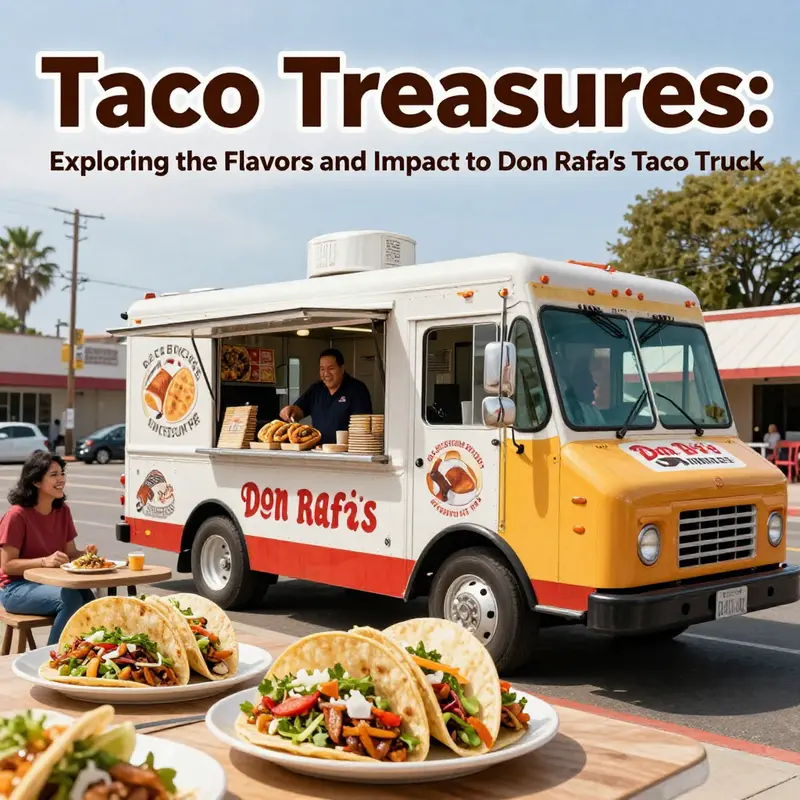
Tucked away in Stockton, California, Don Rafa’s Taco Shop stands as a beacon for taco lovers and culinary enthusiasts alike. This popular food truck doesn’t just serve tacos; it offers a flavor experience that captivates the senses. From the moment customers walk up to place their orders, they become part of an engaging culinary journey, with each bite bursting with vibrant ingredients. The following chapters explore the mouthwatering experience offered by Don Rafa’s Taco Truck, its impact within the local community, and operational insights that can benefit fellow taco business owners. Get ready to savor the essence of taco culture!
The Sizzle, the Stall, and the Street: A Deep Dive into Don Rafa Taco Truck’s Stockton Culinary Experience
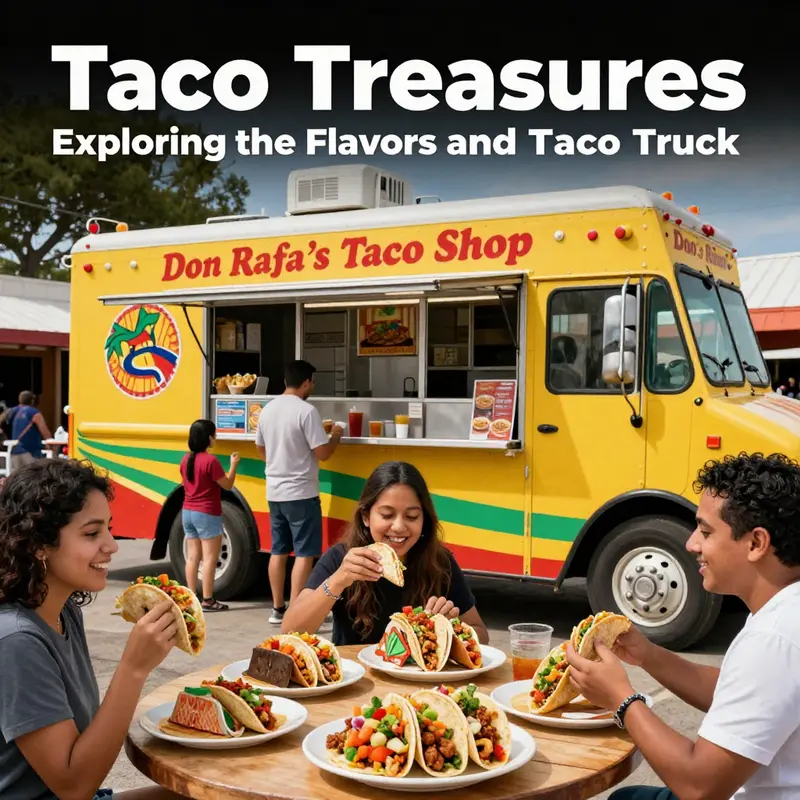
On a sun-washed stretch of Stockton, where the neighborhood hums with morning chatter and the scent of spice rides on the breeze, Don Rafa Taco Truck sits like a beacon for hungry passersby. The truck itself is a study in efficiency and charm, compact yet inviting, with a window that frames the dance of cooks at work. It is more than a place to grab a bite; it is a small, carefully calibrated stage where tradition and speed meet, where tortillas become the vessels for bold, bright fillings, and where a casual lunch or a late-night snack becomes a memory stitched to the day’s errands. The address at 1248 E Miner Ave anchors this ritual firmly in the city’s fabric, a marker that travelers and locals alike learn to navigate with ease. The routine is simple and steady: a quick walk-up to the window, a few seconds of eye contact with the cooks, and a order placed that feels almost ceremonial in its simplicity. What unfolds is a fast, interactive dining experience that preserves the warmth of a family kitchen while delivering the efficiency of a well-tuned roadside service. It is the kind of place where the act of eating becomes a conversation between craft and community, a dialogue that begins with the sizzling of meat on the grill and ends with a satisfied sigh and a clean plate, ideally followed by a pause to consider what comes next on the day’s agenda.
What makes this particular taco truck tick is not merely the quality of its individual components but the way those components are assembled, seasoned, and presented. The carne asada, for example, is more than roasted beef; it is the product of careful marination, patient grilling, and a smoky finish that lingers after the last bite. The fat renders just enough to keep the meat juicy, the surface takes on a crisp edge that adds texture, and every slice carries a depth of flavor that reveals itself as you chew. The al pastor is another standout, a nod to long-standing techniques that marry chili-driven warmth with the brightness of pineapple and a balance of spices that keep each bite balanced rather than overpowering. These fillings don’t exist in isolation; they come to life when tucked into handmade tortillas that are warm, pliable, and just a touch charred around the edges. The warmth of the tortillas is not only a sensory cue but a signal of care—an old-world touch carried into a modern setting.
The sensory spectrum at Don Rafa’s is carefully curated. The sizzle of the grill, the perfume of marinated meat, and the zesty snap of the mild green sauce combine to create a culinary atmosphere that invites you to slow down even as your breath quickens with anticipation. The green sauce, bright and citrusy with a gentle heat, serves as a bright counterpart to the meat’s richness. It’s not aggressive in the way a hotter sauce might be; instead, it acts as a bridge, a way to pull the separate flavors together into a cohesive whole. Some patrons prefer a lighter hand with the sauce, others ask for extra, and the cooks accommodate with a smile, a nod, and a quick shake of the bottle. The customization extends beyond heat and sauce. Whether you favor a soft tortilla that folds neatly in your hand or a crisper version that holds up to a forkful of fillings, the team at the window tunes each order to your preference with a practiced ease that makes the act of ordering feel almost ceremonial in its familiarity.
This level of attentiveness is not merely a nicety but a cornerstone of how Don Rafa’s builds trust and keeps guests coming back. The ritual of ordering—walk up, speak clearly, indicate tortilla preference, and choose toppings—becomes a social exchange as much as a culinary one. The cooks outside the truck are visible to the customers; their expressions and gestures convey a sense of pride in the craft. You can watch the slicing, the deft handling of tortillas, and the precise layering that makes every taco a tiny performance of technique. It’s easy to feel a part of something larger than a quick meal; it is a small theater where tradition is performed with modern speed. The seating, too, is generous, allowing groups to cluster and share a moment of companionship amid the neighborhood bustle. This openness, paired with the efficiency of the service, creates an environment where the dining experience feels personal, even in the midst of a busy street corner.
The choice of fillings is guided by a respect for tradition, but the execution reflects a commitment to freshness and balance. Each component is chosen with care: the cuts of beef for carne asada are trimmed and marinated to yield tenderness without losing character, the al pastor features pork infused with a blend of chilies that brings heat without sacrificing the meat’s natural sweetness, and the toppings offer a range of textures—from crisp lettuce to bright onions and cilantro—that add depth without overpowering the star ingredients. The interplay of flavors is deliberate. The meat provides a robust, savory base while the citrusy brightness of the onion and the herbal lift of cilantro offer lift and contrast. When you bite into a taco that features a well-constructed tortilla wrapped around these fillings, you feel the balance between strength and nuance, as if every bite has been carefully calibrated to deliver a sense of completion rather than a quick hit of impact.
A key dimension of this culinary experience is the respect for the tortilla itself. Handmade tortillas, warm and slightly charred, act as the bedrock for every sandwich, carrying the fillings with a gentle embrace rather than a aggressive hold. The toasty edges introduce a gentle crunch that harmonizes with the soft interior, providing a texture gradient that makes each bite more satisfying. In some cases, customers opt for a crispy variation, a choice that plays off the traditional softness in a way that adds a new layer of texture to familiar flavors. It’s this willingness to accommodate preference that elevates the encounter from a routine street-food moment to a more thoughtful, personalized dining experience. Even the simplest combination—a well-seasoned carne asada tucked into a tortilla with a whisper of sauce—becomes something greater when delivered with the confidence that the cooks know their craft and care about how each bite lands in the mouth.
An often overlooked but crucial aspect of Don Rafa’s success is its sense of time and rhythm. In a world where meals are often rushed, this truck manages a pace that feels neither slow nor hurried; it invites you to make a decision, place your order, and then settle into a moment of anticipation as your food is assembled at the window. The cooks outside the truck are part of the show, and their movement—flipping, slicing, wrapping, presenting—offers a visual narrative that mirrors the auditory and olfactory signals of the kitchen. The result is a dining experience that is both practical and pleasurable: you obtain a meal that is hot, fresh, and thoughtfully prepared, but you also engage in a sense of participation, almost like witnessing a street performance that concludes with a satisfying, shareable bite.
The atmosphere around Don Rafa’s is generous in another way: it is inclusive. The seating space and the open, interactive setup create a sense of accessibility that resonates with a broad swath of Stockton’s diverse community. Families, students, workers, and neighbors converge here, drawn by the consistent quality and the straightforward, friendly service. It’s not simply about satisfying hunger; it’s about meeting people where they are, offering a quick, reliable option that can fit into a busy day or a relaxed evening. The staff’s demeanor often helps to elevate the experience—their readiness to answer questions about fillings, their patience with newcomers, and their willingness to tailor each order to a patron’s preferences—all contribute to a sense of hospitality that remains at the heart of the Don Rafa persona.
In thinking about why this particular taco truck endures and thrives, it’s important to recognize how the culinary philosophy translates into durable practices. Quality ingredients are prioritized, but quality is not measured solely by taste; it is also reflected in consistency, presentation, and a clear alignment with tradition. The carne asada and al pastor are prepared with a respect for their origins, yet they are adapted to the tempo and demands of street service. The tortillas are not an afterthought but a central element, chosen and prepared to support both the fillings and the diner’s experience. The sauces provide a bright counterpoint that enhances rather than overwhelms, their mild heat a perfect partner for the meats’ richness. The customization options—whether for heat level, tortilla type, or toppings—signal a thoughtful approach to dining that recognizes individuality and invites patrons to engage with the meal in a personal way.
Beyond the kitchen there is a broader story about function and place. The truck’s presence on a regular schedule—open on Mondays and Tuesdays, from morning well into the evening—creates a predictable rhythm in the neighborhood. People plan around the truck as a reliable feature of their week, a constant that anchors social and practical routines. The uptime speaks to a business model that values consistent accessibility and relationship-building as much as it does profit. In a broader perspective, Don Rafa’s demonstrates how a mobile culinary operation can become an anchor institution in a community, one that nourishes both body and social connection. The experience is not merely about tasting good food but about participating in a culture of shared meals, quick equals, and the small rituals that turn a street corner into a destination.
This is where the distinction between mere sustenance and a true culinary experience reveals itself. Don Rafa Taco Truck does not chase novelty for its own sake. Instead, it honors the dignity of the craft—the careful brining, the patient grilling, the precise wrappings, and the respectful plating that makes a taco feel like a crafted object rather than a disposable item. It is a philosophy expressed in the rhythm of the service and in the way the team invites questions, explains choices, and counts on the customer’s good humor to complete the scene. The result is a dining moment that feels both uncomplicated and rich, a rare combination in a landscape of fast casuals where speed often erases soul. In Stockton, this truck has become a reference point not just for what a good taco should taste like, but for what good street dining can feel like when it is anchored in craft, generosity, and a sense of place. It stands as a reminder that even in a city known for many flavors, there is a distinctive voice that speaks through the sizzling griddle, the glow of the grill, and the simple ritual of sharing a warm tortilla and a well-made filling with someone you may have just met.
For those who seek a broader context on the street-food ethos and the careful art of building a durable, customer-centered mobile operation, there is a body of writing that explores how the right vehicle, the right layout, and the right menu can cohere into a successful, sustainable model. In the case of Don Rafa’s, the Stockton truck illustrates how a focused menu, a welcoming window experience, and a thoughtful approach to texture, temperature, and heat level can create a reliable, repeatable experience that travels well, remains true to tradition, and invites a continuing relationship with the diners who drop by week after week. It is a reminder that a successful taco experience is not only about the first bite but about a pattern of care that unfolds with each return visit, as diners discover new preferences, savor familiar flavors, and trust that the cooks behind the window will deliver a meal that respects both the craft and the moment.
In this sense, Don Rafa’s Taco Truck embodies a philosophy of culinary accessibility—an open hand extended to the neighborhood and to visitors who might be trying Mexican street food for the first time. The menu, though anchored in recognizable classics, offers a platform for discovery through texture and balance. The tortillas, the meats, and the sauces are not mere components; they are acts in a brief, daily ritual that reinforces the social bonds that food can nourish. The truck’s daily rhythm—its hours, its pacing, its interactive cooking—turns a simple meal into an experience that resonates long after the plate has been cleared. And as the sun sets on the Miner Avenue stretch, the glow from the window lingers in memory as a reminder of how a well-made taco can turn a routine errand into a meaningful moment, a small but meaningful celebration of craft, community, and shared taste.
To readers who are curious about the practical side of running such a venture, this chapter also bears witness to the practicalities that underwrite the magic. The choice of ingredients and the method of preparation are oriented toward freshness, speed, and consistency. The team’s ability to accommodate preferences without sacrificing the integrity of the dish is a key differentiator in a competitive street-food landscape. And the atmosphere—open, friendly, and unpretentious—ensures that customers feel welcome, respected, and confident that their meal will be worth returning for. The Don Rafa Taco Truck experience in Stockton is thus not only about flavor but about the confidence that comes from knowing you are in the hands of cooks who understand the balance between tradition and practicality, and who can translate that balance into a satisfying, repeatable dining moment each time you visit.
For those who want to explore this ethos further, consider the broader implications of how the right food-truck experience can influence perceptions of street cuisine. The way Don Rafa’s pairs simple ingredients with a refined sense of execution offers a blueprint for what it means to deliver comfort food on the go without compromising on quality or character. It suggests that a strong, clear concept—anchored in traditional techniques and expressed through accessible, customizable options—can transform a mobile kitchen into a beloved neighborhood staple. It is a lesson in balancing speed with soul: speed to meet a crowd’s needs, and soul to ensure that each bite carries memory and meaning. In Stockton, as in many other places, Don Rafa’s Taco Truck has built more than a lunch counter; it has built a small, enduring cultural moment around the appetite for honest, well-made food that respects its roots while welcoming new interpretations. The result is a culinary practice that feels both timeless and timely, a reminder that the best street-food experiences are defined not just by what is served but by how it is served—and by the way the servers and cooks make you feel seen and valued as you choose between a soft or a crispy bite, a touch of heat, and a tortilla that bears the mark of care.
Internal reference: When considering the practical choice of which mobile culinary concept to adopt or adapt, a reminder of how important it is to align concept, execution, and community fit can be found in discussions about choosing the Right Food Truck. The alignment between mission and method is what sustains a truck through changing tastes and crowded markets, turning a simple cart on a street corner into a reliable source of comfort and flavor. Choosing the Right Food Truck.
External reference: For broader context on the street-food ethos and Don Rafa’s approach to a similar culinary model, see the Yelp resource noting the Salt Lake City location and its community reception. External reference: https://www.yelp.com/biz/don-rafas-taco-shop-salt-lake-city
A Neighborhood Staple on Wheels: The Community Impact and Rising Popularity of Don Rafa’s Taco Truck
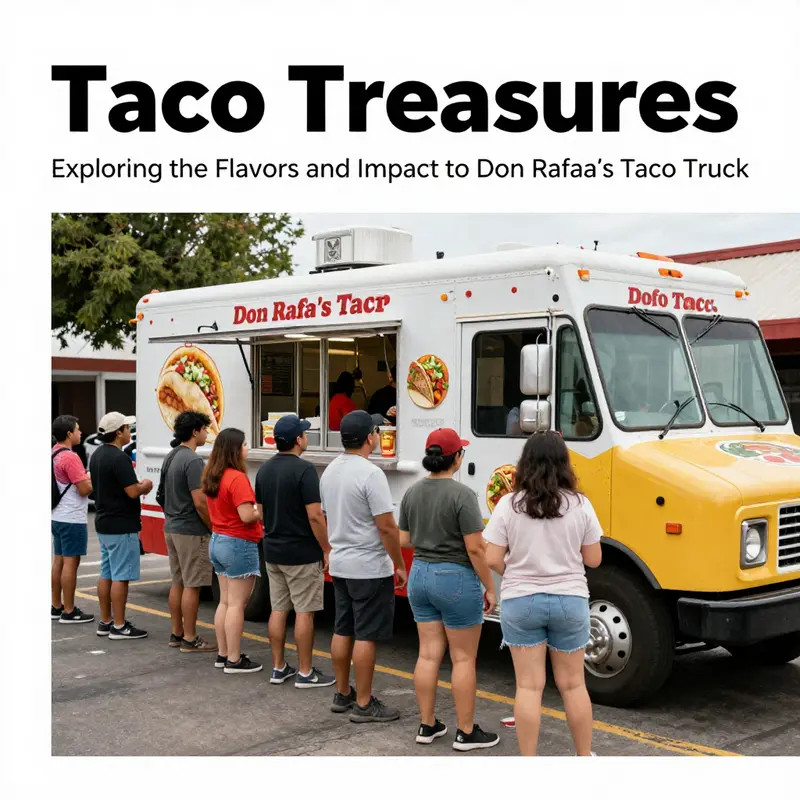
The first impression of Don Rafa’s Taco Truck in Stockton is almost always sensory: the air thick with the scent of carne asada, cilantro bright as a line of green, tortillas warm and pliant, and the distant hum of chatter that signals a gathering more than a simple transaction. The truck sits at 1248 E Miner Ave, a pocket of the city where crowds form on the curb, a line that moves with the rhythm of the neighborhood. The owners, a family who has kept their craft close to the heart of their community, treat the street as both kitchen and commons. The hours, posted in practical black and white, declare a straightforward cadence—nine in the morning to eleven at night, Monday through Tuesday—yet the real schedule unfolds in the patterns of people who return, day after day, to claim their favorites or discover something new. The operation is lean, efficient, and almost performative in its openness: customers walk up to the window, place their orders directly with cooks who stand just beyond the steel and chrome, and then receive portions of their orders straight from the source. This is not a distant dining experience but a shared ritual where the line between chef and customer blurs into a dialogue of flavor and warmth.
What makes this experience meaningful extends beyond the food itself. Don Rafa’s Taco Truck has become a local landmark not merely for the bold, honest flavors but for the way it disperses a sense of belonging across a city that holds many stories, many languages, and many routes to the same table. The truck is a mobile anchor that travels through neighborhoods, a small but constant reminder that the act of sharing a meal can become a form of public service. Families, workers, students, retirees, and curious newcomers learn to recognize the truck’s whistle as a signal that a treat is available and a moment of respite is near. When people speak about the truck, they speak in passing phrases—memory, familiarity, trust—and those words accumulate into something larger than appetite: a social fabric that knits together people who might otherwise drift apart in the busy current of daily life.
The ownership is deeply familial, a thread that ties generations through recipes shared across kitchens and backyards rather than in sterile culinary laboratories. The menu honors heritage through handcrafted tacos and traditional preparations, yet it does so with an eye toward the present moment. Each bite carries a memory of handmade tortillas, a careful balance of salt and heat, and the bright lift of lime that restores balance to heavy flavors. There is a respect for ingredients that borders on reverence, a commitment that flavor should emerge from freshness and time rather than from shortcuts. Freshness is not an occasional virtue here; it is the baseline condition that makes the entire enterprise feel honest and enduring. The cooks, who operate with a clarity born of practice, greet regulars with the confidence of friends who have known each other through many seasons. In this environment, the kitchen is a stage where tradition is performed with humility and pride, and the audience—families gathered at curbside tables or standing in the street—becomes part of the performance.
The physical setup itself invites interaction, and the city responds in kind. The truck’s footprint is modest, but its impact grows through the social space it creates. People walk up not just to order, but to watch, to ask about a recipe, to share a small story about their day. The cooks outside the window answer with smiles and explanations, offering tastes or adjustments as needed. This kind of direct exchange matters, because it humanizes the food economy and dissolves the distance between producer and consumer. It also creates a repetitious, comforting routine—one that anchors a neighborhood and invites others to participate in the ritual. In a city like Stockton, where neighborhoods can be tight-knit and porous, a mobile eatery that actively circulates through streets becomes a portable gathering place, a less formal version of a plaza where conversations occur as easily as conversations about the spice level of a carne asada taco.
The authenticity of the menu supports this dynamic. There are no façades here, no pretensions to novelty for novelty’s sake. The offerings, while occasionally tweaked to reflect seasonal produce or supplier availability, remain faithful to familiar forms—the crisp-edged tortilla, the marbled meat, the zippy brightness of cilantro and onion, the tart kick of a good squeeze of lime. The language of the flavors is honest, with each component allowed to speak its truth. This honesty resonates with diners who have grown up with these tastes and with newcomers who are tasting them for the first time and hear the echo of generations past in every bite. What unfolds is a culinary conversation that travels across generations, a dialogue that invites everyone to weigh in with preference and curiosity. It is not merely a matter of feeding people but of inviting them into a shared culture—one that respects the past while inviting new voices to participate.
The truck’s popularity does not spring from a single lucky break, but from a sustained pattern of excellence that becomes recognizable in the daily routines of the city. Word travels quickly in communities where the streets themselves act as conduits for stories and sustenance. In Don Rafa’s case, those stories are thick with gratitude. Regulars recount how the tacos remind them of home, or of family gatherings where similar flavors were present at the table. They describe the texture of warm tortillas, the perfume of searing meat, the almost ceremonial way a line forms and then dissolves into a moment of connection. Newcomers, drawn by curiosity or by sightings of the truck’s inviting glow, find themselves welcomed into a space where cooking feels communal rather than commodified. The trust that accrues through repetitive visits translates into a robust reputation—an earned popular acclaim that does not require expensive marketing campaigns or flashy branding. It emerges from consistent delivery, from the way the cooks respond to feedback, from the way the menu adapts without losing its core identity.
In examining the population-level impact of a mobile food venue like Don Rafa’s, one can see how mobility itself becomes a political and social choice. A truck that moves through neighborhoods can reach people who might not have easy access to permanent, brick-and-mortar options. It becomes a democratic space where affordability and speed play roles alongside quality and flavor. The physical presence of the truck along a curb becomes a concrete manifestation of opportunity: it invites someone who might be working a long shift to stop briefly, pick up a hot meal, and return to their tasks with renewed energy. It invites families with children to linger a little longer, to claim a shared moment over a table that is never truly assigned, since the street itself is the table. These everyday rituals accumulate into social capital. The truck helps create an informal economy of encounters—neighbors learning names, vendors crossing paths, local workers swapping recommendations—that supports not only the sale of meals but the circulation of goodwill and mutual recognition throughout the community.
The sensory dimension of the Don Rafa’s experience should not be overlooked when considering its social resonance. The aroma of grilled meat and roasted peppers drifts along the street, teasing passersby who may not yet be hungry but who can imagine the next bite. The sizzle offers a primal cue: food is near, and closeness is possible. The visuals—steaming plates, a bright enamel window, the line of color in the sauces lined up in small cups—function as signals of hospitality. Taste then seals the experience, turning a quick street meal into something memorable. The combination of aroma, sight, and sound makes Don Rafa’s an event rather than a mere purchase. People remember the truck in the same way they remember a favorite festival or a beloved corner store that always seems to be there when they need it. In a city where transit options multiply and new dining options appear regularly, this lasting impression matters. It cultivates a sense of place, a way to anchor time and memory to a specific street corner that residents come to claim as their own.
Given this vivid social landscape, the truck’s ongoing success rests on a balance between tradition and adaptability. The family’s recipes carry ancestral weight, yet the operation remains responsive to changing tastes, dietary considerations, and the practical realities of running a mobile eatery. This balance mirrors a broader pattern in successful food ventures: authentic roots preserved alongside a willingness to adjust, to learn from the street, and to welcome feedback from a diverse clientele. As a result, Don Rafa’s Taco Truck does not simply feed; it educates. It educates newcomers about the culinary language of Mexican street food, and it educates the local market about what a small family operation can achieve through consistency, community engagement, and a clear sense of purpose.
To understand the broader implications of this model, it helps to consider how it aligns with modern aspirations for sustainable, community-centered business. The efficiency of service—customers order at the window, receive portions directly from cooks, and move on to mingle near a generous seating area—demonstrates that speed and sociability can coexist with quality. The geometry of the truck and the surrounding space creates a microcosm of urban life: a place where commerce, conversation, and culture intersect on a single stretch of pavement. In such spaces, people learn not only to value flavor but to value the social contract that makes meals possible in public. The truck becomes a locus of trust in a city that may need more of both trust and shared experiences. The family behind Don Rafa’s embodies this trust, not as a marketing slogan but as a lived practice—consistency in flavor, fairness in prices, transparency in sourcing, and a generosity of spirit that invites everyone to be part of the meal.
In conversations with patrons who have watched the truck weave through different neighborhoods, a common thread emerges: the sense that their meals carry a piece of Stockton’s identity. This is not a single city in microcosm but a city of many neighborhoods, each with its own dialect of food and community life. Don Rafa’s manages to reflect that complexity in a compact, portable form. The result is a popular, resonant presence that locals come to trust and out-of-town visitors learn to seek. The truck is no mere vendor; it is a traveling forum where people negotiate shared taste, affordability, and ritual. Its popularity grows not because it offends anyone with novelty but because it honors a language that many people already speak—the language of a comforting, well-made taco shared among friends and strangers who become acquaintances at the curb.
As Stockton continues to evolve, Don Rafa’s Taco Truck stands at the crossroads of heritage and mobility. Its story is one of how small-scale, family-run food enterprises can shape the social texture of a city while offering something delicious and accessible. The truck reminds us that community life is often built not in grand institutions alone but in the daily acts of feeding one another, the small rituals of lining up, sharing a table when space allows, and exchanging recommendations for the next visit. The result is a reputation that feels earned rather than manufactured, a reputation that travels on the currents of word-of-mouth and the steady cadence of recurring customers. The dining experience becomes both a taste and a memory, a reminder that in a world of rapid change, certain anchors remain stable—flavors rooted in tradition, hands that work with care, and a place in the city where people gather, breathe, and eat together.
For readers exploring how such community-centered models can scale or sustain themselves, Don Rafa’s Taco Truck offers a blueprint rooted in authenticity and service. The combination of a strong anchor in a physical locale with the mobility to reach diverse neighborhoods creates a flexible footprint that can adapt to shifting urban dynamics without losing its soul. The lessons are not merely about culinary technique or business logistics, though those matters are crucial. They are about the social function of food: how a shared meal can become a conduit for connection, resilience, and belonging in a city that needs both stability and variety. In this sense, Don Rafa’s represents more than a popular stop for a late-night bite; it stands as a small but persuasive argument for how food culture can nurture community, uplift local entrepreneurship, and enrich the everyday life of a city that deserves both flavor and fellowship.
External reference to the broader dining landscape and customer perspectives can be found through well-regarded sources that document consumer experiences of street food ventures. The Don Rafa’s story aligns with patterns observed across many communities where mobile eateries become dependable gathering points and engines of local pride. For those who want to explore how similar operations balance speed, authenticity, and scale, a practical guide on top food truck models provides context and strategies that echo the spirit of Don Rafa’s approach. top food truck models for success
External reference: https://www.yelp.com/biz/don-rafas-taco-shop-stockton
Two Trucks on One Corner: Operational Realities and Community Rhythm at Don Rafa’s Taco Truck
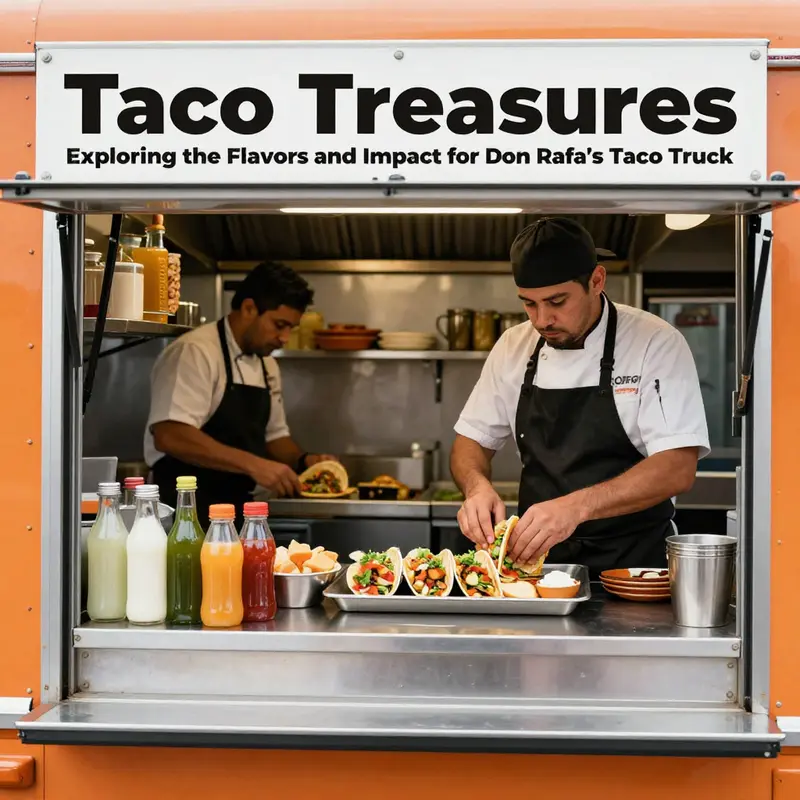
On a sun-brushed corner in Stockton’s east side, a taco truck lineup has become a small, savory landmark for neighbors who want a quick, honest bite. Don Rafa’s Taco Truck operates from 1248 E Miner Ave, and the curb itself has learned its daily rhythm. The schedule is straightforward: from morning until late evening, the truck stays in motion, serving a steady stream of walk-up customers who value speed, warmth, and a clear path to order. The service window is a stage for concise choreography: cooks station themselves just outside the window, the line moves with practiced calm, and each plate exits with a small flourish that signals care. This blend of efficiency and human scale is the heartbeat of a mobile operation that adapts to road life as well as to the palate it serves.
The walk-up format transforms ordering into observation and participation. Patrons watch the cooks plate and hand over items directly, creating a tactile, cinematic moment that enhances trust and appetite. Clarity in this setting—clear menus, visible pricing, and a straightforward sequence—reduces cognitive load and makes waiting feel purposeful. Yet two trucks on the same corner introduce a practical test: how to differentiate, direct, and time a queue so that customers aren’t unsure where to stand or which window to approach. In the best moments, signage and a shared rhythm do the heavy lifting, turning potential chaos into coordinated flow.
Beyond signage, safety and environment emerge as essential considerations. Adequate lighting, a visible staff presence, and a defined curb perimeter help patrons feel welcome and secure, even as the crowd grows. There’s also a social opportunity here: partnerships with neighborhood groups can anchor the operation within the local fabric, reinforcing hospitality and responsibility. When the street becomes a trusted space for exchange and nourishment, customers return not just for a taco but for the sense of belonging that the curb fosters.
The presence of two trucks invites a refined operating discipline: synchronized prep, transparent handoffs, and a shared sense of queue order so that customers understand where to stand, what they’re ordering, and when to expect their plates. The payoff is faster service, clearer expectations, and a calmer atmosphere, even during peak times. The risks—confusion, misdirection, or a crowded curb—are mitigated by simple, repeatable practices that keep the operation legible and humane. Don Rafa’s thus becomes a case study in how clarity, care, and community can turn a curbside challenge into an opportunity for sustained, scalable success.
In this chapter’s broader arc, the practical takeaways are straightforward. Invest in a signage system that uses color-coded cues or window labels to map customers to the correct lane. Prioritize safety audits: lighting that lasts, visible staff presence, and a waste plan that keeps the curb neat. Seek community collaborations that deepen ties to the block, whether through neighborhood events or charitable contributions. When these elements align, the street becomes more than a place to eat; it becomes part of the neighborhood’s daily cadence, a micro-economy built on clarity, hospitality, and shared rhythm. For readers who want to explore further, Yelp’s Don Rafa’s page offers real-world reflections from patrons, a useful counterpoint to on-site observations: https://www.yelp.com/biz/don-rafas-taco-shop-stockton
Final thoughts
As the sun sets over Stockton, the enticing aroma of tacos from Don Rafa’s Taco Truck serves as a reminder of the power of food in bringing people together. Not only does this food truck offer a delicious menu that highlights the art of taco-making, but it also plays a vital role in fostering community spirit and connections among locals and visitors alike. The operational insights provided can serve as invaluable lessons for fellow taco enthusiasts and aspiring food truck owners. Ultimately, Don Rafa’s Taco Truck is not just a food truck; it’s a culinary destination that exemplifies flavor, community, and the joy of good eating.