
For cuisine lovers and taco aficionados, the allure of rolling out flavors in your very own taco truck is irresistible! But before you dive into this delicious venture, understanding the costs associated with renting a taco truck is pivotal. How much does it really cost, what factors affect the pricing, and what variations can you expect based on your location? In this zesty exploration, we’ll uncover a tantalizing overview of taco truck rental pricing, dive into factors that influence costs, analyze regional differences, and compare these expenses with other food trucks. Finally, we’ll serve you real-world examples from fellow taco entrepreneurs. Get ready to feel inspired while learning how to expand your taco dreams into a thriving reality!
The Real Cost of Going Mobile: A Practical Guide to Taco Truck Rental Pricing
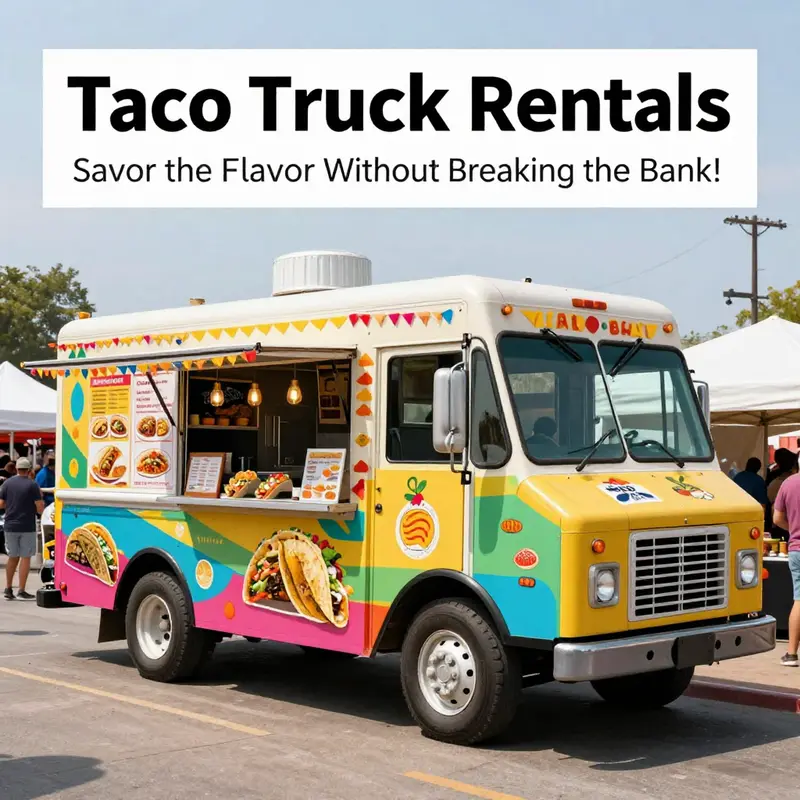
Taco stands and mobile kitchens have a magnetic appeal. They promise flexibility, fresh flavors, and the ability to bring a menu directly to markets, fairs, and neighborhood events. Yet once you start translating that appeal into a rental agreement, the numbers can feel elusive. The term taco truck rental often gets tangled with pickup truck rental in pricing data. The truth is that a taco-focused mobile kitchen is a different beast entirely: it combines transportation with a working kitchen, safety equipment, health compliance, and the logistics of ongoing service. What is clear from the limited direct data that exists is that a taco-truck setup is generally much more expensive to rent than a simple pickup. It is also far more variable, with price layers that reflect size, equipment, duration, and what services are bundled or priced separately. For anyone organizing a launch, a pop-up, or a multi-day street-food run, that variability can be both a hurdle and a guidepost. The goal of pricing, in this context, is not just to find the lowest daily rate but to understand what a given quote includes and how it aligns with your menu, service style, and local regulations.
The first and most obvious factor shaping price is location. Prices for mobile kitchens and food-truck configurations hinge on where you plan to operate. Urban centers with high demand and stringent health and safety requirements tend to command higher rental rates, but they may also offer more turnkey solutions—units that come with compliant ventilation, fire-suppression systems, water hookups, and waste management. Rural or less saturated markets may present lower base rates, but the total cost can rise if you must arrange out-of-town transport, longer setup times, or additional permits. In short, a taco truck’s daily rate is not a universal figure; it ripples outward from the geographic context, just as any culinary venture that channels production into a mobile space must adapt to its ground rules. Within any given locale, you’ll also find a spectrum of configurations. Some operators offer compact, trailer-style kitchens with essential burners and refrigeration; others supply larger, fully equipped units with multiple cooking zones, ventilation hoods, grease management, and on-board power generation. The size and capability of the kitchen translate directly into price, but they also determine the scale of your operation: a compact unit may suffice for a small daily setup, while a more expansive configuration can handle higher throughput, a broader menu, or more complex cooking processes.
Another crucial axis is the rental duration and the expected use pattern. A taco operation that runs a few hours for a weekend market will be priced differently from a daily rental intended for a months-long pop-up. In many markets, the pricing model shifts with time: short-term events may impose higher daily rates to account for turnover, cleaning, and rapid deployment, while longer-term arrangements can secure more favorable terms or bundled services that spread upfront costs. The duration also interacts with maintenance and support. If a rental includes regular maintenance checks, fuel, insurance, and on-site setup support, the all-in cost can be steadier and more predictable—an important consideration for budgeting. Conversely, if those services are billed separately, the headline daily rate can look deceptively low until you tally the add-ons. The net effect is that a fully equipped, operator-ready taco truck is likely to carry a larger, more comprehensive price tag than a bare trailer or a simple vehicle with a minimal kitchen retrofit. The difference is not merely about appliances; it also reflects the level of readiness for real-world operation, from plumbing and electrical systems to fire safety. When quotes are requested, it’s essential to view an itemized breakdown so you can compare apples to apples rather than chasing a tempting but incomplete number.
Equipment and configuration are the heartbeat of the price. A basic food-carrier with a stainless-steel prep area, a single griddle, and a couple of refrigeration units will still be more costly than a standard cargo van. If your concept calls for high-output grills, fryers, multiple burners, and a robust refrigerated line, you are stepping into a tier where the rental fee rises in step with the infrastructure that enables your menu. Some operators include specialty features such as steam tables for hot holding, blast chillers for rapid cooling, or built-in drink stations. Others may offer modular layouts that permit you to swap out equipment for different events or seasons. Then there are ancillary systems that often arrive bundled with the truck: ventilation hoods, fire suppression, propane lines, water tanks, wastewater storage, and sometimes a generator or on-board power supply. Each component adds cost, but these systems are also the backbone of a compliant, efficient kitchen on wheels. If you plan to serve sauces with heat levels that demand careful temperature control, or if your menu requires delicate preparations that must stay within precise hygienic standards, the investment in a properly equipped kitchen becomes a practical necessity rather than a luxury. For many operators, the most effective approach is to map out a clear menu and process flow first. From there, you can collaborate with rental providers to tailor a configuration that includes only the equipment you truly need, while still meeting health and safety requirements and providing a credible performance for your intended venues.
Duration, inclusions, and services compound the base price in often surprising ways. Some rentals present a simple daily rate, but add-driven charges can emerge once you factor in delivery, setup, teardown, and take-down time. If you need staff—handling, cooking, or serving—those labor costs can push the overall figure higher. Some rental agreements include utilities, such as water supply, wastewater disposal, and power, while others bill these separately, sometimes at peak usage times or during high-demand events. Insurance requirements, permits, and licensing can also factor in, especially in jurisdictions with strict health codes or temporary-event rules. If you are organizing multiple events spread across a region, you may discover advantageous pricing through a bundled contract, where the same truck is rotated to several venues with a predictable cadence. The challenge then becomes balancing the convenience of continuity against the flexibility of alternative locations or menus. And if your plan involves branding or a high-visibility setup, you may find that graphic wraps, signage, and design services add to the rental package. In practice, a true estimate for a taco-focused mobile kitchen often looks less like a single price and more like a carefully assembled package that reflects your operational blueprint. A vendor quote might show a base fee, add-ons for essential equipment, optional services like on-site staffing, and a transparent accounting of delivery, setup, and compliance costs. You may need to request multiple quotes to understand the spectrum and identify a configuration that aligns with your concept and budget.
A practical way to navigate these questions is to keep a menu-driven approach to pricing. Start by outlining the exact equipment you require. Is a high-output grill essential for your carne asada or al pastor preparation, or can you achieve your goals with a streamlined setup? How many burners or cold-storage units do you need to maintain food safety and service speed? Once you settle on a configuration, list the event types you will support and estimate the average service length. If your plan includes several short events, a portable or trailer-style kitchen with flexible permits might be more cost-effective than a large, permanently mounted unit. If you anticipate longer engagements in busy markets, a larger, fully equipped truck can deliver the reliability you need to serve consistently, even during peak periods. In either scenario, insist on an itemized quote that specifies the base rental rate, any equipment rental surcharges, delivery and pickup fees, setup and teardown time, utilities, insurance, and any required staff. Ask for a sample contract that shows how overtime is billed, how damages or wear-and-tear are handled, and what happens if events are canceled or rescheduled. The goal is clarity and predictability rather than a single figure that fails to capture these moving parts. And as you review quotes, keep one eye on health and safety compliance. A vehicle that cannot meet local health standards will not just fail to operate; it can jeopardize your entire business plan. If you are unsure which setup matches your menu and your budget, consider consulting a guide focused on the practical side of choosing the right food truck, which can help you align your culinary vision with a realistic, compliant rental path. [Choosing the right food truck] This kind of integration—menu design, equipment needs, and regulatory readiness—often clarifies where to invest and where to scale back. The result is a rental plan that supports steady service, consistent quality, and a credible path to profitability, rather than a bargain that undermines your operation at peak times.
For a broader sense of where pricing sits in the market spectrum, it helps to view rental decisions as a portfolio problem rather than a single transaction. A fully equipped taco truck rental sits at the intersection of vehicle cost, kitchen complexity, and service model. Even before you sign a contract, you can reduce risk by enumerating your must-haves versus nice-to-haves, and by seeking quotes that reflect those priorities. You should also consider the potential for complementary arrangements, such as access to a commissary kitchen or a shared prep space when you are between events. These arrangements can lower ongoing costs and improve compliance, which, in turn, supports a smoother operation. In practice, the pricing landscape is not a fixed ladder but a grid of options that align with your culinary ambition and your business plan. The more precise you are about your menu, service style, and event calendar, the more accurately a rental provider can tailor a package that gives you what you need without inflating the bill with features you won’t use. The beauty of this approach is that it foregrounds reliability and consistency—crucial factors for a business built on repeat customers and evolving tastes—while keeping an eye on the budget.
As you prepare to explore quotes and negotiate terms, remember that the ultimate goal is not simply the lowest daily rate but a sustainable operational framework. The right taco truck rental makes it possible to deliver your distinctive flavors with speed and polish, while also protecting your margins and ensuring long-term viability. The craft of pricing, then, becomes a craft of design: you shape a kitchen that fits your menu, a vehicle that fits your events, and a contract that fits your cash flow. This is the mindset that turns a rental from a temporary solution into a scalable platform for growth, enabling you to test concepts, adapt to demand, and iterate toward a more successful culinary business. For further context on how pricing and practical considerations intersect in the broader world of mobile food ventures, see external resources that discuss adaptable pricing strategies and market dynamics in vehicle-based food service. External reference: https://www.kayak.com
Griddles, Branding, and the Bottom Line: Unraveling Taco Truck Rental Costs
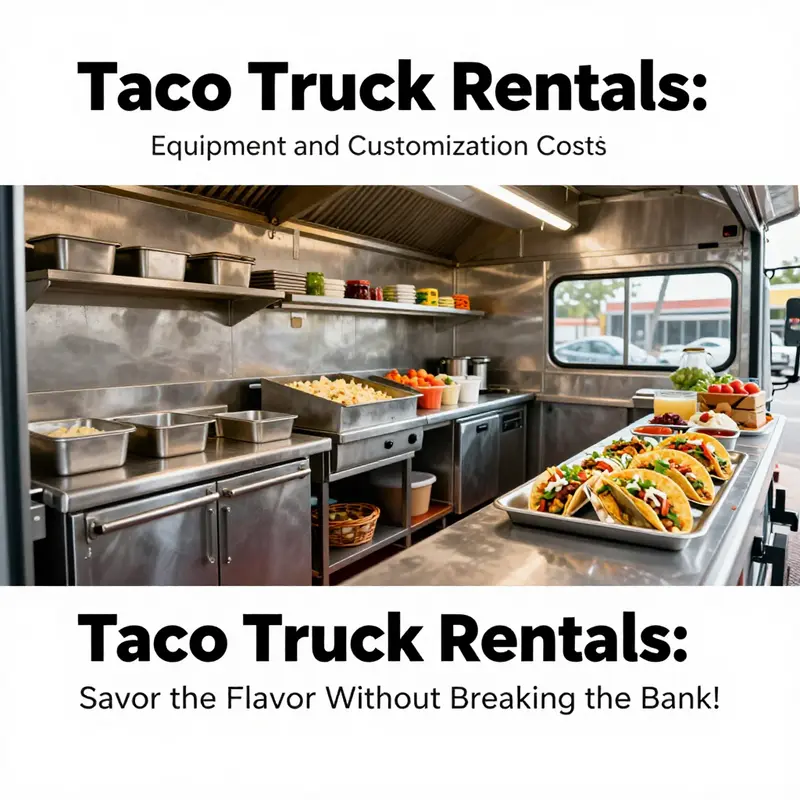
If you picture a taco truck rolling into a busy market or a neighborhood festival, the price tag that follows is rarely just the sticker rate on the vehicle. The reality behind taco truck rental hinges on a set of intertwined factors that extend far beyond the chassis or the cannon of a grill. In the briefest terms, it boils down to two big levers: the equipment that powers the kitchen and the customization that turns a simple vehicle into a functional, brand-defining food service unit. You can think of this as a continuum from a bare-bones platform to a fully outfitted, brand-forward mobile kitchen. Each step along that spectrum carries its own price implications, and understanding how these pieces fit together is essential for anyone shopping in the market. The existing price data for standard pickup rentals offers a baseline sense of daily rates in the broader vehicle rental space, but it does little to illuminate the specialized world of taco trucks. For example, in certain markets, a compact pickup can go for roughly the mid-60s to the upper-100s per day, depending on the model and location. Those figures are informative in their own right, yet they are not a direct proxy for a taco truck, which must accommodate cooking equipment, ventilation, storage, and the movement of a complete mobile kitchen. This gap in direct pricing data is precisely why a careful view of equipment and customization costs becomes essential for planning and budgeting. It helps a prospective operator chart a viable path from concept to a functional business asset rather than merely guessing at what the rental might cost.
Equipment costs form the bedrock of the price structure for any taco truck rental. The kind and quality of the appliances installed inside a mobile kitchen have a pronounced impact on the daily rate. Commercial-grade grills, refrigerators, and fryers are not just larger versions of home appliances; they are engineered for continuous, heavy use, and their maintenance requirements reflect that reality. Grills designed to handle high-volume cooking temperatures, multi-burner ranges, and durable hoods with appropriate ventilation systems introduce both equipment and service costs into the rental equation. Refrigeration plays a crucial role too: if a truck needs robust cold storage for perishables, the refrigeration units themselves—compact and efficient, yet built for constant operation—add to depreciation and insurance considerations embedded in the rental price. Fryers, particularly those built for fast-paced service, contribute to heat management and energy consumption, which in turn influence not only the purchase or rental price but also ongoing fuel and electrical costs associated with operating the unit. More advanced configurations, such as combination cooking lines that unify grilling, sautéing, and hot holding in a single workflow, can significantly elevate the daily rate because they demand higher-capacity electrical or gas infrastructure, more complex ventilation, and tighter quality control.
Beyond the mere presence of equipment, the overall quality and reliability of those components shape long-term value and transactional cost. A truck outfitted with durable, proven equipment is likely to command a higher rental price, but that premium can translate into better performance and fewer downtime incidents. Businesses that rely on consistency—serving the same menu every day, in the same place, with predictable turnover—will often find that investing in reliable, efficient gear yields practical savings over the course of a contract. This is not simply about the latest model or the flashiest brand; it is about equipment that stands up to daily use, minimizes service calls, and maintains product safety and food-quality standards. In other words, cost is not only about acquisition but also about the lifecycle costs that a rental arrangement must cover, including maintenance, routine servicing, and the potential for downtime. The National Restaurant Association’s 2024 State of the Restaurant Industry Report provides a broader view of market pricing and equipment specifications for mobile food service, offering a benchmark for operators weighing different equipment packages and their long-term implications. While the report itself covers a wide spectrum of industry dynamics, it reinforces a crucial point: the equipment installed in a taco truck is a primary driver of rental cost—and a central determinant of how effectively a unit can support a given menu and service model.
Customization costs, meanwhile, are where branding and workflow really start to shape the price trajectory. Branding is not merely cosmetic; it is a strategic investment in the truck’s identity and market recognition. A custom paint job, bold graphics, and a distinct logo can elevate a truck from a functional platform to a walking billboard, converting brand recognition into customer footfall and repeat business. The cost of branding on a mobile unit goes beyond the canvas. It often includes protective coatings suitable for rugged outdoor use, signage integration, and color schemes that align with the menu concept and target audience. A cohesive branding strategy can influence perceived value and, in some markets, justify a higher rental premium because a well-branded truck tends to draw more attention, shorter service times, and better line management caused by customer familiarity with the brand experience.
Interior layout design adds another layer to customization costs that is easy to underestimate. The working interior of a taco truck is basically a compact assembly line. An optimized layout streamlines the cook line, prep area, cold storage, and handwashing stations, while also maintaining safety and compliance with health regulations. Small design choices—where to place a sink, how to route ventilation, or how to position a hot hold area relative to cold storage—have outsized effects on efficiency and throughput. When a rental includes interior customization—rearranging shelves, adding specific storage solutions for utensils and ingredients, or integrating a dedicated heating element for corn tortillas or salsa preparation—the price goes up. These enhancements are not merely about convenience; they are a direct reflection of how a kitchen operates under peak demand. A truck with a well-considered interior layout often operates more smoothly, enabling staff to work quickly, reducing waste, and improving service times, all of which contribute to a stronger bottom line for the operator. Lighting, power availability, and water handling can also be tailored within the interior plan, further raising the overall rental charge, but delivering tangible operational advantages during busy service windows.
Feature additions are the cherry on top of customization. A truck that adds features like upgraded ventilation, energy-efficient appliances, smart inventory systems, or specialized equipment designed for particular menu items may carry a premium. These features can reflect the menu’s complexity—whether it relies on slow-cooked meats, seafood, or multi-item offerings that require precise temperature control and holding times. The incremental cost of these features is often justified by the increased reliability, shorter service times, and better consistency across multiple shifts. It is here that a buyer’s appetite for differentiation and control meets the rental market’s willingness to charge for added value. In practice, a kitchen that emphasizes speed, consistency, and safety through high-grade features can command higher rental terms than a lighter setup with more modest capabilities. The combined effect of branding, interior optimization, and feature additions means that two trucks with the same base chassis can look and perform like entirely different business units, yet the price difference will reflect the operational reality each setup is designed to deliver.
All of these considerations sit within a market landscape where direct, apples-to-apples pricing for a “taco truck” rental is not always published. The data that does exist for vehicle rentals—such as daily rates for pickup trucks in specific cities—provides a rough economic context but does not translate directly to a fully equipped, mobile kitchen. In Twin Falls, for instance, a Toyota Tacoma or a similar model might go for around $64 per day, while a Ford F-150 or equivalent could be about $78 per day; in Madison, a Tesla Cybertruck or a similar model might hover around $142 per day. These figures illustrate the baseline variability in vehicle costs across models and locales, but they are not indicative of the specialized configuration, equipment package, and service commitments that come with a taco truck rental. For operators who are serious about entering the food-on-wheels space, the takeaway is clear: the bottom line for a taco truck is driven more by the combination of equipment quality and customization depth than by the vehicle category alone. To navigate this complexity, it is essential to engage with professional food truck rental companies and suppliers who can provide precise quotes that reflect the intended menu, service volume, and branding strategy.
For operators seeking a practical roadmap, the decision often starts with a choice between renting a bare-essentials platform and outfitting a truck to match a specific concept. A bare platform may keep upfront costs lower and offer greater flexibility to experiment, but it risks operational inefficiencies that can erode margins during peak service periods. Conversely, a fully outfitted truck with a carefully engineered workflow, reliable cooking capabilities, and a strong brand presentation can deliver consistent performance, higher service speed, and a compelling market presence, albeit at a higher rental price. An effective approach is to quantify the expected daily throughput and align it with the equipment package that supports that throughput while accounting for maintenance and downtime. In parallel, a branding plan should be developed early, because the visual identity, messaging, and menu positioning can influence the overall pricing strategy and the appeal to potential customers. The aim is not simply to minimize cost, but to maximize the value derived from the rental. A well-priced, well-equipped mobile kitchen aligns the menu concept with operational realities—how quickly orders are fulfilled, how reliably heat is maintained, and how smoothly the team can work during the busiest hours.
In seeking current market pricing and specifications, it helps to consult credible industry sources, such as the National Restaurant Association’s 2024 State of the Restaurant Industry Report. This resource offers a comprehensive view of mobile food service equipment trends and operational considerations, which can inform vendor comparisons and help set realistic expectations for what a rental package should include. For readers who want a targeted starting point in their research, a practical step is to explore a trusted guide on selecting the right food truck, which can illuminate the tradeoffs between chassis options, outfitting packages, and branding investments. See the linked guide for a clear framework on how to weigh these factors in the context of your menu and market.
Ultimately, the precise price of a taco truck rental comes down to the specific combination of equipment, customization, and service level you require. A conversation with rental providers who specialize in mobile kitchens is indispensable for accurate quotes, as is a careful projection of your daily sales, peak hours, and menu complexity. The pricing landscape is nuanced, and while the vehicle’s base rental rate matters, it is only one part of a broader cost architecture that includes equipment quality, interior organization, branding, and feature enhancements. By thoughtfully balancing these elements, aspiring operators can arrive at a rental arrangement that aligns with both their culinary ambitions and their financial goals. The path from concept to cook-service is not a single price tag; it is a carefully designed package that translates a menu idea into a mobile operation capable of delivering consistent, safe, and delicious tacos to customers wherever the truck happens to roll.
External resource: https://restaurant.org/research/industry-reports/state-of-the-industry-2024
Internal resource for choosing the right food truck: Choosing the right food truck.
Regional Price Maps for Taco Truck Rentals: Understanding Price Discrepancies Across Locations
Pricing a taco truck rental is less about a single sticker price and more about a geography of cost shaped by place, vehicle type, and the rental plan. In practice, the most reliable anchors for what a taco operation might spend are not the flashy menus or the social feeds of food celebrities, but the underlying economics of mobility, regulation, and equipment. What the available data does show is a basic contrast: when the term taco truck is confused with a simple pickup, the numbers you’ll encounter look familiar, but they tell you almost nothing about the real cost of running a mobile kitchen. The current reference points come from pickup truck rentals rather than fully equipped food trucks. In one city, a midsize pickup or a similar model costs roughly sixty-four dollars per day, while a full-size pickup runs about seventy-eight dollars per day. In another city, an electric pickup option can push the daily price to around one hundred forty-two dollars. These numbers are not the cost of a taco operation; they are a baseline for the chassis on which a taco business could be built. They show how location, demand, and vehicle type can swing prices even for bare transportation, which means the real price of a taco truck—an actual mobile kitchen—will be higher and more variable, depending on many factors beyond the metal and wheels being rented.
To grasp regional variations, it helps to keep two distinctions clear. First, there is the difference between renting a bare vehicle and renting a fully equipped mobile kitchen. A basic pickup rental is, in effect, transportation. A taco truck rental, by contrast, is a plug-and-play kitchen on wheels, and it often comes with stoves, ovens, refrigeration, cold storage, plumbing, electrical systems, and ventilation. The costs here multiply quickly, because a kitchen on wheels is not merely about moving from point A to point B; it is about delivering reliable food production in a way that complies with health codes, operates with confidence in often variable weather, and supports the day-to-day rhythms of a small business. Second, there is the regional variable of what the market can bear. Urban centers with dense event calendars, higher living costs, and stricter permitting regimes tend to command higher quotes, while rural or less dense regions can offer lower base rates but possibly longer lead times, fewer turnkey options, or different insurance and support requirements. The net effect is a price map with peaks and valleys, where the same configuration in two neighboring states can cost significantly different amounts once all variables are tallied.
The practical implications of this price geography are not just about the sticker price on a quote. They echo through every decision a would-be taco entrepreneur makes: how long you need the vehicle, whether you want a turnkey kitchen or a bare shell to tailor with your own equipment, and how much you value service levels like on-site support, maintenance, and after-hours assistance. A fully equipped food-truck rental, including installation, generators, water systems, gas lines, refrigeration, and a compliant exhaust setup, will inevitably cost more than a bare chassis rental. Yet there is a reason people pursue these rentals instead of buying and outfitting their own trucks. The rental model can reduce upfront risk, provide flexibility to test menus and locations, and offer a path to scale without a crushing initial investment. But the price you pay is a function of where you are, when you need the truck, and what you expect from the vendor in terms of equipment quality, reliability, and compliance with local health and safety standards.
Location matters in more concrete terms than just the hourly or daily rate. Permit fees, inspections, and health department requirements vary widely by city and county. Some jurisdictions charge for vendor licenses, fire-safety certifications, or annual renewals that can be expensive and time-consuming. Insurance costs follow a similar pattern, with higher premiums in markets where the risk profile is perceived as greater or where commercial vehicle operations intersect with a larger number of event venues. In high-demand markets—cities with frequent festivals, farmers’ markets, and concerts—the price of access climbs. Vendors may factor in higher labor costs, more stringent maintenance standards, and the need for rotating stock and service contracts to ensure consistent performance. In steadier, smaller markets, the price pressure may come more from competition among local operators and the availability of turnkey kitchens that can be rented with short notice. The effect is a mosaic where you might find a lower base rate in one region but with add-ons such as daily cleaning, service calls, or cleaning and waste-water management that can shift the total cost substantially.
From a procurement perspective, a useful way to think about regional price variation is to separate the planning into three buckets: the base vehicle or kitchen unit, the equipment and configuration, and the ongoing support and compliance. The base unit price, if you can call it that for a taco operation, reflects the fundamental platform: the size, the power system, the water and waste configurations, and the general level of mobility. The configuration bucket includes the number and quality of burners, grills, ovens, refrigeration capacity, and the presence of a vented exhaust system; the more sophisticated the kitchen, the more you pay upfront and in ongoing maintenance. Finally, the support and compliance bucket covers insurance, inspections, service agreements, and contingency provisions for things like generator failures or water leaks. In a given region, the balance of these buckets can shift. For example, a city with robust inspection regimes but abundant service providers may offer quick replacement parts and on-site setup, driving costs up slightly but reducing risk. In a market where equipment is older or less common and service networks are thinner, the price might drop, yet the risk of downtime increases and so might the pressure to purchase more comprehensive coverage or longer pre-paid service arrangements.
With this complexity in mind, anyone evaluating a taco truck rental should approach the process as a structured search for quotes rather than a single price target. Start by clarifying scope: Do you need a bare kitchen on a trailer or a fully integrated mobile unit with a dedicated power supply and water management? Are you planning to operate in a single city or multiple regions with varying event calendars? What is your expected peak demand, and how many staff will rely on the equipment? Once these questions are answered, reach out to multiple vendors to compare apples to apples. Ask for a detailed breakdown of what is included in the price: installation, commissioning, utilities, generator fuel, maintenance, and what happens if something fails during a service period. Also inquire about the ease of extending or shortening rental periods, since startup phases often involve shifting timelines as permits come through and venues book dates. When you compare quotes, look beyond the daily rate. A lower base price may come with higher ancillary costs for daily cleanup, waste management, or mandatory service visits. A higher daily rate may include more comprehensive maintenance coverage, more reliable equipment, and stronger vendor support—factors that can translate into fewer headaches when you are feeding crowds in unfamiliar neighborhoods.
If there is a practical takeaway for readers trying to translate these price dynamics into a budget, it is this: anchor your expectations in regional realities and be explicit about what you require from the rental. For anyone who wants a grounded sense of what kind of mobile kitchen is most likely to suit their business, a useful starting point is to explore guides that help you compare different types of food trucks and configurations. A well-chosen reference point is the article on choosing the right food truck, which distills the decision into a framework for evaluating kitchen layouts, compliance needs, and long-term viability. It can be accessed here: Choosing the right food truck.
The upshot is that regional price discrepancies for taco truck rentals reflect more than just exchange rates or the price of raw materials. They reflect the patchwork of local regulations, market demand, and the availability of skilled service networks that keep kitchens running under pressure. In some places you may pay a premium for the security of a turnkey setup that arrives with all utilities and trained technicians ready to roll. In others, you may negotiate a lower base price with a longer lead time but more responsibility on your end to source and install equipment and to handle ongoing maintenance. Either way, the cost landscape is shaped by geography as much as by the kitchen itself. Keeping that landscape in view helps any aspiring operator set realistic budgets, target workable location strategies, and plan a path from a handful of trial events to a scalable, regionally resilient operation.
As you move from planning to quoting, remember that the ultimate objective is not to minimize upfront expenditures but to ensure consistent, compliant, and delicious service across whatever locations you choose. The regional economics will always be part of the equation, but so will your menu, your team, and your ability to adapt to different venues and audiences. The trajectory of a taco business depends on how well you align your vehicle, its equipment, and its operating protocol with the realities of the places you serve. And while the numbers—whether sixty-four dollars or one hundred forty-two dollars per day—offer a starting frame, the real forecast comes from the combination of your operational plan, your vendor relationships, and your readiness to respond to the unique constraints and opportunities of each market you enter.
null
null
Decoding the Real Cost Gate: What You Pay When You Move from a Pickup to a Taco Truck
When people ask, “How much is a taco truck rental?” the simplest answer is usually to widen the lens beyond the obvious image of a shiny kitchen on wheels. The term can conjure two very different vehicles: a regular pickup truck rented for transport or a purpose-built, fully equipped mobile kitchen designed to operate as a taco business. The data most readily available online today tends to address the former—pickup trucks—rather than the latter. And because the two categories carry very different cost structures, conflating them can create more confusion than clarity. What follows is a grounded exploration of pricing dynamics, with the practical takeaway that if you’re planning a taco operation, you should expect the actual taco-truck rental price to sit well above standard pickup-rental rates, unless you’re negotiating a unique, pared-down arrangement.
A useful starting point is to acknowledge the baseline numbers for pickup rentals that often appear in recent market summaries. In Twin Falls, for example, a Toyota Tacoma or a similar model runs about $64 per day, while a Ford F-150 or a comparable truck is around $78 per day. In Madison, the data set expands to a Tesla Cybertruck or a similar model at roughly $142 per day. These figures, sourced from a major booking platform, illustrate a simple truth: daily rental prices for vehicles without kitchen equipment can vary widely by model, demand, and locale. They provide a floor of what it costs to access mobility in different configurations, but they do not, by themselves, reveal the economics of operating a food business on wheels.
The gap between a bare pickup rental and a taco truck rental is not just about a more powerful engine or a glossy paint job. It is about the integration of commercial-grade kitchen gear, specialized electrical and plumbing needs, compliance with health and safety standards, and the ongoing logistics of running a mobile food business. When a vendor talks about renting a customized food truck designed for taco service, they are not selling a vehicle alone. They are offering a turnkey platform that includes a kitchen, power supply, cold storage, water systems, grease management, ventilation, and often built-in safety features. Those are precisely the elements that elevate cost well beyond the daily rate for a standard pickup. The exact price depends on several interlocking variables: the size and configuration of the kitchen, the type and quality of equipment (stoves, fryers, refrigeration, prep surfaces, ventilation), whether the truck is propane- or electric-powered, whether it includes generators, tanks, and water supply, and where the unit is located for pickup or delivery. In short, the taco-truck rental market is a different product tier, with a different pricing curve, than the base pickup rental market.
Because the data at hand concentrates on general pickup rentals rather than food-truck leases, language about cost must be careful and specific. What is clear is that the rental cost for a taco-truck-style operation is typically higher than a bare pickup rental. It is not unusual for the all-in daily rate to incorporate hardware, installation, and basic maintenance of the kitchen facility, plus the overhead of health-compliant equipment and the regulatory environment that governs mobile food vendors. The exact dollar figures, however, are not consistently published in the public data sets you’ll find online. Instead, potential operators are advised to obtain quotes directly from professional food-truck rental companies or equipment suppliers. A precise quote will reflect the area, the vehicle’s layout, and the configuration of the kitchen line. It will also account for whether essential components—like stoves, refrigerators, and cooling units—are included or must be leased separately. In other words, a taco-truck rental is a bundle that merges transport with commerce, and the price must cover both mobility and permitting for a legitimate street-food operation.
To ground this in a practical frame, consider what drives any taco-truck quote. First is the configuration: a compact, entry-level taco setup with a small grill, a prep station, and a modest cold-storage area will cost less than a large, high-output kitchen that can run multiple service lines, maintain strict cold-chain controls, and support a full menu. Second is the power architecture. Some units run on propane, others on diesel or electricity, and some use a hybrid approach with onboard generators. The choice of power system influences not only the upfront rental rate but also ongoing costs for fuel, maintenance, and emissions compliance. Third is the equipment inventory: the quality, brand, and capacity of fryers, griddles, exhaust hoods, hot cases, and handwashing stations all shape price and reliability. Fourth is the location and logistics. A truck rented for a city launch will incur different fees than a unit bound for a regional festival, where specifications around vehicle width, maneuverability, and service hours may reshape the contract terms. Fifth is the inclusion of support services. Some rental packages include setup, maintenance, routine cleaning, or access to a nearby commissary or repair network; others require separate arrangements. Each element layers into the daily rate, often in ways that surprise new entrants who assume a single number will suffice.
With these factors in view, the prudent path is to frame a taco-truck budget around a few practical steps rather than a single headline price. Start by defining the scope of your operation: will you dish up only a few signature tacos, or provide a broader menu that includes hot sides and beverages? A broader menu with more equipment means higher initial rental costs, but it can also unlock greater revenue potential if demand supports it. Next, inventory a realistic equipment list. Talk to rental providers about which components are essential for your initial kitchen and which are add-ons you can defer until you scale. This helps you understand which line items are non-negotiable and which are negotiable levers in the price. Then, explore power options early. If your event footprint is outside reliable electrical access, you’ll want a unit with robust on-board power or a dependable generator, even if it adds to the daily rate. Finally, quantify the ancillary costs that often accompany mobility: health permits, vehicle insurance tailored for food service, daily sanitization services, grease management, and waste disposal. These are not optional extras in the eyes of regulators, but they can be costly if left until the last minute.
When shopping for a taco-truck rental, it is worth remembering a simple truth: you are purchasing more than a vehicle; you are purchasing a platform for a food business. A vehicle that is not just mobile but capable of producing consistent, safe, and delicious food under often challenging service conditions is the core asset of a taco operation. Therefore, while the public data on pickup-truck prices offers a helpful benchmark, it is the customized food-truck rental market that will determine your true daily cost and your operational feasibility. Because case studies or real-world examples specific to taco-truck rentals do not appear in the provided materials, the best approach is to consult industry-focused sources or rental specialists who can tailor a quote to your regional market, your kitchen layout, and your intended service model. In other words, the numbers you will ultimately rely on come from a targeted dialogue with suppliers who understand how to translate a menu, a space, and a timeline into a concrete rental figure.
If you are serious about exploring this path, you may want to begin with a careful examination of what your vehicle choice signals about your brand and your capacity for growth. The question of which path to take—whether to rent a refurbished food-truck setup, lease a newer configuration, or even pursue a custom-built trailer—depends as much on your business plan as on your budget. For readers seeking guidance on choosing the right platform, there is a resource that speaks directly to aligning vehicle choice with your business goals: Choosing the Right Food Truck. This guidance can help you balance appetite for scale with the realities of upfront investment and ongoing operating costs. While it does not replace vendor quotes, it can help you frame the conversations you will have with rental companies and suppliers so that you are not chasing a figure that sounds like a bargain but does not support your service model.
In the absence of a canonical price sheet for taco-truck rentals within the provided data, the path forward is clear: anticipate a price premium over pickup-rental rates, build a detailed equipment and service specification, and solicit multiple quotes from professional food-truck providers who can translate your menu, space, and city into an accurate daily rate. It is also advisable to factor in the non-negotiables of running a compliant and reliable mobile kitchen: sanitation, cooling reliability, safe ventilation, and insurance that covers both the vehicle and the food operation. The reality of mobile food is that success rests not only on taste but on the consistency of service and the trust you build with regulators, venues, and customers. A taco business that negotiates clear terms, understands its power needs, and plans for ongoing maintenance is far more likely to become a sustainable operation than one that fixes on a single headline daily price.
As you consider the pricing landscape, keep in mind that the numbers you need will come from direct discussions with rental firms and equipment suppliers. While market benchmarks for bare pickups offer a rough frame, they cannot substitute for a quote that reflects your exact kitchen layout, the number of staff you plan to operate with, and the regulatory environment of your location. The pursuit of a taco-truck rental thus becomes a structured exploration rather than a quick comparison of daily rates. Readers who want to deepen their understanding should pursue targeted inquiries into food-truck leasing, sector-startup resources, and the detailed costs that accompany health inspections, licensing, and insurance. In the end, the most sustainable path to a precise figure is a careful, multi-quote process that converts your culinary ambition into a reliable, costed plan for a mobile taco business.
External resource note: for a broader sense of how rental pricing varies in the broader mobility market, you may consult industry data on car rental pricing and the factors that drive price changes across regions and vehicle types, such as public-facing comparisons at general car-rental platforms (external resource reference): https://www.kayak.com/cars
Final thoughts
Ready to start your own taco truck journey? Understanding how much is a taco truck rental is the first step in ensuring your flavorful dreams soar! We’ve explored pricing intricacies, customization factors, regional discrepancies, comparisons with other food truck rentals, and real-world experiences from taco enthusiasts. Gear up with this knowledge to make informed decisions and unleash your unique taco creations. Remember, the road to taco delight is vibrant and full of opportunities—each taco truck has a story waiting to be told, and yours could be the next big hit on wheels!