
Taco lovers and business owners alike know that nothing brings flavor and festivity like a taco truck at your event. But how much does it really cost to rent one? From jaw-dropping prices to mouth-watering menus, understanding the costs involved can help you budget like a pro. In this guide, we’ll explore aspects of taco truck rentals including pricing, factors affecting costs, operational expenses, rental duration comparisons, and how to find the best deal for your culinary adventure. Prepare your taste buds as we dive into the delicious details of taco truck rentals!
Pricing Under Pressure: Decoding the Real Costs of Renting a Taco Truck for Your Event
A taco truck on a sunny lot can turn a simple catering idea into a memorable experience, but translating that visual into a practical budget is less cinematic and more arithmetic. For organizers and aspiring food-service entrepreneurs, the question isn’t just how much a taco truck costs to rent on paper. It’s how the numbers add up across a real-world event—the base rental, the gear that comes with it, the length of time you need the truck, and the incidental costs that quietly swell the final bill. The market offers a spectrum of options, from short-term daily rentals to longer-term arrangements, and the price you pay depends on a web of variables. Location matters. A truck in a bustling metro area will typically command higher rates than one in a smaller market, simply because demand, labor, insurance, and permitting requirements are pricier. The size and condition of the vehicle itself matter too. A compact, well-kept unit with essential kitchen amenities can be cheaper to rent, but a larger, more equipped vehicle that promises higher throughput and more consistent service will carry a premium. All of these nuances shape the bottom line, and savvy buyers learn early to parse the line items rather than rely on a flat, one-number quote.
One starting point in this landscape is the recognition that the market for mobile cooking hardware often frames cost in two ways: the price of owning a new, ready-to-run cart and the price of renting someone else’s mobile kitchen for a given window. In some segments of the market, new electric taco carts that come with core kitchen amenities—refrigeration, cooking surfaces, and basic safety features—can begin at a relatively modest entry point. A base price around a few thousand dollars may seem surprising until you account for what that price includes: a one-year warranty, standardized safety certifications, and a system designed for plug-and-play operation. This is not a guarantee of ongoing savings, but it does establish a floor for what a first-time buyer or a cautious operator might expect when evaluating a purchase versus a rental. The distinction between buying and renting is the perennial fork in the road for event planners and culinary businesses. Buying can lock in long-term options and depreciation benefits, while renting offers liquidity, flexibility, and the ability to test a concept without committing to a large upfront investment. Either path, however, hinges on the same fundamental truth: you must quantify not just the sticker price but the full ecosystem of costs that accompany your choice.
Within the rental ecosystem, the structure of the price is rarely a single line item. The daily, weekly, or monthly rental rate can be influenced by the vehicle’s size and condition, the sophistication of its equipment, and the local market’s competitive dynamics. A larger truck with a more extensive kitchen footprint will likely demand a higher day rate, and a unit that is newer or has a more robust warranty may fetch a premium as well. Rental packages often bundle more than just the chassis and the stove line. They can include setup and breakdown services, basic branding or wrap options, generators or power supply arrangements, and sometimes even staffing or on-site support for the event. When you factor in these add-ons, the base daily rate morphs into a package that may be more or less attractive depending on your event’s scope and your internal capabilities. In this way, the rental ecosystem rewards clarity: the more precisely you can articulate your event’s burn rate, the better you can choose a package that aligns with your budget and your service standards.
Beyond the rental itself, there is a cluster of operational costs that must be considered as you map out a catering plan around a taco truck. Fuel and electricity are immediate fixed costs that can swing with the hours of operation, the availability of power at the venue, and the efficiency of the truck’s systems. Electric configurations, in particular, introduce a distinction between fuel expenditure and electrical consumption, yet both fall under the same umbrella of ongoing operating expenses. Permits and licenses form another critical line item. Depending on the jurisdiction, these regulatory costs can range widely—from a modest one-off permit to a multi-thousand-dollar licensing regime that supports health and safety compliance, vehicle operations, and temporary event permissions. The cited ranges in related discussions suggest that licensing and permitting can stretch from around a thousand dollars to several thousand, depending on city, county, and state requirements. Insurance is another essential ingredient, typically priced as a function of the truck’s value, the scope of use, and the event’s risk profile. Then there are staffing needs. If you intend to run a larger operation or to deliver at peak times, you may need additional hands for food preparation, service, and quality control. Wages, payroll taxes, and the costs associated with employee benefits can significantly alter the true cost of renting a mobile kitchen, particularly for multi-day events or series of gigs that extend across a season.
Even when a rental package appears straightforward, the total cost can hide surprising add-ons. Transportation between venues, city-specific parking and loading-zone fees, and mandatory safety checks can accumulate. Cleaning and maintenance fees, security deposits, and damage waivers are common flux points that can either cushion or inflate the final bill, depending on the provider’s policy and your event’s risk profile. The careful planner will treat these as part of a total cost of ownership calculation rather than as afterthoughts to a single-day rental. In practice, this means building a budget that accommodates a core rental price plus a contingency for incidentals, a buffer for regulatory costs, and a thoughtful allocation for staff and food costs. The math is rarely glamorous, but it is essential for avoiding a surprising end to a night of service and hospitality.
The economics of renting versus buying carry implications beyond price. A rental may allow you to experiment with concepts—different cuisines, different service models, different scales of operation—without tying up capital in an asset that may not be fully utilized. Yet renting can also lock you into a pattern of recurring costs if you rely on the truck for every event or for a season of business. In such cases, a carefully structured lease may provide a middle ground, offering predictable monthly payments and the ability to walk away or upgrade when the market shifts. If you are evaluating options, a practical approach is to estimate the total cost of a rental for a target event schedule and compare that figure to a hypothetical purchase plus ownership costs over a similar horizon. This kind of comparison helps clarify whether the business model hinges on short bursts of service or on longer-term, repeat engagements that justify an owned asset.
With these considerations in mind, the path to pricing clarity often begins with a direct conversation with rental providers. Specific quotes will reflect not only the truck’s age and equipment but also the geographic market, the duration of the rental, and any extras you request. It is prudent to request a detailed breakdown: daily rate, included services, any delivery or setup fees, any maintenance or cleaning surcharges, permits or licenses, insurance requirements, and the cost of any optional add-ons. Only by aggregating these components can you arrive at a defensible budget and a decision that aligns with your event’s scale and your business strategy. If you are exploring options while also thinking about the route you will take as an operator, you may find it helpful to read about the considerations involved in choosing the right food truck, which can provide a framework for evaluating the fit between your concept and a given vehicle. Choosing the right food truck. As you gather quotes, keep in mind that the cost of a taco truck rental is not merely a price tag. It is a bundle of service quality, reliability, and potential revenue generation for your event or business.
In the broader context, thinking about cost without considering the actual operation can lead to a skewed view. A useful anchor is to recognize that even a modestly equipped, fresh-out-of-the-gactory cart aimed at starting a small mobile kitchen can present a significant base investment, while a rental can provide a way to test demand and refine your menu without assuming ownership risk. When you peer through the numbers, you begin to see that price is not only about what you pay upfront but about the flow of cash across the life of the contract or asset. The affordability question, then, becomes a dynamic calculation of how often you will use the truck, the distance it must travel, the power it requires, and the regulatory environment in which you operate.
For readers seeking a broader frame of reference on how costs can accumulate in the mobile-kitchen economy, a trusted external resource offers practical guidance on the economics of starting a food-truck venture. This resource outlines typical capital outlays, ongoing operating costs, and the budgeting discipline needed to sustain a mobile catering operation over time. You can explore that external perspective here: https://www.thebalancesmb.com/how-much-does-it-cost-to-start-a-food-truck-4121830. While it covers a wider scope than rental pricing alone, the discussion complements the pricing lens by situating rental decisions within the lifecycle costs of a mobile culinary business.
In sum, the price you ultimately pay to rent a taco truck is a function of many moving parts—location, vehicle size, equipment level, rental duration, and the optional services you select. The most reliable way to reveal true costs is a candid, itemized quote from a rental provider that also clarifies what is included versus what incurs additional charges. As you approach this decision, keep two questions at the center: What is the real total cost of using this truck for my event or series of events? And how does that cost compare to the alternative paths—ownership, longer leases, or different vehicle configurations—that could alter the economics of your operation? In pursuing those questions, you will not only understand pricing more accurately but also gain a clearer view of how a taco truck can fit within the broader strategy of your catering or culinary venture.
Pricing the Plate: How Location, Timeframe, and Kitchen Quality Shape Taco Truck Rentals
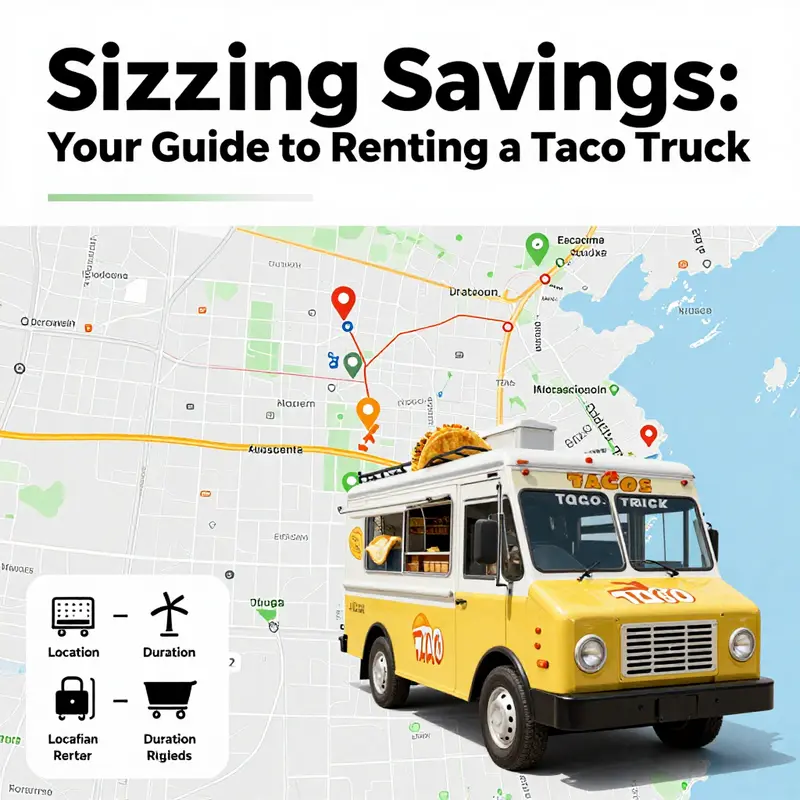
When planning a taco event, the question isn’t only what to serve but what it will cost to bring a taco truck to the scene. Rental prices are a function of location, duration, and the level of equipment included. In urban markets, higher demand, stricter codes, and more complex permits can push the daily rate upward, while rural settings often offer lower base prices though travel costs may offset savings. Duration also matters: short-term bookings typically carry higher per-day rates to cover setup and teardown, whereas longer commitments may unlock discounts and more predictable budgeting. Equipment quality and configuration are the other major levers: a lean setup used for a weekend pop-up costs less than a fully equipped, brand-ready truck designed for high-volume service. Beyond the sticker price, operators must consider ancillary costs such as licenses, fuel, insurance, staffing, and maintenance. The takeaway: to estimate true cost, map guest count and service model to a complete cost framework that includes the rental rate and all operating expenses.
Beyond the Rental Fee: A Deep Dive into the Hidden Operational Costs of Renting a Taco Truck
When a potential caterer or event host looks at renting a taco truck, the sticker price on the contract board often becomes the focal point. Yet the true cost of ownership or rental stretches far beyond the initial number. To plan a viable budget, you must read the smaller print—the line items that quietly accumulate as you roll to your first event and then on to the next. The conversation around cost should shift from “What does the truck cost to rent?” to a fuller question: what will it cost to operate this business on a day‑to‑day basis, over weeks, months, and years? Understanding these hidden operational costs is essential to avoid surprises and to preserve profitability when your calendar fills with gigs, festivals, and private parties. In practice, the baseline price—whether a long-term lease or a short-term rental—will reflect the truck’s size, its equipment quality, and regional market conditions. A basic electric-equipped cart with the essentials, including refrigeration and a grill, may start near a few thousand dollars upfront, and that figure often comes with a one-year warranty and secure payment options. But the price you see on the rental agreement is only the surface. The deeper costs live in the miles you travel, the food you serve, and the regulatory and operational framework that supports your daily operations.
Fuel is the most immediate and variable expenditure. The price you pay for gas or diesel is not just a number on a receipt; it’s a function of distance, event density, and route planning. A busy weekend could require hours of driving between venues, market stops, and supply runs. Even with fuel-efficient equipment, the cumulative gallons consumed can reshape the bottom line. Smart scheduling, consolidated shopping trips, and careful routing can trim fuel spend, but those savings require disciplined logistics. Maintenance and repairs ride in tandem with usage. Regular maintenance—oil changes, tire checks, brake inspections, and system diagnostics—prevents breakdowns that could derail a busy schedule. Yet maintenance costs are not perfectly predictable. A routine service may be modest, while an unexpected component failure can force expedited service calls, emergency parts, or a rental backup vehicle for a high-demand weekend. Those fluctuations should be anticipated with a maintenance reserve in your budget so a hiccup doesn’t choke cash flow.
Insurance is another variable layer that can significantly shift monthly or annual outlays. Liability coverage protects against accidents, injuries, or damages to property when the truck is on the road or stationed at a site. Depending on how broadly you operate—permitted hours, locations, and the size of your team—premium costs can swing. Some operators carry additional coverage for equipment, theft, and food spoilage, each adding a line item to the ledger. The market for insurance fluctuates with risk exposure, and premiums respond to location, the scope of operations, and the number of events in a given period. If you are renting rather than owning, confirm whether insurance is bundled with the rental, and if so, what limits apply and who bears the deductible in the event of a claim.
Licensing and permitting fees sit at the intersection of compliance and cost. Health department approvals, food handling permits, vehicle registrations, and temporary event permits each carry separate fees that may recur as you expand into new counties or cities. Local regulations can surprise newcomers with additional requirements for mobile food vendors, including waste disposal, water supply standards, and sanitation inspections. In many markets, the cumulative licensing cost for a year can range from modest to substantial—potentially between $1,000 and $5,000 or more for businesses that operate across multiple jurisdictions. Even if you plan to stay within a smaller geographic footprint, it’s worth budgeting for renewals and potential retrofits that may be required to stay compliant as rules evolve. When plans include first-time events far from home base, those permit considerations quickly multiply and must be anticipated in advance.
Staffing costs are not just about wages. If you staff the truck for events, you must account for labor hours, payroll taxes, and possible overtime. The rhythm of a taco operation depends on the event’s pace: prep, service, post-event breakdown, and travel time each consume labor. For bigger gigs, you may employ additional crew for setup, cooking, serving, and trash management. Even when you’re operating solo, you should consider whether a helper or a backup driver is necessary for safety and efficiency. Wages are just part of the picture; you will also allocate payroll administration costs, uniforms or protective gear, and potential coverage for sick days or vacations.
Ingredient procurement and packaging form a second major tier of ongoing expense. The lunch or dinner menu you offer drives your grocery bill, the size of your perishables inventory, and the frequency of restocking trips. Fresh produce, proteins, cheeses, salsas, and tortillas all require reliable sourcing. If demand spikes for certain specials, you may face price volatility or the need to secure premium suppliers. In addition to the food itself, you must purchase condiments, napkins, disposable gloves, packaging, and utensils. Packaging choices influence both cost and guest experience; opting for recyclable or compostable options may improve sustainability and appeal, but at a premium. The interplay between menu design and ingredient costs is delicate: a small change in a single ingredient can ripple into a different cooking process, cooking times, and waste streams. On the vendor side, relationships, minimum orders, and delivery schedules can all affect your cash cycle and inventory carrying costs.
Utility costs, often overlooked, deserve careful attention. Refrigeration units, hot holding equipment, and lighting require power. If your truck runs on utility power at the event site, you’ll pay for electricity usage or, in some cases, generator fuel and maintenance. The cost of running refrigeration to keep produce and proteins cold must be calculated alongside the risk of spoilage and waste. In regions with strict energy regulations or limits on generator noise, you may incur higher operating costs to comply with local codes. Utilities also extend to basic infrastructure within the truck, such as water supply or waste disposal systems, which may require regular servicing or water fill-ups during multi-day events.
Marketing and promotional activities are not merely add-ons but a credit to customer acquisition and retention. On the surface, you’ll spend on signage, branding, online presence, social media campaigns, and participation in local events. The true return on marketing goes beyond vanity metrics; it translates into bookings, repeat customers, and word-of-mouth referrals. A savvy operator builds a marketing plan that aligns with the seasonality of events, the neighborhoods served, and the culinary niche offered. The cost of marketing compounds when you extend campaigns to partner venues, sponsorships, or cross-promotions that broaden reach but require planning and budgeting.
Forecasting, contingency, and financial discipline are the underpinnings that keep a taco truck rentable and profitable. A realistic forecast considers peak seasons, weather patterns, and market competition. It also requires a contingency fund for fuel spikes, supply shortages, or permit delays. In practice, many operators design a tiered budgeting approach: a base operating budget that covers predictable costs and a reserve that covers surprises. This approach smooths cash flow and prevents abrupt reductions in service when costs rise or when events are fewer than anticipated. A thoughtful forecast should also account for the time value of money, especially when deciding between a long-term rental and occasional contract work. Renting can be appealing for its flexibility, but it does not absolve you from thoughtful capital planning, nor does it guarantee that the economics are favorable in every market or season.
The practical takeaway is to treat the rental price as just one line item in a broader financial map. As you project costs, you must account for fuel, maintenance, insurance, licensing, staffing, ingredient procurement, utilities, and marketing. Each category carries its own volatility, and together they determine whether a given event slate remains profitable. Building a robust budget means estimating realistic ranges for each cost area, then layering in safety nets for worst-case scenarios. It also means continually refining your assumptions as you gain data from real gigs—recording mileage, tracking fuel economy, and monitoring waste levels to sharpen your forecasting accuracy.
For readers who want to deepen their understanding of startup and ongoing costs, explore structured guidance on budgeting and cost management. Practical resources such as the SBA’s startup cost estimates can provide a framework for planning, helping you translate a conceptual budget into concrete line items and phased cash outlays. If you’re looking to optimize tax planning alongside cost control, you may also find value in targeted guidance on deductions and write-offs for food truck operations. As you prepare for your next booking, keep the bigger picture in mind: the most successful taco ventures balance the allure of flavorful, on‑the‑go cuisine with disciplined financial stewardship that keeps the venture sustainable through busy seasons and quiet spells alike. For a concise primer on related tax considerations, you can read about tax deductions for food truck owners. And for broader budgeting frameworks, refer to the U.S. Small Business Administration’s practical guidance on estimating startup costs: https://www.sba.gov/business-guide/plan-your-business/estimate-startup-costs.
Long-Term Leases or Quick Rentals: The Real Cost Equation for Renting a Taco Truck
When a caterer looks at a taco truck, the first question isn’t merely the sticker price of a new cart. It’s how you plan to use the vehicle, over what period, and under what conditions you’ll operate. The base price for a new electric taco cart with essential kitchen amenities can start around $3,700. That figure, surprisingly accessible at first glance, often includes a one-year warranty and a secure payment option. But it is only a starting point. The actual rental cost is shaped by geography, the truck’s size and condition, the length of use, and the mix of services bundled into the rental package. In other words, long-term planning matters as much as the day you sign the contract.
Long-term leases tend to offer stability. They provide predictable monthly expenses and a framework for maintenance and service, which can be a boon for cooks who want to focus on the menu rather than the boiler and the battery. Short-term or daily rentals, by contrast, suit events that come and go, or those with uncertain demand in advance. The pricing logic follows the same arc: the bigger the truck, the newer the model, and the more robust the power and water systems, the higher the price. Geographic variation adds another layer. A bustling metro market may command higher daily rates than a smaller town where demand settles into a slower rhythm. Some rental packages already include routine maintenance, contingency power, basic insurance, and even pre-staged setup. Others present those elements as optional add-ons. The effect is simple: you’re paying for the convenience of presenting a consistent, operative kitchen on wheels—along with the peace of mind that everything will run smoothly during your event window. If your event calendar expands, there can be savings in long-term terms; conversely, a single high-stakes event could be most cost-efficient when pursued through a tight, one-off rental with precise inclusions and a quick turnaround.
Operational costs extend well beyond the daily rental fee. Permits and licenses can swing widely, depending on city, state, and the nature of the event. The initial overview notes that licenses may range from roughly $1,000 to $5,000, a substantial sum that sits alongside the rental price but is essential for legal operation. This is not a quibble over a small tax or a minor fee; it is a baseline cost of doing business in many jurisdictions. Fuel contributes to ongoing expenses, as does insurance. If you hire staff to operate the cart, wages and payroll considerations enter the equation, even if you yourself are driving and managing the truck. If you manage staffing in-house, you still bear the opportunity costs of your time and the administrative burden that comes with insurance, health checks, and compliance paperwork. The result is a composite cost picture that grows quickly when you add in permit renewals, food safety inspections, and potential downtime for maintenance or repairs. Rather than a single number, the rental price becomes a dashboard of obligations that must be planned for to keep the operation solvent during peak seasons and quiet months alike.
In the absence of taco-truck-specific rental data, analysts often look to related, nearby benchmarks to frame expectations. The existing research reveals a gap: there is no direct, widely published figure for taco-truck rentals. What is available is a snapshot of pickup-truck rental costs in several U.S. locales, a proxy that underscores how location and market conditions influence price. In Edmond, the average monthly pickup-truck rental runs around $2,894, with an approximate weekly cost near $675. In Twin Falls, the monthly price lands near $3,182 and weekly costs around $742. Palmdale shows about $2,525 per month and roughly $589 per week. While these figures do not translate neatly to a taco truck—mobile food operations have different power needs, equipment requirements, and compliance obligations—they illustrate a core truth: regional demand, vehicle type, and service levels radically shape pricing. For precise taco-truck numbers, the best route remains direct quotes from catering equipment rental platforms and industry reports dedicated to mobile food markets. These sources reflect the specifics that matter to a taco kitchen on wheels—power generation, water supply, waste management, health compliance, and delivery or setup logistics—alongside any bundled services that create real value for event-based cooking.
For readers charting a budget, this is a practical reality check. The absence of a single, universal taco-truck price means your planning must start with a clear event profile. How many events are you planning? Over how many weeks or months will you need the truck? What level of on-site support do you require—chef, line cooks, or just a one-person operation? What infrastructure does the venue provide, and what must you supply? Do you need a generator with a certain wattage, circulating water, a handwashing station, or a waste-collection setup? Will you be subject to street-use permits or health inspections? The answers to these questions directly influence the rental quote. By detailing your needs before contacting rental firms, you can avoid sticker-shock and discover whether a bundled plan offers real savings.
The pricing puzzle also invites a negotiation mindset. Because taco trucks sit at the intersection of equipment rental and mobile service delivery, the value proposition often lies in what the rental package includes beyond the cart itself. A quoted daily rate may be attractive until you discover it excludes delivery, setup, power hookups, or insurance. A bundle that pairs the truck with a generator, water system, cleanup service, and a trained operator can deliver greater reliability at a lower effective daily cost than a la carte add-ons. When you lack taco-truck-specific data, you can still compare comprehensively by evaluating the scope of services, the speed of delivery, and the provider’s reliability record. Always request three quotes to gauge market norms, and scrutinize the fine print—what happens if a delivery arrives late, or if weather delays a scheduled event? The best deals are transparent about contingencies and provide a path to quick replacements or repairs to minimize downtime.
Beyond quotes and bundles, the topic of taxes intersects with daily cash flow and long-term strategy. Many operators explore whether to classify rental payments as ongoing operating expenses or capitalizable startup costs, a distinction that can alter the apparent cost of renting versus buying. Consulting with a tax professional to determine the most favorable treatment of rental costs, insurance, and maintenance can yield meaningful savings over time. Insurance is not optional for a mobile kitchen. It protects against liability, equipment damage, and worker accidents. A robust policy should cover equipment breakdown, third-party liability, and health-code compliance issues. The legal and financial scaffolding around a taco truck rental—permits, insurance, permits renewals, and inspections—must be woven into the cost model to avoid erosion of margins when the calendar fills.
To keep navigation simple yet practical, consider this guiding question as you proceed: does the option you’re evaluating align with your event cadence, your risk tolerance, and your service standard? If you intend to operate regularly, a longer-term package that includes maintenance and on-call support may deliver the best value. If your need is episodic, a short-term rental with predictable delivery and return terms could be the most cost-efficient path, provided it covers the essential infrastructure and permits. The reality is that a taco truck rental is a multi-faceted service contract, not a single-price purchase. The total cost is the sum of the base rental, the duration-based adjustments, the value of bundled services, and the compliance and risk-management components that keep the operation lawful, safe, and on schedule.
For those seeking a deeper comparison and further guidance, a broader resource on choosing the right configuration and partner for a mobile kitchen can offer added clarity. You can explore that guidance here: Choosing the right food truck.
In the end, the numbers are less important than the process. The cost of renting a taco truck will vary, sometimes widely, from one market to another and from one rental agreement to the next. The key is a thorough needs assessment, a disciplined budgeting approach, and a strategy that integrates permits, insurance, and maintenance into the price of doing business on wheels. When you approach the market with that frame, you’ll emerge with a cost estimate that reflects the real demands of your menu, your events, and your compliance obligations—rather than a single, static price tag. And while it’s tempting to seek a one-size-fits-all figure, the practical path is a carefully staged negotiation that builds a reliable, scalable mobile kitchen around your culinary goals. External resource: https://www.made-in-china.com/
null
null
Final thoughts
Renting a taco truck can turn any gathering into a fiesta filled with flavor and fun. While the costs can vary based on multiple factors—from location to operational expenses—being well-informed allows you to budget effectively and maximize your investment. Whether you’re gearing up for a birthday bash, a corporate gathering, or a delightful day of food truck hopping, understanding the landscape of taco truck rentals helps you serve up not just delicious tacos but unforgettable experiences for your guests. Dive in and savor every moment!