
Taco trucks are not just about delicious tacos; they’re about making a lifestyle and a profit while serving mouthwatering meals! For cuisine lovers and aspiring taco entrepreneurs alike, knowing the earning potential of taco trucks is crucial. This article serves as your guide to understanding the revenues, operational costs, and growth trends within the busy taco truck marketplace. Each chapter delves deep into a unique aspect of taco truck economics, helping you savor the full flavor of this vibrant business. Buckle in as we explore how much a taco truck really makes!
City-Scale Earnings: Unpacking How Much Urban Taco Trucks Can Turn in a Congestion of Demand
The appeal of a taco truck in a dense urban landscape rests on a simple equation: capacity to serve a hungry, time-pressed crowd, at a price point that covers costs and leaves room for growth. When you step into the economics of an urban taco operation, you confront a spectrum of factors that can tilt the balance from solid profitability to a struggle for cash flow. Location, customer mix, menu design, operating hours, and the efficiency of the setup all play roles in shaping the figures. Yet even with the inevitable variability, industry analyses point to a robust potential in well-chosen urban environments. In practical terms, a well-managed mobile taco operation can generate substantial monthly revenue, with the right controls on costs and a steady stream of repeat customers. The numbers that emerge from multiple sources converge on a core story: urban taco trucks can deliver meaningful profits if the owner treats the venture as a real business—from site scouting to procurement, from staffing to maintenance, and from branding to marketing.
A recurring benchmark across city markets is a monthly revenue range of roughly $15,000 to $30,000 for a single, well-run taco truck operating in high-traffic zones such as downtown business districts, near campuses, or along busy pedestrian corridors. This top-line figure is not a ceiling but a practical ceiling given typical hours and demand. When one digs into the cost structure, the arithmetic becomes clearer. Food costs generally run in the neighborhood of 30% to 35% of sales, a standard spectrum for food trucks with streamlined menus and efficient prep. Add labor, fuel, insurance, licenses, permits, and depreciation of equipment, and the net monthly profit commonly lands in a band of about $3,000 to $8,000. That range reflects differences in management discipline, purchase discipline (what you buy and where), and how lean the overhead truly is. A realistic reading of the math shows that even a modestly optimized operation can produce a meaningful monthly profit after all variable and fixed costs are covered.
To translate the monthly picture into annual terms, consider a scenario where the truck achieves daily sales of $800 to $1,200. Over a typical 26-to-28 day work month, gross monthly revenue would fall in the broad range of $20,800 to $33,600. Multiply by twelve, and you get annual gross revenues roughly between $250,000 and $400,000. While these figures are averages, they illustrate a credible path to six-figure annual net income for operators who maintain discipline on costs and sustain a steady stream of customers throughout the year. A common mental model in the industry is to aim for a net margin in the low-to-mid twenties or even higher with robust turnover. If net profits hover in the 20% to 35% range—as some market analyses and case studies suggest—the annual net could land anywhere from $50,000 to well over $100,000. Those are compelling numbers for a venture with relatively modest upfront capital compared with a full brick-and-mortar restaurant.
The startup costs, of course, influence early profitability and risk. A mid-sized taco truck, often referred to in a generic sense as an el carrito optimization, might require an upfront investment ranging from roughly $30,000 to $70,000. This range covers the vehicle itself, the kitchen equipment, basic fit-out, and essential permits. When you factor in the ongoing costs—inventory, fuel, insurance, maintenance, and staff (if you hire)—the focus shifts to managing a daily rhythm that sustains sales while curbing waste and downtime. The economics of a mobile kitchen hinge as much on what you don’t spend as on what you sell. A lean operation keeps food costs in line, minimizes spoilage, and avoids unnecessary inventory that ties up cash and drains profits. The lesson is simple but powerful: effective cost control and predictable sales are the twin pillars that support a healthy net income in a market where appetite for quick, affordable meals remains high.
The revenue picture becomes even more meaningful when you layer in the operating dynamics unique to city environments. Urban settings offer a confluence of opportunities and constraints. High-traffic locations near offices, transit hubs, universities, and entertainment districts translate into predictable lunch windows and pronounced spikes during events. The advantage is the ability to realize a high order velocity—customers line up, place orders, and move on. In a well-timed lunch rush, a taco truck can convert foot traffic into 100 to 300 orders per hour, depending on the complexity of the menu, the speed of service, and the size of the team. A basic and efficient setup can turn orders quickly, enabling a high daily revenue with a compact footprint. This speed tends to be the differentiator in urban settings where competing food options abound and customers demand speed as much as taste.
Brand positioning also matters in ways that can lift revenue without a commensurate increase in cost. A focused brand that emphasizes a signature taco, a distinctive preparation method, or a unique chef-driven twist can command premium pricing within a price-sensitive market. The capacity to sustain a higher price point often hinges on perceived value: the quality of ingredients, the credibility of the menu narrative, and the consistency of the customer experience. In practical terms, a strong brand can expand average ticket size and improve repeat business, both of which bolster monthly and annual profits. The more consistent a truck is in delivering a flavorful and dependable experience, the more reliable the revenue stream becomes to a point where the business can grow through repeat customers and referrals.
Seasonality and event-driven revenue add another layer of potential upside. Outside of peak lunch hours in business districts, there are opportunities to participate in music festivals, city fairs, farmers markets, and sports or cultural events. These occasions can dramatically lift daily sales over short periods, sometimes by a multiple of a regular weekday. While such events bring higher sales, they can also entail higher costs—additional staffing, portable equipment, and sometimes more complex permits. Yet for operators who plan ahead, the incremental revenue during events can be a powerful accelerant to annual earnings. A strategic calendar of locations and events, allied with a reliable service model, creates a revenue cadence that smooths out the natural ebbs and flows of daily city life.
The financial picture would be incomplete without acknowledging the realities of variable costs. In a mobile operation, fuel is a recurring concern—driving to and between locations, to events, to restocking points. Insurance, licenses, and vehicle maintenance also occupy space in a monthly budget. Labor is a double-edged sword: more hands mean faster service and higher capacity, but labor costs can erode margins if not carefully managed. The rule of thumb in many markets is to optimize staffing for peak times and rely on a lean crew during slower periods. The aim is to balance speed and reliability with the discipline to keep payroll aligned with actual demand. In effect, the more predictable the daily revenue and the tighter the control on variable costs, the stronger the bottom line. A truck that runs efficiently during lunch hours and maintains a modest but steady stream of afternoon customers can sustain healthier margins than one that spikes only during certain events.
A practical way to think about profitability is to anchor expectations to a rhythm that blends stability with growth. If a truck can consistently sell 150 to 200 tacos per day at an average price of $6 to $8, daily gross revenue sits between $900 and $1,600. In a five-day week, the weekly gross could range roughly from $4,500 to $8,000. Monthly, that translates to about $18,000 to $32,000 in gross revenue, with the potential to exceed $35,000 in markets with higher average ticket sizes or frequent events. When you translate gross revenue into net income, after subtracting all variable costs and allocated fixed costs, the book starts to look favorable: net monthly profits commonly fall in the $3,000 to $8,000 range, depending on execution. A credible path to annual net income thus emerges: about $36,000 to $96,000, with the upper end reachable in markets with premium pricing, high turnover, and low waste. In some well-functioning West Coast neighborhoods where foot traffic is intense and the price elasticity supports higher ticket averages, annual net income can push toward six figures. The takeaway is clear: revenue is robust in urban environments, but profit depends on disciplined cost management and a consistent, scalable service model.
The literature and practitioner narratives converge on a practical benchmark for profitability: most taco trucks reach positive earnings within 6 to 12 months of opening, assuming a combination of prudent initial gearing and disciplined ongoing operations. This timeline reflects the reality that new ventures face upfront costs and the time required to build a loyal customer base. It also underscores the importance of learning the local demand curve, testing the menu, and refining the operation to minimize downtime. When a truck hits its stride—regular foot traffic, dependable orders during lunch, and a growing base of repeat customers—the financial case for mobile tacos becomes strong. The combination of accessible startup costs relative to a full-service restaurant and the potential for high daily turnover makes urban tacos a compelling entry point for aspiring food-business owners who want to manage risk while pursuing meaningful returns.
To bring one real-world snapshot into focus, consider a western city center where a known taco brand has demonstrated the power of steady volume. The operation reported selling roughly 150 to 200 tacos per day, at prices between $6 and $8, yielding a daily revenue of about $1,200 to $1,600. On a monthly basis, that translates to more than $35,000 in gross revenue, backed by a steady stream of returning customers. That case highlights the upside of combining location density with a brand that resonates with local tastes and a menu that balances authenticity with accessible flavor profiles. It also points to the payoff of a reliable operational tempo—the discipline of consistent service during peak hours, the efficiency to serve quickly, and the capacity to handle the throughput without compromising quality. While every market has its own nuances, the pattern is familiar: strong location, efficient service, a clear value proposition, and a rhythm that converts foot traffic into repeat business and sustained profitability.
From a practical standpoint, the most influential steps a new operator can take to approach these earnings involve a blend of site research, menu design, and cost discipline. Start with site scouting: target high-footfall corridors, close to workplaces, campuses, or transit hubs, and assess the ease of access, visibility, and proximity to complementary food vendors that can create a shared draw. A smart menu is lean yet expressive, focusing on a core set of items that can be executed quickly without sacrificing flavor. The price point should reflect both the perceived value and the costs of operation; a balance between affordability and premium appeal can help maintain high volume while preserving margins. Inventory control is essential: purchase ingredients that offer long shelf life for essential items, and plan for cross-utilization to minimize waste. In a city environment, where permit costs and health costs remain constant realities, the ability to run a tight ship on the kitchen side often determines the bottom line.
Marketing and customer retention play a nontrivial role in dialing in the revenue potential. A consistent brand experience—clear signage, a queue-efficient layout, and reliable food quality—turns first-time visitors into repeat customers. Seeding the business with friendly, fast service and predictable portions helps build trust and encourages word-of-mouth referrals in a tight-knit urban community. Seasonal promotions, loyalty programs, and collaborations with local events can also lift average ticket size and frequency of visits without necessarily increasing fixed overhead. In this sense, growth is less about adding quick-buck gimmicks and more about expanding the reliability and reach of the operation: more days with strong turnout, more predictable revenue, and a higher likelihood of maintaining a healthy net profit while reinvesting in the business.
An essential caveat is that these figures assume disciplined cost control and a path to scale through location density and brand strength rather than rapid expansion on borrowed capital alone. The economics of growth must be managed with care. While the upfront investment is modest relative to a full-service restaurant, missteps in supply chain, staffing, or permits can shave margins quickly. Conversely, a well-executed model with careful site selection, efficient operations, and a compelling brand can transform a single truck into a reliable, scalable enterprise with a robust annual income that reflects both the revenue potential and the enduring appeal of a well-made taco in a crowded urban landscape. In short, the city is a long, inviting runway for a taco truck when the operator articulates a clear value proposition, executes with consistency, and guards the core price-to-value formula that sustains both customers and profit.
If you want a practical starting point for applying these ideas, a good next step is to consult industry benchmarks and to cross-check your assumptions with revenue models built around your own target locations. For readers seeking a broader industry perspective on these patterns and the latest market intelligence, see industry reporting that aggregates operator surveys and market trends. fireduptacotruck.com/blog/. This resource can help you translate the principles outlined here into actionable steps for site selection, pricing, and operations. And for those who want to ground their expectations in broader market data, an external benchmark published by a leading industry outlet provides a complementary view of what’s possible in the current year: https://www.foodtrucknews.com/industry-insights/how-much-do-food-trucks-make. The combination of local, on-the-ground learning and wide-lens industry insight helps craft a realistic and aspirational plan for turning urban demand into durable profitability.
In sum, urban taco trucks sit at a favorable intersection of demand and cost discipline. The revenue potential exists in the density of city life, the speed and reliability of service, and the ability to monetize a clear brand story. By aligning location strategy, menu design, and operating efficiency, a taco truck can realistically generate meaningful monthly revenue and net profits that compound over the course of the year. The experience of operators who achieve consistency—walk-up customers who become regulars, events that multiply daily income, and a tight control of food costs—illustrates a path to sustainable earnings. The city rewards those who treat the taco truck as a real business with a deliberate plan, a dependable operation, and the willingness to adapt to an ever-changing urban palate.
Margin in the Sizzle: Unpacking Operating Costs to Reveal Taco Truck Profit
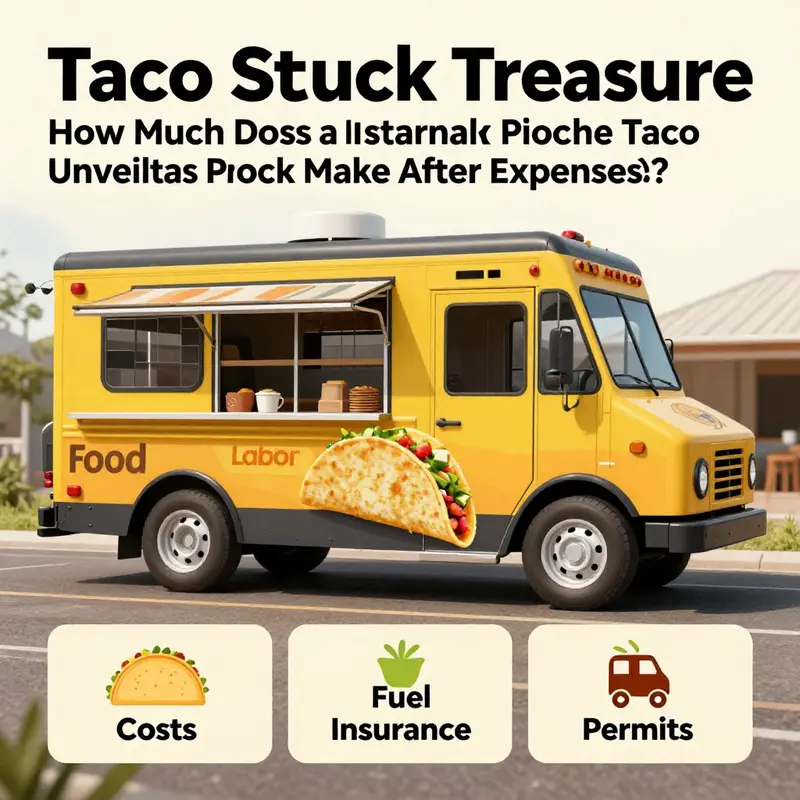
The scent of sizzling meat and fresh cilantro draws crowds, but the real heartbeat of a taco truck’s profitability sits in the numbers behind the scene. Many would-be operators imagine that revenue alone tells the story, that a busy corner equals instant cash, or that a few good salsa recipes guarantee a thriving business. In truth, the margin—the difference between what comes in and what goes out each month—defines whether a truck stays on the road or stalls at the curb. A clear-eyed view of operating costs makes the difference between a hopeful side gig and a sustainable enterprise. The operating costs of a taco truck are not merely a ledger of expenses; they are a map of how a business turns hunger into steady income, how volume and efficiency meet pricing and structure, and how the daily grind translates into meaningful profit over time.
From the outset, it’s essential to separate costs into what changes with sales and what remains more constant. Variable costs rise and fall with the volume of tacos sold and the miles driven. They include the food and beverage ingredients themselves, which determine the per-taco cost but also influence menu design and portion control. Then there are the costs that feel more fixed, though they are not truly immutable. Labor, fuel, routine maintenance, and core licenses and insurance are ongoing commitments that nibble at the bottom line even on good days and can pinch harder during lean periods. The trick is to understand how these components interact with pricing, location, and community demand.
The most immediate line item is the food and ingredient sourcing. It’s tempting to assume that ingredients are a minor portion, but for a taco truck they anchor the cost structure. Industry observations place the typical cost per taco in a range that reflects both the quality of ingredients and the type of tacos offered. A conservative assumption would place food costs at roughly 30% to 35% of total sales. In real-world terms, if a truck generates $15,000 in gross revenue in a month, the food bill could run around $4,500 to $5,250. That figure, by itself, reshapes the margin dramatically. The more efficient a business is with portion control, supplier relationships, and waste reduction, the more that percentage can move toward the lower end of the band without sacrificing flavor or reliability on busy days.
Labor is the next major variable, and it often accounts for a substantial slice of monthly expenses. Most taco trucks require at least a driver/cook and an additional crew member for prep or service during peak periods. Wage landscapes differ, with urban markets pushing hourly rates higher due to competition for skilled workers. A practical range for labor is from minimum wage up to about $15–$20 per hour, depending on location and the skill level required. If a truck operates with two staff members for 40 hours a week at an average of $17 per hour, labor could approach roughly $1,360 per week, or about $5,440 per month. In other weeks, with fewer shifts or more efficient scheduling, labor costs can drop toward $3,000 or rise toward $7,000. The point is not to lock in a single figure but to anticipate the swing and design rosters that balance service quality with payroll discipline.
Fuel and propane costs add another layer of variability. The truck’s miles traveled, the distance between events, and even the season can push these numbers up or down. Fuel is not merely a fuel line; it is a reflection of where the truck chooses to operate, how often it drives to high-traffic zones, and how often it idles in queues or lines during peak hours. In practice, fuel and propane may range from a few hundred dollars to well over a thousand each month, especially in markets with long commutes or frequent events. Managing fuel efficiency, route planning, and equipment usage can meaningfully influence this line item.
Then there is maintenance and repairs, the quiet backbone of reliability. A mobile kitchen is a working kitchen on wheels, with the same wear-and-tear concerns as a brick-and-mortar operation, plus the additional stress of vibration, road shocks, and variable climates. Regular maintenance—tightening fittings, oil changes, gasket replacements, and high-use components like grills and refrigeration—can amount to several hundred dollars monthly. A proactive maintenance habit not only reduces the risk of costly emergency repairs but also contributes to consistent service quality and customer trust. Insurance, permits, and licenses are necessary under any regime, and while these can feel like overhead, they are the cost of staying legal and protected. On an annual basis, permits and insurance commonly total between $1,000 and $3,000, which translates to roughly $80 to $250 per month. When added to other fixed costs, these obligations create a baseline that every operator should cover as a non-negotiable expense.
All told, the model that best fits a well-run taco truck in a bustling urban setting reveals a net profit margin that sits between 10% and 15% of gross revenue. This is a broad band because it accounts for practice, scale, and the specifics of a given market. If the truck is pulling in $20,000 a month in gross sales, a 12% net margin would yield around $2,400 to $2,500 in monthly profit after taxes, depreciation, and the typical operating expenses described above—though that approximation can vary. It is not unusual for a highly efficient unit, supported by strong volume, savvy pricing, and disciplined cost control, to push closer to the upper end of that range. Conversely, trucks facing lower demand, higher rents, or inconsistent schedules can hover near the lower bound or dip below it during slow seasons.
These figures align with broader industry patterns that have emerged in recent years. High-traffic urban operations consistently report stronger revenue streams, while the cost of parking spaces, licenses, and labor tends to be higher in those markets. A sensible approach for aspirants is to assume a cautious base case, then build a plan that scales through three levers: pricing strategy, operations efficiency, and revenue diversification. Pricing is not simply a function of what customers will pay; it is a lever to calibrate the balance between perceived value and food costs, to maintain a fair wage for staff, and to ensure that busy, hungry lines remain smoothly served. When prices are set thoughtfully—reflecting ingredient costs, portion size, and service speed—customers perceive value and the business sustains its margins.
The question of profitability, therefore, hinges not merely on gross revenue but on how well a truck converts that revenue into profit after every necessary expense is accounted for. A widely cited point of reference from the industry is that even a modestly well-managed operation can support a healthy monthly profit in the three-to-eight thousand dollar range in favorable markets. This range narrows or widens with the same consistency you would expect from any service-oriented business: more sales, better waste control, and smarter staffing yield higher profits; lower demand, higher rents, or a slower pace of sales erode margins. The numbers vary because the real world looks different in each city, each neighborhood, and each event calendar, yet the underlying logic remains constant: profit is a function of volume, price, and the discipline to manage costs without compromising the customer experience.
The broader context of these figures is worth noting. The mobile food service sector has shown resilience and growth; early 2025 analyses point to a double-digit year-over-year expansion, driven by demand for quick, customizable meals and the flexible appeal of food trucks as an option for both casual meals and special events. For taco trucks, that means an opportunity to secure regular crowds at lunchtime, after-work gatherings, and weekend happenings, while also tapping into catering for private events, campus functions, and festival circuits. Each of these revenue channels introduces its own cost structure and margin profile, but they also creates additional avenues to spread fixed costs and increase utilization of the truck and its crew. The aggregate effect is a broader, more robust pathway to profitability for operators who plan with calendar, geography, and customer preferences in mind.
A practical way to think about this is to walk through a notional month with plausible inputs. Suppose a truck in a busy urban zone sells a mix of tacos and beverages that produces $22,000 in gross revenue. If food costs run at 32% of sales, that puts COGS at about $7,040. Labor, given a two-person team, could land somewhere in the $4,500 to $6,000 band, depending on hours and overtime. Fuel and propane might account for $1,000 to $1,800, while maintenance and repairs could be $300 to $700. Permits, licenses, and insurance, on a monthly basis, might average $150 to $300. Add a small buffer for miscellaneous items such as packaging, POS fees, and replacement parts, say $200. Total monthly expenses could then range from roughly $13,190 to $16,240. The resulting net would be between about $5,760 and $8,810 per month, i.e., a margin of roughly 26% to 40% of gross revenue in this specific scenario. The big caveat is that this is a best-case framing that assumes disciplined waste management, steady traffic, and efficient scheduling. In more typical circumstances, the numbers are gentler, which is why many operators rely on recurring events, catering side gigs, and early-bird or loyalty pricing to stabilize cash flow through slow weeks and seasonal dips.
If we broaden the lens and cross-reference other published data, the picture remains consistent in its core message. The National Restaurant Association’s 2023 Mobile Food Vendor Economic Report presents a slightly more conservative baseline for mobile operators, noting annual revenues commonly in the range of $180,000 to $250,000 with a net profit margin around 12%. That aggregates to roughly $25,800 in annual net profit on average in that population, a figure that sits between the lower bound of a high-volume truck and the higher end of a smaller unit’s performance. The divergence across sources highlights an important reality: profitability is highly sensitive to location, scale, and operating discipline. A truck that earns $300,000 per year would typically leverage tighter cost controls, robust sales routines, and perhaps a diversified service model to carry a larger share of profit to the bottom line, whereas a truck with more modest sales might rely on careful pricing and expense management to sustain positive cash flow.
For those new to the space, it is tempting to draw quick conclusions from a single data point. Yet the truth lies in the subtle math of daily operations. A realistic plan starts with setting a price structure that accounts for ingredient costs, labor, and overhead while maintaining a competitive edge. It continues with menu design that emphasizes items with favorable cost-to-price ratios, reducing waste through precise forecasting and inventory control, and maintaining equipment that keeps operations smooth during peak demand. It also means recognizing that some months will be stronger than others, and building contingency buffers into payroll and maintenance budgets so the business doesn’t fold under an unexpected spike in fuel costs or a surprise repair.
The practical implication is that profitability is a function of three intertwined levers: sales volume, pricing strategy, and cost discipline. The first lever—volume—depends on where the truck parks, for how long, and how effectively it attracts repeat customers. High-traffic sites with predictable schedules, partnerships with event organizers, and a steady calendar of catering engagements can deliver the consistency on which profit hinges. The second lever—pricing—must reflect input costs while communicating tangible value to customers. Smart menu engineering, seasonal specials, and bundled deals can raise average order values without eroding demand. The third lever—cost discipline—encompasses everything from waste prevention to labor scheduling optimization, from preventative maintenance to careful procurement and supplier negotiation. Each component is a gear in the larger machine, and when one moves too aggressively without balancing the others, the machine risks grinding to a halt.
To connect these ideas to practice, consider a few real-world strategies that align with the numbers described above. Start with waste management: track waste by day and by item, identify patterns in over-portioning, and recalibrate recipes and portion sizes. A modest reduction in waste from 5% to 3% ofFood cost can yield meaningful profit gains over a month, particularly in high-volume operations. Next, optimize staffing by aligning shifts with foot traffic patterns. If lunchtime lines peak between 11:30 and 1:30, concentrate staffing during those windows and scale back during slower periods, maintaining service quality without overpaying for idle labor. Embrace data-driven marketing: use social media and community calendars to schedule pop-ups and promotions around high-foot-traffic events, and consider loyalty programs that incentivize repeat customers without eroding per-ticket margins.
Diversification can also bolster margins. Catering engagements, participation in local festivals, and even selling branded merchandise can supplement daily sales and help spread fixed costs over a larger revenue base. These channels come with their own cost structures—travel time, event permits, and packaging—but they also offer opportunities to leverage the brand established at the truck’s home base and to convert occasional customers into regulars. When a truck engages in multiple revenue streams, the business gains resilience, because downturns in one channel can be offset by gains in another. In practice, many operators adopt a blended model that uses daily street sales as the core and treats events and catering as the growth engines that push overall profitability higher over the course of a season.
Finally, a note on startup costs and the path to profitability. The initial investment in a taco truck can be surprisingly modest by some standards. Basic, functional models can be acquired for about $3,600 to $6,480 from various suppliers, with higher-end configurations and newer units commanding larger outlays. While lower upfront costs accelerate time to break-even, ongoing costs and the need for reliable, clean equipment should not be underestimated. Depreciation plays a role in accounting for the long-term health of the business, and licenses, insurance, and capital reserves for maintenance are essential to keep the operation compliant and operable in a busy market. When builders, operators, and financiers discuss profitability, the shared emphasis is on sustainable margins that survive the inevitable fluctuations of weather, seasonality, and competition.
In sum, the operating cost landscape of a taco truck is intricate, but not inscrutable. The core truth remains simple: revenue is important, but profit comes from managing cost and maximizing the value delivered to customers. A well-run truck in a high-traffic urban setting can achieve solid monthly profits by combining disciplined cost management with smart pricing, reliable service, and a steady calendar of events. A truck in a smaller market or with fewer events can still be profitable, but it will demand greater focus on cost control and a strategic approach to marketing and diversification. The literature and real-world experiences in mobile food service reinforce this, showing a spectrum of outcomes shaped by location, scale, and the operator’s willingness to optimize across the business lifecycle. As always, the best path forward rests on rigorous budgeting, careful forecasting, and the humility to adapt as markets evolve.
For readers seeking practical steps that extend beyond theory, exploring tax considerations can be a valuable complement to the financial planning described here. Tax considerations for food-truck owners can influence how you structure expenses and how you plan for year-end. A useful resource that outlines common deductions and strategies is available at this internal link: tax deductions for food truck owners. The right tax planning supports cash flow and can help protect margins when revenue fluctuates, turning effective cost management into a more stable, long-term trajectory. While tax law changes over time, building a practice of keeping meticulous records, separating personal and business expenditures, and consulting with a qualified professional remains a foundational step for any owner.
The broader picture of profitability in the mobile food space continues to evolve with market demand and consumer preferences. The takeaway is not a single magic formula but a disciplined approach to operating costs, price strategy, and revenue opportunities. When a taco truck operator treats every taco as part of a larger system—an integral piece of a monthly budget that includes fuel, staffing, maintenance, and the occasional catering gig—the math becomes a dependable predictor of performance rather than a hopeful guess. In this sense, the sizzle on the grill becomes a signal of robust margins when paired with a clear plan for cost control and revenue growth. For those who invest time in understanding the cost structure and the levers that drive profit, the taco truck can remain not only delicious to customers but also financially sound for years to come.
External reference for deeper context: https://www.restaurant.org/research/mobility-trends/2023-mobile-food-vendor-economic-report
Riding the Wave: Market Trends, Growth, and the Earning Potential of Taco Trucks in a Booming Food Truck Era
Taco trucks have moved from roadside curiosities to reliable, scalable businesses riding a broad wave of urban consumption, social media visibility, and changing dining habits. The latest market signals show a food truck sector that is not only growing but evolving in ways that directly influence what a taco truck can make each month. In 2024, the global food truck market was valued at about USD 5.42 billion and is projected to reach roughly USD 7.87 billion by 2030, a trajectory supported by a compound annual growth rate in the neighborhood of 6.3%. Some forecasts place growth a bit higher, suggesting annual increases between 7% and 11% through 2030. Taken together, these figures sketch a healthy, momentum-filled space that welcomes new entrants who bring compelling menus, efficient operations, and smart marketing. For anyone evaluating the earning potential of a taco truck, this expanding market adds a layer of optimism, but it also demands careful navigation of location, pricing, and cost structures that can swing profitability in either direction.
Urban density remains a central driver of the sector’s momentum. Downtown cores, business districts, and event-heavy neighborhoods create the foot traffic that a taco truck needs to convert curious onlookers into repeat customers. The same urban dynamics that push rents and labor costs upward also create a favorable environment for high-volume sales. In practical terms, a well-managed mobile taco truck operating in a high-traffic urban area can generate substantial monthly revenue. Industry estimates converge on a plausible band of $15,000 to $30,000 per month in revenue for trucks that consistently capture peak streams of customers. Within that band, a truck that runs steadily through lunch and dinner shifts, perhaps in a place with a steady stream of office workers or a persistent festival circuit, can realize predictable daily totals that translate into strong monthly results. A commonly cited example is a truck achieving daily sales of roughly $800 to $1,200, which compounds into annual gross revenues in the range of $300,000 to $450,000. Those figures are not guarantees, but they illustrate how scale and schedule interact with price points and demand to produce meaningful top-line outcomes.
From a profitability perspective, the story becomes more nuanced once costs are factored in. Food costs themselves typically account for about 30% to 35% of sales, reflecting the margins on core ingredients like tortillas, proteins, toppings, and sauces. After subtracting the direct cost of goods sold, operators must cover labor, fuel, insurance, permits, maintenance, and depreciation on equipment and the truck itself. The outcome is a net monthly profit that often lands in a broad range—roughly $3,000 to $8,000—dependent on efficiency, overhead control, and the business model’s emphasis on speed, customization, or both. In other words, two trucks with similar daily volumes can diverge by thousands of dollars per month if one deploys tighter scheduling, smarter inventory management, or more agile staffing practices. The annual picture mirrors this sensitivity: when a truck sustains $800 to $1,200 per day, annual gross revenues can range from about $300,000 to $450,000. With a leaner cost structure and a gross-to-net conversion around the upper half of the typical range, net annual income might sit between roughly $75,000 and $112,500 on a 25% net profit margin. In markets with extreme demand, premium branding, or high-value add-ons, these numbers can be meaningfully higher.
These macro figures sit atop a broader industry context. Market analyses focused on the food truck sector broadly indicate that successful operators often generate between $50,000 and $100,000 in annual revenue, with net profit margins generally in the 10% to 20% range after all expenses. That range highlights how crucial location, menu pricing, and operational discipline are to the final bottom line. When a truck targets high-demand urban spaces or popular event locations, earnings can exceed the baseline, particularly when the business builds repeat customers through consistent quality and smart marketing. The evolving consumer appetite for quick, authentic, affordable meals—especially Mexican-inspired fare—plays a central role in sustaining this momentum. The combination of a high-value, low-overhead model and a flexible, mobile footprint creates a unique profitability profile that many operators find compelling, even as they remain mindful of the capital required to launch or upgrade a truck fleet.
Startup costs, while not the sole determinant of profitability, are an important early hurdle that shapes a business’s break-even horizon. Basic mobile taco truck models—whether new or refurbished—can vary widely in price, with initial estimates suggesting a range from the low thousands to a few tens of thousands depending on age, size, and equipment. A cited data point places basic procurement costs around $3,600 to $6,480 for essential configurations sourced from international suppliers, underscoring how modest upfront investments can lower the barrier to entry. Of course, those numbers reflect a starting point for equipment alone and do not account for licensing, permits, insurance, vehicle financing, health department fees, or necessary maintenance upgrades. The ongoing costs that come with keeping a truck on the road—fuel, periodic repairs, tire replacements, and routine servicing—can accumulate quickly, especially in cities with congested traffic patterns or stricter regulatory regimes. In this sense, the path to profitability is not simply a function of revenue potential but the discipline and foresight a operator applies to cost control over time.
Beyond the numbers, the profitability of a taco truck is shaped by strategy. Menu pricing, for example, is a balancing act between accessibility and perceived value. A lean menu that emphasizes signature tacos, flexible toppings, and value-driven combos can accelerate throughput and reduce waste. Conversely, a menu that stretches into gourmet or fusion territory may command higher price points but can slow service times and require more inventory management discipline. The social media era amplifies the speed at which customers learn about a truck and decide where to eat. A strong digital presence, visually appealing preparations, and authentic storytelling can raise demand in the same geographic area without proportionally increasing front-of-house time. In practice, operators who combine steady daily sales with efficient cost control and a recognizable brand are the ones most likely to see the earnings that align with the higher end of the industry benchmarks.
Location remains the most influential determinant of profitability. In high-traffic urban areas, the volume of customers can escalate quickly, pushing total revenue toward the upper end of the spectrum. In contrast, trucks that rely on occasional events or limited downtown routes may experience erratic volumes that depress margins if fixed costs remain elevated. The annual growth estimates for the broader market reinforce the idea that a favorable urban first impression translates into durable demand. The market’s expansion signals—underpinned by a 6.3% CAGR and even broader projections of 7% to 11% annually through 2030—reflect both consumer taste for convenience and a robust ecosystem that includes events, catering opportunities, and corporate dining programs. For entrants, this means a greater likelihood that a well-positioned truck can capture multiple revenue streams in a single day, including walk-up sales, campus or office building partnerships, catering components, and short-term private events. The challenge is to translate this potential into reliable cash flow through disciplined scheduling, inventory discipline, and precise pricing.
One often overlooked but increasingly important element is the choice of truck configuration and equipment. The right setup can shave minutes off each order, boost order accuracy, and enable smoother transitions between locations. For operators seeking guidance on optimal configurations, resources that discuss top truck models and their performance characteristics can be valuable. For further reading on configurations that tend to perform well, see the overview of top truck models here: Top Food Truck Models for Success.
As the sector grows, so does the diversity of opportunities. The market’s momentum supports not only traditional street vending but also pop-up collaborations, farmer’s markets, corporate lunch programs, and dynamic, event-driven sell-through. In this environment, a taco truck’s earnings can be augmented by adding revenue streams that align with local tastes and calendars. For some operators, this might mean packaging and selling sauce or spice blends as retail add-ons, offering seasonal variations that command premium pricing, or providing a small-scale catering option for office meetings or neighborhood gatherings. The key is to pair the mobile agility of a taco operation with a disciplined approach to cost control and a consistent customer experience. When these elements align, a truck can move beyond parity with the broader market and reach the higher echelons of profitability.
At the same time, operators should remain mindful of external factors that shape performance. Regulatory environments vary by city and state, influencing permit requirements, health inspections, and vehicle standards. Economic cycles, fuel price volatility, and labor market conditions also factor into the bottom line. A truck that operates with a lean team and a flexible schedule can weather fluctuations more readily than one that relies on a fixed daily lineup. Seasonality, too, deserves consideration. Winter weather in northern markets, or rainy seasons in coastal zones, can dampen foot traffic. Conversely, spring and summer weekends, steep event calendars, and festival seasons can create multiple high-demand windows across each month. A strategy that recognizes these patterns—by planning menus, inventory, and staffing around predictable peaks—tends to stabilize cash flow and support steadier profitability over time.
Looking ahead, the market’s health suggests opportunities for thoughtful entrants who combine appealing menus with practical operations. The reported growth in the broader food truck segment, the sustained demand for fast, affordable meals, and the continued reliance on mobile platforms to reach customers all indicate that taco trucks can carve out a durable niche. Importantly, success in this space is rarely about chasing a single income line; it’s about orchestrating a mix of high-volume days, steady catering gigs, and a brand that resonates with local communities. The comparative figures—monthly revenues in the tens of thousands, robust but not limitless cost controls, and the potential for substantial annual net income—point to a model where cautious optimism is warranted, provided operators stay attentive to pricing, cost discipline, and market dynamics rather than resting on the assumption that demand alone will carry the business.
For readers seeking a longer view of how the market evolves, the forecast literature underscores a long-run growth trajectory coupled with meaningful variation by geography and event cadence. The global market expansion is the backbone, but local execution remains the deciding factor for earnings. In cities with dense employment bases and strong food cultures, a taco truck can compete effectively against fixed-location eateries by offering speed, customization, and a mobile convenience that matches modern urban life. The widespread adoption of social media, coupled with the ability to respond quickly to customer feedback, helps trucks refine menus and pricing in near real time. Small adjustments—such as tweaking a taco’s core protein, adjusting toppings for regional tastes, or offering a family-style bundle during evenings—can yield outsized improvements in average order value without sacrificing service speed. This dynamic flexibility is one of the core advantages of the mobile model and a key reason why many operators view their investment as a long-term venture rather than a seasonal sideline.
Taken together, the market trends and the earning potential for taco trucks point to a landscape with meaningful upside, tempered by the realities of operating in crowded urban markets. The growth story is buoyed by consumer demand for quick, customizable meals and by the strategic advantages of a fleet-based, mobile approach. Yet the same story demands rigorous budgeting, proactive marketing, and continuous attention to operational efficiency. The numbers tell a compelling story: strong upper-range revenue possibilities, a reliable path to meaningful net income with disciplined cost management, and a market that continues to reward agility and brand resonance. For readers who are evaluating this path, the message is clear: success hinges on combining a well-priced, popular menu with an efficient, scalable operation—and then leveraging the social and experiential dimensions of street-level dining to cultivate loyal, repeat customers across diverse locations.
External analysis reinforces this view. A comprehensive market analysis from Persistence Market Research highlights the scale, momentum, and longevity of the food truck sector, including the growth trajectory for mobile dining and the robustness of ancillary opportunities such as catering and events. This broader research framework provides context for the earnings figures discussed above while reminding readers that local execution—where and how a truck operates—will largely determine whether the general market trends translate into specific, sustainable profits. For a broader, data-driven perspective on market size, growth, and trends, see the external resource at the end of this discussion: https://www.persistencemarketresearch.com/market-reports/food-truck-market.aspx.
In sum, the earning potential of a taco truck sits at the intersection of market momentum and disciplined daily practice. The sector’s growth signals, the premium on speed and customization, and the continuing appeal of Mexican-inspired street fare all create favorable conditions for operators who combine smart pricing, efficient operations, and a compelling brand narrative. The path to profitability is not a single shortcut but a sequence of careful choices—location planning, menu design, cost management, and marketing—done consistently over time. When these elements align, a taco truck can become not just a source of steady income but a vehicle for entrepreneurship in a rapidly evolving food landscape.
Counting the Cost and the Cash: A Realistic Look at Taco Truck Startup Costs and First-Year Profitability
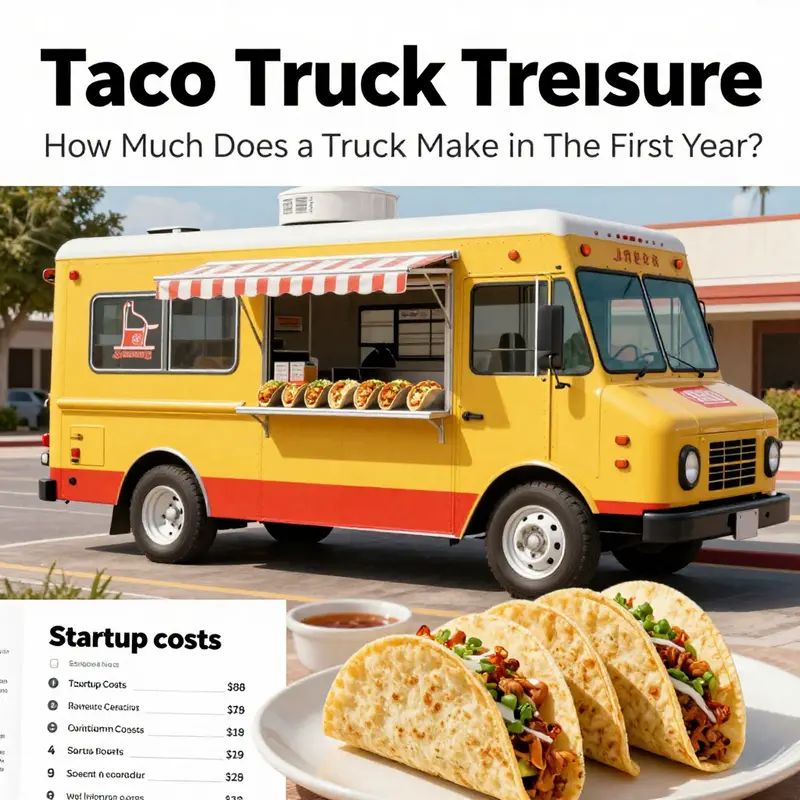
The dream of rolling a sizzling, 24-hour taco operation into city streets is enticing, and for good reason. A well-executed taco truck can bring the kitchen to the curb, offering fast, affordable meals to hungry crowds while preserving the mobility that makes this business model so appealing. Yet the lure of low overhead and freedom can obscure the math that underpins real profitability, especially in the first year. This chapter threads together startup costs, revenue potential, and the practical realities that shape what a new taco truck can actually earn in its debut year. It is not a blueprint for overnight wealth, but a grounded, actionable portrait of how money moves from the cash register to the bank, and where those dollars come from in a bustling urban landscape.
Startup costs are the first hard line in the sand a prospective owner must cross. Estimates commonly place the initial outlay somewhere in the broad range of fifty thousand to well over a hundred fifty thousand dollars. The spread reflects crucial choices: whether you buy new or used, how much customization you demand, and where you establish your operation. A used vehicle may pare initial costs, but it can bring higher maintenance bills and more frequent downtime. A fully customized, brand-new setup can command a premium but requires patience and coordination with vendors, permits, and lead times. Inside the wallet, the line items tend to cluster around a few core categories: the vehicle and its conversion, equipment and installation, licenses and insurance, initial inventory, and marketing. Each element carries its own price tag and risk, and the total is amplified by contingency planning for unexpected delays or overruns.
Vehicle and kitchen equipment sit at the heart of the startup outlay. A commercial vehicle must meet health and safety codes while delivering reliable performance in a mobile kitchen. The size and layout determine not only how many servings you can produce per hour but also how efficiently you can clean, store, and replenish supplies. Grills, steamers, fryers, fry baskets, refrigeration units, sinks, and exhaust systems all factor into the price, and the installation process can introduce electrical and plumbing challenges that demand experienced hands. It is wise to conduct an early, honest assessment of your anticipated peak service times and the menu complexity you intend to offer. A lean menu with centralized proteins, toppings, and sauces can reduce both upfront hardware costs and ongoing waste, while still delivering the crave-worthy flavors customers expect from a taco truck.
Permits, licenses, and insurance are the non-negotiables that legitimize operations and protect you from costly disruptions. The maze of local health departments, fire codes, parking regulations, and mobile vending rules varies by city and district. Navigating this landscape requires time, diligence, and sometimes professional guidance. Insurance—ranging from general liability to equipment and vehicle coverage—provides a safety net against accidents, theft, or unexpected incidents that could otherwise derail a business’s momentum. These fixed costs are often underestimated in early planning and can become a persistent drag if not accounted for in a realistic budget.
Initial inventory and marketing represent the bridge between the shop-worthy kitchen and the street-level hustle. Stocking the right ingredients in the right quantities minimizes waste and ensures consistency in taste and portion size. Yet overstocking can tie up capital and raise carrying costs, while understocking can lead to frequent trips to suppliers and missed sales opportunities. Marketing, while sometimes viewed as an afterthought, should begin before the truck hits the street. A soft launch period, social media teasers, and neighborhood events help build a first-wave of loyal customers who become the backbone of steady daily revenue. Even modest promotional investments—sampling at events, a flyer campaign near high-traffic corridors, or a simple loyalty card—can pay dividends in the first weeks if carefully executed.
With the cost side laid out, the page turns to revenue potential and profitability in the first year. Industry snapshots consistently describe a pattern: in high-traffic urban settings, a well-managed mobile taco operation can generate substantial gross revenues. In the first-year horizon, the numbers typically span from the lower end of around $150,000 to the higher end near $300,000 for trucks that find their rhythm in busy neighborhoods and festivals. These are the kinds of figures that lure new entrants, and they are not unfounded. They reflect a scenario in which demand remains robust, pricing is aligned with the market, and operations achieve a rhythm that minimizes waste and maximizes throughput.
But revenue is only half the story. The other, more sobering half concerns costs that eat into the top line. Food costs, commonly measured as a percentage of sales, typically run in the 30% to 35% range for a well-structured taco operation. That might seem predictable, yet the real world rarely adheres to clean percentages. Supplier price fluctuations, seasonality, and menu changes can shift costs, sometimes creepily. Beyond ingredients, labor and payroll taxes can take a sizable bite, especially as you scale up or add peak-hour staff for lunch rushes and weekend events. Fuel, vehicle maintenance, and depreciation for kitchen equipment also require ongoing attention. Insurance, permits renewals, and routine inspections reintroduce recurring charges that must be budgeted as a fixed cost, not an afterthought. The sum of these operating expenses often yields a net profit margin that is modest, at least in the first year: roughly 10% to 20% of gross revenue, depending on efficiency and overhead controls. That translates to net profits in the vicinity of $15,000 to $60,000 for a first year if the business begins with a solid base of sales and keeps costs disciplined.
The reality, however, is not always kind. For many first-year operators, the learning curve is steeper than expected. Route planning, traffic patterns, and the timing of daily sales can take weeks or months to optimize. Customer mix—who buys what, at what times, and how often—can shift as you discover the sweet spots for your menu and service model. This can delay reach-and-stay profitability, with some entrepreneurs operating near break-even or even at a loss during the initial months. Such outcomes are not a sign of failure; they are a natural part of the process of translating a concept into a predictable, repeatable workflow on the street. The most resilient operators treat the first year as a period of calibration as much as a period of revenue generation.
Several levers influence how quickly a taco truck climbs into sustained profitability. Location and timing are among the most critical. The difference between pulling in a steady stream of daily customers and chasing sporadic crowds can hinge on the street geography—concentrations of offices, neighborhoods with a high appetite for quick meals, and proximity to foot traffic nodes like transit stops, event venues, or construction sites. A well-researched route that balances consistency with novelty often wins more repeat business and reduces the variability that plagues many launch efforts. Pricing should reflect the market without deterring purchase; it must cover costs while underscoring the perceived value of the product. In practice, this means offering a menu that delivers a clear value proposition: familiar flavors with a quick, reliable service, paired with a few standout items that drive word-of-mouth and social media sharing.
Efficiency in the kitchen and on the street compounds gains in the first year. A streamlined assembly line, precise portioning, and strict waste management reduce per-unit costs and help stabilize profit margins even as sales grow. Cross-training staff and scheduling for peak demand can contain labor costs while preserving service speed and accuracy. Inventory management tools and vendor relationships contribute to cost control, ensuring that price shocks do not ripple through the operation. Even small improvements—reducing plate costs by a few percentage points through better supplier terms or negotiating better fuel rates with a preferred vendor—compound over months to become meaningful gains in net income. In fact, many operators discover that the discipline of tracking metrics—beat-by-beat performance against forecast—creates a feedback loop that sharpens decision-making and accelerates profitability.
A practical way to frame the first-year outlook is through a basic scenario. Suppose a truck operates in a high-traffic urban core, delivering a consistent stream of customers with a steady menu. If gross annual revenue falls near $180,000, the gross margin at 68% leaves about $122,000 for cost of goods sold and gross profit. After factoring labor, fuel, maintenance, insurance, permits, and depreciation, the remaining funds for operating expenses might hover around $86,000. In this simplified view, net profit lands in a range around $36,000, which corresponds to a net margin of roughly 20% of gross revenue, a healthy outcome given strong volume and disciplined cost control. Yet the same scenario could slip to a net margin near 10% if waste grows, labor scheduling becomes inefficient, or rent-assisted marketing pushes up costs without a proportional rise in sales. And in a slower market or a less favorable location, first-year outcomes could shrink toward the mid-teens or even fall into the single digits. The truth is that first-year profitability is highly contingent on the accuracy of your market research, the realism of your cost estimates, and your ability to execute a dependable service model that customers trust and return to.
The broader picture, supported by industry analyses, suggests that the mobile food service sector has been expanding, reflecting rising demand for quick, affordable, and customizable meals like tacos. A larger market context matters because it informs price resilience, supplier competition, and consumer expectations. When the market is robust, a truck can ride the wave of interest in mobile, flexible dining experiences while maintaining careful control over overhead. When the market tightens or a city introduces new permitting requirements or higher taxes, the financial dynamics can shift quickly, underscoring the importance of financial reserves and flexible planning. The first year, then, should be treated as a critical period of learning and adjustment, not a one-off milestone. A successful first year builds a foundation for sustainable growth, enabling an operator to reinvest profits into equipment upgrades, additional market testing, or even a second truck as demand warrants.
For those who want to anchor their expectations with practical steps, there is a clear sequence. Begin with a rigorous cost assessment that includes line-item pricing for every major component of the truck and its operation. Build multiple revenue scenarios based on conservative, expected, and optimistic traffic estimates. Create a cash-flow forecast that explicitly separates startup capital from ongoing operating capital, and stress-test it against plausible price and cost fluctuations. Incorporate a discounting mindset: consider the time value of money and the fact that early profits may be modest but can compound as the brand gains traction. Use this forecast to determine a realistic break-even point—the moment when cumulative revenue covers both startup costs and ongoing monthly expenditures. The goal is not to eliminate risk entirely but to align your planning with a disciplined, evidence-based expectation of what the first year can yield.
The personal and professional dynamics of starting a taco truck also deserve attention. The venture demands long hours, steep learning curves, and a willingness to adapt quickly to feedback from customers and regulators alike. Building a loyal customer base in a new market requires consistent food quality, friendly service, and dependable scheduling. Small but meaningful advantages—such as a slightly faster service line during peak hours, a reliably fresh supply of toppings, and a visible, approachable presence at community events—can translate into repeat business that steadies revenue when other channels are uncertain. It is not unusual for first-year operators to rely on a few core events or high-traffic days to establish the brand’s reputation, then gradually broaden their reach through word-of-mouth and targeted promotions. The best performers treat every day as a chance to collect data, learn from missteps, and cultivate a narrative of reliability and value that makes customers comfortable with returning.
As you weigh whether to pursue this venture, consider the reference points that make the numbers meaningful. The estimated startup costs provide a baseline for the capital you’ll need to secure before you even flip the switch on the first service. The first-year revenue and profitability bands offer a realistic expectation for what the operation can deliver in its most formative period. The critical insight is that profitability in year one is not a fixed destiny but a function of your planning rigor, your ability to operate efficiently, and your skill in connecting with customers in a highly competitive urban environment. Those three elements—planning discipline, operational efficiency, and customer-centric servicing—work in concert to transform a charismatic concept into a sustainable, profitable business. If you advance with a clear plan, maintain tight control over costs, and stay responsive to the market, the first year can become a solid stepping stone rather than a mere trial run. In that sense, the financial story of a new taco truck is less about dramatic early gains and more about disciplined growth, steady learning, and the thoughtful deployment of capital to unlock greater scale over time.
For readers who want to dig deeper into the practical aspects of choosing the right setup as they navigate these decisions, a focused reference on selecting the right vehicle and configuration offers detailed guidance and considerations that align with the realities discussed here. The linked resource emphasizes aligning the truck’s capabilities with the intended menu, traffic patterns, and regulatory requirements, helping you avoid common missteps and set the stage for a smoother first year. As you explore this path, leverage the practical framework of startup costs and profitability to keep your expectations grounded and your plan executable. The math is not glamorous, but it is essential—and with careful budgeting, strategic location choices, and an emphasis on value, a taco truck can not only survive its first year but lay the groundwork for continued growth and success on streets where customers crave affordable, flavorful food.
External reference: For a broader framework on startup costs and business planning, see the Small Business Administration guide on startup costs: https://www.sba.gov/business-guide/plan-your-business/startup-costs
Internal resource: When you’re weighing the practicalities of the business, you may find helpful insights on selecting the right food truck and aligning it with your goals and market. For a concise overview that ties into the considerations discussed above, review this resource: Choosing the right food truck.
Final thoughts
Navigating the taco truck business is much like crafting the perfect taco—it’s all about balance! From understanding revenue potential in urban areas to breaking down operating costs and recognizing market trends, each element plays a crucial role in shaping profitability. Whether you’re a taco aficionado or an aspiring truck owner, knowing these financial aspects equips you to build a rewarding taco truck venture. Remember, the road to success is paved with delicious tacos and informed decisions!