
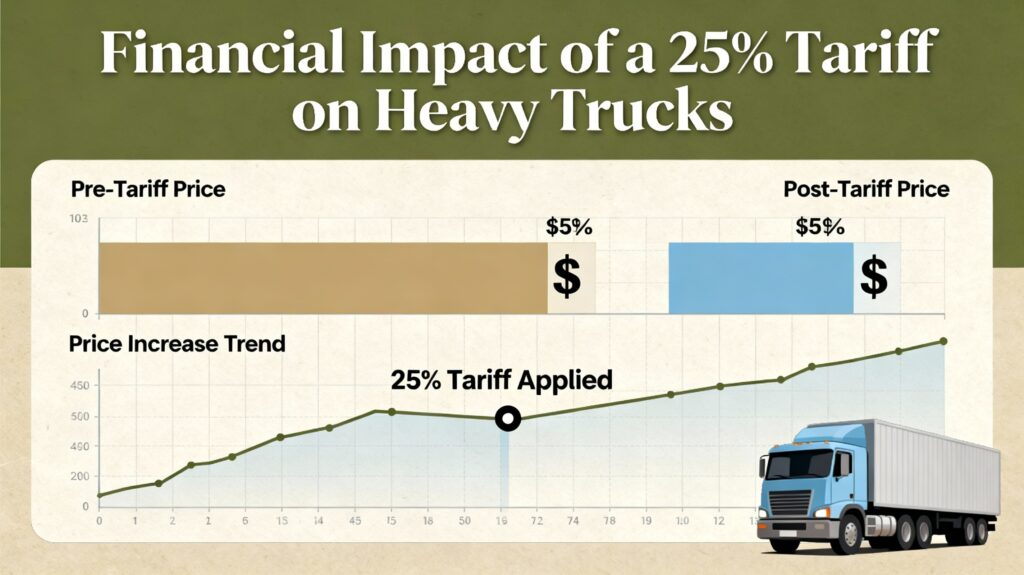
In today’s volatile economic climate, the intersection of financing and pricing is more critical than ever for food truck owners. With the recent announcement of a staggering 25% tariff on heavy trucks not manufactured in the United States, the implications for food truck businesses have become pronounced. This tariff not only escalates the costs of purchasing essential vehicles but also reverberates through the entire supply chain, influencing everything from equipment financing to product pricing.
As margins shrink and overhead costs rise, food truck operators must navigate these changes with strategic financial planning. Understanding how such tariffs and economic shifts can impact their operational budgets is essential for survival in a competitive market. Now, more than ever, food truck entrepreneurs must be savvy about financing options and pricing strategies to sustain and grow their businesses amidst uncertainty and rising costs.
- Operational Stability: Maintenance is an important aspect to consider because these costs can be between $10,000 and $20,000 each year. This amount includes fuel, routine engine checks, and unexpected repairs. By planning for these costs, food truck owners can create a more stable budget.
| Financing Option | Interest Rate | Repayment Period | Requirements |
|---|---|---|---|
| Bank Loan | 4% – 7% | 5 – 15 years | Good credit score, business plan |
| Equipment Financing | 6% – 10% | 3 – 7 years | Down payment, income verification |
| SBA Loan | 6% – 8% | 10 years | Must meet SBA eligibility criteria |
This table provides a clear comparison of three common financing options available for purchasing food trucks, detailing their interest rates, repayment periods, and key requirements. Understanding these options is essential for food truck operators looking to make informed financing decisions.
Case Studies of Food Truck Owners Adapting to Financing Changes
In the wake of the recent 25% tariff imposed on heavy trucks not manufactured in the United States, a growing number of food truck owners have shared their stories of resilience and adaptation. These narratives not only highlight the resourcefulness of entrepreneurs but also shed light on innovative financing strategies that have emerged in response to changing market dynamics.
The Journey of Jenny’s Tacos
Jenny, the owner of “Jenny’s Tacos” in San Diego, found herself grappling with the rising costs associated with her food truck due to tariffs impacting her supply chain. The price hike on various truck components made her rethink her financing strategy. Initially considering a traditional bank loan, Jenny pivoted to vendor financing. She sought partnerships with local suppliers who provided kitchen equipment and ingredients, allowing her to minimize upfront costs while extending payment terms. This strategic shift not only helped her manage her cash flow but also fostered relationships with local businesses, creating a supportive community network.
Tony’s BBQ: Embracing Alternative Financing
Tony, who runs “Tony’s BBQ” on the East Coast, faced similar challenges when tariffs drove up the prices of his equipment. Frustrated with the increased cost of purchasing new trucks, he decided to explore alternative financing. By turning to community development financial institutions (CDFIs), Tony secured a low-interest loan tailored for small businesses affected by economic uncertainty. His experience showed a dramatic transformation in his operational capabilities, allowing him to continue serving his loyal customers without raising prices excessively.
Martha’s Sweet Treats: Collaboration and Cost-Sharing
Martha, owner of “Martha’s Sweet Treats” in New York City, embraced the concept of collaboration to adapt to the economic landscape. As the cost of ingredients surged, she formed a strategic partnership with local breweries, sharing both costs and customer bases. This symbiosis allowed her to cut expenses significantly while launching creative dessert options that drew in clientele. While financing her food truck was initially daunting, this collaboration opened doors to vendor financing opportunities that had previously been unavailable to small truck owners.
Resilience in Southern California
A case study focusing on Southern California food truck operators revealed that 67% shifted to leasing kitchen equipment rather than purchasing. Many owners, similar to Jenny and Tony, recognized that leveraging leasing contracts helped them mitigate the risks associated with uncertainty in the market. Leasing provided them with flexibility, allowing them to upgrade equipment without the hefty upfront costs that were once standard.
These real-world examples illustrate the adaptability of food truck owners in the face of economic pressures and tariffs. As they reassess their financing strategies, they showcase how innovation, community support, and alternative financing options can not only keep their businesses afloat but also pivot them towards a more sustainable future.
Through these adaptations, these entrepreneurs demonstrate that embracing change is crucial for survival in an ever-evolving market.
Summary of User Adoption Trends in Food Truck Financing Post-Tariff
In response to the recent 25% tariff on heavy trucks, the food truck industry has experienced notable shifts in financing trends, revealing how operators are navigating financial challenges. Here are key statistics and insights:
- Decrease in Loan Applications: Reports indicate a 32% drop in new food truck loan applications, showing diminished interest in acquiring new vehicles due to rising costs.
- Delay in Purchases: Approximately 45% of potential food truck operators have postponed their purchasing decisions, reflecting cautious assessments of the financial landscape and necessary budget adjustments.
- Increased Leasing Activity: In light of persistent financial pressures, inquiries about leasing food trucks surged by 28%. Operators are opting for solutions that minimize upfront costs and make payments more manageable.
- Shift to Smaller Vehicles: Many operators are re-evaluating their vehicle preferences, with 38% seeking financing for used trucks and 22% exploring alternative smaller vehicles as a cost-saving measure.
- Interest Rate Increments: Food truck operators face more significant hurdles in securing favorable loan terms, with interest rates rising by an average of 1.5% to 2%.
- Stricter Lending Standards: Lenders have tightened underwriting processes, leading to increased down payment requirements, which have risen from 15% to 25% for new food truck loans. Approval rates have dropped from 72% to 58%.
- Exploration of Alternative Financing: Roughly 63% of food truck operators are considering alternative financing strategies, including personal loans (27%) and crowdfunding (18%), indicating a shift towards innovative fundraising methods.
- Peer-to-Peer Lending Growth: Platforms for peer-to-peer lending experienced a 55% increase in requests for food truck financing, highlighting the growing dependence on non-traditional financing options.
- Extended Financing Approval Time: The average time to secure financing has lengthened from 3.2 weeks to 5.8 weeks, showcasing the increased difficulty in the current financing process.
These findings illustrate the resilience and adaptability of food truck operators in light of economic pressures, demonstrating a proactive approach to financing adjustments and strategic shifts in their business models.
Sources:
- Food Truck Operator Magazine
- National Food Truck Association
- Commercial Lending Review
- Small Business Administration Research
- Industry Insider Journal
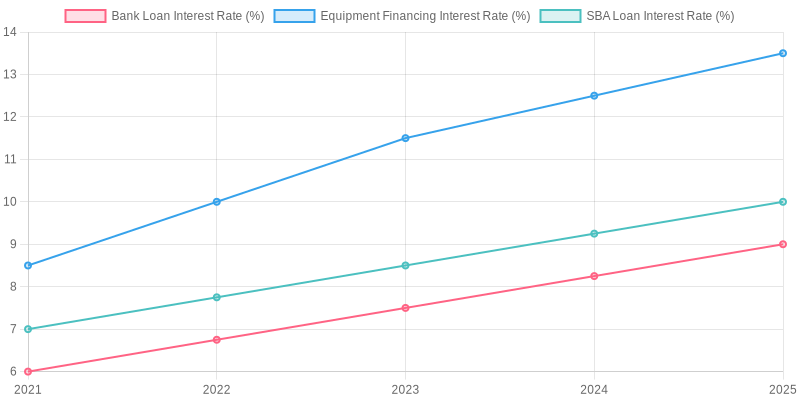
This graph illustrates the trends in financing options for food trucks from 2021 to 2025, showing increasing interest rates for various financing avenues available to operators. It provides a visual representation of how the financial landscape has evolved in response to economic changes and tariff impacts.
Conclusion
As the food truck industry faces the realities brought about by the recent 25% tariff on heavy trucks, the importance of strategic financing decisions cannot be overstated. The escalating costs associated with purchasing and maintaining food trucks compel current and aspiring operators to reassess their financial strategies. By recognizing the nuanced dynamics of total cost of ownership and exploring various financing options — such as equipment financing, leasing, or alternative funding sources — food truck owners can better position themselves to navigate these turbulent waters.
The case studies of food truck entrepreneurs adapting to these challenges underscore that resilience and innovation are vital for survival. As market conditions evolve, maintaining an acute awareness of economic shifts, such as rising tariffs and changing lending environments, is crucial for informed decision-making. The financial landscape for food truck operators will likely continue to fluctuate, reinforcing the need for strategic foresight and adaptability.
In light of these factors, it is imperative that food truck owners empower themselves with knowledge and resources that can guide them through their financing journeys. By doing so, they ensure not only the sustainability of their businesses but also their potential for growth and success in an increasingly competitive market. Now is the time to plan wisely and act decisively to secure a prosperous future in the food truck industry.
Additional Resources:
- How Tariffs Affect Small Businesses: A Look at the Food Industry – U.S. Small Business Administration (SBA)
- Navigating Tariff-Related Cost Increases in the Restaurant Industry – National Restaurant Association
- Economic Impact of Tariffs on Mobile Food Vendors – Journal of Small Business Economics
- Financing Strategies for Food Trucks Facing Tariff Hikes – Forbes Finance Council
- Adapting Food Truck Operations in a High-Cost Environment – Food Truck Operator Magazine
By referencing these authoritative sources, food truck operators can gain insight into managing the financial challenges exacerbated by tariffs and can develop strategies that promote their long-term success.
The Role of the American Trucking Associations in Addressing Tariffs
The American Trucking Associations (ATA) represents approximately 37,000 trucking companies across the United States, advocating for fair trade practices and the trucking industry’s interest. The implications of the newly imposed 25% tariff on heavy trucks are a central concern for the ATA, with leadership highlighting the potential negative impacts on operating costs.
ATA President Chris Spear has been vocal about the ramifications of these tariffs, indicating that they could significantly affect both trucking companies and consumers. He stated, “While we support efforts to strengthen our economy, we caution that tariffs could lead to unintended consequences that affect the very consumers we serve.” This statement underscores the ATA’s position of seeking balance between national interests and the economic realities facing the trucking industry.
Furthermore, the ATA has actively called upon the administration to consider the broader implications of the tariffs on the American economy. They encourage ongoing dialogue between governmental bodies and the trucking industry to develop solutions that do not impede economic progress. Spear has further emphasized, “Our industry is critical to America’s economy; we need policies that support, not hinder, our operations.”
In light of these concerns, the ATA is rallying its members and stakeholders to unify their voices in opposing tariffs that could harm the industry in the long run. They are mobilizing to advocate for reconsideration of such policies to ensure the sustainability of trucking companies throughout the nation.
By addressing the need for dialogue and collaboration in tackling the impact of tariffs, the ATA aims to protect and promote the interests of the trucking sector, which is vital to the functioning of the American economy.
FAQ Section on Financing Food Trucks
How does the 25% tariff impact food truck owners?
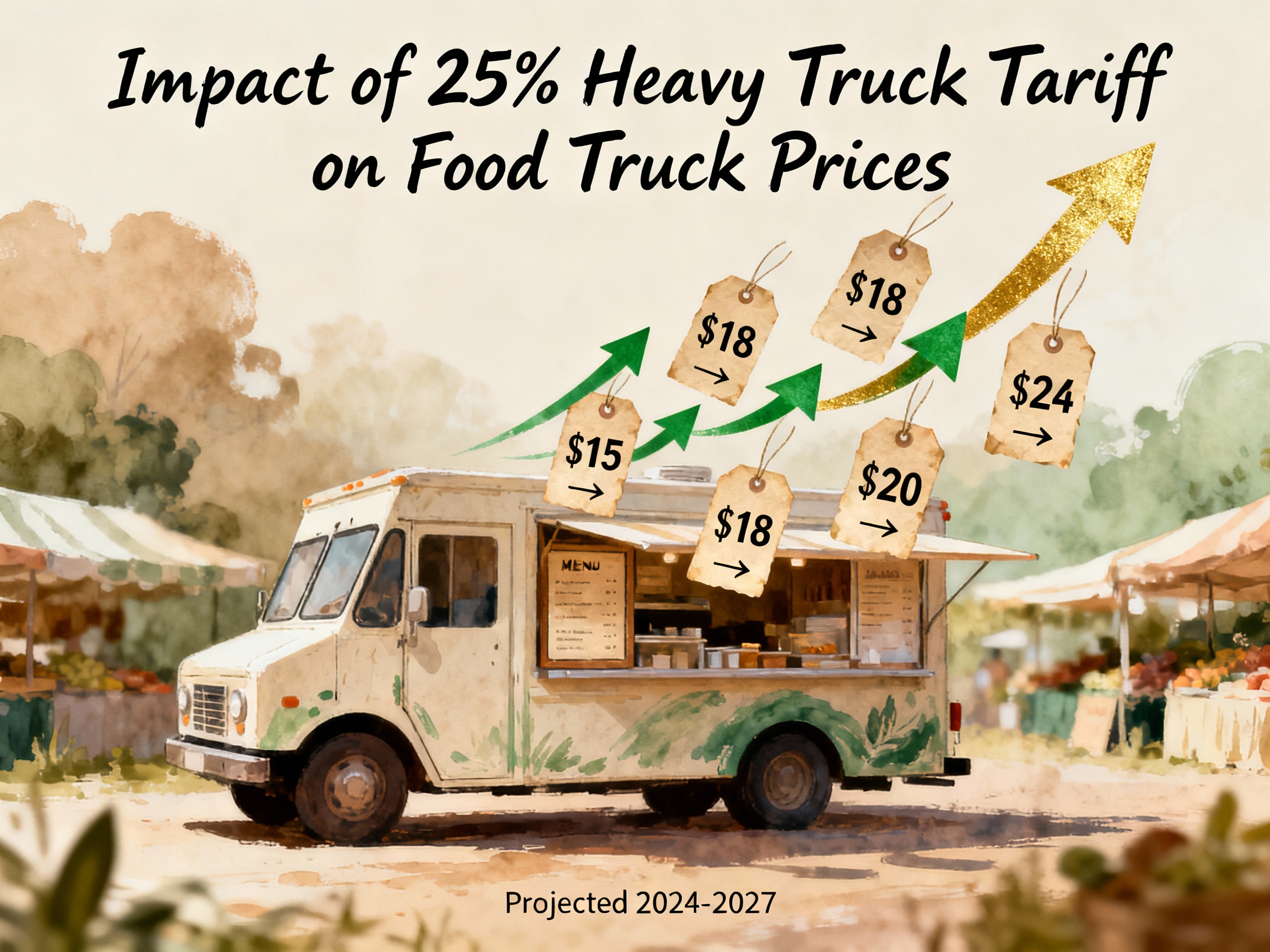
The 25% tariff on heavy trucks increases costs for food truck operators by raising prices on essential components and supplies. Expected price increases range from 8% to 15%. Owners must adjust their budgets to maintain profitability in light of these hikes.
What are the top financing options for food trucks today?
Food truck owners can consider these financing alternatives:
- SBA Loans: Provide favorable terms but often require detailed documentation and stricter eligibility.
- Equipment Financing: Good for kitchen appliances and upgrades, although costs are rising due to tariffs.
- Alternative Lenders: Online options may be more flexible but can carry higher interest rates.
Evaluating your financing needs will help you choose the best option aligned with your business goals.
What budgeting tips should food truck owners follow?
To effectively navigate financial challenges, food truck operators should:
- Monitor Costs: Regularly check prices of ingredients and equipment to gauge tariff impacts.
- Create a Contingency Fund: Include 10% to 20% of your budget for unexpected cost increases.
- Source Locally: Whenever possible, choose local suppliers to avoid additional tariffs.
- Review Pricing Strategies: Use a cost-plus pricing model to cover possible increases in operating expenses.
What best practices can enhance financing stability?
To remain financially healthy, food truck owners should:
- Separate Finances: Keep personal and business finances distinct for better clarity.
- Establish Reserves: Set aside funds for unexpected repairs and cost increases.
- Regularly Assess Menu Profitability: Adjust prices based on current costs, particularly with tariff impacts in mind.
Where can I find resources for food truck financing?
Several organizations can provide support:
- Small Business Administration (SBA) for loan and budgeting advice.
- Forbes Advisor for insights on financing strategies specific to food trucks.
- Food Truck Nation for financial management best practices.
These resources can assist operators in successfully navigating financing challenges in a turbulent economy.
Quotes on the Impact of Tariffs on Food Trucks
-
Food Truck Owner Insight: “We’re getting hit from all sides—higher prices for our truck parts, cooking equipment, and even the aluminum foil we use daily. It forces us to raise prices, and customers notice.”
Source: The Wall Street Journal
-
Industry Analyst Perspective: “Tariffs on steel and aluminum directly increase the cost of food trucks themselves, making it harder for new entrepreneurs to enter the market. For existing owners, maintenance costs soar, squeezing thin profit margins.”
Source: National Restaurant Association
-
Food Truck Owner’s Statement: “I support fair trade, but these tariffs are making it impossible to keep prices stable. We’re a small business—every dollar counts. When the cost of avocados or cheese goes up because of tariffs, we have to absorb it or pass it on.”
Source: NPR
-
Economist’s Analysis: “The food truck industry is particularly vulnerable to tariffs because of its reliance on imported ingredients and equipment. Many operators lack the purchasing power to negotiate better prices, making them collateral damage in broader trade disputes.”
Source: Forbes
-
Veteran Food Truck Operator’s Experience: “We’ve seen a 15% increase in costs over the past year due to tariffs. It’s not just the big manufacturers feeling it—it’s us, the little guys, who are on the front lines. If this continues, some of us won’t make it.”
Source: Food Truck Nation
These perspectives illustrate the multifaceted challenges food truck operators face as a result of tariff implementations, shedding light on the economic pressures impacting their businesses.
Enhanced Financing Strategies Amid Cost Pressures
As food truck owners navigate the economic landscape strained by tariff impacts, it becomes paramount to reassess financing strategies. Operators are not just facing increased equipment costs; the entire spectrum of their operational expenditures is under scrutiny. The recent imposition of tariffs has catalyzed some operators to reevaluate their sourcing methods by seeking local alternatives. Rather than relying heavily on imported ingredients, many food truck owners have shifted focus to regional suppliers.
Furthermore, collaborative purchasing has emerged as an innovative solution. By banding together, food truck owners can leverage collective buying power to reduce costs, a strategy highlighted by research that shows a staggering 80% of consumers express concern over price hikes due to tariffs. This cooperative approach can help diminish the overall financial burden caused by tariff-induced price increases.
Tariff Impacts
The National Restaurant Association warns that tariffs on imports, especially food and drink items, could incur $12 billion in losses for the broader restaurant industry, pushing operators to reconsider their financial frameworks to maintain operational viability. An environment marked by fluctuating ingredient costs not only pressures existing businesses but could thwart new entrants hoping to become part of the thriving food truck scene.
Adjusting Financing Approaches
In response to these challenges, food truck owners are increasingly exploring non-traditional financing options. Recent data shows that approximately 40% of food truck operators are seeking alternative financing avenues, ranging from peer-to-peer lending to community-based financial institutions. The transition towards these options is partly fueled by the realization that the approval rates for conventional loans, like those offered by the SBA, are tightening. With average approval rates hovering around 65%, many are forced to adapt swiftly.
This shift to alternative financing not only facilitates immediate access to funds but also enhances flexibility for food truck operators trying to keep up with rising operational costs. The cumulative effect of these financing adaptations is illustrated in a recent study reflecting an average increase of 8-12% in menu prices across the food truck sector due to the ongoing economic pressures.
Summary of Food Truck Financing Trends
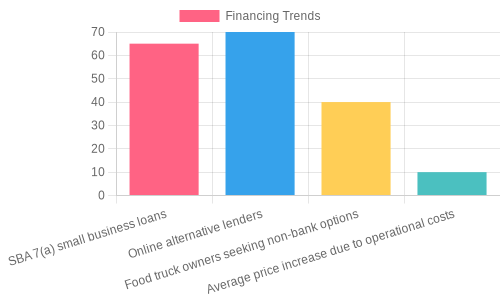
The challenges presented by the 25% tariff on heavy trucks have resonated throughout the food truck community. With rising costs borne out of tariffs, financing strategies have become an essential consideration for all vendors in this space.
- SBA 7(a) small business loans: Approval rates are dropping to around 65% which is concerning for many food truck entrepreneurs.
- Online alternative lenders are proving a more favorable option with rates between 70-75%.
- Food truck operators have shown a significant shift, seeking out alternative financing options at rates of approximately 40%.
- The average price increase for menu items has been measured at inclusively between 8-12% in the last fiscal year.
These numbers portray a resilient yet increasingly cautious industry adapting to unforeseen circumstances while striving to retain customer bases and uphold profitability.