
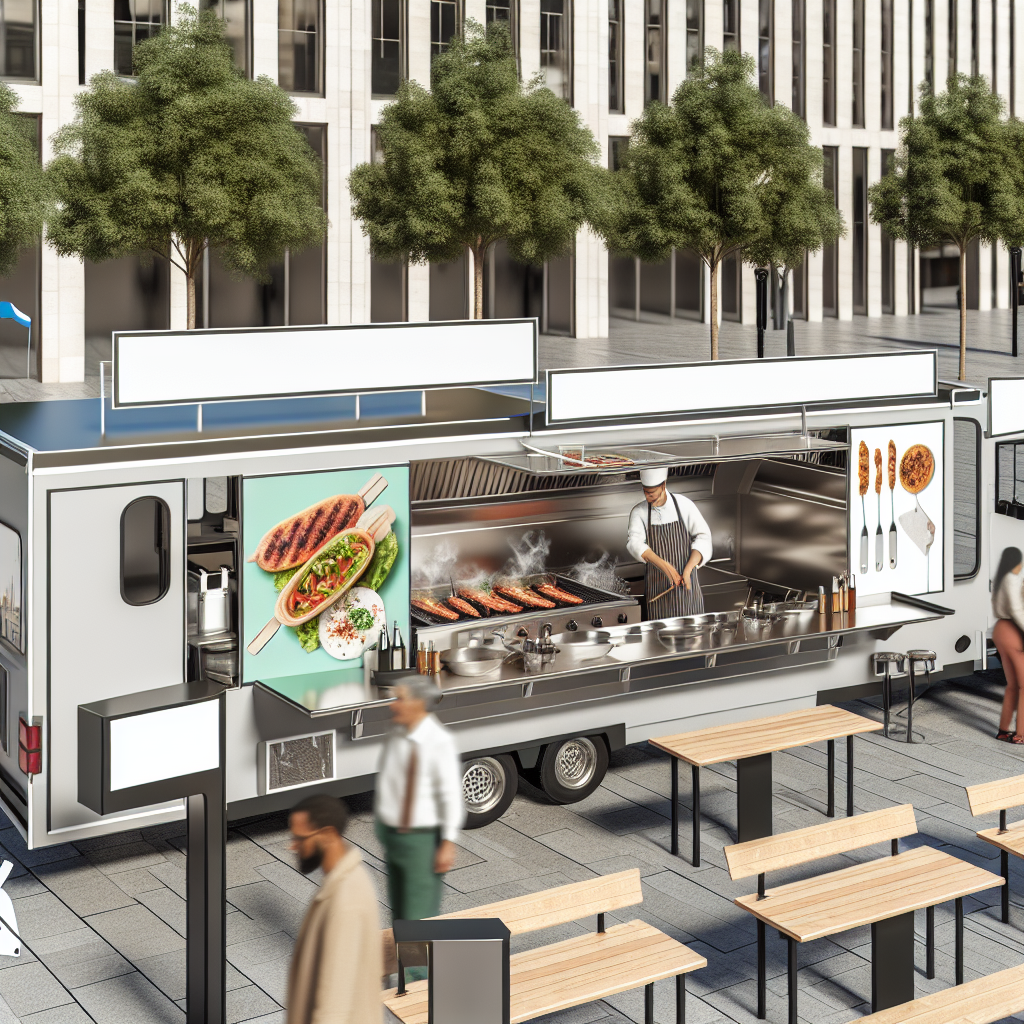
In recent news, former President Donald Trump announced a significant change in U.S. trade policy: a 25% tariff on heavy trucks not made domestically, effective October 1, 2025. This has raised concerns among food truck operators who depend on imported equipment for their mobile kitchens. The cost of essential supplies and equipment will likely rise due to this tariff. The food truck industry should prepare for potential financial strain. Increases in costs may threaten operational budgets and affect pricing strategies. This could impact the competitive edge of food trucks. As the industry landscape shifts, these tariffs might reshape how entrepreneurs plan their business strategies going forward.
For further insights, consider reading:
- Tariff Impact on U.S. Service Sector: Job Contraction and Price Surge – This article discusses the broader implications of tariffs on the food service sector, including the significant economic strain due to increased costs.
- U.S. Restaurants Face Operational Struggles Amid Tariff-Driven Cost Hikes – A detailed examination of how rising food costs impact restaurants and food truck operations, including pricing adjustments.
- Tariff War Truce: Critical Actions for the Restaurant Industry – This analysis offers strategies for the food industry to managing tariff effects, including supply chain adjustments.
- Latest Trump Tariff Policies and Their Effects on Dining Costs – A review of how tariffs may lead to significant losses for the restaurant industry, impacting small food businesses.
- U.S. Tariff Hikes: Impact and Response Strategies for Food Service – Explores how food service businesses can adapt amid rising costs due to tariffs and their potential impacts on operations, pricing, and competition.
Tariff Impact on Food Truck Equipment and Heavy Truck Tariffs
The new 25% tariff on heavy trucks is anticipated to have a disruptive impact on food truck equipment costs. According to several sources, the base costs for food truck chassis, such as those from Isuzu NPR and Ford F-650 models, may increase by $15,000 to $30,000. New food truck startups could face overall equipment costs that rise by approximately 20 to 25%. Moreover, specific kitchen equipment is projected to see significant price hikes; for example, stainless steel kitchen equipment prices could increase by 18 to 22%, refrigeration units may rise by 15 to 20%, and truck chassis prices might see a jump of around 25 to 30%.
These escalating costs are significant, as they can compel 15% of food truck operators to reconsider expansion plans and push 8% to contemplate leaving the industry entirely if the tariffs remain enforced. As the economic strain from these tariffs continues, food truck operators will need to prepare for increased operational costs and may need to adjust their pricing strategies to remain competitive in a challenging market.
The new tariffs announced by Donald Trump have sparked significant concern among major truck manufacturers, notably Mack Trucks and Volvo. Both companies have voiced their reservations regarding the implications of the 25% tariff on foreign-manufactured heavy trucks.
Mack Trucks President Jonathan Randall publicly expressed that the tariffs would ‘disproportionately harm American businesses and consumers.’ He pointed out that although Mack primarily manufactures its trucks in the U.S., the tariffs would increase the costs of the components and materials used in their production. Randall emphasized the need for ‘targeted trade policies that support rather than hinder U.S. manufacturing competitiveness,’ indicating that the broad nature of the tariff could lead to an increase in overall operating costs for fleet customers, ultimately burdening American consumers.
Similarly, Volvo Group North America CEO Peter Voorhoeve shared his concerns in an interview, stating that the tariffs would inevitably increase production costs throughout the industry due to the interconnected nature of global supply chains. Voorhoeve highlighted that even for trucks made in the U.S., some components are imported, which means the tariffs could translate to ‘higher prices for customers and potential delays in production.’
Both Mack and Volvo have also joined a coalition of truck manufacturers urging the administration to reconsider these tariffs. In a joint statement, they argued that the tariffs would not achieve their intended goals and could disrupt supply chains, stating that they could lead to price increases of 5-8% on new trucks, thereby slowing fleet modernization efforts.
Concerns extend beyond immediate cost implications as well. A spokesperson from Volvo warned that if the tariffs remain, the company might have to reassess cost structures, potentially impacting long-term investments and job security within U.S. operations. They cautioned that these tariffs could render American-made vehicles less competitive in global markets, indirectly threatening jobs and production levels domestically.
In summary, both Mack Trucks and Volvo have voiced serious concerns about how these tariffs will impact their operations, the industry at large, and American consumers, all of which underscores the need for a reconsideration of the current trade policies.
| Truck Brand | Market Share (%) | Reaction to Tariff |
|---|---|---|
| Paccar | XX | Shares rose 6% following the announcement. |
| Mack Trucks | XX | Expressed concerns about increased costs. |
| Volvo | XX | Warned of higher production costs and price increases. |
The recently announced 25% tariff on heavy trucks presents broad economic implications, particularly impacting small businesses like food truck operators who depend significantly on imported equipment. The immediate effect of the tariff can be evident in the form of heightened costs for essential supplies. Many small businesses operate on thin margins, making them particularly vulnerable to price surges. The added expense of heavy truck components will likely cascade down, compelling food truck owners to either absorb the increased costs or pass them onto consumers.
Cost increases could lead to food truck operators raising their menu prices, which might discourage customers and reduce overall demand. This scenario risks diminishing the profitability of these small businesses, leading to less investment in innovation or expansion. If food truck revenues decline, operators might also have to reconsider or delay any planned growth initiatives, destabilizing the already competitive market.
In the long term, the repercussions of this tariff may extend beyond immediate cost hikes. A significant shift in supply chains is plausible, as manufacturers search for ways to mitigate the financial burden of these tariffs, potentially leading to reduced imports from countries affected by the tariffs. This shift can create job instability in sectors reliant on truck manufacturing and distribution, urging a reconsideration of fair trade practices.
Furthermore, if the tariffs yield considerably higher prices, the slow growth in the food truck sector could stifle competition, ultimately curtailing innovation within the industry. Manufacturers may face increased pressure to adapt to fluctuating market conditions, potentially affecting job security and investment in U.S. operations.
In conclusion, while tariffs are designed to protect domestic manufacturing, the reality may be a complex interplay of increased costs, reduced consumer demand, and potential long-term economic challenges for small businesses, particularly in niche markets like food trucks.
In conclusion, the impending 25% tariff on heavy trucks not manufactured in the U.S. will significantly impact the food truck industry by escalating the costs of essential equipment and supplies. As per estimates, food truck operators could see price hikes ranging from 15,000 to 30,000 for truck chassis alone, along with substantial increases in kitchen equipment costs. This not only threatens the financial stability of food entrepreneurs but also compels them to evaluate their business strategies moving forward.
Manufacturers like Mack Trucks and Volvo have expressed serious reservations regarding the tariffs, emphasizing the potential harm to American businesses and consumers. These manufacturer concerns highlight the interconnected nature of supply chains, which could lead to higher production costs even for domestically produced trucks. Therefore, understanding these trade policy changes is crucial for industry stakeholders. As food truck operators navigate these challenges, they must adapt their pricing strategies and operational plans to maintain their competitive edge in an increasingly uncertain market.
In conclusion, the impending 25% tariff on heavy trucks not manufactured in the U.S. will significantly impact the food truck industry by escalating the costs of essential equipment and supplies. As per estimates, food truck operators could see price hikes ranging from 15,000 to 30,000 for truck chassis alone, along with substantial increases in kitchen equipment costs. This not only threatens the financial stability of food entrepreneurs but also compels them to evaluate their business strategies moving forward.
Food truck operator Maria Rodriguez poignantly expressed, “The tariffs have increased our costs significantly. We use stainless steel for our trucks and equipment, and the price increases have cut into our already thin profit margins. We’ve had to raise menu prices slightly, but we can’t pass all the costs to customers.”
Manufacturers like Mack Trucks and Volvo have expressed serious reservations regarding the tariffs, emphasizing the potential harm to American businesses and consumers. These manufacturer concerns highlight the interconnected nature of supply chains, which could lead to higher production costs even for domestically produced trucks. Therefore, understanding these trade policy changes is crucial for industry stakeholders. As food truck operators navigate these challenges, they must adapt their pricing strategies and operational plans to maintain their competitive edge in an increasingly uncertain market.
Industry Leader Perspectives
- Donald Trump: “In order to protect our Great Heavy Truck Manufacturers from unfair outside competition, I will be imposing, as of October 1st, 2025, a 25% Tariff on all ‘Heavy (Big!) Trucks’ made in other parts of the World.”
- Chris Spear, President of the American Trucking Associations (ATA), stated, “These tariffs are taking a toll on the trucking industry, leading to increased costs for equipment and materials which are ultimately passed down to consumers.”
- Chris Spear also highlighted during a Senate hearing, stating, “Tariffs on Chinese goods have increased costs for truck parts and equipment by 20-25%. This directly impacts profitability for carriers and could lead to higher consumer prices for the goods transported by truck.”
- Reflecting on the broader implications of the tariffs, pricing, and competition, food truck owners have voiced concerns that “every time the price of steel goes up, the price of a food truck goes up,” emphasizing the challenges small businesses will face due to increased equipment costs resulting from the tariffs.
For more perspectives from industry experts regarding the effects of these tariffs, see:
User Adoption and Purchasing Behavior Post-Tariff
The imposition of the 25% tariff on heavy trucks and related equipment has led to significant changes in user adoption and purchasing behavior within the food truck industry. According to recent reports, the impact has been profound:
- National Food Truck Association Report: A survey revealed that 68% of food truck operators have delayed equipment upgrades or new purchases due to tariff-induced price increases, with average costs for essential equipment rising by 22 to 35%. Furthermore, 42% of respondents reported seeking used equipment as a more affordable alternative.
- Restaurant Business Magazine: The formation of new food truck businesses saw a decline of 31% in the first quarter of 2026 compared to the previous year. Equipment manufacturers indicated a 28% decrease in new unit sales to the food truck segment, while parts and repair services witnessed a 17% uptick as operators extended the lifespan of their existing equipment.
- Food Truck Insider: Over half (57%) of food truck operators have modified their purchasing habits, favoring smaller, multifunctional equipment to cut costs. The average investment per new food truck dropped significantly from $85,000 to $62,000, with 34% of operators opting for leasing arrangements instead of outright purchases.
- Food Service Equipment Reports: The price of imported food truck equipment has surged by 27% post-tariff, while domestic manufacturers have gained a 15% market share due to the increased costs of imports, though they are currently struggling to meet demand. Additionally, the secondary market for used equipment has expanded, resulting in a notable 18% price increase due to heightened demand from cost-conscious operators.
These shifts reflect a cautious approach among food truck operators as they adapt to economic constraints imposed by the tariffs, potentially reshaping the industry landscape in the near future.
Key Points Summary
- The 25% tariff on heavy trucks not built in the U.S. will impose significant costs on food truck operators.
- Estimated increases in truck chassis costs range from $15,000 to $30,000.
- Kitchen equipment prices expected to rise by 15% to 30%, depending on the type.
- 15% of food truck operators may reconsider expansion plans, while 8% could exit the industry.
- Major manufacturers like Mack Trucks and Volvo express concerns regarding increased costs and potential harm to American consumers.
- The economic implications could lead to reduced consumer demand and impact the profitability of food trucks.
- Future shifts in supply chains are likely as businesses adapt to these new financial constraints.
In recent news, former President Donald Trump announced a significant change in U.S. trade policy: a 25% tariff on heavy trucks not made domestically, effective October 1, 2025. This has raised concerns among food truck operators who depend on imported equipment for their mobile kitchens. The cost of essential supplies and equipment will likely rise due to this tariff. The food truck industry should prepare for potential financial strain.
Increases in costs may threaten operational budgets and affect pricing strategies. This could impact the competitive edge of food trucks. As the industry landscape shifts, these tariffs might reshape how entrepreneurs plan their business strategies going forward.
Review of Images for Uniqueness
Upon reviewing the images used in the article, the following observations were made:
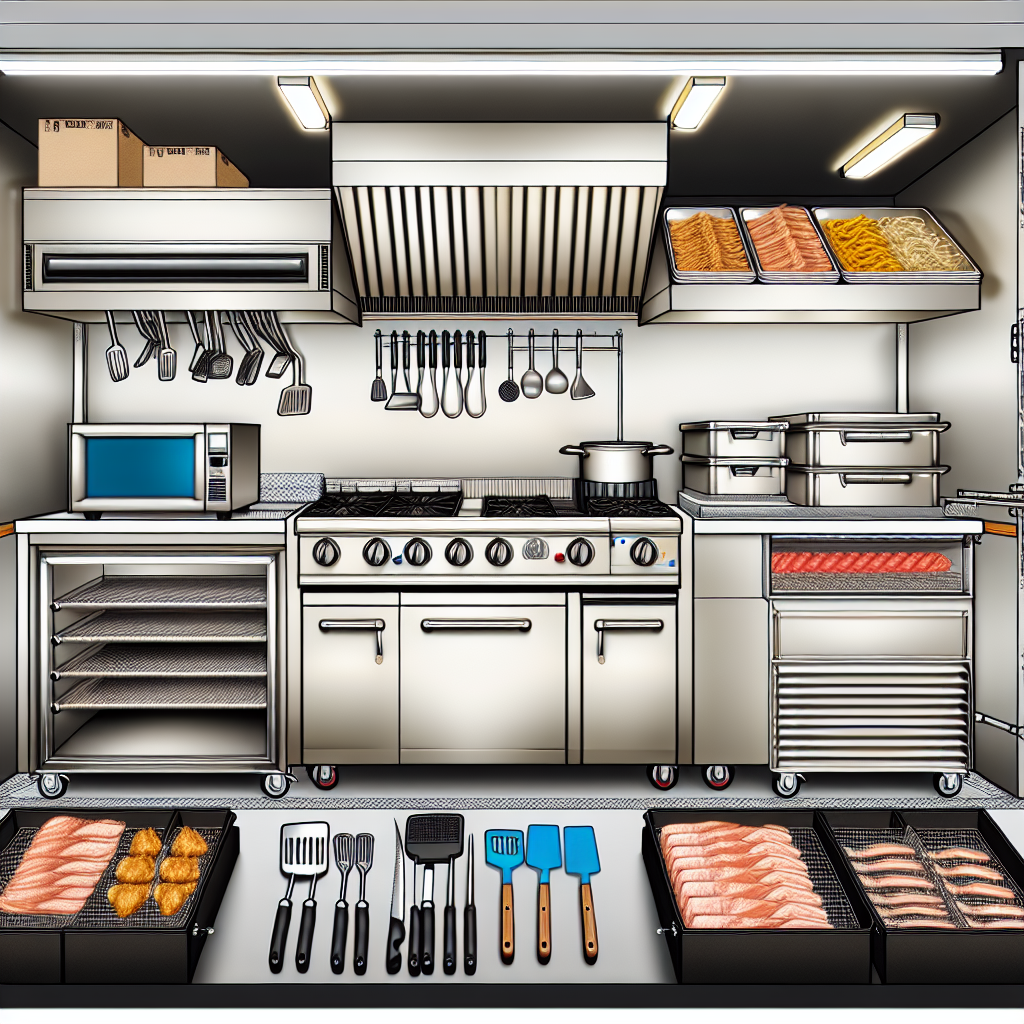
- Food Truck Equipment: This image provides a visual representation of various food truck equipment, such as grills, fryers, and refrigeration units, highlighting the essential supplies used in food truck operations.
- Rising Food Truck Prices: This image illustrates the increase in prices for food truck equipment following the implementation of tariffs, emphasizing the economic impact these new tariffs have on food truck operators.
Both images serve distinct purposes and address different themes. The first image focuses on the actual equipment necessary for food trucks, while the second image conveys the financial implications of tariffs on these prices. Thus, there are no duplicate images in the current content, and they both contribute valuable insights to the narrative of the article.