
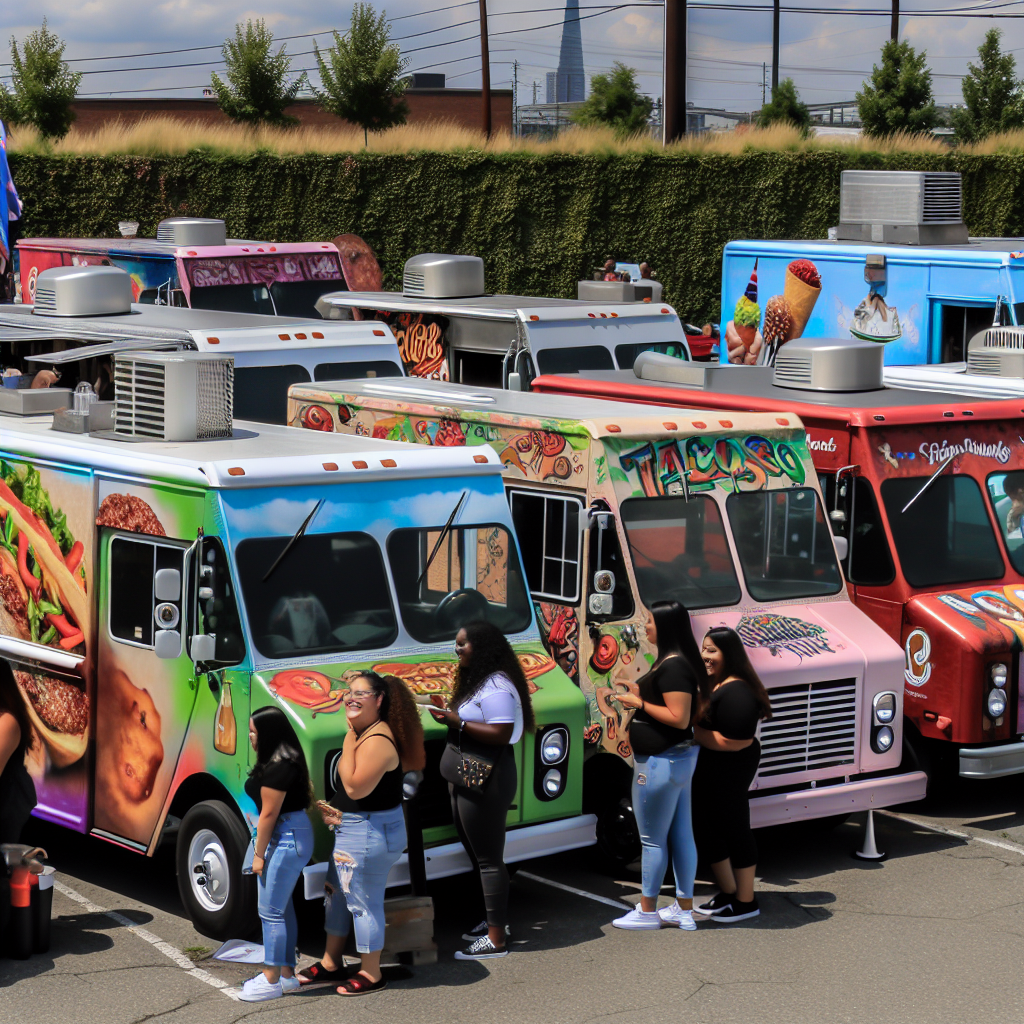
The food truck industry has exploded in popularity, captivating the taste buds of countless food lovers while offering aspiring chefs a unique avenue to share their culinary creations. With over 36,000 food trucks currently in operation across the United States, the opportunity for success in this mobile restaurant business has never been more attainable.
However, selecting the right model is crucial for aspiring food truck owners. From step vans to cargo vans and trailers, the variety of food truck models available can be overwhelming. Each food truck model comes with its own set of advantages, impacting everything from menu options to operational efficiency.
This article will explore the diverse world of food truck models, helping you make informed decisions as you embark on your journey in the vibrant food truck landscape.
Popular Food Truck Models
When considering entering the food truck business, selecting the right model is crucial. Here is a look at some of the most popular food truck models available, including their features, benefits, and considerations:
Chevy P30
- Features:
- Available in lengths of 14-20 feet.
- Equipped with a robust 6.0L V8 engine.
- Familiar with many mechanics, aiding in repairs.
- Benefits:
- Low acquisition cost (typically $10,000 – $30,000 for used models).
- Good availability of spare parts.
- Considerations:
- Relatively poor fuel economy at 8-10 mpg.
- Potential rust problems due to age (discontinued in 2003).
- Important to verify chassis condition and certification for food truck use.
Freightliner MT45
- Features:
- High payload capacity (up to 6,000 lbs).
- Options for diesel engines.
- Benefits:
- Excellent for vendors with heavy cooking equipment.
- Durable design and good cargo space.
- Considerations:
- May require a commercial driver’s license (CDL) in some areas due to its weight.
- Higher maintenance costs but offers longevity.
Ford P700
- Features:
- Body lengths from 17-24 feet.
- Available with gasoline or propane engines.
- Benefits:
- Rugged chassis is designed for generator vibration stability.
- High roof options providing up to 7 feet of clearance.
- Considerations:
- Limited availability of new models (discontinued in 2019).
- Higher insurance premiums than smaller vans.
RAM ProMaster
- Features:
- Front-wheel drive configuration for better interior space.
- Available in various lengths with a generous loading capacity.
- Benefits:
- High fuel efficiency (up to 18 mpg).
- Accessibility with a lower floor height making it easier to park and operate in urban environments.
- Considerations:
- Struggles in snowy conditions due to front-wheel drive.
- Resale value can depreciate faster compared to other models.
By carefully considering these models, food truck vendors can find the right fit for their specific needs and make informed decisions in their entrepreneurial journey.
Comparison of Popular Food Truck Models
Here is a table that summarizes the costs and features of popular food truck models:
| Vendor | Price Range | Capacity | Ideal Use Cases |
|---|---|---|---|
| Ford Transit | $46,000 | Up to 3,800 lbs | Best for urban food service operations |
| RAM ProMaster | $44,000 | Up to 4,000 lbs | Suitable for a variety of cuisines |
| Diamond Cargo Trailers | Less than $6,000 | Varies based on model | Ideal for lower-cost operations or trailers |
This table provides a quick overview of the primary characteristics of each model, helping you to compare them effectively based on price, capacity, and intended usage.
Vendor Insights on Preferred Food Truck Models
Food truck vendors frequently share valuable insights when it comes to selecting the right models for their businesses. Their experiences highlight the balance between cost, functionality, and the unique needs dictated by their culinary focuses.
A recent survey by Mobile Cuisine revealed that 68% of over 200 food truck operators preferred custom-built trucks over converted vehicles. One vendor noted, “The upfront cost is higher, but the customization pays off in daily operations with everything exactly where we need it.” This sentiment emphasizes the importance of tailoring the food truck setup to streamline processes and improve service efficiency.
For vendors who specialize in different types of cuisine, the choice of vehicle often reflects operational needs. As highlighted in a Forbes article, taco truck operators lean towards more compact trailers for better mobility, while gourmet burger vendors often prefer larger trucks equipped with extensive kitchen facilities. A food truck owner proclaimed, “We started with a step van but upgraded to a full kitchen-on-wheels after two years. The additional equipment capacity increased our sales by 40%.”
Vendor preferences also extend to specific models that have garnered praise for reliability and maintenance. According to insights from Food Truck Empire, the Ford E-Series is frequently lauded for its ease of repair and affordability. One vendor commented, “The Chevy Step Van is a workhorse; it’s easy to repair and parts are affordable,” showcasing vendors’ attention to maintenance logistics.
Moreover, the transition towards more electric food truck models is gaining traction. As the Nation’s Restaurant News reports, early adopters are benefiting from significant fuel savings, reporting that “Our electricity costs are about one-third of what we spent on generator fuel.”
These insights from food truck vendors illustrate the importance of choosing the right model based on personal experience, operational needs, and evolving trends, ultimately shaping their success in this dynamic industry.
Financial Aspects of Starting a Food Truck Business
Starting a food truck business involves various financial considerations, particularly concerning vehicle selection and associated costs. Understanding these costs, including food truck financing options, is essential for effective financial planning.
Vehicle Costs
- Step Vans: New step vans can range broadly from $30,000 to over $100,000. For instance, a used step van might be available in a lower price range of $20,000 to $60,000 depending on condition and mileage. The Freightliner MT45 and Chevy P30 are popular choices among food truck vendors for their durability and maintenance reliability.
- Cargo Vans: Prices for new cargo vans generally start around $46,000 for models like the Ford Transit, with the RAM Promaster being slightly cheaper at around $44,000. Used models, particularly discontinued ones like the Nissan NV Cargo, can sometimes be found for under $30,000.
- Trailers: For entrepreneurs starting on a tighter budget, food trailers can be a cost-effective solution, with brands like Diamond Cargo Trailers available for less than $6,000.
Additional Startup Costs
In addition to vehicle purchases, other significant expenses include:
- Kitchen Equipment: Expect to invest between $15,000 and $50,000 for essential kitchen equipment, which can include cooking appliances and food preparation tools.
- Permits and Licenses: Costs can range from $1,000 to $5,000, depending on local regulations and requirements.
- Insurance: Annual costs are typically between $2,000 and $6,000, depending on coverage.
- Initial Inventory and Branding: These can add another $2,000 to $5,000 to the startup budget.
Total Estimated Costs
Overall, starting a food truck can require a total initial investment of approximately $40,000 to $150,000 or more, depending on choices made regarding vehicle and equipment, as well as local expenses. It’s important to conduct thorough research and create a detailed business plan to navigate the financial landscape effectively, including considering various food truck financing options.

Market Trends in the Food Truck Industry
As of 2023, there are approximately 36,000 food trucks in operation across the United States. This number showcases the significant growth of the food truck industry, which has expanded at an average annual rate of 10.3% over the past five years. The rising popularity of food trucks has made the market increasingly competitive, compelling vendors to make strategic choices when selecting their food truck models.
Given the competitive landscape, food truck vendors are now more inclined to select models that optimize efficiency and ensure brand differentiation. For instance, owners seeking to cater to diverse culinary preferences often consider expandable models, box trucks, and custom designs that allow for a broader menu offering and a more engaging customer experience.
Furthermore, with the food truck sector being valued at $4.3 billion in 2023, it is crucial for vendors to invest wisely in food truck models that will not only meet operational needs but also resonate with their target audience. The choice of vehicle can impact kitchen layout, equipment space, and ultimately, sales performance.
In summary, the burgeoning number of food trucks significantly influences vendor decisions, pushing them towards selecting models that enhance efficiency, support creativity, and enable scalability within a fast-evolving marketplace.
Payoff: Choosing the Right Food Truck Model
Choosing the right food truck model is a pivotal decision for your business’s success. As highlighted throughout this article, a model that aligns with your business model and menu can make all the difference. Consider factors such as your intended cuisine, customer base, and operational needs when making this choice.
Remember that your menu determines the equipment you’ll need, as well as how much space you require for food preparation and storage. Whether you opt for a step van, cargo van, or trailer, ensure that the model not only meets your budget but also supports your culinary vision and service efficiency.
In conclusion, investing time to understand the characteristics of different food truck models will empower you to select one that enhances your performance and sets you on the path to success in the vibrant food truck industry.
In conclusion, embarking on your food truck journey presents exciting opportunities, but choosing the right food truck model is crucial for your business’s success. Each model offers unique advantages and challenges that can significantly affect your operational efficiency and customer experience. Therefore, it is imperative to thoroughly evaluate your options and align your choice with your specific culinary vision and business goals.
We encourage aspiring food truck vendors to conduct extensive research on various food truck models and their suitability for your intended business model. Engage with current vendors, consult experts, and leverage available resources to gather insights that will guide your decision. The right food truck could be the difference between a thriving business and one that struggles to gain traction. Take the time to explore the possibilities, ask the right questions, and ensure that your investment sets you on a path toward success.
In conclusion, embarking on your food truck journey presents exciting opportunities, but choosing the right food truck model is crucial for your business’s success. Each model offers unique advantages and challenges that can significantly affect your operational efficiency and customer experience.
We encourage aspiring food truck vendors to conduct extensive research on various food truck models and their suitability for your intended business model. Engage with current vendors, consult experts, and leverage available resources to gather insights that will guide your decision. The right food truck could be the difference between a thriving business and one that struggles to gain traction.
As one vendor wisely shared, “Choosing the right food truck isn’t just about how it looks; it’s about how it works. A custom layout can really enhance our service time and the customer experience — it’s the heart of our business.”
Take the time to explore the possibilities, ask the right questions, and ensure that your investment sets you on a path toward success.
Popular Food Truck Models
When considering entering the food truck business, selecting the right model is crucial. Here is a look at some of the most popular food truck models available, including their features, benefits, and considerations:
Chevy P30
- Features:
- Available in lengths of 14-20 feet.
- Equipped with a robust 6.0L V8 engine.
- Familiar with many mechanics, aiding in repairs.
- Benefits:
- Low acquisition cost (typically $10,000 – $30,000 for used models).
- Good availability of spare parts.
- Considerations:
- Relatively poor fuel economy at 8-10 mpg.
- Potential rust problems due to age (discontinued in 2003).
- Important to verify chassis condition and certification for food truck use.
Freightliner MT45
- Features:
- High payload capacity (up to 6,000 lbs).
- Options for diesel engines.
- Benefits:
- Excellent for vendors with heavy cooking equipment.
- Durable design and good cargo space.
- Considerations:
- May require a commercial driver’s license (CDL) in some areas due to its weight.
- Higher maintenance costs but offers longevity.
Ford P700
- Features:
- Body lengths from 17-24 feet.
- Available with gasoline or propane engines.
- Benefits:
- Rugged chassis is designed for generator vibration stability.
- High roof options providing up to 7 feet of clearance.
- Considerations:
- Limited availability of new models (discontinued in 2019).
- Higher insurance premiums than smaller vans.
RAM ProMaster
- Features:
- Front-wheel drive configuration for better interior space.
- Available in various lengths with a generous loading capacity.
- Benefits:
- High fuel efficiency (up to 18 mpg).
- Accessibility with a lower floor height making it easier to park and operate in urban environments.
- Considerations:
- Struggles in snowy conditions due to front-wheel drive.
- Resale value can depreciate faster compared to other models.
By carefully considering these models, food truck vendors can find the right fit for their specific needs and make informed decisions in their entrepreneurial journey.
The financial aspects of starting a food truck provide essential information on costs and budgeting. This directly connects to the market trends as the rising number of food trucks and competitive landscape requires vendors to make informed financial decisions that align their choices with current trends and consumer preferences. Understanding financial implications such as vehicle costs influences model selection, which in turn affects market positioning.
To ensure a smooth transition between the sections, it’s vital to highlight how financial decisions, such as investing in specific food truck models, play a role in the broader market trends impacting the industry. This link can showcase that understanding financial challenges is key to navigating market competition and leveraging opportunities effectively.